More Flowers From Ferry Hill

Here are a few more photos of flowers seen in early April along the Potomac River near Sharpsburg, Maryland.


two-leaved miterwort, Mitella diphylla (Saxifragaceae) [right and below]


downy yellow violet, Viola pubescens var. scabriuscula  (Violaceae)


blue cohosh, Caulophyllum thalictroides  (Berberidaceae)


rue anemone, Thalictrum thalictroides (Ranunculaceae) [with a side of early saxifrage, Micranthes virginiensis]


star chickweed, Stellaria pubera (Caryophyllaceae)


toadshade, Trillium sessile (Melanthiaceae)


squirrel corn, Dicentra canadensis (Papaveraceae)


wild blue phlox, Phlox divaricata (Polemoniaceae)


spreading rockcress, Arabis patens (Brassicaceae); G3 (globally rare/local), S3 in Maryland
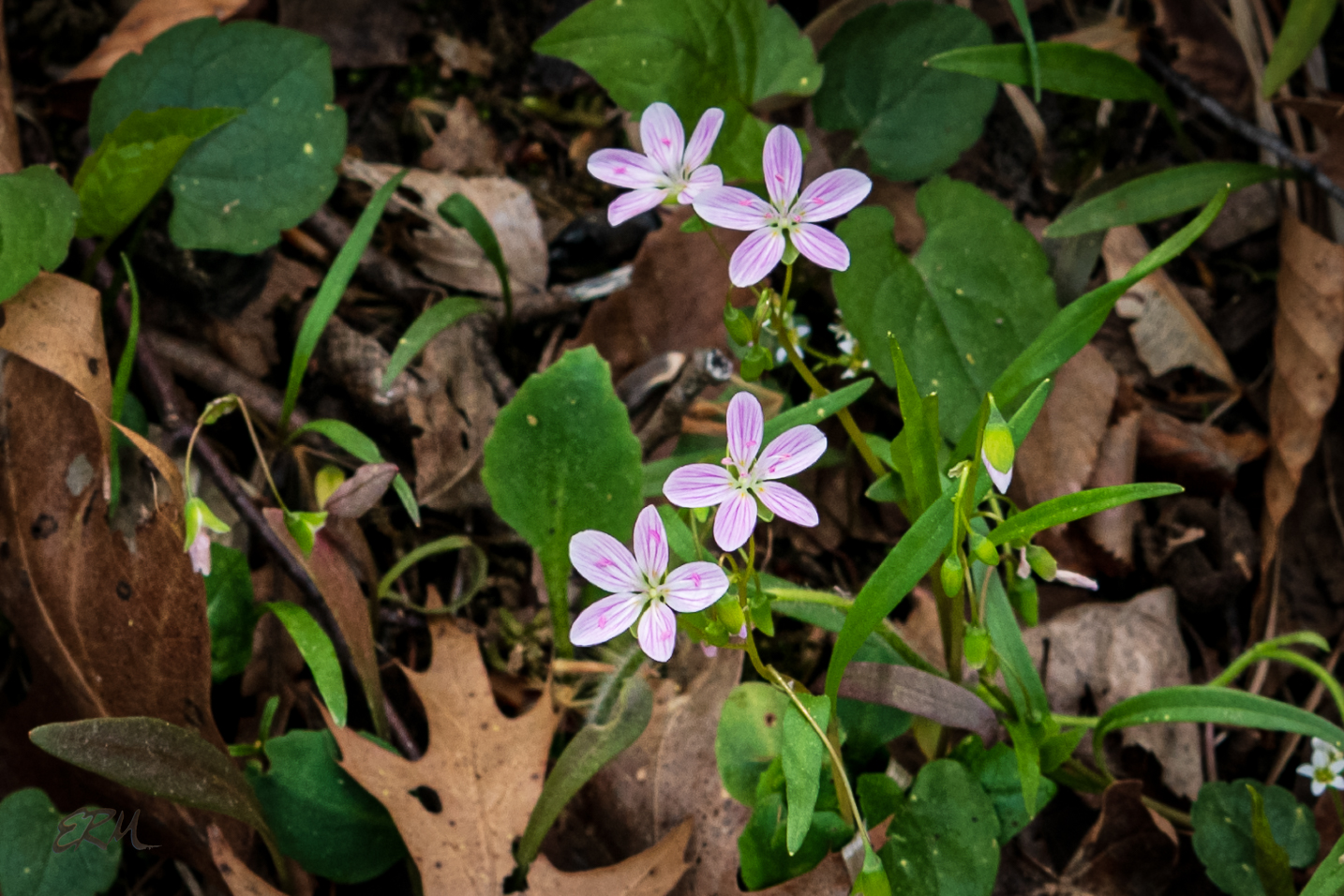


spring beauty, Claytonia virginica (Montiaceae)

First Ravine on the Left

Earlier this month B and I made a trip to Washington County to look for some wildflowers that aren’t found in the Potomac Gorge. Directions from fellow botanerds and a bit of poking around rewarded us with three new-to-me species.

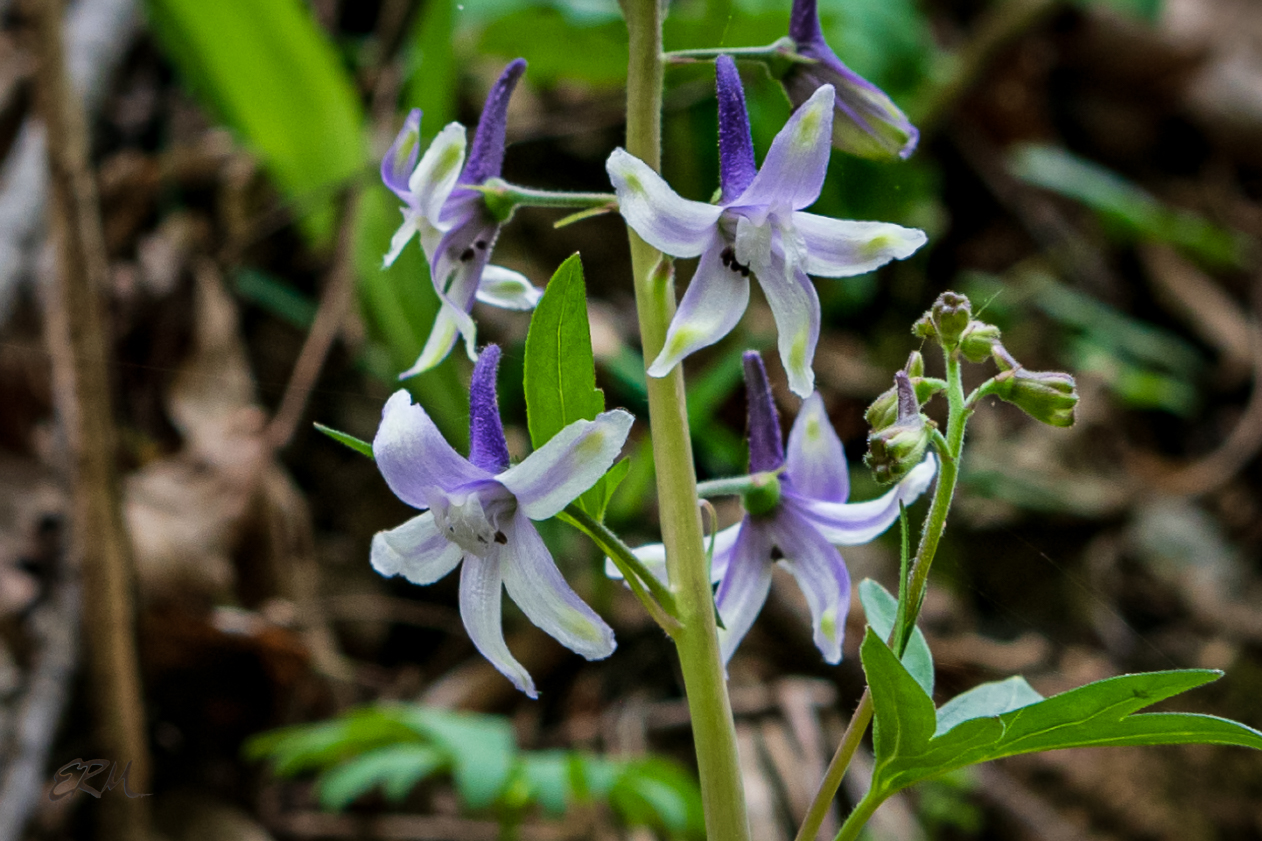
This one is dwarf larkspur, Delphinium tricorne (Ranunculaceae).  There are 65 species of Delphinium native to North America, but only four of those are found east of the Mississippi, and only two in the mid-Atlantic.

Dwarf larkspur’s range includes the easternmost parts of the prairie states, the Midwest, parts of the South (especially the Appalachians), and the southernmost part of the mid-Atlantic.

It’s a plant of open, rocky woodlands with moist soils.  Look for it on bluffs and ravines along the Potomac River in Washington County.  Apparently there are records for it in the Potomac Gorge, but the most recent sighting there was in 1935; it’s not likely to be found there again.


The dark blue-purple color is typical, but dwarf larkspur can also be white and, apparently, bi-colored.


Right Under My Nose

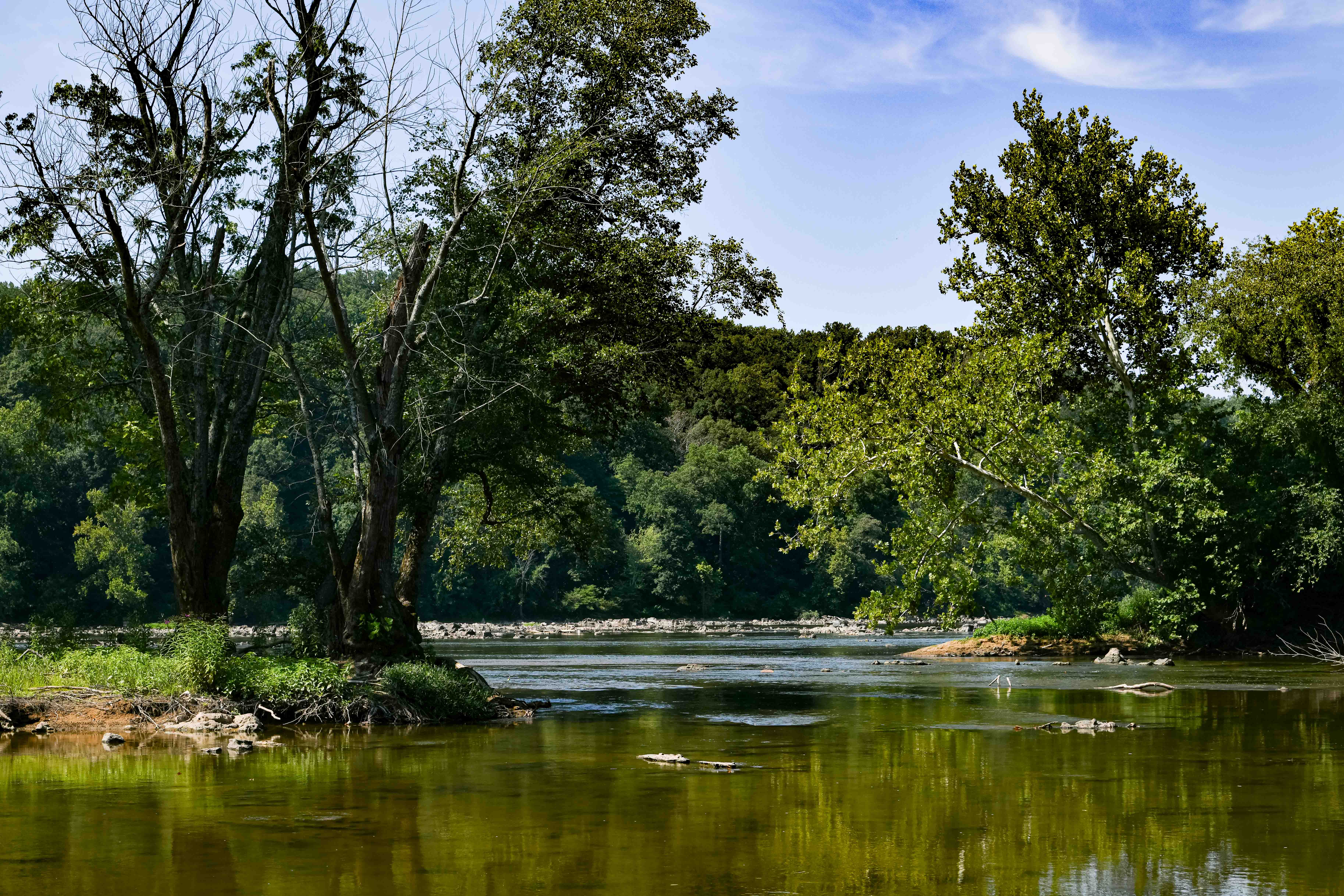
One of my favorite places in C&O Canal NHP is the area known as Widewater, the part of the canal that lies between the Gold Mine Tract and Bear Island/Billy Goat A Trail. It’s incredibly peaceful and beautiful, with nifty rock formations and a wonderful variety of plants.


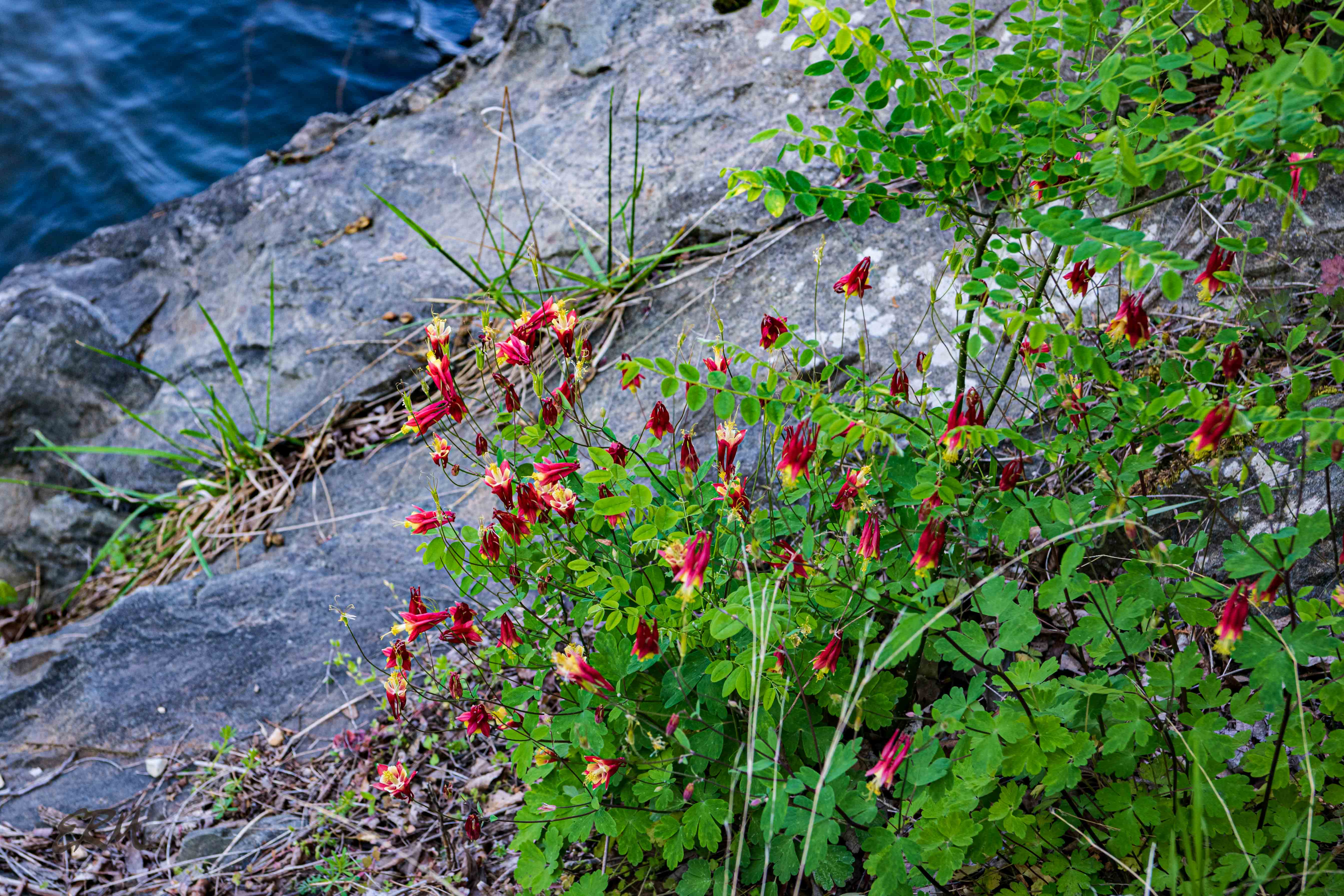
I grew up in Montgomery County, went to Great Falls often as a child, made my way there whenever I could as a teenager, always found time to hike there when back from college on short breaks… and I don’t know how many times in the past 9 years, since I started seriously hunting for wildflowers, I’ve been on that stretch of the canal. Close to a hundred, maybe? And yet it wasn’t until last year that I saw red columbine (Aquilegia canadensis) there, blooming right under my nose on the banks of the canal.

Red Columbine is by far the most widespread of the twenty-two Aquilegia species native to the US and Canada, and the only one found east of the Mississippi River.  Its range includes New England, the mid-Atlantic, the upper South, the Midwest, and parts of the prairie states.  The plants like moist, rocky outcroppings or slopes in woodlands, or more open areas if they get enough water.  Obviously they love the combination of shade and water they get from growing on the steep southern bank of the canal at Widewater.


Aquilegia canadensis is in the Ranunculaceae, a family that includes many of our beloved native flowers (anemone, hepatica, meadow rue), and one spectacular flower that I saw in the wild for the first time last Friday. It’ll be the subject of my next post – come back soon!

“It Sounds Seussian”

My friend P wrote that when I posted a picture of purple-headed sneezeweed (Helenium flexuosum) on social media. I included a few pictures in my August 7 post here, but want to share a few more. It’s such a photogenic flower!  That’s a pearl crescent (Phyciodes tharos) sitting on the flower head. Here are a few more pictures from my August ramblings on the banks of the Potomac.    

fogfruit, aka frogfruit (Phyla lanceolata; Verbenaceae)

        blue vervain (Verbena hastata; Verbenaceae)               riverbank goldenrod (Solidago racemosa; Asteraceae)      

tall meadow rue (staminate flowers; Thalictrum pubescens; Ranunculaceae)


Just Couldn’t Help Myself

Monday dawned sunny and cool, beautiful weather for wildflower hunting. Despite my resolution to stay put during this health crisis, I decided it might be worth trying Rachel Carson Conservation Park. It was a good call – for most of the time I was there, I had the place to myself.

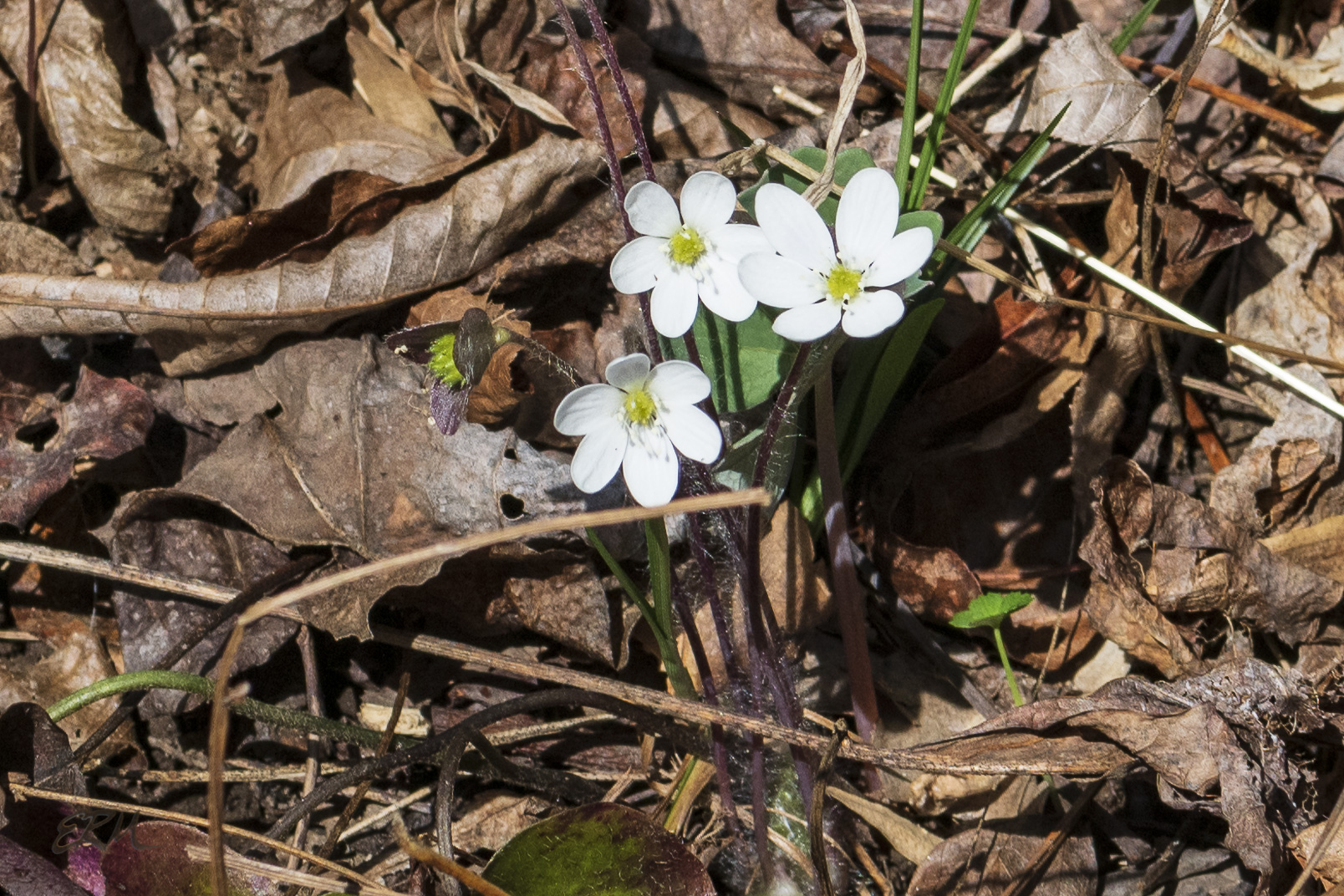
That’s the good news. The not-so-good news is that it’s too early in the season for some of the flowers I wanted to see. But there were other things blooming, like round-lobed hepatica (Anemone americana; Ranunculaceae).The flower colors can vary from white through pale blue to a deep, almost purple blue, and sometimes even pink.

The white-flowering hepatica [right] looks a lot like another member of the same family, Thalictrum thalictroides, or rue anemone [below]. The leaves are entirely different, though. Rue anemone flowers are almost always pure white, but sometimes they can be a little pink, with reddish leaves.