Flower of the Day: Southern Agrimony

aka harvestlice, aka swamp agrimony (Agrimonia parviflora); Rosaceae (rose family)

20140807-DSC_0094

I know, I know, you were expecting a picture of a flower.  This species of agrimony has small yellow flowers, about 1/4″ wide at most, that are very typical of the rose family. It’s another example of medium-sized plants with long, spiky inflorescences and itty bitty flowers (like vervain, jumpseed, lopseed).

I like this plant for the sound of the name, which comes from the Greek for “poppy”. But really, it’s about the leaf.  Is that not a fascinating leaf?  Shown above is a single, pinnately compound leaf, with 17 primary leaflets and about 30 secondary leaflets.  Nevermind about the flowers, I just love the plant:

20140807-DSC_0090  Okay, here are some flower pics:

20140806-DSC_0126This one is actually a different species: common agrimony (A. gryposepala).  Leaf is not nearly as nifty: 20140721-DSC_0484 Southern agrimony flowers are similar to common agrimony flowers:

20140807-DSC_0084


Flower of the Day: Swamp Candles

aka swamp loosestrife; Lysimachia terrestris; Primulaceae (primrose family; some authorities place it in the myrsine family)

 20140728-DSC_0136

This may be one of the few cases where the common names make more sense than the botanical name; the specific epithet “terrestris” means “of the earth”.  Its distribution across North America is a little whacky; it doesn’t occur in the Deep South (except Georgia), the southwest, the Great Plains (except Oklahoma) or the mountains, except in the Pacific Northwest.  It is endangered in Kentucky and Tennessee.

Like yesterday’s FOTD, this is a water-loving species.  It will grow to about three feet tall, wth each flower about half an inch across.  Apparently in some areas this species is known to hybridize freely with other native loosestrifes.

This picture was taken on a late July evening, along the Potomac River just upstream from Cabin John Creek.  The river level was very low.

20140728-DSC_0030-2

Flower of the Day: Halberd-Leaved Rosemallow

Hibiscus laevis; Malvaceae (mallow family)

20140728-DSC_0070

You could hike along the Billy Goat trails all day and never see this flower – but only because the trails never get close enough to the water.  Find one of the rocky outcroppings and head out into the river, though, and you’ll see dozens and dozens – or hundreds – of the plants, which can grow to over six feet tall.

20140728-DSC_0035

They could almost be considered shrubs, as the large stems will get very stiff as if lignifying, and these stems will persist through the winter.  But the plant does die back in true perennial fashion.

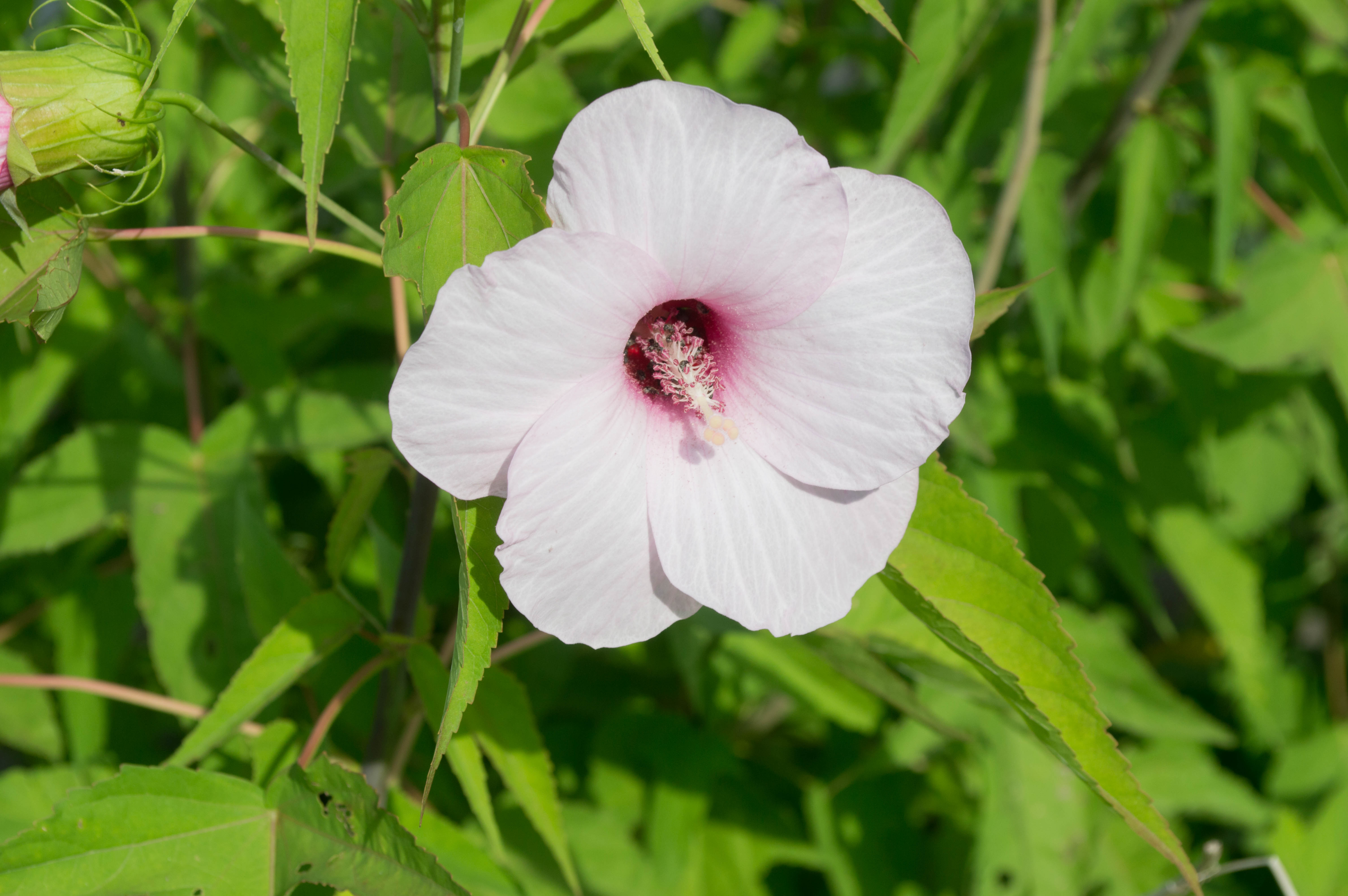
This rosemallow is a plant that loves to have its feet wet.  You’ll find it growing right along the riverbanks; whether or not it’s actually standing in water depends on the water level.  The flowers will open to a width of five inches when in full sunlight, then close at night.

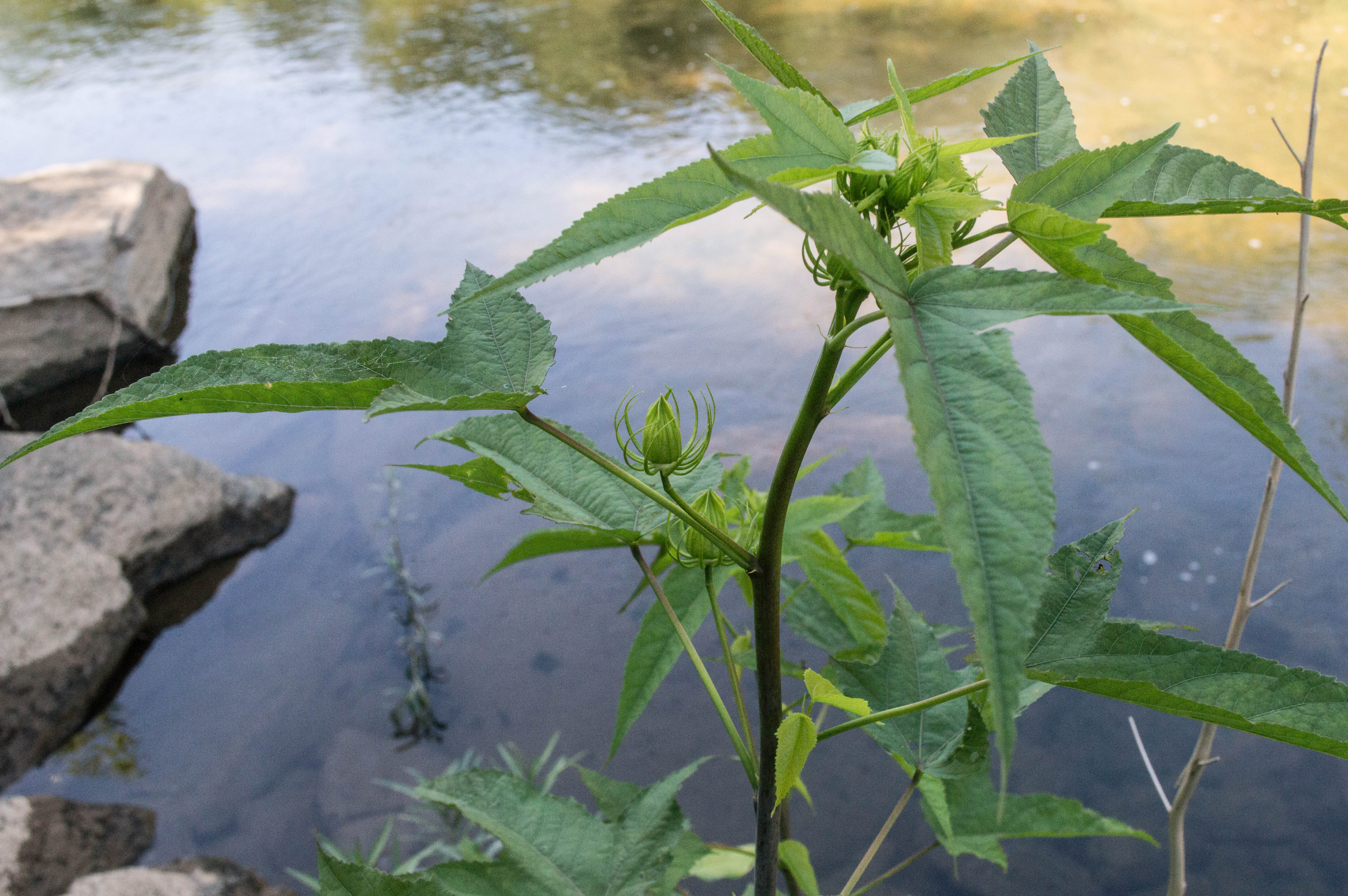
Here’s a picture of a smaller plant in bud, showing the leaf shape:

20140725-DSC_0110

And here’s one more picture, just because:

20140728-DSC_0027

Flower of the Day: Indian Tobacco

aka pukeweed; Lobelia inflata; Campanulaceae (bellflower family)

20140725-DSC_0260

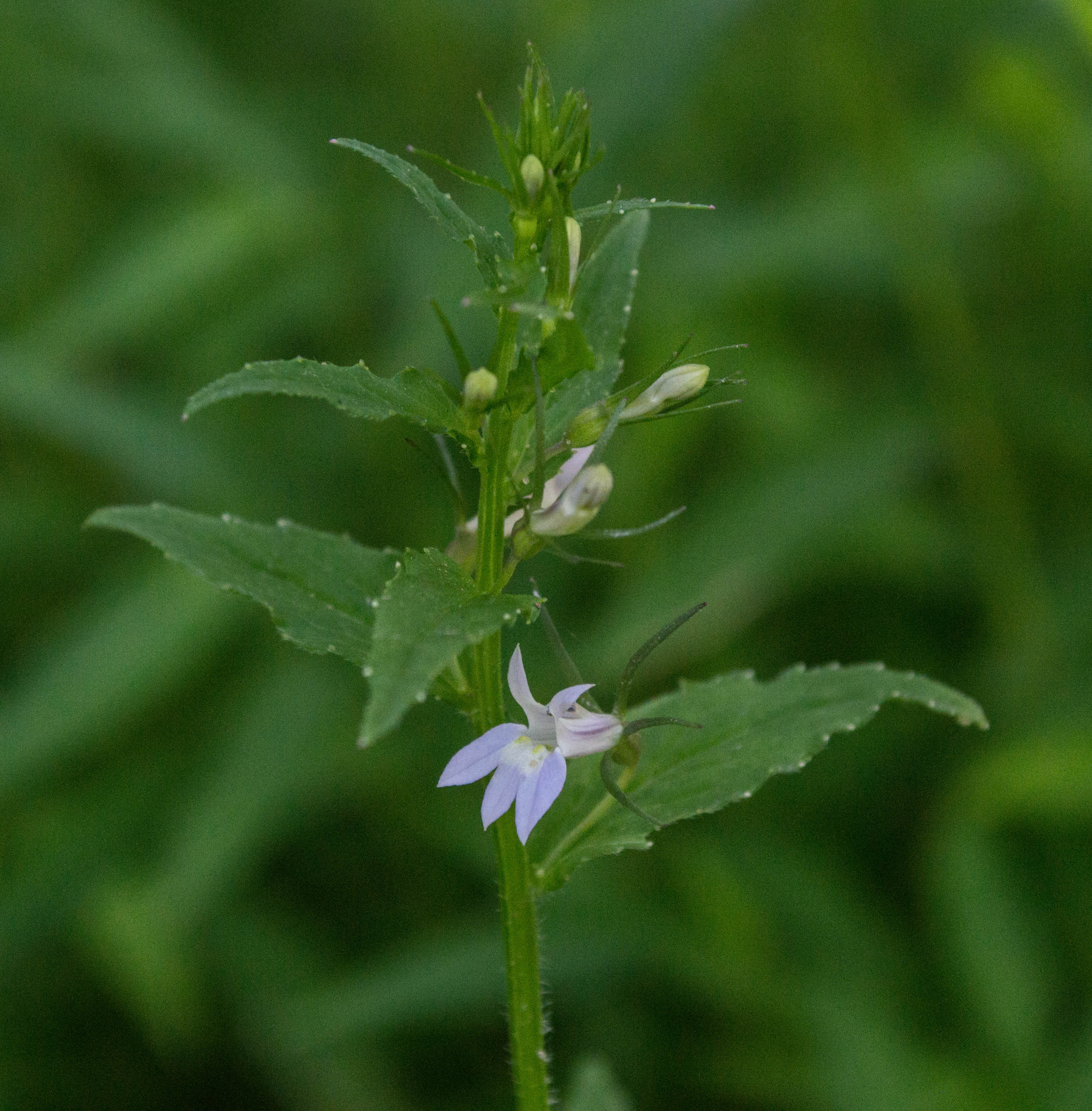
This eastern North American native forb grows to about three feet tall in partly sunny areas with moist soils. The flowers are about 1/3″ wide.  The internet is full of interesting claims about the medicinal uses of this plant; some sources simply state that it’s poisonous and shouldn’t be used at all, while others note its use by Native Americans for a variety of purposes, including treatment of respiratory ailments, as an emetic, and as an entheogenic (go ahead and click, I had to look it up, too).

For more on medicinal uses, including current practices, check out the University of Maryland Medical Center page.

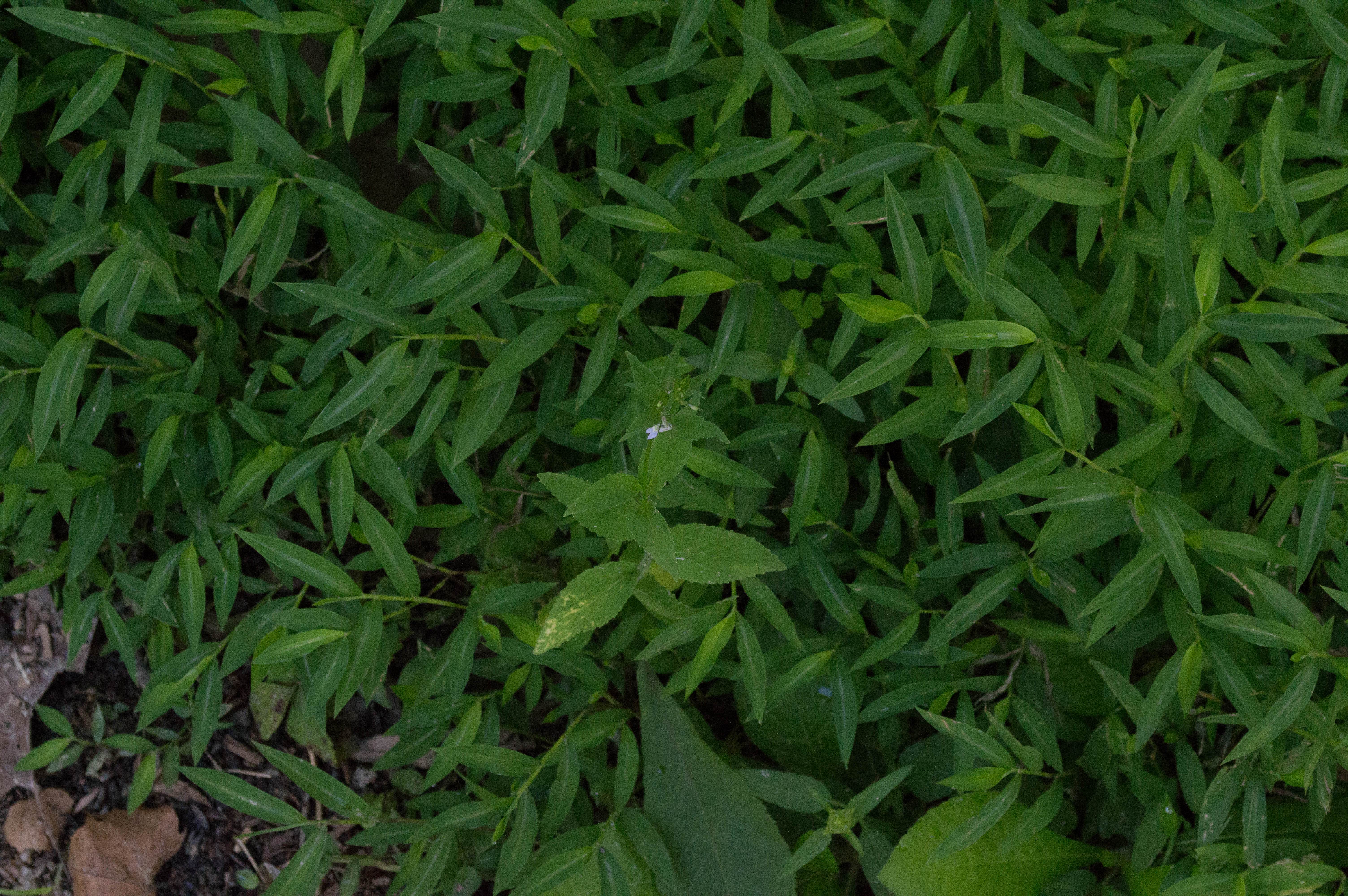
The next photo shows what I call the “five foot view”: this is what I see when walking along (my eyes being about five feet above ground level).

20140725-DSC_0274

One little spot of color and I’m down on my knees having a closer look. Shame about all the Japanese stiltgrass, though.

Flower of the Day: Jumpseed (a mid-summer LWF)

Polygonum virginianum, aka Persicaria virginiana and several others; Polygonaceae (buckwheat family)

20140716-DSC_0054

Most of the LWFs* I wrote about earlier in the season were tiny little flowers on tiny little plants.  This one is a tiny little flower on a very large inflorescence on a medium-sized plant.  The plant grows about three feet tall, and usually sports only a single foot (or more) long flower spike with dozens of buds; only a few open at a time, and each flower is less than 1/8″ across.

20140716-DSC_0025

Jumpseed is found throughout woodlands in North America, from northern Quebec south through Florida and west to Texas.

*little white flowers