Flower of the Day: Lesser Snakeroot

Ageratina aromatica; Asteraceae (aster family)

20140929-DSC_0135-2

The Eupatorium-type flowers aren’t quite done yet.  A. aromatica’s big brother, Ageratina altissima, dominates the scene – you can find them by the dozens along the Billy Goat trails – but tucked in little nooks on sandy soils you might find this small species, too.

20140929-DSC_0145

As you can see, this is another one of the rayless composites, consisting only of disk flowers.  It’s found throughout the eastern US as far north as New York; some sources state that it ranges further into New England, but is rare or endangered there.

Flower of the Day: Calico Aster

Symphyotrichum lateriflorum (formerly Aster lateriflorus); Asteraceae (aster family)

20140929-DSC_0176

Plants formerly in the genus Aster have been reclassified into more than 100 genera, based on DNA analysis (the old system of taxonomy went by flower and fruit morphology), which is only one of many factors that make these plants hard to ID if you’re an amateur enthusiast.  Most of those plants found in this area are now classed as Eurybia, Symphyotrichum, or Doellingeria.

20140929-DSC_0160

Calico aster is a common woodland plant found throughout the eastern half of the US and Canada.  It grows to three feet tall and is often covered in masses of flowers, a delightful sight at a time of year when little else is blooming and leaves are falling from trees.

20140929-DSC_0182

One thing to keep in mind: it’s entirely possible that I’ve mis-identified this plant!  If you think so, please leave me a comment, and thanks.

Is it a Weed?

20140710-DSC_0061

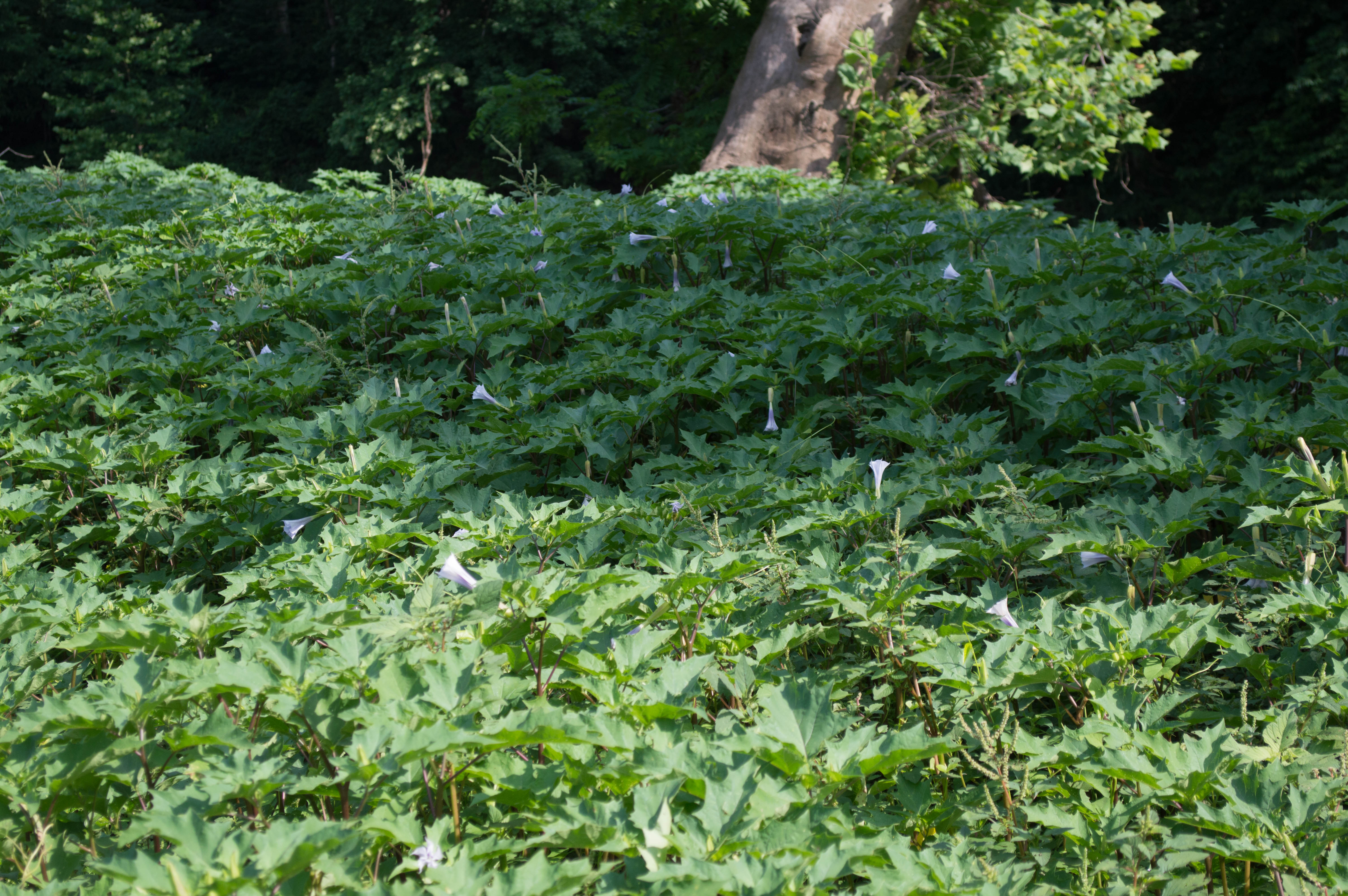
 A species of Datura (jimsonweed), a highly invasive alien, outcompeting almost everything on a long swath of riverbank

Back when I was a Master Gardener, there were some frequently asked questions that would drive me crazy.  One was “how do I get rid of moss in my lawn?”  My (secret) answer was “why would you want to? get rid of the lawn, instead”.  But of course I couldn’t say that.

20140614-DSC_0181nodding star-of-Bethlehem

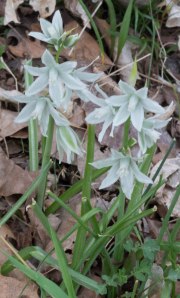
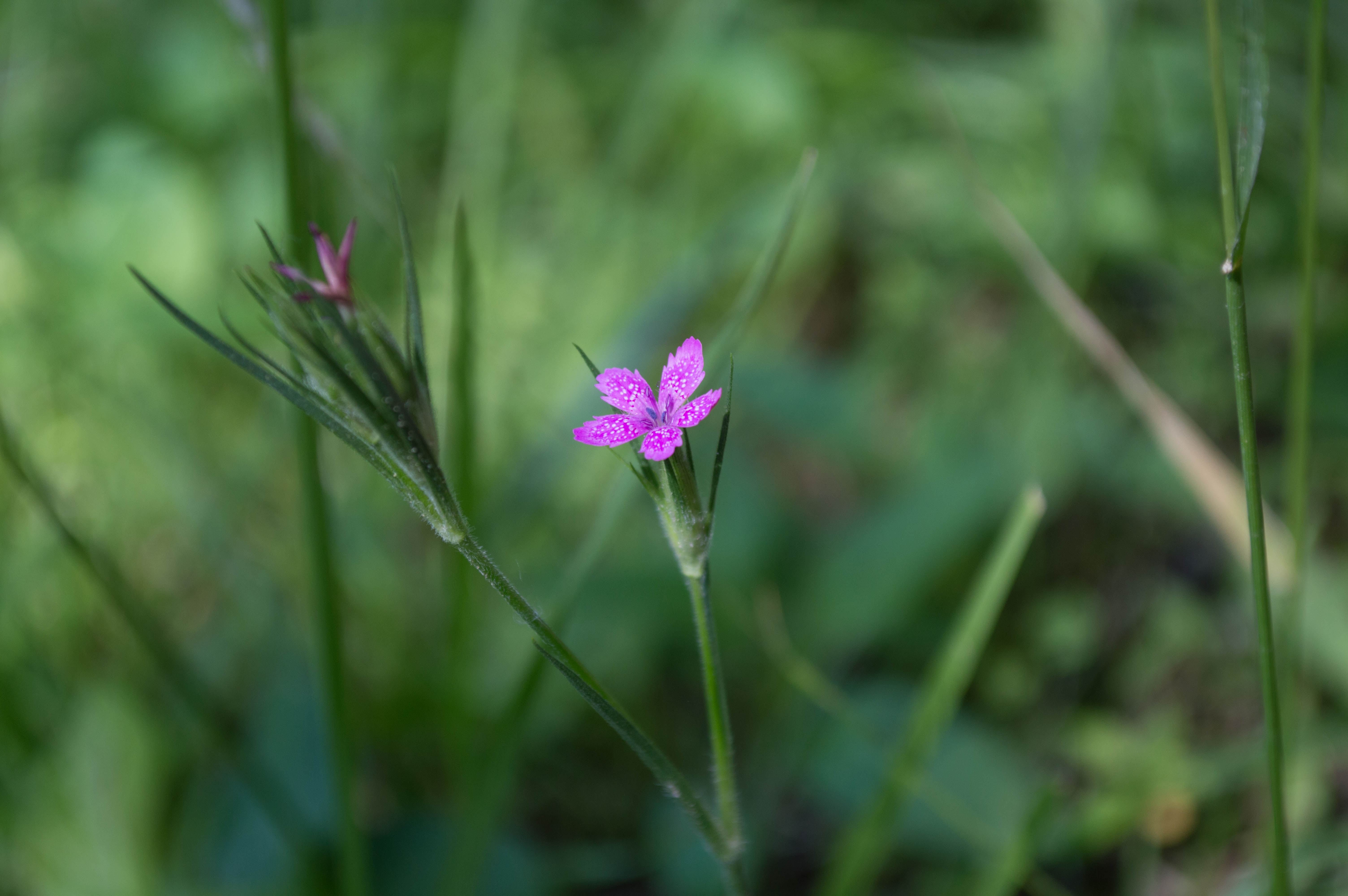
 left, Deptford pink (Dianthus armeria), and right, nodding star of Bethlehem (Ornithogallum nutans), escaped garden ornamentals; I see more of them every year

Another annoying question was “is this a weed or a plant?”  That’s a little tricky to answer because, well, of course it’s a plant, but whether or not it’s a weed is in the eye of the beholder.  It’s a value judgement.  It’s a little like saying you don’t want to eat something because it’s full of chemicals.  Well, of course it’s full of chemicals. Show me a substance that isn’t.

20141006-DSC_0104Virginia creeper (Parthenocissus quinquefolia), a highly aggressive native climber that I’m allowing to grow in one section of garden; it’s not a weed to me!


Anyway, as I was struggling my way through a dichotomous key, it occurred to me to try to create one as a learning exercise.  It became a joke.  I’m quite pleased how many “shares” it’s gotten after posting it to a certain facebook group page…  Hope you get a chuckle out of it.

Scan 1

lesser celandinelesser celandine (Ranunculus ficaria), on the state noxious weed list in 46 states
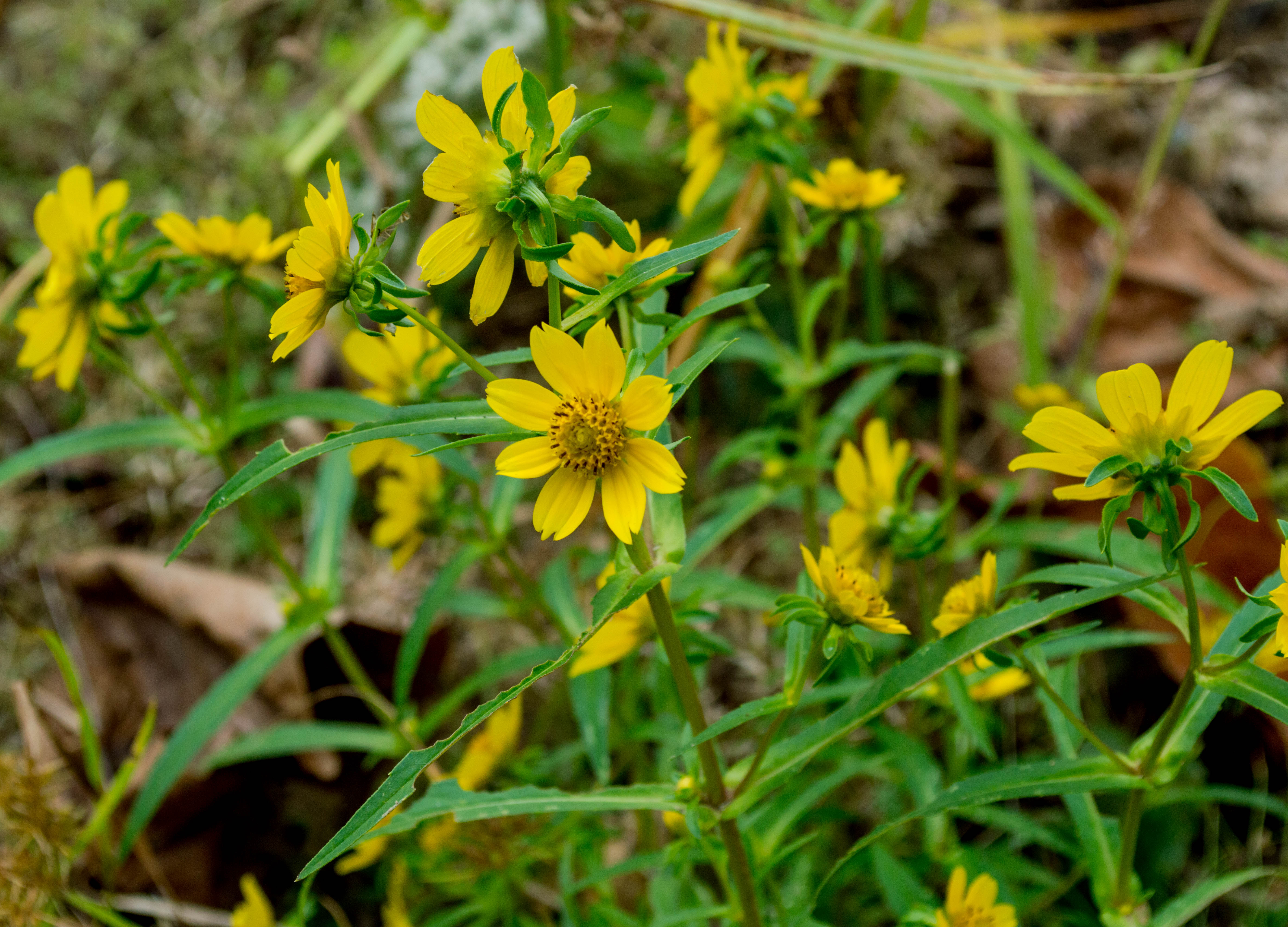
Nodding Bur Marigold

aka nodding beggarticks, sticktight; Bidens cernua; Asteraceae (aster family)

20140924-DSC_0070

I found this annual plant along the sandy, exposed bed of the river when it was running very low, in mid-September.  Although bur marigold likes really wet soils, it is not considered an emergent aquatic.

20140924-DSC_0056

It can be found through most of the US and Canada, except for a few states in the south. Some authorities consider it weedy.


The more I see of composites, there more fascinated I am by them.  Here’s a close up of the disk flowers.

20140924-DSC_0076


By the way, it’s possible I’ve mis-identified this one.  There’s another, almost identical species called smooth bur marigold (Bidens laevis); I spent a long time poring over details on the fantastic New England Wild Flower Society and John Hilty’s Illinois Wildflowers websites. These have become my go-tos whenever the books fail me.

20140924-DSC_0067

Strawberry Bush

strawberry bush

Euonymous americanus, sometimes Euonymous americana; Celastraceae (bittersweet family)

aka hearts-a-burstin, wahoo, fish wood, burning bush

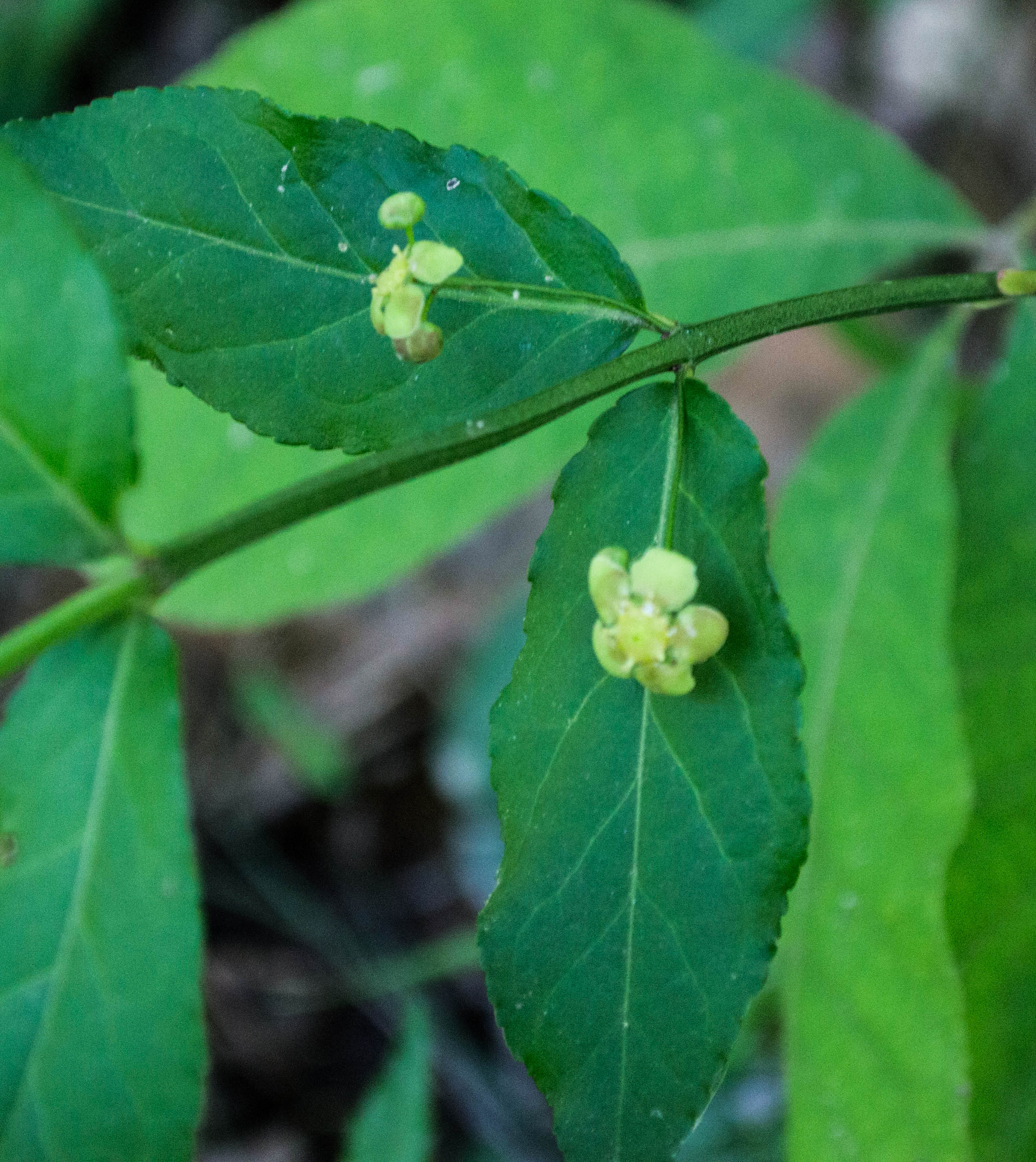
Not much to look at, is it?  I took that single photo of the plant on May 19, just to remind myself that I’d seen the flowers, never intending to post about it. Some flowers are really just unremarkable.  So I noted it for my spreadsheet (yes, I have a spreadsheet) and promptly forgot about it.

20140923-DSC_0043

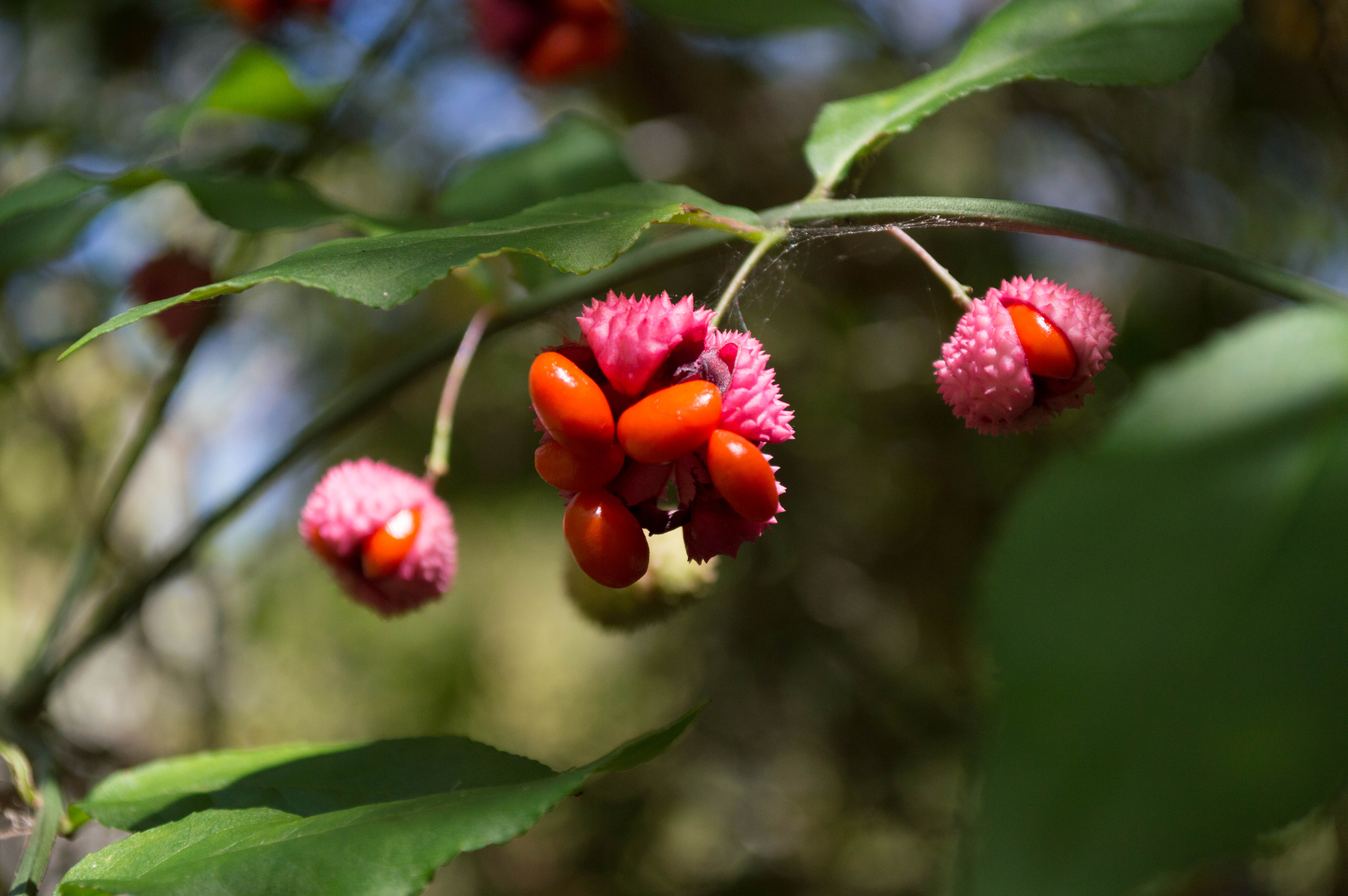
…until four months later, when I saw the fruit and seed.


This eastern US native can be found from New York (where it’s endangered) south and west as far as Texas.  It’s also endangered in Illinois.  Apparently deer forage on the foliage; in some areas strawberry bush’s absence is considered an indication of deer overpopulation.

20140923-DSC_0046