All About Lopseed

20150707-20150707-_DSC0011

Phryma leptostachya
Phyrmaceae


Here’s another of those summertime woodland plants that has tiny flowers (like vervain, enchanter’s nightshade, honewort).  The plant itself can grow to three feet tall, with leaves about five inches long and an inflorescence about one foot long, but the individual flowers are only about a quarter inch long.

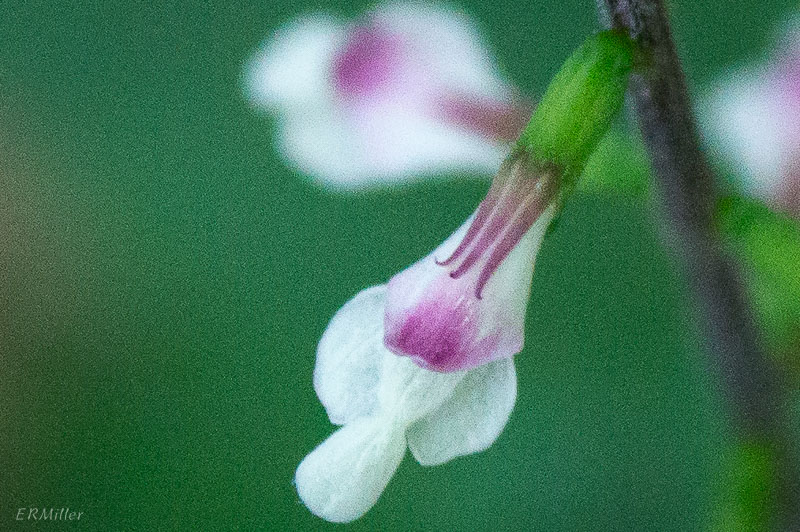
From a distance the flowers appear pinkish; once you get up close, you can see that the three lower lobes are white, with a pinkish upper lobe and three pink-purple teeth on the top part of the calyx.
20150707-20150707-_DSC0061


closeup of flower; it looks very Art Deco to me

20150707-20150707-_DSC0017


the distinctive toothed calyx

20150707-20150707-_DSC0002


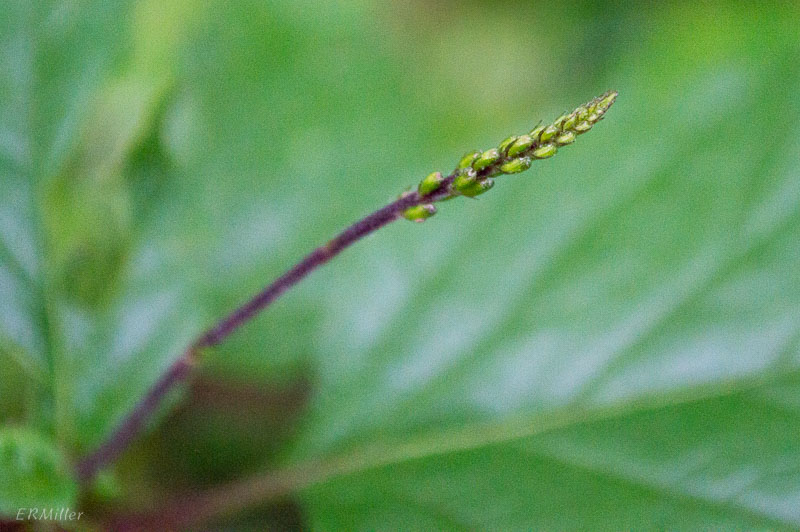
the new flower spike; note that the flower buds are lying upright along the stem

20150707-20150707-_DSC0019


the flowers, arranged on the stem in opposing pairs, stand out at a 90 degree angle


When the flowers are finished and starting to form their single seed each, they lie flat along the stem – hence the name “lopseed”.

20150707-20150707-_DSC0041


spent flowers flopping down along the stem


The specific epithet is derived from the Latin “lepto”, meaning thin, fine, slight, and “stachys”, meaning ear of grain.

Once by itself in its own family, lopseed was later placed into the verbena family (Verbenaceae).  Recent molecular phylogenetic* studies have placed it back in Phrymaceae, with about 209 other species to keep it company.

While researching, I found this description from a text published in 1847:

“I. PHEYM A Zfnn. aman. 3 p. 19et gen. n. 738 . Garin, defrucl. 1 p. 3 6 3 I. 7fl. Lam. illuslr. t. 516 , non Forsh. — Leptostachy a Milch. gen. 11 . Calyx tubulosus, 5-nervis, bilabiatus, labiis post anthesin ronniventibus , superiore tripartito laciniis subulatis apice reduncis, inferiore brevissimo bifido. Corollas tubo labium calycis superius acquante, limbo bilabiato, labio superiore emarginato, inferiore majore trilobo , fauce nuda. Stamina inclusa. Ovarium oblongum. Stylus filiformis; stigma brevi ter bifidum , cruribus anguste lamellaribus. Caryopsis calyce inclusa; pericarpio membranaceo , 5-nervi, stylo persistente terminato, semini adnato. Semen cavitatemi pericarpii omnino implens. Reliqua ut in charactere ordinis. — Genus slructurà et patria perinsigne , a nonnullis cum Priva, maxime alieno, confusimi, fructu jam a Gasrlnero eximie explorato.”  [Digital Library]

Sadly, I don’t read Latin, though I’m good enough with cognates to get parts of it.

Lopseed is found from the Great Plains east to the Atlantic, in the United States and Canada, and also in California.  It is considered possibly extirpated in Maine.

20150707-20150707-_DSC0022

*phylogeny is the evolutionary history of an organism
in molecular phylogeny DNA sequences are analyzed to determine evolutionary relationships among organisms

Flower of the Day: Hairy Wild Petunia

20150629-20150629-_DSC0183

aka Carolina wild petunia
Ruellia caroliniensis
Acanthaceae


Despite the common name, and despite appearances, this plant is more closely related to water willow (FotD June 20) than to the common garden petunia.  The latter plant is in the genus Petunia, family Solanaceae, and is therefore closely related to tobacco and tomatoes.

Actually Ruellia and Petunia are quite far apart taxonomically; not only are they in different families,  they’re in different orders (Scrophulariales and Solanales, respectively).

About 15 species of Ruellia can be found in the continental US; of these, four are found in Maryland, and of those four, this is the only one you’re likely to see. The other three are critically imperiled here.

20150629-20150629-_DSC0187

R. caroliniensis ranges from New Jersey (where it’s endangered) west to Illinois, and then south to the Gulf coast.  It grows one to three feet tall.  I’ve seen references to it liking both dry, sandy soils and moist soils; the three places in the Gorge where I know to find it have sandy soils that are prone to minor flooding, so I’m not sure what to make of that.

20150629-20150629-_DSC0081

See the partly submerged rock on the lower right?  Yeah, that’s one of the places where this plant grows.


Diptera or Hymenoptera? A Little Insect ID

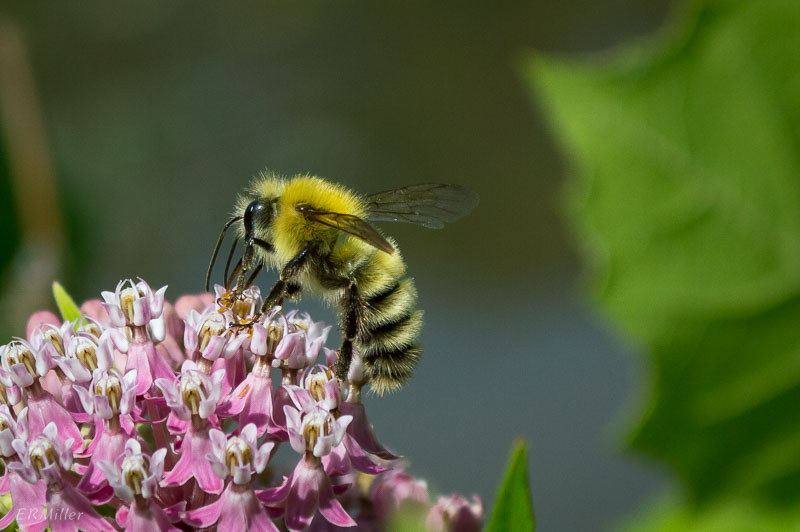
Remember this picture from June 26?

20150623-20150623-_DSC0125

bee on swamp milkweed (Asclepias incarnata)

A reader commented that it might not be a bumblebee – might not even be in the order Hymenoptera.  These things bug me, so I did a little research.

First, a quick summary of taxonomy: species of organisms are grouped into genera, which are grouped into families, which are grouped into orders, which are grouped into classes, which are grouped into phyla (for animals) or divisions (for plants), which are grouped into kingdoms, which are grouped into domains. (If you’re my age, you learned as a child that all life is in either the plant or animal kingdoms, a notion that was actually discarded before I was born, but I’m not going to sidetrack into the history of taxonomy; let’s just say that classification systems change as scientists learn more.)

20150629-20150629-_DSC0074

bee on narrow-leaved mountain mint (Pycnanthemum tenuifolium)

There are 30 or so orders within the class Insecta (those wacky taxonomists are always redefining things, so it’s hard to say exactly how many).  One of these is Diptera, which comprises mosquitoes and flies.  Another is Hymenoptera, which comprises bees and wasps.

At this point, you night be wondering, isn’t the creature pictured obviously a bee? Not necessarily.  There are flies, like this one, and for that matter moths, like this one (yet another order, Lepidoptera), that look, superficially at least, a lot like bumblebees. Beespotter.org has a page about bee mimics; it’s an interesting read.

The commenter on my blog pointed out that the insect in question appears to have only two wings, which suggests Diptera.  (That’s what “diptera” means: two wings.  Insects in the Hymenoptera have four wings.)

20150630-20150630-_DSC0010

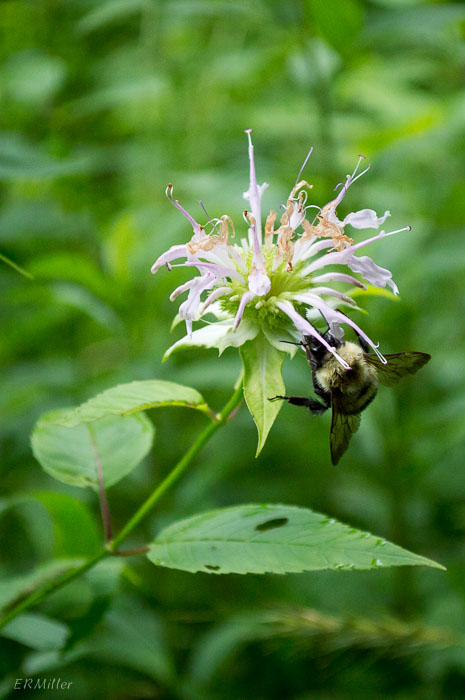
bee coming in for a landing on basil balm (Monarda clinopodia)

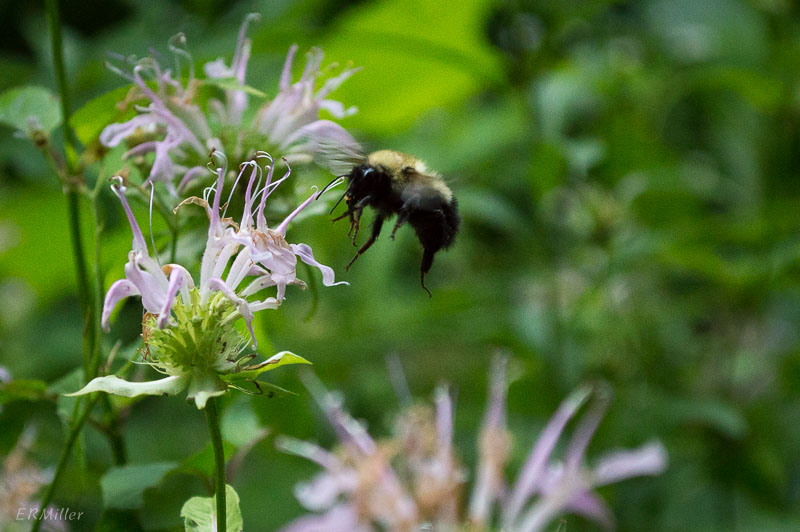
After more hours than I care to admit reading field guides and surfing the internet, I was still at a loss to say what this creature is, mostly because I couldn’t tell from the picture if it has two wings or four.  So I asked the expert: a friend who is an entomologist.  I emailed him the picture with the note “What order is this in? I’m not even going to say what my thinking is here”.  Here’s his reply:

“Hymenoptera. I know you are thinking Diptera, because it looks like it only has one pair of wings, but it actually has 2 pair. Hymenoptera have a series of “hooks” on the trailing edge of the front wing called hamuli, and these serve to link the wings together. You can actually see the two wings in this picture – the notch near the bottom of the “wing” is the demarcation of where the two wings join together. A give away in this photo that this is a bee and not a fly are the antennae, which are long and multi-segmented. Flies have shorter antennae, with fewer segments.”

20150630-20150630-_DSC0005

a brief pause on the morning rounds

So, it’s a bee: class Insecta, order Hymenoptera, family Apidae, genus Bombus.

20150630-20150630-_DSC0019

Bombus (probably) departing Monarda, en route to Erigeron

Seeds

Call me a snob, but I’m just not interested in invasive alien plants.  I’d rather see a tiny, subtle native than a big, splashy exotic.  But there are times when they have their charms.

20150527-20150527-_DSC0048

Like when this yellow goat’s beard (Tragopogon pratensis)
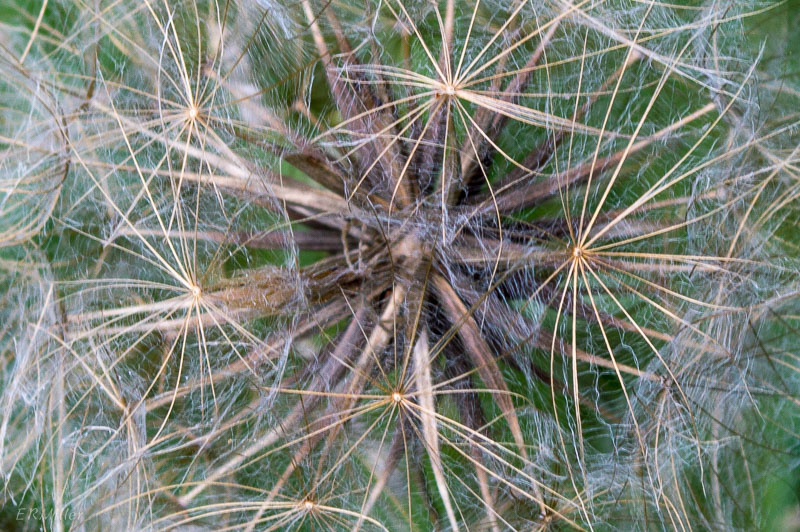
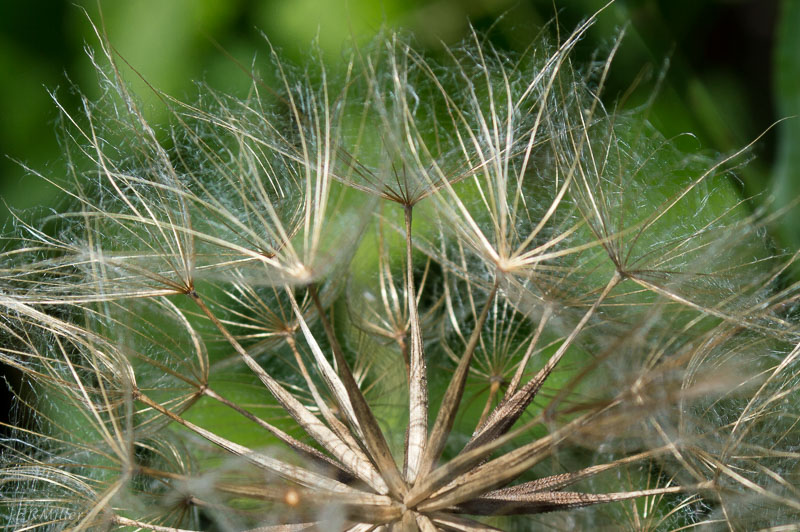
went to seed.

June 7

20150616-20150616-_DSC0028-2


June 16

20150616-20150616-_DSC0028

20150616-20150616-_DSC0023

photographed at Belmont Manor and Historic Park, Howard County, Maryland