So Unbelievably Blue

20150822-_DSC0129

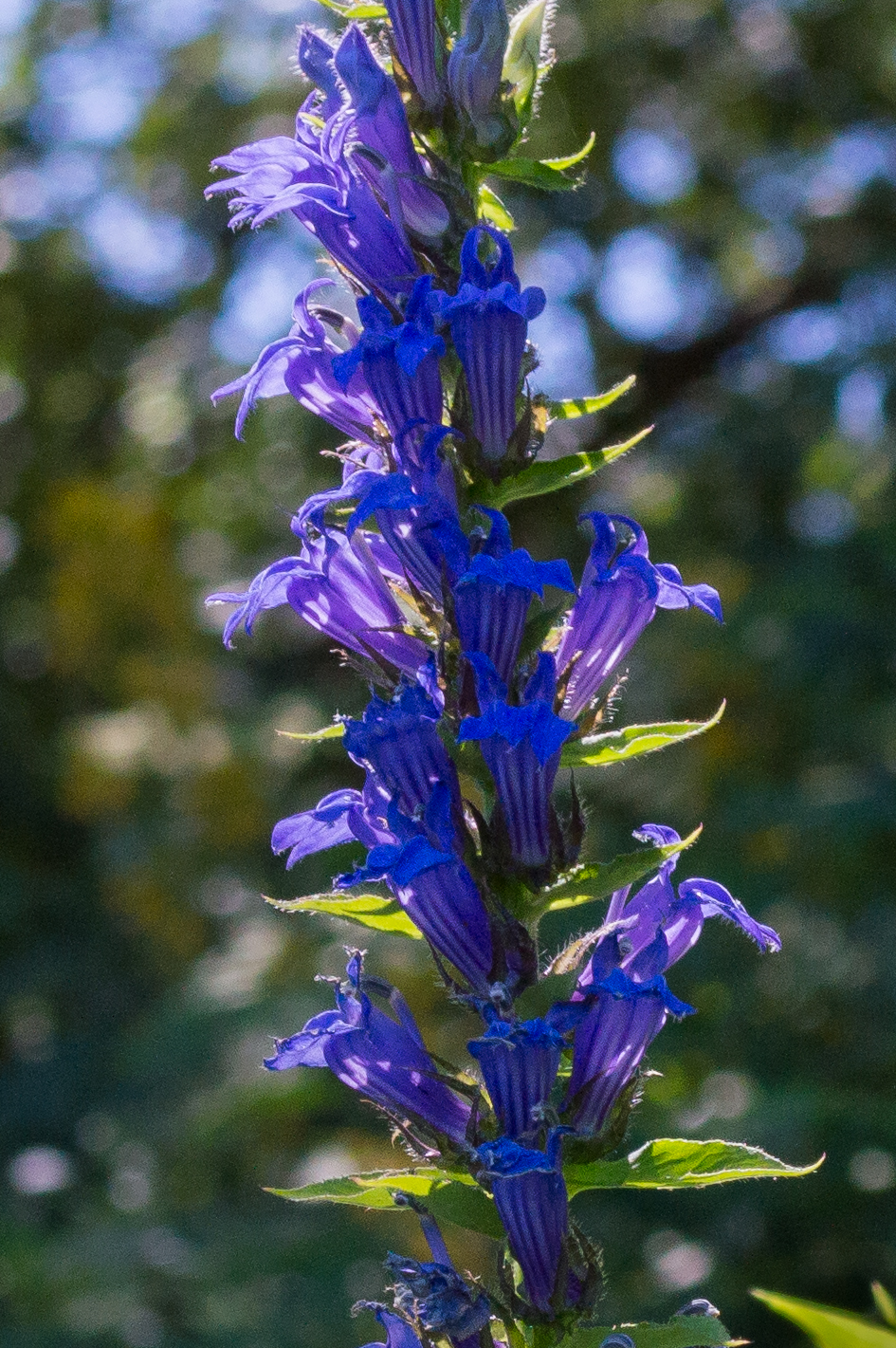
great blue lobelia
Lobelia siphilitica
Campanulaceae


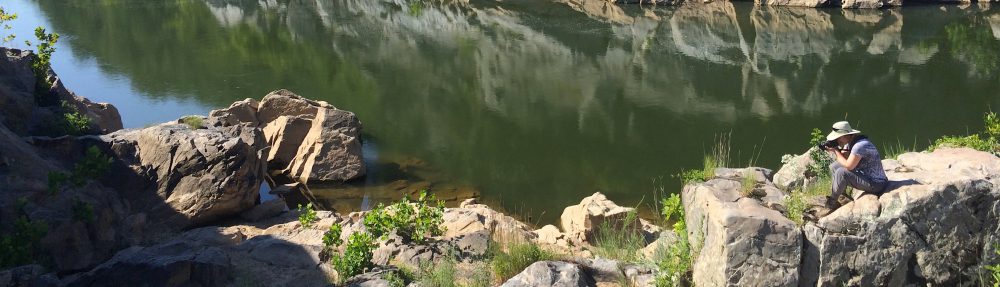
Here’s a cousin of yesterday’s unbelievably red flower.  Like the cardinal flower, great blue lobelia is a plant of wet places.  This single plant was growing right at the water’s edge near Fletcher’s Clove in the lower Potomac Gorge (in Washington, DC.).  I looked all around for others, by boat and on foot, but this was the only plant I could find.

Getting good pictures of it was darn near impossible.  I could only get so close in the kayak, there was no place to land, and the sun was in a less-than-ideal position.

20150822-_DSC0132


seen from the water, mid afternoon


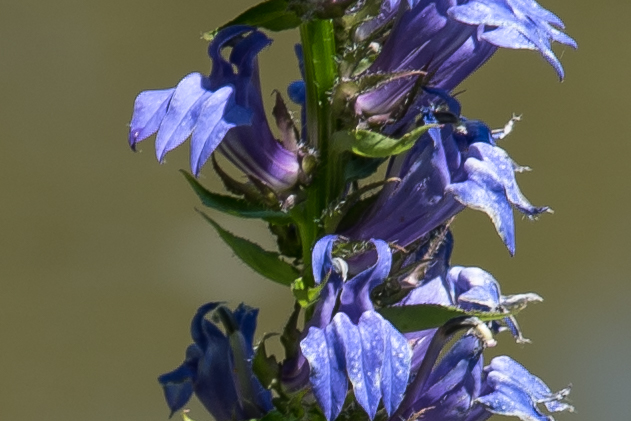
When I went back a few days later to try from the shore, I still couldn’t get close: the bank was too steep, I couldn’t maneuver to different positions, and the sun was, again, not cooperating.

20150825-_DSC0042


the very same plant, seen from the land three days later, early afternoon


Great blue lobelia is found in the US and Canada from the east coast to the Great Plains.  It’s listed as possibly extirpated in Maine, endangered in Massachusetts, and exploitably vulnerable in New York.

Twenty seven native species of lobelia can be found in the US, eight of which occur in Maryland*.  One of these, Indian tobacco, is fairly common in the Carderock-Marsden Tract area.
20150825-_DSC0039

*per the Maryland Biodiversity website
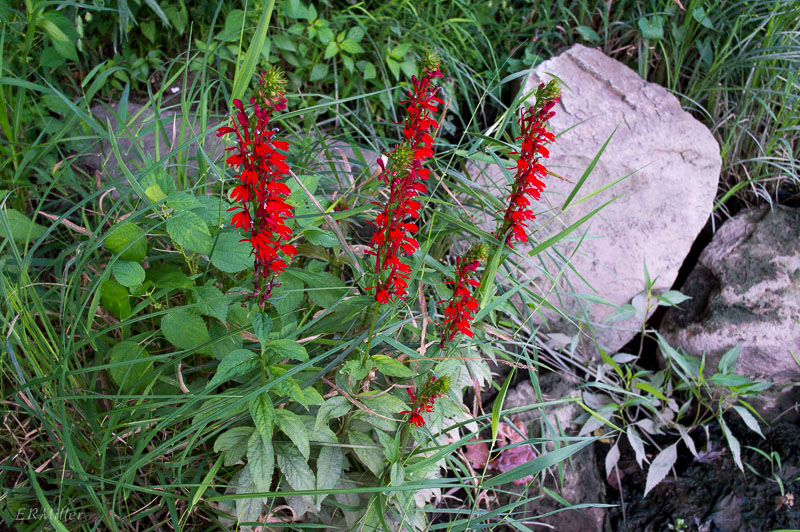
So Unbelievably Red

20150821-20150821-_DSC0008

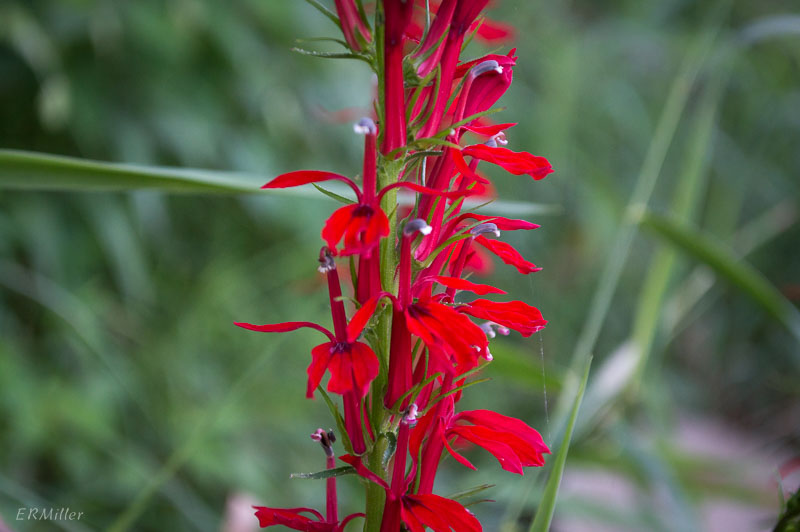
cardinal flower
Lobelia cardinalis
Campanulaceae


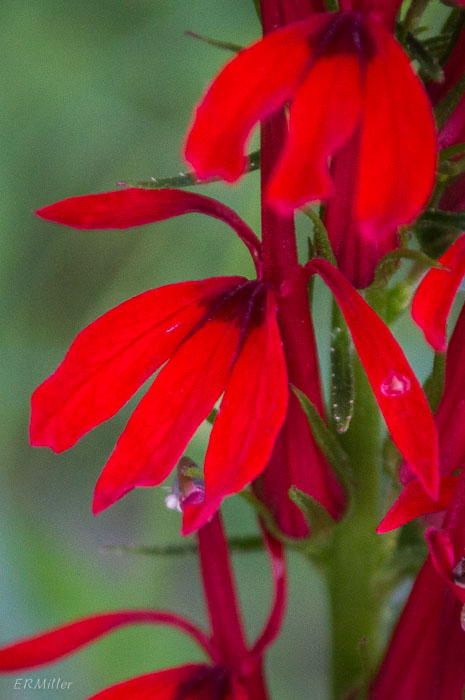
Of the more than 370 different flower species I’ve seen in the last two years, this is the only one that is truly, unequivocally, red.  So very red, I practically squeaked upon seeing it.  So very red, I actually beached the kayak and got out to take some photos (in the shade, in a strong, steady breeze).

So very red, you’ll be forgiven for thinking I tinkered with the colors in processing (I didn’t).

20150821-20150821-_DSC0004

This stand of plants was right by the water, under the woodland canopy – exactly the habitat it prefers (wet with some shade).  I explored every little cove and rock outcrop (okay, not every one) between Fletcher’s Boathouse and Chain Bridge, on both shorelines (DC and Virginia), and saw no others.

Cardinal flower is found all over the continental US, except for parts of the northern Great Plains and the Pacific Northwest.  It’s listed as “salvage restricted” in Arizona, is threatened in Florida, and is exploitably vulnerable in New York.

20150821-20150821-_DSC0009

Exploring My New Beat: the Lower Potomac Gorge

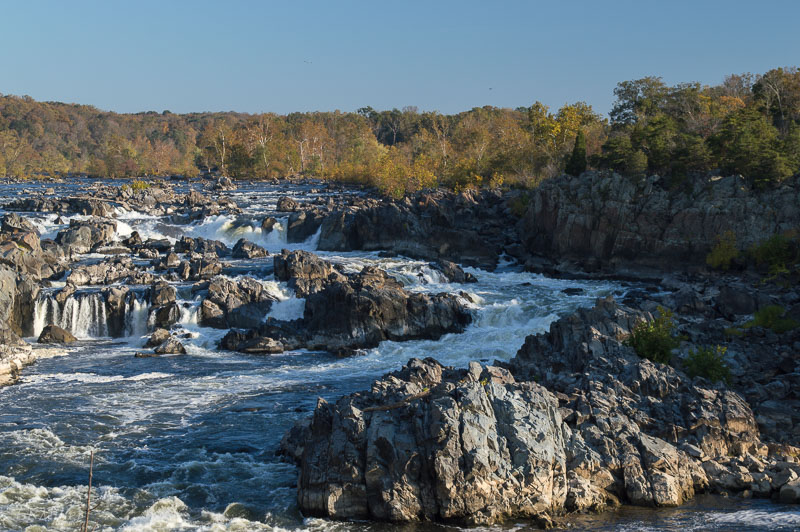
20141024-_DSC0102

sunrise on Great Falls; November 2014

As you may recall, the Potomac Gorge is the 15-mile long section of river in the Fall Zone, the transition area from the metamorphic rocks of the Piedmont physiographic region to the unconsolidated sediments of the Coastal Plain, starting at Great Falls and ending at Roosevelt Island.

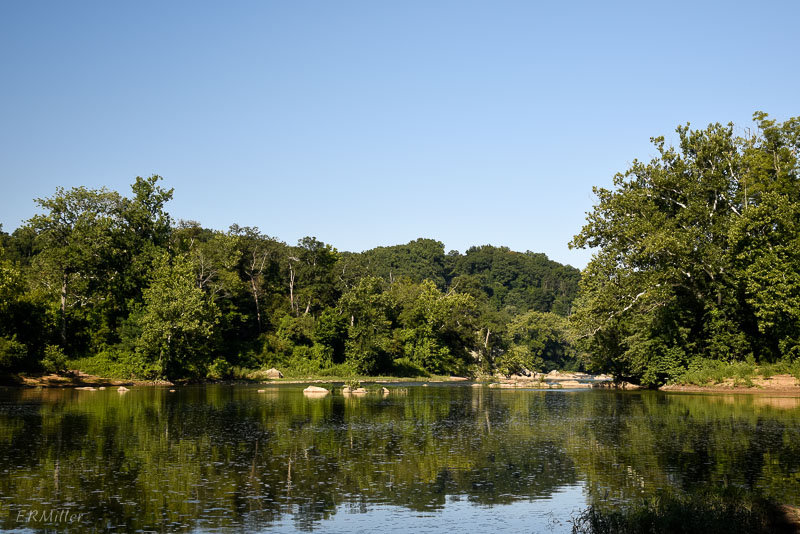
20150731-20150731-_DSC0374

the river near Hermit Island; July 2015

For several years I’ve been concentrating on the area between Sherwin Island at the lower end of the falls and Rock Run, just upstream of the American Legion Bridge, with the occasional detour south as far as Brookmont or north to the start of the falls.

20150816-20150816-_DSC0074

view upstream from one of the bedrock terraces near Rock Run; August 2015

20150610-20150610-_DSC0073

pond within a bedrock terrace, about 15 feet above river level when this photo was taken; July 2015

But while the warm weather lasts I’m going to be exploring the lower Gorge by kayak.  With a real camera this time: I rigged up a way to keep the D3200 dry. Now that I have decent pictures expect to see posts about some different wildflowers.

20150821-20150821-_DSC0073

view upstream from the lower Gorge (Fletcher’s Cove is around the bend); August 2015

20150821-20150821-_DSC0027

osprey (Pandion haliaetus) near Chain Bridge; August 2015

And perhaps the occasional bird.  (On two outings, I’ve seen four ospreys, two bald eagles, one double-crested cormorant, several great blue herons, and more mallards than you can shake a stick at).

20150821-20150821-_DSC0069

kayaker, Washington Monument, and airplane (the little dot in the upper right); colors aren’t so vivid when you’re shooting into the sun; August 2015

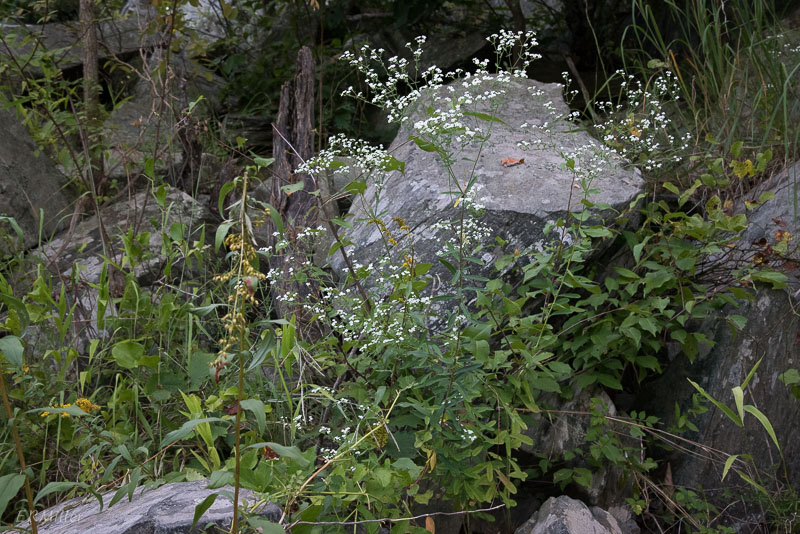
Flowering Spurge

20150817-20150817-_DSC0021

Euphorbia corollata
Euphorbiaceae

There are about 48 native euphorbias found in the continental US, and 27 or so alien.  Worldwide, there are almost 2000 Euphorbia species. Most of the native American species are not particularly showy, but this little charmer is exceptional.  The plant can grow as tall as three feet, with an open, airy habit.  It prefers the dry soils of open, sunny areas, and seemingly loves the bedrock terraces of the Potomac Gorge, growing right out of small pockets of sandy soil on the rocks.

The name “spurge” has the same Latin root as “purge”, for the reason you might expect: some species were once used medicinally for cleansing.  Of the bowels.

20150817-20150817-_DSC0033

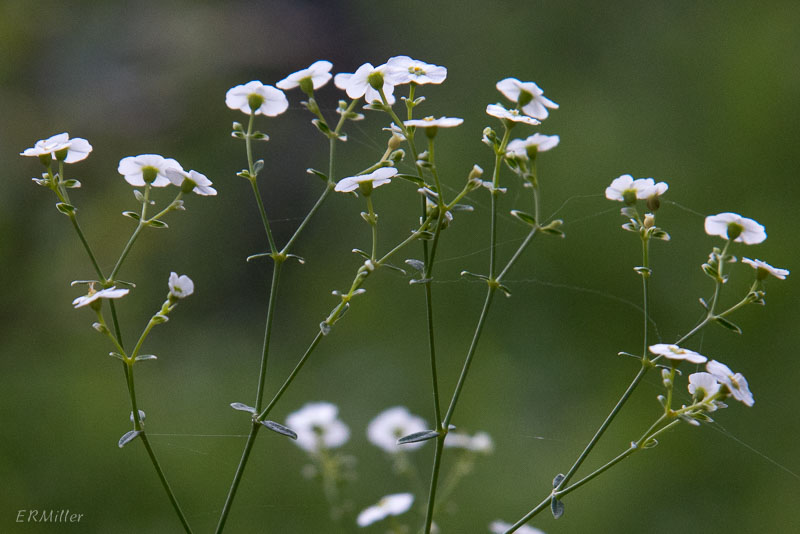
Those white petals aren’t really petals, as I wrote last year.  They’re bracts: modified leaves that look like petals, often functioning to attract pollinators to the tiny flowers within.

Euphorbias are complicated and interesting.  As a matter of fact, there’s a website devoted to them.  If you’re interested in details about the unique floral characteristics, check out the explanation here. It’s fascinating.

20150817-20150817-_DSC0030

20150813-20150813-_DSC0115

I’m not sure what’s so appealing about them.  As with cranefly orchid, I would love to have a kimono made with a fabric printed with a flowering spurge design.  They seem to have a Japanese aesthetic about them.  I can’t quite explain it.

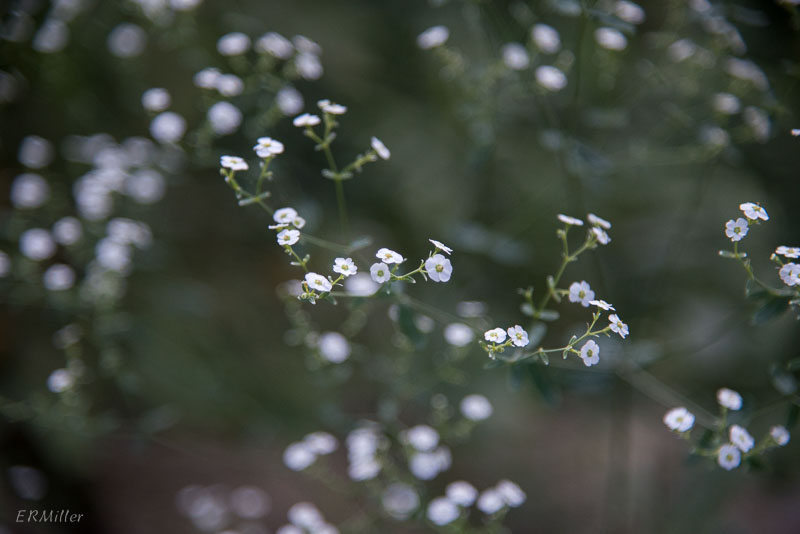
Speaking of Japanese aesthetics, they’re a good subject for bokeh.

20150813-20150813-_DSC0148

Variations on a Theme: Leafcups

20150816-20150816-_DSC0081

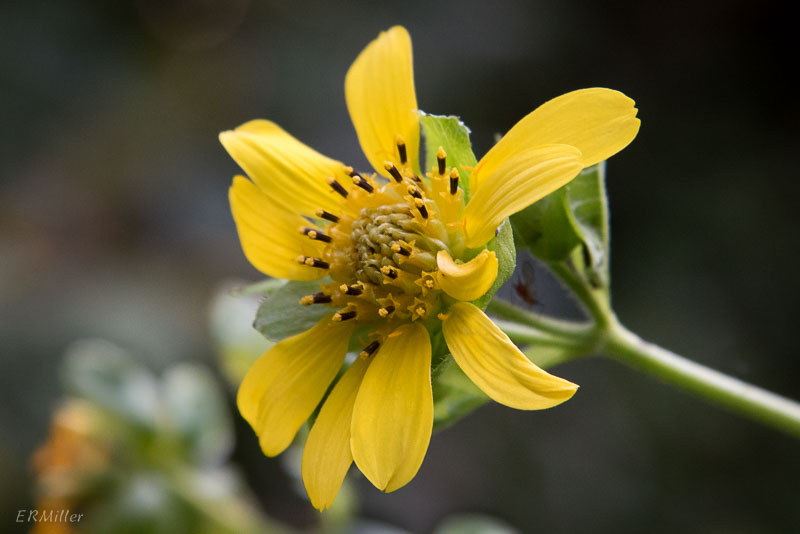
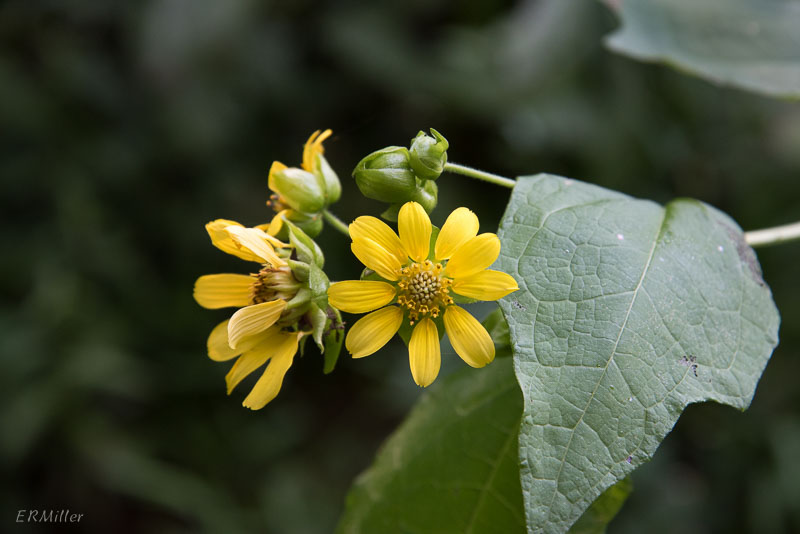
large-flowered leafcup
formerly Polymnia uvedalia, now Smallanthus uvedalia


and

20150817-20150817-_DSC0005


white-flowered leafcup
Polymnia canadensis


What is that tiny white thing in the second photo?  There’s a story.  I’ve been keeping an eye on this plant for a few years, and this is the best shot of a flower I’ve been able to get. There are two stands of it in the general area of Billy Goat B.  One of them is regularly browsed upon by something (I’m assuming it’s deer, they’re responsible for a lot of damage); I’ve never seen the plants in flower.  The other stand is mostly atop an eight foot tall rock outcrop that I can’t get to.  In deep, deep shade.  I can see the plants just fine from below, and sometimes one of the plants near ground level hangs on long enough for me to get a good shot of a leaf

20150817-20150817-_DSC0006

but the flowers have always been out of camera shot.

White-flowered leafcup, also known as small-flowered leafcup, grows two to six feet tall, with tiny little flower heads – less than an inch across – while the leaves can be more than a foot long.  It’s found in most of the eastern US except the far north and a few southern states, and is endangered in Connecticut and Vermont.

20150728-20150728-DSC_0165

Large flowered leafcup is quite a showstopper.  This plant grows three to ten feet tall, with flowers up to three inches across.  You can find huge stands of it on the eastern end of Billy Boat C.  Check out just how big this leaf can be:

20140811-DSC_0267

This leafcup is found more extensively through the southeast and west into Texas.  It’s threatened in Michigan and endangered in New Jersey and New York.

20150816-20150816-_DSC0080