Extirpated

20150902-_DSC0028-2

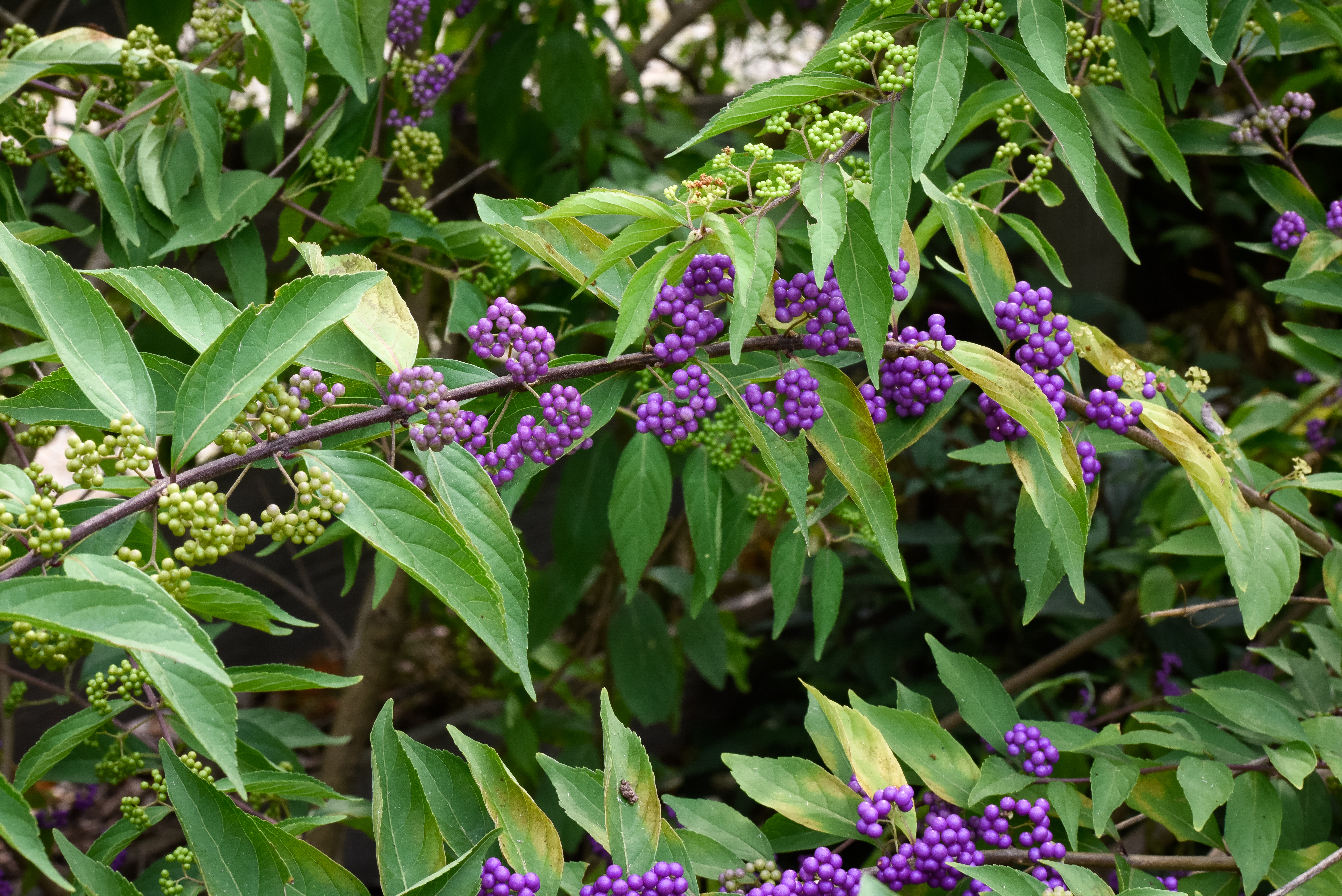
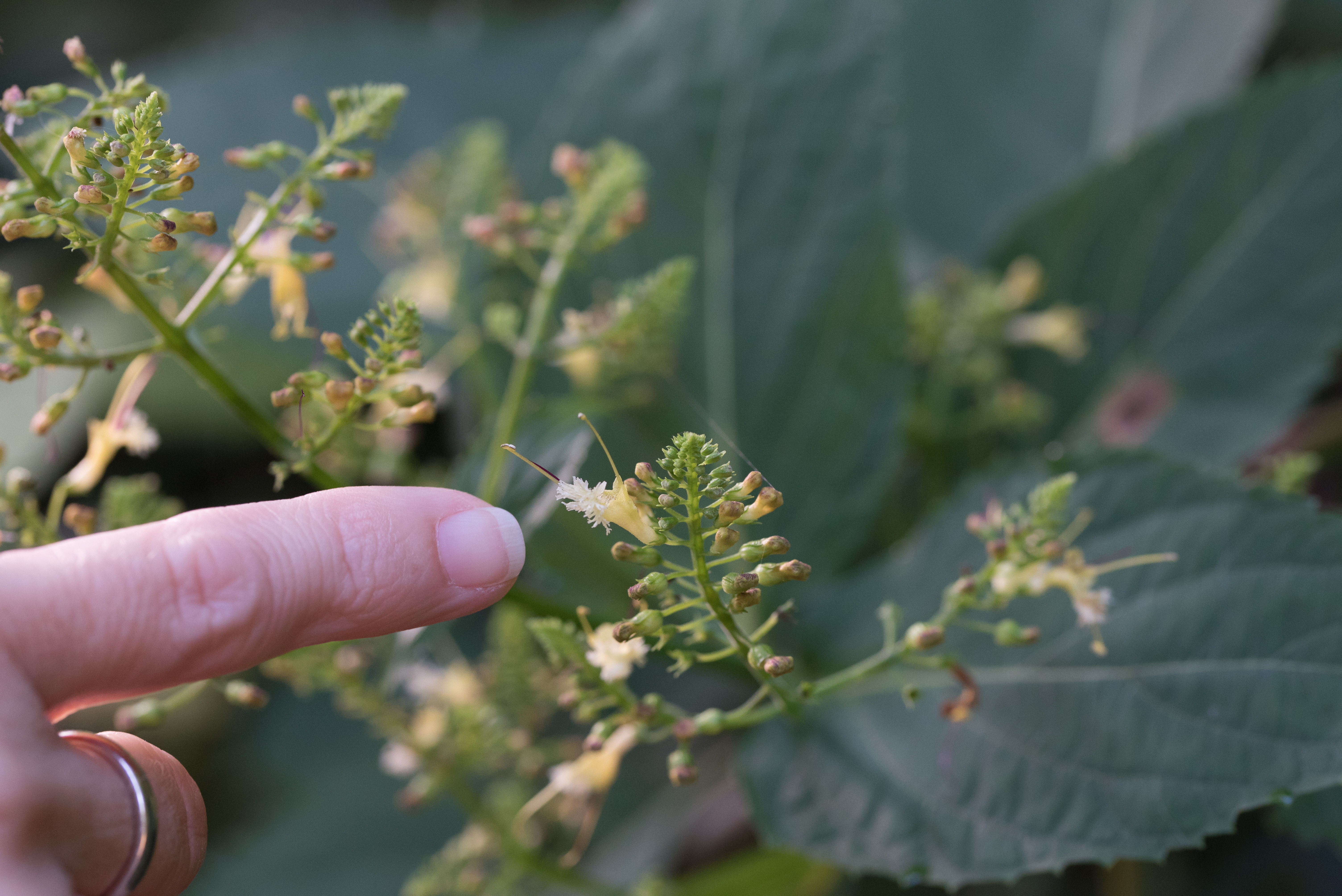
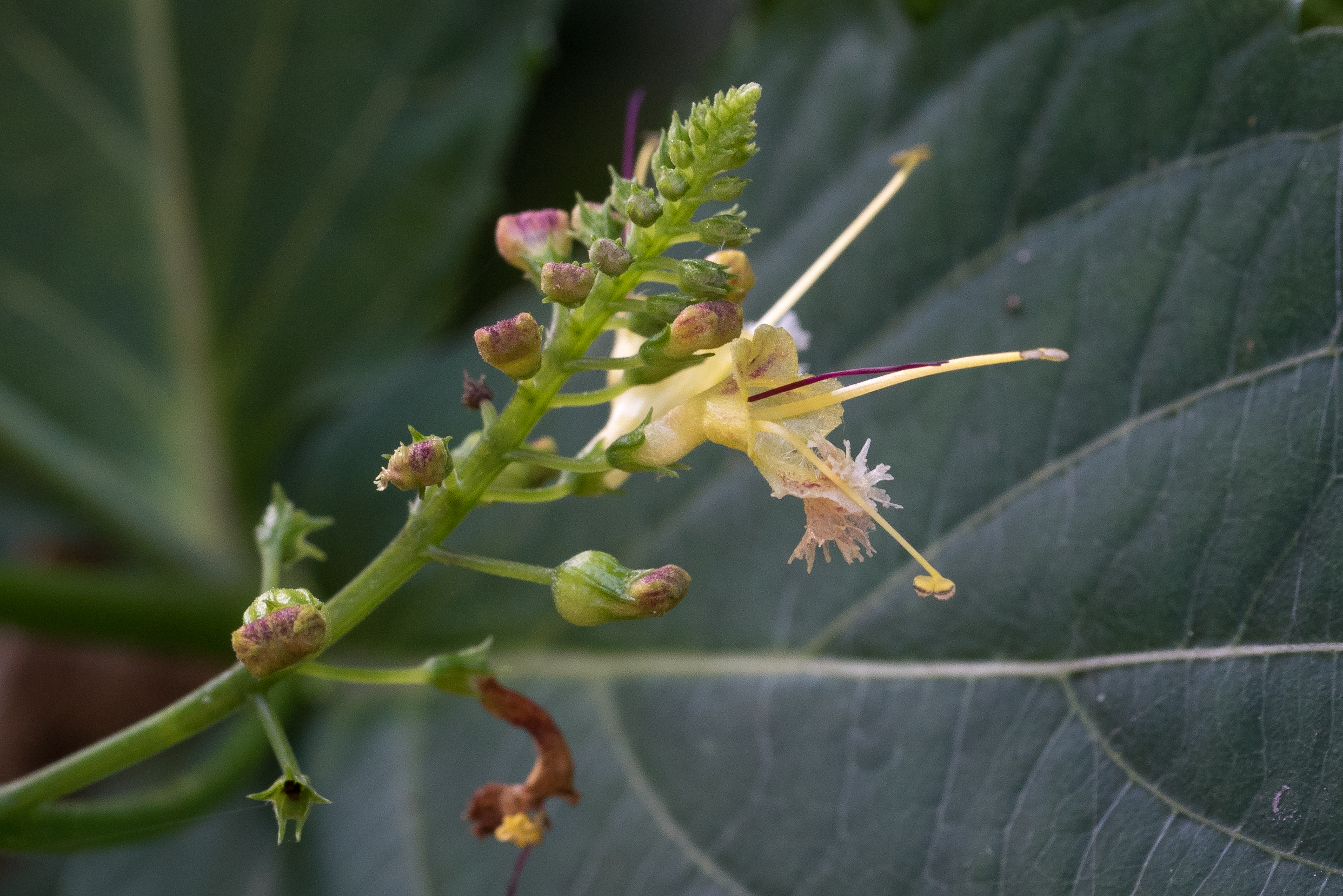
Extirpate – to remove or destroy completely.  In ecological usage, refers to species no longer occurring in a defined area.  Example: Callicarpa americana (American beautyberry; Lamiaceae) is extirpated in the state of Maryland.

20150902-_DSC0043-2

There is, however, a specimen in my garden, where it does quite well in full sun, despite being a plant of open woodlands.  American beautyberry can grow to eight feet tall by eight feet wide, generally with a more open habit (this one has been pruned a lot).  The flowers are pretty in their own way, but the fruit are the main attraction -not just for gardeners, but for songbirds (more than 40 species feed on them) and some small mammals.  And the leaves contain mosquito-repelling compounds.

20150902-_DSC0042-2

American beautyberry ranges from Texas eastward among the southern states, and northward along the Atlantic coast into Virginia (and, historically, Maryland).

The USDA’s plant fact sheet for this species is full of interesting information.

_DSC0069

Once Again Sans Camera

IMG_6928

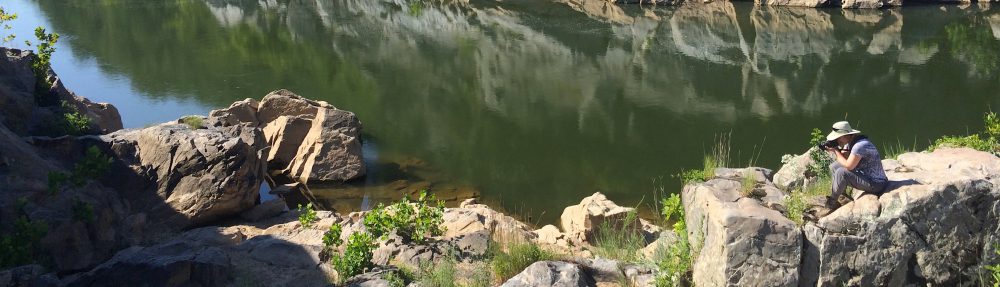
On a hazy September morning I took the kayak out onto the river at Old Angler’s Inn; the point was to enjoy the paddling and not hunt for wildflowers, for a change.  But when finished and heading back to the truck, I decided to do something I’ve been wanting to do for, oh, about 35 years, and put the kayak into the canal, and from there paddled upstream to Widewater.  (There are several places on the C&O called that, but this is the one opposite the Billy Goat A trail, just downstream from Great Falls.)

IMG_6932

Once there, I had a lovely time exploring the rock formations on the far side, and the little islets in the middle of the lake.  And wouldn’t you know it, something caught my eye. From a distance it looked a lot like the masses of white Eupatoriums that were flowering, except shorter and pinker.  So I rowed over and thought “huh, a sedum.”  I gingerly unwrapped the iPhone and took a few quick snapshots.

IMG_6929

It’s possibly a garden escapee – a cultivar of Hylotelephium telephium, perhaps.  But from what I could see in the pictures, I believe it to be our native Allegheny stonecrop, Hylotelephium telephioides.

The Allegheny stonecrop is found scattered across the east coast from Georgia to New York and across the upper Midwest (and also Louisiana).  As you can see, it’s a sun-loving and rock-loving plant, with light green, succulent foliage and masses of pink to white flowers.  It’s threatened in Indiana and Kentucky, endangered in New York, and rare in Pennsylvania.

The several species in the genus Hylotelephium were once placed in the genus Sedum, by the way.

I spent way too many minutes trying to translate Hylotelephium.  The root hylo means “of the woods”.  I could find nothing about telephium other than it’s an ancient Greek name for a plant.  The root oides means “resembling”.  So I suppose this species name could be translated as “Telephium of the woods that looks like Telephium”.  I really wish I’d studied Latin in school.
Skink!

20150828-_DSC0001

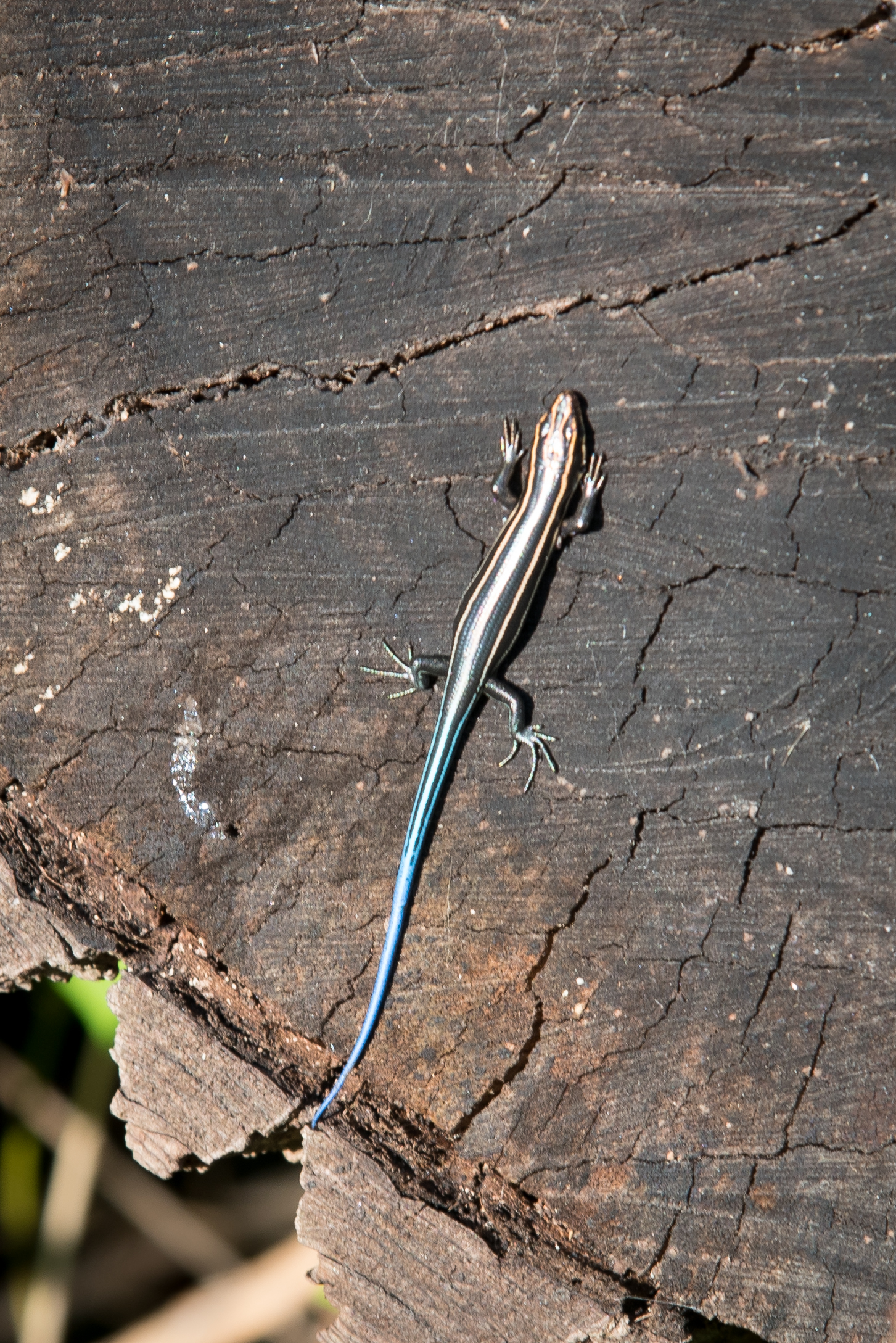
Sometimes called blue-tailed skink, but don’t confuse it with the one native to Australia. This is Plestiodon fasciatus, better known as the common 5-lined skink.  It’s one of the most common lizards in the eastern part of the US.  Only the juveniles have this characteristic blue tail.

I could write more, but I’ve no pretensions of being an herpetologist and would just be parroting information read elsewhere.  Here’s a nice little writeup about this reptile.  Here’s another.


Meanwhile, Back in Cabin John…

20150824-_DSC0196

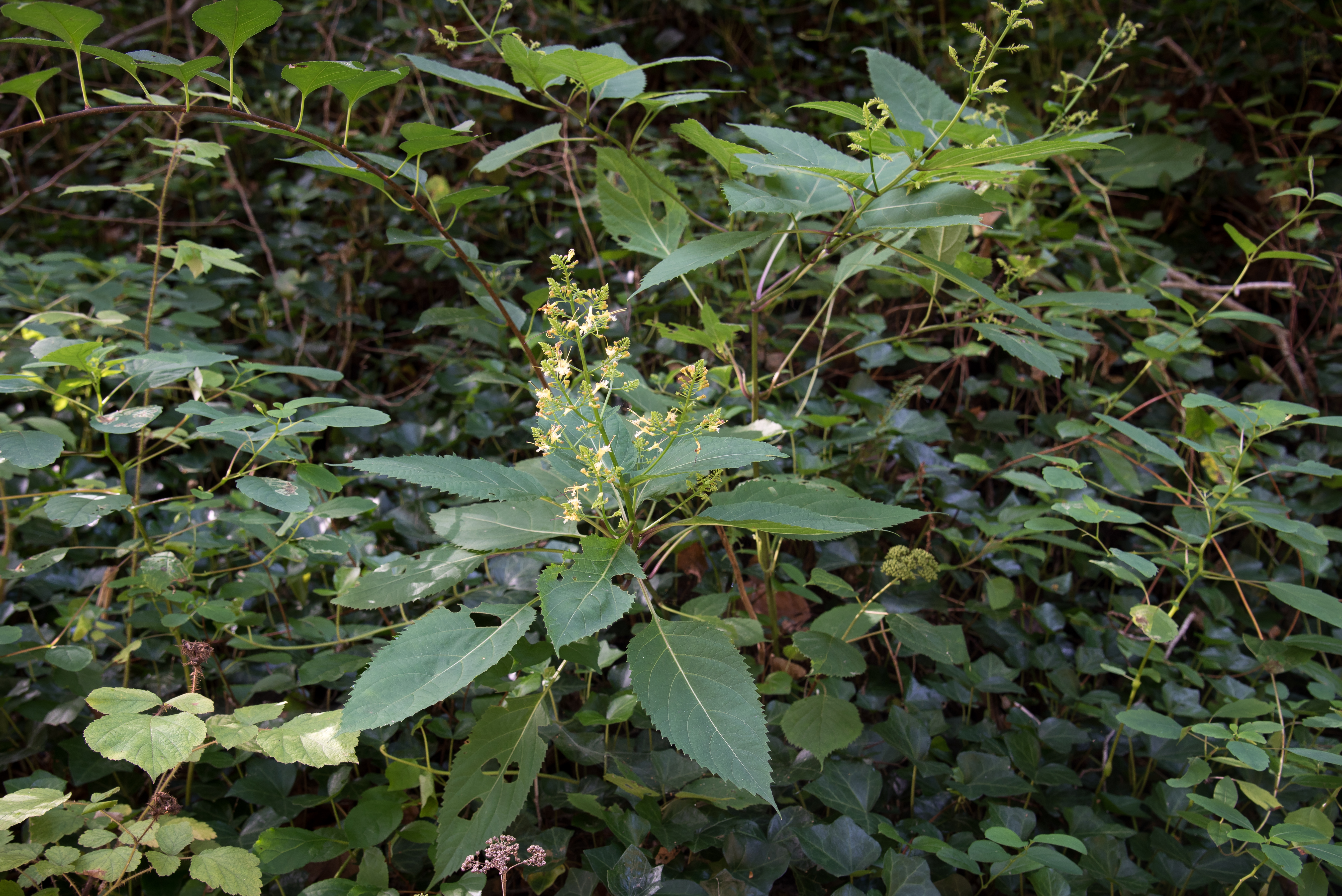
horsebalm, aka richweed, horseweed, stone root
Collinsonia canadensis
Lamiaceae

I’m not sure that there’s anything particularly special or interesting about this plant.  It has some medicinal uses.  It’s found throughout most of the eastern US and Canada.  It’s endangered in Wisconsin.  There are three other species of Collinsonia in the US, none of which are found in Maryland.  I’m not sure what else to say about it.

20150823-_DSC0007

Except this: even if it’s supposedly a fairly common plant, I have only ever found one stand of it, which makes it special.  There are perhaps three or four plants in this stand, growing atop a boulder alongside Cabin John Creek, almost but not quite above my head.

20150824-_DSC0150

This makes them tricky to photograph.  Because of nearby large vegetation, the plants are always in shade. Since they’re so close to the creek, they’re always being blown around a little.  It’s easy to deal with motion or with lack of light, but not both at the same time, especially if you want to zoom in close to see the fascinating little details.

20150824-_DSC0195

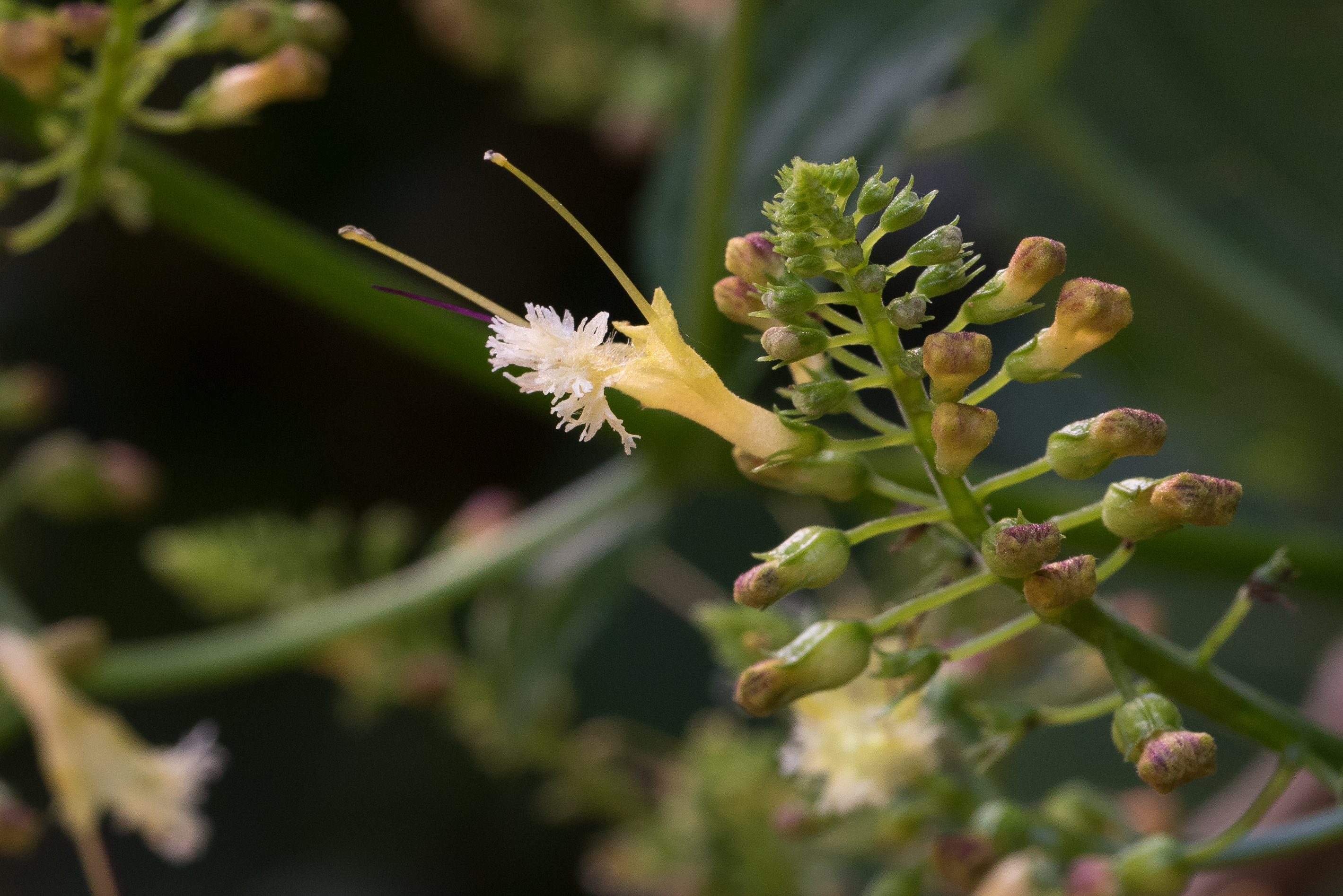
The flowers are quite small.

And intriguing.

Helen of Troy in Autumn

20150821-20150821-_DSC0063

common sneezeweed
Helenium autumnale
Asteraceae


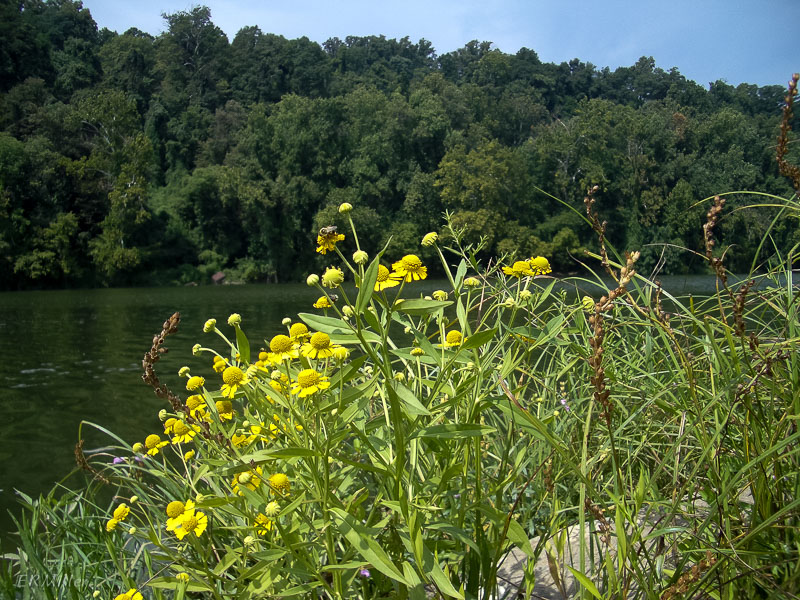
With three naturally occurring varieties, there’s a common sneezeweed found almost everywhere in the continental US and Canada, except the extreme northwest and northeast.  This herbaceous perennial can get up to five feet tall, and likes full sun and plenty of moisture – not surprisingly, this is another plant I found growing along the banks and on the rock outcrops in the lower Potomac Gorge.

20150821-20150821-_DSC0060

Nineteen other native species of Helenium grow in the US.  Common sneezeweed and purple-headed sneezeweed are the only ones known in the Gorge.

Apparently the dried, ground leaves and flowers were once used for snuff, hence “sneezeweed”.

20030101-20030101-IMGP0276