

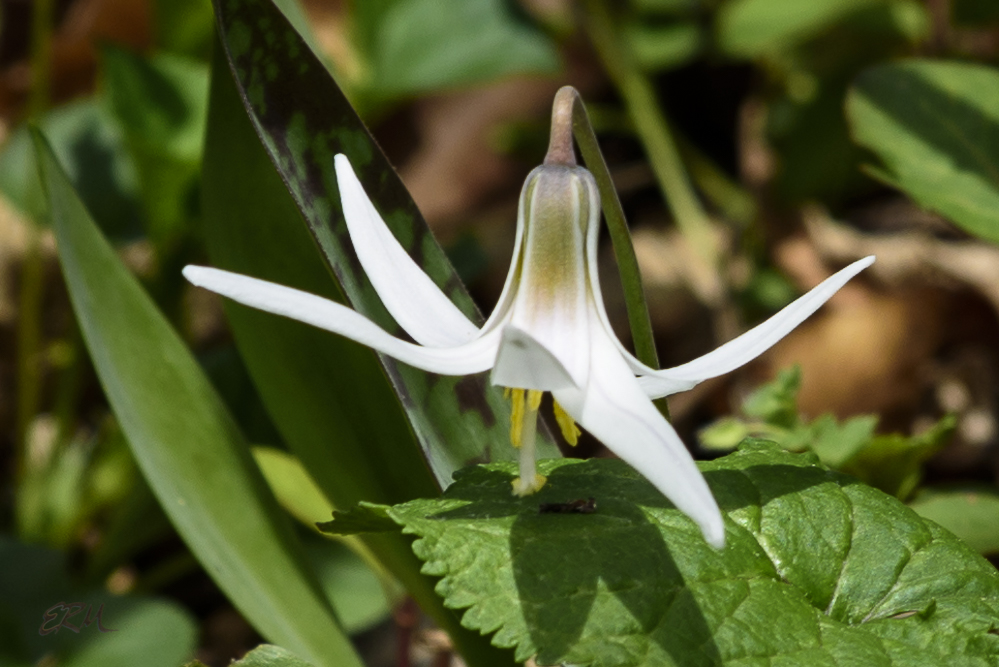
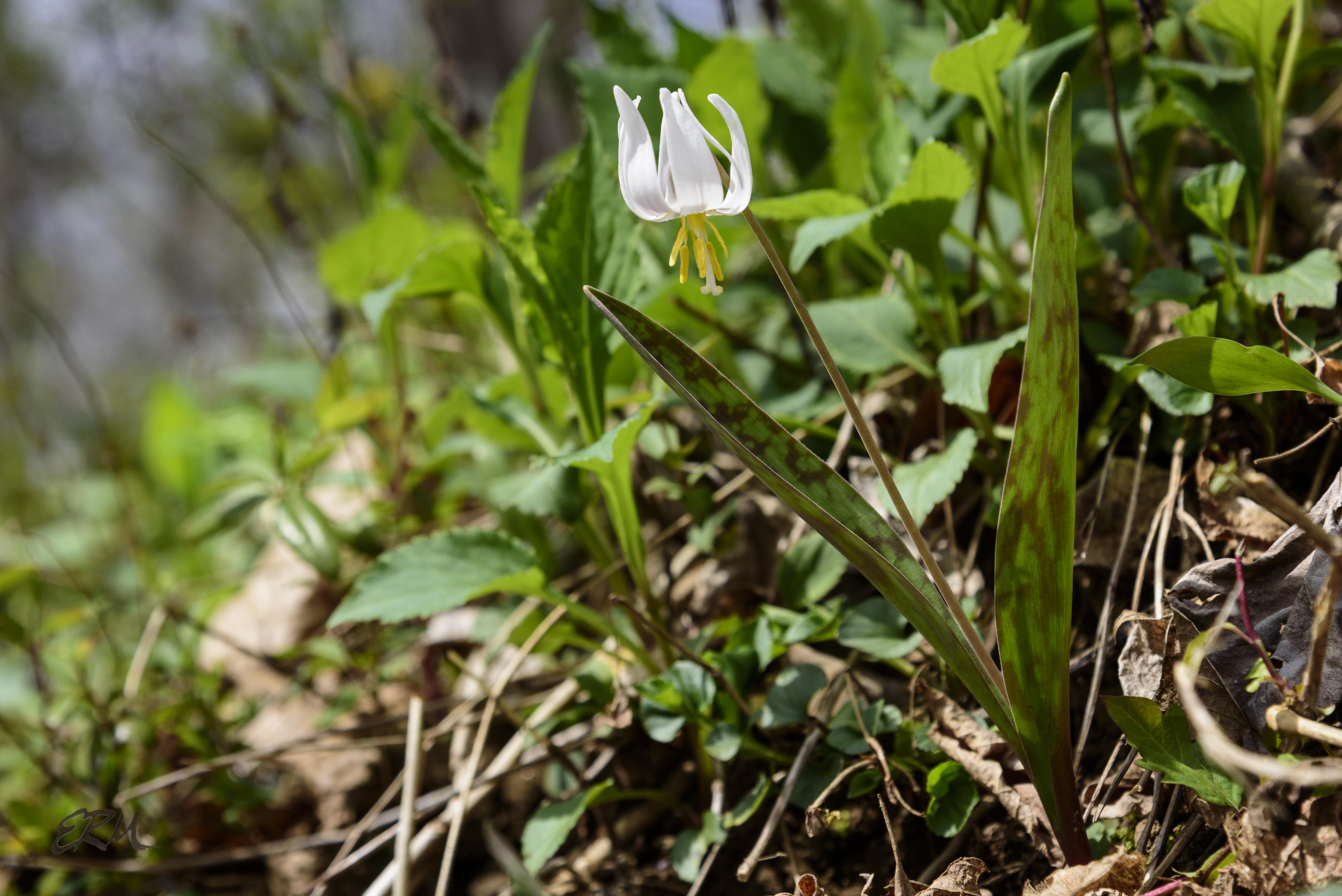
Recent chatter on various internet forums and mention of The Trout Lily Project got me interested in learning more about the Erythroniums. Twenty four species of them are native to North America; of these, E. albidum (see yesterday’s post) and E. americanum (pictured in this post) are by far the most widespread. All of the others are west coast or midwest species, with two exceptions: E. rostratum and E. umbilicatum. The latter is found in the southeast, as far north as Maryland.
Maybe.

USDA PLANTS Database shows it present in Maryland, but lacks county-level data. The Biota of North America Project shows it present in Montgomery, Cecil, and Garret counties, while The Flora of North America shows it in the southern part of the state. The Maryland Biodiversity Project has no records for it.
Two characteristics distinguish E. americanum from E. umbilicatum. The latter has a dimple on top of the ovary, where the style attaches, while the former has a persistent style that attaches without a dimple. The other difference is the presence of auricles (“ears”) at the inside base of each tepal of E. americanum; E. umbilicatum does not have auricles.

Also, anther color varies from pure yellow to dark red in E. americanum. There is some thought that E. umbilicatum has more purplish anthers, but this characteristic is deemed unreliable. So to tell the difference, you have to look at the ovaries and look for auricles.
Which is why every time I see a dark-anthered trout lily, I’m down on knees and elbows, glasses off, gently poking back the petals and squinting at the insides.
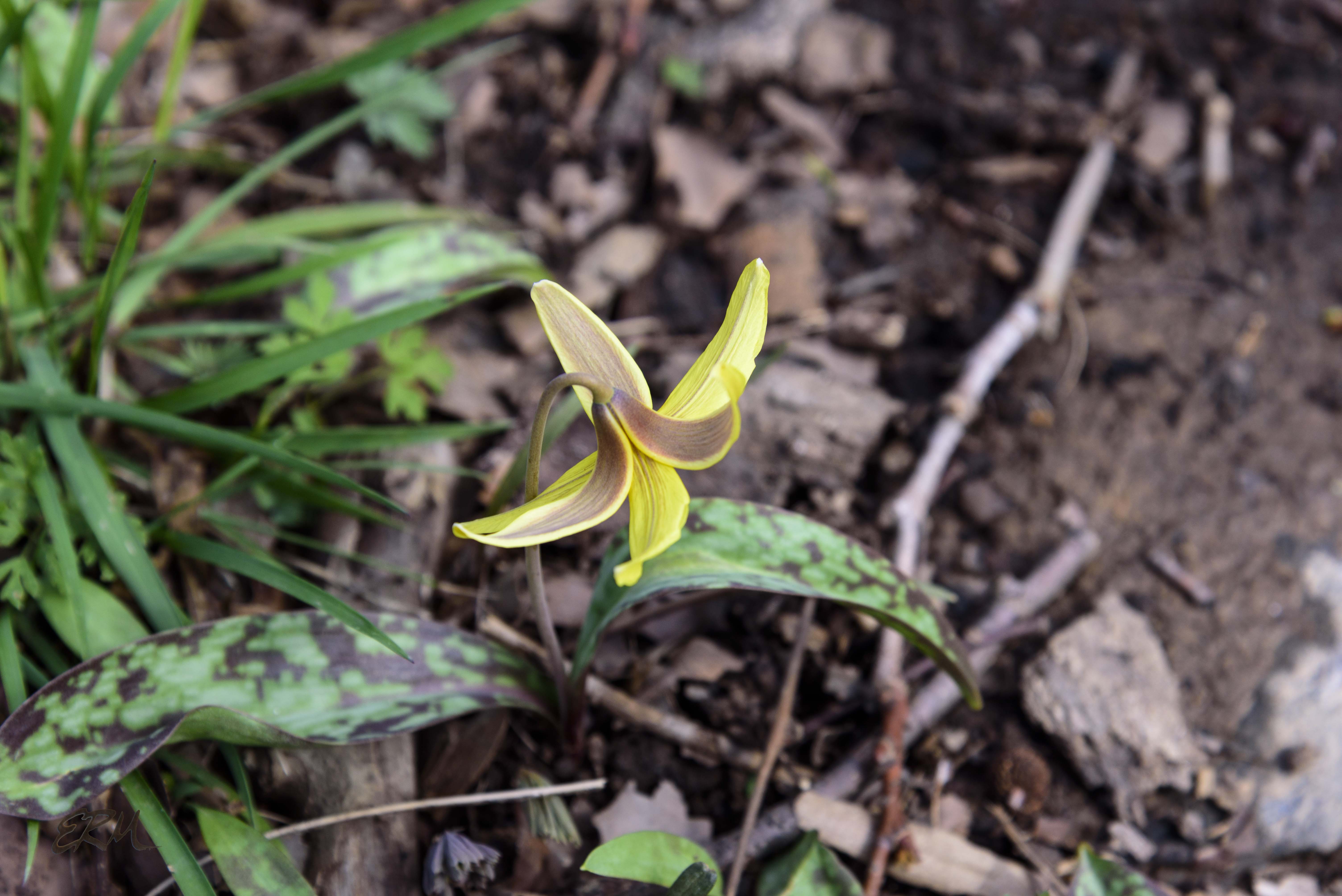
I would love to be able to submit a record of dimpled trout lily to MBP. So far, no luck. All the trout lilies I’ve looked at have auricles and lack dimples.
Whenever possible I photo-illustrate my posts with my own pictures, but of course I have none of dimpled trout lily. For pictures and more information, go to the link at the start of this post. Also go to the MBP page for American trout lily and scroll down to Bill Harms’ photo of tepals and ovary, then have a look at Carolina Nature’s dimpled trout lily page.
UPDATE fellow blogger and citizen botanist botanybill sent this photo of E. americanum, Thanks for showing us the auricles, Bill!













 Elizabeth's Wildflower Blog