Joe-Pyes Bring Big Butterflies

I closed last Wednesday’s post with a picture of a monarch butterfly on joe-pye weed, but that’s not the only butterfly I’ve been seeing around. Seems my little garden attracts quite a few types of butterflies, mostly because of the joe-pye weeds, but also because of some other plants. More on that in upcoming posts.
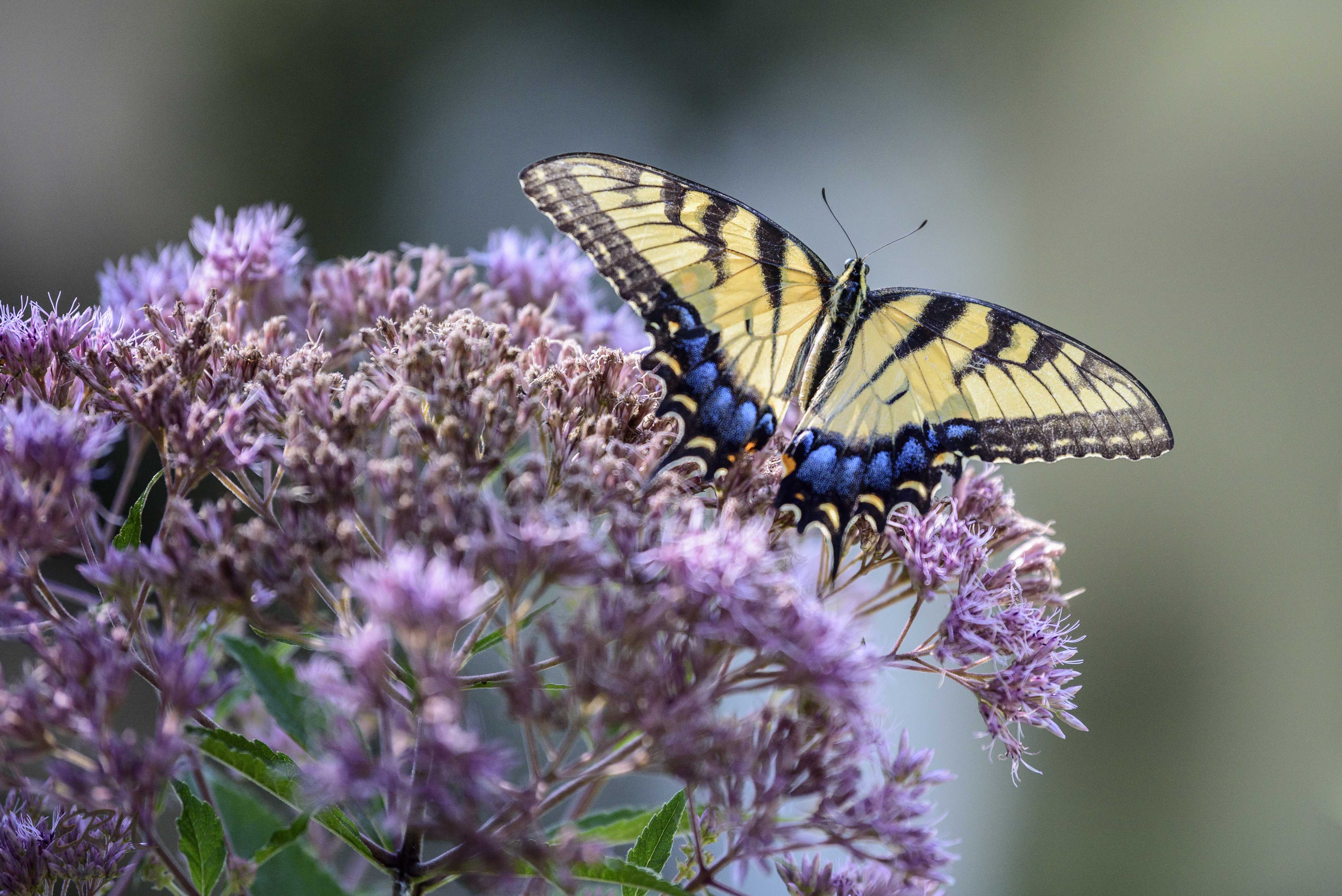
The camera had been on a tripod while I tried to get close-up shots of various flowers, but there was so much activity I finally gave up for awhile; taking the camera in hand, I started shooting butterflies instead.
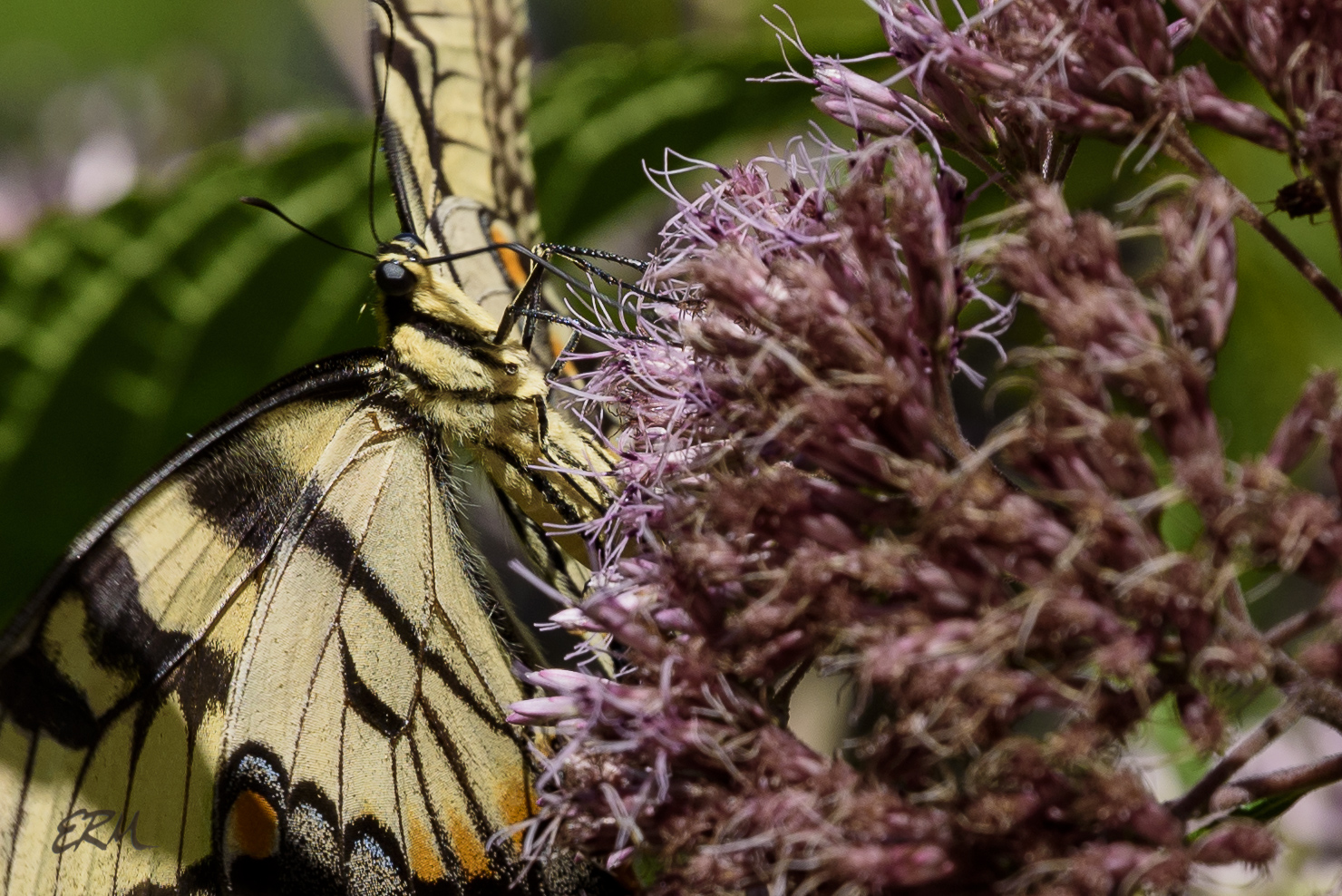
This is a female eastern tiger swallowtail (Papilio glaucus), easily identified because nothing else in Maryland looks quite like it, with one exception: the Appalachian tiger swallowtail (Papilio appalachiensis), which is uncommon, only found in the western half of the state, and only flies from late April to early June.

The eastern tiger swallowtail is common and widespread in Maryland, flying in early May and again in August. Many types of trees can host the caterpillars, including wild cherry, sweet bay magnolia, and birch, each of which are growing not far from the joe-pye weeds in my garden.

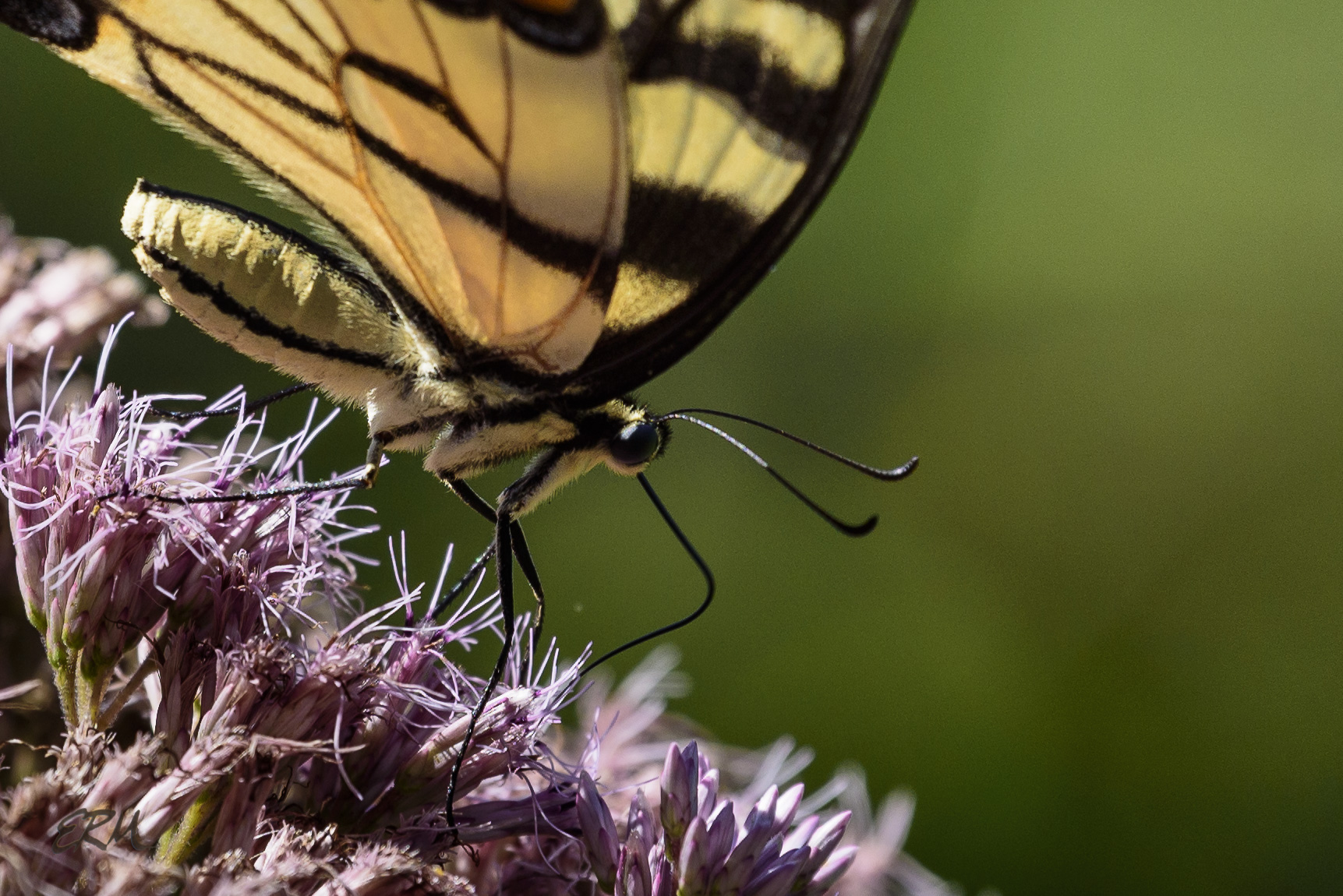
The adults feed on a variety of flowers, sipping nectar through long proboscises.

The specimen pictured here is a female. The identifying characteristic is the blue spots on the hindwing; males have very little, or zero, blue on them.

Before wrapping up for the day I also took some shots of this dusky beauty. I was so happy, sure that I’d gotten a spicebush swallowtail. After all, there are several spicebushes nearby, so makes sense, right?

Yes, it makes sense, but I was wrong. This is not a spicebush swallowtail. More about that next time.
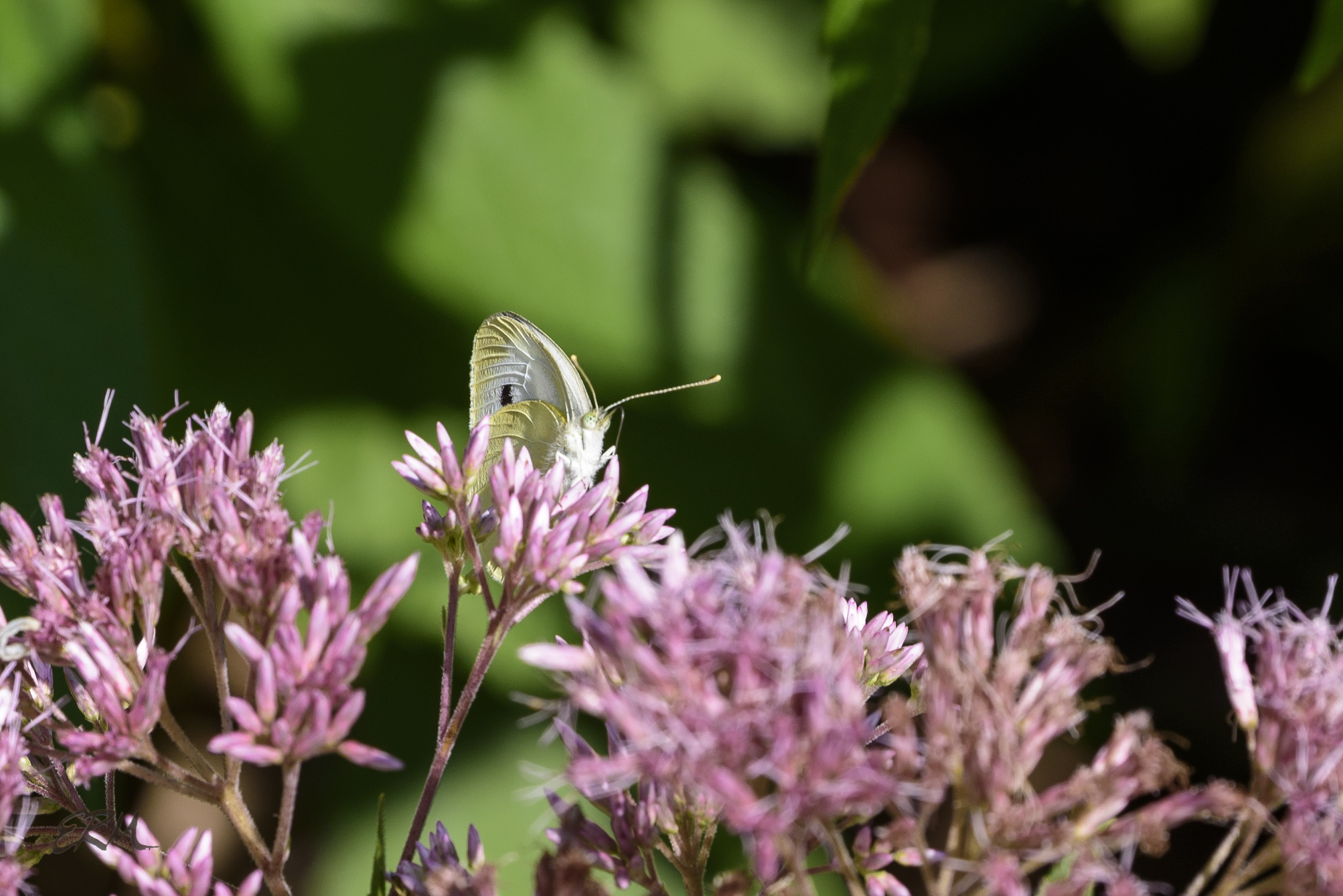
 

Bonus picture: cabbage white (Pieris rapae), I think.
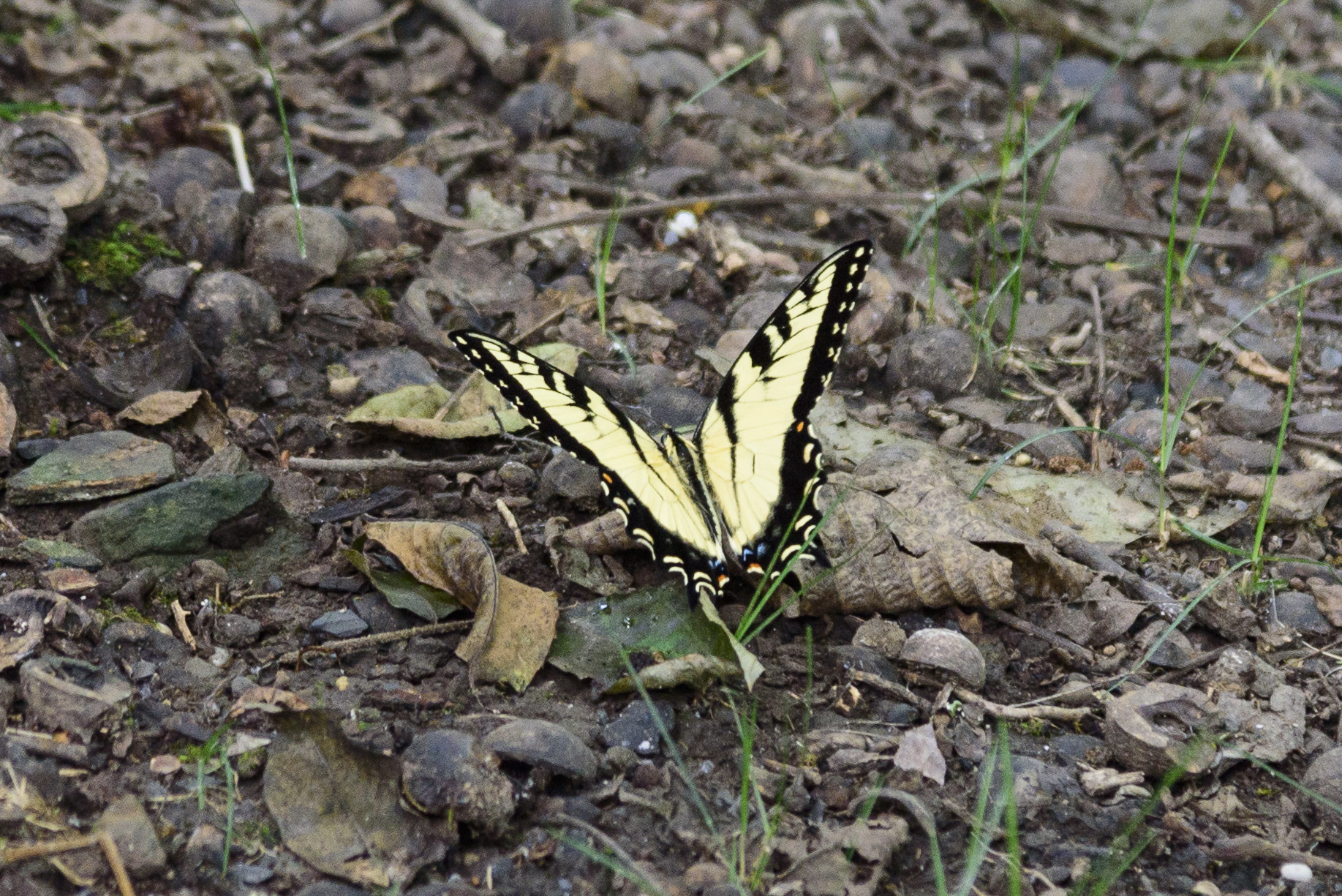


Second bonus picture: the day after I finished writing this post, I spotted a male eastern tiger swallowtail. I had the wrong lens on the camera and the darned thing never stayed still; this is the best picture I could get. Note that there’s only a tiny amount of blue and orange spotting on it.

Bouncing Back

large-flowered leafcup

Interrupting my series on astery things and butterflies for a quick update on the Potomac Gorge, where I went this past Tuesday. After all the flooding, many plants are coming back. They aren’t as tall as they normally would be at this time of year, and some of them are just starting to bloom or bud up, a month or two late.

On the riverbanks, large-flowered leafcup (Smallanthus uvedalia) and cut-leaved coneflower (Rudbeckia laciniata) are blooming. A few New York ironweed (Vernonia noveboracensis) are also growing, looking short but with lots of buds.

cut-leaved coneflower

Right by the water’s edge, a few halberd-leaved rosemallow (Hibiscus laevis) are up, at about one-third of their mature height. I found one just starting to form buds; in other years, these plants started blooming in mid July.

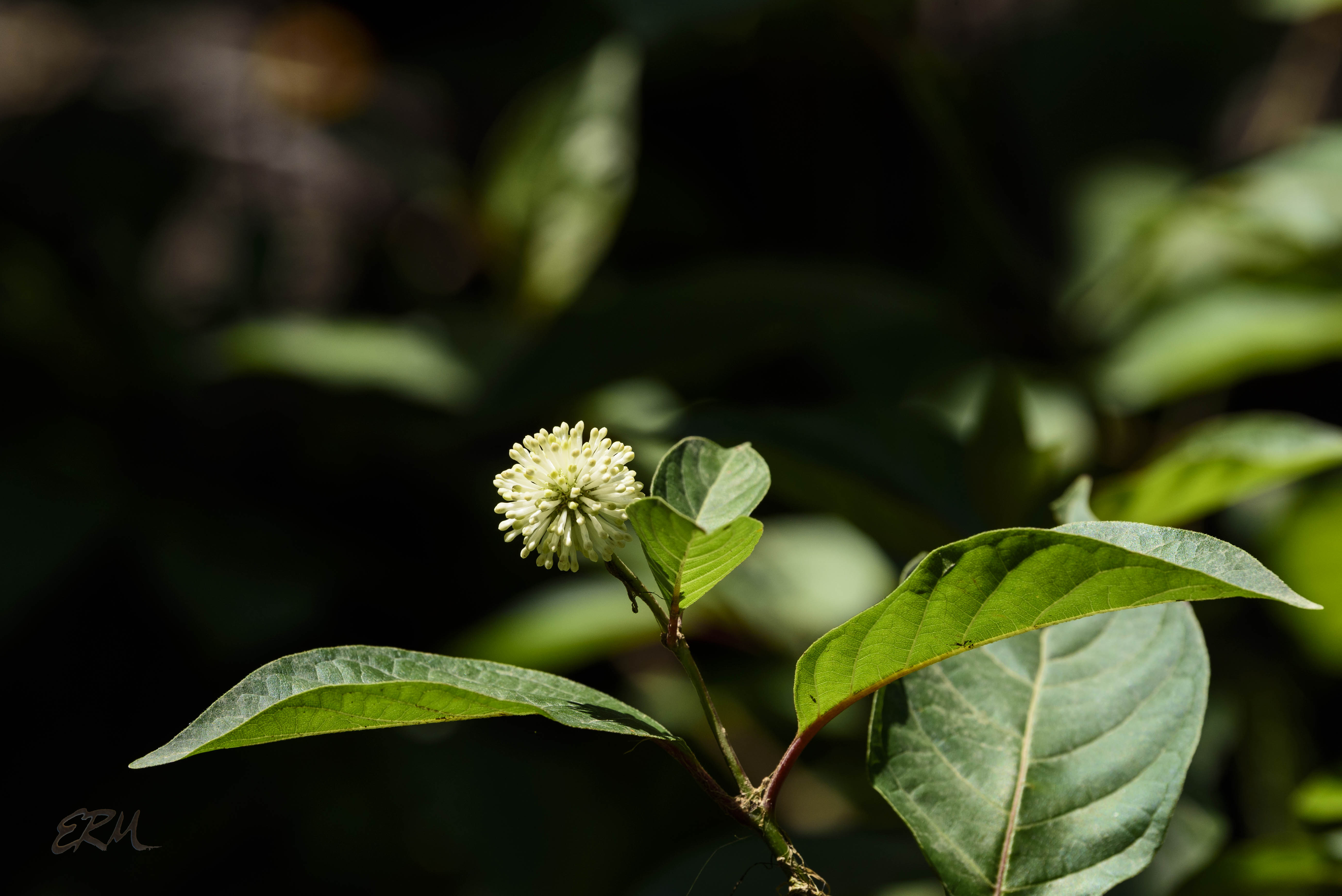
buttonbush

In one place I saw an exceptionally short and shrubby-looking buttonbush (Cephalanthus occidentalis) with a few flower heads just formed, one with buds that will open any day now. In this area they usually start blooming in late June or early July.

woodland sunflower

Inland where there wasn’t any flooding, some of the typical mid-to-late summer bloomers are starting: two species of thoroughworts (Eupatorium) and goldenrods (Solidago) with buds just about to burst.

Starry campion (Silene stellata) and woodland sunflower (Helianthus divaricatus) are in full bloom. There were just a few blooms left on a stand of St. Andrew’s cross (Hypericum hypericoides).

cranefly orchid

And much to my delight, cranefly orchid (Tipularia discolor) is out.

Astery Things #2: The Joe-Pye Weeds

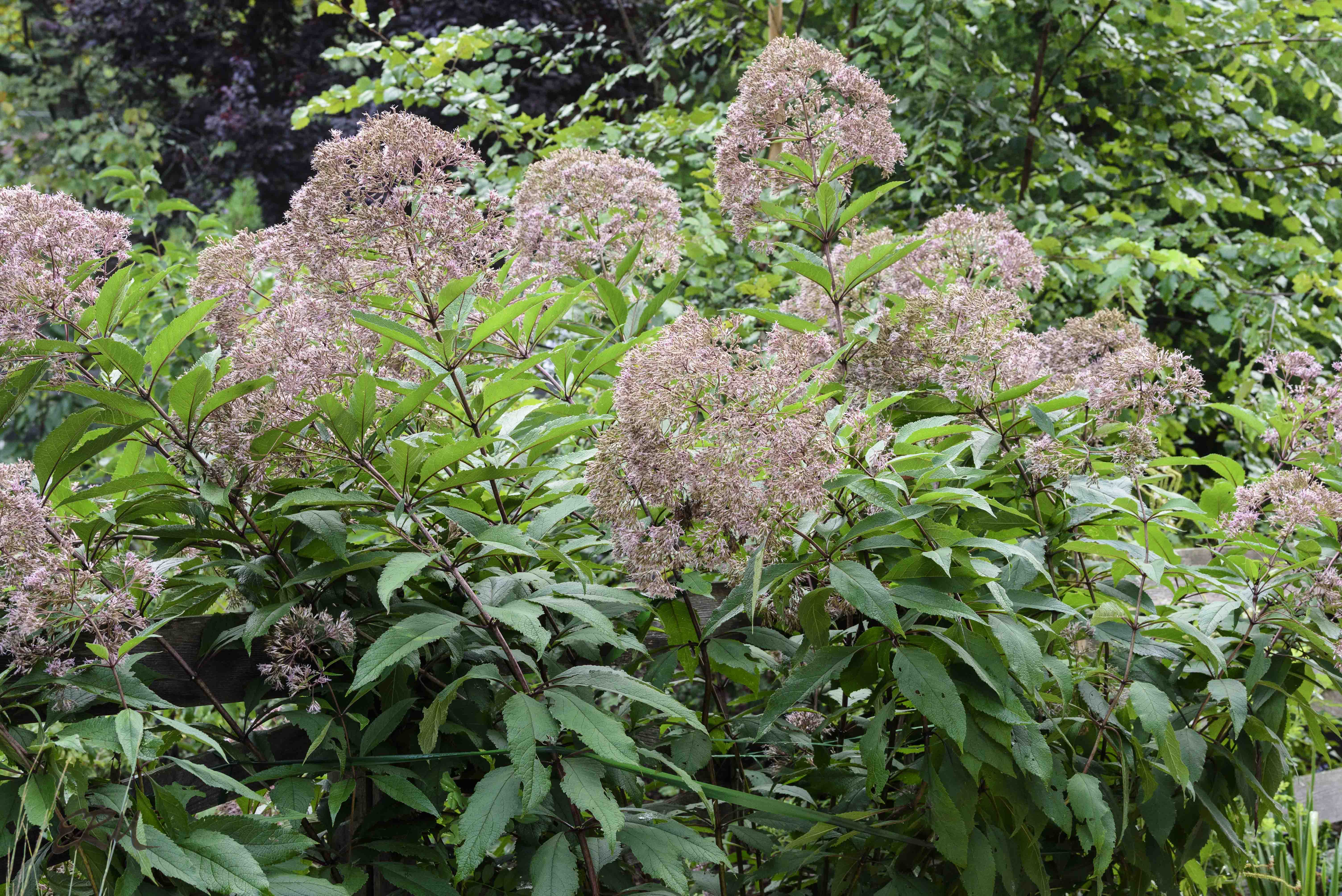
Eutrochium fistulosum

Once upon a time there was a genus of plants called Eupatorium. It was a large genus, lumping together plants commonly known as thoroughworts, bonesets, mistflowers, snakeroots, and joe-pye weeds. Roughly twenty years ago, the genus was split into twelve or more genera. Thoroughworts and bonesets are still Eupatoriums; mistflowers are now Conoclinium, and snakeroots Ageratina. Joe-pye weeds, those plants with large arrays of pink-purple flowers and whorled leaves, were placed in the new genus Eutrochium.

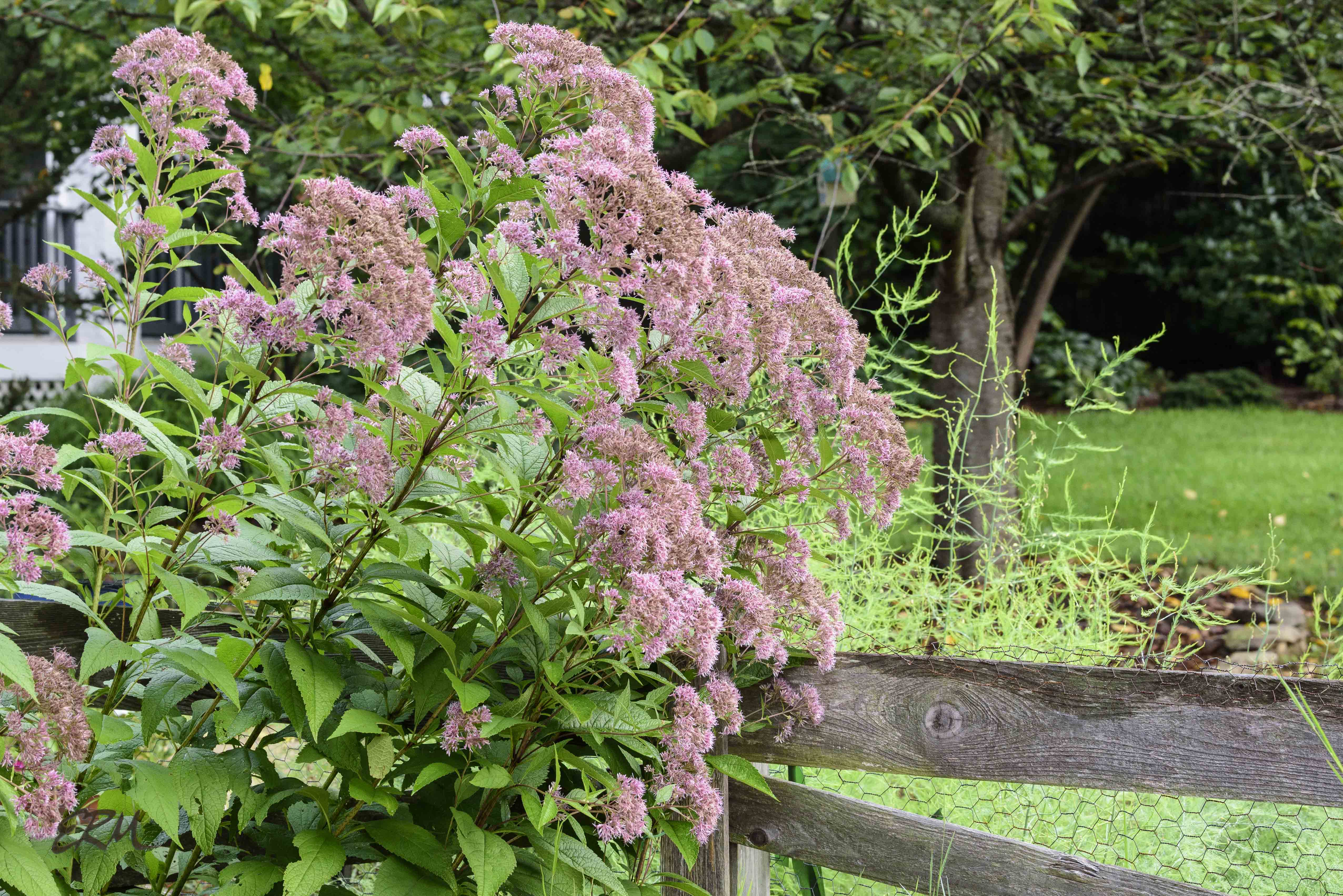
Eutrochium maculatum

Historically, four of North America’s five Eutrochium species were found in Maryland, but one of them, E. maculatum (spotted joe-pye weed), has been extirpated. The other three are

  • E. dubium (eastern or coastal plain joe-pye weed)
  • E. fistulosum (hollow joe-pye weed, trumpetweed)
  • E. purpureum (sweet, sweet-scented, or purple node joe-pye weed)

Distinguishing these four species from one another is fairly straightforward, provided you can look at mature, flowering specimens. Here is a much abbreviated chart of some identifying characteristics, taken from the Flora of North America, with the most useful ones in bold purple:

  E. dubium E. fistulosum E. maculatum E. purpureum
stems
purple-spotted purple purple spotted dark purple at nodes
  sometimes solid purple sometimes spotted sometimes solid purple greenish to purple-green
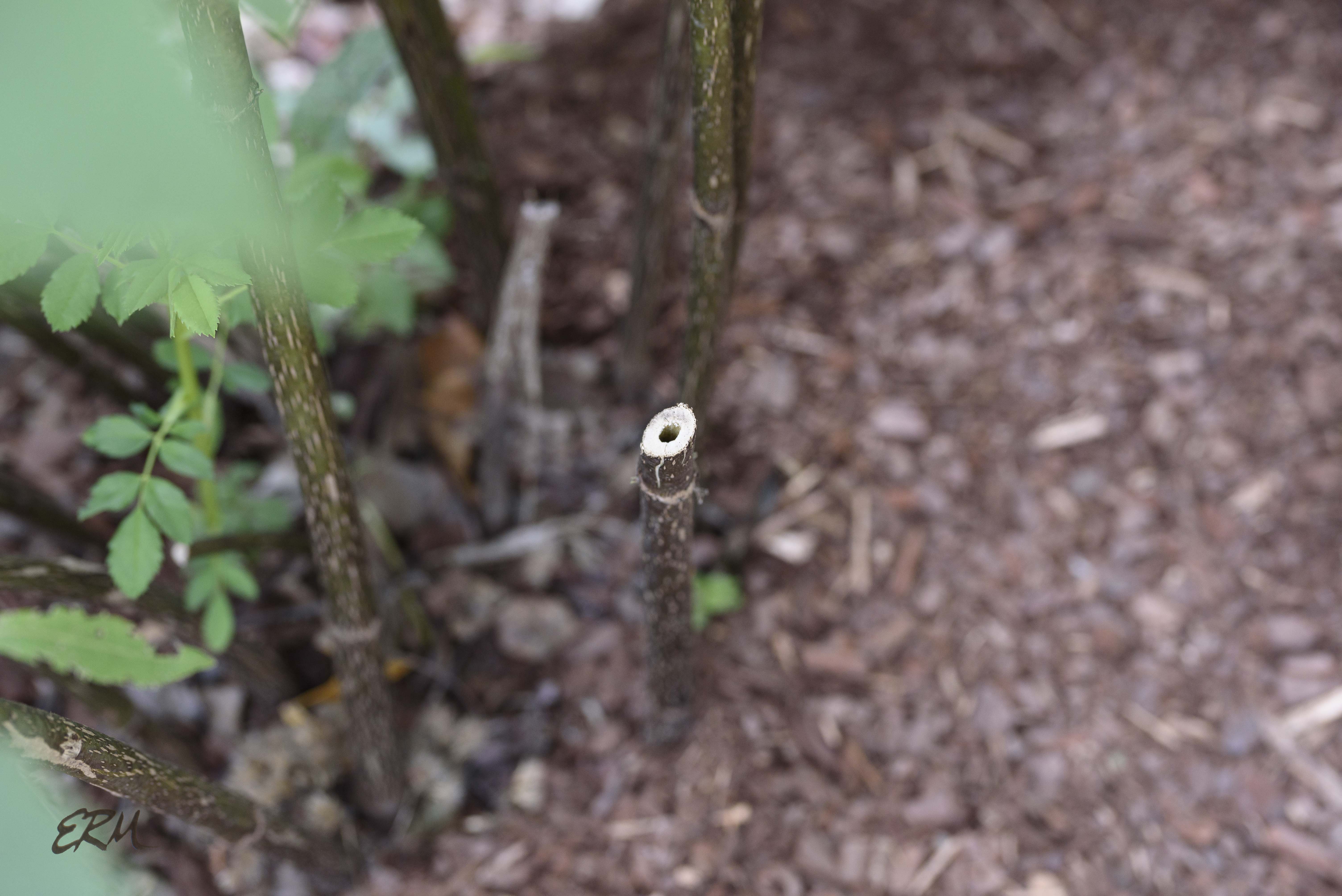
  solid hollow solid; may be hollow at base solid; may be hollow at base
leaves
arrangement in whorls of 3-4 in whorls of 4-6(-7) in whorls of (3-)4-5(-6) in whorls of 3-4(-5)
venation 3-nerved pinnately veined pinnately veined pinnately veined
shapes deltate-ovate narrowly lanceolate lance-elliptic lance-ovate
  ovate broadly lanceolate lanceolate ovate
  lance-ovate lance-ovate deltate-ovate
margins coarsely serrate finely serrate sharply or doubly serrate coarsely serrate
bases abruptly contracted gradually tapered gradually tapered gradually tapered
or abruptly tapered or abruptly tapered
florets
number (4-)5-9(-10) (4-)5-7 (8-)9-20(-22) (4-)5-7(-8)
notes
found only in coastal plain over 6 feet tall wide distribution known to hybridize
  and inland along major rivers morphologically variable morphologically variable

When trying to identify plants in the field, remember to look at the totality of characteristics rather than focusing on one or two, because there can be so much variation from plant to plant. And also because you really shouldn’t be cutting into plant stems in the field, at least not in areas where plants are protected.

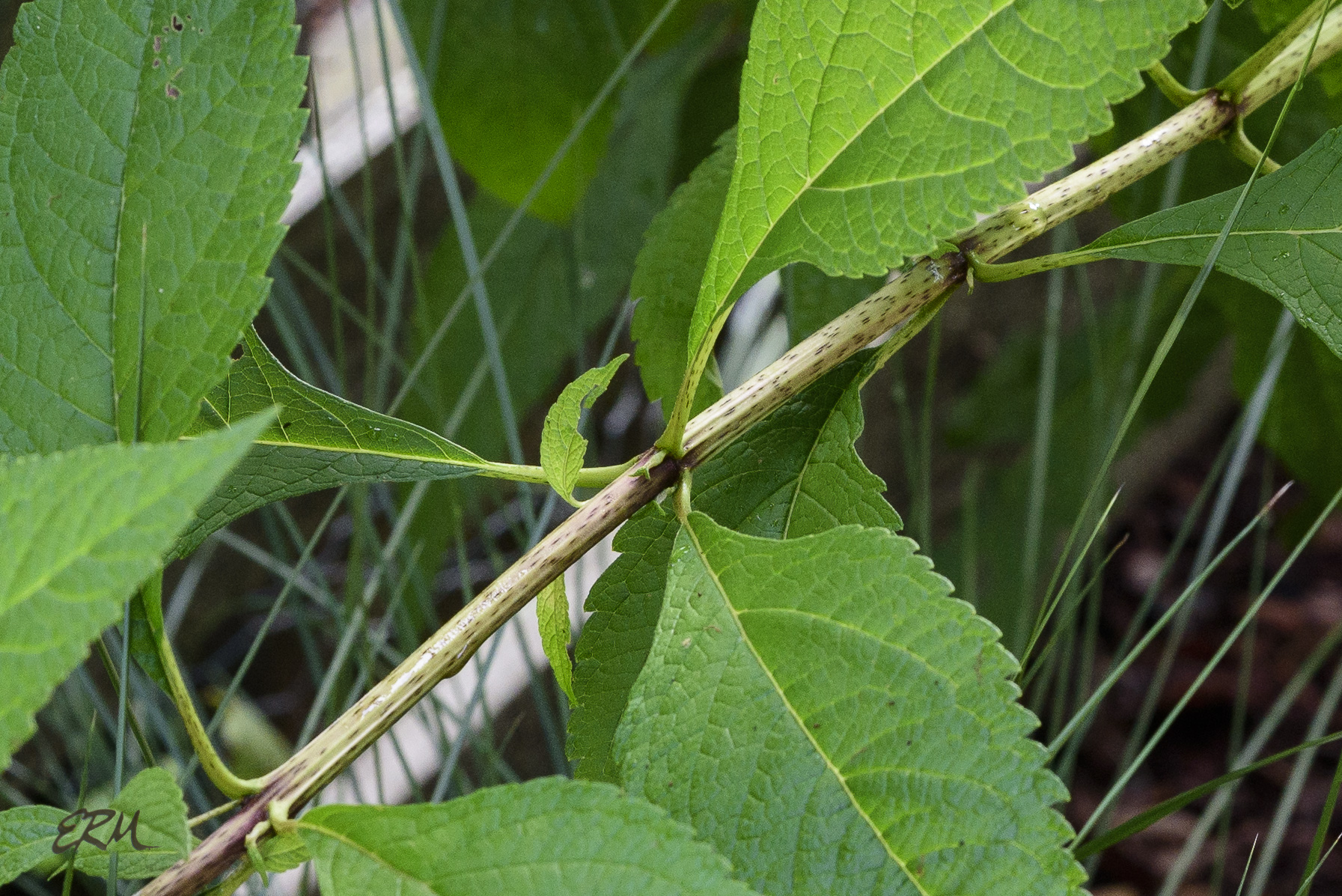
E. fistulosum: hollow stem

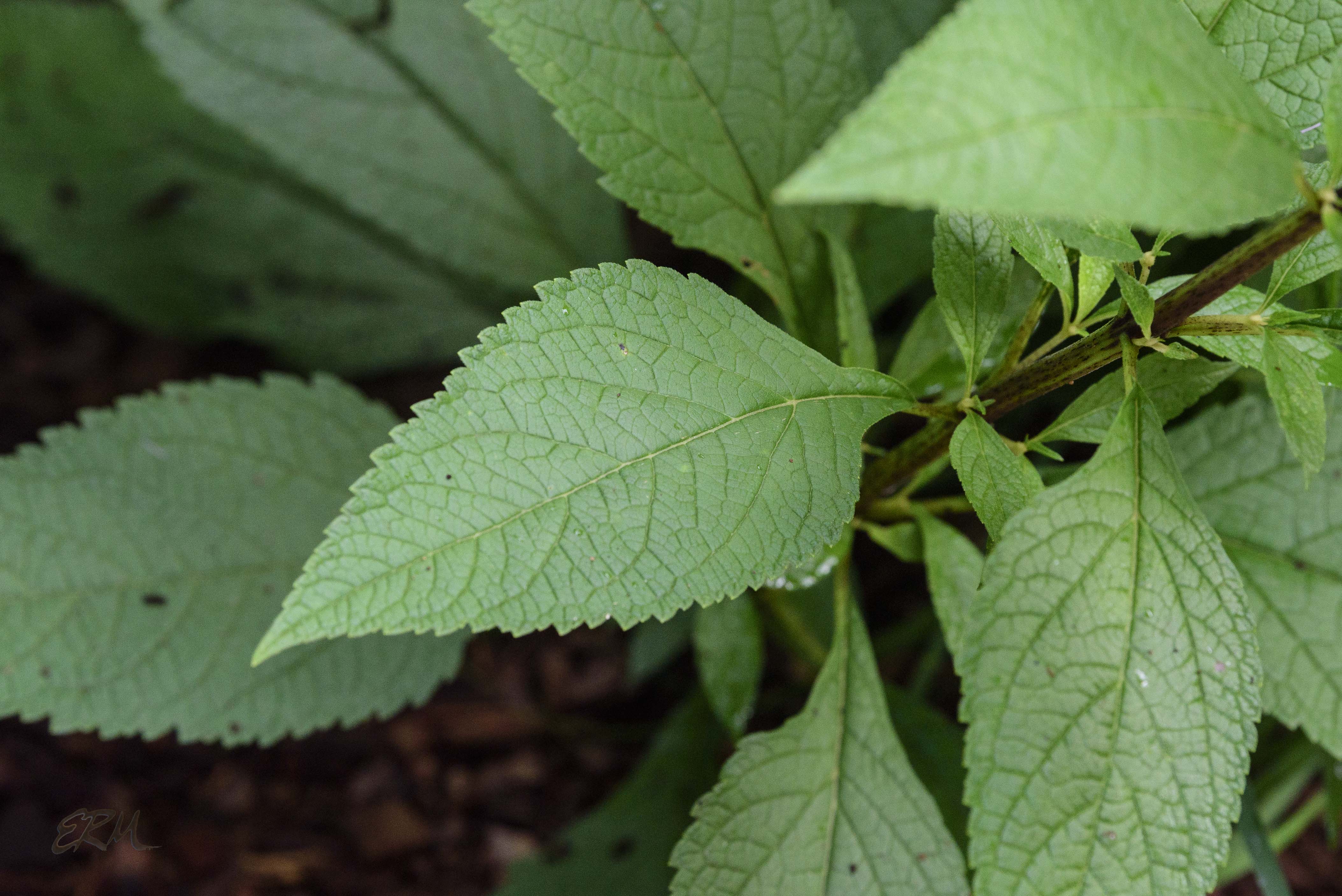
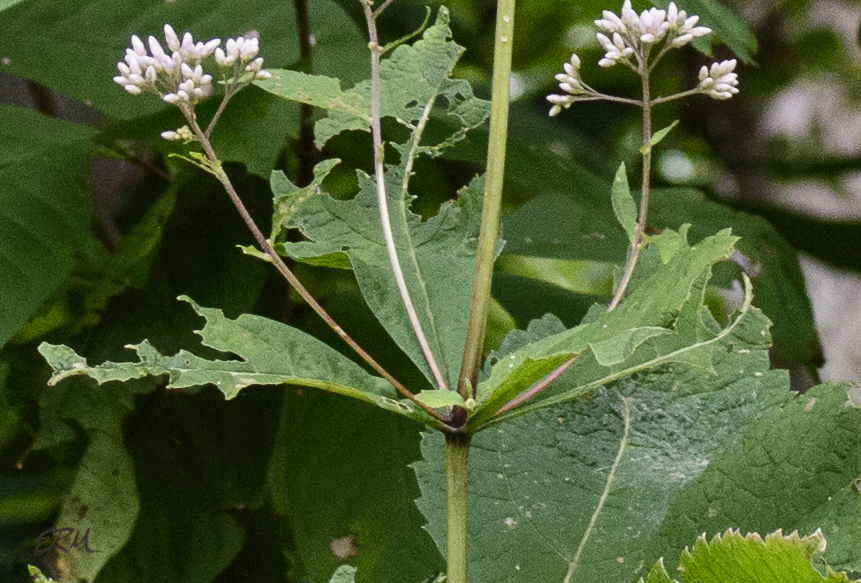
Here are a few pictures to illustrate. Keep in mind that these are garden plants; wild-growing specimens rarely look so lush and full. Also, the E. maculatum pictured in this post is not the species, but rather a cultivar (‘Gateway’). Still, it’s not too far off what a wild plant looks like.

E. fistulosum: a whorl of 4 broadly lanceolate leaves

E. fistulosum: a loose corymb of flower heads


E. maculatum: whorl of three leaves, purple-spotted stems


And here are a few of E. maculatum. It’s worth noting that further up on the stems, the leaves were in whorls of four (but I couldn’t get a good picture up there).

E. maculatum: lanceolate-ovate leaf


Eutrochium species with purple node

This picture from four years ago is probably of E. purpureum, though I was never able to get close enough for a confident ID. At any rate, it shows what a purple node looks like.


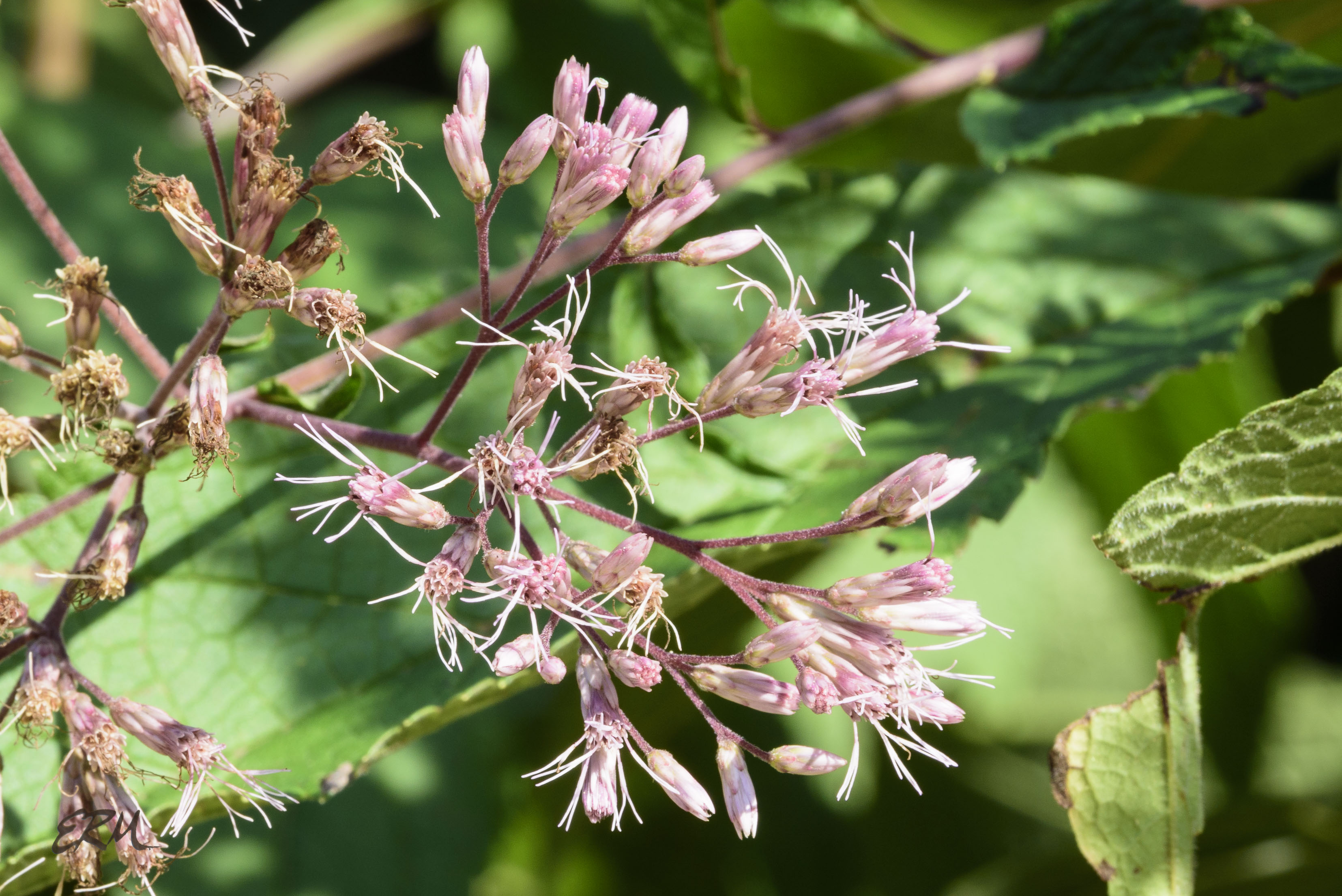
Of course none of this is what makes joe-pye so interesting. It’s those flowers. Unlike the aster I wrote about in the last post, joe-pyes have no ray florets – only disc florets. Each floret consists of five pointed petals, fused at the base, from which a single long style emerges. The cumulative effect of all those tiny flowers, from 4-24 per head, dozens of heads in each corymbiform inflorescence, up to a dozen inflorescences on each stem, often multiple stems from one plant… it’s just breathtaking.

And then there’s the icing on the cake: joe-pye weeds attract bees and butterflies like crazy.

More about this next time.


Astery Things #1: New England Aster

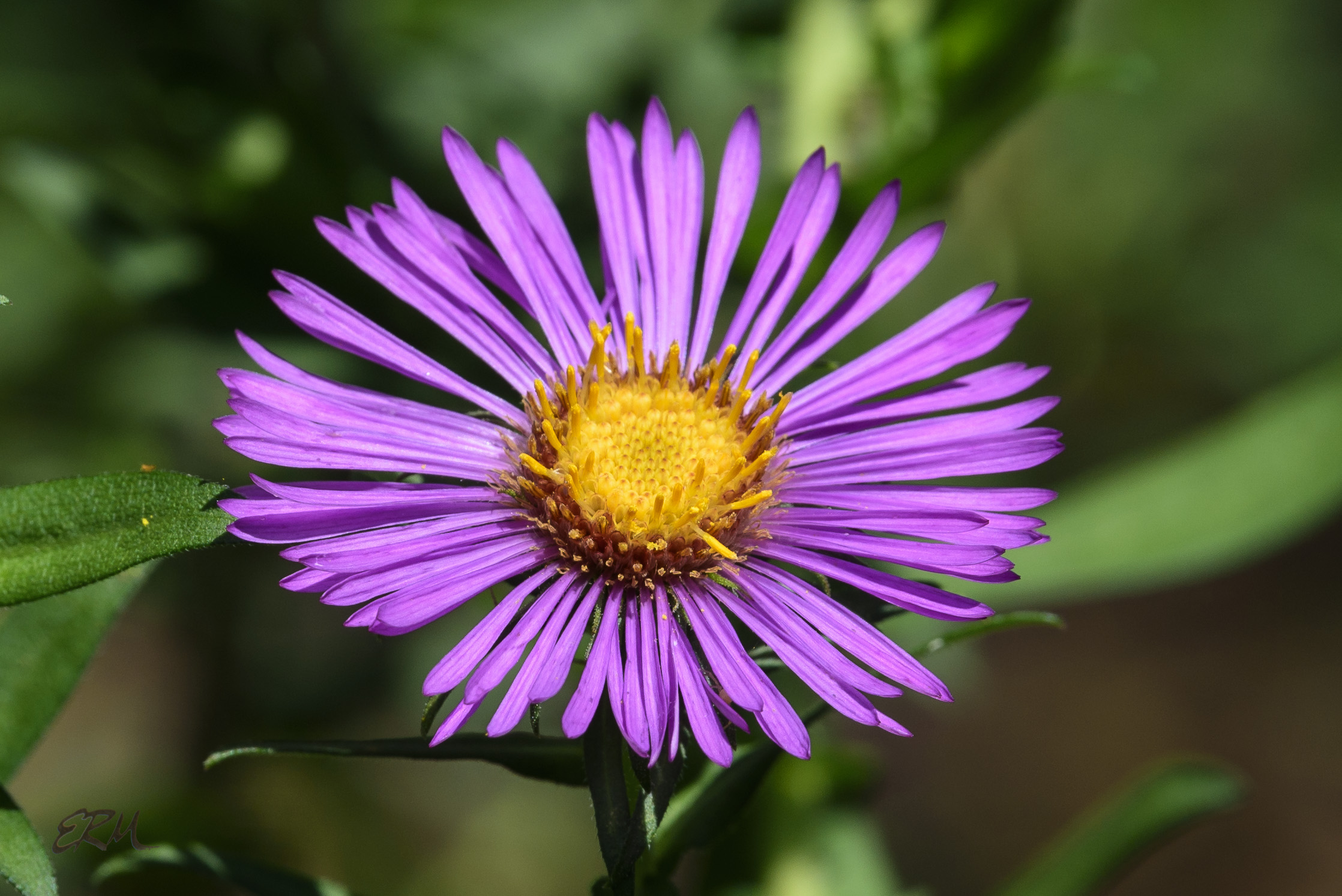
Symphyotrichum novae-angliae is a typical aster, with flower heads consisting of roughly 50 to 75 dark rose to deep purple ray florets ringing a button of 50 to 110 disc florets that are initially yellow but become purple with age.

upper stem leaves

There are quite a few other blue-purple flowering aster species in Maryland, but distinguishing them is a topic for an upcoming post.

flower heads forming

This species is found mostly in New England, of course, and in the upper mid-west and mid-Atlantic, but also ranges south through the Appalachians and into the Great Plains. In scattered areas of the West it’s found as a garden escapee. In Maryland, New England aster is found almost entirely from the Piedmont west, with just a few occurrences in the Coastal Plain.

pruned by rabbits!

The flowers pictured here are typical, but this particular plant is not. Usually New England aster sports one stem (or just a few) standing up to four feel tall; there may be some branching near the top. The plant shown here was pruned several times by rabbits before I got ’round to spraying repellent on it, hence the short, bushy appearance. New England aster grows in a variety of habitats, sunny to partly shady, almost always in moist to wet soils.


Clearly it makes a lovely garden plant if you can protect it from herbivory while it’s still small.


Of Astery Things and Big Butterflies

New York ironweed (Vernonia noveboracensis)

I don’t like putting my blog into summer dormancy, but I haven’t found much in the past month to photograph and write about. But I’ve been itching to start shooting again, so last week, instead of hunting for wildflowers, I decided to spend time photographing flowers a little closer to home – that is, in my own front yard, since a lot of showy native plants are flowering there now. These include both typical and oddball members of the Asteraceae: goldenrod, New York aster, New York ironweed, joe-pye weed, blue mistflower, and the somewhat weedy Carolina elephant’s foot.

Eutrochium maculatum, one of the species commonly called joe-pye weed

Aster family flowers are interesting in many ways, including their ability to attract bees and butterflies. I’ve taken over 700 photos in the past few days; once I’ve finished processing those and doing a bit of research, I’ll finally have more to post about. Stay tuned!