Flower of the Day: Fringetree

20150507-20150507-_DSC0053

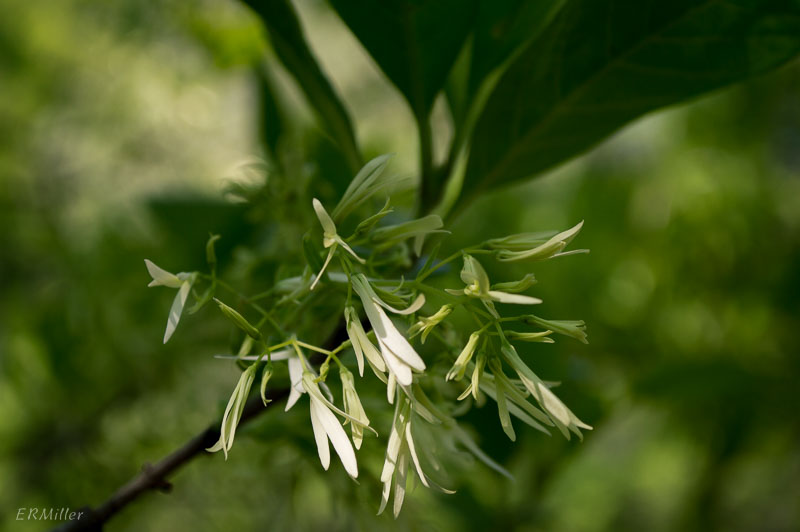
Chionanthus virginicus; Oleaceae

Like buttonbush and American bladdernut, fringetree is one of those natives that’s fairly common but that you’ll seldom notice, until you see it in bloom.  It’s a spectacular sight, with big clusters of flowers (each with petals up to an inch long) hanging from the branches.
20150507-20150507-_DSC0057

I have never been able to get a picture of an entire specimen, or even a large portion of one, because I can never see the whole thing.  Fringetrees grow in the understory, and in the Carderock area, at least (where there are dozens of them), they’re always mixed up with the larger trees.  They typically stand 10 to 20 feet tall, but in a cultivated landscape can grow taller. They’re native to the southeastern US, where they prefer damp woods, thickets, and bluffs (like Carderock).

If you go looking for them, keep your nose open.  Every time, I smell them before I see them.  The scent is lovely.

Flower of the Day: Wild Stonecrop

20150503-20150503-_DSC0016

aka woodland stonecrop
Sedum ternatum
Crassulaceae


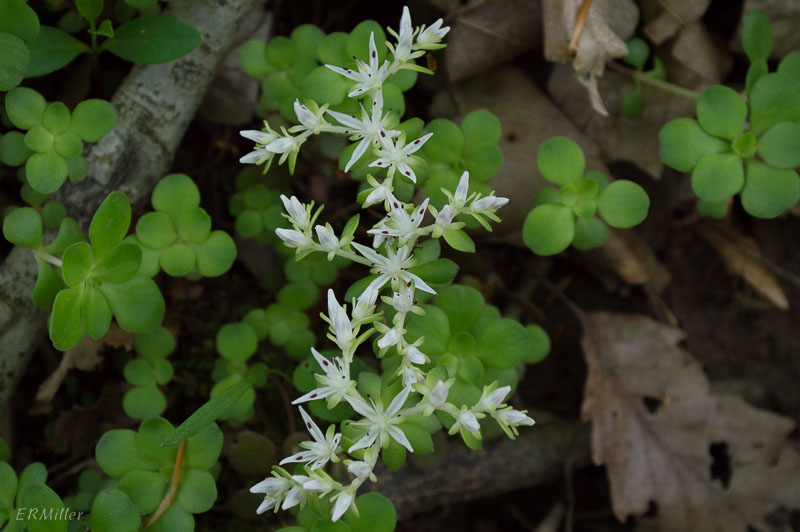
I’ve written about this plant before, but it’s a favorite and blooming now.  Wild stonecrop is native to Eastern US woodlands.  It likes to sprawl across rocks where there is a little bit of soil or leaf mould, and stands no more than eight inches tall.

20150503-20150503-_DSC0004

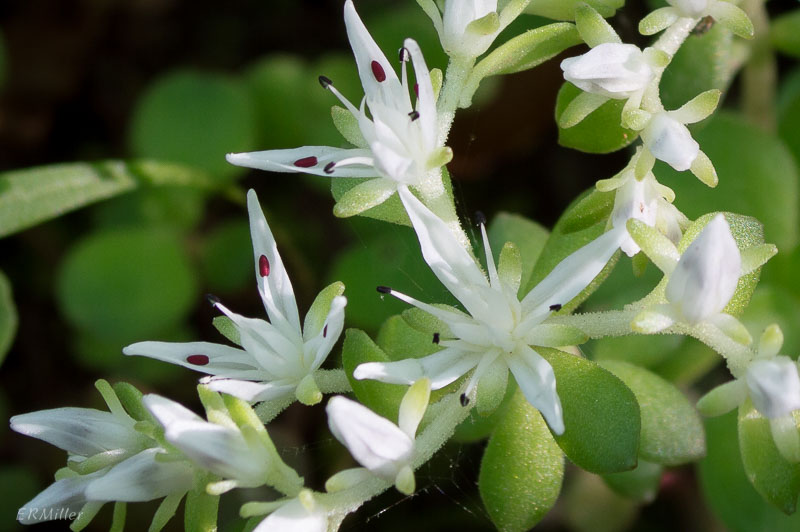
The inflorescence typically has about a dozen flowers on three branches.

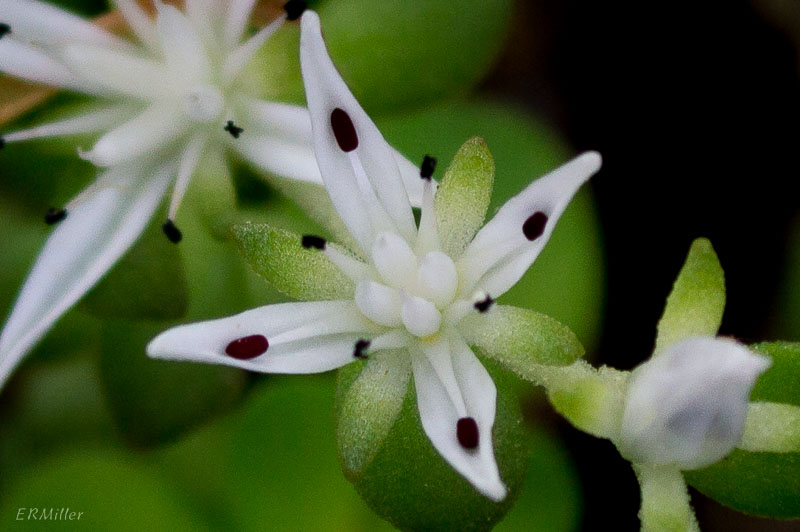
This flower is about 1/4 inch across, and consists of four green sepals, four white petals, eight stamens with purplish anthers, and four pistils.

20150503-20150503-_DSC0027


You can get a sense of scale from this picture (note the fallen leaf at the lower right).


20150503-20150503-_DSC0013

This particular stand is under a tree alongside a very small stream near the base of a large rock formation.  The sun was just starting to peek over the rocks as I was taking these pictures.

I spent an hour there, in that one location.  Felt like 15 minutes.
20150503-20150503-_DSC0042

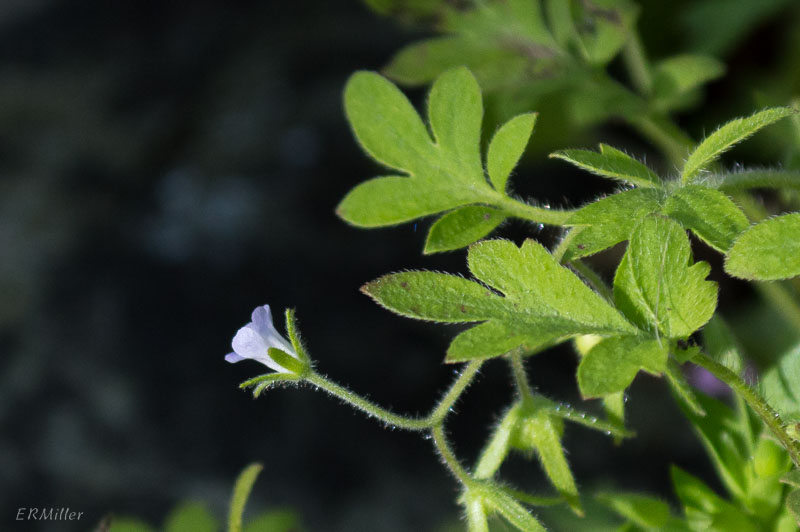
Flower of the Day: Coville’s Phacelia

20150429-20150429-_DSC0091-2

aka buttercup scorpionweed
Phacelia covillei
formerly in the Hydrophyllaceae
currently in the Boraginaceae (per the Angiosperm Phylogeny Group)


20150429-20150429-_DSC0095

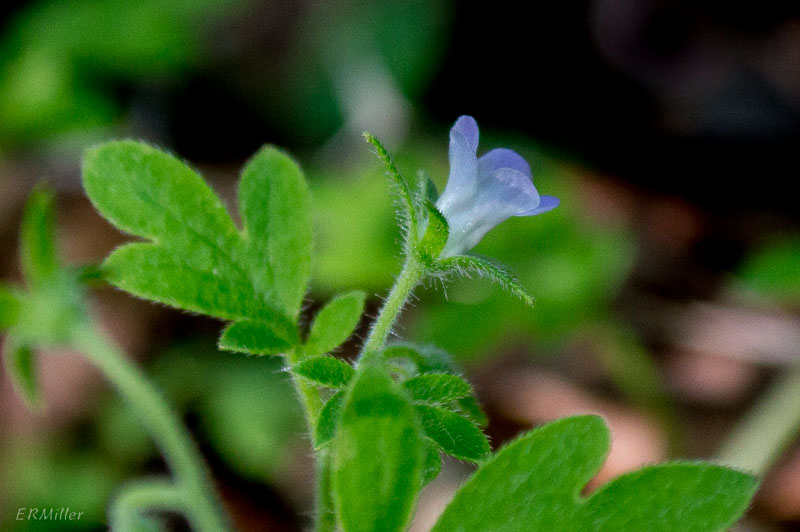
Coville’s phacelia is a somewhat weedy-looking, low-growing, hairy annual forb, easily overlooked.  Per the USDA Plants database, it is found only in Illinois, North Carolina, Virginia, and Maryland (where it is endangered).


Some authorities consider it the same species as P. ranunculacea, which is found in a handful of Midwestern states (and is endangered or of special concern in four of those).

There isn’t much information about it on the internet, but I did find this 112 year old reference to it:

20150429-20150429-_DSC0089

“In view of the apparent rarity of the species, a note upon it may be of interest.  The original station for this plant was an island in the Potomac River, where it was fist collected by F.V. Coville.”  -H. A. Gleason, A Second Illinois Station for Phacelia Covillei Watson” in Torreya, vol. 3, No. 6 (June, 1903).

I wonder which island that would be?  Perhaps Plummers Island, “the most studied island in North America”.

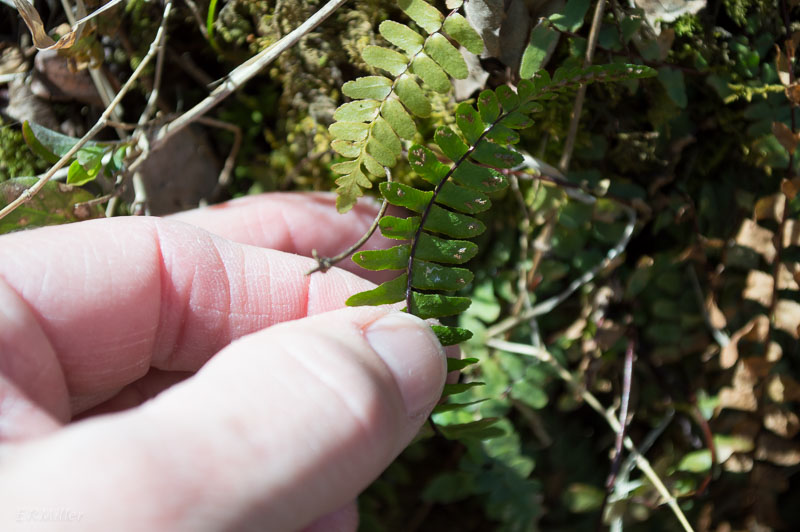
Fern of the Day: Ebony Spleenwort

Asplenium platyneuron

20150429-20150429-_DSC0035


right: a not typical looking ebony spleenwort
(note the circinate vernation)


below: a fairly typical looking ebony spleenwort

20150406-20150406-_DSC0078

The spleenworts are known to hybridize freely, making field identification difficult.  In this case, the stipe and lower part of the rachis were black, suggesting ebony spleenwort

20150429-20150429-_DSC0033

but it’s impossible to know for sure.

At any rate I wanted to post this because the plant looks neat and I love the pictures.  Also to get the earworm “ebony spleenwort” out of my head.  Note that I got the phrase “circinate vernation” out, too.


Flower of the Day: Golden Alexanders

20150429-20150429-_DSC0020

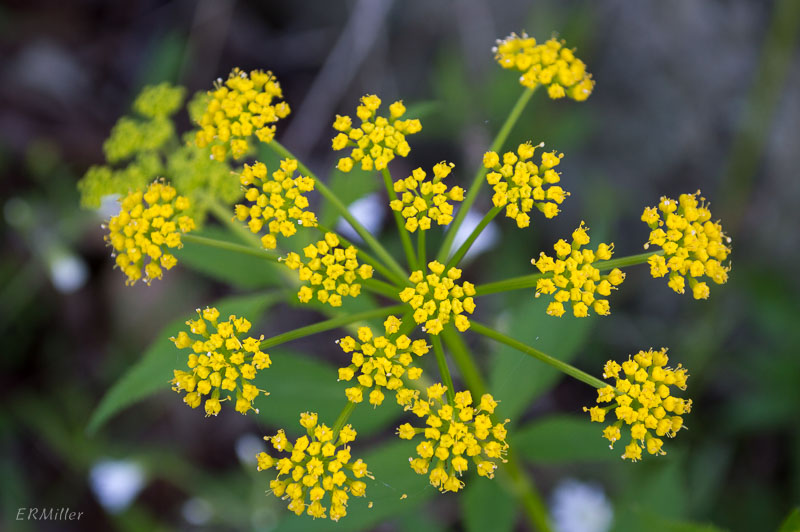
Zizia aurea; Apiaceae

This perennial member of the carrot family stands about two feet tall and grows in a variety of habitats, from moist to drier open woodlands and in rocky areas, and provides nectar for a large variety of insects that don’t have many other sources in the springtime.  It ranges from Quebec to Florida and west into the Great Plains.

The complex inflorescence is an umbel of about a dozen umbellets:

20150429-20150429-_DSC0024

Each umbellet consists of about twenty flowers, each with five inward-curving petals.

In case you’re wondering, yes, these botanical terms share a root with the word “umbrella”.  It’s from the Latin umbra, meaning shadow.  Umbel-shaped flower heads are typical in the Apiaceae.

The genus is named for botantis J. B. Ziz.  What I can’t figure out is why this (and several other) species has the common name Alexanders.  If anyone knows, please leave a comment.