Variations on a Theme: Rockcresses

The taxonomists are at it again.  Most of the guide books still classify the rock cresses in the genus Arabis, but recently most New World species have been moved to either Boechera or Arabidopsis.

20150416-20150416-_DSC0266


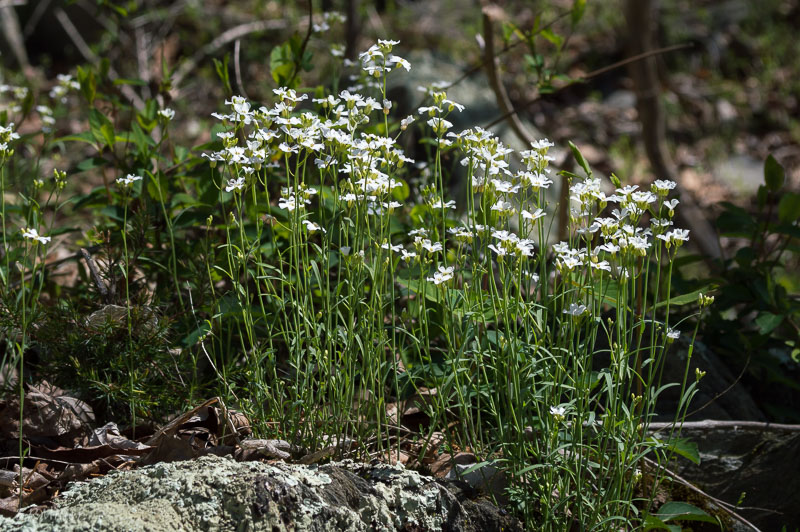
lyre-leaved rockcress, aka sandcress (Arabidopsis lyrata, formerly Arabis lyrata)


Lyre-leaved rockcress is a mostly northern species, found across Canada and the northeastern US, with small, isolated populations found further to the south. It’s endangered in Massachusetts, and threatened in Ohio and Vermont

Needing very little soil, it doesn’t tolerate competition from other plants, but will grow happily by itself right out of rocks.
20150416-20150416-_DSC0268


20150416-20150416-_DSC0185


smooth rockcress (Boechera laevigata, formerly Arabis laevigata)


Smooth rockcress seems to enjoy a little more soil than lyre-leaved; it can be found in rocky woods and ledges, but seldom growing right out of the rock.  It ranges from Quebec south to Georgia, and west into some of the Great Plains states, and is threatened in Maine and Massachusetts.

20150416-20150416-_DSC0183

The rockcresses are in the Brassicaceae (mustard family).
Variations on a Theme: Phloxes

20150417-20150417-_DSC0014


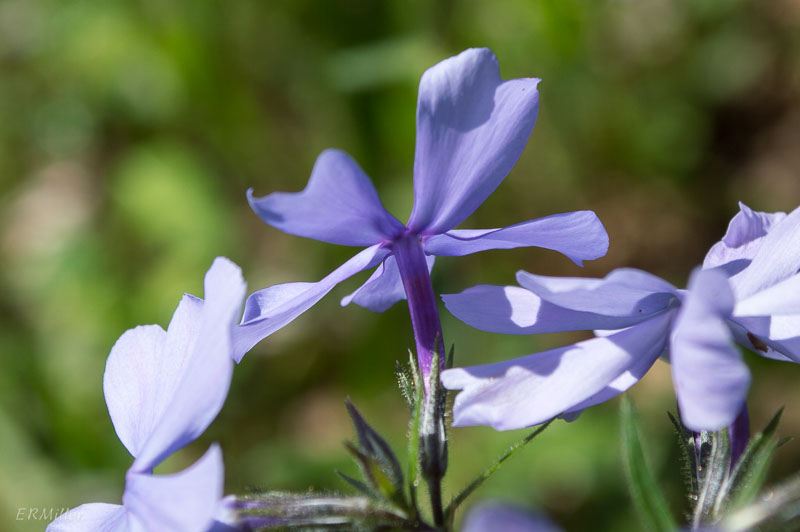
wild blue phlox (Phlox divaricata)


20150416-20150416-_DSC0073


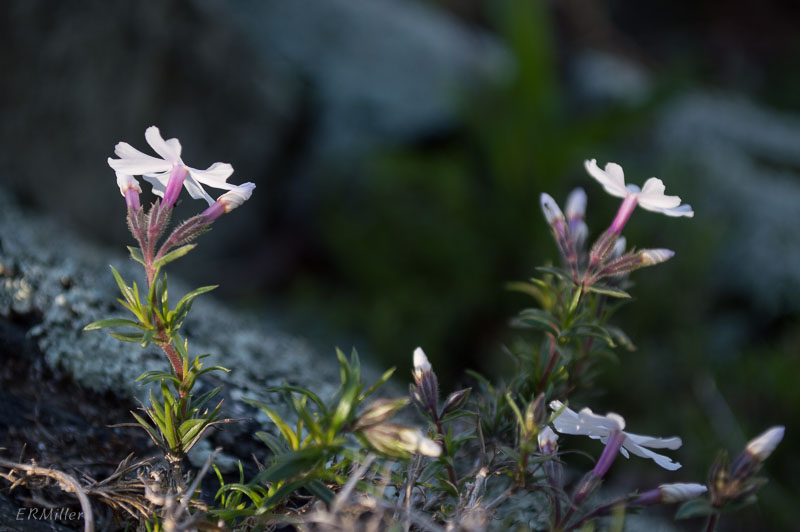
moss phlox (Phlox subulata)


There are 71 native species of phlox across the US and Canada.  Ten of them can be found in Maryland.  These two are the ones I see most frequently in the Potomac Gorge, though I’m always on the lookout for others.

20150417-20150417-_DSC0012


Wild blue phlox stands one to two feet tall, and likes the moist soils near the river.  It’s often found growing near Virginia bluebells, though it seems to grow in the more uphill, drier areas as well.

20150416-20150416-_DSC0074


Moss phlox stands only a few inches tall, and can mostly be found growing out of crevices and cascading over rocks.


20150417-20150417-_DSC0015


As you can see, the flowers are almost identical in shape, but different colors.  Moss phlox is more often pink, according to the books, but almost all the specimens I’ve found in the gorge are white.


20150416-20150416-_DSC0088

Flowering Dogwood

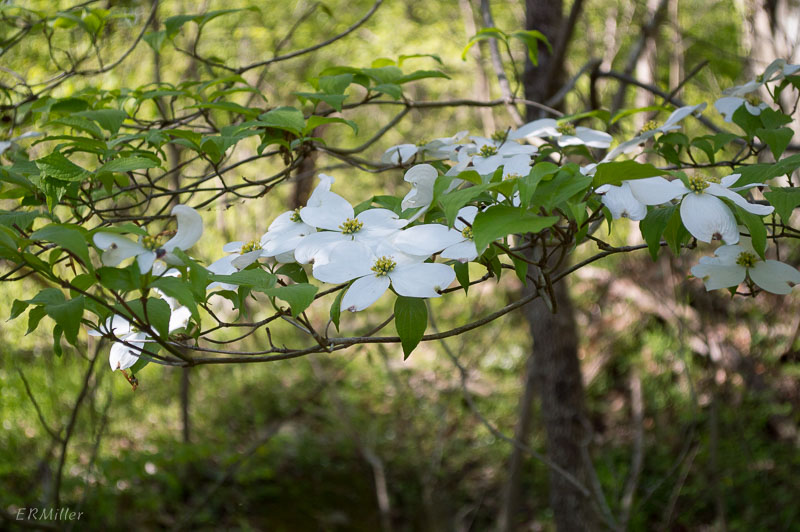
20150429-20150429-_DSC0111Cornus florida; Cornaceae

This graceful, small ornamental tree is a native of eastern US forests, where it grows in the understory. It ranges from southern Maine (where it’s endangered), Vermont (where it’s threatened) and New York (where it’s exploitably vulnerable) to Texas.

20150429-20150429-_DSC0113

Some dogwood facts:

  • Dogwood is the state tree of Missouri, the state flower of North Carolina, and the state tree and flower of Virginia.
  • The United States sent 3000 dogwood saplings to Japan on the 100th anniversary of Japan’s gift of the cherry trees which grace our national capital.
  • Dogwood is pretty easy to grow and is a common landscape tree in the eastern US, but it is prone to pests, including borers, powdery mildew, cankers, crown rot, and the dreaded anthracnose, a fungal disease caused by an organism believed to have been introduced to the US in 1978, but of unknown origin.
  • Dogwood is considered a soil improver, because the leaves decompose much faster than other trees’ leaves do.
  • The wood is extremely hard and shock-resistant.  Pacific dogwood makes great firewood because of its high BTU value, though it is difficult to split.  (I can’t find any similar data for C. florida, though.)

20150429-20150429-_DSC0117-2


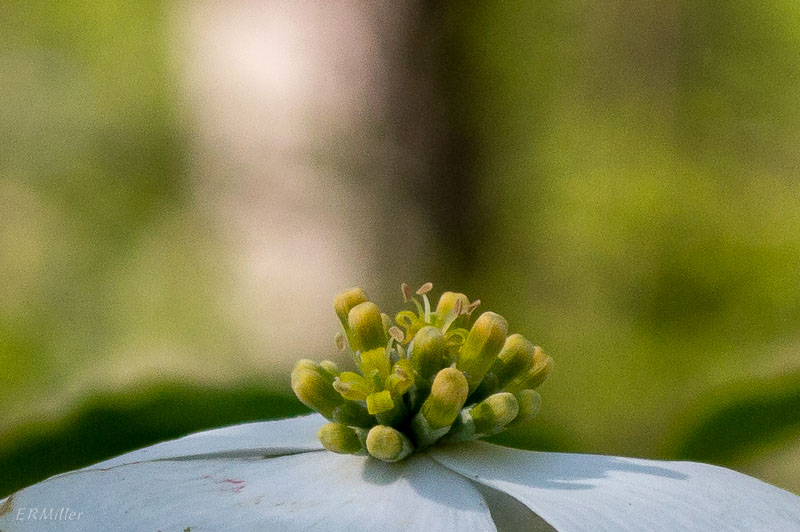
And, see those little yellow things in the center?  Those are the flowers.  The white parts that look like petals are actually bracts (modified, colored leaves).

The Earliest of the Asters: Golden Ragwort

20150417-20150417-_DSC0001

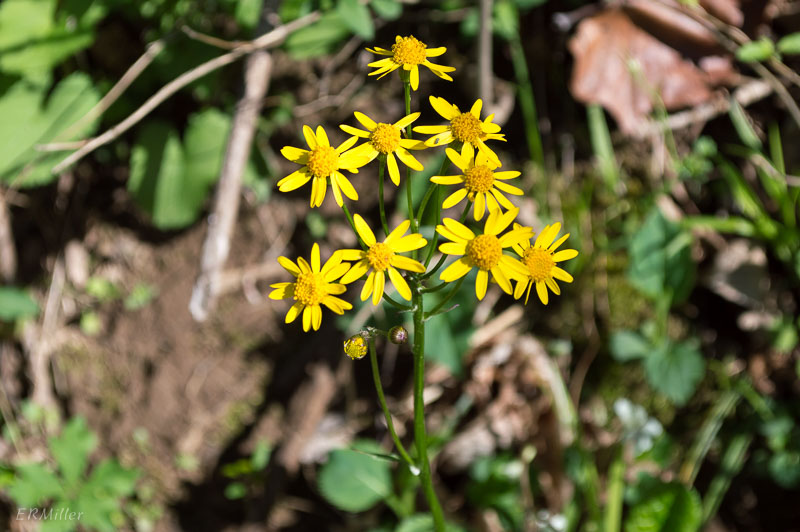
Packera aurea (formerly Senecio aureus); Asteraceae

Based on a few years’ observations, I’ve concluded that about one in five flowering plants in the Potomac Gorge are in the aster family.  But most of them won’t start showing up until summer.  Golden ragwort is always the first.

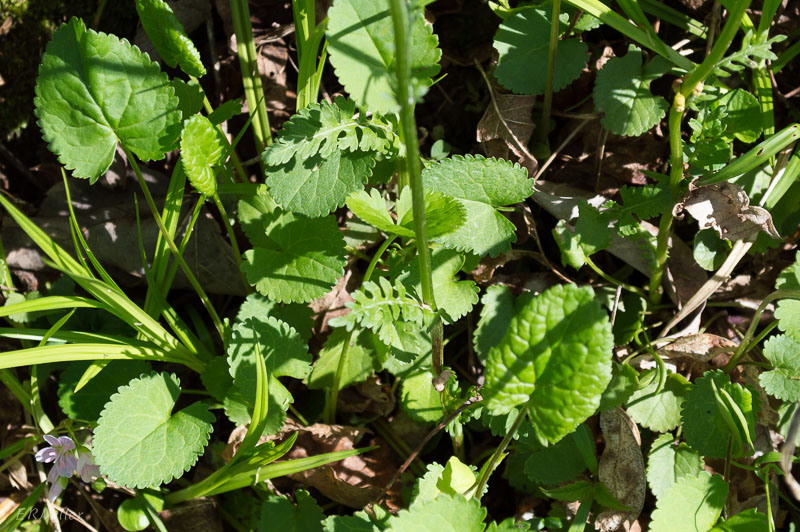
It’s an interesting plant.  The basal leaves appear first: toothed, rounded to oval and indented at the base, they are totally different from the stem leaves, which are elongate and deeply lobed.

20150417-20150417-_DSC0002

The buds are deep purple, opening to golden blossoms.

Golden ragwort forms vast stands in moist bottomlands throughout the eastern US and Canada, blooming about the same time as wild blue phlox and as the Virginia bluebells start to fade.

20150417-20150417-_DSC0006