Trees over the C&O Canal, October 17, early morning.
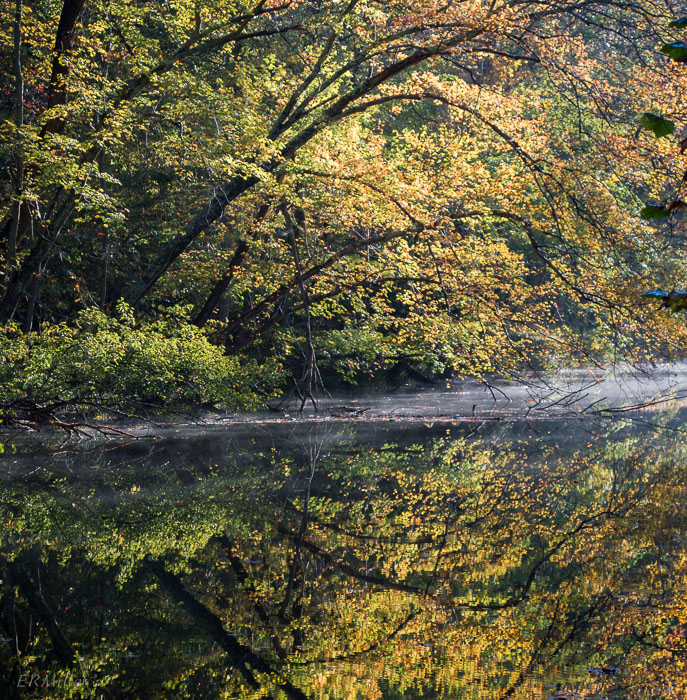

Trees over the C&O Canal, October 17, early morning.
Elephantopus carolinianus; Asteraceae (aster family)

If you’ve been following my blog you’re probably wondering why this plant is placed in the aster family. Doesn’t look anything like an aster, does it? Look closely at the inflorescence; what you’re seeing is four individual disk flowers, each with a 5-lobed corolla. No ray flowers. Pretty neat!
I first encountered Carolina elephant’s foot when we moved to our current house. It was growing as a lawn weed (the foliage is pretty distinctive); I let a small patch of it bloom in order to identify it.
It’s all over the place along the C&O canal, blooming from July to September, but it’s endangered in Pennsylvania and New Jersey (the northernmost part of its range). It can be found south through Florida and as far west as Texas.
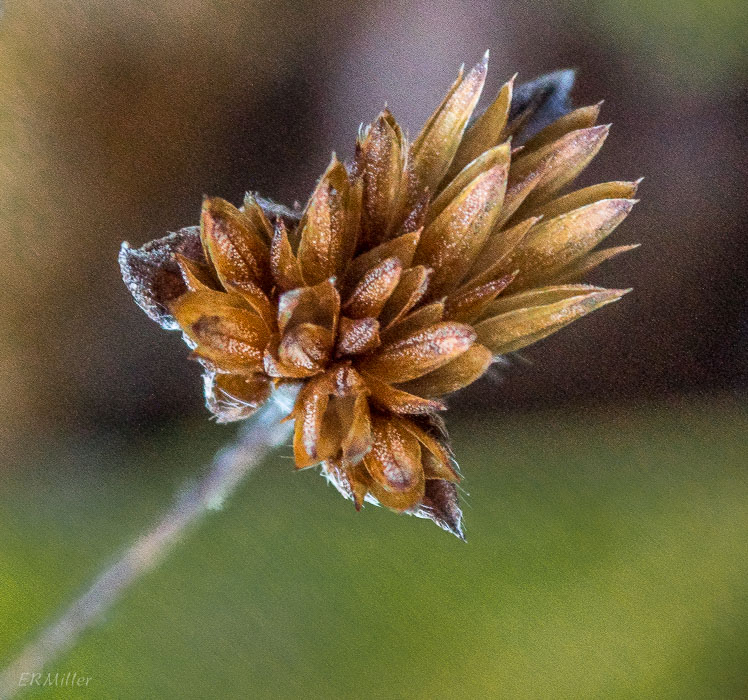
Here’s what it looks like in mid-October, gone to seed.
Earlier this year I was over the moon to find two native orchids in the area, puttyroot (Aplectrum hyemale; fotd 5/20) and cranefly (Tipularia discolor, fotd 7/31). These two plants have a similar, unusual life cycle: the new leaf (one per plant) emerges from the ground in autumn, persists through the winter, then dies back in spring (puttyroot) or early summer (cranefly); some time after that a single flower spike emerges, develops multiple buds, and blooms.

Last week while hiking I saw the new leaves of cranefly orchids; note the characteristic purple underside. (Be assured no plants were harmed, nor soils disturbed, in the taking of these photos!)


Of course I then had to go hunting for puttyroot, too, and found a few of those leaves, and seedpods still on one spike.

cranefly in flower:
puttyroot in flower:

This really has been a wonderful year.
Depending on when you look it up, and the current state of research, and the seeming whim of taxonomists, the Asteraceae is the largest plant family on Earth, with 23,000 species (more or less). Only the orchid family is as large, or larger, maybe. Species in the Asteraceae can be found in almost every habitat, on every continent except Antarctica.
 Erigeron philadelphicus (common fleabane)
In the Potomac Gorge area, I’ve found more plants in the Asteraceae than any other family, by far: seventy species. That’s out of a total of 351, or just shy of 1 in 5. This includes the asters themselves, the beggar-ticks, bonesets, coneflowers, coreopsis, dandelions, elephant’s foot, everlasting, the various fleabanes, the multitudes of goldenrods, leafcup, hawkweeds, horseweeds, ironweed, fireweed, rattlesnake weed and ragweed and ragwort, pussytoes, snakeroots and sneezeweed, sunflowers and thistles, and wingstem. And some aliens I didn’t bother to name.

The second largest family, at 21 species (13 native, 8 alien), was the Fabaceae (pea family).
Lespedeza virginica (slender bush-clover)
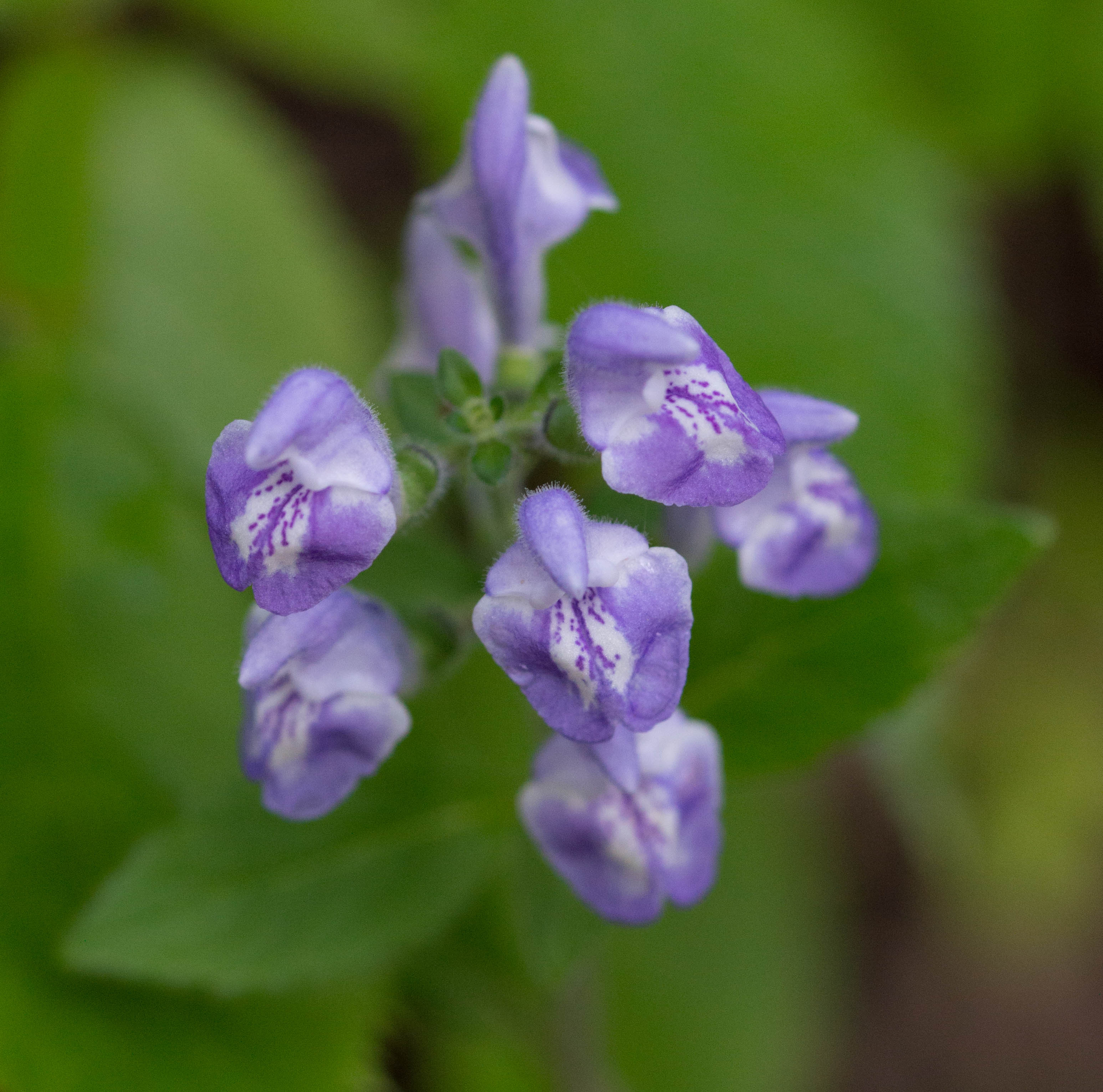
In third place was the Lamiaceae (mint family) at 16 (11 native, 5 alien).
Scutellaria elliptica (hairy skullcap)
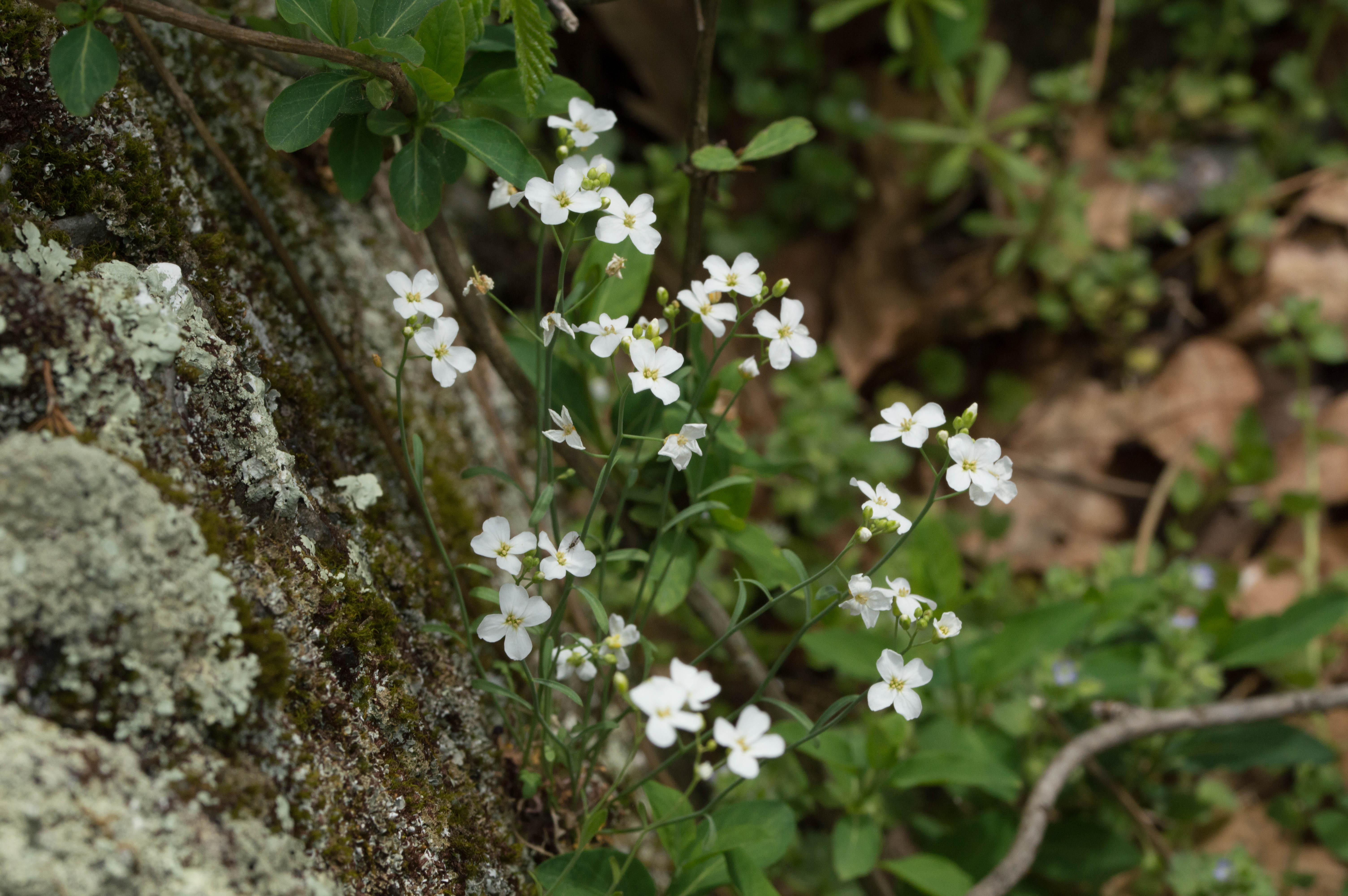
Brassicaeae (mustard family) checked in at 15 (7 and 8).
Arabis lyrata (lyre-leaved rock cress)

Ranunculaceae (buttercup family) had 14 (10 and 4).
Thalictrum thalictroides (rue-anemone)
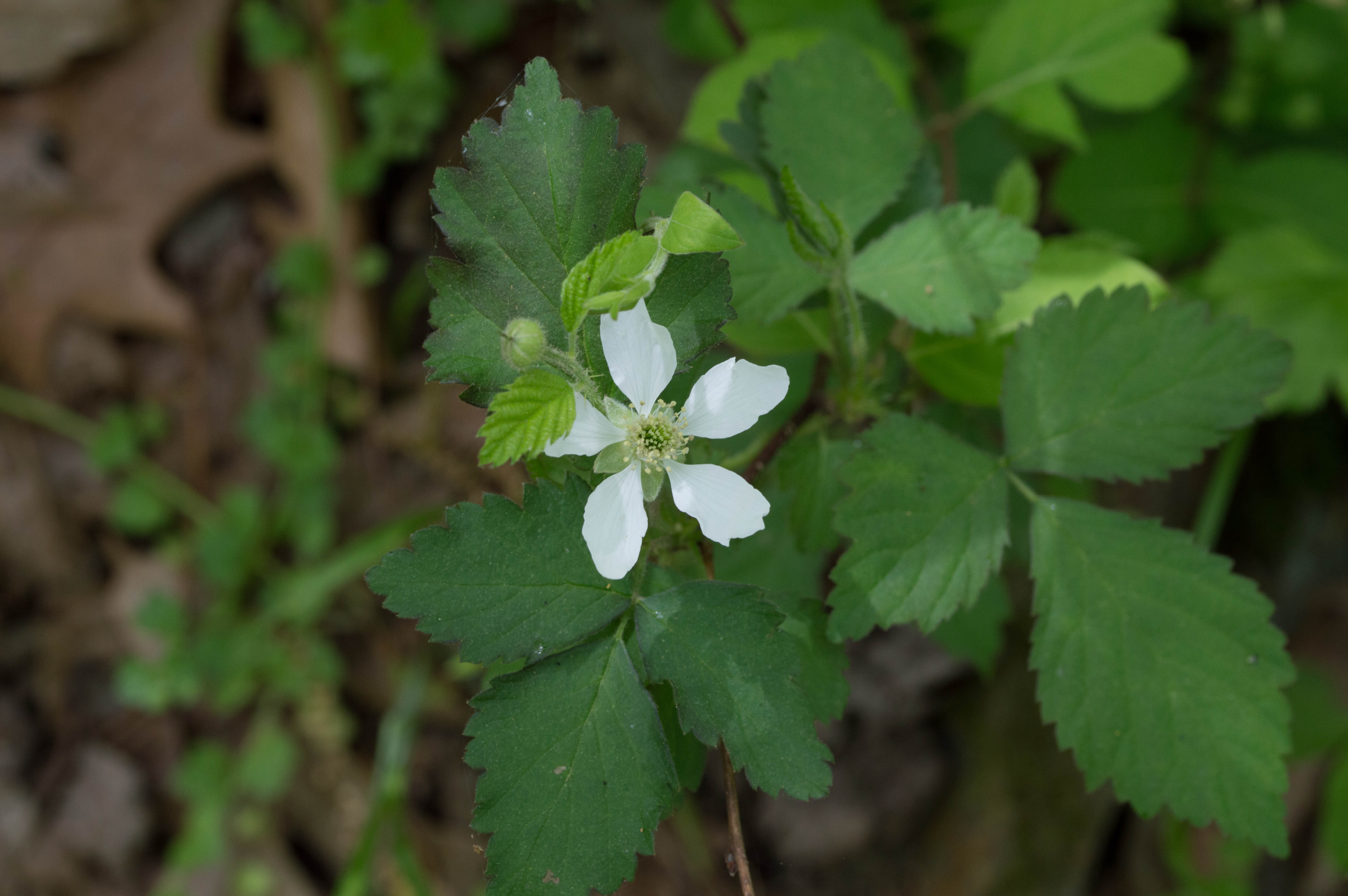
The Rosaceae (rose family) had 12 (9 and 3).
Rubus hispidus (swamp dewberry)
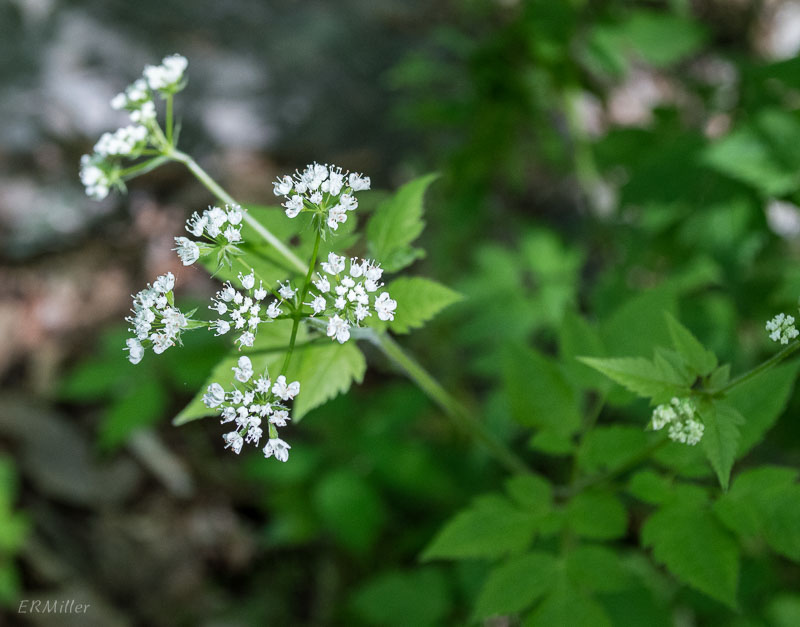
And the Apiaceae had 10 (6 and 4).
Osmorhiza longistylis (aniseroot)
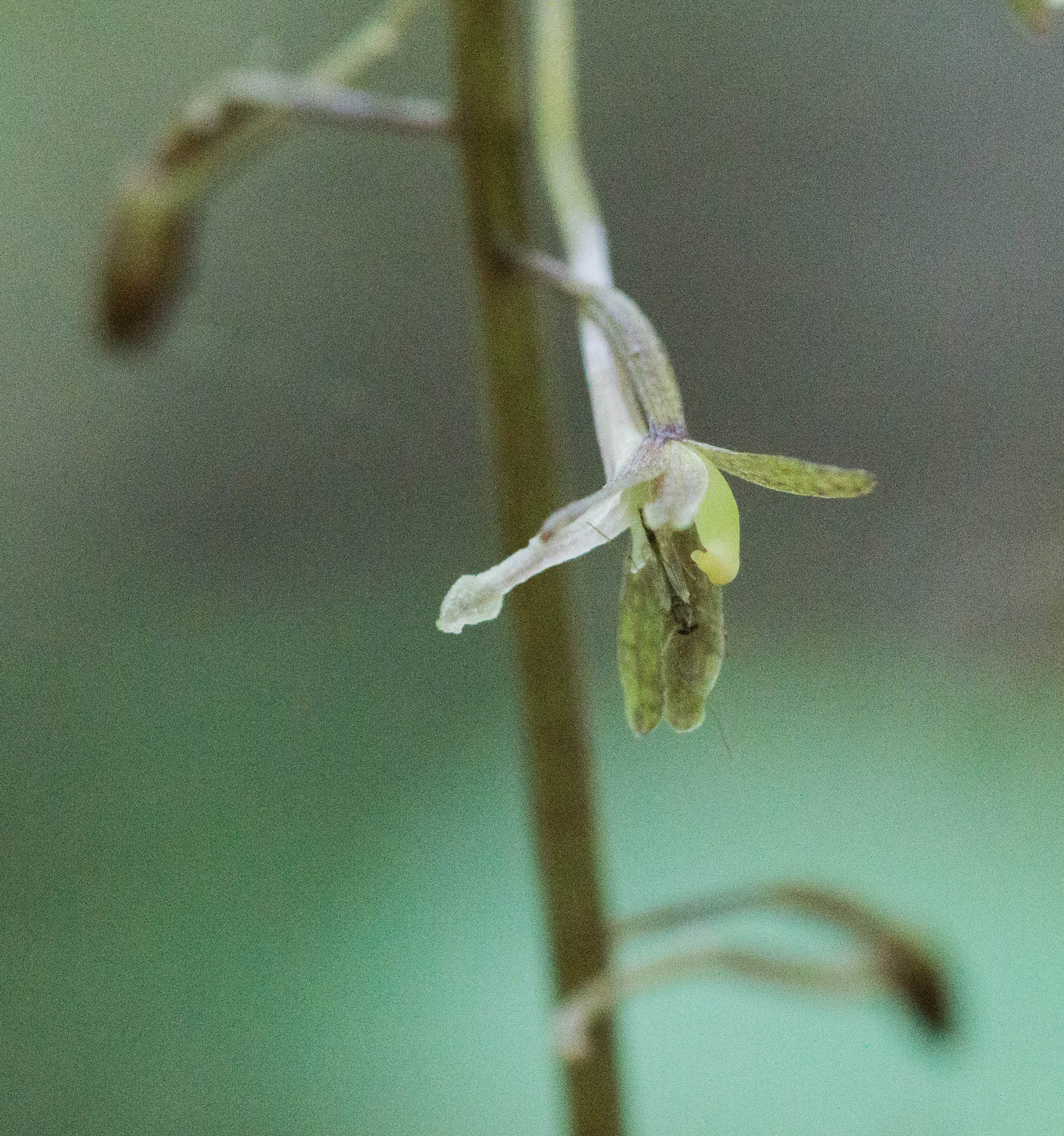
And though the Orchidaceae is so large worldwide, in this area I found only two. More on that tomorrow.
Tipularia discolor (cranefly orchid)
Here’s a nice tutorial on the Asteraceae.
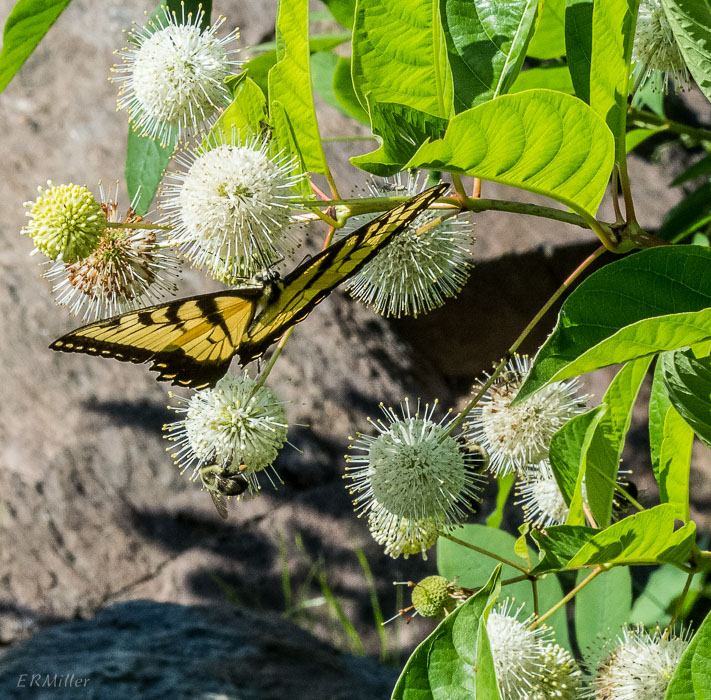 eastern tiger swallowtail (male) and bumblebee on buttonbush (Cephalanthus occidentalis) in late July, banks of the Potomac River in view of the American Legion Bridge
Plants first seen blooming in the month of Octboer:
And since I don’t expect to find anything new in November (unless I find witch hazel; I know it’s out there), the 2014 totals are:
for a grand total of 351 species in 81 families, along the Potomac River and C&O Canal from Violette’s Lock south to the American Legion Bridge, and the last mile of Cabin John Creek. Oh, and that’s not including the 5 asters, 5 violets, 7 grasses, and a few others that I was never able to narrow down to the species level.
Not too shabby.
ps – found witch hazel (fotd yesterday), but not in the Potomac gorge area.
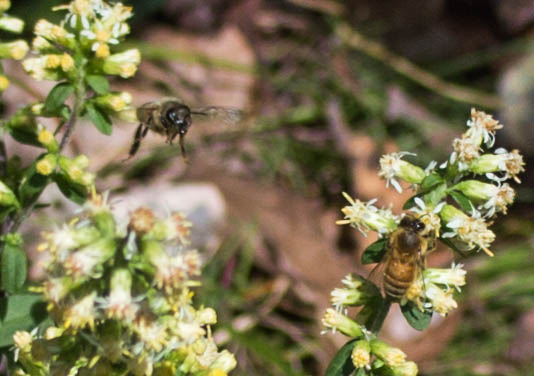
bumblebee crashing honeybee’s party on silver-rod
 Elizabeth's Wildflower Blog