Flower of the Day: Flowering Spurge

Euphorbia corollata; Euphorbiaceae (spurge family)

20140814-DSC_0038

Coreopsis, Erigeron, Eupatorium, Helenium, Helianthus, Hieracium, Rudbeckia, Solidago, Vernonia  – this is the season of the aster family.  It was so refreshing to see something from another family growing on the rocky bluffs above the river.
20140814-DSC_0118

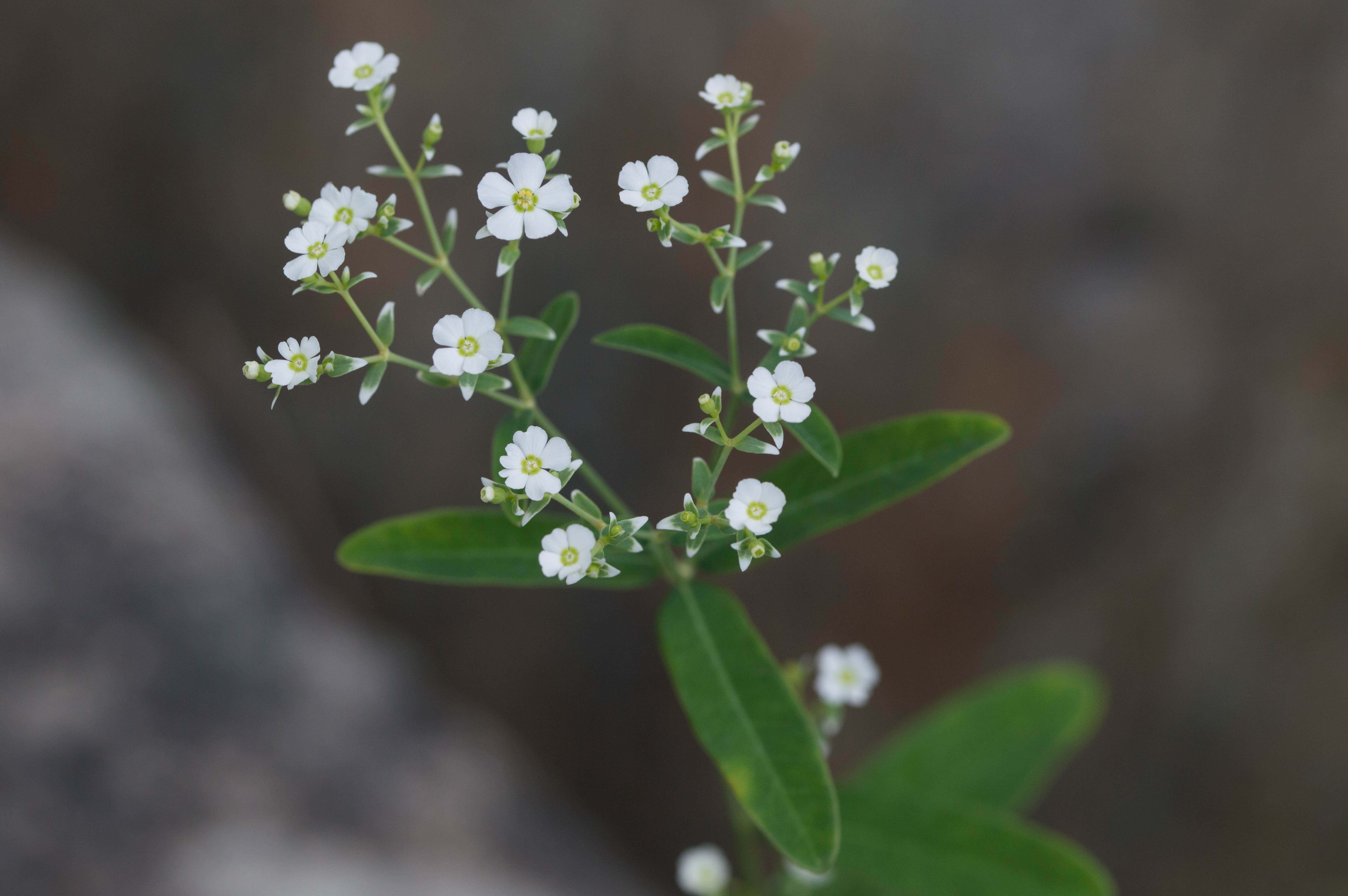
This three-foot tall perennial herb will grow in a variety of soil conditions, and can be found in its native range from the Atlantic west to the Great Plains, from Ontario south to Florida.  The five white petals you see are actually bracts (modified leaves, often brightly colored); the flowers are tiny little things in the center.  Two other well-known plants whose bracts are mistaken for petals: flowering dogwood, and this Euphorbia’s very popular cousin poinsettia (E. pulcherrima).

Here’s what it looks like about a week before blooming:

20140729-DSC_0109

 I love how the very tips of the upper leaves turn white.
Flower of the Day: Horse Balm

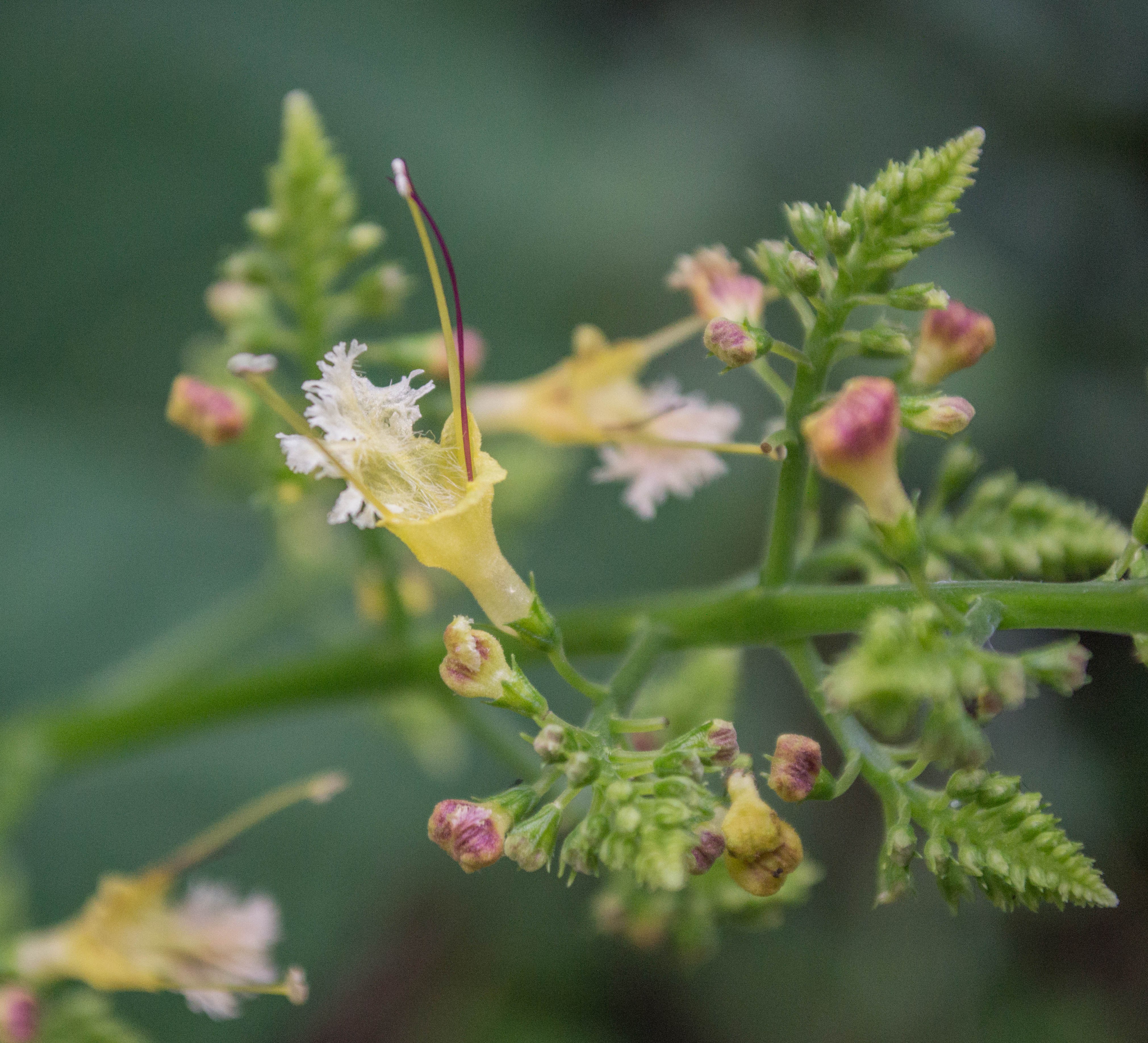
Collinsonia canadensis; Lamiaceae (mint family)

20140807-DSC_0111  20140807-DSC_0112

The Cabin John Trail irritates me.  It’s overused and in poor condition, treacherous when wet, sometimes smelling from the sewer main it follows… and yet I’ve found some great plants there.  On August 7 I walked along the stream looking for goatsbeard (FOTD June 9), wanting to see what it looked like in seed (still pretty impressive), when I spied something else growing out of the rocks over the creek.  Something I’d never seen before, or even heard of.

I love when that happens.

Horse balm is a big plant, growing to five feet tall and three feet across.

20140807-DSC_0101

The leaves have a pleasant scent (as so many mints do); the plant was used medicinally by Native Americans and settlers.  It’s native to eastern US and Canada, and endangered in Wisconsin.

Here’s what the goatsbeard looked like, by the way:

20140807-DSC_0098

Flower of the Day: Dodder

Cuscuta gronovii; Convolvulaceae (morning glory family)

20140806-DSC_0099

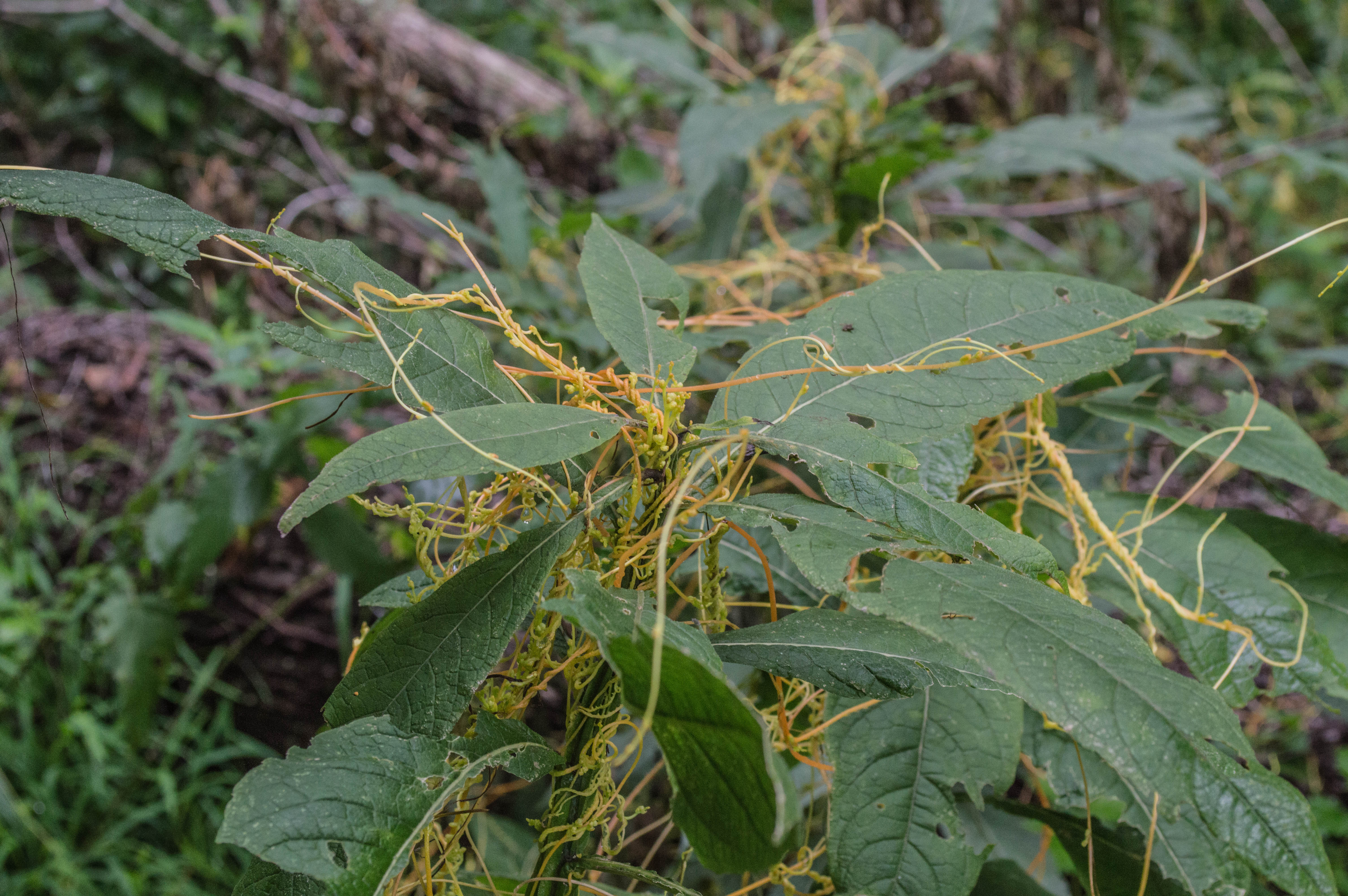
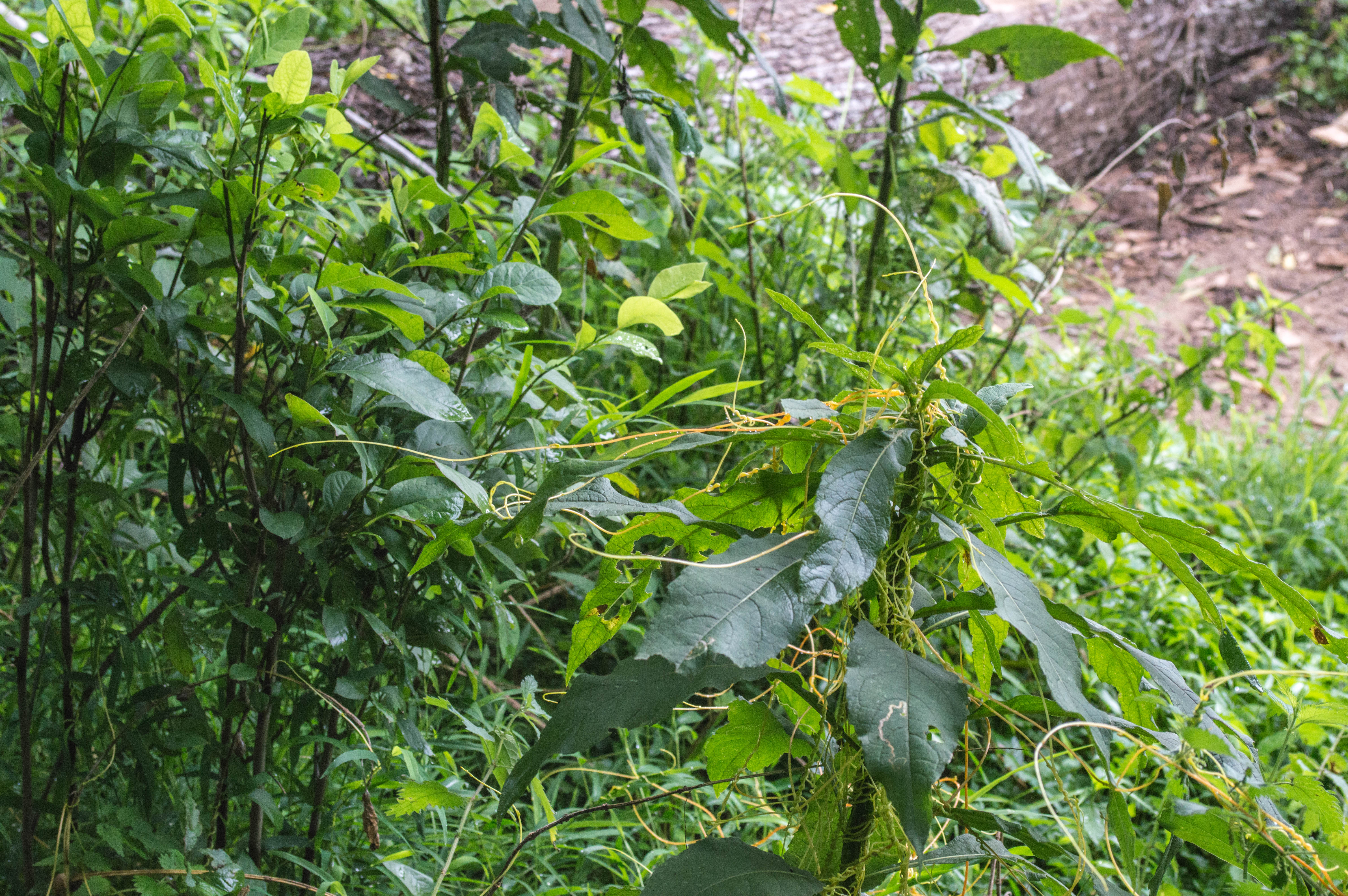
See that tangled mess of yellow and orange threads?  That’s dodder.  It is actually a flowering plant, but it’s an obligate parasite, meaning it depends on a host plant for survival.  Almost entirely lacking chlorophyll, the rootless and leafless stem emerges from the ground and finds a host plant to attach to, then wraps itself around the plant as it grows, penetrating the host in order to draw nutrition from it.  Later in the season it flowers and sets seed, then dies.

Dodder is native to most of the United States, but that doesn’t mean it isn’t a pest.  It’s a major problem for certain agricultural crops (cranberry and blueberry, among others), is a federally listed noxious weed, and is listed by thirteen states as noxious and/or prohibited and/or restricted and/or quarantined… you get the idea.  Look at these stems reaching out from the host plant!  (click on the image)

20140806-DSC_0101

As a perpetually curious wildflower enthusiast I was a little excited to find it. On the other hand, I’m a little worried.  The greater Carderock-Marsden Tract area has enough problems from alien invasives without having to deal with dodder, too.

The name “dodder” comes from the Middle High German word for egg yolk.

Good info about dodder from the University of Massachusetts.

Flower of the Day: Late-Flowering Thoroughwort

Eupatorium serotinum; Asteraceae (aster family)

 DSC_0020

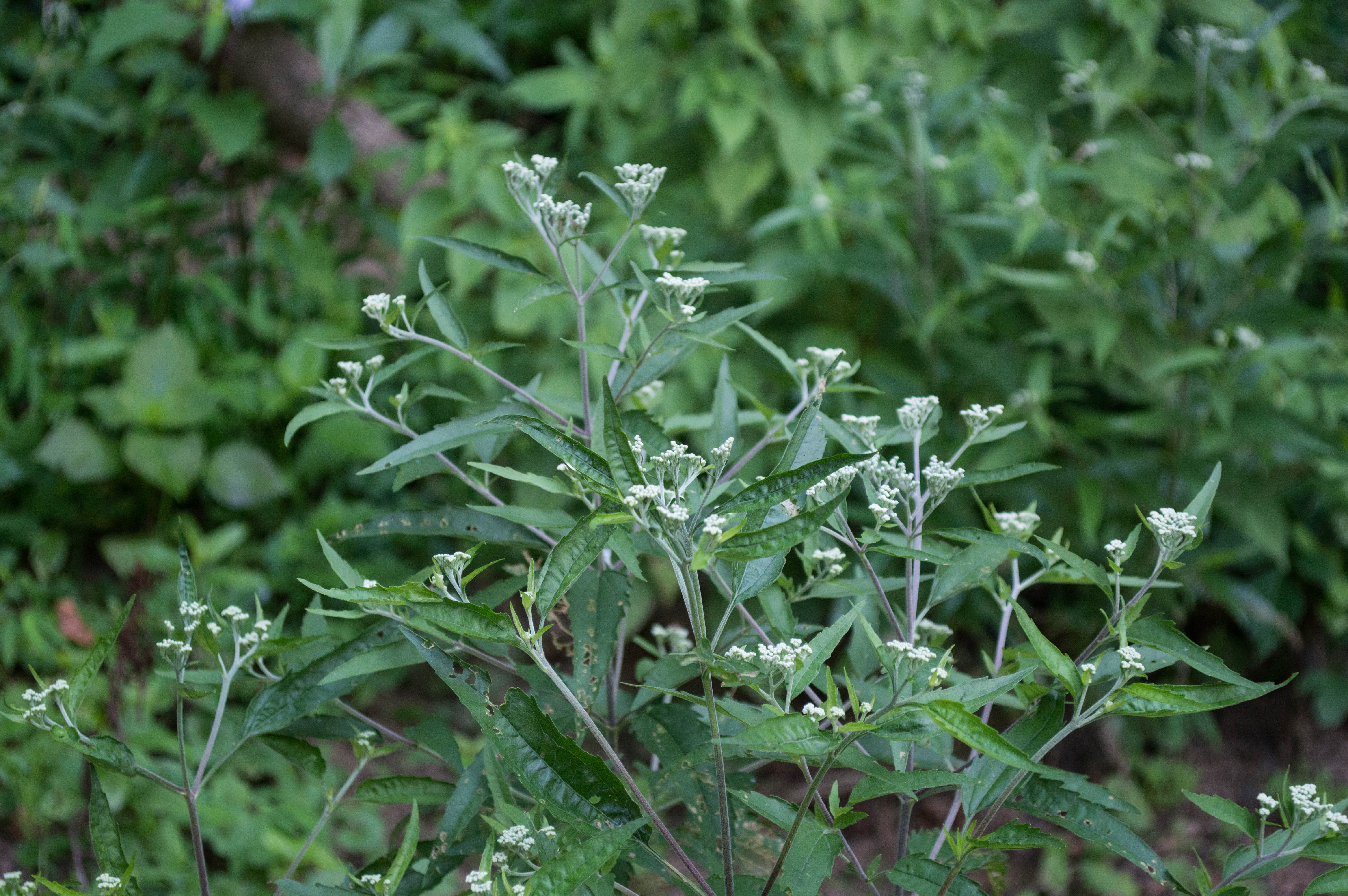
This FOTD is a little premature, as it’s still in bud, but I’m on a roll here with the Eupatoriums.  This one can grow up to five feet tall, and has longer, narrow leaves than the other species I’ve written about the past few days. The inflorescence is rather flat.

DSC_0024

This plant, also known as late boneset, is endangered in New York.  Like most of its relatives, it can be found across the eastern US and into Canada.

Tomorrow, I’ll take a break from plants in the aster family – but not for long, because this is the time of year when they really dominate.  As of August 13, 13% of the plants I’ve catalogued this year have been in the Asteraceae.  By October that figure might be as high as 25%.  Of all the plants families on this earth, only the Orchidaceae has as many species.

Flower of the Day: Mistflower

Conoclinium coelestinum; Asteraceae (aster family)

 20140811-DSC_0275

Yet another in the series of Eupatorium-type flowers, formerly named Eupatorium coelestinum.  Note once again how similar the flowers are to the others I’ve posted about in the last few days.  This plant grows up to three feet tall, and has triangular leaves with short petioles. It’s closely related to the common garden plant ageratum. Its native range is from Ontario and New York south to Florida and west to the central and southern Great Plains.

Here’s a picture showing flowers, buds, and the characteristic leaves:

20140806-DSC_0102 and one more picture for fun20140811-DSC_0274.