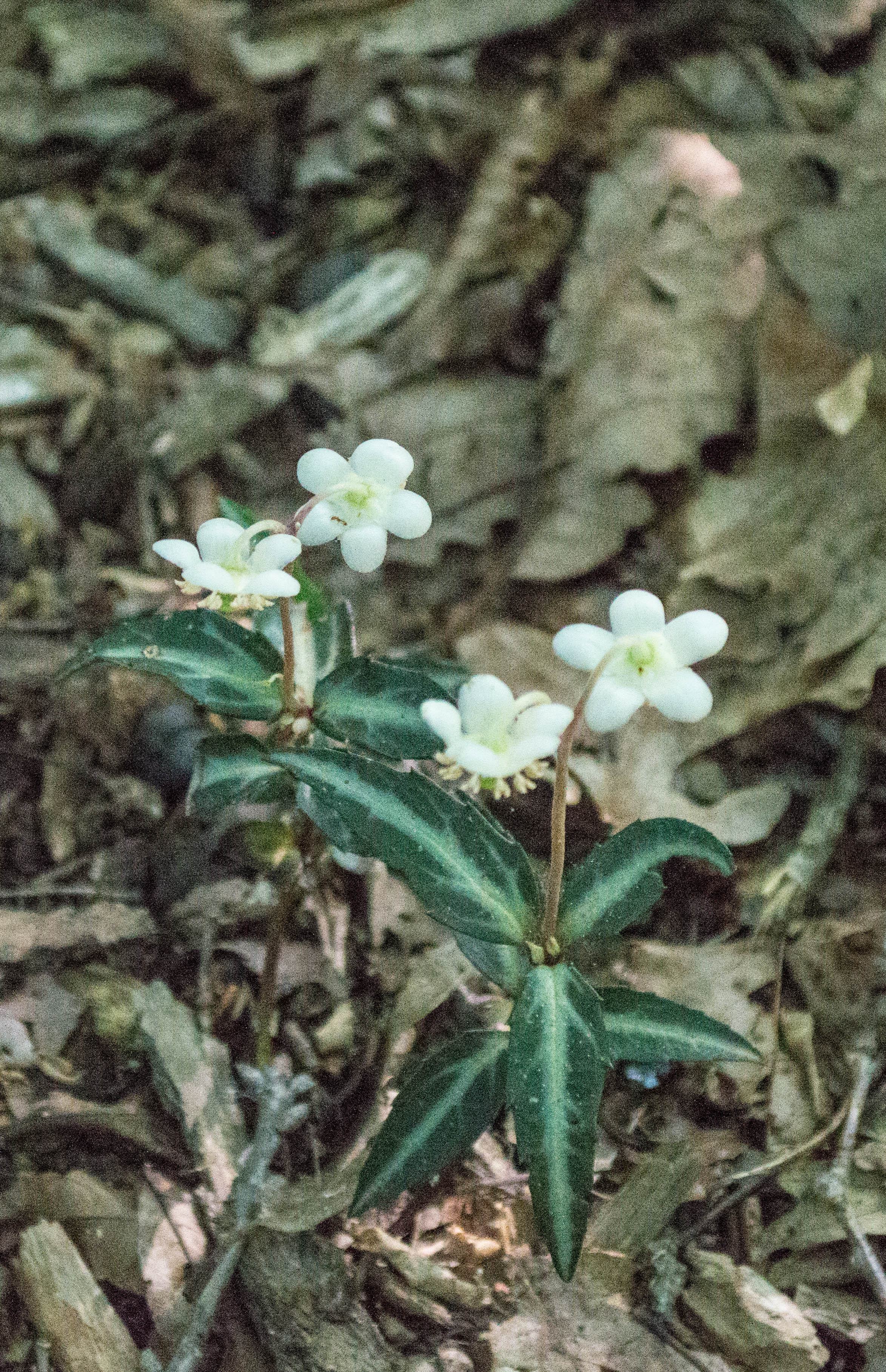
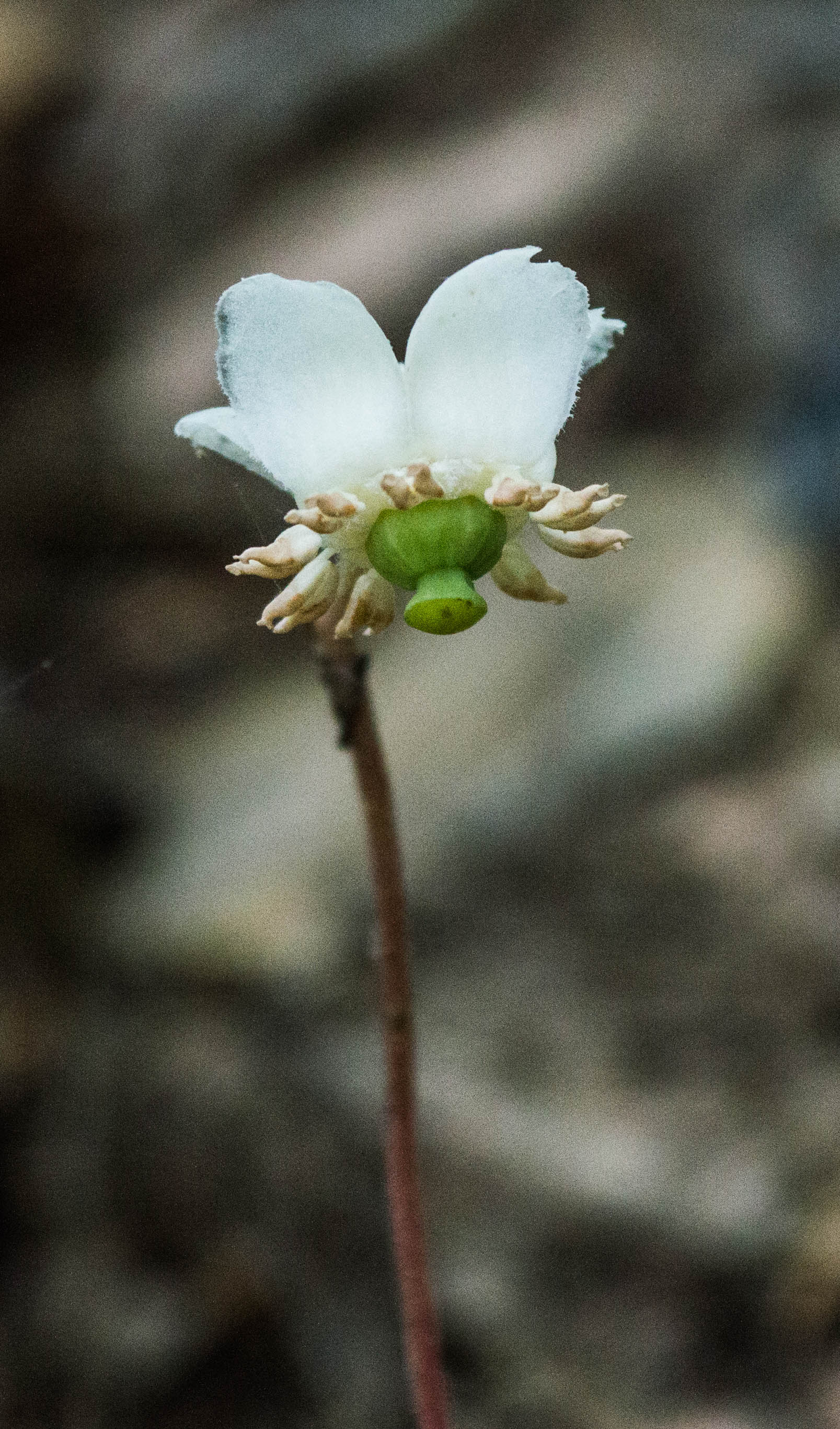
Flower of the Day: Spotted Wintergreen

aka striped prince’s pine; Chimaphila maculata; Pyrolaceae (shinleaf family; some authorities place it in the Ericaceae (heath family))

20140618-DSC_0099

This low-growing (only a few inches tall) evergreen plant likes the shade of deep woods.  The flowers most often appear in pairs, though there can also be one or three flowers together.  It’s found in eastern North America from Florida through Quebec, but is endangered in much of Canada, Maine, and Illinois, and is classed as exploitably vulnerable in New York.

20140618-DSC_0105 20140624-DSC_0040

Flower of the Day: Common Jewelweed

aka spotted touch-me-not, orange touch-me-not, orange jewelweed; Impatiens capensis; Balsaminaceae (touch-me-not family)

20140614-DSC_0144

This easily-found annual plant grows 2-5′ tall, with flowers borne in small clusters in the upper leaf axils.  It likes the wet soils along stream banks, and can be found over most of the US and Canada except the desert southwest, Montana, and Wyoming.  In this area, you can also find the less common pale touch-me-not, I. pallida, along the C&O canal in DC (where I saw it last year).

20140614-DSC_0145

The touch-me-nots are closely related to the very popular bedding plant called impatiens that you find just about any place that sells plants.  This native species attracts ruby-throated hummingbirds, and is an especially important food source for bumblebees.  Supposedly the sap has anti-fungal properties, and can relieve itching from poison ivy as well.

Supposedly the common name “touch-me-not” comes from the fact that the ripe seed pods explode and fling seeds everywhere at the slightest touch.

The List for June

flowering plants first seen in the month of June:

  • white avens
  • tall beardtongue
  • shining bedstraws
  • blue false indigo
  • whorled coreopsis
  • elderberry
  • enchanter’s nightshade
  • fringed loosestrife
  • bottlebrush grass
  • hairy ruellia
  • heal-all
  • horse nettle
  • Indian pipe
  • jewel weed
  • larger blue flag
  • moonseed
  • narrow-leaved mountain mint
  • Pennsylvania smartweed
  • ramps
  • hairy skullcap
  • common speedwell
  • spotted wintergreen
  • trumpet creeper
  • Venus’ pride
  • wild garlic
  • great wood sorrel
  • spotted St. Johnswort
  • black cohosh

And, the  A L I E N S

  • wild madder
  • black medick
  • creeping yellow cress
  • curly dock
  • Deptford pink
  • field garlic
  • little hop-clover
  • white mulberry
  • nodding thistle
  • privet
  • rabbit foot clover
  • white campion
  • yarrow


bringing the year’s total to 201, altogether.

Flower of the Day: Trumpet Creeper

Campsis radicans; Bignoniaceae (bignonia family)

20140618-DSC_0010-2

There are always small, subtle flowers to be found, but now is the time of year for big, showy flowers.  Trumpet creeper practically shouts for you to come have a look.  It grows along the rock walls of the Clara Barton Parkway, and the flowers are so large (2-3 inches long) and bright you can see them as you’re driving by.

It’s a woody vine that grows vigorously to thirty feet long, so think twice before buying one for the garden, unless you have a very large area that you’re trying to naturalize.  It does attract hummingbirds.

By the way, if you are interested in native plant gardening and attracting wildlife, read this very interesting article before buying plants at the nursery. Many native plant cultivars developed for the garden are far enough removed from their native form that animals don’t recognize them.  They’re useless.