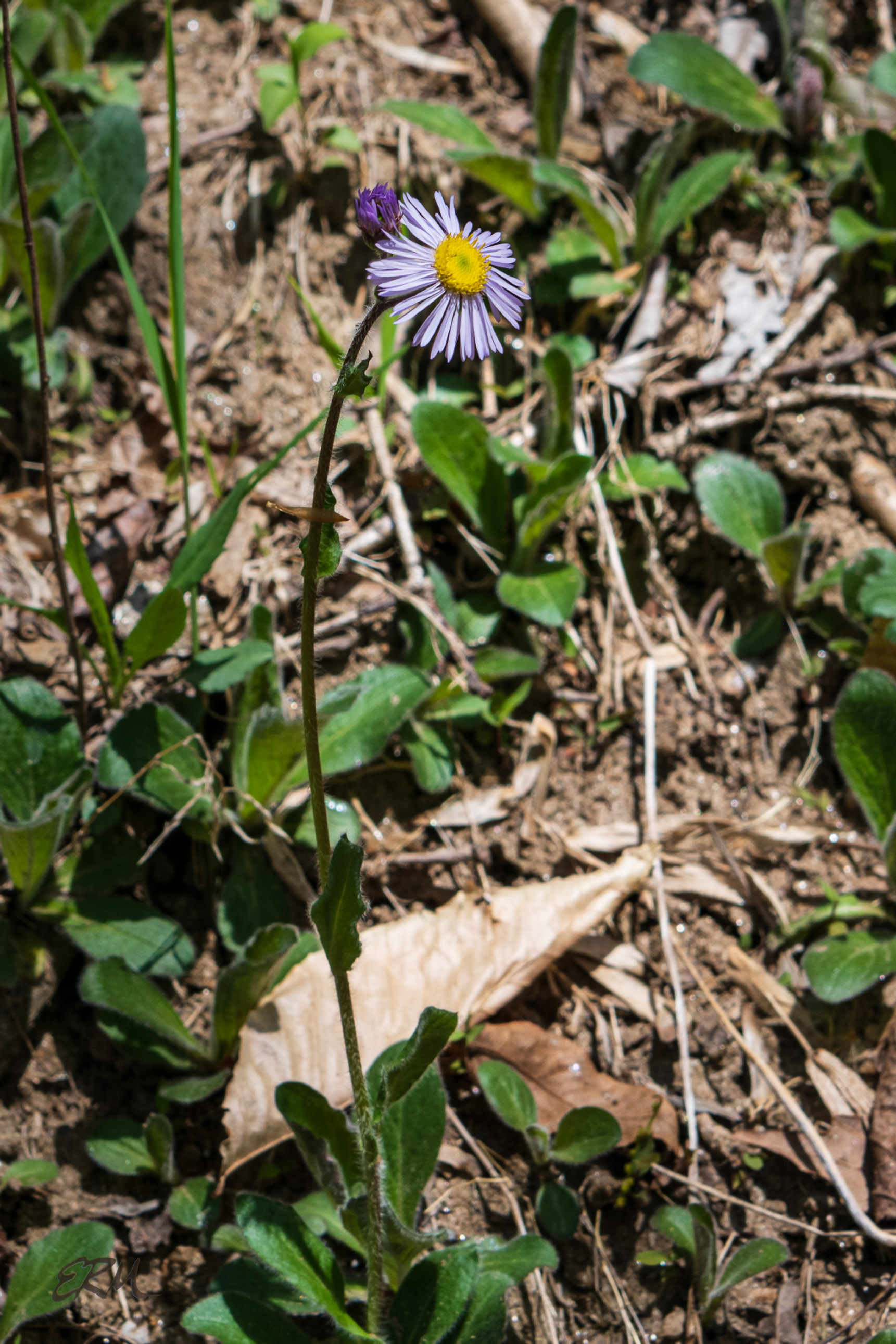
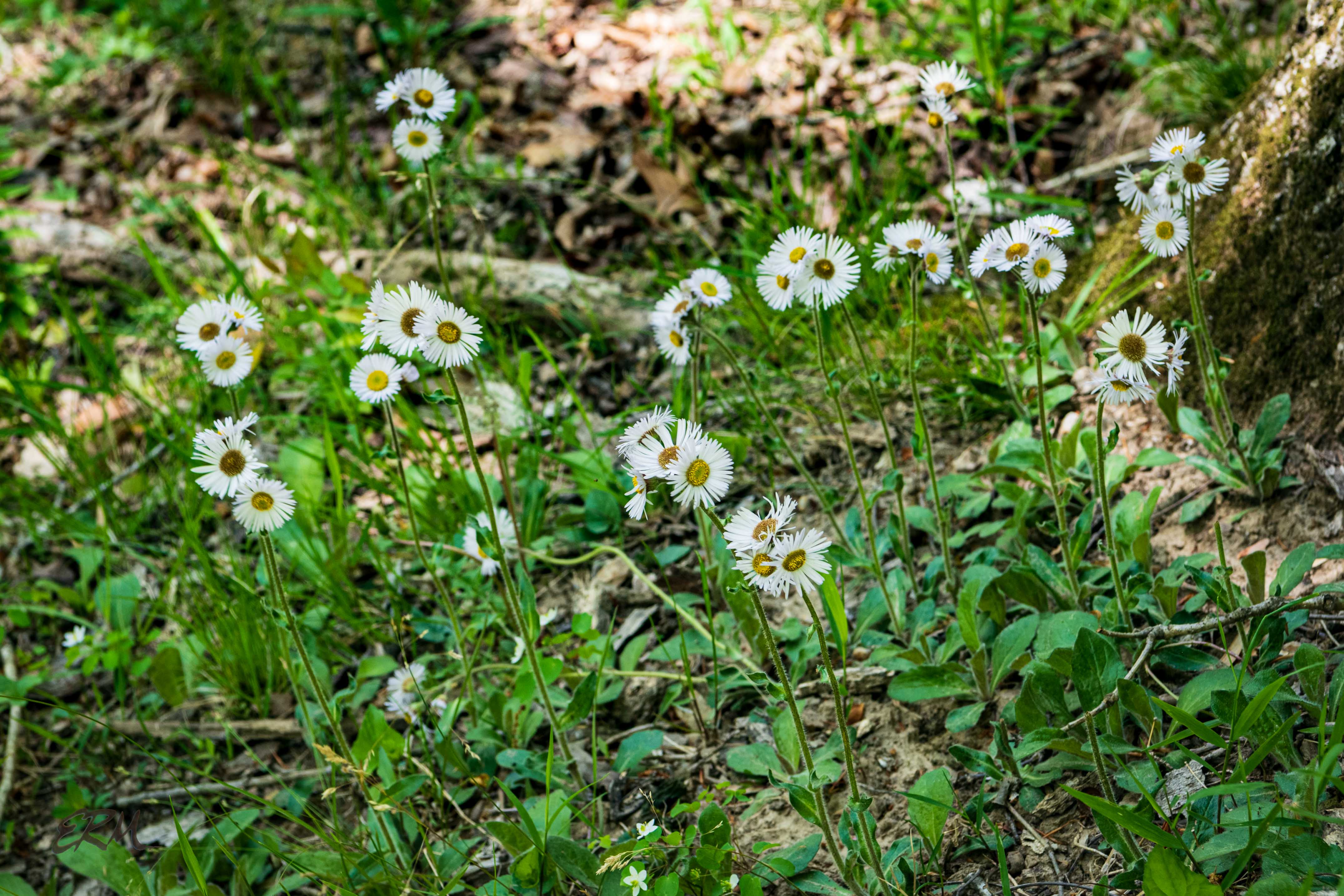
 As a follow-up to the last post, here are a few more pictures of Robin’s plantain.
Inflorescence with two flower heads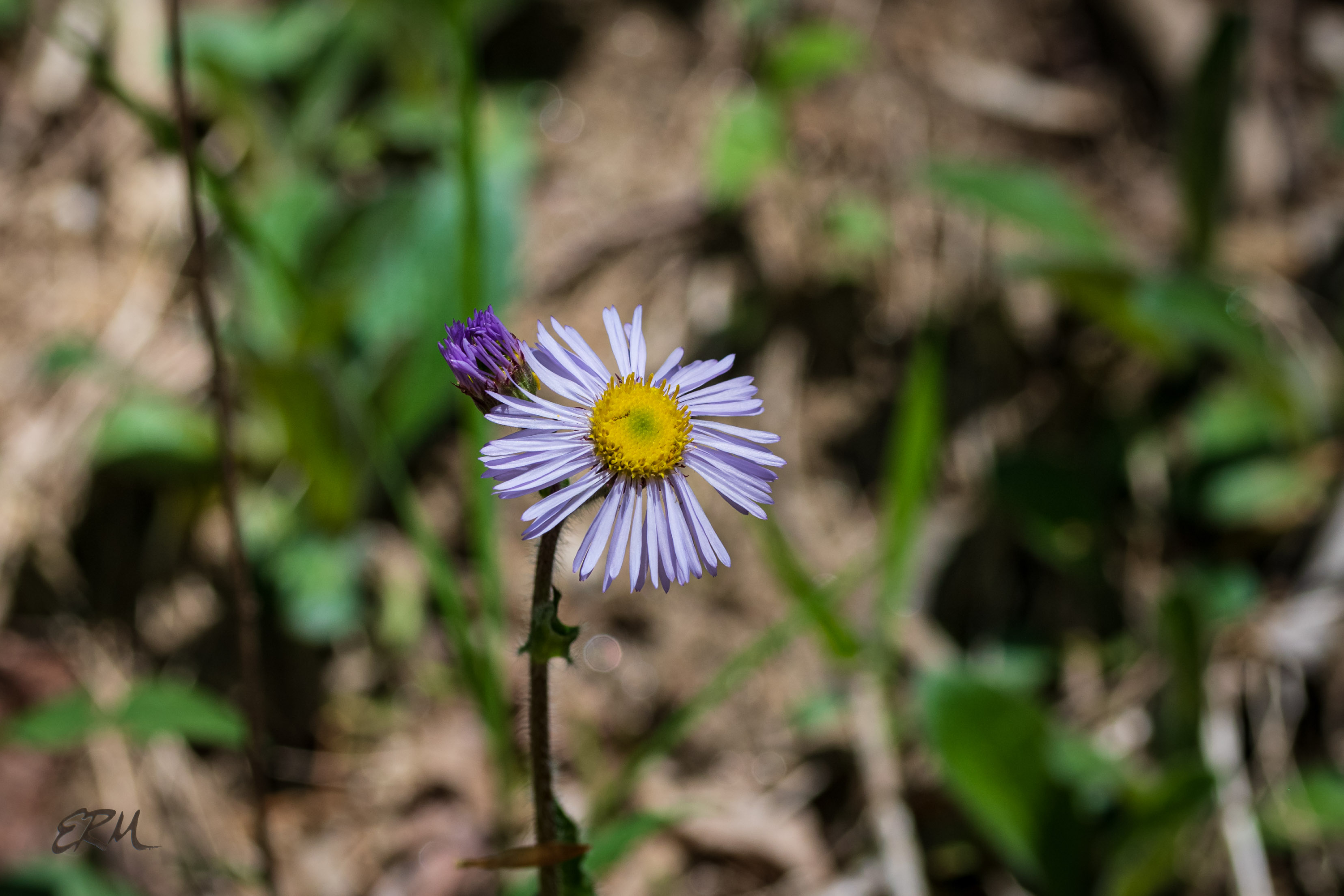

inflorescence seen from behind

pubescent leaves of the basal rosette; conspicuously hairy stem

a small colony
As a follow-up to the last post, here are a few more pictures of Robin’s plantain.
Inflorescence with two flower heads
inflorescence seen from behind
pubescent leaves of the basal rosette; conspicuously hairy stem
a small colony
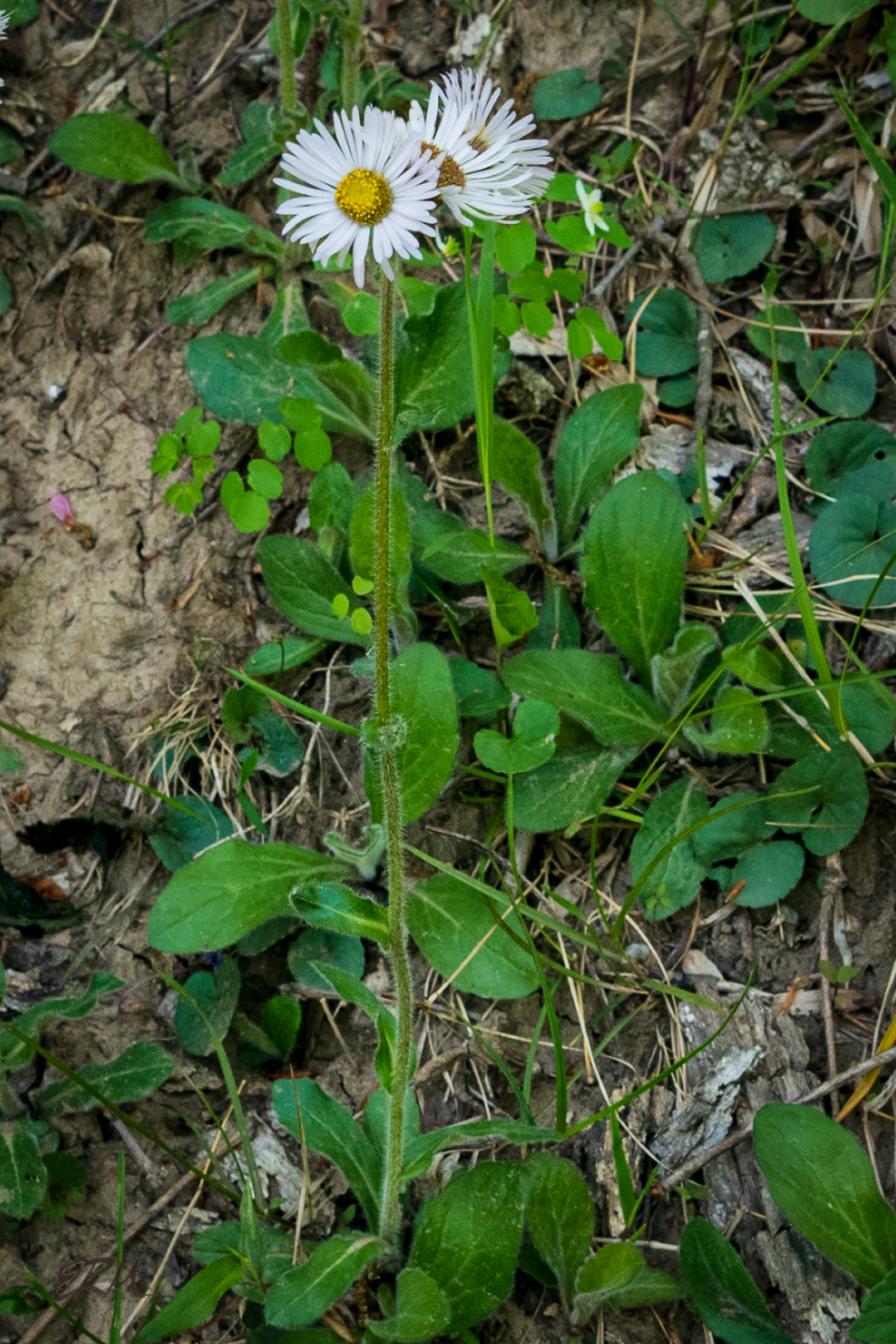
Robin’s plantain, Erigeron pulchellus
Over the years I’ve seen many fleabanes in many different locations. Mostly they were Erigeron annuus (annual fleabane) or E. philadelphicus (common fleabane). Sometimes they were E. strigosus (daisy fleabane).
Always I looked closely to see if maybe I’d found E. pulchellus (Robin’s plantain). Sometimes I thought I had; I’d pore over the pictures I’d taken and read yet again the descriptions in various books, and always I came to the conclusion: nope, not this time, not Robin’s plantain.
Then one spring day in 2022 I was walking in the Gold Mine Tract near Great Falls when a stand of aster-y looking flowers caught my eye. “What are those?” I wondered. “They look like fleabanes, but… oh wow, that’s Robin’s plantain!”
When it comes to identifying Robin’s plantain, my best advice is, you’ll know it when you see it: it looks like the more common Erigeron species, but is different enough to make you think twice. Here’s a grossly oversimplified rundown of how to differentiate the four fleabane species found in Maryland*.
Start by looking at the stem leaves. If most of them are sessile (maybe slightly petiolate), then the plant is either E. annuus or E. strigosus.

many toothed sessile leaves
If the stem is crowded with leaves, and most of them are distinctly toothed, then it’s E. annuus. Look for basal leaves; if there aren’t any, that’s another indicator for E. annuus.
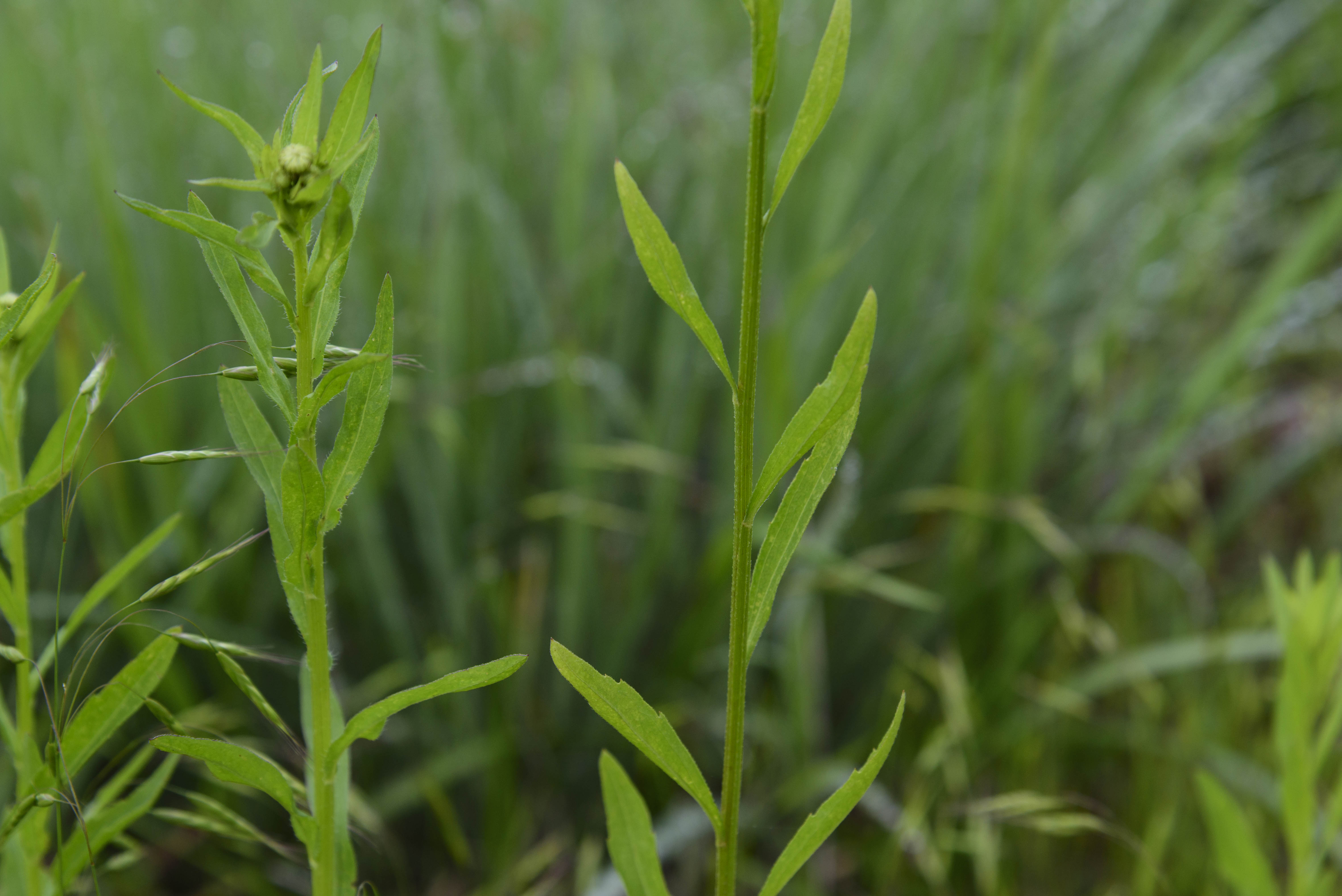
fewer leaves on stem; leaves mostly entire
If there are only a few stem leaves, and they’re mostly entire, then it’s E. strigosus.
If most of the stem leaves are clasping, then the plant is either E. philadelphicus or E. pulchellus.
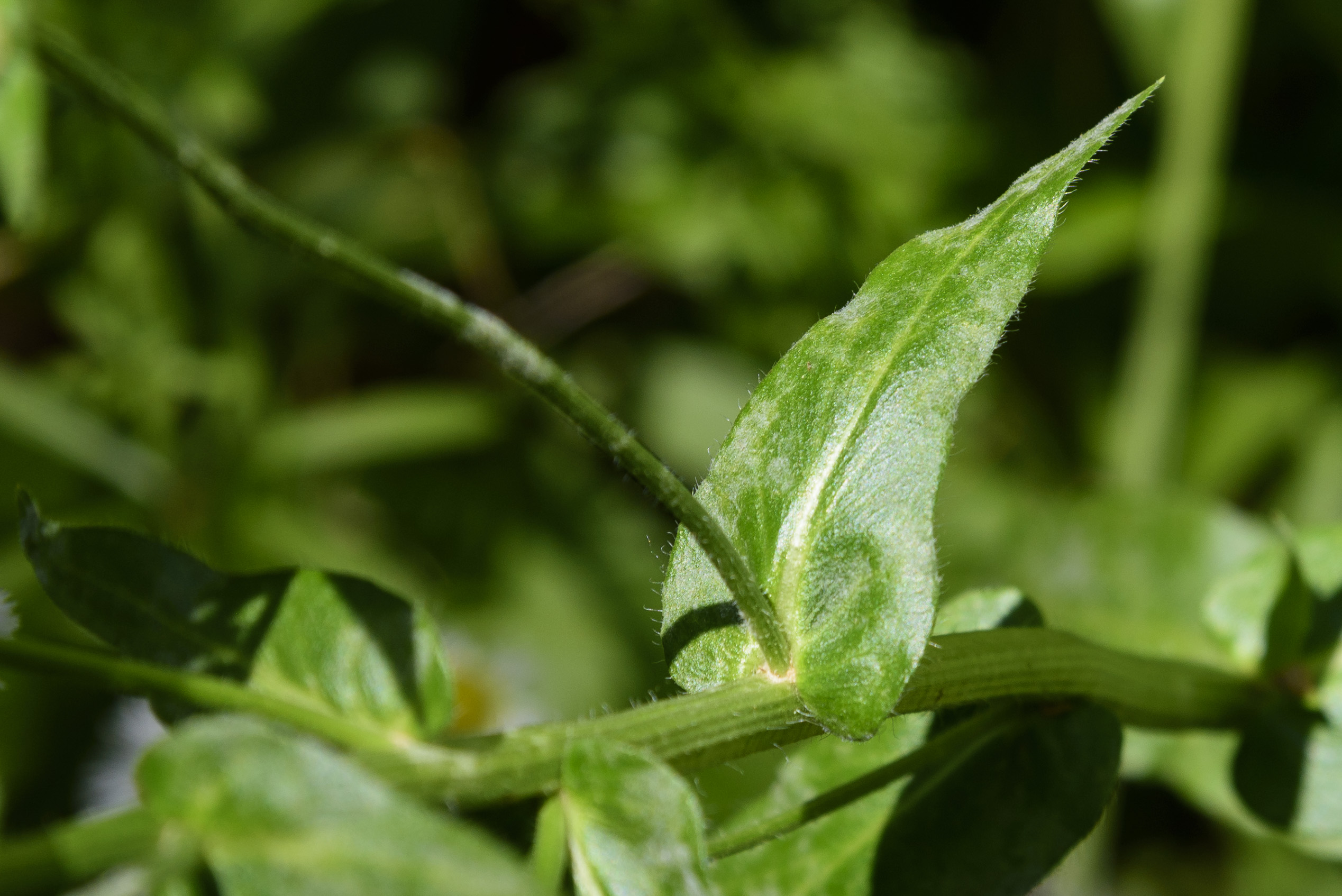
clasping leaf, margin entire
If the stem leaves are only slightly toothed at the bottom of the plant, and entire further up the flowering stem, then it’s probably E. philadelphicus.

wavy leaf margin, clasping; also note the conspicuously hairy stem
If they’re wavy or more obviously toothed, then it’s likely E. pulchellus.

There are other, maybe better ways differentiate these two species. Look at the inflorescence. If it’s obviously branched and bearing many flower heads, then it’s E. philadelphicus.
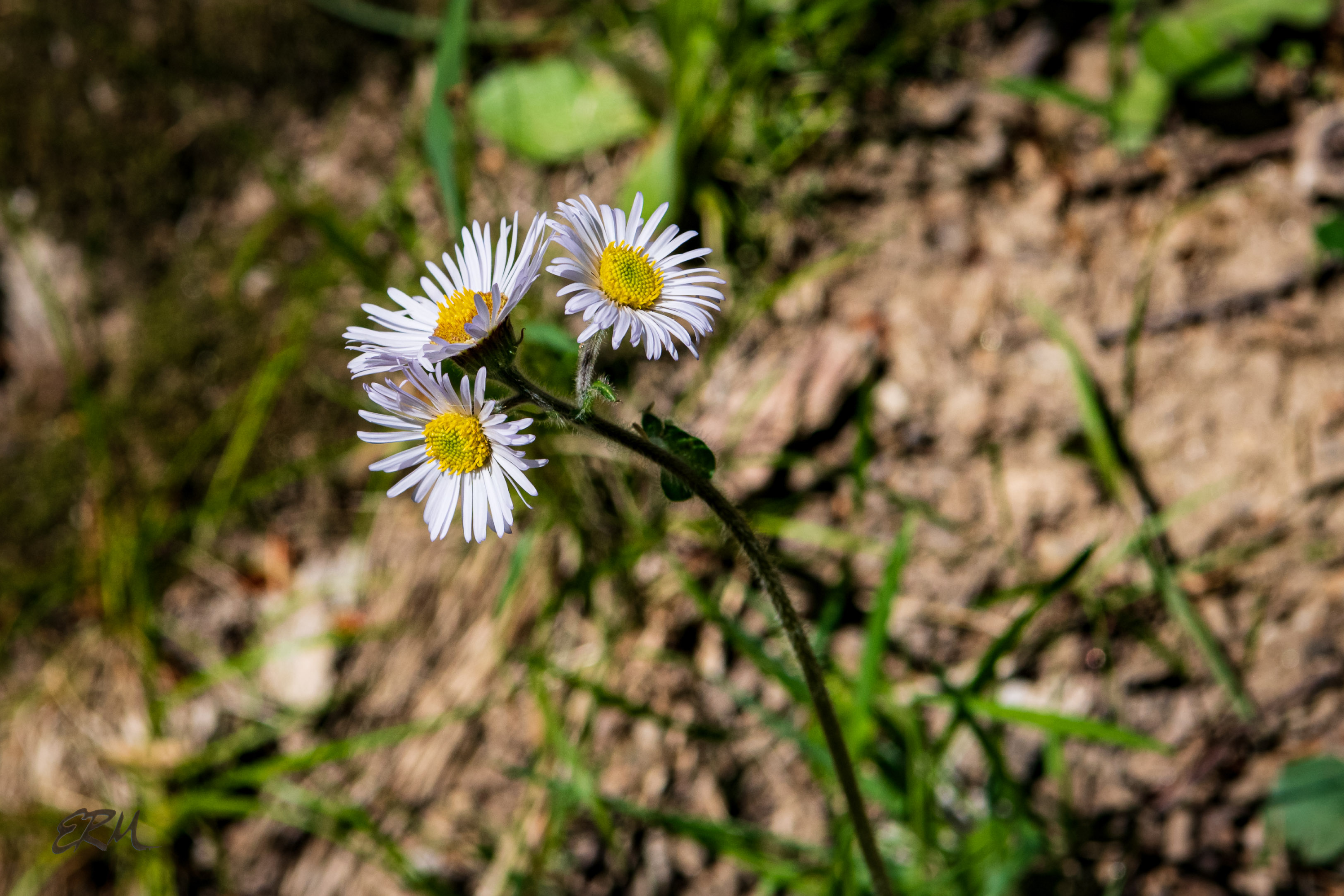
If it’s unbranched and bearing only a few flower heads, then it’s E. pulchellus. (Also, E. pulchellus heads tend to be larger with many fewer ray flowers than E. philadelphicus.)
Also consider the habitat. E. philadelphicus is found in moist soils in disturbed areas (fields, roadsides) and is much more common. E. pulchellus is a plant of dry woodlands and prefers rocky areas, like the bluffs in the Gold Mine Tract.
above left, common fleabane; above right, Robin’s plantain
———–
*information gleaned mostly from Flora of Virginia, Alan S. Weakley; any errors are mine
 Forked bluecurls (Trichostema dichotomum) is a small annual forb in the Lamiaceae, easy to miss because the flowers are small, too. It’s worth stopping to take a close look, though, because the color is stunning, and mint family flowers are just nifty.

For detailed information about forked bluecurls, see this post from 2016. Many thanks to my friend B for posting about this find on social media; I hadn’t seen forked bluecurls in years, and dropped everything to go photograph them.


 My friend P wrote that when I posted a picture of purple-headed sneezeweed (Helenium flexuosum) on social media. I included a few pictures in my August 7 post here, but want to share a few more. It’s such a photogenic flower! That’s a pearl crescent (Phyciodes tharos) sitting on the flower head.

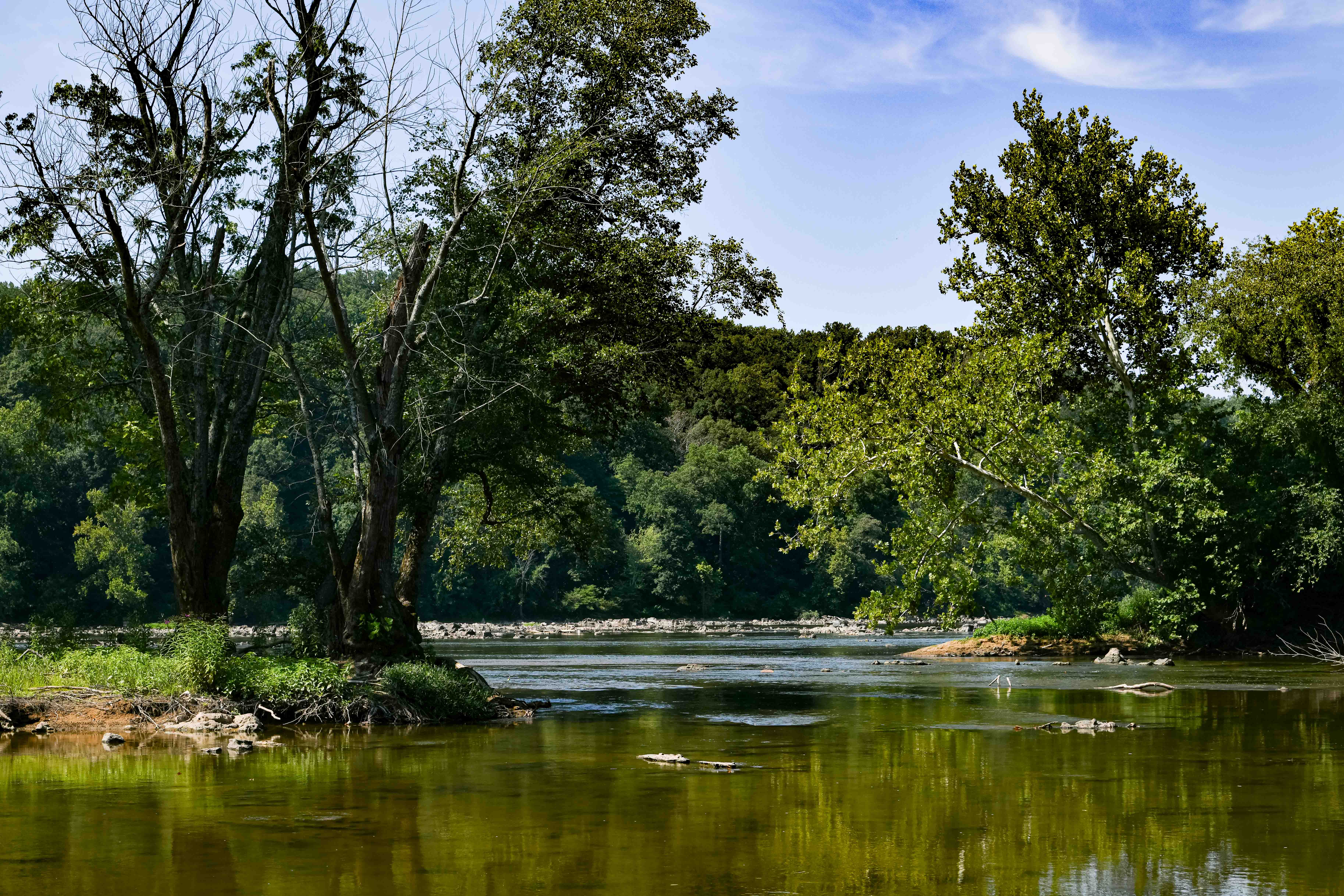
 Here are a few more pictures from my August ramblings on the banks of the Potomac.

fogfruit, aka frogfruit (Phyla lanceolata; Verbenaceae)
 blue vervain (Verbena hastata; Verbenaceae)

 riverbank goldenrod (Solidago racemosa; Asteraceae)

tall meadow rue (staminate flowers; Thalictrum pubescens; Ranunculaceae)

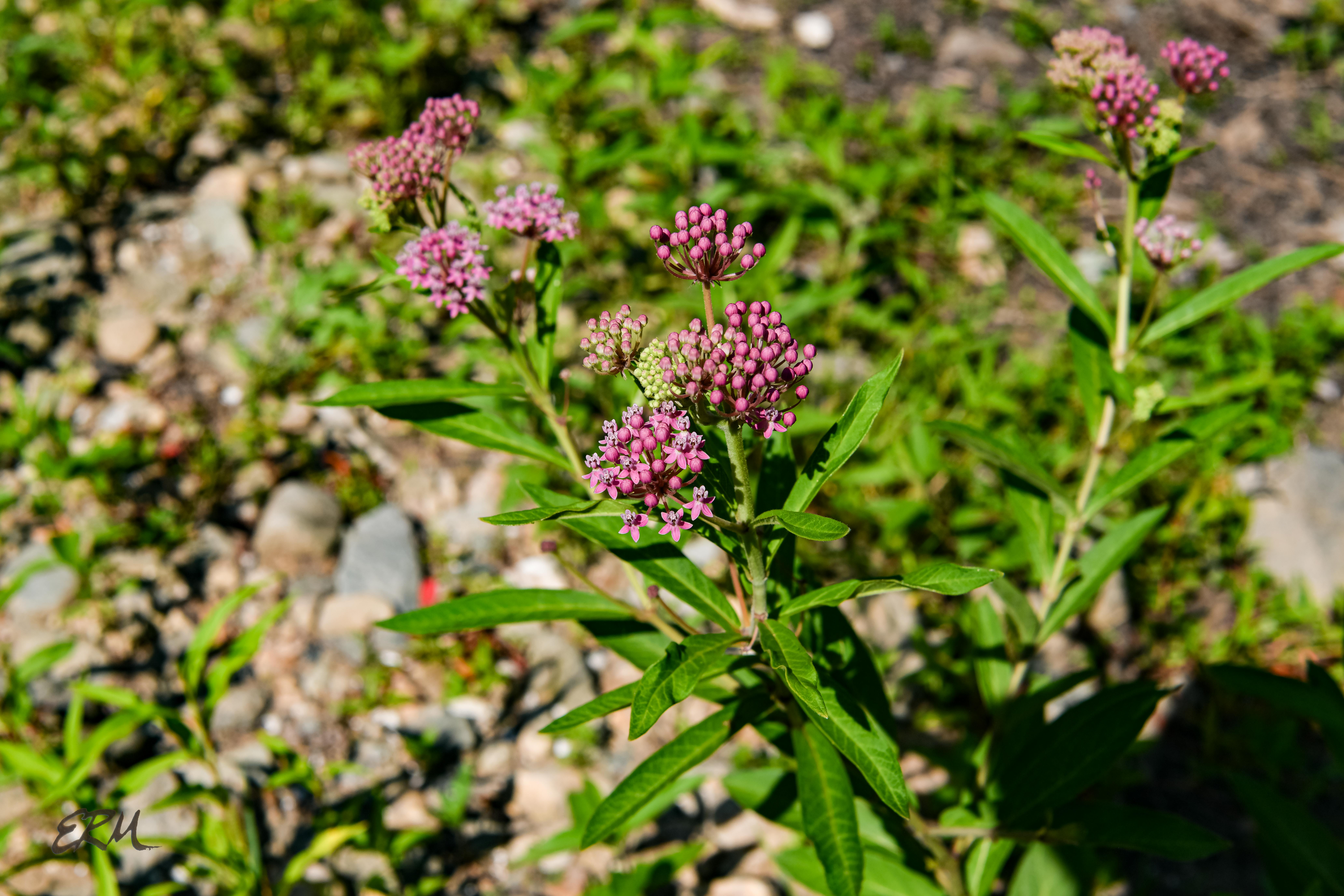
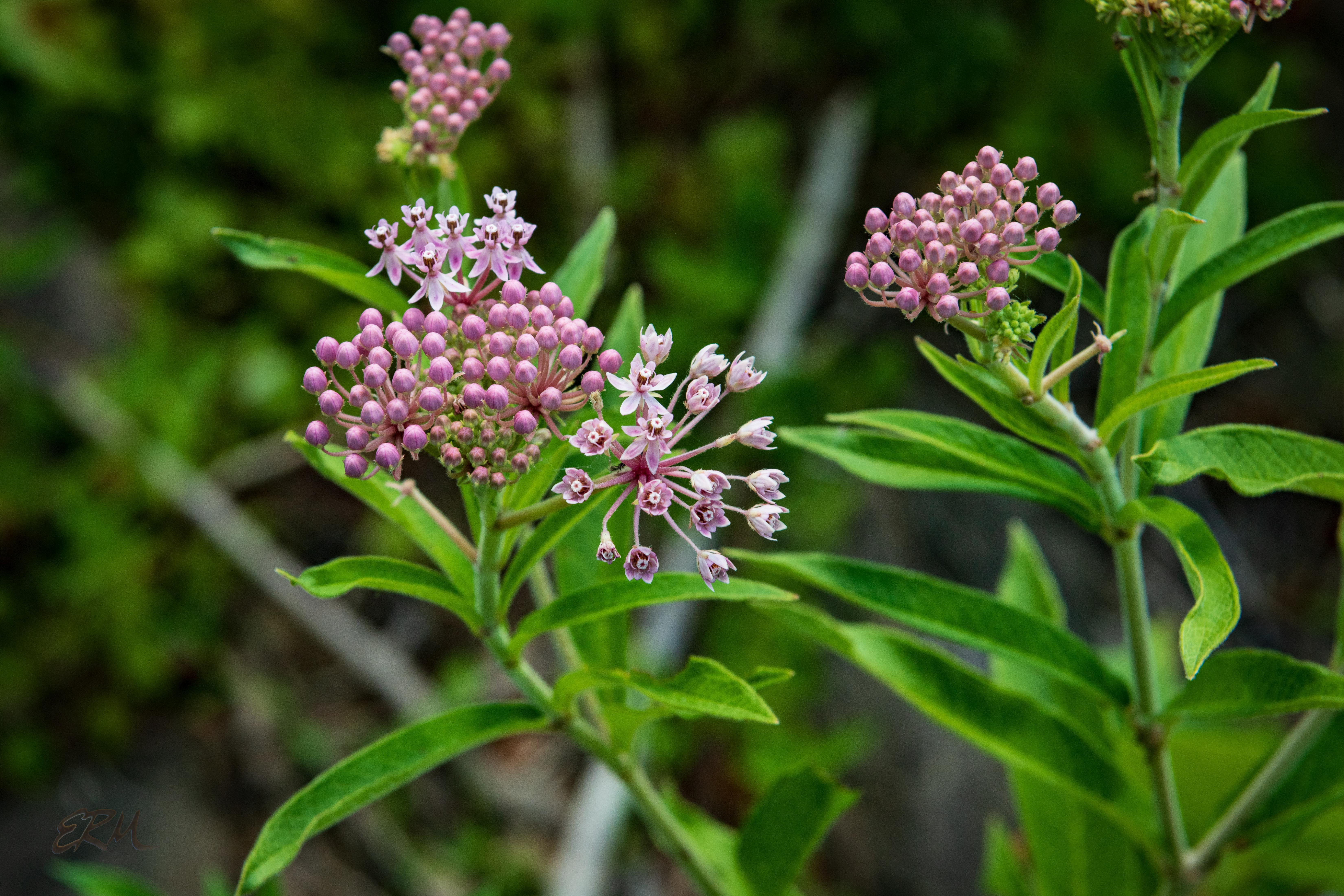 Swamp milkweed (Asclepias incarnata; Apocynaceae) is found in habitats similar to swamp candles (see previous post). They’re pretty easy to distinguish from common milkweed (A. syriaca): the flowers are a richer, more saturated pink color, and are borne in flatter, sparser clusters; also the leaves of swamp milkweed are much more narrow.
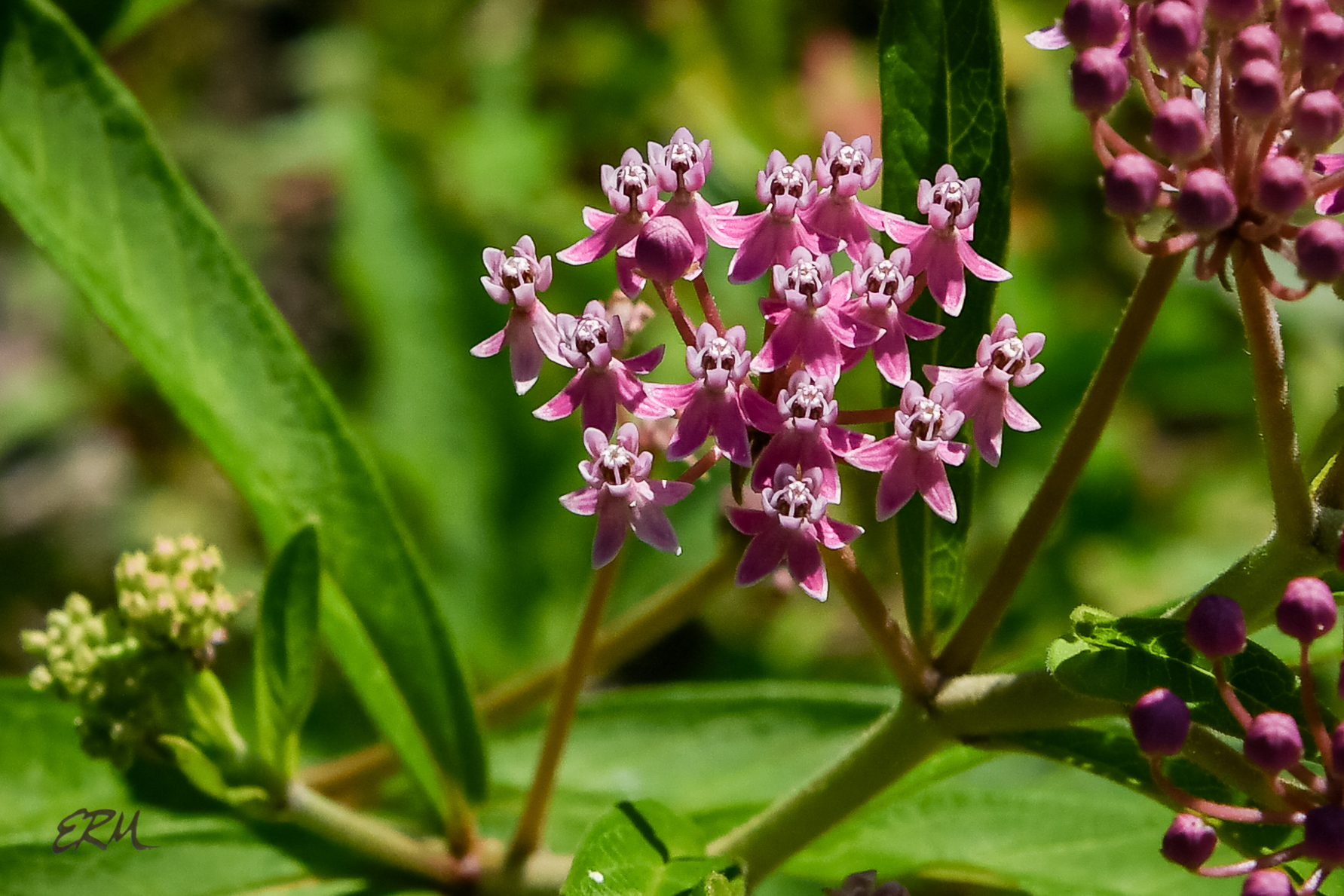 I don’t have much of anything new to say about them (see this post from 2017); I just wanted to share a few pictures from early August.
Click on each picture to see it better.
 Elizabeth's Wildflower Blog