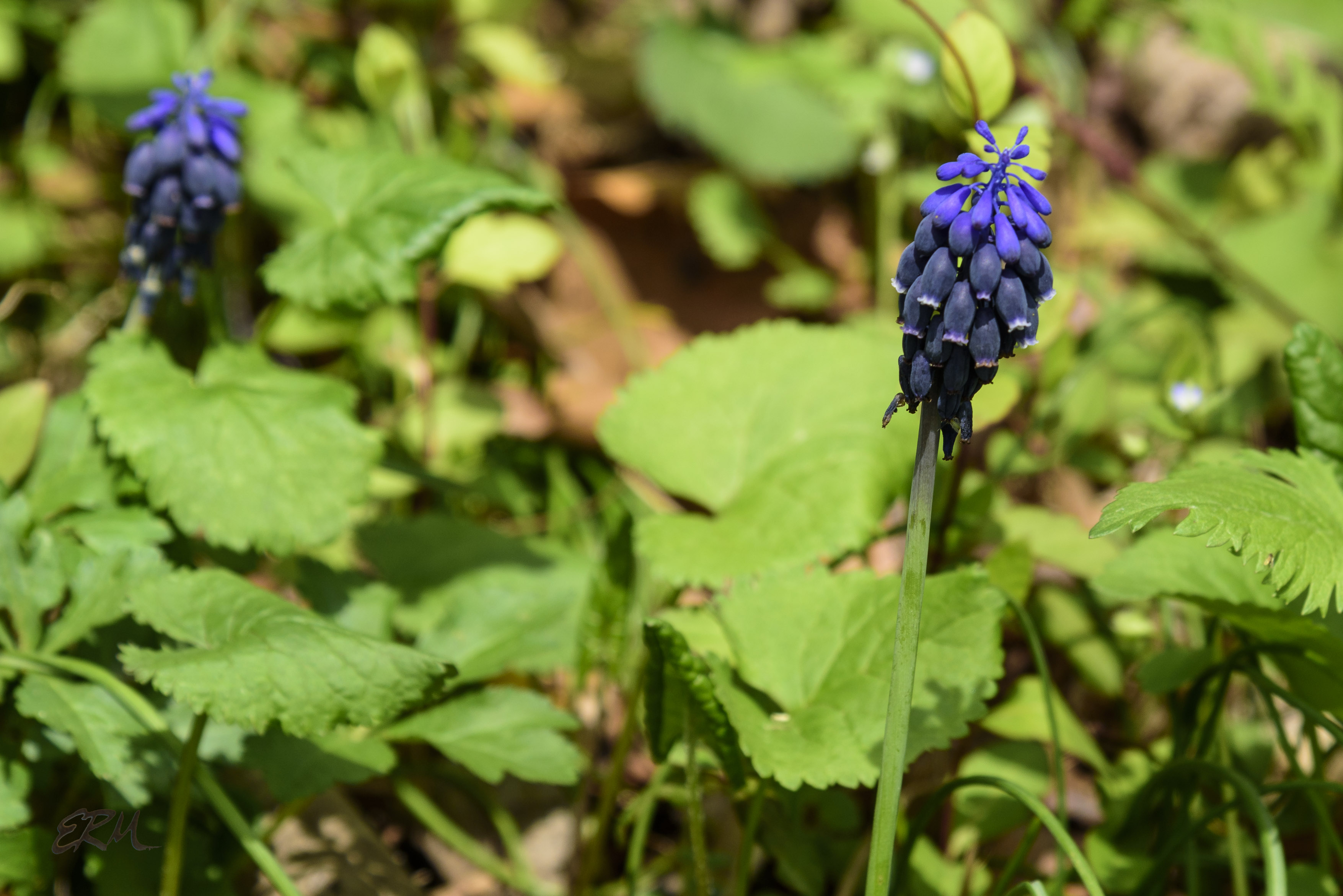
Never Assume

Every year I see this garden escapee along the Billy Goat C trail, and every year I think “yep – Muscari armeniacum“, because I know that plant from many years of gardening.

But, I’m always fact-checking (or second-guessing) myself, so I looked up M. armeniacum, just to be sure. Imagine my surprise when multiple authorities show it present in North America, but nowhere near the Mid-Atlantic.

Huh.

The same authorities show two other Muscari species, M. botryoides and M. neglectum, in the Maryland piedmont, so I checked Weakley’s Flora, and believe this to be M. neglectum. Unless it’s one of the cultivars. I think for the purposes of this blog, it’s good enough to say it’s a Muscari.

There are numerous Muscari species and cultivars in the nursery trade, all of which go by variants of the common name grape hyacinth. Previously placed in the Liliaceae, they’re now listed in the Asparagaceae. They’re easily grown bulb-forming perennials that bloom early and spread nicely in the garden, which is why they’re a problem: they naturalize a little too well.

Populations of the various Muscari are now established in much of the US, excluding the Great Plains and the mountainous and desert regions of the West. I haven’t found any official listing of it as invasive other than in Tennessee, but that may be a matter of time.

The long, grass-like leaves in these pictures belong to the grape hyacinth; it’s growing in a patch of golden ragwort, which has the heart-shaped leaves.
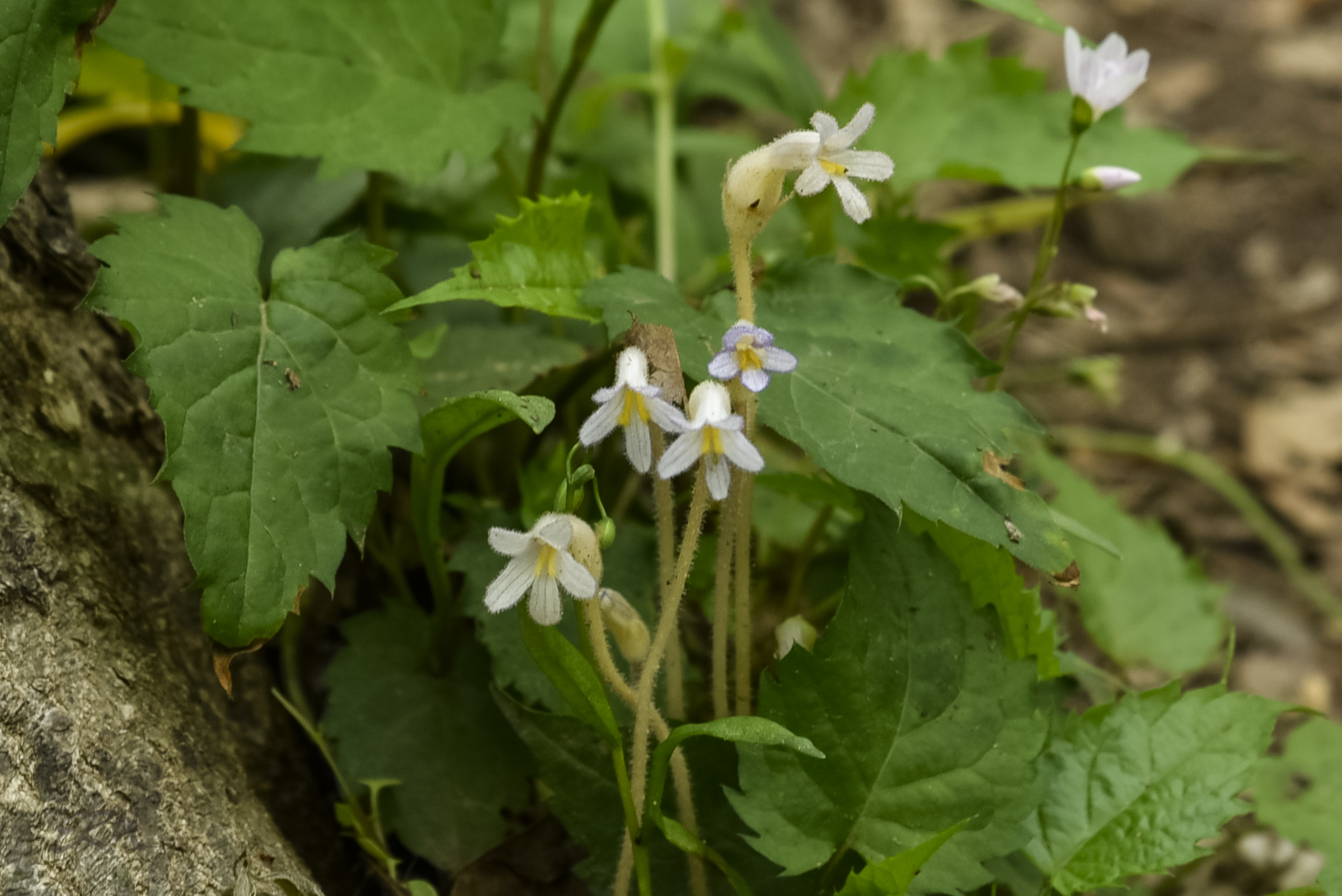
Notorious Orobanche

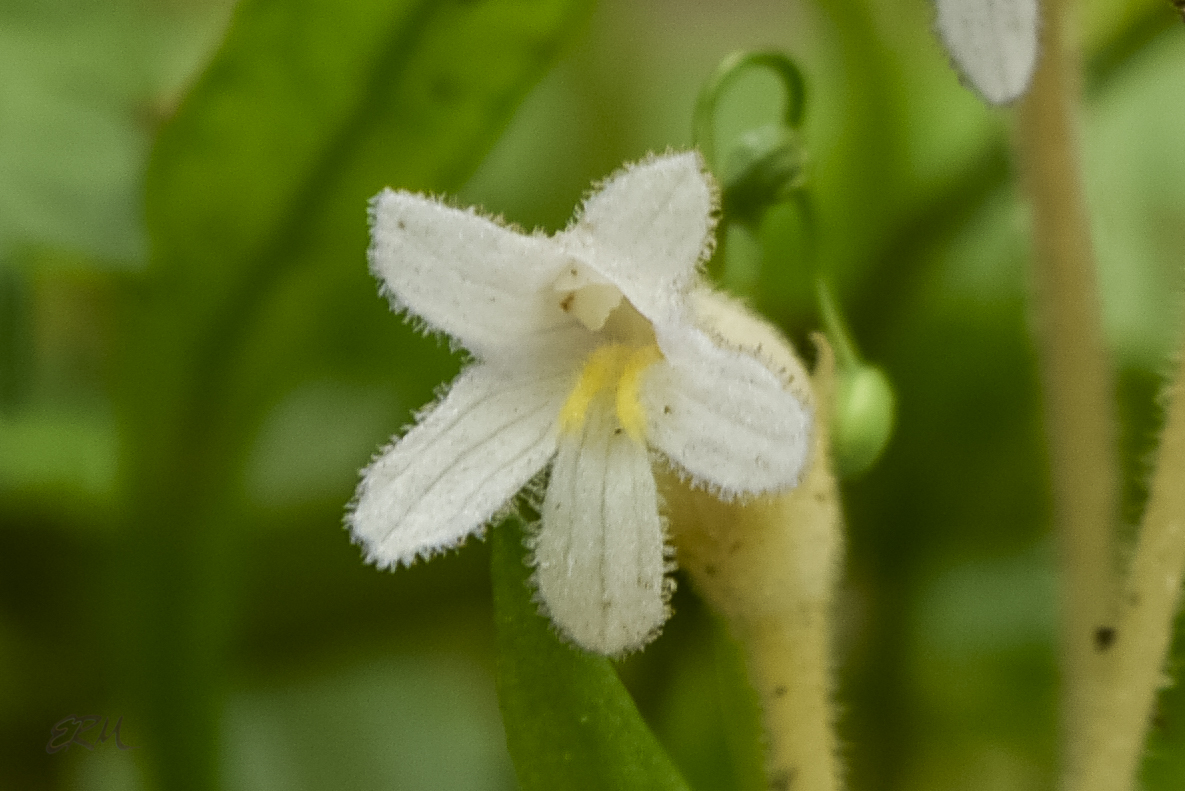
When I finished shooting small-flower phacelia, I just sat and enjoyed the view for awhile, but then the sky darkened and rain looked imminent, so I got all the gear into my daypack and started hoofing it fast back to the car. And then I stopped short, because I saw this.

I suppose a truly dedicated photographer and botanerd would take the time to set up the tripod and get decent close-up shots, but I hate getting wet, and more importantly I didn’t want the camera to get wet, so I took a few handheld shots and then really started hoofing it fast.

This is Orobanche uniflora, known by the common names one-flower cancer root, one-flower broomrape, and ghost-pipe; it’s placed in its own family, the Orobanchaceae. It can be found throughout the continental US and most of Canada, in moist woodlands and open areas, often growing right among species of Sedum or plants in the aster and saxifrage families*. In Maryland it can be found from the Appalachian plateau to the western edge of the coastal plain.

Notice that the stems are yellow, and there’s no green? That’s because this species has no chlorophyll: it’s parasitic, requiring a suitable host in order to germinate and grow. The leaves surrounding the flowers in these pictures are from other plants. Some of them look to me like one of the asters, though I can’t be sure unless I go back in a few months and see the plants blooming.

The various Orobanche species are on the federal noxious weed list, and are classified as noxious, prohibited, quarantine, or pest by eight states; Florida excepts O. uniflora, though. It’s hard to imagine this little thing causing significant crop damage, but apparently it can.

*USDA Forest Service

Yet Another Phacelia. Last One For Awhile. Really.

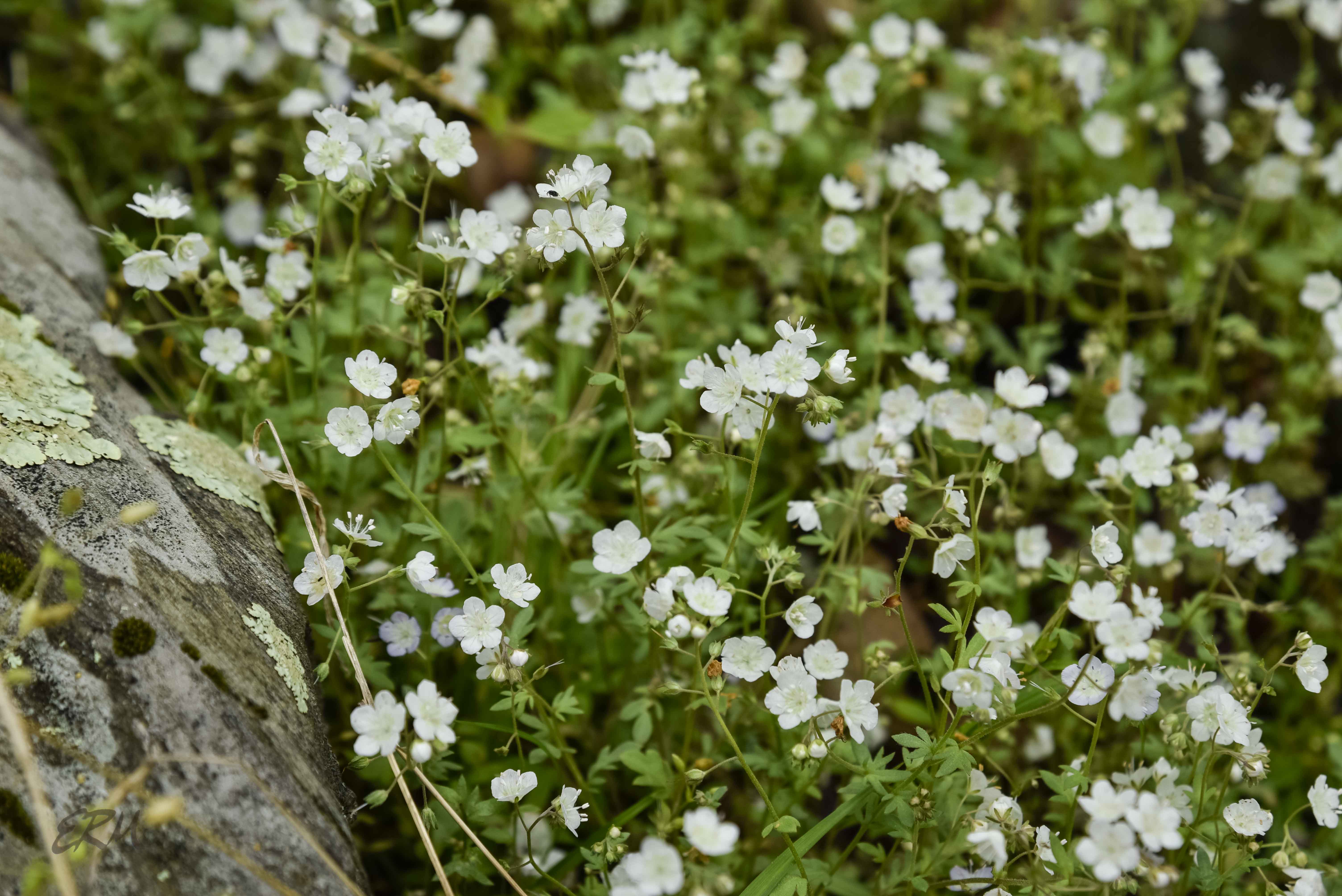
It was an overcast day, and I was working at my volunteer job downtown when I realized that rain was likely soon, and could continue for the next several days, and if I waited too long I’d miss seeing small flower phacelia blooming. Quel horreur! since this was a “new to me” species.

So I packed up, drove out to Old Anglers Inn, and hiked quickly through occasional light drizzle to the place where fellow muddy-kneed photographer and wildflower enthusiast LW directed me. (See comments in One More Phacelia for location.)


Phacelia dubia (smallflower phacelia, small-flower scorpionweed, Appalachian phacelia) is a short-growing annual forb in the Boraginaceae (currently). It’s found in parts of the Deep South but more frequently in the Mid-Atlantic states (Virginia, Maryland, West Virginia, Pennsylvania, and one part of New York). It’s presumed extirpated in Ohio.

Like P. purshii, P. dubia is listed as S3/watchlist in Maryland. The two species are much alike, about the same height, flowers about the same size. Based on a one-time only observation in this large patch of plants, I’d say the cauline leaves of P. dubia are a little smaller, with fewer lobes, and mostly sessile rather than almost clasping as in P. purshii; also there seem to be fewer of them.

Most of the flowers in this patch were white, though some of them had a blue-ish cast and a few were an outright light lavender. But color is seldom diagnostic. The obvious difference between small-flower and fringed phacelia is the fringed petals on the latter species. In small-flower phacelia, the petal margins are entire.

Thanks for the tip, LW!

Geraniums, Native and Alien

It seems like after a slow start, everything is blooming all at once. It’s hard to keep up with it all. Last Tuesday, for example, I saw thirty species of plants flowering in a few locations from Old Anglers Inn to Lock 10. Among them were two geraniums, one native and one alien.

Geranium maculatum (wild geranium, Geraniaceae) is a clump-forming perennial forb that grows up to two and a half feet tall in moist soils. You can find it in open woodlands, meadows, and woodland edges. There’s a good amount of it growing off the Billy Goat B trail, along a footpath that leads up to the canal from about the trail midpoint, where it crosses a small stream.

Wild geranium is found in a few parts of the easternmost Great Plains and the South, but mostly in the mid-Atlantic, Midwest, New England, and eastern Canada. In Maryland look for it everywhere except the southern parts of the coastal plain. It’s a great plant for the garden: it spreads, but not aggressively, is pest-free, and rabbit-proof (my new gold standard for native forbs).

The other geranium native to the Maryland Piedmont, G. carolinianum (Carolina cranesbill) can also be found in the Carderock-Marsden Tract area, but I haven’t seen it yet this year. It usually starts blooming a few weeks after wild geranium. Note that the flowers are smaller and the foliage more finely cut.

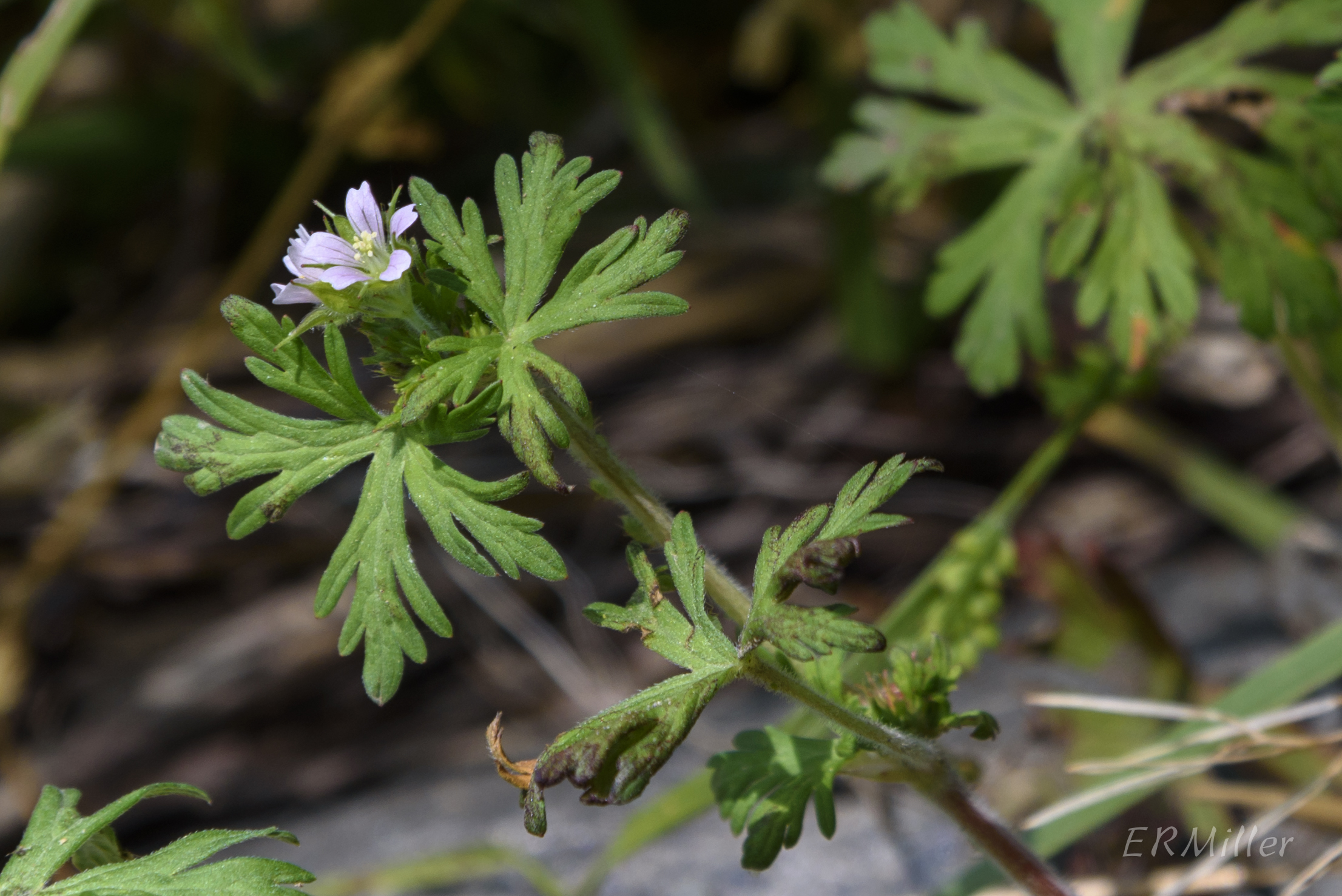
The Maryland Biodiversity Project shows 11 species of geraniums in the state, probably seven of which can be found in the Piedmont. Five of them are aliens. This one is G. molle, which I found growing next to the parking lot at C&O Canal Lock 10. As is often the case, I was looking for something else when I found it (more on that in a future post). In a frequently-mown area this plant is quite short and branched, as you’d expect, but left to grow it still doesn’t get as tall as G. maculatum. The flowers are smaller, too, and a more lurid shade of pink, and the leaves more intricately cut.

Rainy Earth Day Blues

Typical Mid-Atlantic spring weather today, cool and rainy. Not that I’m complaining: we need the rain, and I need to stay indoors and catch up on a huge backlog of photos and posts to write. But it does make me feel blue, so here’s an antidote: azure bluets. More on them in a few days. I just wanted to post this picture.