Brain Fruit

20161129-_dsc0060

One day in October I was looking for parking in a residential area in Washington, DC. When I found a stretch about a quarter block long that was devoid of cars, two thoughts went through my mind in quick succession: “hooray!” and “wait, this is too good to be true.”

It was too good to be true, not because of DC’s often byzantine parking restrictions, but because of the large number of softball-sized green things on the street: brain fruits, also known as hedge apples, horse apples, monkey balls, mock oranges, and osage oranges. Those things falling off a tree can put a heck of a dent in a car.

20161129-_dsc0052


autumn leaves and characteristic deeply furrowed bark


These fruits come from the tree Maclura pomifera, which goes by many common names, including the ones above (except brain fruit and monkey balls), yellow-wood, and bodark, a corruption of the French name bois d’arc (bow-wood). It’s in the mulberry family (Moraceae), which also includes fig (Ficus carica), jackfruit (Artocarpus heterophyllus), and breadfruit (Artocarpus altilus). Jackfruits are thought to be the largest tree-fruit in the world (they can weigh up to 80 pounds), and breadfruit saplings were the precious cargo on the HMS Bounty when the crew mutinied.

The native range of the osage orange is thought to be Arkansas, Oklahoma, and Texas, primarily in the Red River basin. However, it can be found across much of North America because 1. it was extensively planted for hedgerows and windbreaks, and 2. as a pioneer species it can be agressive or even weedy. But it was incredibly useful, with highly rot-resistant wood that made great fence posts as well as bows and tool handles. And it’s thorny, so planted close together and pruned to keep it short and dense it made effective livestock fencing: “horse high, bull strong and hog tight”, as the saying went.*
20161129-_dsc0055


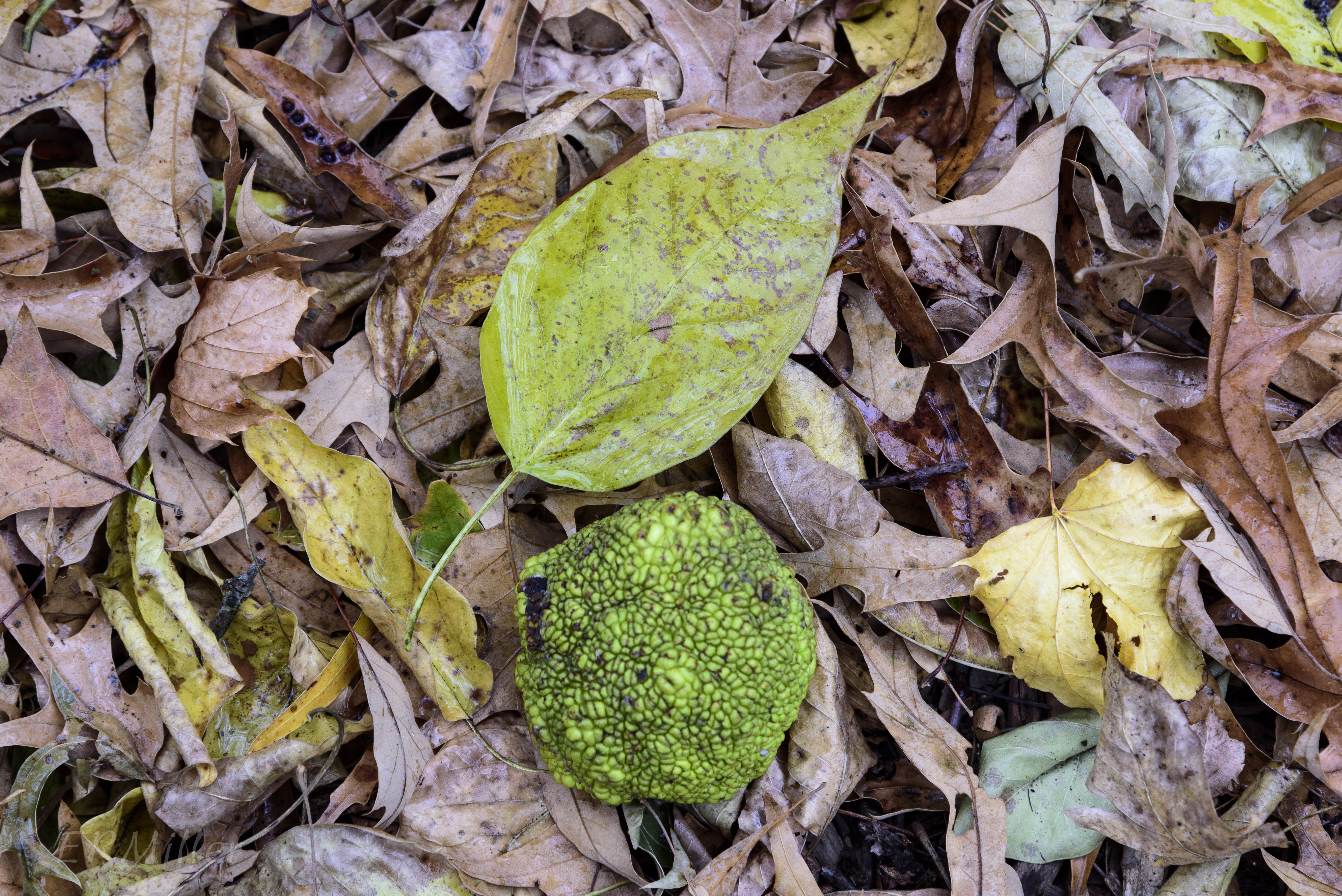
leaf and fruit; this leaf blade measured 6.5″, and the petiole another 2.5″;
the fruit was 3.5″ in diameter


The tree can grow to a height of 65 feet, but is often somewhat shorter. It’s dioecious, meaning that plants bear either male or female flowers. Despite having a specimen almost in my backyard, I’ve never seen the flowers, which are generally described as “inconspicuous”.

But I see plenty of brain fruits.

One time a few years ago a big storm knocked a large, mostly dead branch off the tree and into my yard. I was happy to collect the wood, cut it, and season it, because osage orange wood has ridiculously high BTU value.

20161129-_dsc0062


inside


*I spent a long time trying to find the origin of this phrase. The earliest use I could find was as a description of a “lawful” fence (osage orange or not), in an 1878 newspaper article in Sherill’s History of Lincoln County, North Carolina:

The question of no fence law was agitated. Up to this time cattle and hogs had free range and field crops had to be fenced in. A lawful fence was “horse high, bull strong and hog tight.”
The Aster Family (part 5): Odds and Ends

Did you know that there’s a word for the study of the Asteraceae? It’s synantherology. And, a person who studies the Asteraceae is a synantherologist.

I was going to write a post about the lower orders of classification within the aster family. But it ends up being unusually complicated, with various authors positing sub-families, super-tribes, tribes, sub-tribes, and even sub-genera as ranks between family and species. If you’re really interested, check out the Asteraceae page at the Tree of Life Web Project, or Classification of Compositae from the International Compositae Alliance.

So rather than another detour into taxonomy, here’s a gallery of aster family oddballs: flowers that might not look like composites at first glance.

20140915-dsc_0182-2

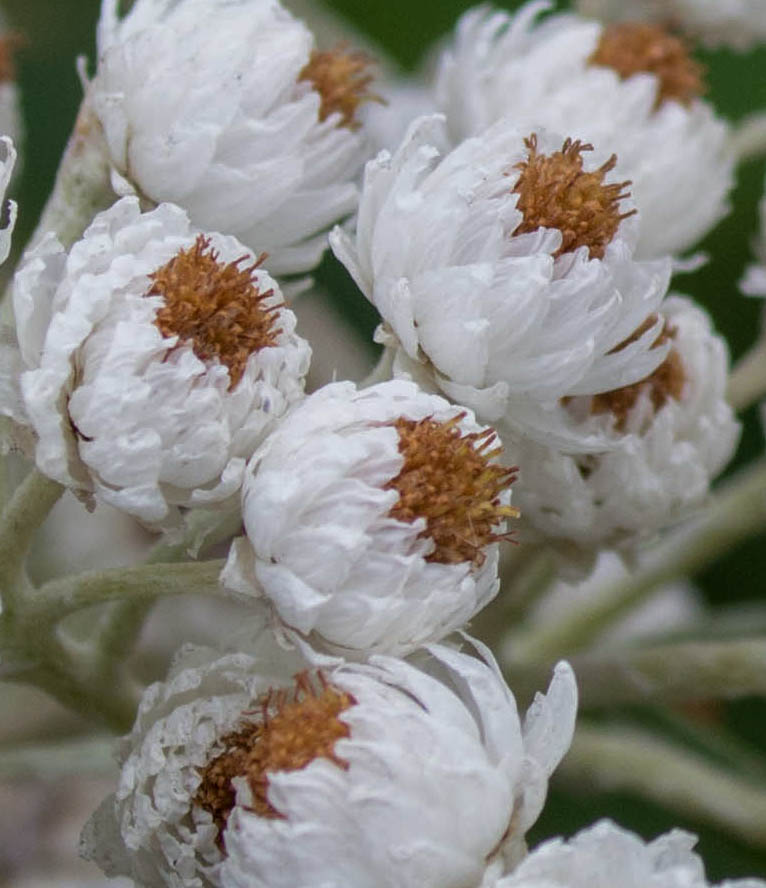
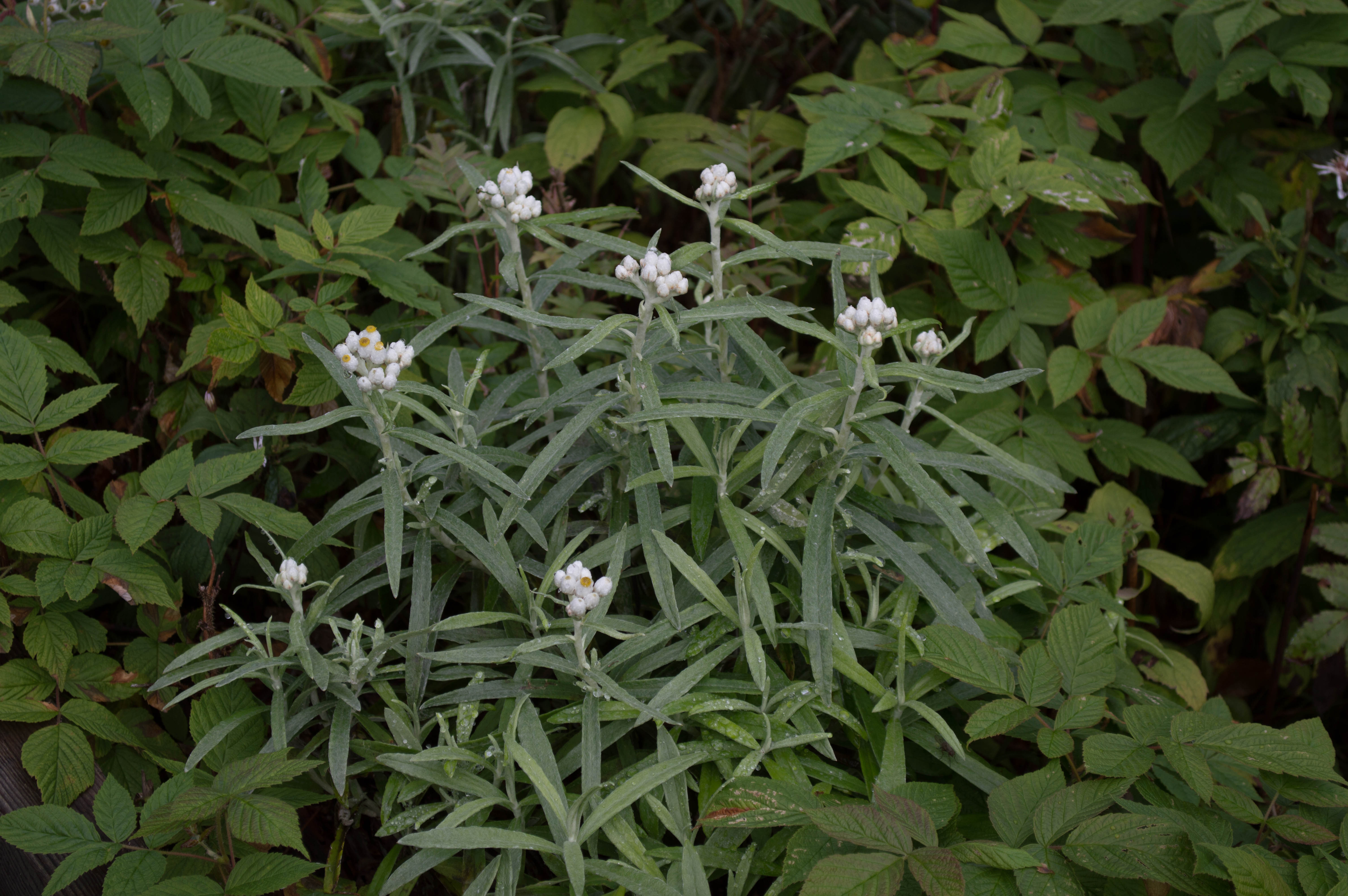
Anaphalis margaritacea
pearly everlasting

Maryland Biodiversity Project has only 2 records for this plant, including one in the piedmont, so it’s unlikely you’ll see it in this area. But you’ll see it often in floral arrangements. The yellow-ish centers are the disk florets, and the white outer parts are bracts; there are no ray florets.20140915-DSC_0024


20150428-20150428-_DSC0068

Antennaria plantaginifolia
plantain-leaved pussytoes

This plant is found throughout the Maryland piedmont. White disk florets only, surrounded by green phyllaries. Look at those little seeds!
20150514-20150514-_DSC0129


20140821-DSC_0201

Elephantopus carolinianus
Carolina elephant’s foot

Found throughout the Maryland piedmont. Click on the image and then zoom in to see the details: this head is showing four individual disk florets, each with a five-lobed corolla. There are no ray florets.


20140828-DSC_0011

Erechtites hieraciifolius var. hieraciifolius
pilewort; fireweed; burnweed

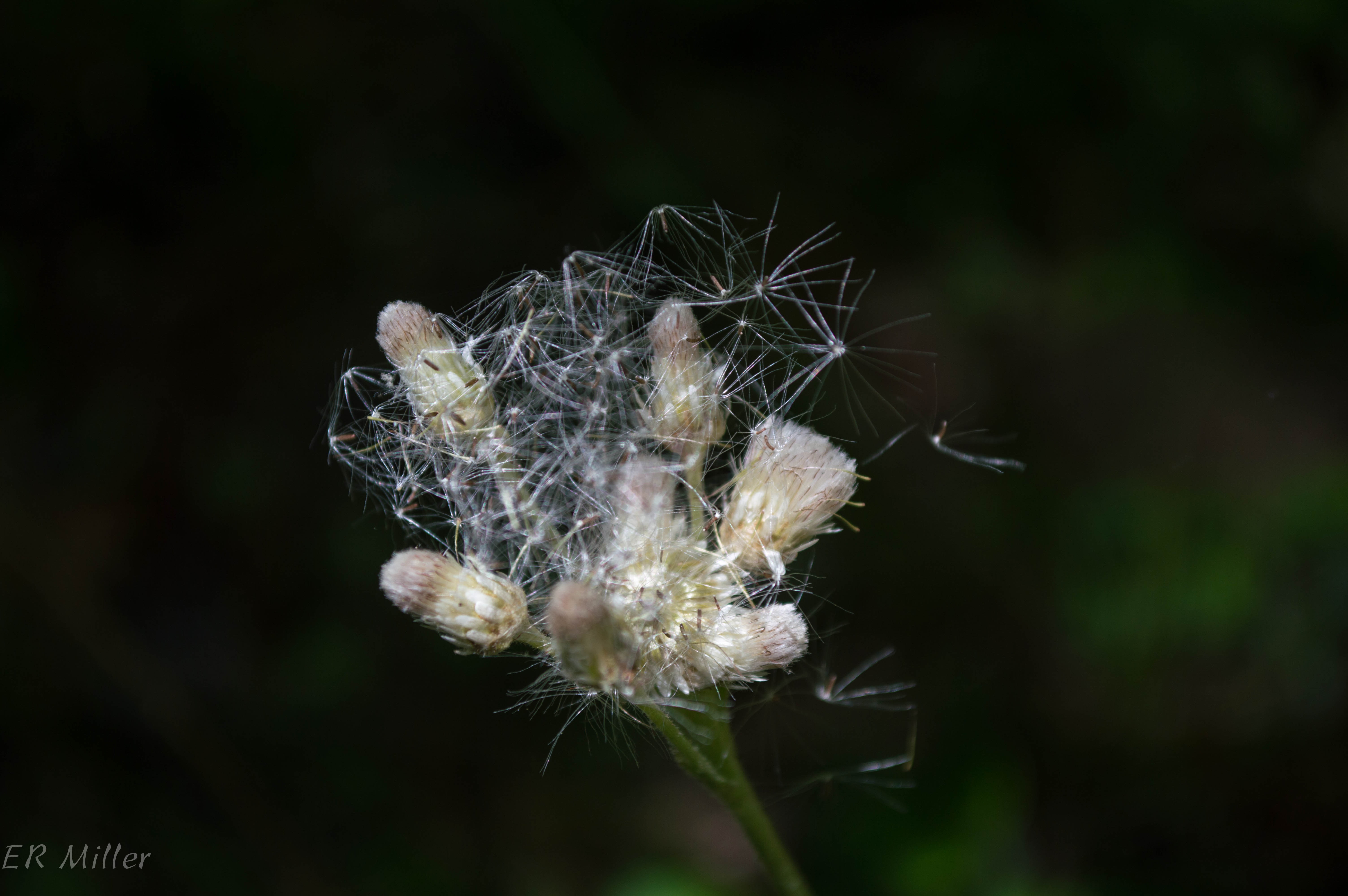
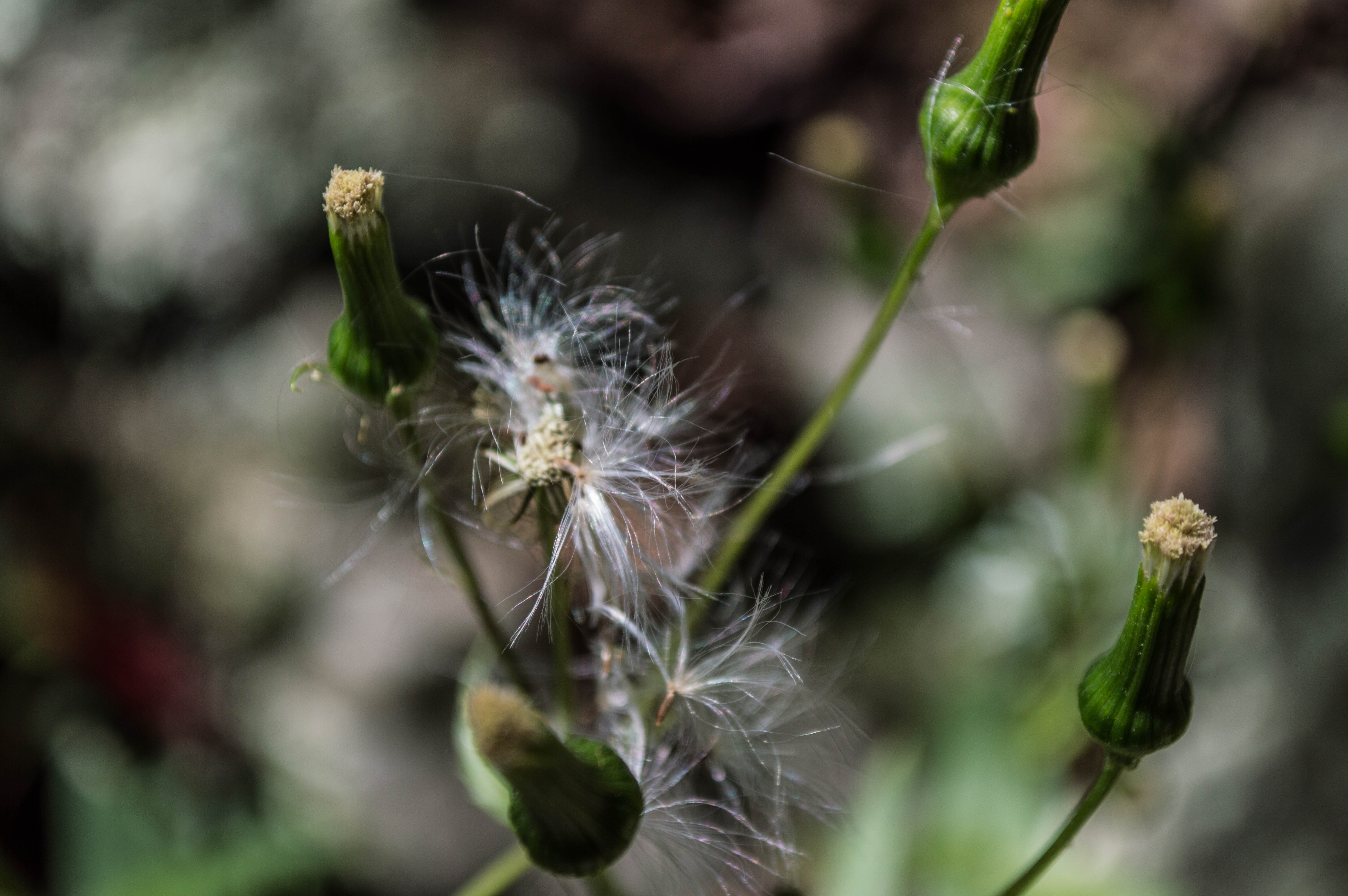
Found throughout the Maryland piedmont. My apologies for not having a clearer picture. The flower heads contain disk florets only (no ray florets).


20150823-_DSC0105

Conoclinium coelestinum
blue mistflower
(with eastern tailed-blue butterfly)

Found throughout the Maryland piedmont. Disk florets only.


DSC_0024

Eutrochium species
joe-pye weed
(with eastern swallowtail butterfly)

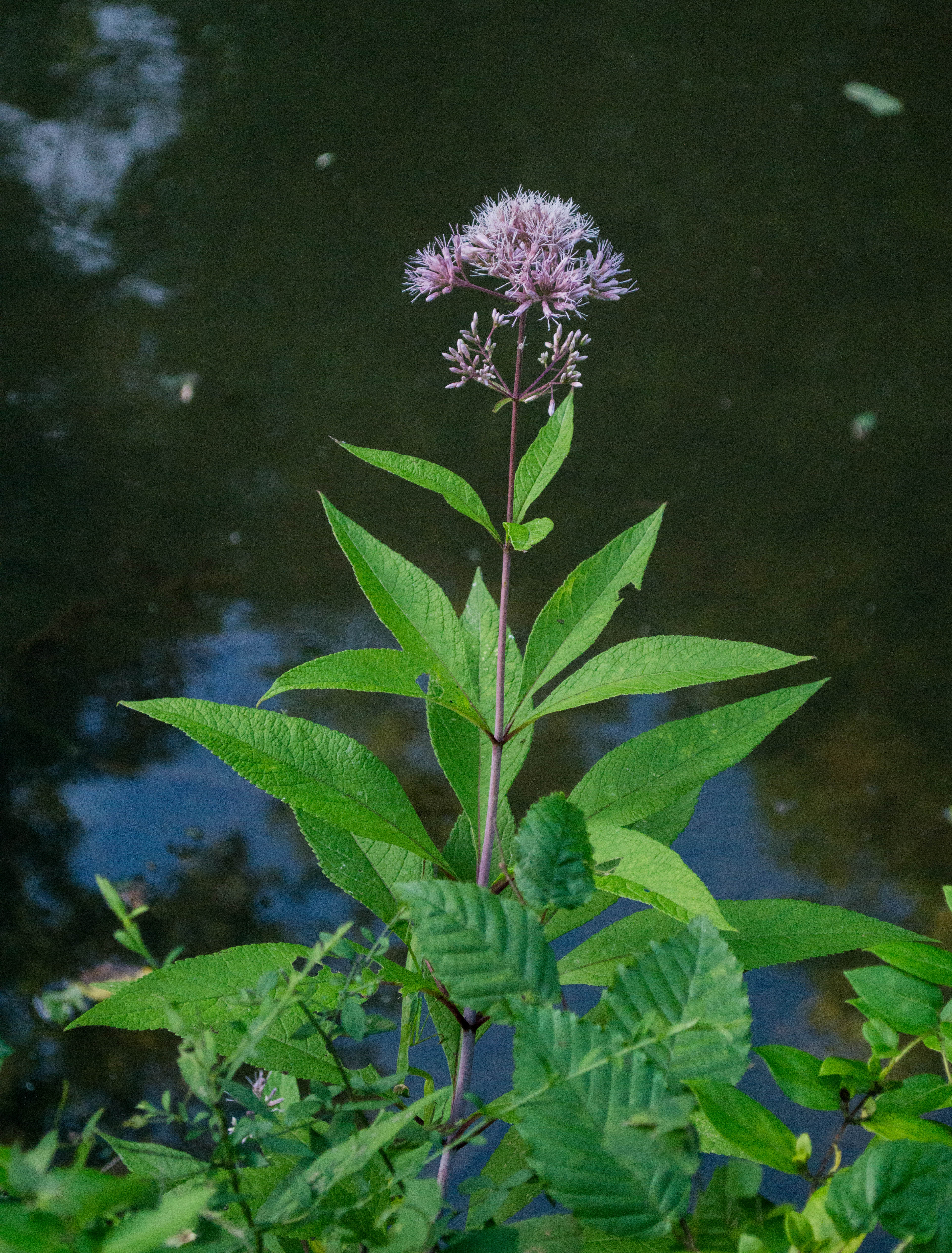
Found in most of the Maryland piedmont.  Disk florets only.
20150728-20150728-DSC_0110

The Aster Family (part 4)

20150616-20150616-_dsc0028


Tragopogon (goatsbeard) species (I think)


Each floret of a composite family plant produces a single fruit (which contains a single seed) called a cypsela. In many texts and on-line sources, the term achene is used. The difference between the two is technical (it depends on the position of the ovary), and for years both were used rather loosely. While trying to make sense of this I tripped over an article in the Brazilian Journal of Botany, the poorly translated abstract for which reads

The worry about the indiscriminate use of the terms cypsela and achene for the fruits of Asteraceae has been frequently detached by specialists in this family. The present work was developed aiming to verify the existence of arguments to justify the adoption of a term against the other. After historical and anatomical analysis, we concluded that there is technical basis to consider cypsela and achene as different types of fruits. For Asteraceae, the correct is to call cypsela; achenes are only derived from superior ovaries, as in Plumbaginaceae.

At any rate, picture a single small seed with a tuft of hairs, like dandelions have.

20140923-dsc_0115


Erechtites hieracifolius (pilewort)


That’s pretty much it, unless there are barbs instead of hairs:

20141006-dsc_0088


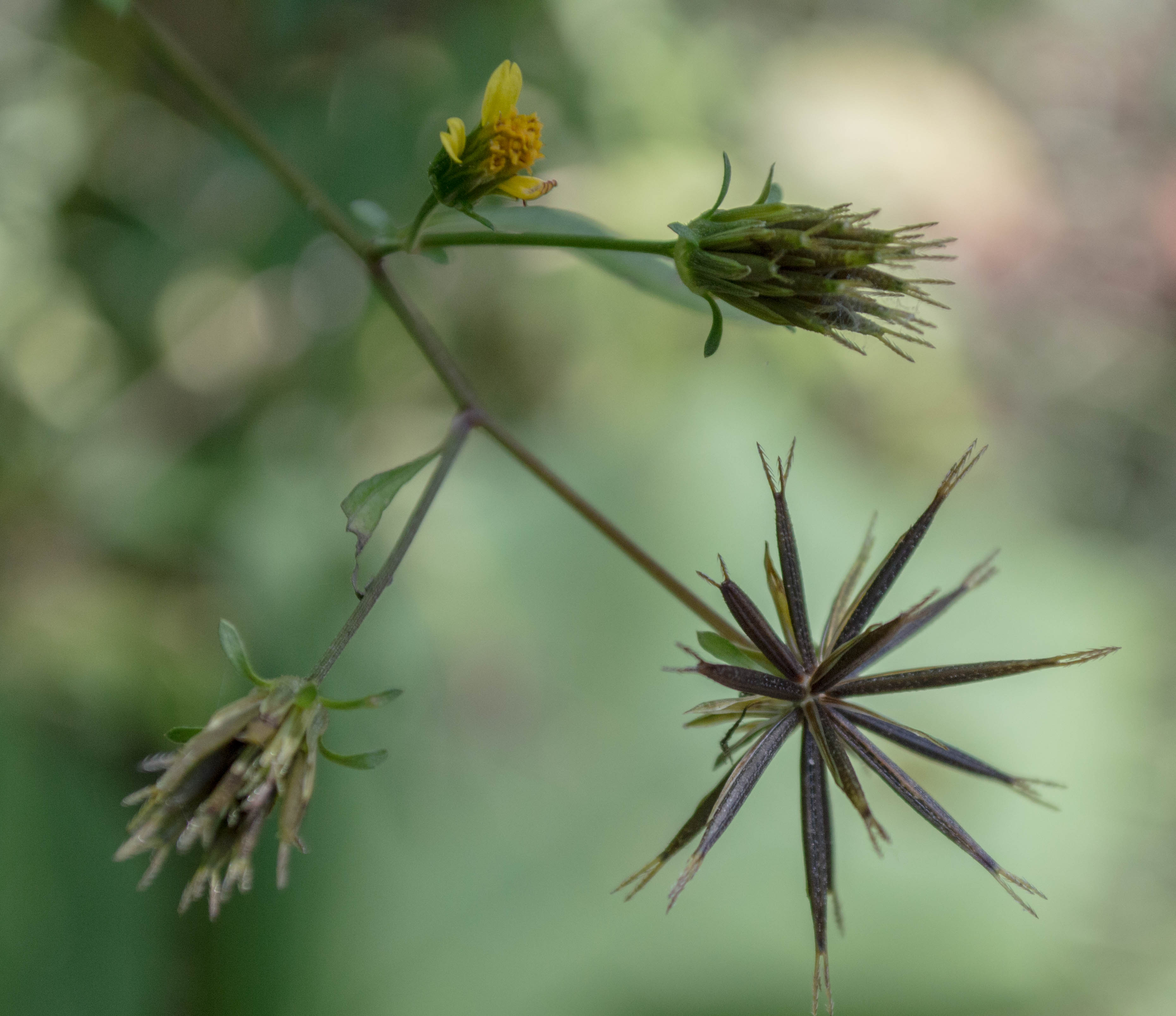
Bidens bipinnata (Spanish needles); note the capitulum (flower head) with yellow ray and disk florets at top, another flower head showing the phyllaries in the middle, and the barbed cypsela at the lower right


next: lower classifications

The Aster Family (part 3)

There are three types of aster family flower heads, named according to the type(s) of florets present.

20140825-DSC_0245

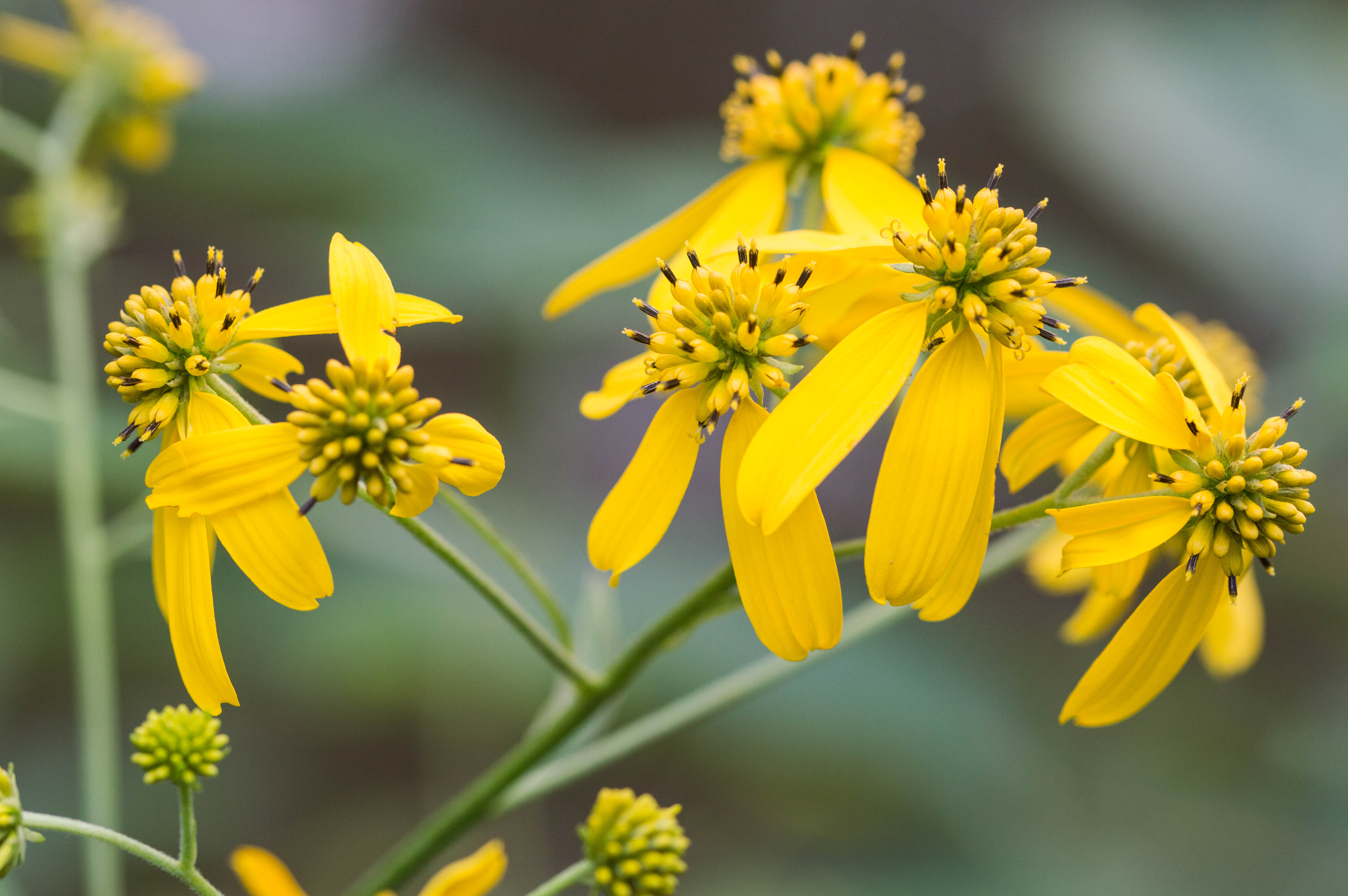
If both types of florets (ray or ligulate and disk) are present in a head, the arrangement is termed radiate.

Verbesina alternifolia
(wingstem)

20150514-20150514-_DSC0078-2


If a head contains rays only, it is called ligulate.

Hieracium venosum
(rattlesnake weed)


20140825-DSC_0317


And if only disk florets are present, a head is called discoid.

Vernonia noveboracensis
(New York ironweed)


Another characteristic of aster flower heads is the presence of phyllaries.

20151020-_DSC0014


20140929-DSC_0221-2

Symphyotrichum species, possibly S. oblongifolium 
(aster)


At the base of a flowerhead there’s a whorl of bracts (modified leaves), called an involucre. In aster family plants only, the individual leaf-like structures are called phyllaries. The number of phyllaries, how they’re arranged (how many rows), the shape, presence of hairs, and other fine details are characteristics used to distinguish certain species from others [see this recent post about tickseed].

Symphyotrichum species
(aster)

next: aster fruits/seeds

The Aster Family (part 2)

Aster family flower anatomy gets complicated and the subject is full of jargon. Here’s a photo-illustrated primer.

20160812-_DSC0037

Aster family plants have flowers by the dozens or hundreds, clustered together in heads. This plant —>
is Helenium flexuosum (sneezeweed), with one open head and one still-developing head. What appear to be yellow petals are actually individual ray flowers. If you click on the image and zoom in, you can clearly see several individual flowers at the bottom, each one three-lobed. The purplish, nearly spherical center part is composed of disk flowers. The ones on the bottom half are open, with two-parted stigmas protruding, while the upper half holds still-closed buds.

“Ray flower” is a general term. There are actually two different types of rays: ray florets and ligulate florets. Both are tubular-shaped at the bottom, and flatten out towards the top. Ray florets can be sterile or pistillate (that is, female*), and have 2 or 3 teeth or lobes at the end, Ligulate florets are perfect (that is, bisexual: containing both male and female parts*), and often have 5 teeth or lobes.

20150816-_dsc0080


Smallanthus uvedalia (large-flowered leafcup), showing 10 ray florets and 13 open disk florets
[click on the picture to zoom in and see the details]


The central flowers in a head are called disk florets. These consist of five petals fused together, so that they look like a single five-lobed tube; the stigma often protrudes, sometimes dramatically. The central disk can be more or less flat to almost spherical (as in the first photo).

next time: the three types of aster flower heads


*with apologies to my friend Linda for anthropomorphizing