It’s Back!

20160802-_DSC0009

Another entry to my two year saga of monitoring a perennial favorite, an unusual (but not rare, threatened or endangered) find that’s inconveniently located in an area of high human and deer activity.

Yes, cranefly orchid is back! I reported last summer that it had disappeared from this spot, but then in October I found some new leaves. And last Tuesday I saw a dozen flowering spikes.

This species is hibernal: each plant grows a single leaf in autumn. The leaf persists through the winter and into late spring, then dies. In midsummer, the plant sends up a spike, which will flower for two to three weeks and then die. The cycle begins again the following autumn.

Last year I thought that maybe deer browse had killed the plants. But I recollect that it was also a dry year, so maybe drought had something to do with it? Then a very knowledgeable and experienced acquaintance told me that cranefly orchid doesn’t necessarily bloom every year. This got me to wondering why, so I did a little research.

Studies have shown that when cranefly orchids are successfully pollinated and fruit is set, there’s a subsequent decrease in root and leaf size*. As a result, plants take a year off, so to speak, because they have insufficient energy stores for another reproductive effort. And blooming can also be affected by deer browse (herbivory) and environmental stresses.

20160802-_DSC0010

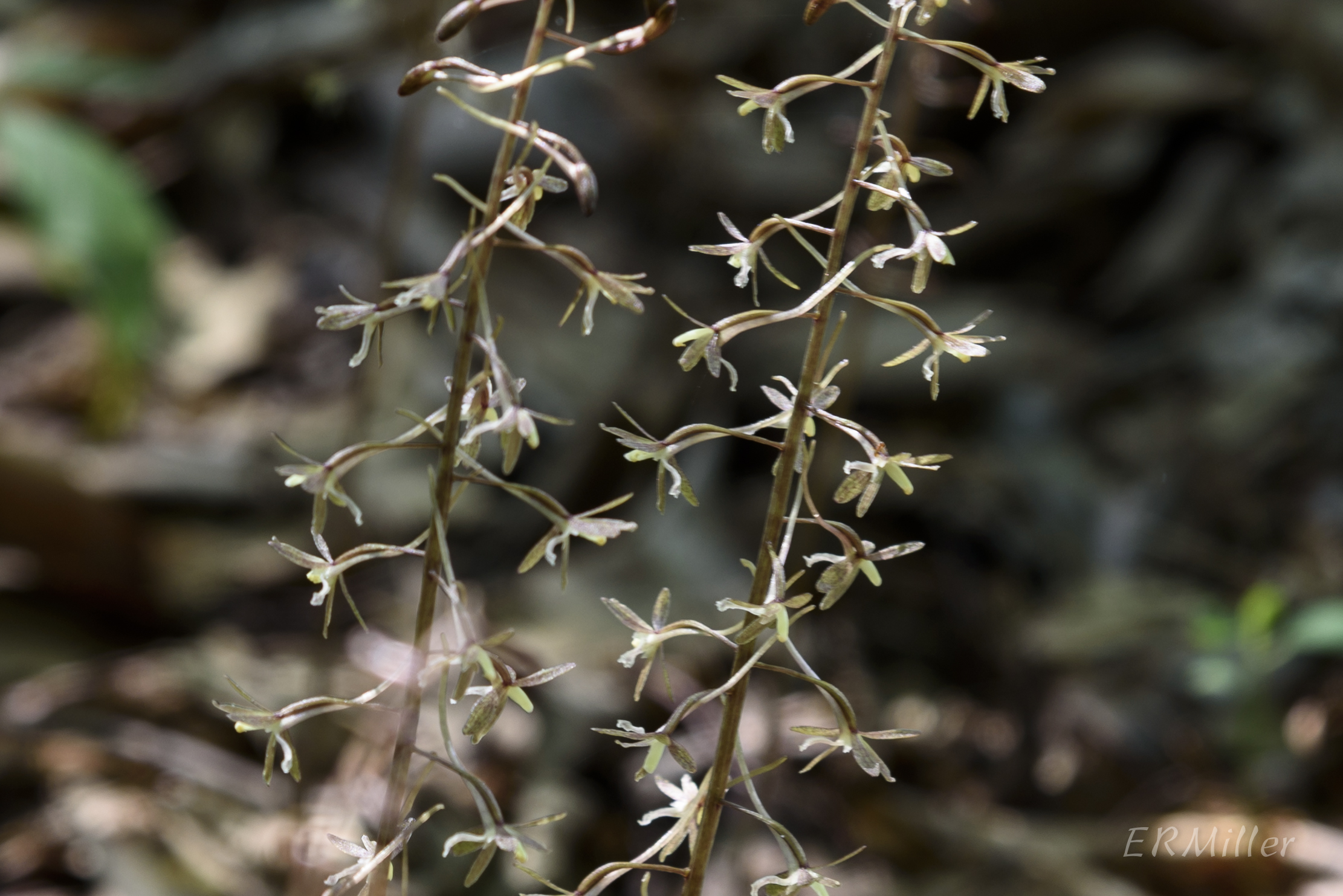
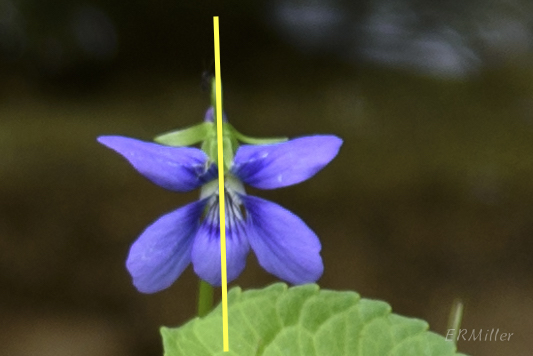
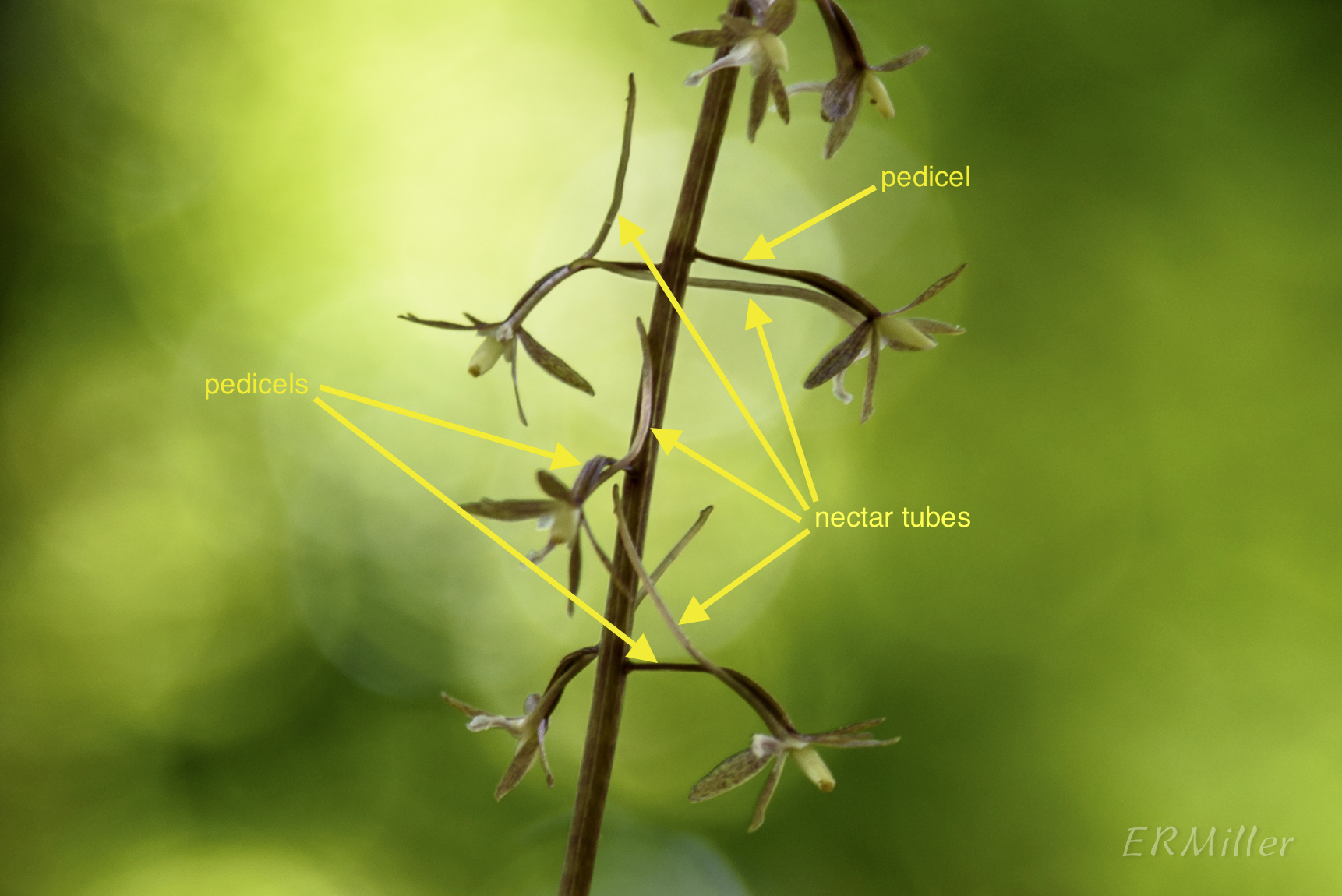
Another interesting fact: the flowers are asymmetrical. Typically orchids show bilateral symmetry (capable of being divided along a plane into a pair of mirror images). It’s a little hard to tell from this picture, as I couldn’t get a straight-on shot of a flower, but these are not bilaterally symmetrical. (I’m going to have to go back and try shooting from a different angle.)
20160505-_DSC0040

This violet was kind enough to stand in for an orchid to demonstrate bilateral symmetry, the yellow line showing the plane of symmetry –>
20160802-_DSC0001

Also, check out those crazy long nectar tubes coming out the backs of the flowers! (Click on the image to see it larger.) The odd shape of the flowers allows pollinia to be deposited onto visiting moths.

Cranefly orchids are just neat.


*”Costs of Flower and Fruit Production in Tipularia discolor (Orchidaceae)” [abstract]

YowYow

By my count I’ve written about 47 different plant species I found in Iceland, and guess what? There are almost 30 more. But I don’t have good pictures of most of them, and some IDs are in doubt, so I think I’ve just about exhausted my material for blog posts. And I do want to get back to posting about the Maryland piedmont.

So for all my fellow botanerds, here’s a list of my Icelandic finds, arranged by family. An asterisk (*) indicates either ID in doubt or unsure of taxonomic status.

Apiaceae (parsley family)
Angelica archangelic  garden angelica
Anthriscus sylvestris*  cow parsley

20160620-_DSC0649

oneflower fleabane (that’s two plants)

Asteraceae (daisy family)
Achillea millefolium  yarrow
Erigeron borealis  alpine fleabane
Erigeron uniflorus  oneflower fleabane
Hieracium species  hawkweed
Hieracium thaectolepium*   hillside hawkweed
Taraxacum species  dandelion
Tripleurospermum maritima ssp. phaeocephala  sea mayweed

Boraginaceae (borage family)
Mertensia maritima  oyster plant
Myosotis arvensis  field forget-me-not

20160620-_DSC0620

rock whitlowgrass

Brassicaceae (mustard family)
Arabidopsis lyrata ssp. petraea  northern rock-cress
Cardamine nymaii*  lady’s smock
Cardamine pratensis*  cuckoo flower
Draba nivalis  snow whitlowgrass
Draba norvegica*  rock whitlowgrass


Caryophyllaceae (pinks family)
Arenaria norvegica arctic sandwort
Cerastium alpinum  alpine mouse-ear
Cerastium nigrescens*  arctic mouse-ear
Silene acaulis  moss campion
Silene dioica  red campion
Silene suecica  alpine catchfly
Silene uniflora  sea campion

Crassulaceae (stonecrop family)
Rhodiola rosea  roseroot stonecrop
Sedum annuum  annual stonecrop
Sedum villosum  hairy stonecrop

Cyperaceae (sedge family)
Eriophorum angustifolium  cottongrass

Equisetaceae (horsetail family)
Equisteum arvense  field horsetail
Equisetum palustre  marsh horsetail
Equisteum pratense  shady horsetail
Equisetum variegatum  variegated horsetail

Ericaceae (heather family)
Calluna vulgaris  heather
Empetrum nigrum  crowberry
Harrimanella hypnoides  mossy mountain heather
Kalmia procumbens  trailing azalea
Vaccinium myrtillus  bilberry
Vaccinium uliginosum  bog bilberry

Fabaceae (pea family)
Lupinus nootkatensis  Nootka lupine

Geraniaceae (geranium family)
Geranium sylvaticum  woodland cranesbill

Juncaeae (rush family)
Juncus or Luzula species  rush

Lamiaceae (mint family)
Thymus praecox ssp. arcticus  creeping thyme

Lentibulariaceae (bladderwort family)
Pinguicula vulgaris  common butterwort

Onagraceae (evening primrose family)
Chamerion latifolium  arctic riverbeauty
Epilobium anagallidifolium  alpine willowherb

Orchidaceae (orchid family)
Dactylorhiza maculata  heath spotted orchid
Dactylorhiza viridis  frog orchid
Platanthera hyperborea  northern green orchid

Orobanchaceae (broomrape family)
Bartsia alpina  velvetbells

Papaveraceae (poppy family)
Papaver radicatum  arctic poppy

Plantaginaceae (plantain family)
Veronica fruticans  rock speedwell

Plumbaginaceae (leadwort family)
Armeria maritima  sea thrift

Polygonaceae (knotweed family)
Bistorta vivipara  alpine bistort
Oxyria digyna  mountain sorrel
Rumex acetosa  common sorrel

Ranunculaceae (buttercup family)
Caltha palustris  marsh marigold
Ranunculus acris*  meadow buttercup
Ranunculus species  buttercup

Rosaceae (rose family)
Alchemilla alpina  alpine lady’s mantle
Alchemilla glomerulans  clustered lady’s mantle
Dryas octopetala  mountain avens
Fragaria vesca  strawberry
Geum rivale  water avens
Potentilla anserina  silverweed
Potentilla crantzii  alpine cinquefoil

Rubiaceae (madder family)
Galium boreale  northern bedstraw
Galium normanii  slender bedstraw
Galium verum  lady’s bedstraw

Salicaceae (willow family)
Salix arctica  arctic willow
Salix herbacea  dwarf willow
Salix lanata  woolly willow
Salix myrsinifolia or S. phylicifolia*  boreal or teal-leaf willow

Saxifragaceae (saxifrage family)
Saxifraga cespitosa  tufted saxifrage
Saxifraga hypnoides*  mossy saxifrage
Saxifraga rosacea  Irish saxifrage

Tofieldiaceae (no common name that I could find)
Tofieldia pusilla  Scottish asphodel

Violaceae (violet family)
Viola canina  heath dog violet
Viola tricolor  wild pansy
Viola species  violet

Woodsiaceae (cliff fern family)
Gymnocarpium dryopteris  oak fern


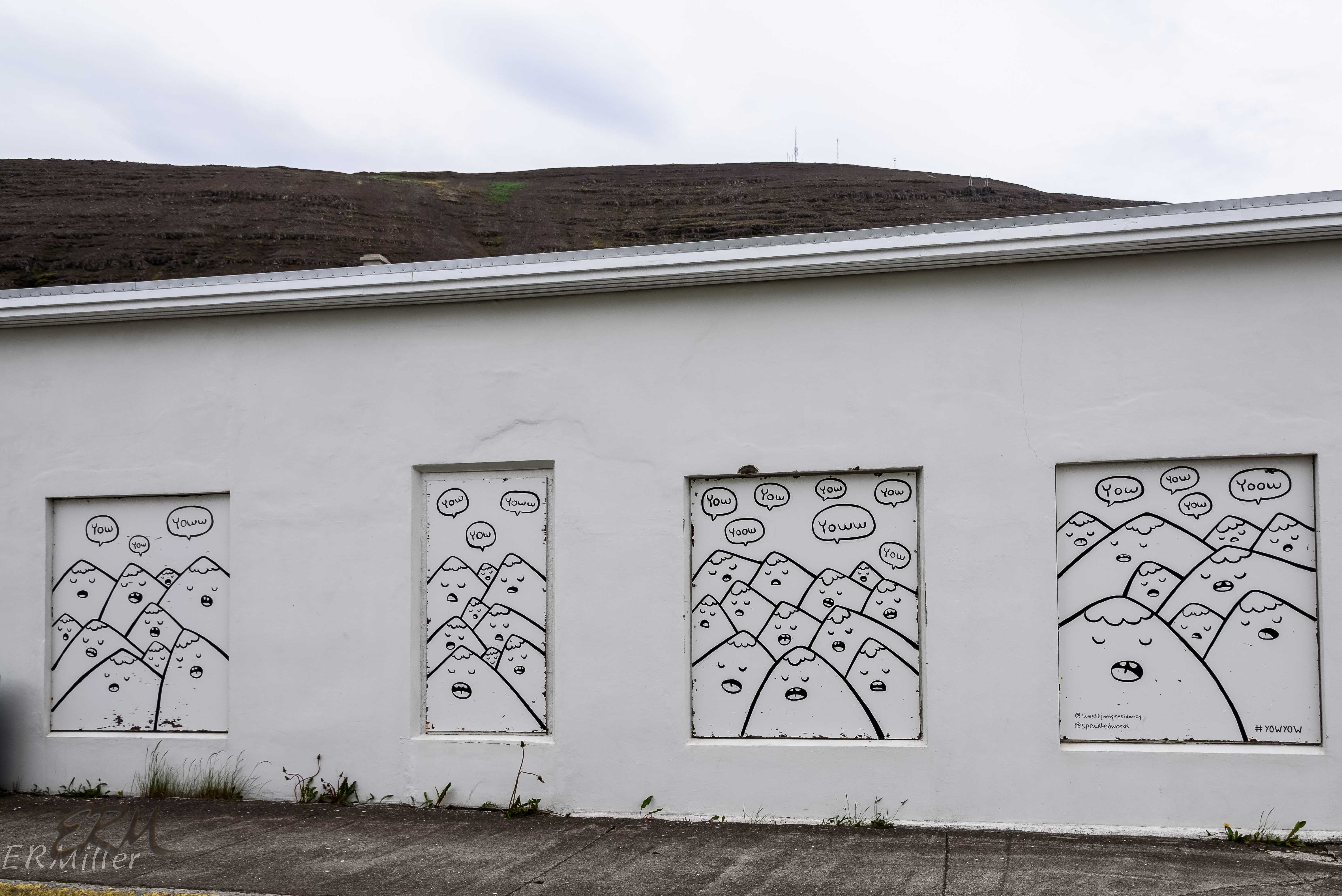
#yowyow – street art on a building in Þingeyri

<— click on this image, it’s worth seeing it larger

nicely sums up how I feel about Iceland

Back in the Gorge

Volunteer commitments and other activities have kept me away from my beloved Potomac gorge for an unprecedented two weeks, but I finally got a chance to go for a quick look around Carderock on Tuesday. I was hoping to find (among other things), starry campion, since I mentioned it in a post about pinks in Iceland a few weeks ago.

I knew exactly where to look, and sure enough, there it was.

20160802-_DSC0026

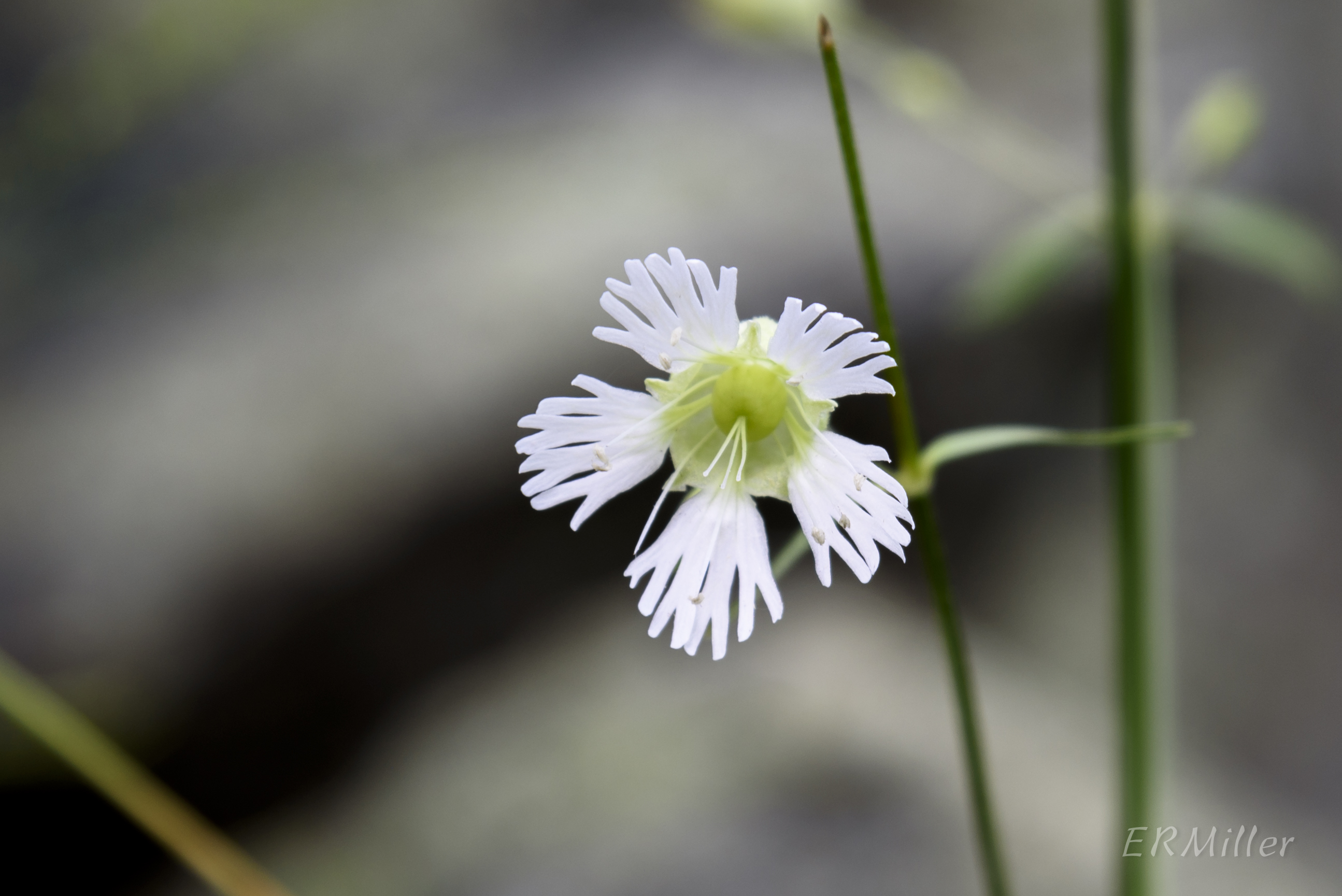
Starry campion (Silene stellata, Caryophyllaceae), also known as starry catchfly, whorled catchfly, and widowsfrill, is one of four species of Silene found in the area. (Another is S. caroliniana.) It likes part shade in dry soils, and can be found from the east coast west into the Great Plains. It’s threatened in Michigan, special concern in Connecticut, and historical in Rhode Island.

This species is a perennial, standing about two feet tall,  and consists of a single stem (usually) with leaves in whorls of four (picture here) and a few terminal flowers.

The flowers are white, sometimes with a very faint bluish or purplish tinge.

20160802-_DSC0028

The petals are really neat, aren’t they? Each flower has five petals that are so deeply dissected that from a distance they appear to be many more. If the plants receive too much sunlight, the flowers will close, then reopen in the evening and stay open until bright sunlight the next day.


I found a few other species blooming Tuesday. More about those in the next few days.

Complicated

The willowherb family (Onagraceae) is large (about 650 species), cosmopolitan (represented just about everywhere), and taxonomically complicated (“relationships within the family have not been fully understood”*). So taxonomically complicated, it’s hard to even figure out what the current accepted botanical name is for this plant.

20160619-_DSC0491

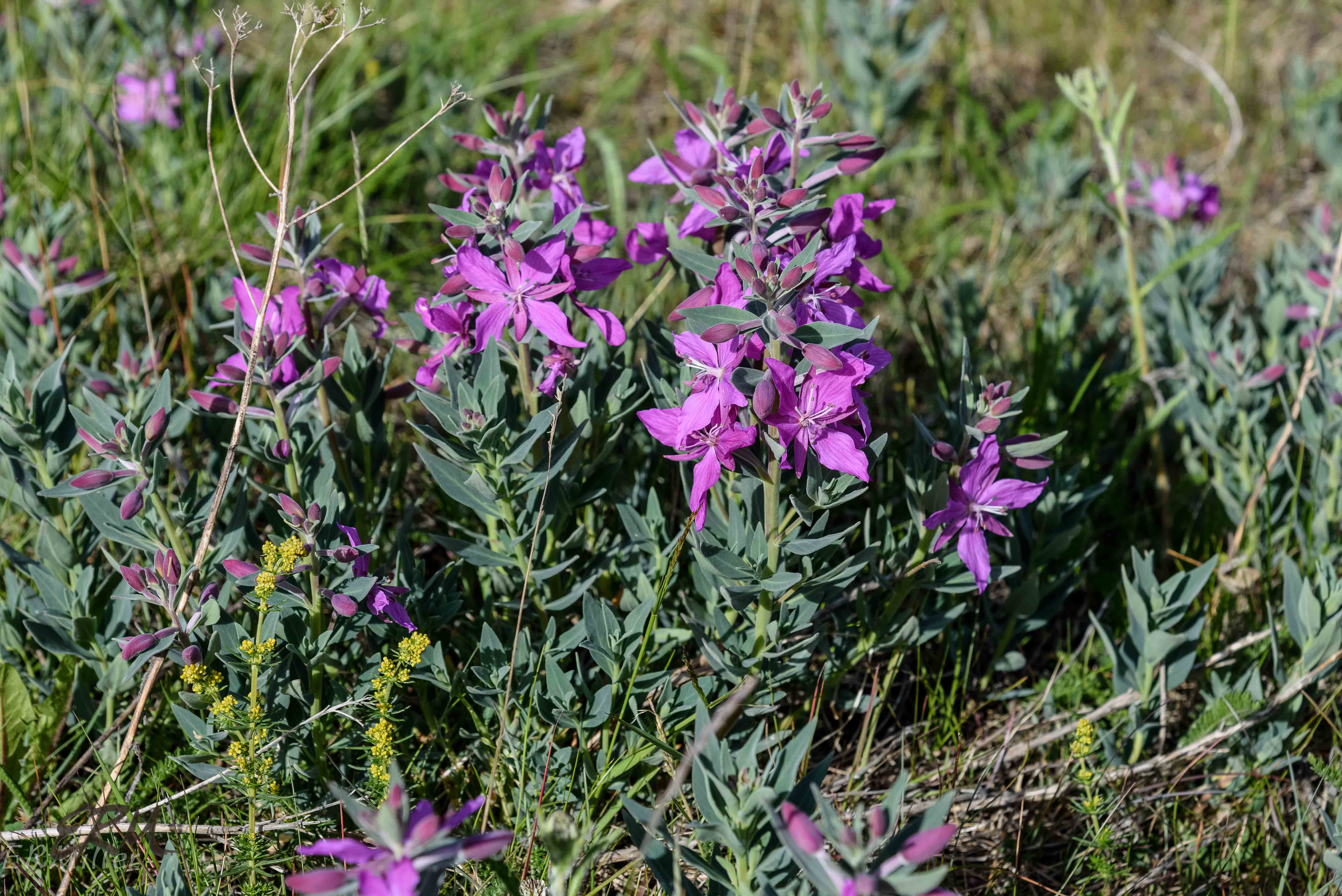
This first species, found near Akureyri in Iceland, has the common names broad-leaf fireweed, broad-leaved willowherb, arctic fireweed, dwarf fireweed, arctic river beauty, glacier rose, and who knows how many more. The Icelandic name is eyrarrós. The currently accepted botanical name (per ITIS) is Chamerion latifolium, but it’s also known as Chamaenerion latifolium and Epilobium latifolum.


Whatever you call it, it’s striking, standing about a foot tall, the blue-green leaves contrasting the rosy purple blossoms. It’s fairly common in Iceland, though with scattered distribution. It can also be found in higher latitudes around the northern hemisphere, and in mid-latitudes at high elevation (India, Pakistan, Nepal). In North America it’s present in Greenland, much of Canada, Alaska, and in mountainous parts of the West. A closely related species, Chamerion angustifolium, is found in parts of Maryland (as well as Iceland). And Nova Scotia, where I saw it two years ago.

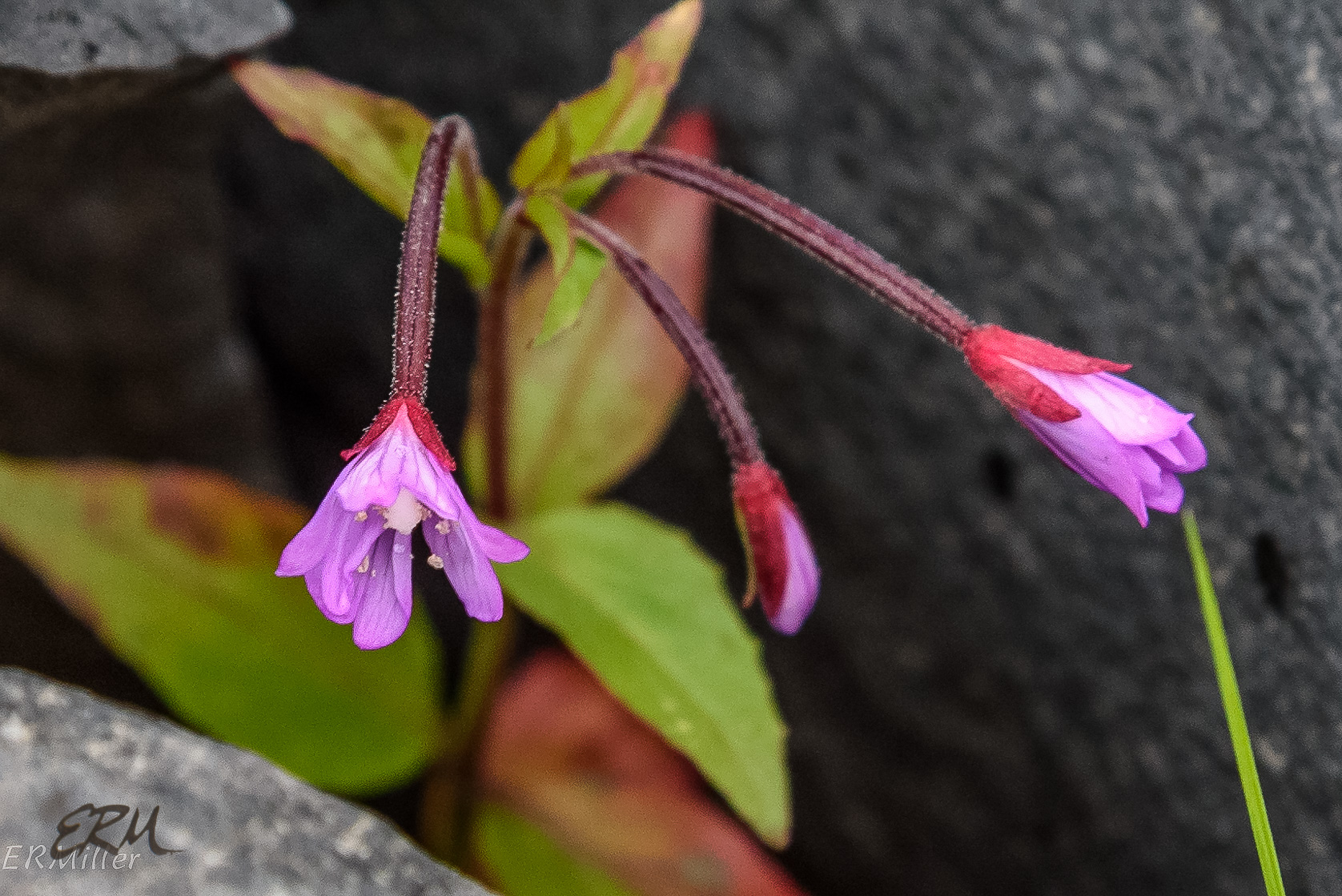
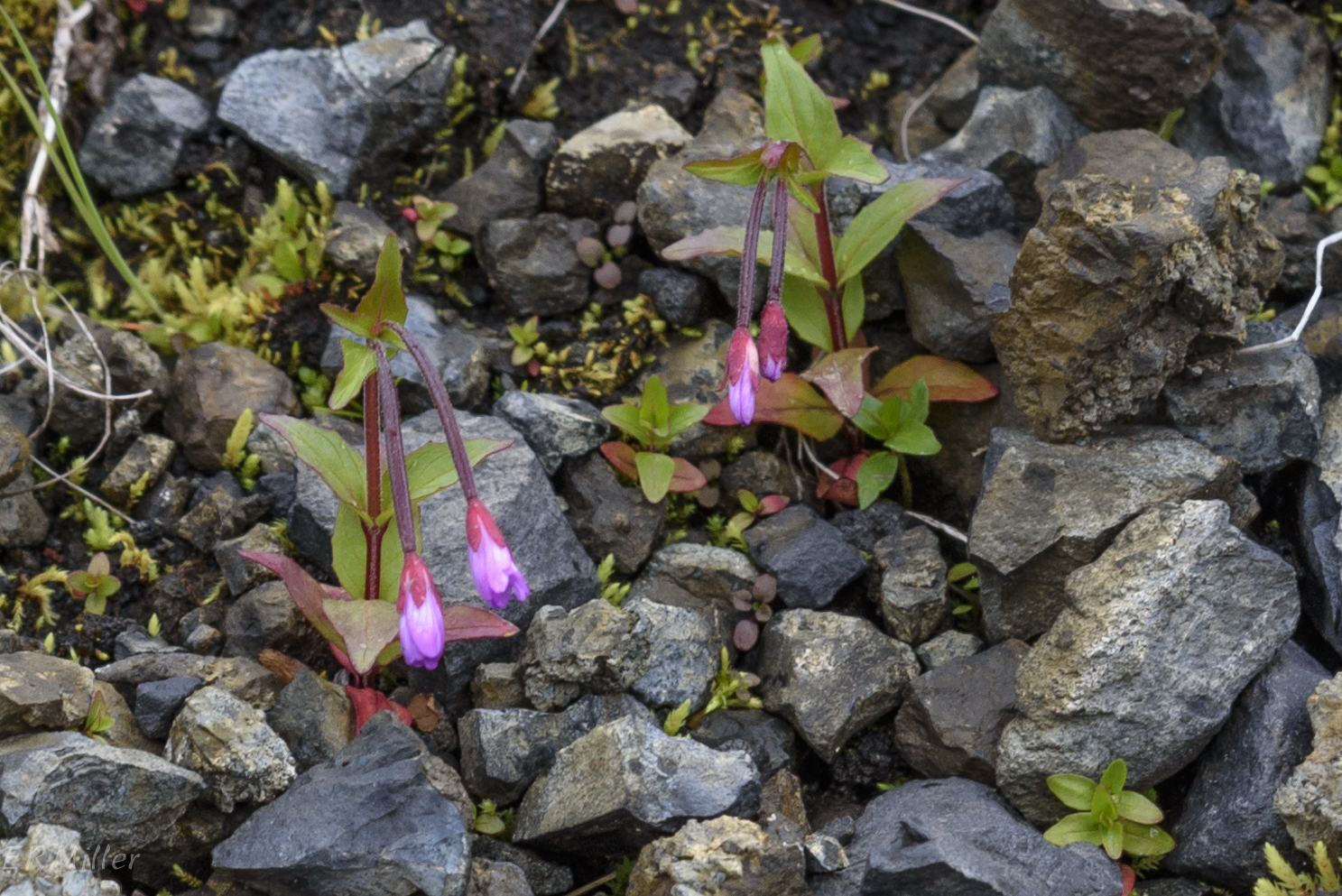
There are about nine species of plants in the Onagraceae in Iceland, but I saw only two; this second species was near the glacier Sólheimajökull in the south of Iceland. It’s callled fjalladúnurt in Icelandic and alpine willowherb in English. It’s also called pimpernel willowherb, alpine willowweed, and dwarf fireweed. The accepted botanical name is Epilobium anagallidifolium. 

This species has an interesting split distribution in North America: in the east it’s found in Greenland, Quebec and a few of the Maritime provinces, New England, North Carolina, and Tennessee, then westward from the Rocky Mountains. (Note that BONAP does not show it present in the two southeastern US states.) It’s also found in northern Europe and northern Asia.

E. anagallidifolium is readily identified by the bent flowering stems (a harsh-weather adaptation according to NatureGate) and the dark red calyx.

20160622-_DSC0827

Would you believe that I keep a detailed “life list” of my finds? No kidding. It’s arranged by plant family. Noted under Onagraceae are the two species in Iceland, two more in Nova Scotia, four in the Potomac gorge, and three in Death Valley.

I’m a botanerd.

One more thing, I can’t resist. Speaking of complicated, here’s a comically complicated explanation of Oenothera (the type species for this family):

  • Oenother’a: one source says that this name derives from the Greek oinos, “wine,” and thera, “to imbibe,” because an allied European plant was thought to induce a taste for wine. However, Stearn’s Dictionary of Plant Names gives an alternate meaning for thera as ‘booty,’ but also suggests that Oenothera could be a corruption of the Greek onotheras from onos, “ass,” and thera, “hunting, chase, pursuit” or ther, “wild beast.’ The root ther also can have the meaning of ‘summer.’ What this might have to do with the actual plant is unexplained. (ref. genus Oenothera)
    from calflora.net’s California Plant Names

*Wagner, W. L. and P. C. Hoch. 2005-. Onagraceae, The Evening Primrose Family website. http://botany.si.edu/onagraceae/index.cfm (July 28, 2016)

Two More Adorable Ericas

We were hiking on a trail south of Akureyri when threatening weather turned us around. I promised Steve I wouldn’t take as many pictures on the way back, since we would be retracing our steps while trying not to get rained on. And almost as soon as I said that, I saw these flowers blooming on the hillside.


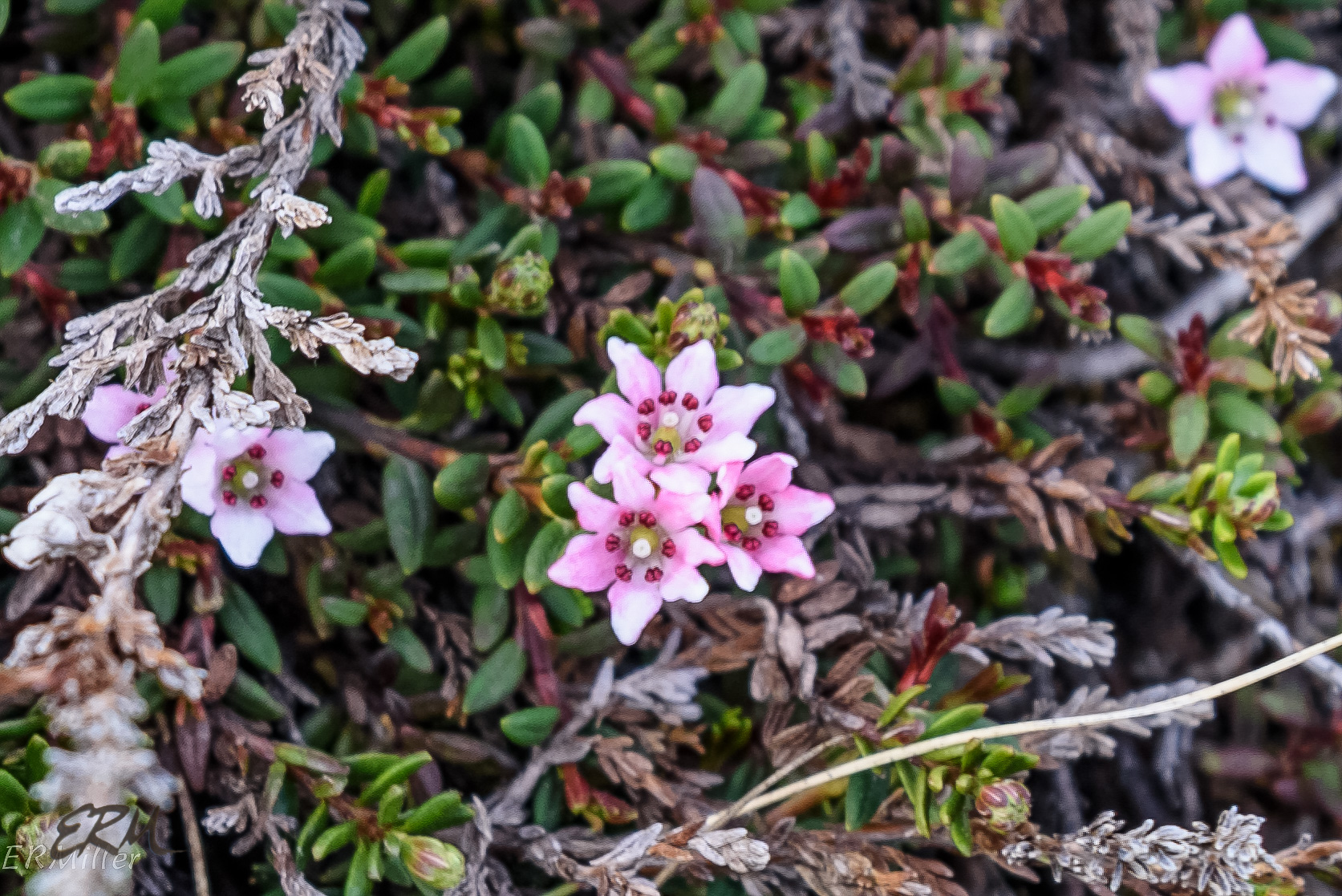
Harrimanella hypnoides
moss plant, moss bell-heather,
mossy mountain-heather
Icelandic: mosalyng


This tiny thing is actually a subshrub: though no more than four inches tall, it does have woody stems. In Iceland it’s a common plant in the mountains, but not in the lowlands. The species grows through much of the sub-arctic, including Russia, Fennoscandia, Greenland, Canada as far west as the Northwest Territories, and in the US in New York, New Hampshire, and Maine. It’s threatened in the latter two states.

Some sources claim Harrimanella to be a monotypic genus, but a very similar looking plant formerly known as either Andromeda stellariana or Cassiope stellariana is now called Harrimanella stellariana. That plant is found in northern North America where the other species isn’t: British Columbia, Yukon, Alaska, and Washington. H. hypnoides likes altitude: the excellent Finnish website NatureGate (luontoportti) claims that it shares the record for highest-growing vascular plant in Finland, having been found on top of Halti at 4,478 feet.


Click on these pictures to get a sense of how small the plants are. The gray-green stuff nearby is lichen, and that’s a 77 millimeter lens cap in the second photo. The flowers are a little under a quarter-inch wide. I was able to shoot at this angle because the trail was going through a little hollow, and the ground where the plants were growing was about chest-high.

Kalmia procumbens
(formerly Loiseleuria procumbens)
trailing azalea, alpine azalea
Icelandic: sauðamergur

This species is a cousin to the mid-Atlantic’s mountain laurel (K. latifolia), but much, much shorter, growing no taller than four or five inches. Its range is similar to moss plant’s, except that it grows further south in Eruope and further west in North America. It’s listed as sensitive in Washington, threatened in Maine and New Hampshire, and endangered in New York. The Lady Bird Johnson Wildflower Center site claims that it’s common above tree line on Mt. Washington in New Hampshire.