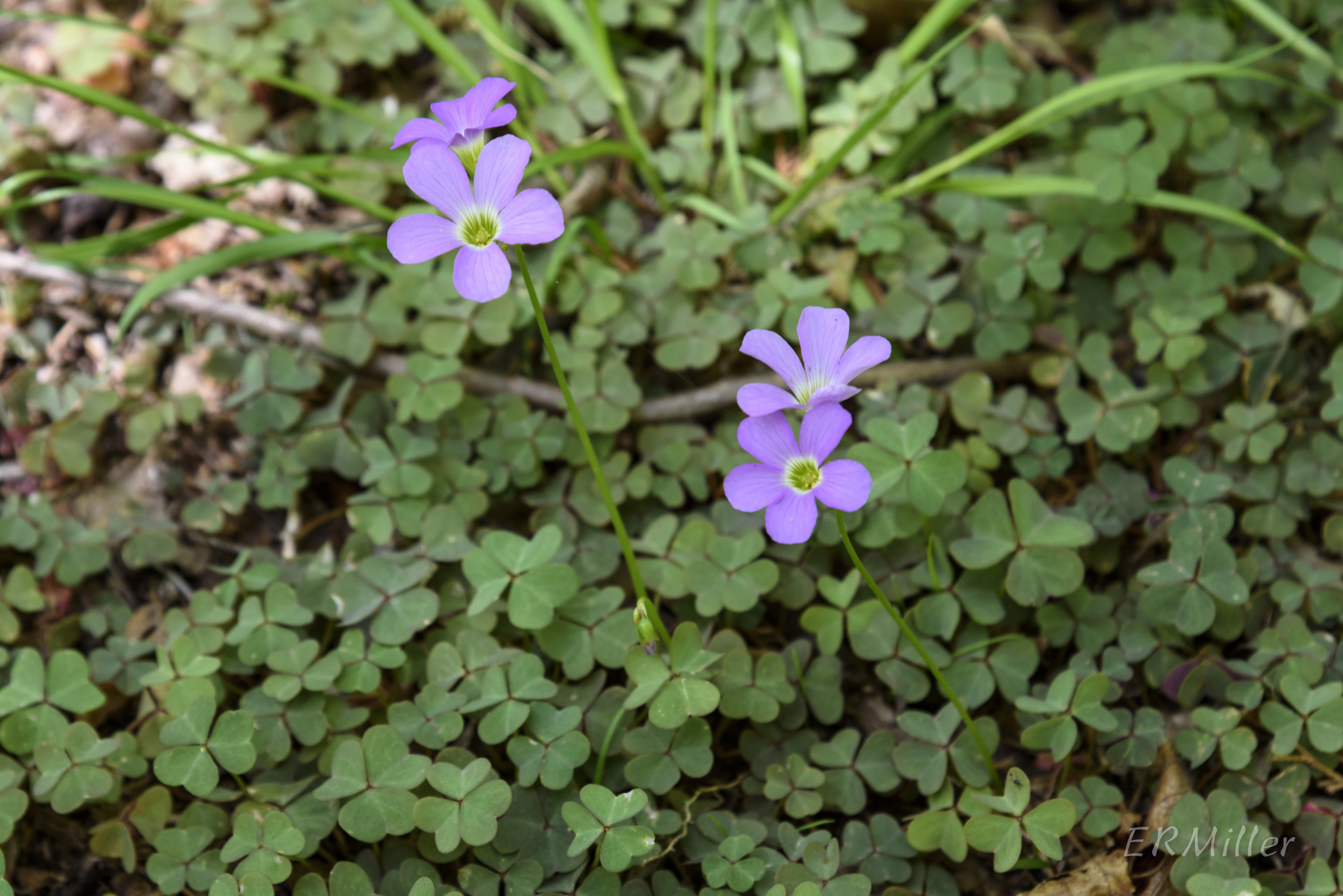
Pennywort

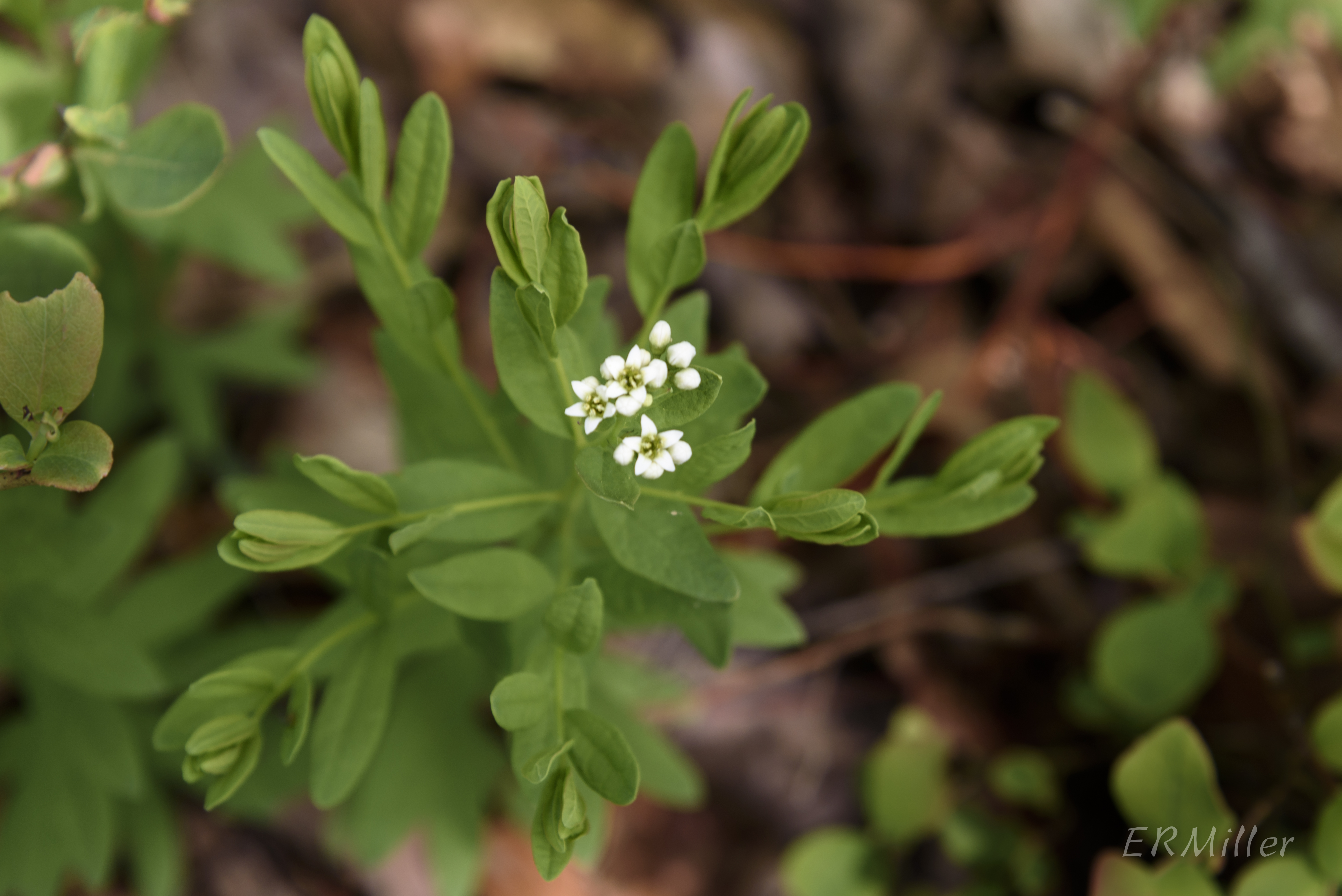
20160426-_DSC0094
Obolaria virginica
Gentianaceae

You know how birders keep “life lists” of their sightings? I have a life list of wildflower finds. I was delighted to add three new plants to it earlier this week, after visiting Rachel Carson Conservation Park: pinxter azalea, pennywort, and an orchid.

…and that’s about the most interesting thing I can say about pennywort. It’s a low-growing forb of moist woodlands, ranging from Texas northeast into Pennsylvania. There are no conservation issues. Obolaria is a monotypic genus (meaning there are no other species of Obolaria). I saw no other pennywort plants in the area.

“Pennywort”, by the way, is a popular name; there are quite a few plants (entirely unrelated to each other) that are called “pennywort”.

That’s all, folks. Tomorrow: the orchid. You can see a bud peeking up behind the pennywort in the photo above.

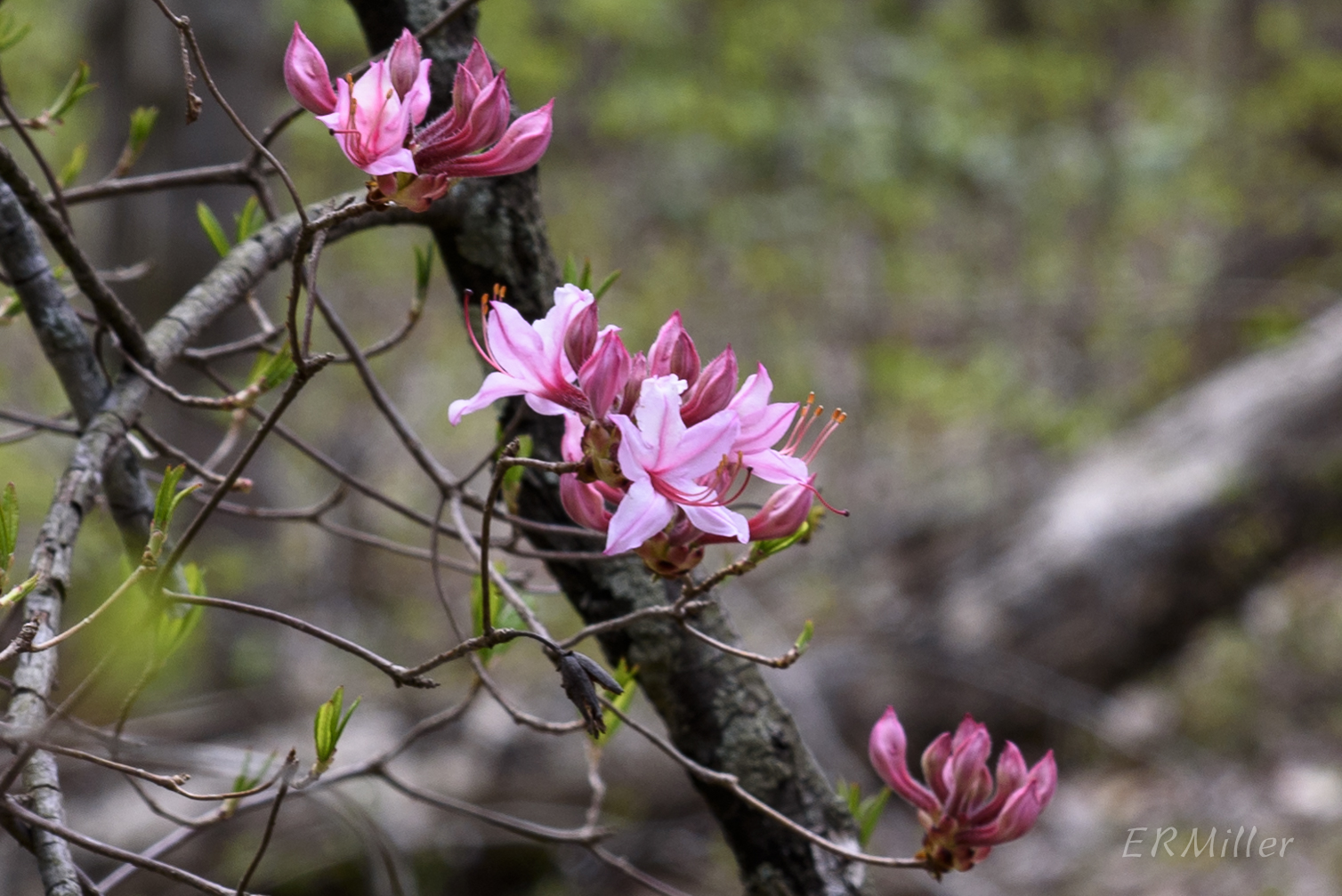
Pink!

20160421-_DSC0052

pinxter azalea, pinxterbloom,
pinxterflower, pink azalea
Rhododendron periclymenoides
(formerly R. nudiflorum)
Ericaceae

20160421-_DSC0028


About ten days ago I read that the pinxters in Rachel Carson Conservation Park were in bud. A few days later, I went to have a look, but only a few were open. A few days after that, I went back and found them fully open, glorious splashes of pink blossoms among the pale green of new leaves on other trees.

20160426-_DSC0155

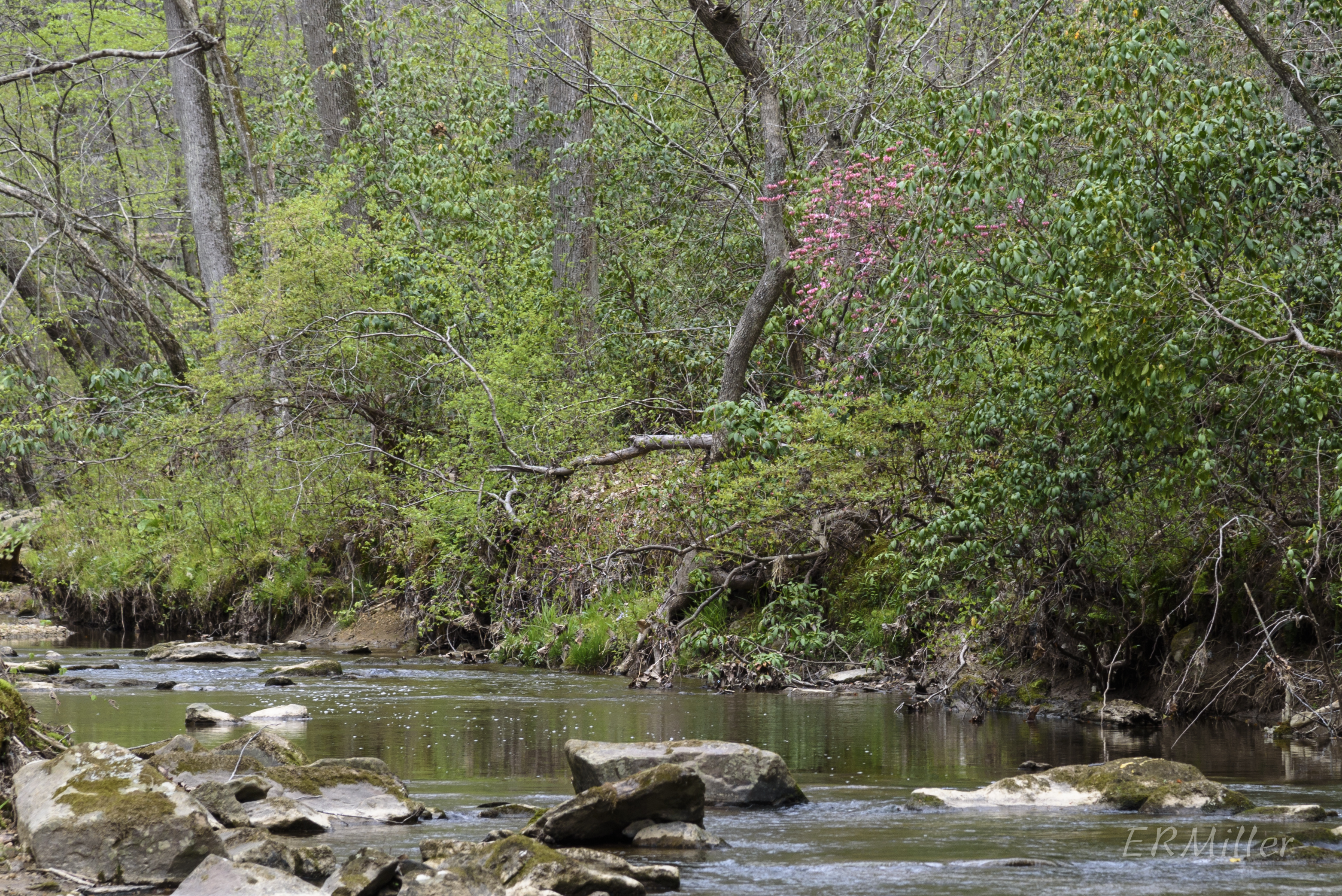
There are thirty two native species of Rhododendron in the continental US. Seven of these occur in Maryland, mostly in the western counties or on the coastal plain. Three species are found in the piedmont. This species is a deciduous shrub growing to twelve feet tall (usually less). Like most ericaceous plants it prefers moist but well-drained acidic soils. At Rachel Carson you can find it near rock outcroppings and along the shore of the Hawlings River.

20160426-_DSC0054

Supposedly pinxter is a fairly common plant, but I’ve never come across it before. I’ve read that it can be found on Sugarloaf Mountain. Guess I need to get back there soon. It’s listed as endangered in New Hampshire, expoitably vulnerable in New York, threatened in Ohio, and special concern in Rhode Island.

20160426-_DSC0164

About the name…  According to  Cookies, Coleslaw, and Stoops: The Influence of Dutch on the North American Languages (Nicoline van der Sijs, Amersterdam University Press), the word “pinxter” comes from the word “pinkster”, the Dutch name for the religious festival known in English as Pentecost. You can read more about that here.

20160426-_DSC0058

The more I looked at this flower, the more fascinated I became by its structure. Note the five stamens and one very long pistil per flower. In general, plants in the Ericaceae have twice as many stamens as petals (typically ten stamens and five petals, but not always). It took awhile but I finally read that the North American azaleas are an exception to this rule, having the same number of stamens as petals.

Rachel Carson Conservation Park

20160421-_DSC0027

flowering dogwood (Cornus florida, Cornaceae)
stands out among other trees

Along the banks of the Hawlings River in northeastern Montgomery County lies a 650-acre area called the Rachel Carson Conservation Park. The park has no facilities, just a few interpretive signs and about six miles of natural-surface trails through the rolling woods and meadows.

20160421-_DSC0080


wood thrush (Hylocichla mustelina), often heard in deep woods but seldom seen


Among local native plant enthusiasts this park is known primarily for its pinxter flower azaleas, and that was reason enough for me to go. But I was pleasantly surprised by how nice the area is. By “nice” I mean not full of people and trash, and not over-used. I found some wonderful flowers and plants other than the azaleas, including two species that I had never seen before. This always makes for a great day but one of the species was an orchid, which catapults Rachel Carson Conservation Park to the top of my favorite places list.

Animal viewing was good, too. There was a wild turkey that I couldn’t get pictures of; I was making notes at the time and those birds move fast! There were lots of spicebush swallowtails but they didn’t sit still for more than a second.

20160426-_DSC0028


northern green frogs (Lithobates clamitans) [I think]


20160421-_DSC0033


see the pink shrub peeking out?


More about the plants in the next several days.

Carderock Area, April 25

20160425-_DSC0203

bastard toadflax
Comandra umbellata
Santalaceae


The season is progressing rapidly: many of the ephemerals are gone already. When I visited the greater Carderock area on April 25, a few new species were in flower, all about a week and a half to two weeks earlier than last year.

Still blooming:
azure bluets (full bloom)
field chickweed
star chickweed (starting to wane)
sweet cicely (just starting)
wild ginger
wild blue phlox (waning)
wild pink (a little past full)
plantain-leaved pussytoes (almost done)
golden ragwort (almost done)
lyre-leaved rockcress (almost done)
early saxifrage (almost done)
spring beauty (waning)
toadshade (including yellow form)
common blue violet
creamy violet
smooth yellow violet

20160425-_DSC0192


wild geranium
Geranium maculatum
Geraniaceae


Newly blooming:
cinquefoil, dwarf (just starting)
Carolina cranesbill
hooked crowfoot
spring forget-me-not
fringetree (just starting)
wild geranium (just starting)
pawpaw
Coville’s phacelia (looking a little past its peak)
rattlesnake weed
Rubus species
spiderwort (just starting)
wild stonecrop (just starting)
bastard toadflax
long-tube valerian (just starting)
violet wood sorrel

20160425-_DSC0179Oxalis violacea, Oxalidaceae

Table Mountain Pine

20160417-_DSC0062

aka hickory pine, prickly pine,
mountain pine, squirrel pine
Pinus pungens
Pinaceae

The table mountain pine is endemic to the Appalachian Mountains, where it’s found mostly in the Ridge and Valley and Blue Ridge physiographic provinces. In Maryland, that includes Frederick, Washington, and Allegany Counties, though there are no records of table mountain pine in Washington County.

This specimen was found at White Rocks in the Sugarloaf Mountain Natural Area, which is actually in the Piedmont province, though at the westernmost part, right at the edge of the Blue Ridge province.

Table mountain pine grows slowly, with a rather crooked, many-branched habit, and is often flat-topped. It rarely grows taller than 60 feet, although the tallest on record was 94 feet. It prefers exposed, rocky sites (like White Rocks) where there’s little competition from other trees. The seedlings actually take root in rock crevices.

Identifying it is fairly easy, as there aren’t too many pine species in Maryland. The fact that it’s 2-needled and has spiny cones helps, along with noting the habitat. More on pine identification (and an explanation of “2-needled”) in a future post.

I was wondering about how it got the name “table mountain pine”, since sometimes it’s written with capital letters: Table mountain pine or Table Mountain pine. Was it named for a specific place? The internets gave the following answers:

“Pinus pungens is named for generic Appalachian mountain forms, not a specific mountain, and so the common name should not be capitalized as a proper noun.” (University of Georgia)

“This tree was first collected around 1794 near Tablerock Mountain in Burke County, North Carolina, hence the common name `Table Mountain pine’.” (North Carolina State University)

So who knows? Though the second source sounds authoritative.

20160417-_DSC0063