Flower of the Day: Lesser Snakeroot

Ageratina aromatica; Asteraceae (aster family)

20140929-DSC_0135-2

The Eupatorium-type flowers aren’t quite done yet.  A. aromatica’s big brother, Ageratina altissima, dominates the scene – you can find them by the dozens along the Billy Goat trails – but tucked in little nooks on sandy soils you might find this small species, too.

20140929-DSC_0145

As you can see, this is another one of the rayless composites, consisting only of disk flowers.  It’s found throughout the eastern US as far north as New York; some sources state that it ranges further into New England, but is rare or endangered there.

Flower of the Day: Calico Aster

Symphyotrichum lateriflorum (formerly Aster lateriflorus); Asteraceae (aster family)

20140929-DSC_0176

Plants formerly in the genus Aster have been reclassified into more than 100 genera, based on DNA analysis (the old system of taxonomy went by flower and fruit morphology), which is only one of many factors that make these plants hard to ID if you’re an amateur enthusiast.  Most of those plants found in this area are now classed as Eurybia, Symphyotrichum, or Doellingeria.

20140929-DSC_0160

Calico aster is a common woodland plant found throughout the eastern half of the US and Canada.  It grows to three feet tall and is often covered in masses of flowers, a delightful sight at a time of year when little else is blooming and leaves are falling from trees.

20140929-DSC_0182

One thing to keep in mind: it’s entirely possible that I’ve mis-identified this plant!  If you think so, please leave me a comment, and thanks.

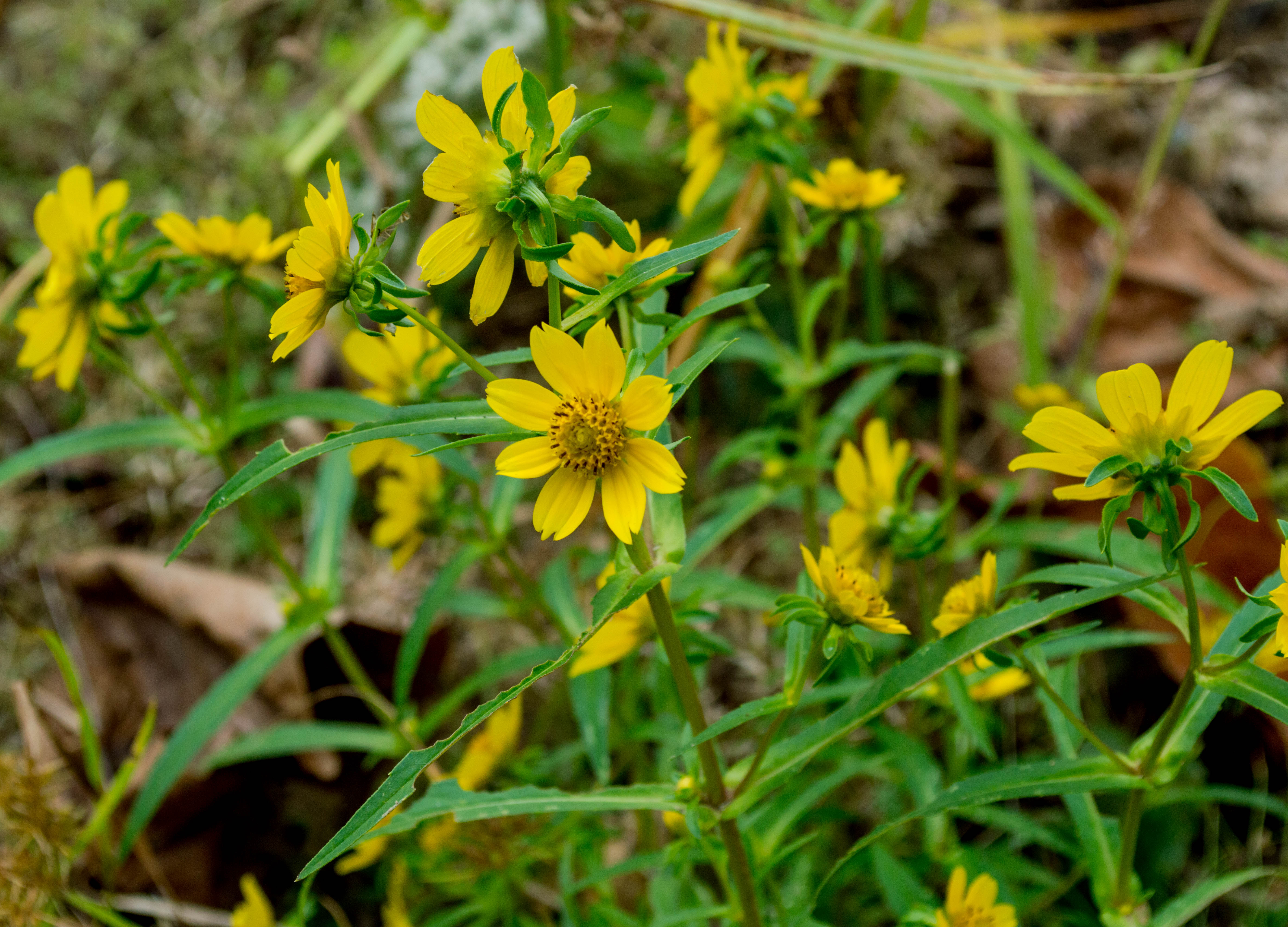
Nodding Bur Marigold

aka nodding beggarticks, sticktight; Bidens cernua; Asteraceae (aster family)

20140924-DSC_0070

I found this annual plant along the sandy, exposed bed of the river when it was running very low, in mid-September.  Although bur marigold likes really wet soils, it is not considered an emergent aquatic.

20140924-DSC_0056

It can be found through most of the US and Canada, except for a few states in the south. Some authorities consider it weedy.


The more I see of composites, there more fascinated I am by them.  Here’s a close up of the disk flowers.

20140924-DSC_0076


By the way, it’s possible I’ve mis-identified this one.  There’s another, almost identical species called smooth bur marigold (Bidens laevis); I spent a long time poring over details on the fantastic New England Wild Flower Society and John Hilty’s Illinois Wildflowers websites. These have become my go-tos whenever the books fail me.

20140924-DSC_0067

Update on “Yet Another Goldenrod” (FotD 9/22)

It appears that one of my mystery goldenrods is Solidago racemosa.  This might not interest you much, but it interests me because although it is a rare plant throughout its range, it can be found pretty readily along the rocky bluffs of the Potomac gorge.

20140908-DSC_0065

It’s a compact plant, only growing a foot or so tall, with leaves both on the stem and forming a basal rosette.

Although S. racemosa has several different common names, none of them are commonly used.  It’s gone through several botanical name changes, too, formerly known as  S. simplex and S. spathulata.

Just about everything you’d care to know about the Solidagos can be found in the goldenrods section of the Astereae Lab web page of the University of Waterloo in Canada.

S. racemosa is endangered in New York, Massachusetts, and Pennsylvania; threatened in Tennessee; and of special concern in Kentucky.

Flower of the Day: Common Beggar-Ticks

aka devil’s beggar-ticks; Bidens frondosa; Asteraceae (aster family)

20140908-DSC_0037

At this time of year the asters are just about the only things blooming in the Potomac gorge.  This one is comprised entirely of disk flowers; the rays absent. The green parts surrounding the flower head are bracts.  20140908-DSC_0042

According to the USDA, there are 26 species (one of them alien) of Bidens found in North America.  Another one is Spanish needles, fotd 9/12.  This one is probably the most widespread of them.  It prefers moist soils and full sunlight but can tolerate some dry and shade; it’s prone to becoming a nuisance plant. While looking into the origin of the common name I tripped across a New Zealand website that featured it as Weed of the Month.

20140908-DSC_0047

The common name comes from the fact that the seeds hitch a ride on the fur (or clothing) of passing animals.