Two Death Valley Shrubs, One Community

20160309-_DSC0692

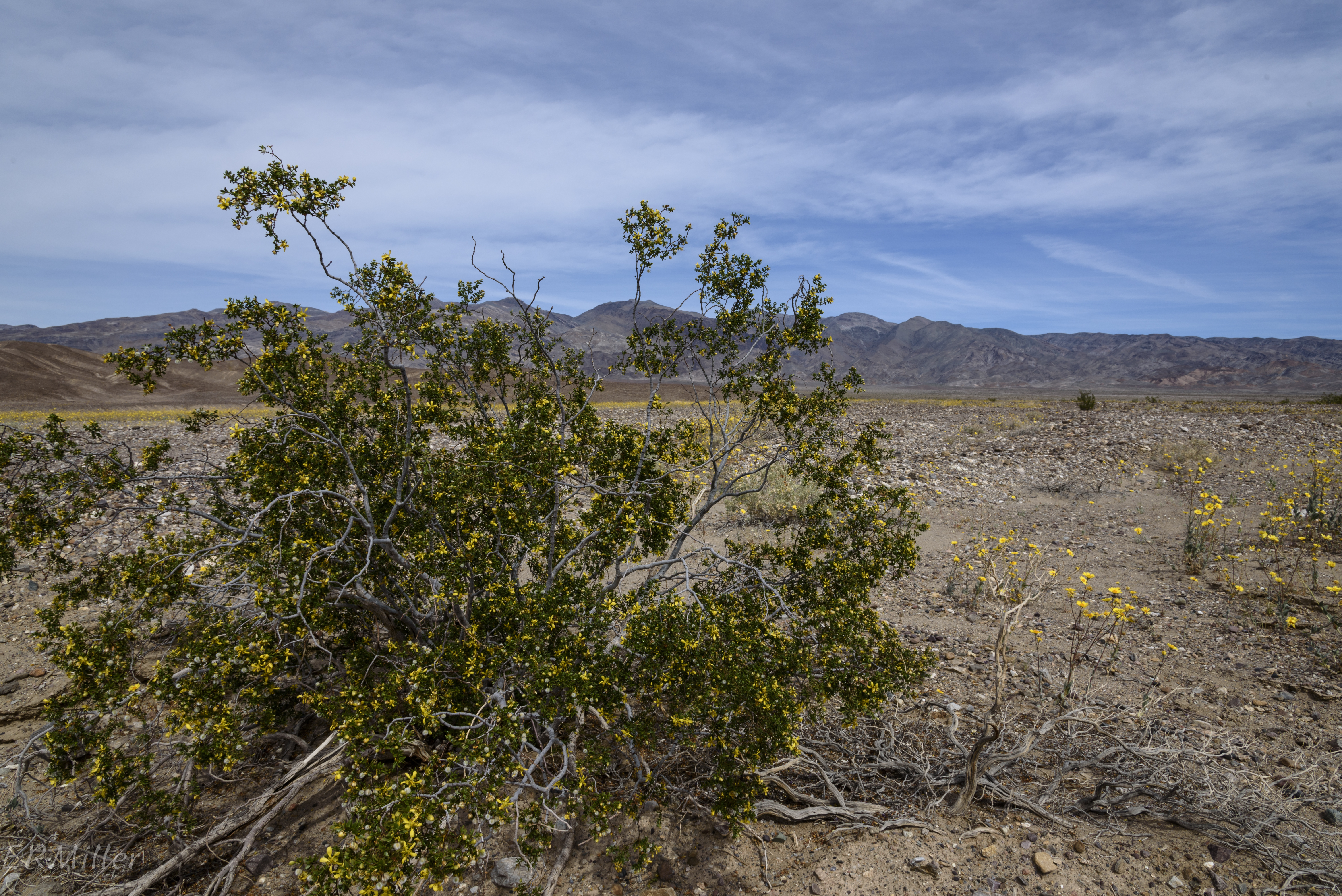
As I drove and hiked and poked my way through eastern Death Valley, I kept seeing this shrub. It seemed like it was everywhere. Later research confirmed my informal observations: 70% of the Mojave desert is covered in well-spaced stands of it, and indeed the plant community is named for it: creosote bush scrub, which occurs in elevations below 3,500′ in areas with very hot summers, winters that don’t quite get to freezing, and extremely low average annual rainfall amounts (0-2″ in dry years, up to 8″ in wet years).

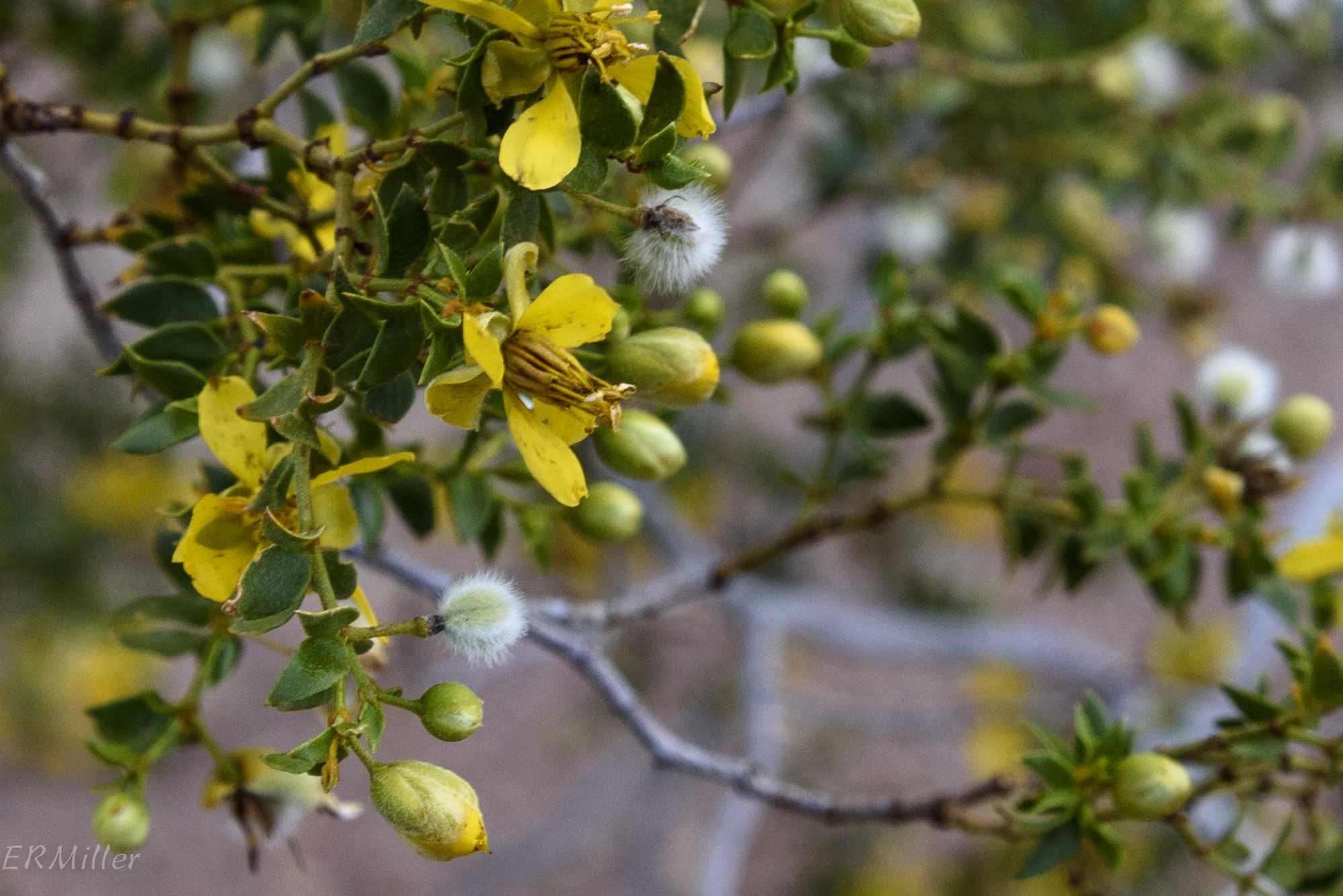
Larrea tridentata (Zygophyllaceae) is evergreen, can grow up to ten feet tall (usually it’s much shorter), is considered weedy by some authorities, and ranges from California southeast to Texas.  The more I read, the fascinated I became. Here are a few random facts.
20160307-_DSC0040

Common names include creosote bush, governadora, greaswood, guamis, hediondilla, and confusingly, chaparral (confusing because it is not a part of the chaparral plant community).

Creosote bush was used by native peoples as a medicinal for treating respiratory conditions, various inflammations, viral and fungal infections, arthritis, and many other things. It has analgesic, antidiarrheal, diuretic, and emetic properties.

The plant is allelopathic, meaning it engages in chemical warfare, by releasing chemicals through its roots to inhibit the growth of other plants, including, possibly, other creosote bushes.

Most young creosote bush plants are established under a canopy of burrow bush.

In addition to sexual reproduction, creosote bush reproduces vegetatively. The resulting clonal colonies can live thousands of years, making them among Earth’s longest-living organisms. One colony has been estimated to be 9,400 years old.
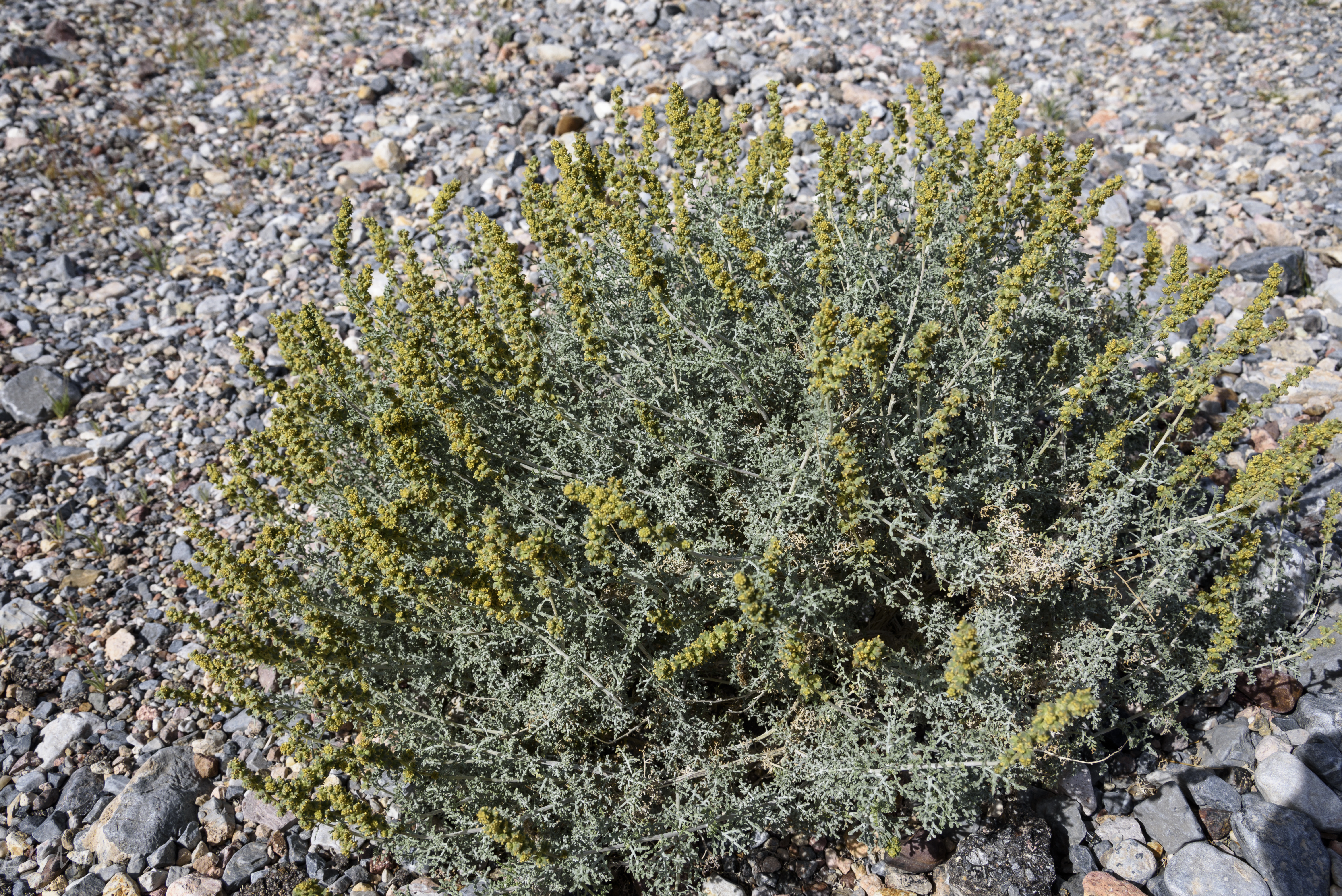
20160308-_DSC0349

Another species is co-dominant with creosote bush in its community; that one is known by the common names white bursage, burro bush, and burro weed.  I didn’t see as many of these plants, but as soon as I saw one up close, I had an unpleasant suspicion that it was closely related to a much-hated plant back home.

I was right.  Burrow bush is Ambrosia dumosa (Asteraceae), in the same genus as giant ragweed (A. trifida). And just like giant ragweed, it produces a very fine pollen that’s dispersed by the wind, making it a potent allergen.
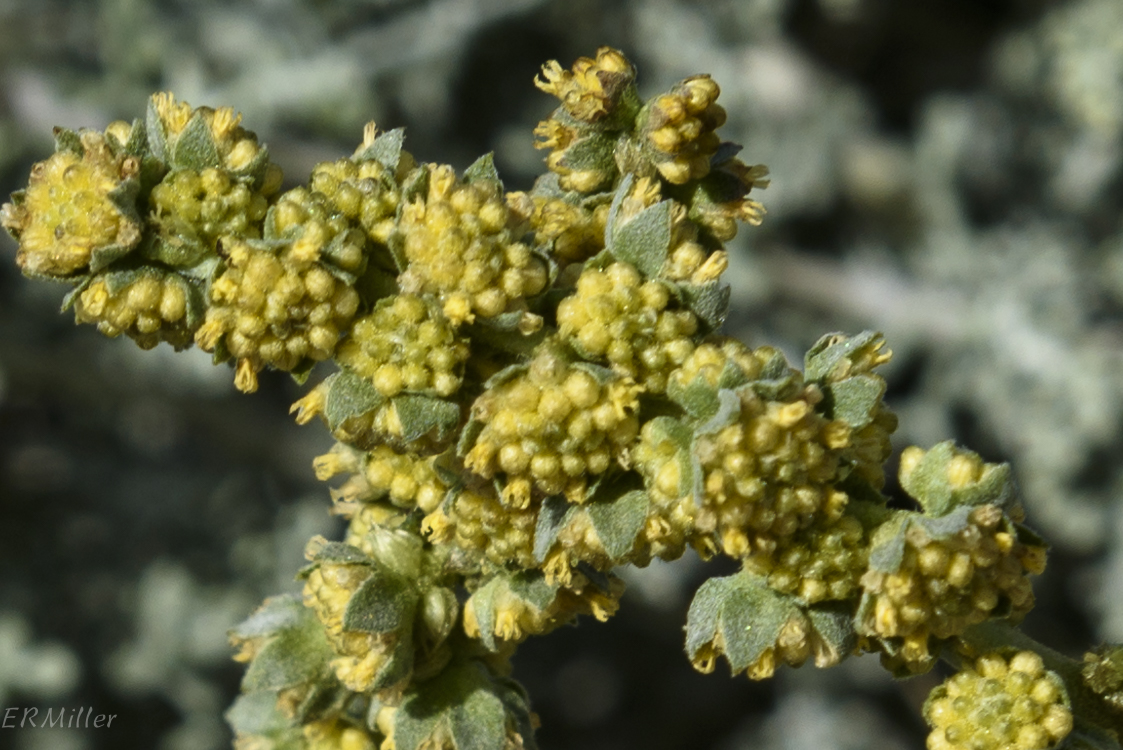
20160308-_DSC0350

Burrow bush grows in the Mojave and Sonora deserts.  It grows to about three feet tall, and is drought-deciduous (meaning it drops leaves in extremely dry conditions).


For more information about these plants, their communities, ecology, and so on, visit the following websites:

US Forest Service: creosote bush  burrow bush
mojavedesert.net
Medicinal Plants of the Southwest
California Plant Names
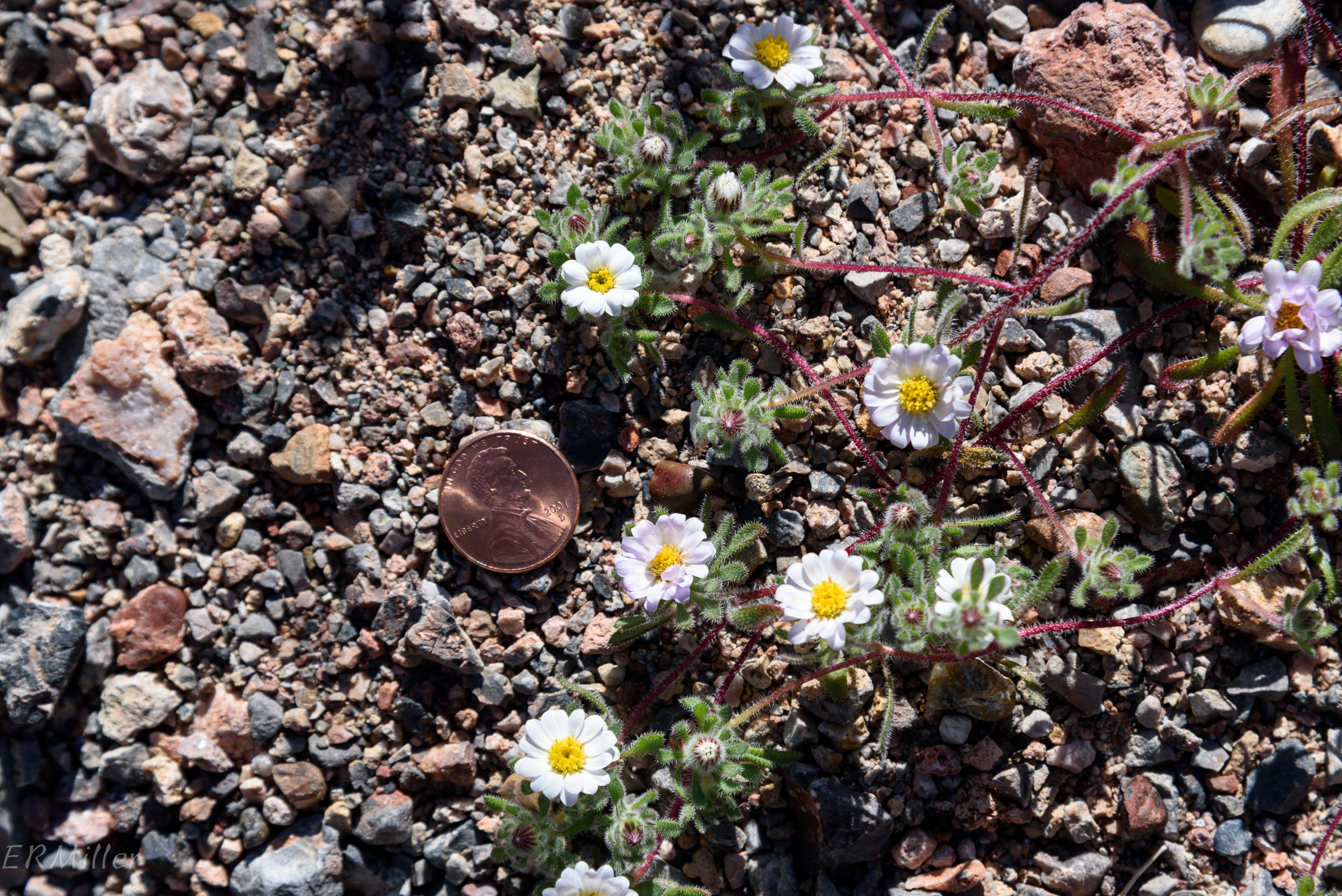
Belly Daisies

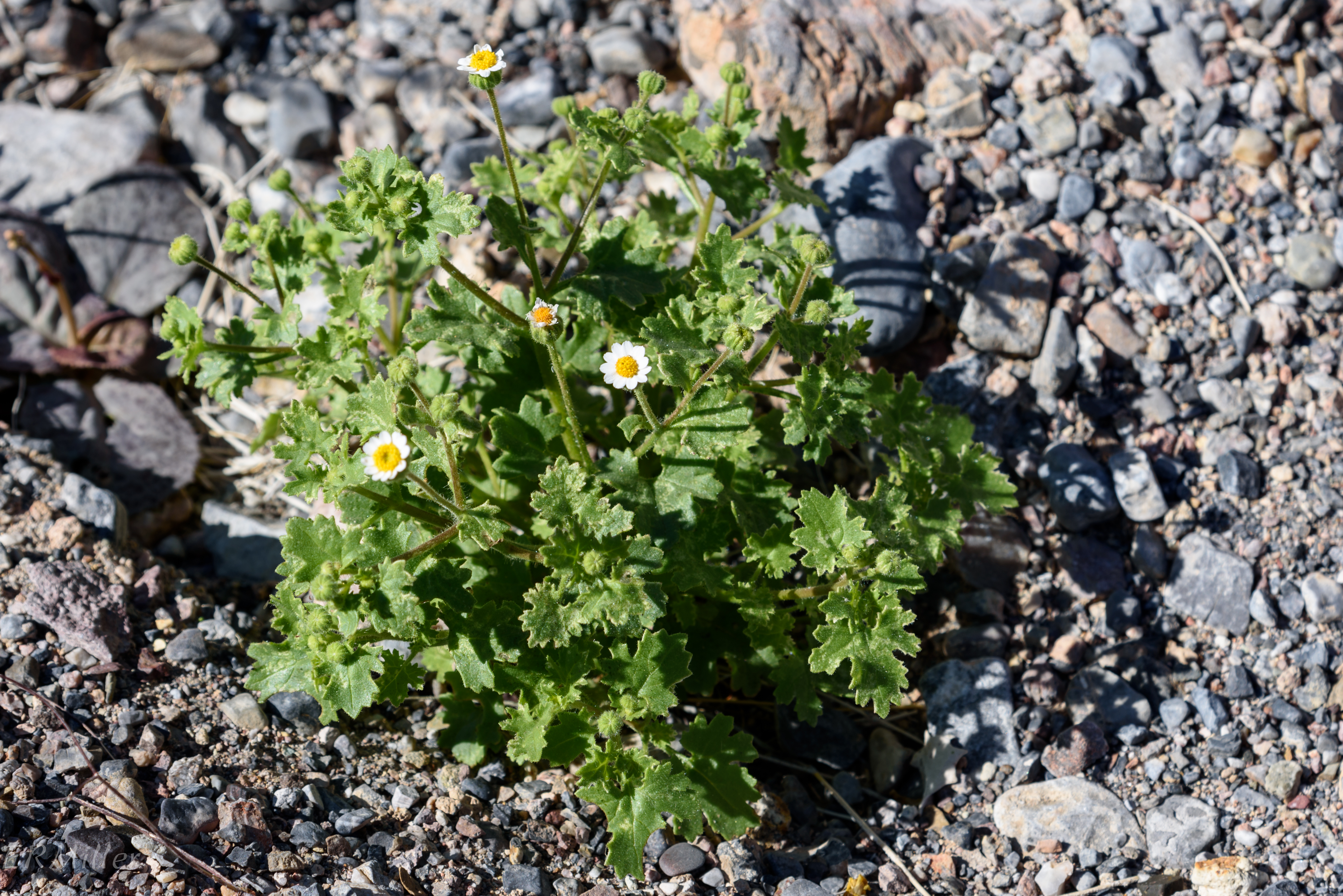
20160310-_DSC0843

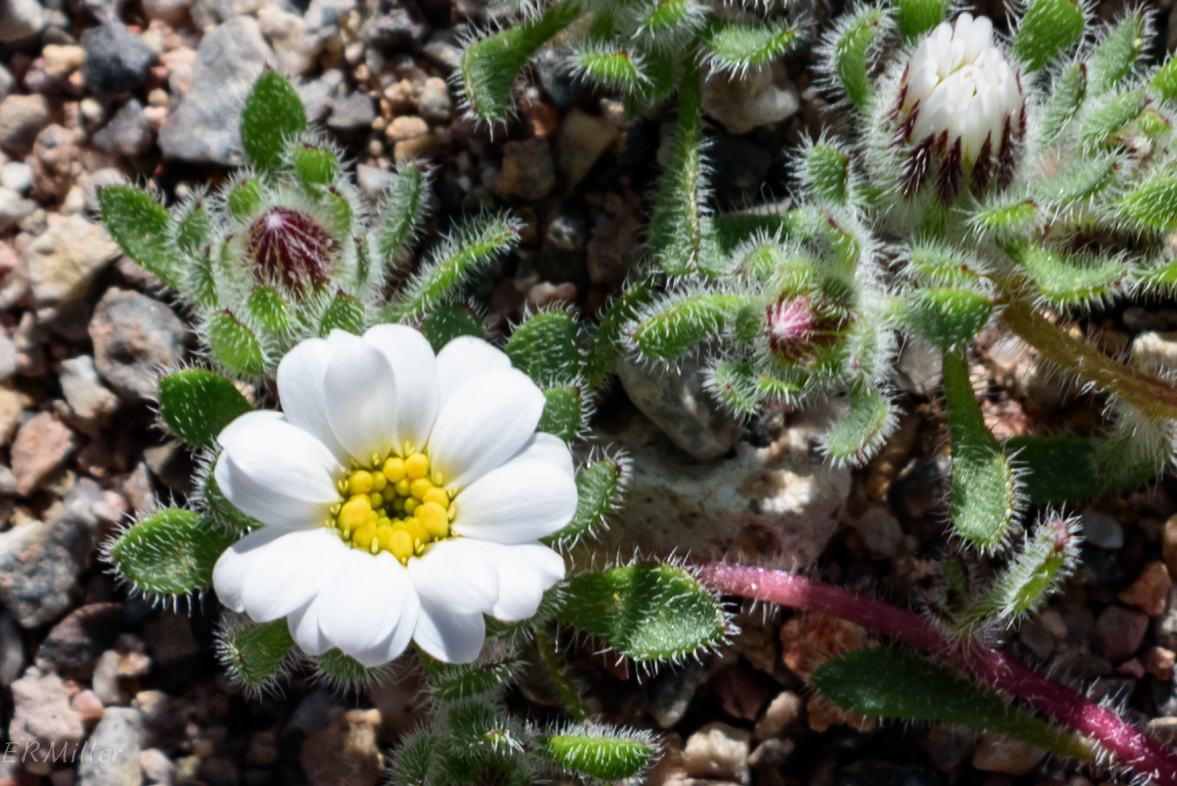
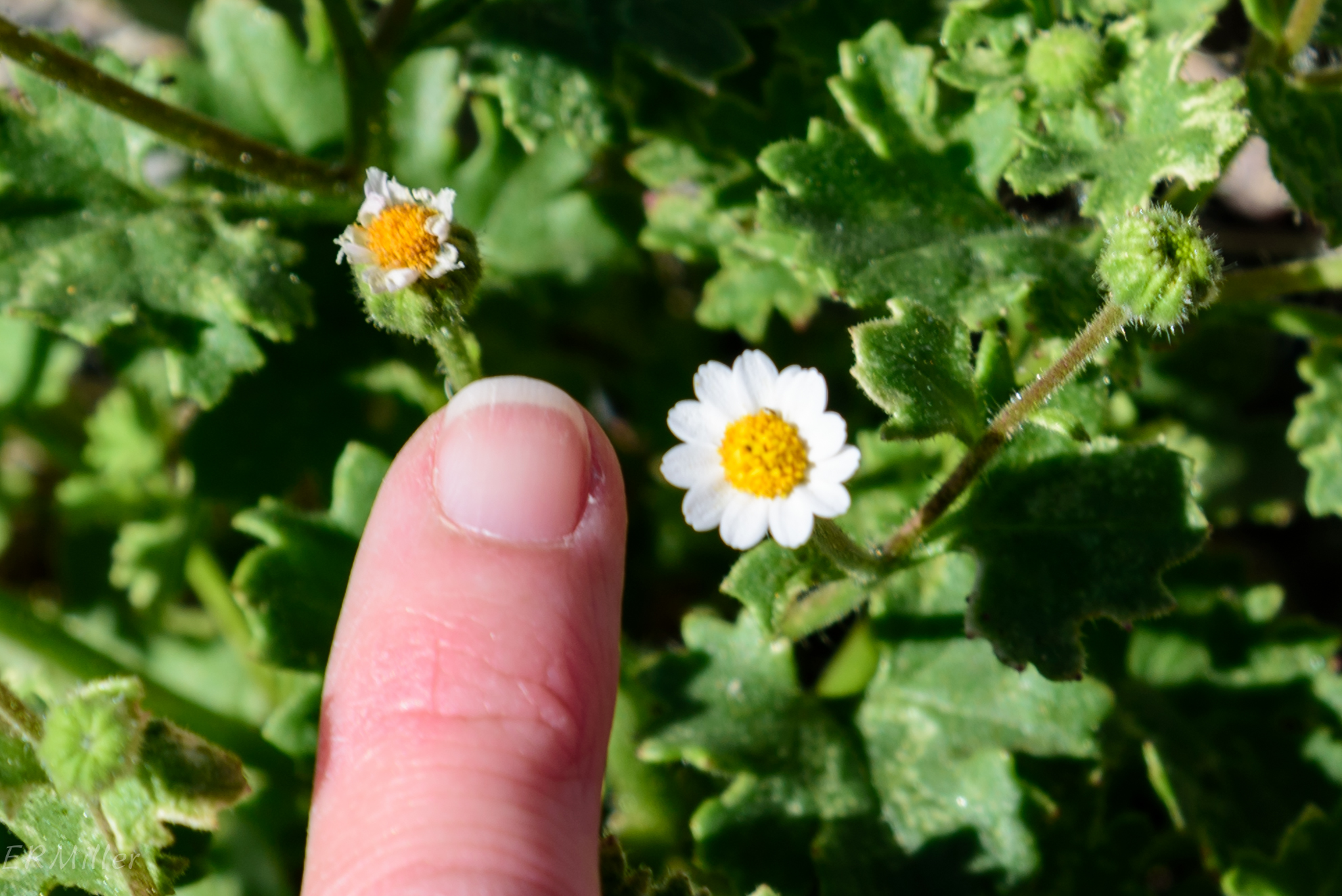
desert star; Mojave desertstar
Monoptilon bellioides

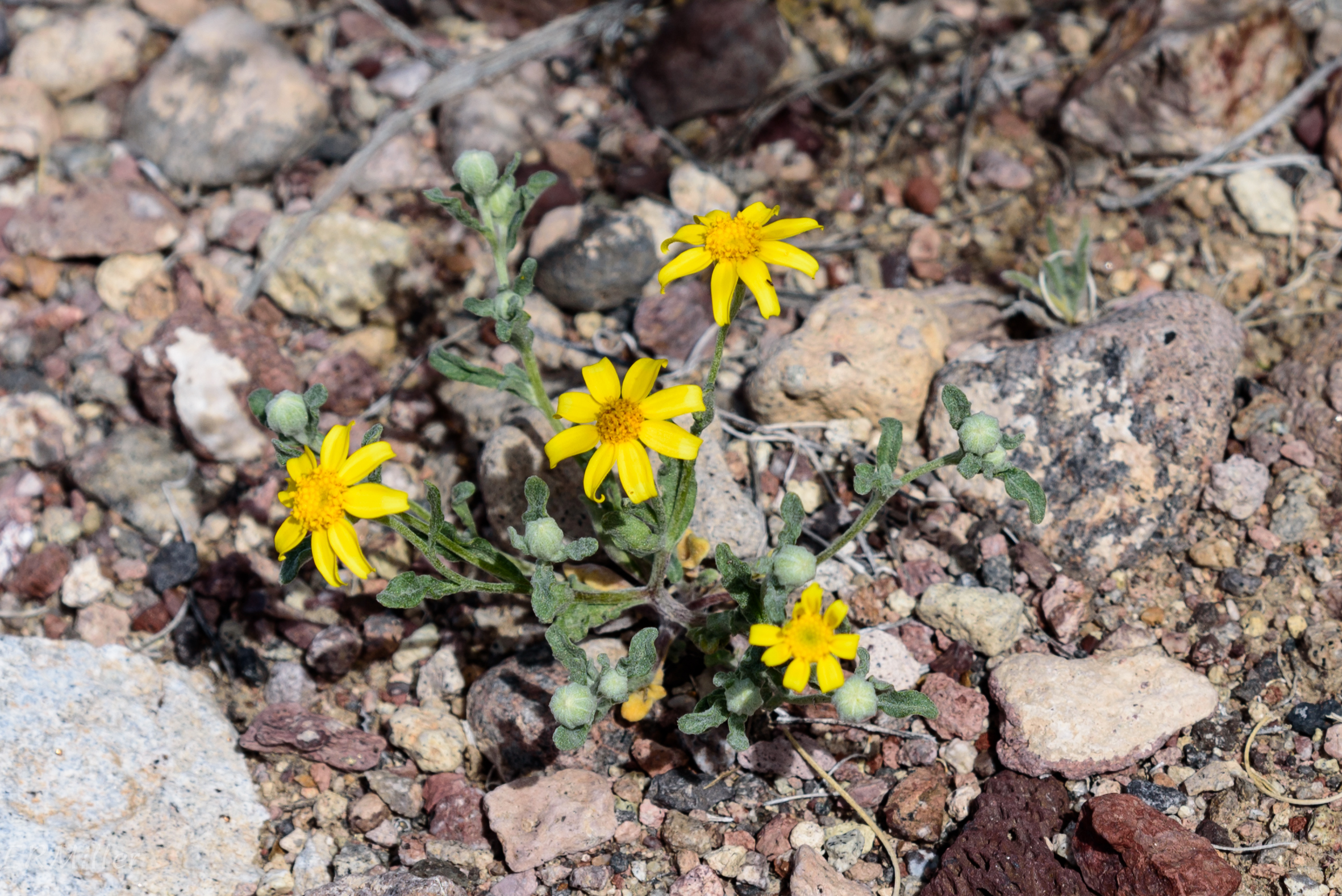
20160310-_DSC0830


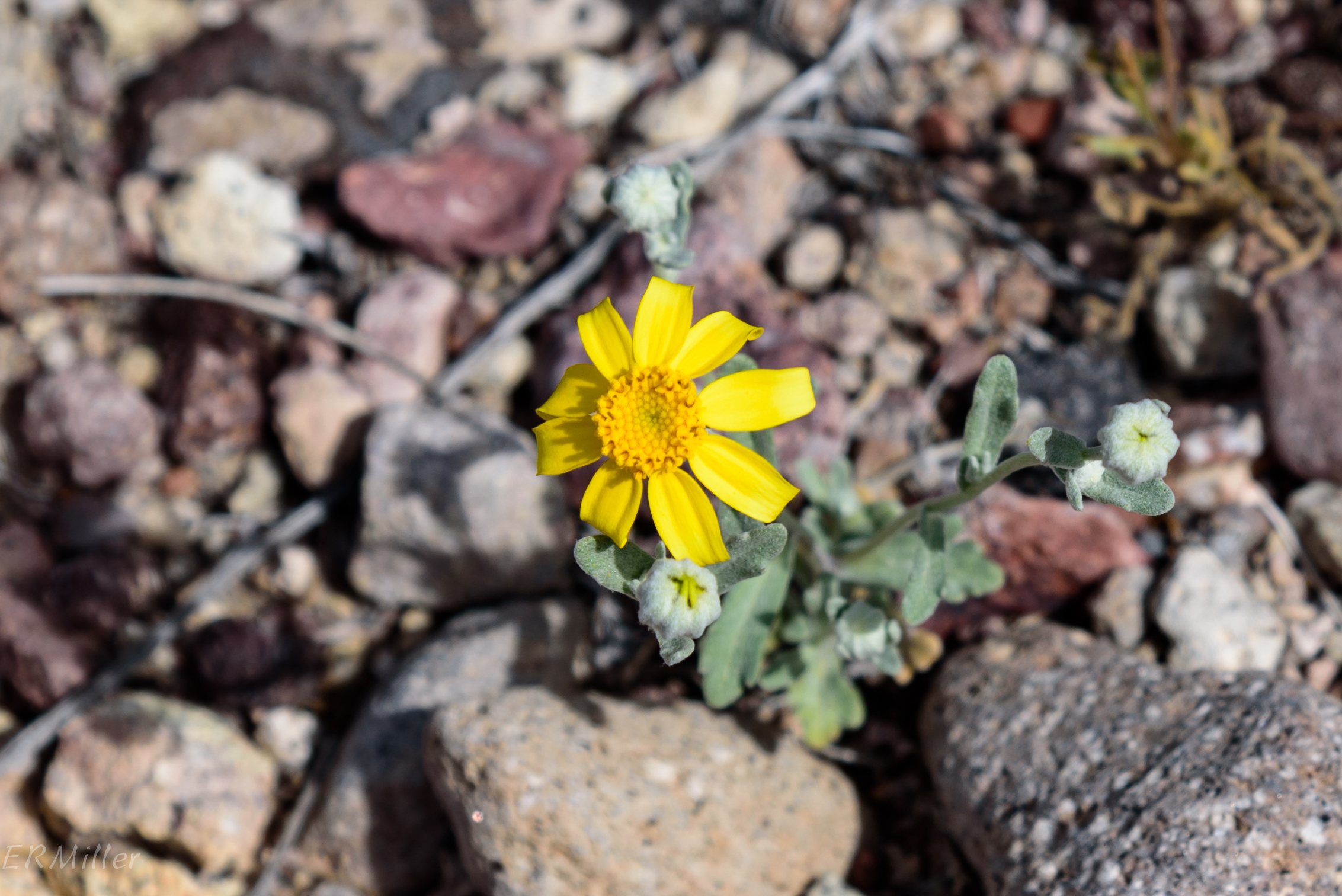
rock daisy; Emory’s rockdaisy
Perityle emoryi

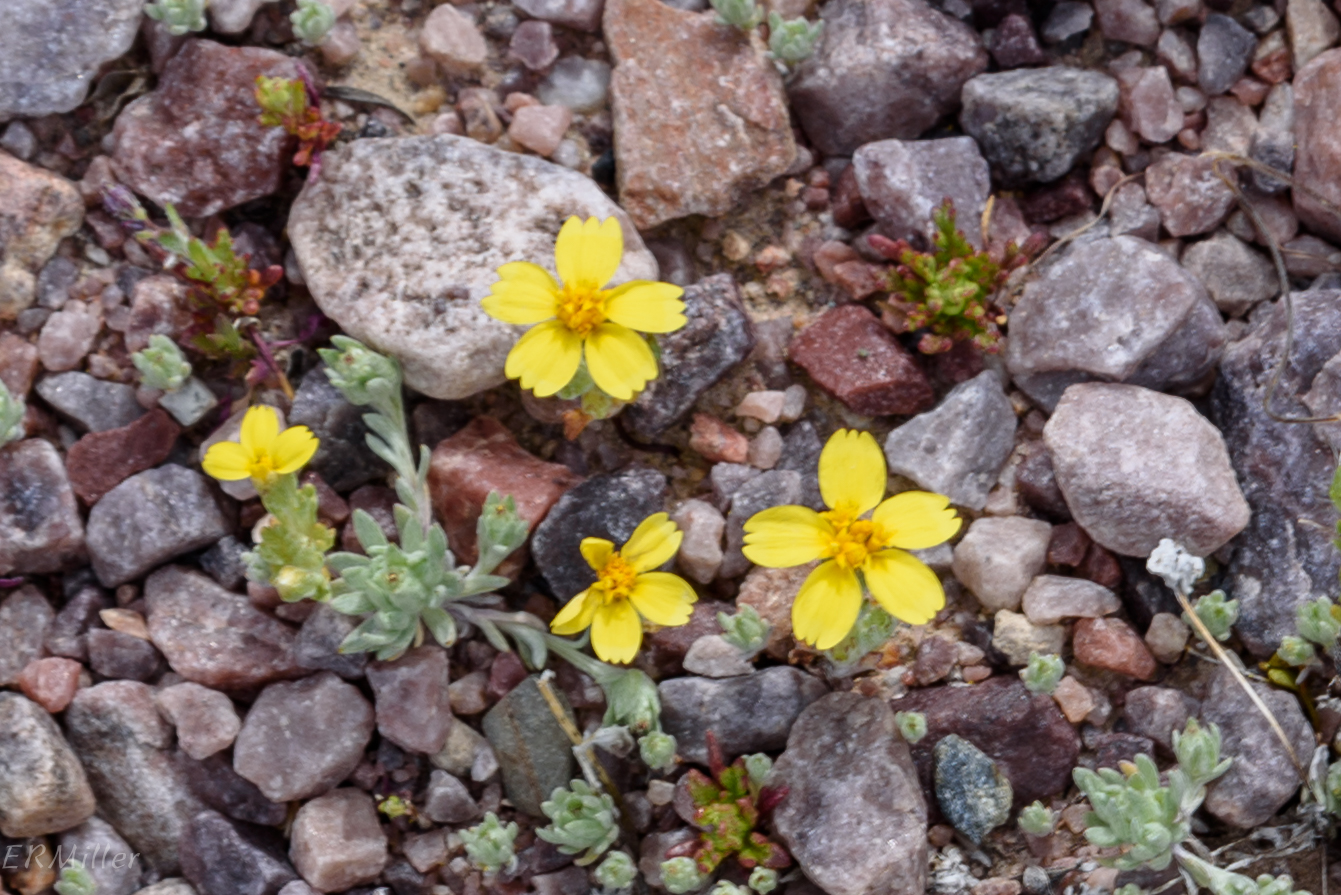
20160309-_DSC0622


woolly daisy; easterbonnets
Eriophyllum wallacei
(formerly Antheropeas wallacei)

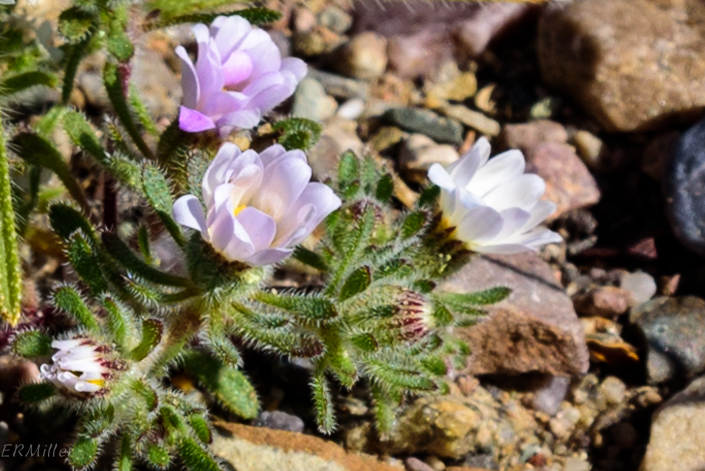
20160309-_DSC0747


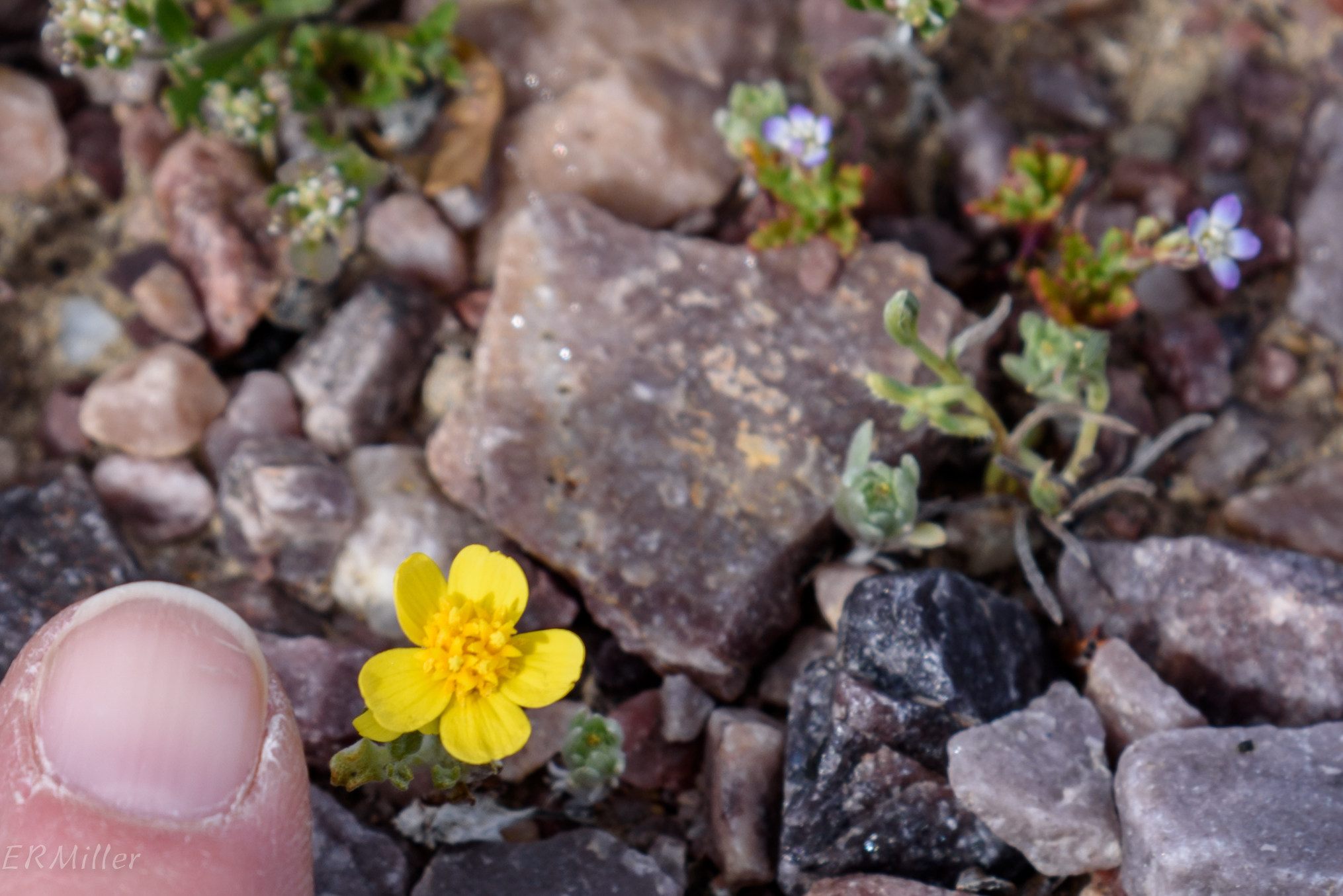
false woolly daisy; yellowray Fremont’s gold
Syntrichopappus fremontii


These four Death Valley belly flowers are in the Asteraceae, of course. All are native to the desert Southwest. All are itty-bitty (note the penny in the first photo above).

20160308-_DSC0178

20160310-_DSC0843-2

I found desert star to be especially charming.


young blossoms just opening


mature blossom

20160310-_DSC0831


rock daisy is about the size of a pinky-nail

20160309-_DSC0620


woolly daisy is about the same size

20160309-_DSC0746


yellowray Fremont’s-gold is a smidge larger (that’s a forefinger nail)


And a special bonus bellyflower: can you see the purple blossom in the upper right of the above photo? The whole thing is about the size of one of the yellow rays. It’s called salt sandspurry (Spergularia salina; Caryophyllaceae). I didn’t even know it was there until I looked at the picture!


DWCs

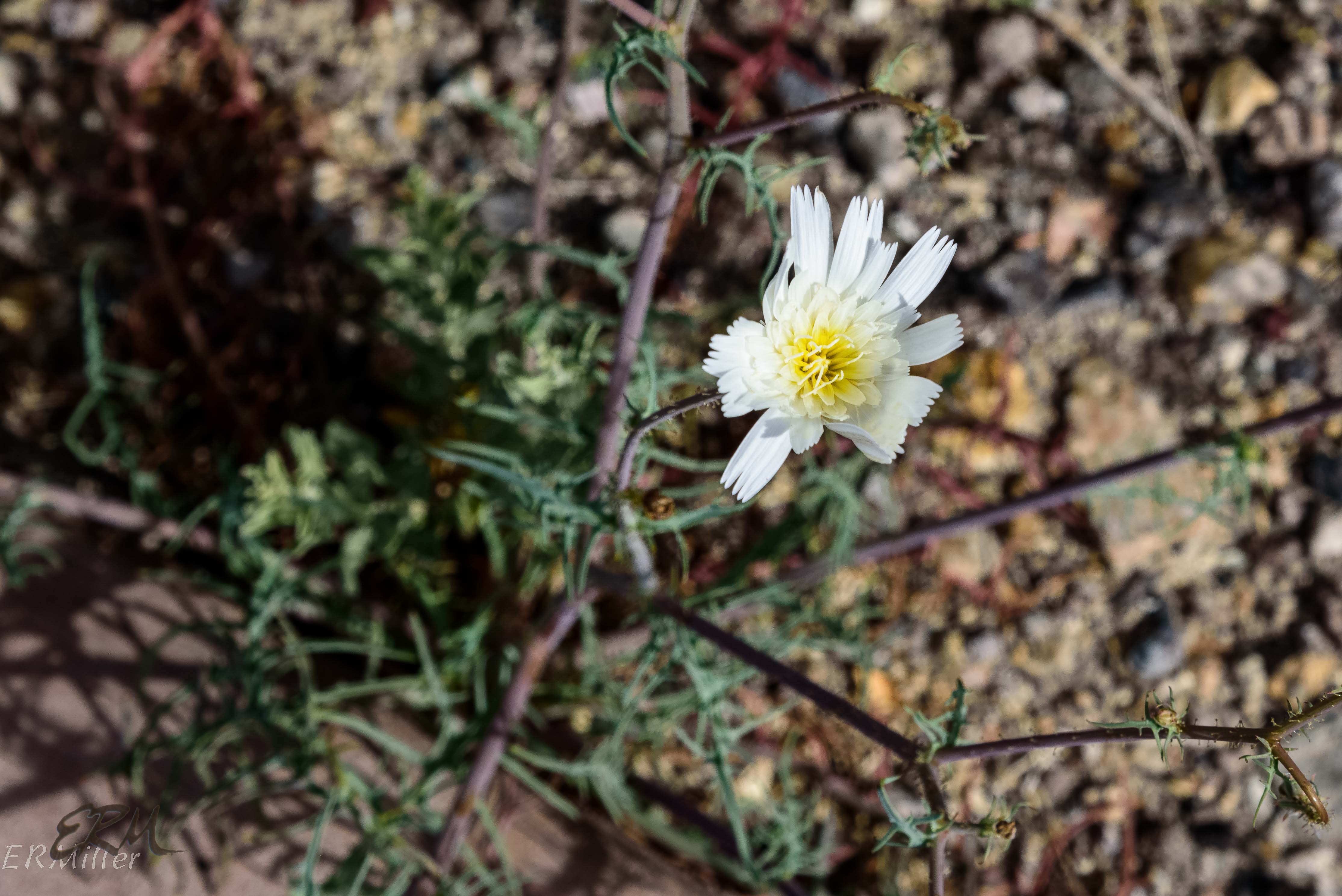
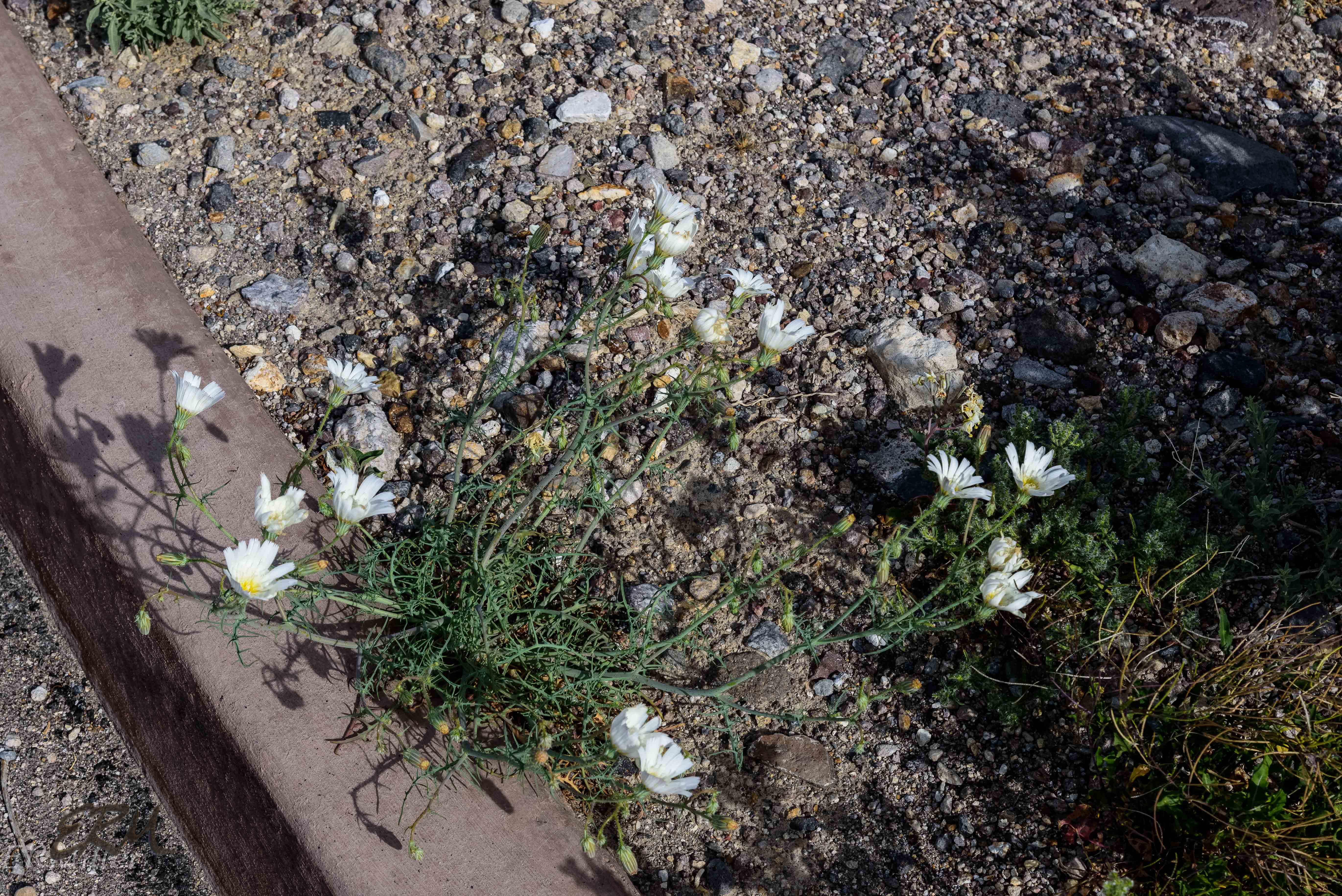
right: gravel ghost, aka parachute plant
Atrichoseris platyphylla
Asteraceae


below: desert chicory, aka plumeseed
Rafinesquia neomexicana
Asteraceae

I figure if the various hard-to-tell-apart yellow flowers can be referred to as DYCs, then I can refer to the white ones as DWCs. Here are two of them from Death Valley.


The flowers of gravel ghost stand about 2 feet from the ground on naked stems; the only leaves are gray-green and form a basal rosette.


See how the flowers appear to be floating in mid-air?  You can barely make out the stems.  This is how the plant comes by its common names.

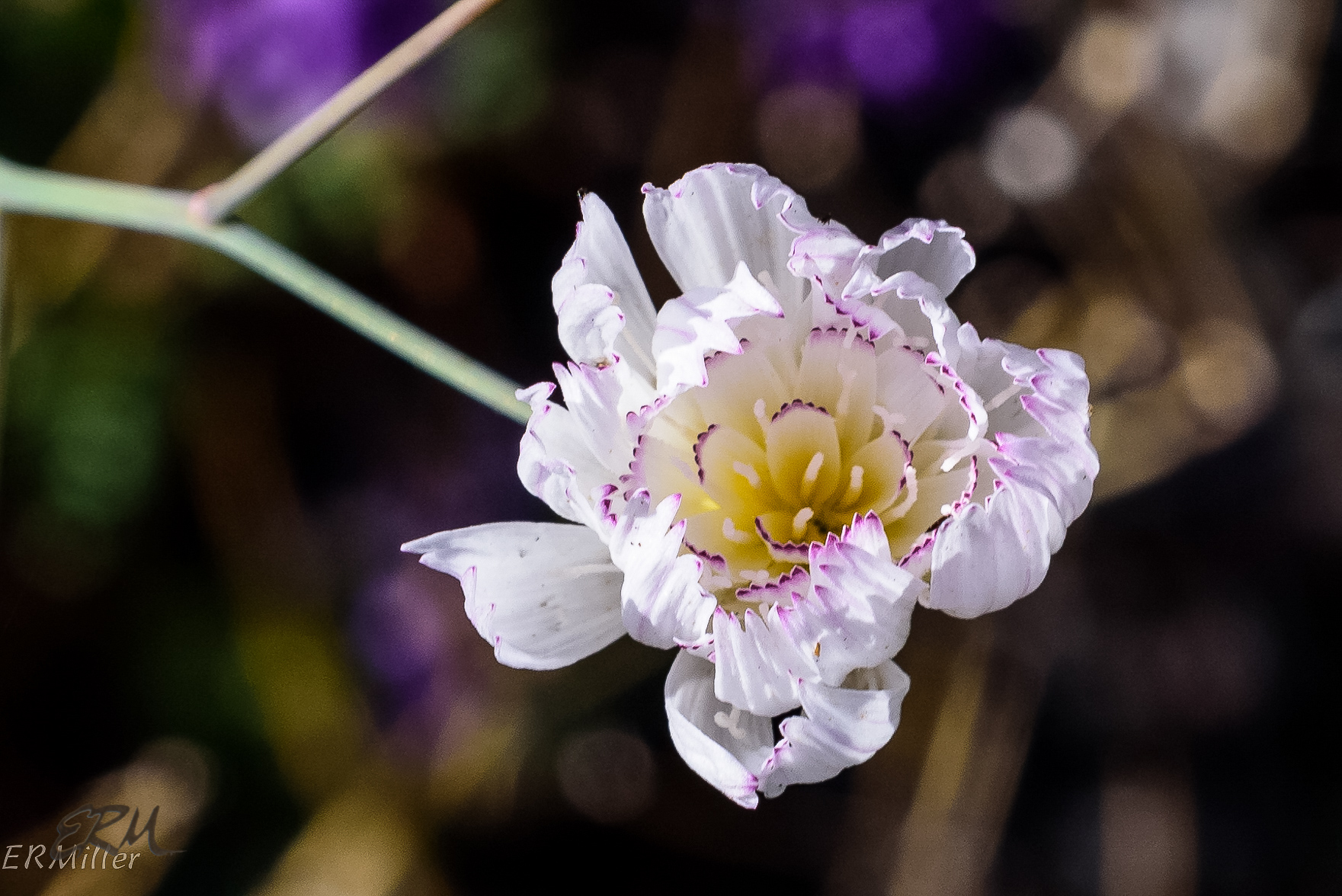
Young inflorescences are really pretty up close: the rays are tipped in purple.

In contrast, desert chicory has leaves on rather weak stems, so that the plant is often seen either somewhat flopped over or growing through another plant for support.


Gravel ghost is found in the deserts of California, Nevada, Utah, and Arizona. Desert chicory can be found in the same states and also New Mexico and Texas. Both plants are annuals.

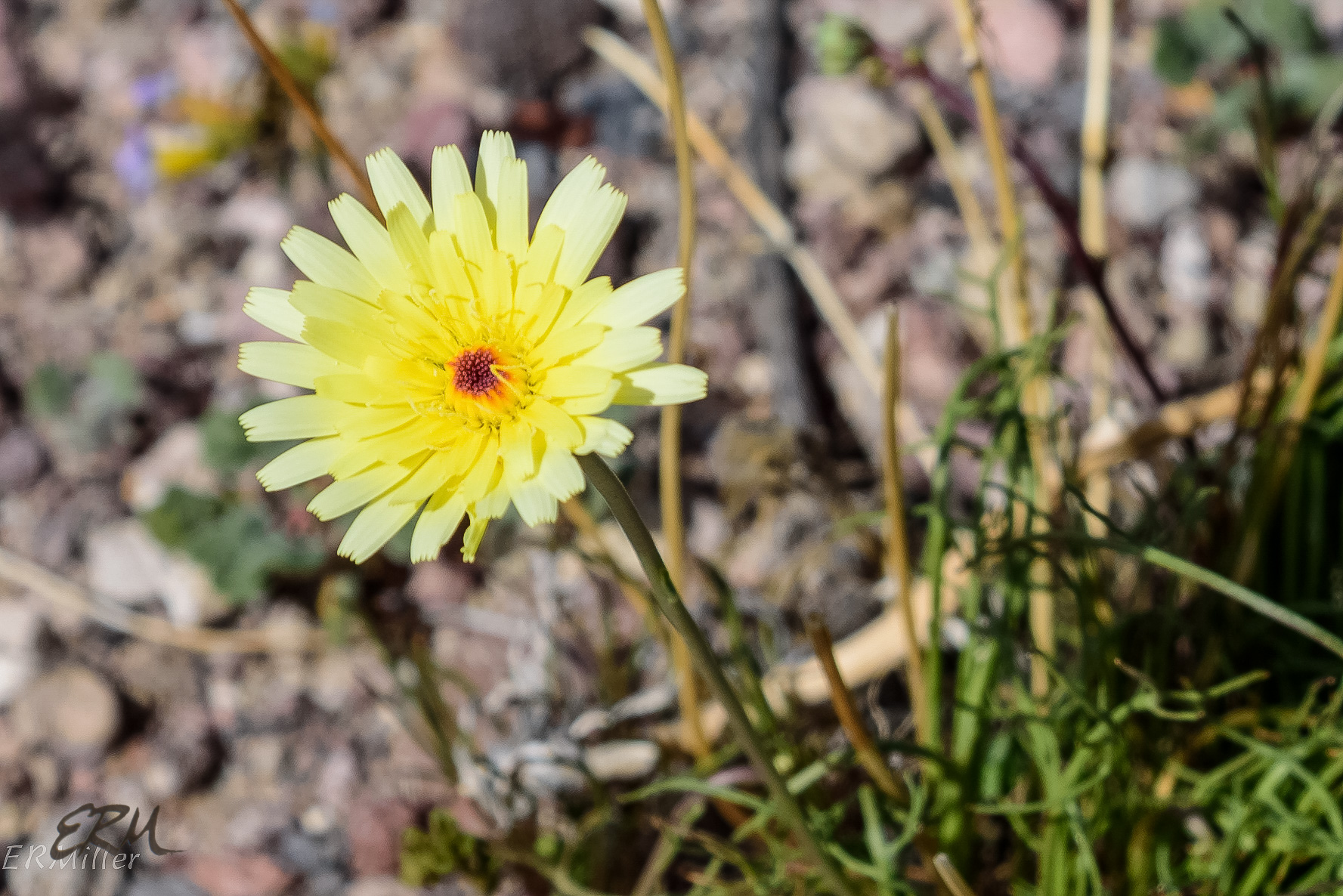
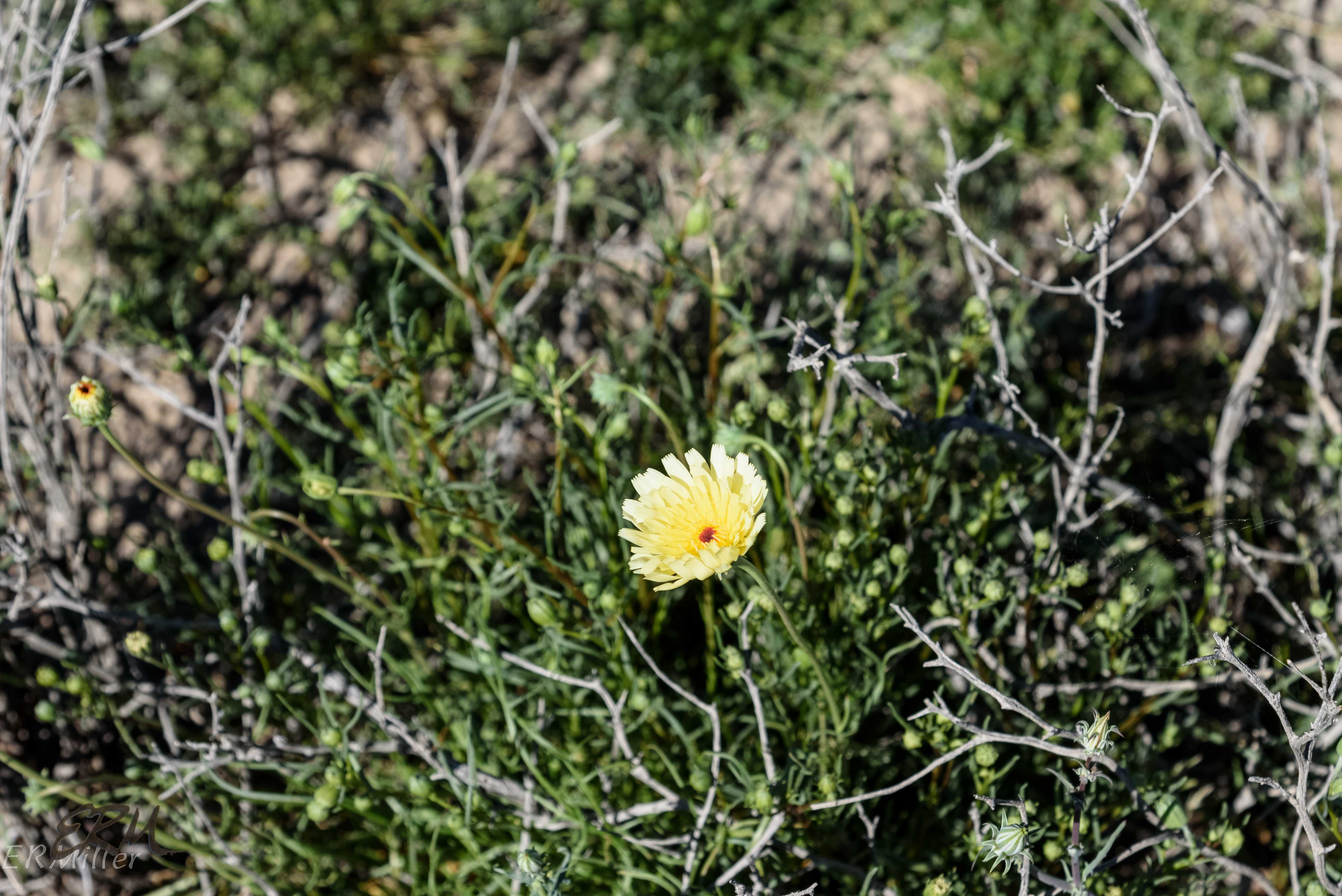
“DYC” (Two More Yellow Flowers)

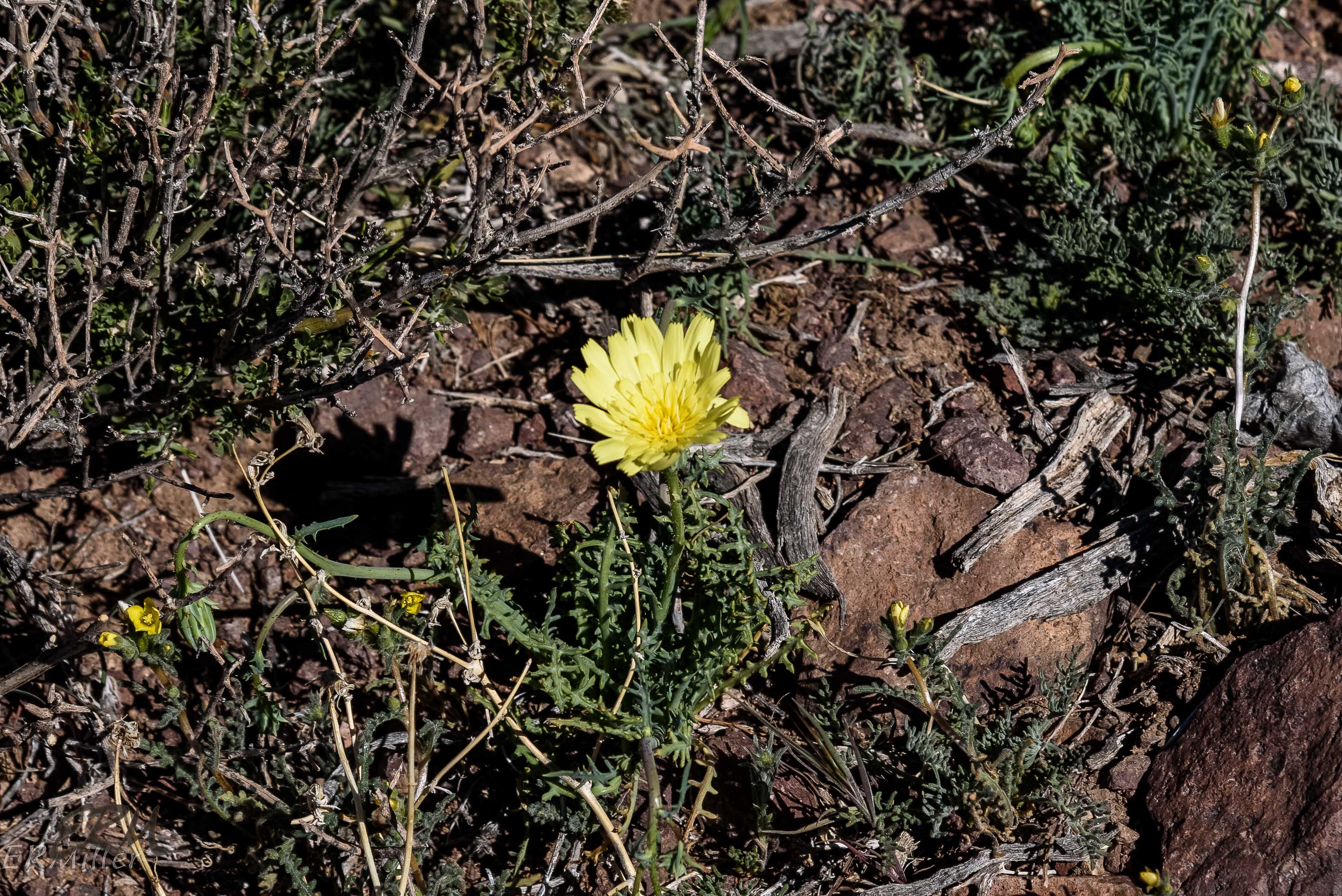
Anisocoma acaulis
scale bud
Asteraceae


and


Malacothrix glabrata
desert dandelion
Asteraceae


While researching the Aster family, I stumbled across the term “DYC” – “damned yellow composite”, used by Lady Bird Johnson, among others. It’s the floral equivalent of birders’ “LBJ”. Ha! That’s how I was starting to feel trying to identify these two plants, which have very similar inflorescences but quite different leaves.

“Which flower is that?”
“I dunno, another DYC.”

The most obvious difference is the red dot in the center of the dandelion, but that only shows on young flowers.  The better way to distinguish them is by looking at the leaves.


Scale bud’s leaves are a light gray-green and deeply notched – not to confuse things, but they’re shaped somewhat like dandelion leaves.


Desert dandelion has darker leaves with much narrower lobes – they look almost like threads.


The desert dandelion ranges from New Mexico west and north to Oregon and Idaho. Scale bud’s range is limited to Arizona, California, and Nevada. Both plants are annuals.

I found both of these species near Dante’s View, at an elevation of about 5000 feet. If they occurred elsewhere in the park I failed to notice. Maybe because I was getting exhausted.  Or maybe because they’re, you know… DYCs.

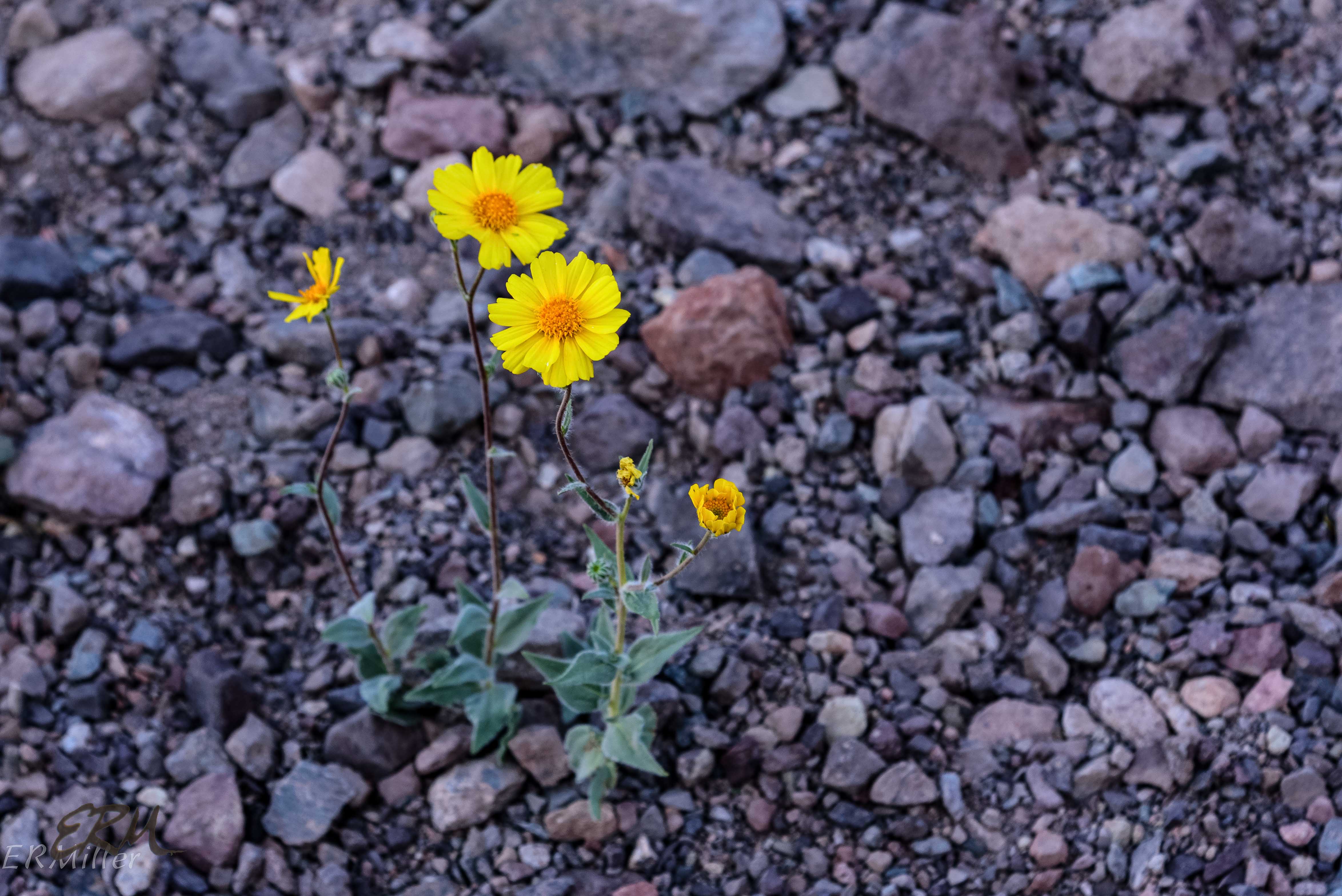
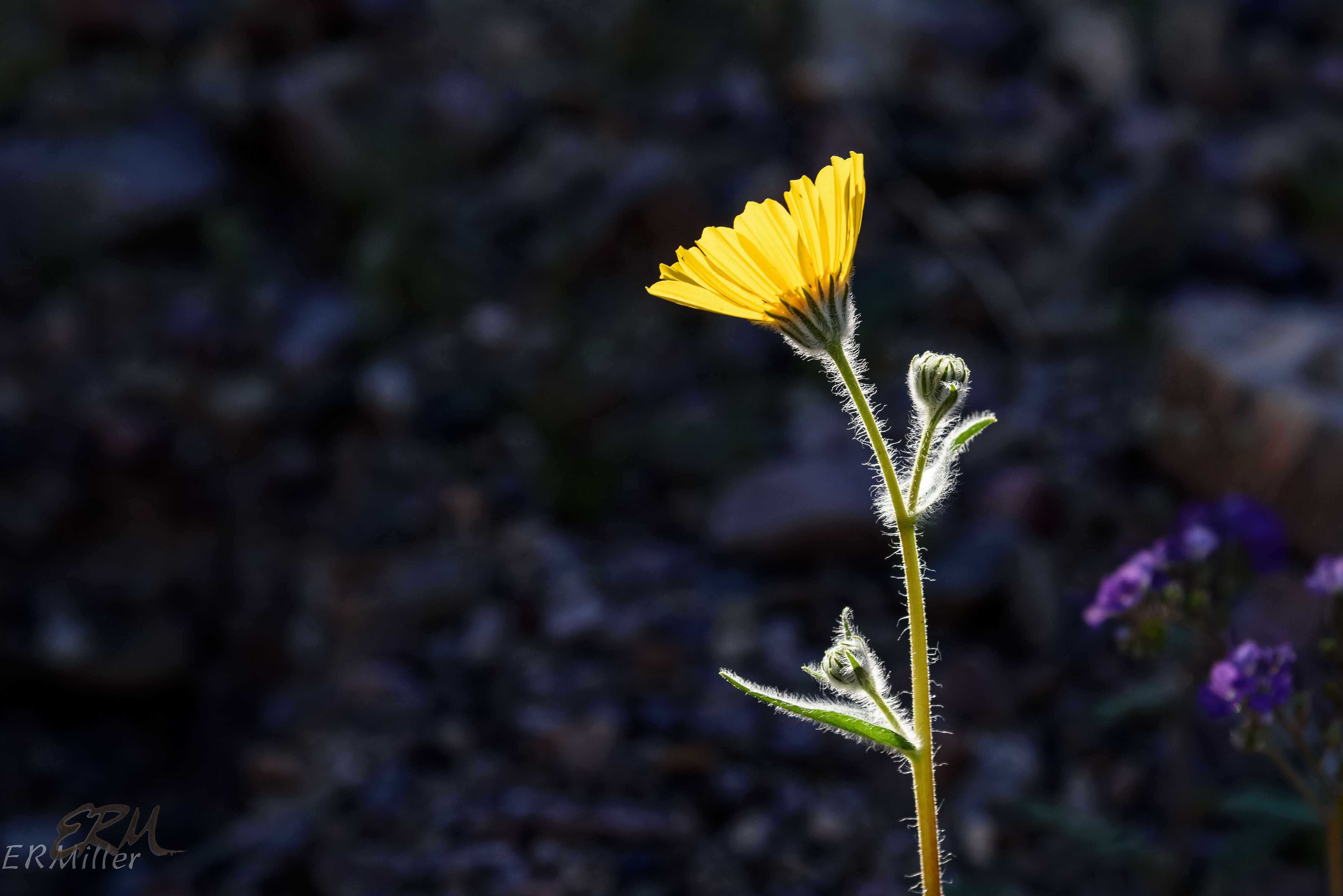
Desert Gold

Geraea canescens
Asteraceae

Also known as desert sunflower, this is the plant you see carpeting Death Valley* in years when the conditions are right (eg wet winters). It’s an annual that can stand up to three feet tall (the three plants pictured above are unusually small specimens), and has hairy stems, and hairy, sage-green leaves that are sessile, oval at the base, and long-tipped.


Desert gold is native to the desert Southwest (California, Nevada, Utah, and Arizona).

*see yesterday’s post