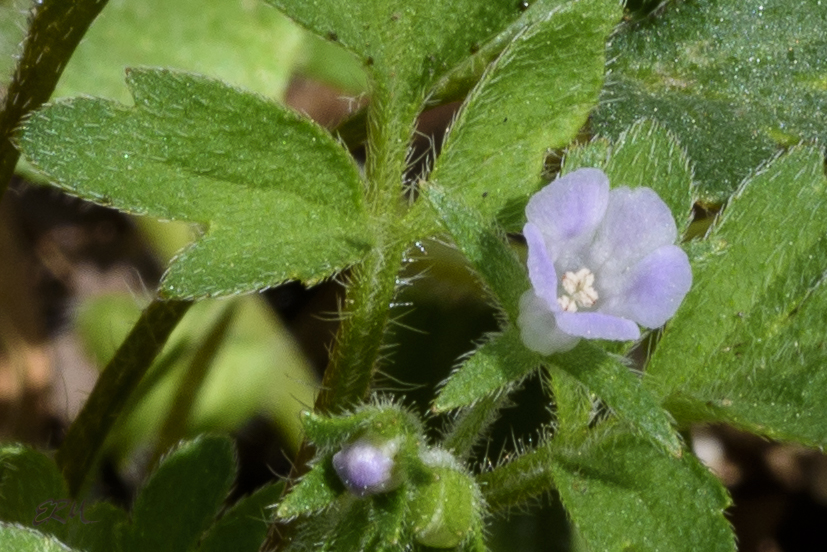
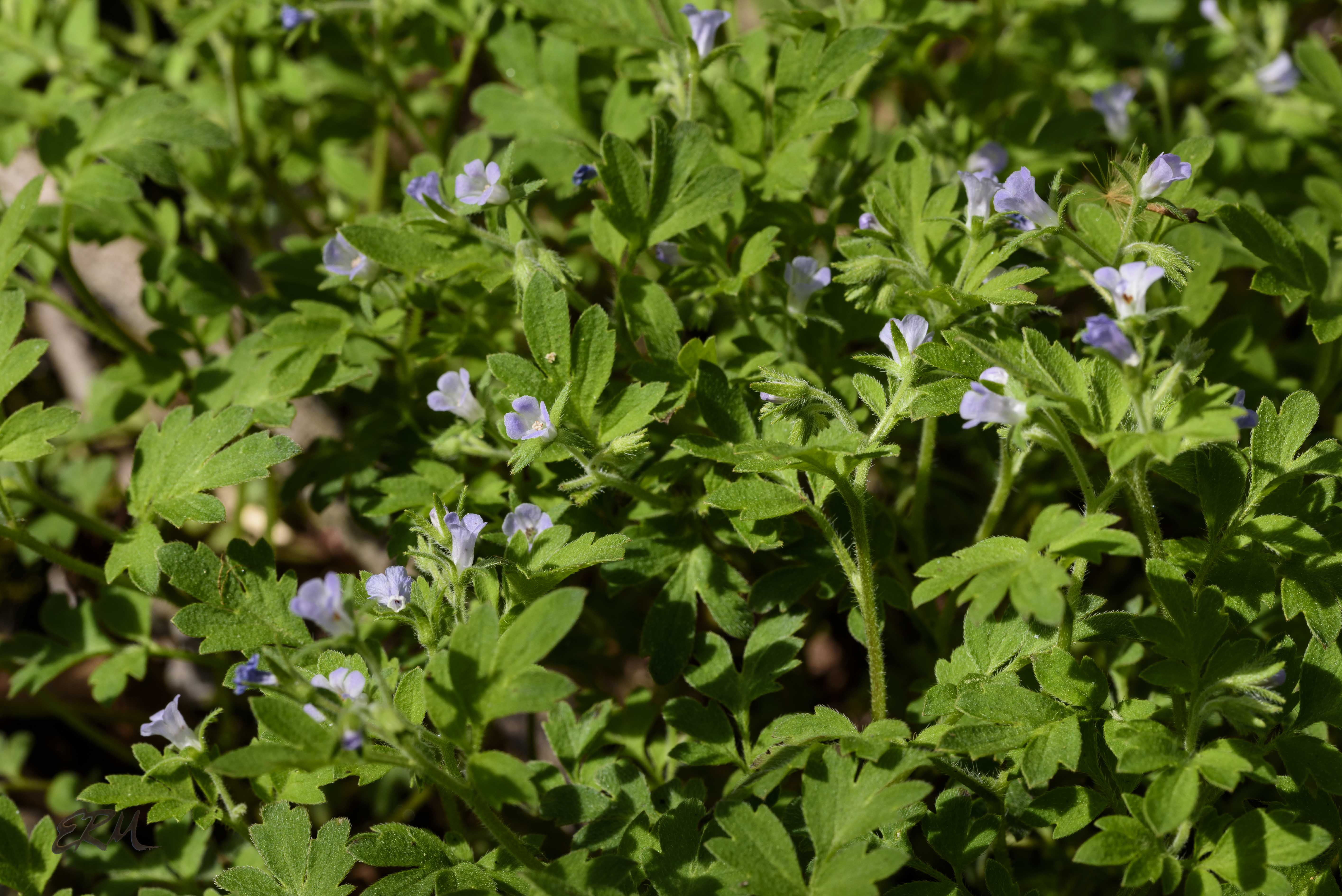
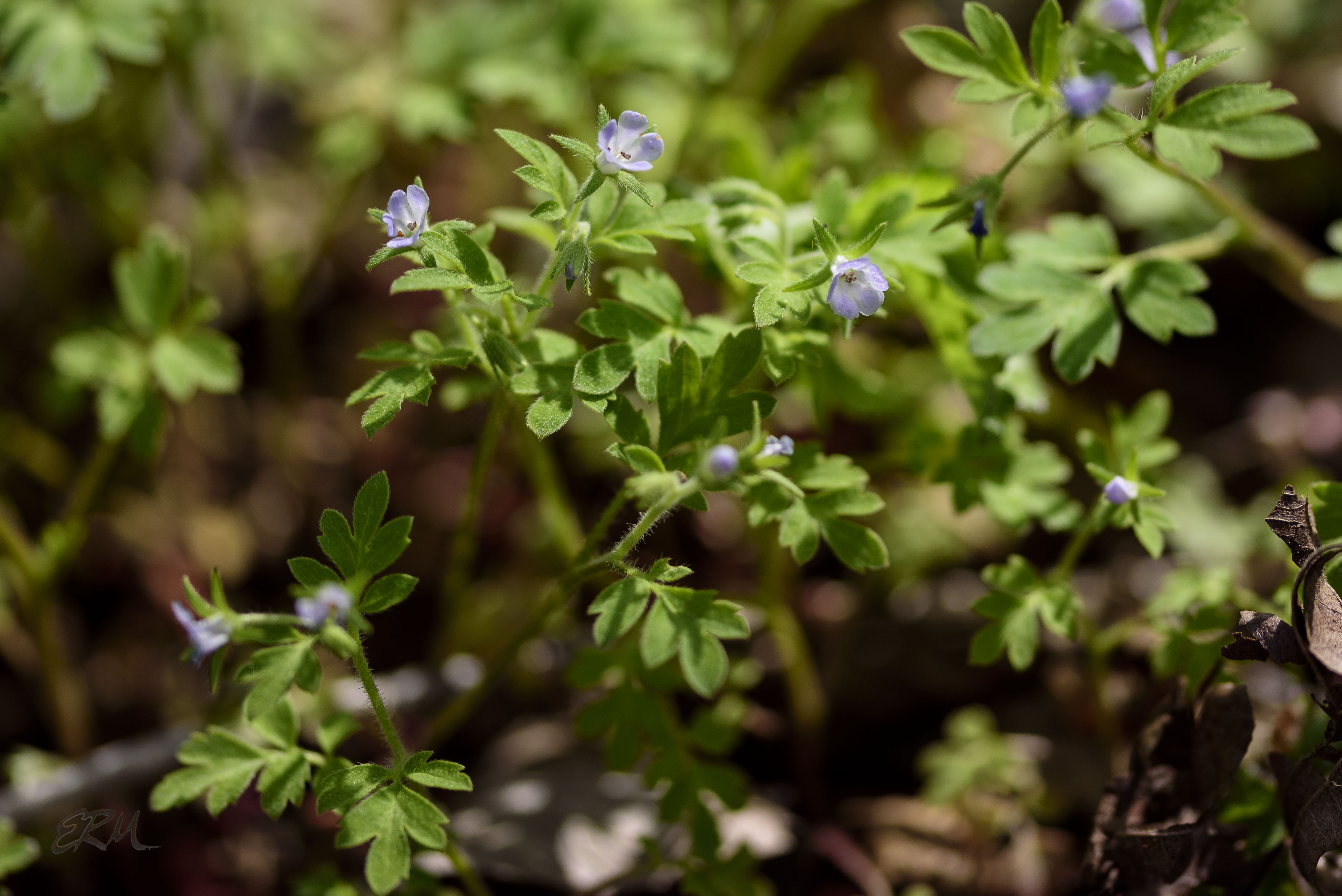
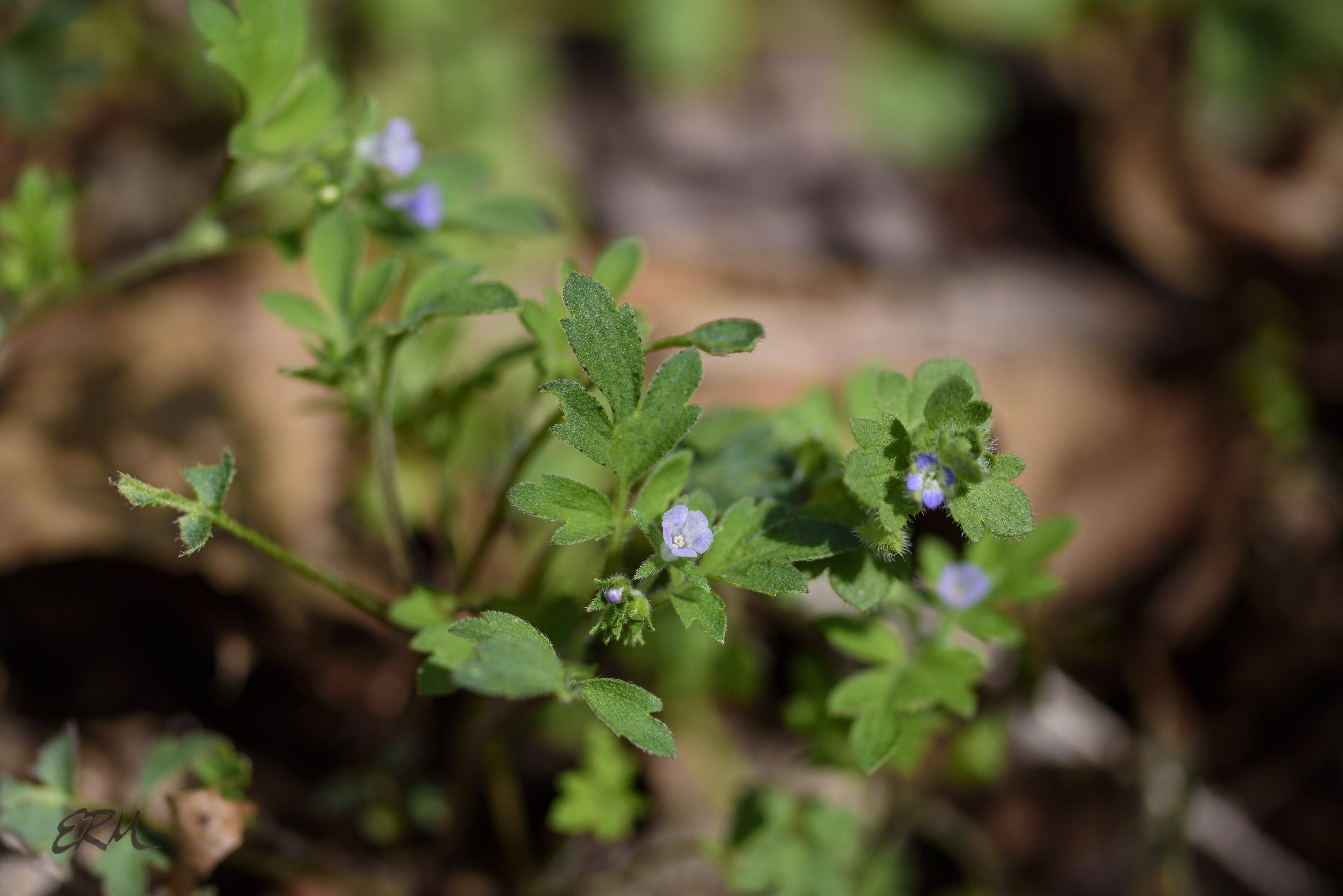
 Last Sunday morning Steve and I headed out for a walk, and in less then an hour found Coville’s phacelia. Lots of it. So Monday I went back without Steve but with camera, tripod, and macro lens, and spent some quality time photographing this rare species.

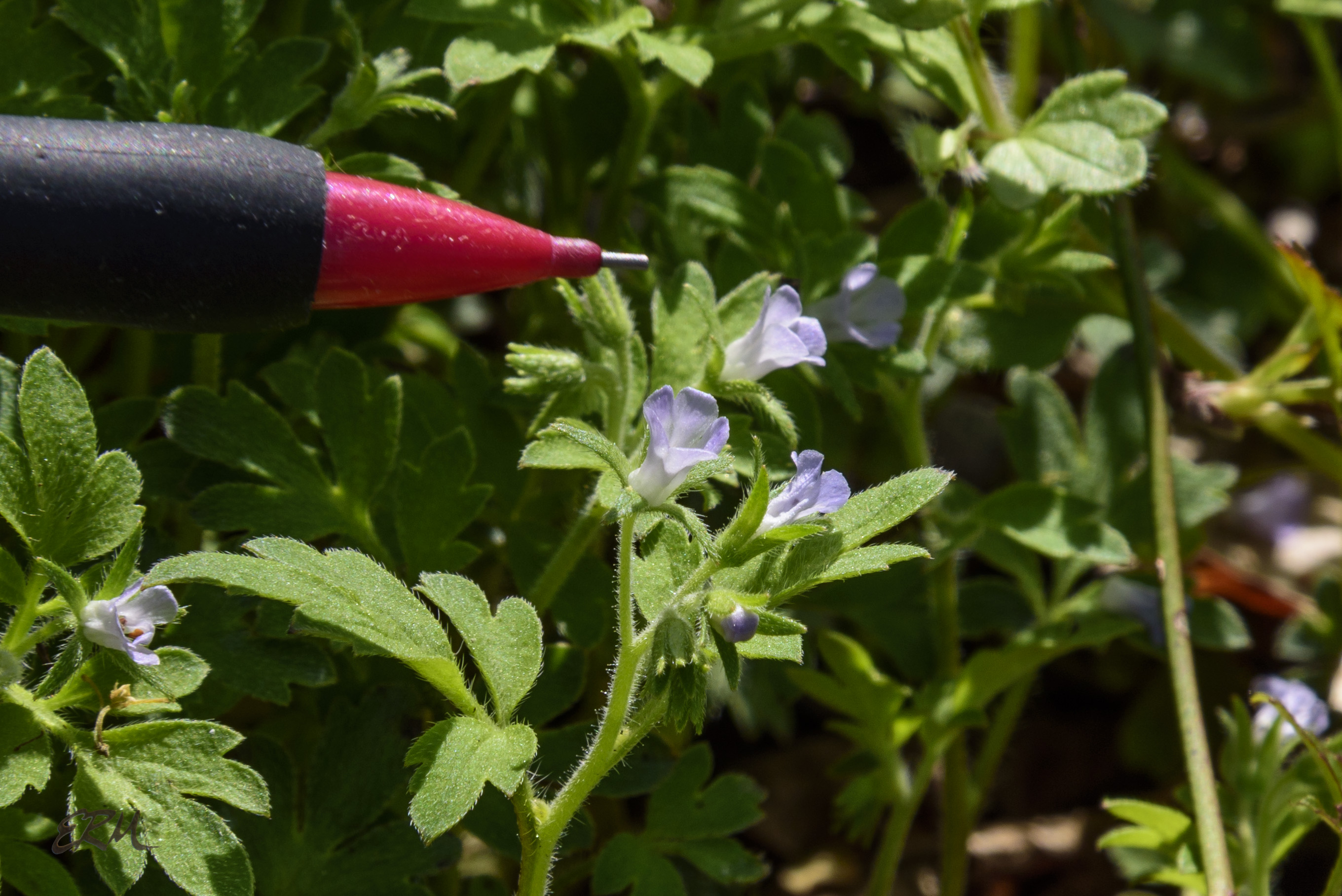
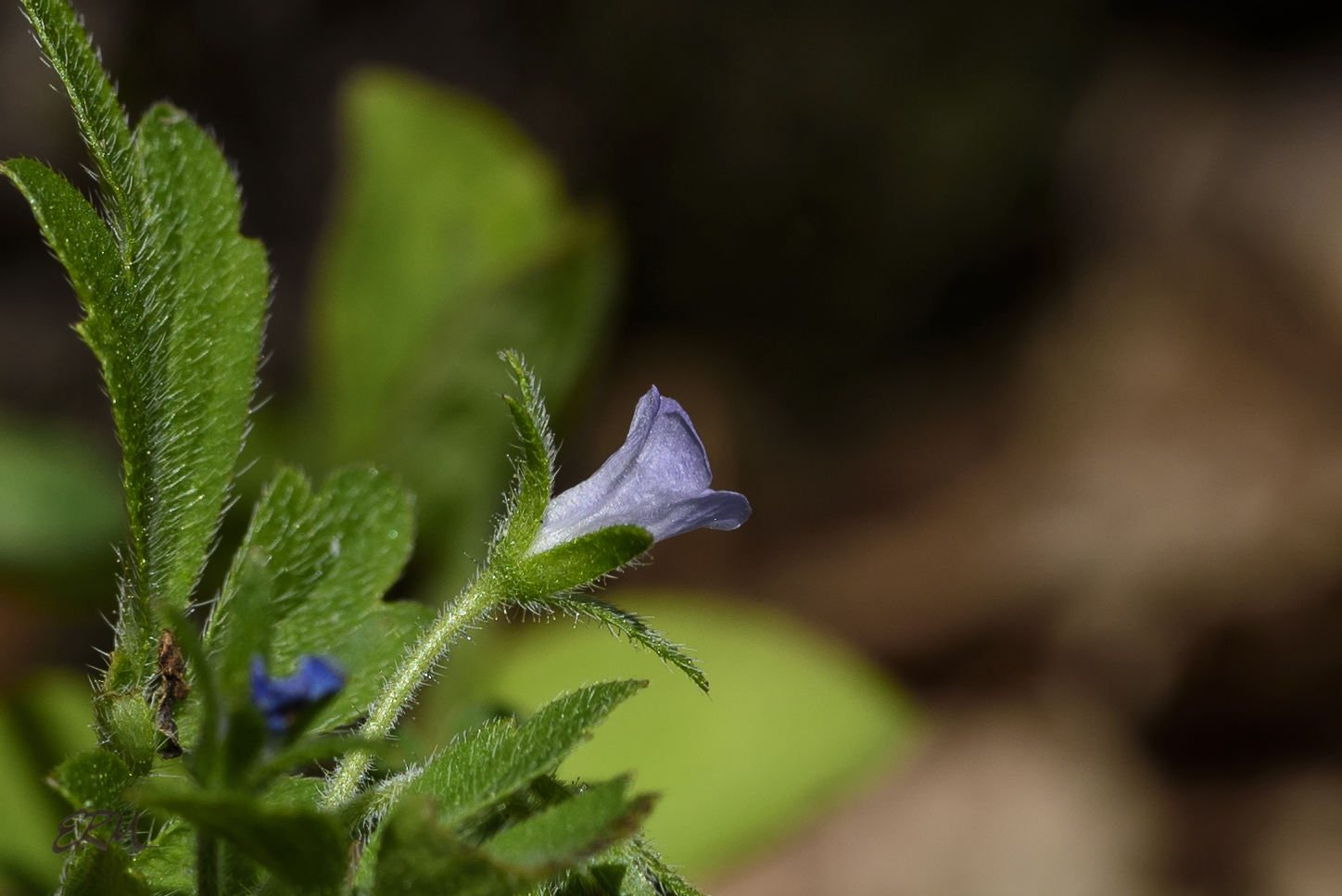
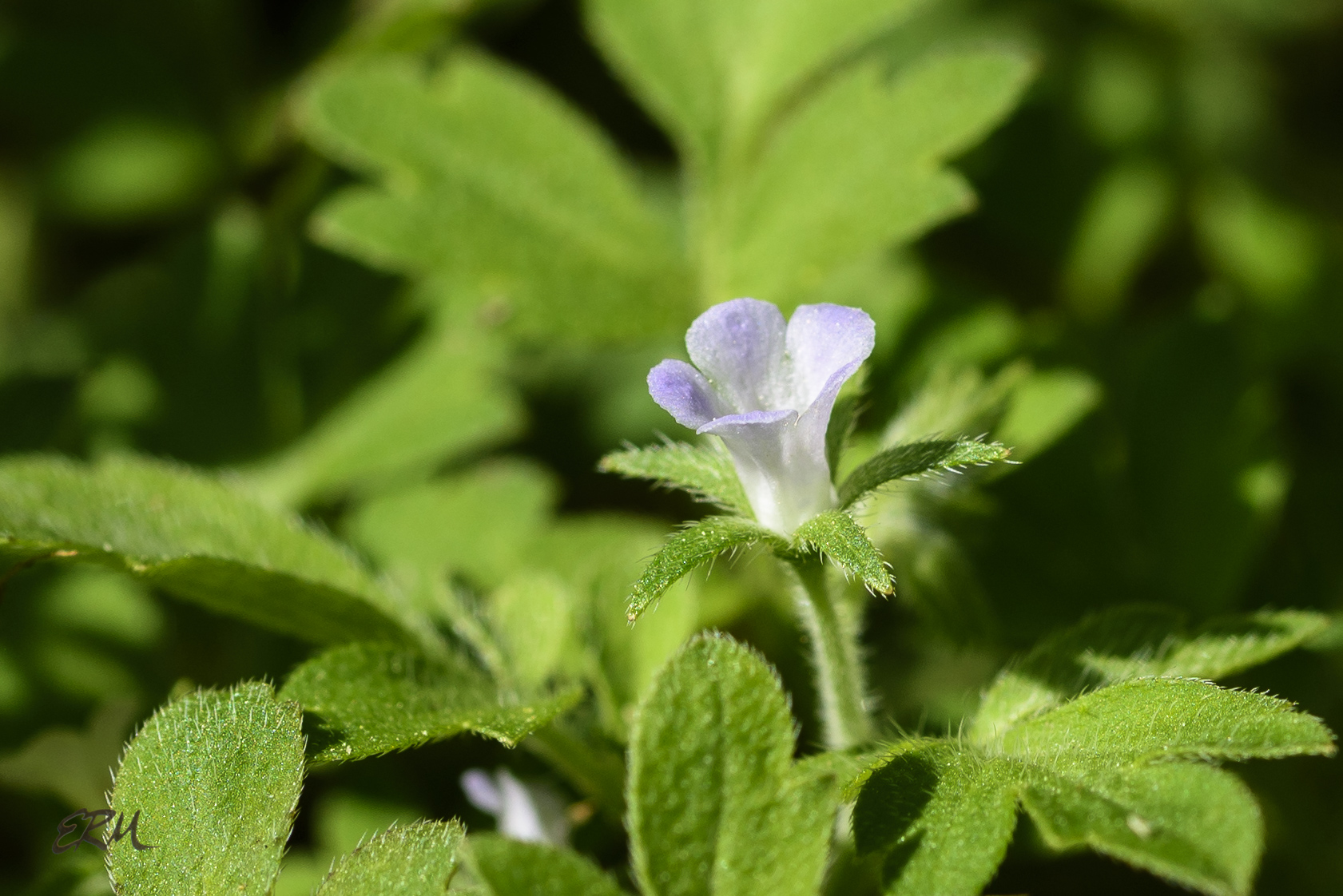
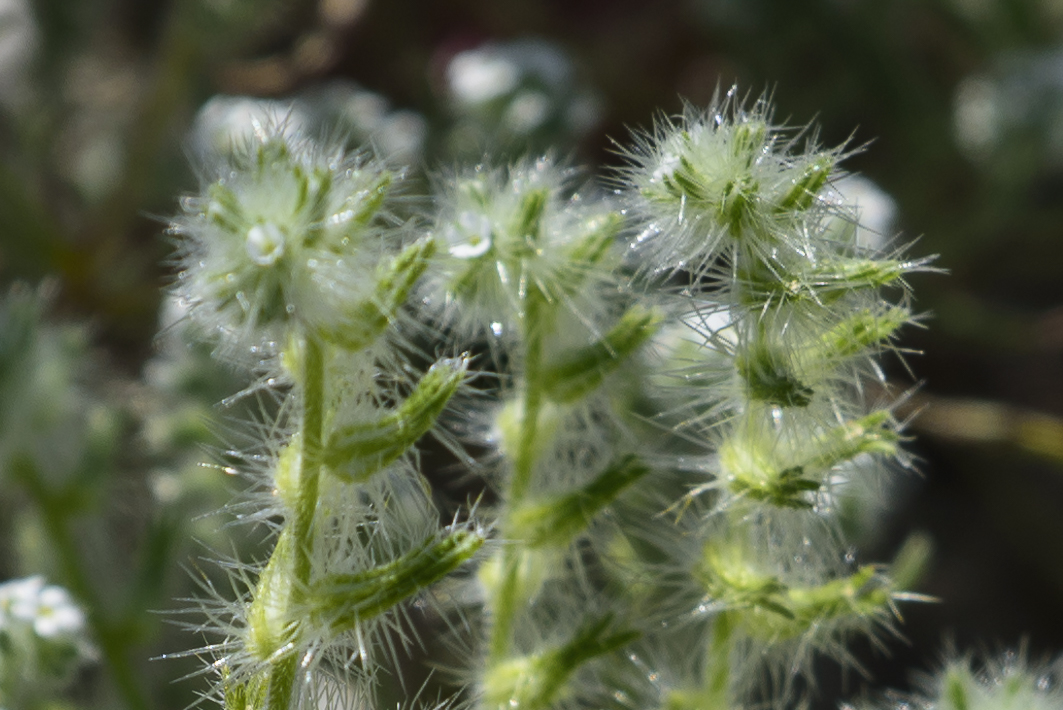
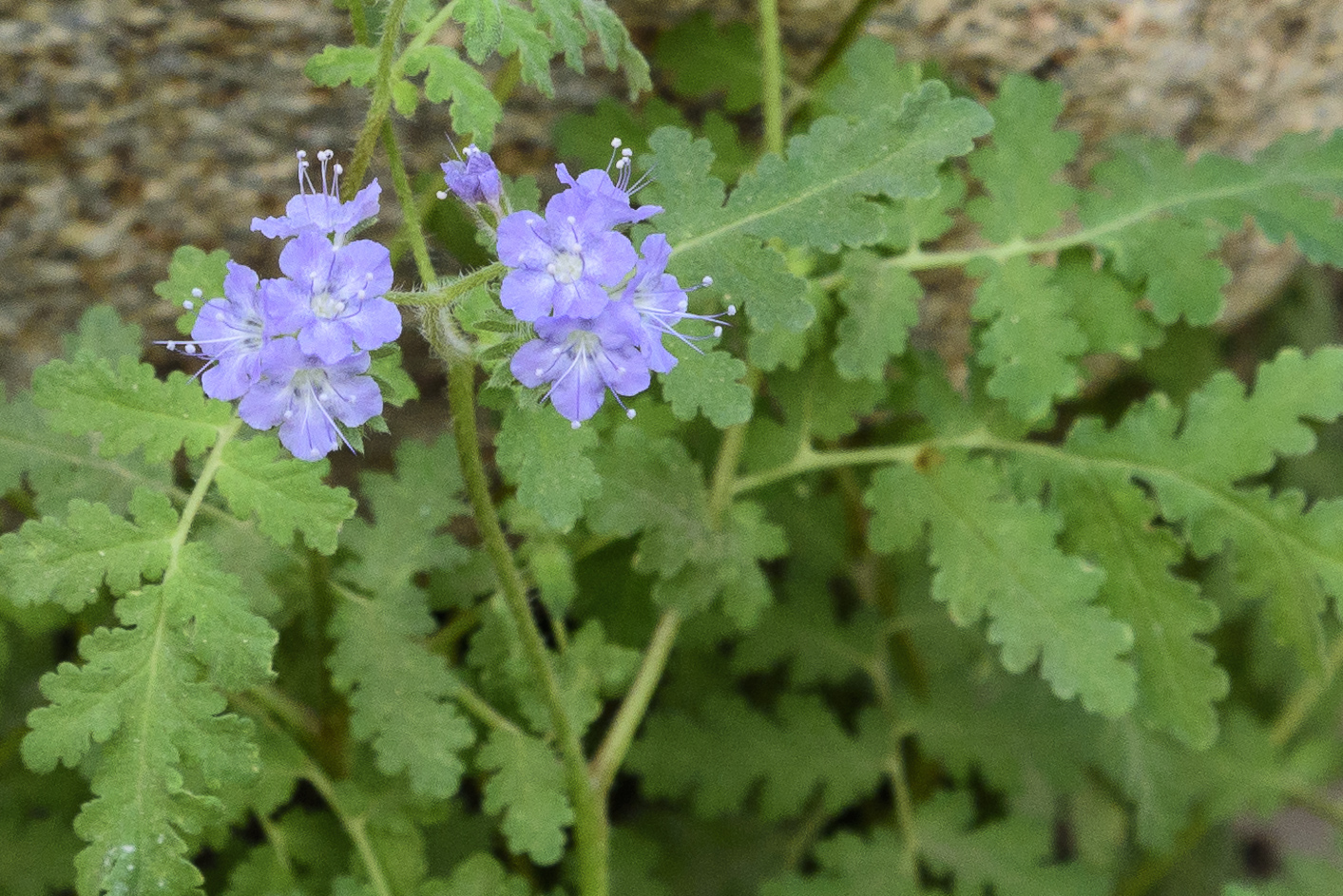
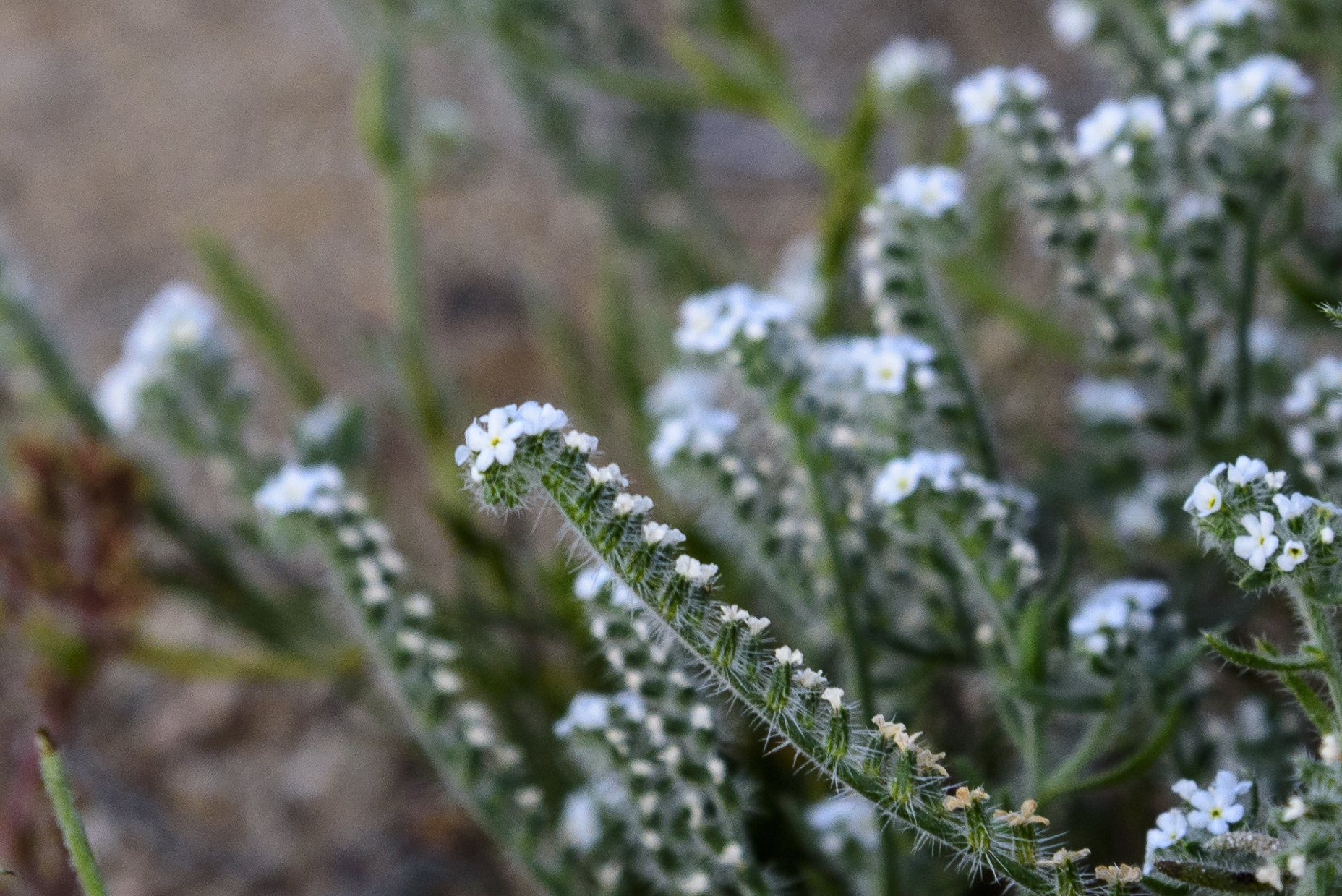
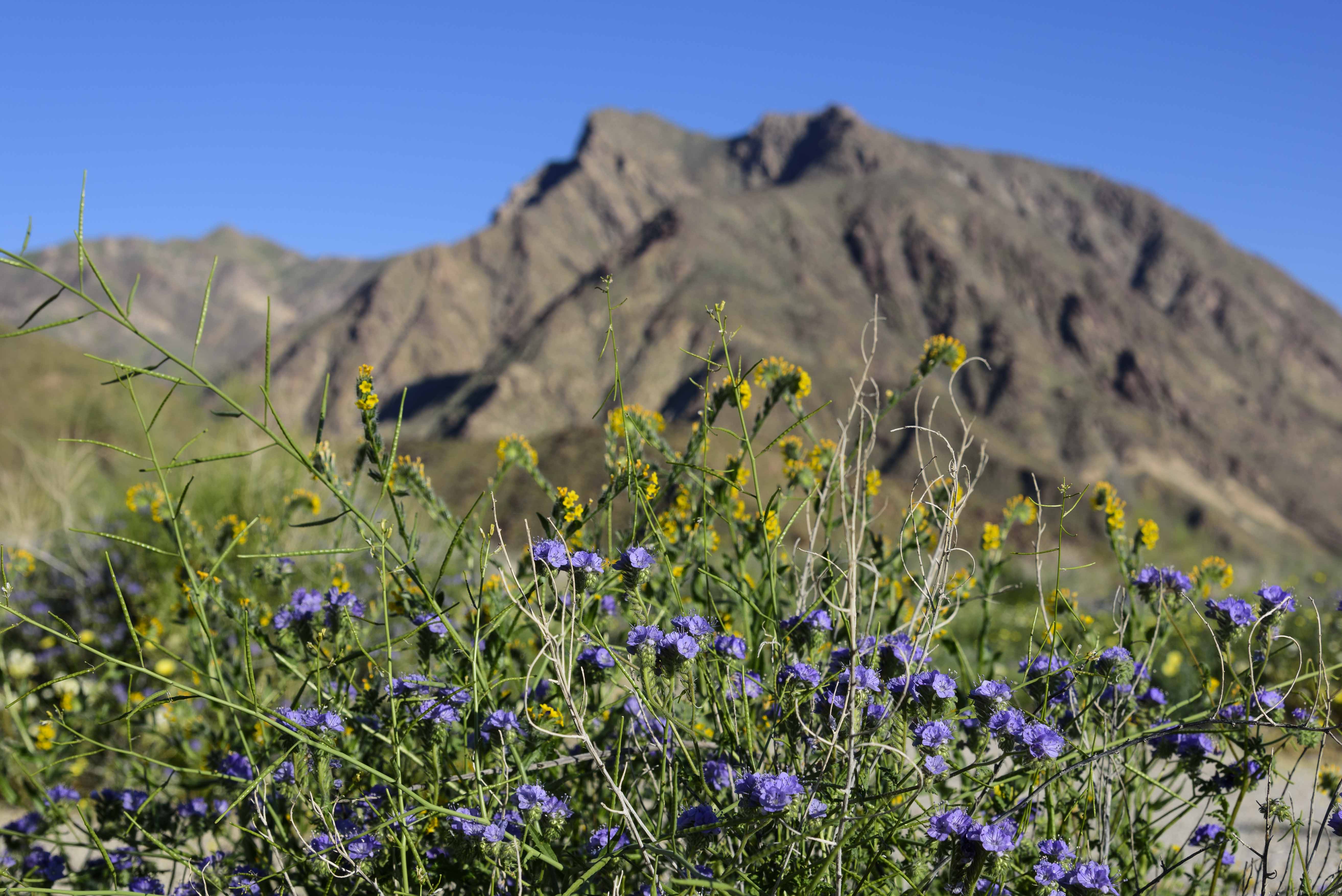
Also known as buttercup scorpionweed, this phacelia is of course related to the phacelias in Anza-Borrego. You can see the similarities in these photos: hairy stems, hairy leaves, hairy calyces with five sepals, and corolla of five petals fused into a single, five-lobed tube.
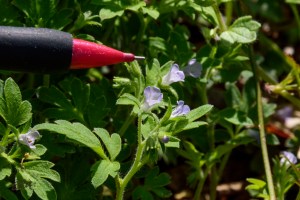
The plants are annual forbs, growing more or less upright in a rather weak fashion. Literature describes them as up to a foot tall, but I’ve rarely seen them over six inches.

Coville’s phacelia has an odd distribution, with several disjunct populations located in Washington, DC, Montgomery and Prince George’s counties in Maryland, Fairfax County in Virginia, five counties in central North Carolina, and one county in southwestern Indiana.

However, according to natureserve.org:
In addition to the Potomac River (in D.C., Maryland, and Virginia) and drainages of the Cape Fear and Tar Rivers in North Carolina, the species has recently been identified from the Ohio River drainage (in Ohio and West Virginia), the Wabash River drainage (in Indiana and Illinois), and Texas County, Missouri.
 Except possibly it hasn’t: apparently authorities in several midwestern states do not differentiate between P. covillei and the very similar P. ranunculacea (oceanblue phacelia).

The Virginia Plant Atlas also shows it present in Halifax County (far southern Virginia). With respect to the taxonomic uncertainty, VPA comments:
This species has often been considered an eastern cytotype of Phacelia ranunculacea (Nutt.) Constance, which occupies similar habitats of the sc. U.S. in the lower Ohio and Mississippi River drainages. Sewell and Vincent (2006, Castanea 71: 192-209) found that the two taxa differ in chromosome number, subtle but consistent morphological characters, and overall distribution. However, morphological differences are fairly minor and the geographic split isn’t as clean as one might hope, as there are populations of P. covillei in the Ohio River drainage, as well as the Atlantic Piedmont. Nevertheless, Sewell and Vincent present a reasonable case for two species, especially since the different ploidy levels would prevent interbreeding.
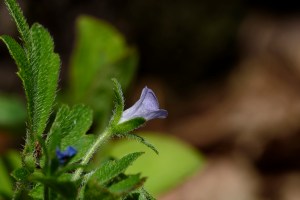 Coville’s phacelia has the global conservation rank G3, defined as:
Either very rare and local throughout its range or distributed locally (even abundantly at some of its locations) in a restricted range (e.g., a single western state, a physiographic region in the East) or because of other factors making it vulnerable to extinction throughout its range; typically with 21 to 100 estimated occurrences.*
 Its state rank in Maryland is S2:
State rare. Imperiled in Maryland because of rarity (typically 6 to 20 estimated occurrences or few remaining individuals or acres in the State) or because of some factor(s) making it vulnerable to becoming extirpated. Species with this rank are actively tracked by the Natural Heritage Program.*
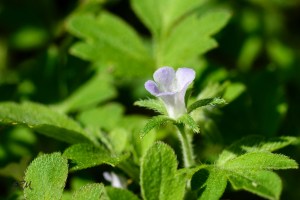 And its state status is E:
Endangered; a species whose continued existence as a viable component of the State’s flora or fauna is determined to be in jeopardy.*
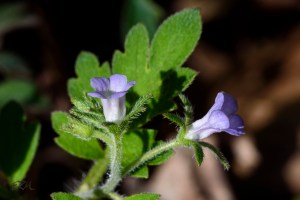
Over the past few years I’ve observed that Coville’s phacelia has a bloom period of three weeks, more or less, so it should still be around. Look for it along the Billy Goat B and C trails. It is indeed locally abundant.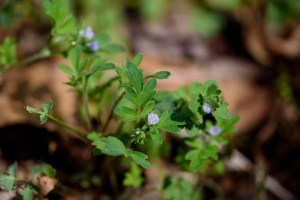
*definitions from “Rare, Threatened, and Endangered Plants of Maryland” (August 2016), available as a .pdf at the Maryland DNR website

 It was an overcast day, and I was working at my volunteer job downtown when I realized that rain was likely soon, and could continue for the next several days, and if I waited too long I’d miss seeing small flower phacelia blooming. Quel horreur! since this was a “new to me” species.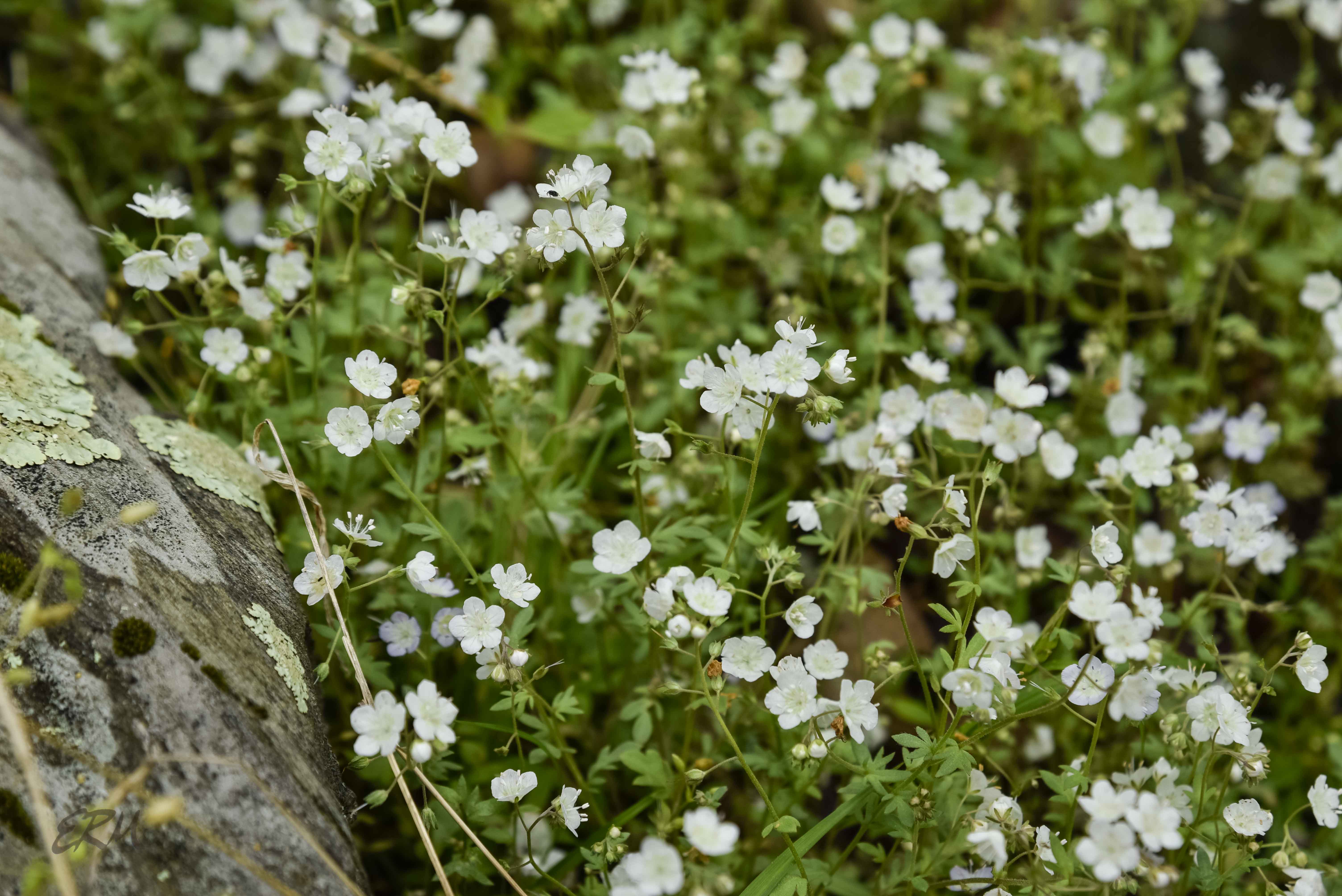

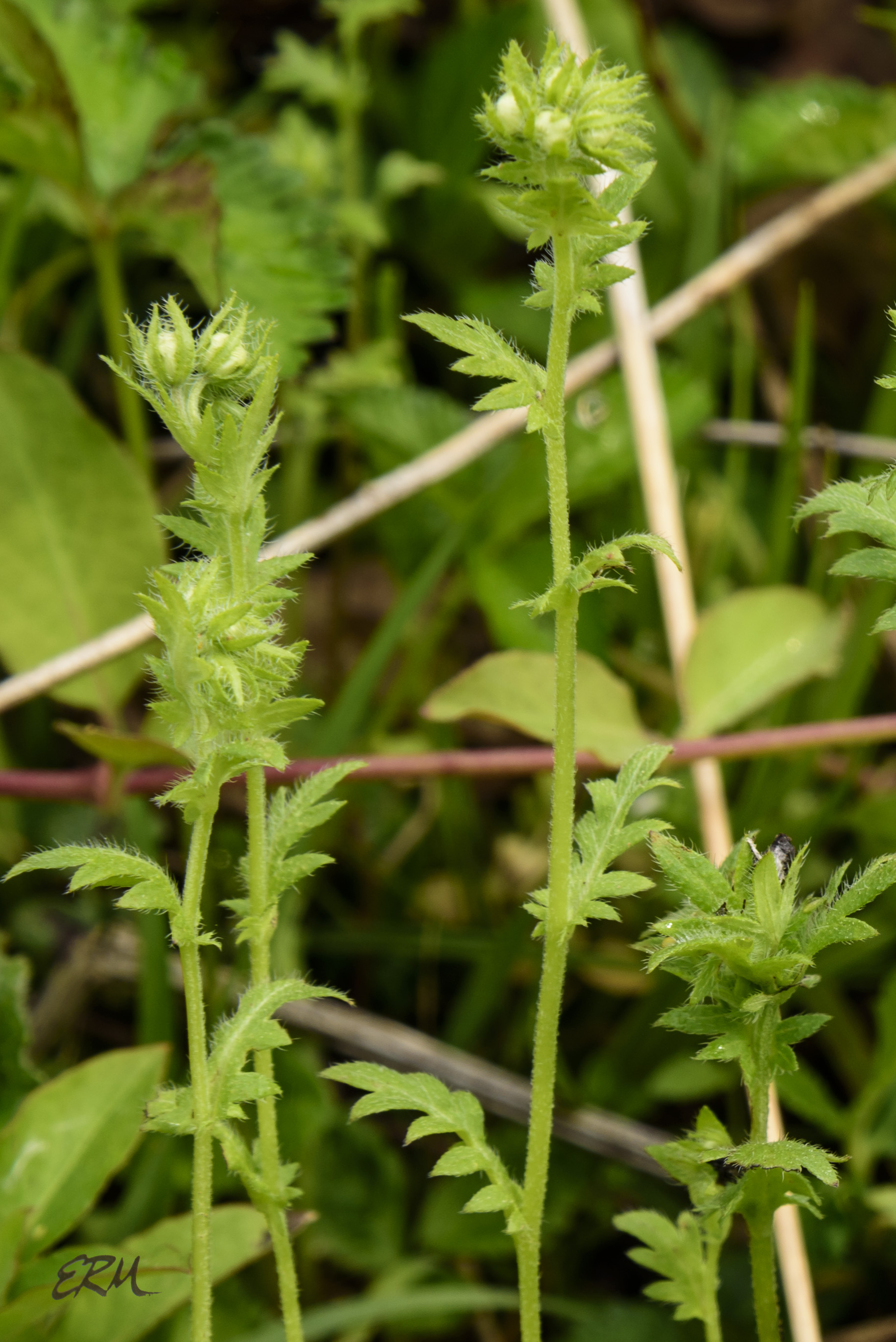
 Like P. purshii, P. dubia is listed as S3/watchlist in Maryland. The two species are much alike, about the same height, flowers about the same size. Based on a one-time only observation in this large patch of plants, I’d say the cauline leaves of P. dubia are a little smaller, with fewer lobes, and mostly sessile rather than almost clasping as in P. purshii; also there seem to be fewer of them.
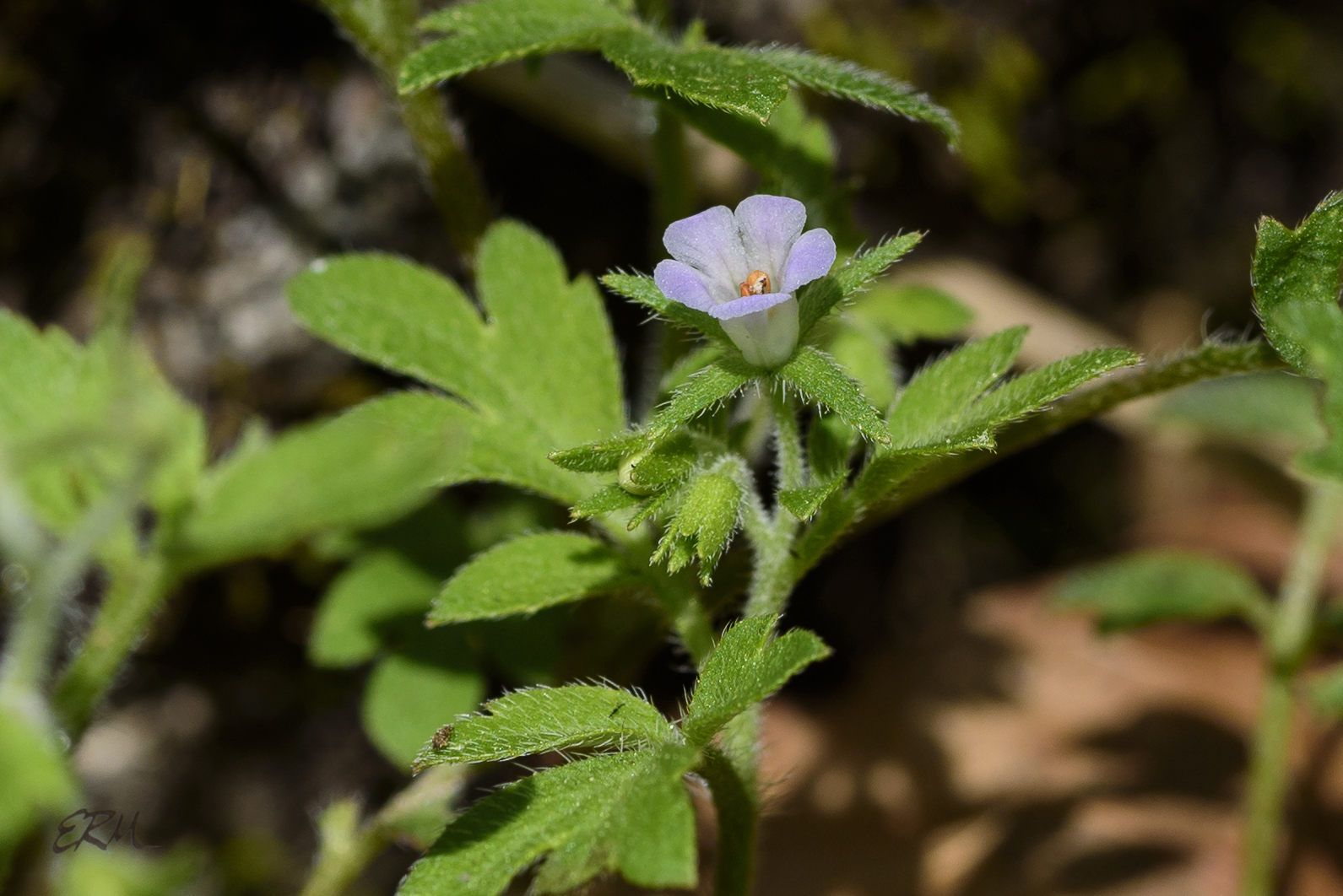
 Most of the flowers in this patch were white, though some of them had a blue-ish cast and a few were an outright light lavender. But color is seldom diagnostic. The obvious difference between small-flower and fringed phacelia is the fringed petals on the latter species. In small-flower phacelia, the petal margins are entire.












 Elizabeth's Wildflower Blog