Three Phacelias

The bright yellow fields of desert gold and yellowcups are eye-catching, but almost as common is a deep purple color that you almost have to be out of your car to see. Two species are responsible, both closely related: caltha-leaved phacelia and notch-leaved phacelia.

Something on the order of 167 native species of phacelia occur in the US and Canada. A few can be found in the east – including Miami mist and Coville’s; there are also species found in the South, or Mid-West, or north into Canada. But most phacelias seem to be found west of the Rocky Mountains.

According the the National Park Service, about six species are found in Death Valley. During my two and a half day jaunt I saw the two mentioned above, as well as a third: Fremont’s phacelia, which isn’t nearly as common or eye catching, but is wonderful in a belly flower sort of way.


caltha-leaved phacelia (Phacelia calthifolia), right


notch-leaved phacelia (Phacelia crenulata), below

Caltha-leaved phacelia (Phacelia calthifolia) gets its name (presumably) from the genus Caltha (marsh marigolds, among others), which is a name from the ancient Greek meaning “goblet”. The leaves are low to the ground, more-or-less round, and dark green.

The leaves of notch-leaved phacelia (Phacelia crenulata) are also dark green, but elongated and deeply indented:


Although the flowers of both species appear at first glance identical, the anthers of notch-leaved protrude well beyond the petals:


while caltha-leaved has a much tidier appearance:


I never saw these two species growing together. Nearby, maybe 20 yards apart, but not together.

Fremont’s phacelia (Phacelia fremontii), left and below


Fremont’s phacelia’s leaves are deeply notched, but quite different from notch-leaved, and there’s no mistaking the flower: it sits much closer to the ground than the other two species, and the flowers are a pleasing sky blue with yellow throats.

I found this third species at an elevation of about 5000′ above sea level, in the Dante’s View area.

Phacelias are in the Hydrophyllaceae, though some older references will place them in the Boraginaceae.
Bad News, Good News

The first week of March there were news reports about a “superbloom” of wildflowers in Death Valley. Since I had an airline credit to use, it was an easy decision to fly out and spend a few days there, just me and the camera.

I arrived late on Monday, March 7 to find the show not as spectacular as the news articles suggested. On March 9, an update was posted at the Furnace Creek Visitor Center. The bad news: hot weather and a windstorm had damaged the flowers before my arrival. The good news: there were still plenty of flowers to see. And since I had never visited that part of the country, it was all new to me.

I believe I found about 30 different species of plants flowering, but I’m only just starting to go through the photos to identify them.  It’s a good way to pass time while sitting in an airport lounge awaiting the flight home.

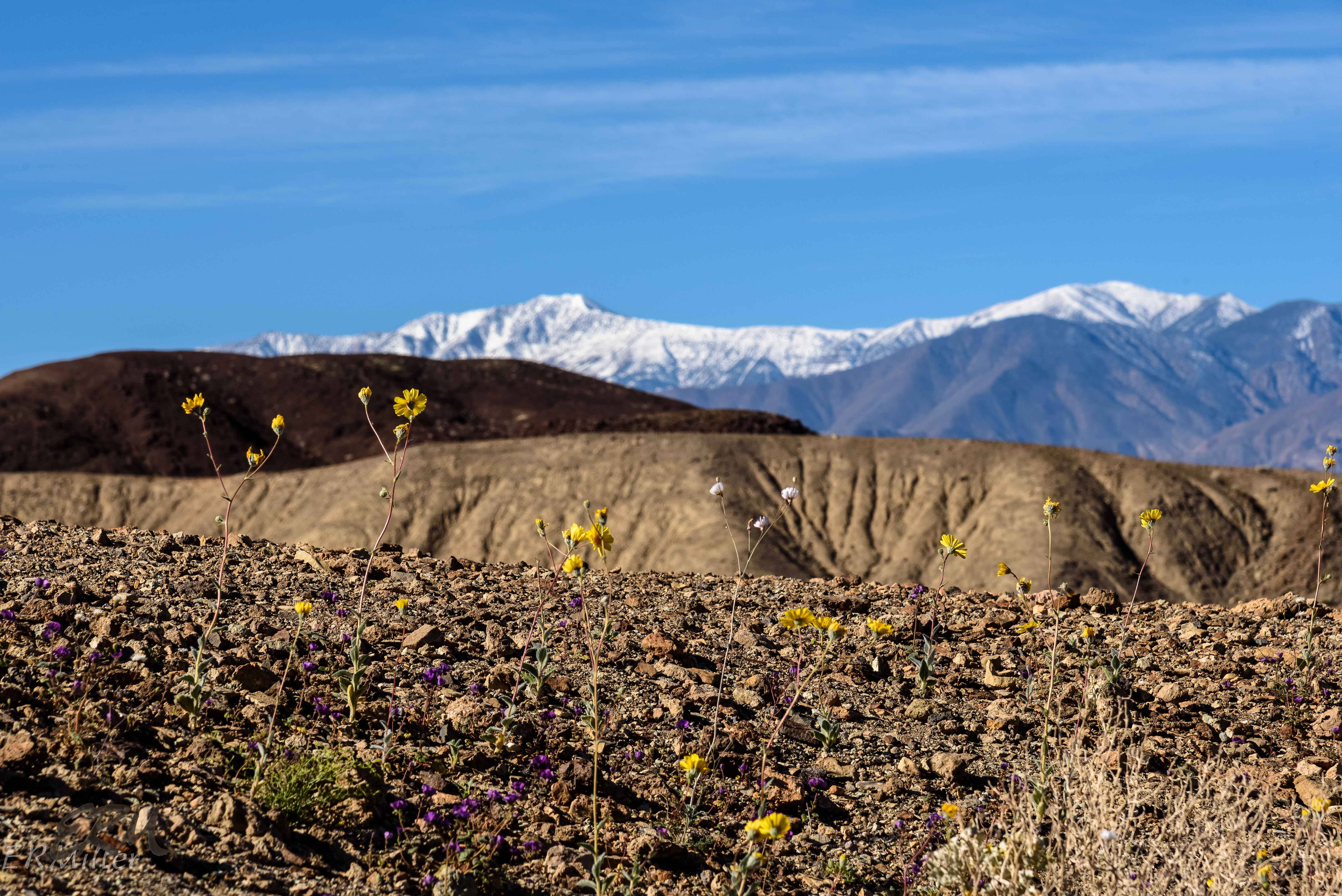
Here’s a teaser: flowers in the badlands area of the Black Mountains near Artist’s Palette.  This view is looking southwest toward the Panamint range, with snow-covered Telescope Peak in the distance.  The yellow blossoms are desert sunflowers, aka desert gold (Geraea canescens, Asteraceae).  Also visible are the white-flowering gravel ghost (Atrichoseris platyphylla, Asteraceae) and purple caltha-leaved phacelia (Phacelia calthifolia, Hydrophyllaceae).

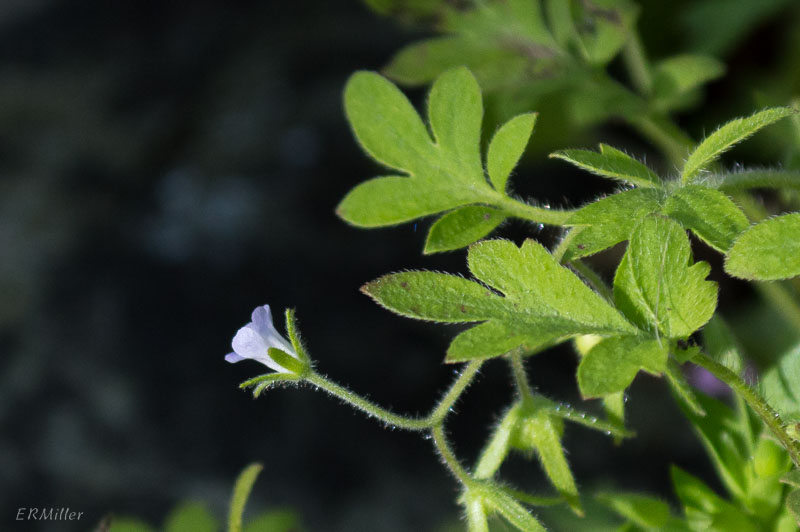
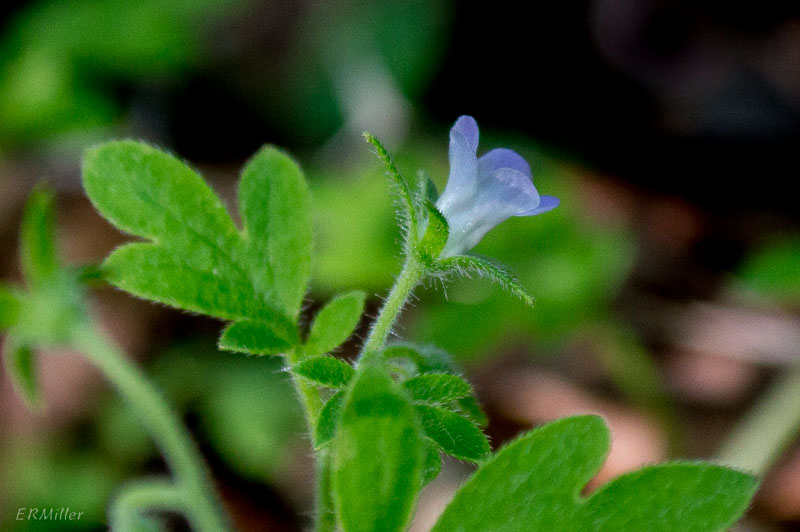
Flower of the Day: Coville’s Phacelia

20150429-20150429-_DSC0091-2

aka buttercup scorpionweed
Phacelia covillei
formerly in the Hydrophyllaceae
currently in the Boraginaceae (per the Angiosperm Phylogeny Group)


20150429-20150429-_DSC0095

Coville’s phacelia is a somewhat weedy-looking, low-growing, hairy annual forb, easily overlooked.  Per the USDA Plants database, it is found only in Illinois, North Carolina, Virginia, and Maryland (where it is endangered).


Some authorities consider it the same species as P. ranunculacea, which is found in a handful of Midwestern states (and is endangered or of special concern in four of those).

There isn’t much information about it on the internet, but I did find this 112 year old reference to it:

20150429-20150429-_DSC0089

“In view of the apparent rarity of the species, a note upon it may be of interest.  The original station for this plant was an island in the Potomac River, where it was fist collected by F.V. Coville.”  -H. A. Gleason, A Second Illinois Station for Phacelia Covillei Watson” in Torreya, vol. 3, No. 6 (June, 1903).

I wonder which island that would be?  Perhaps Plummers Island, “the most studied island in North America”.