Flower of the Day: Yellow Passion Flower

Passiflora lutea; Passifloraceae (passionflower family)

20140714-DSC_0217

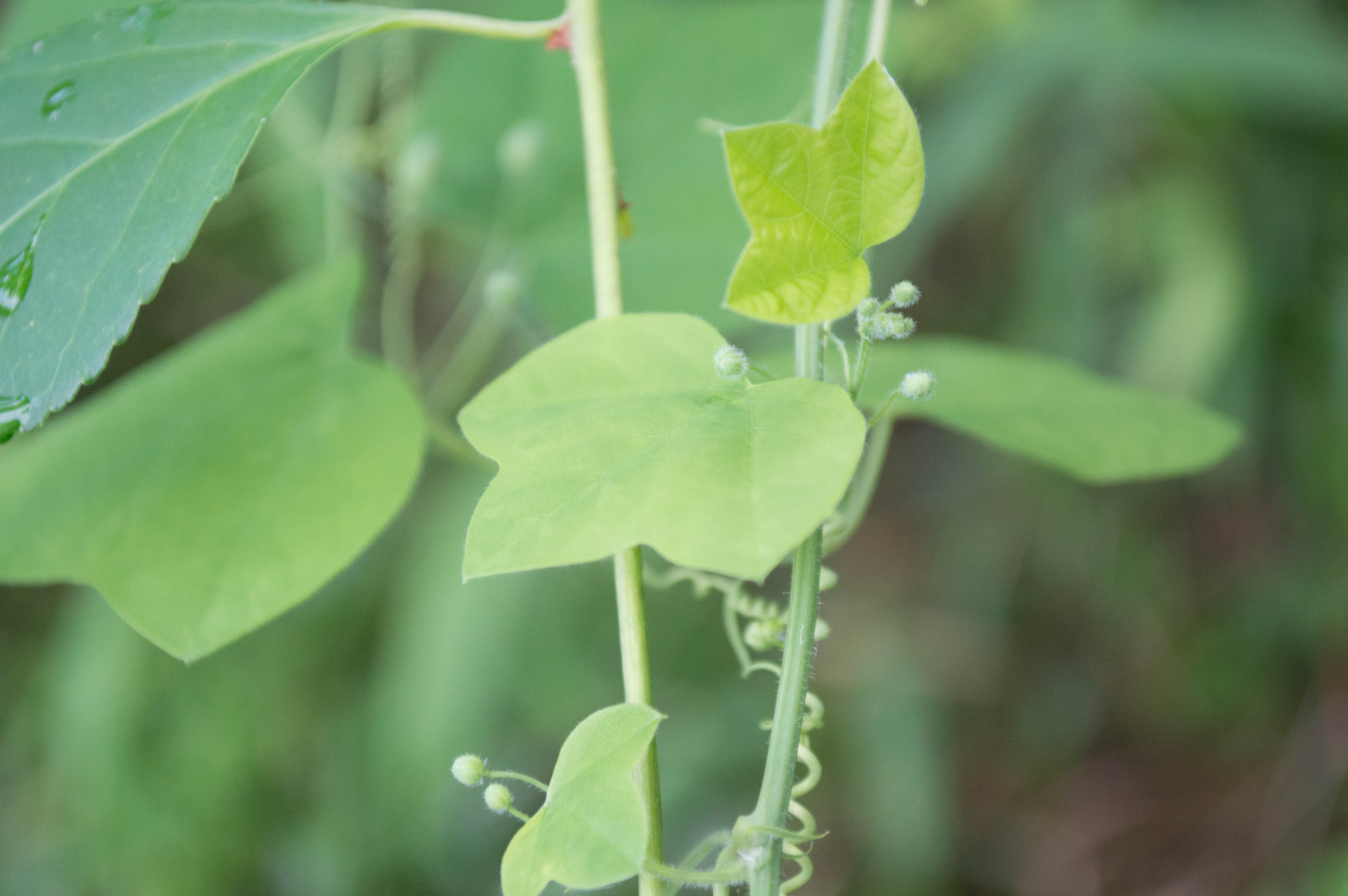
You know those bizarro passion flowers you see in floral arrangements?  We have a native version of those. Not nearly as large, colorful, or showy, but still it’s pretty neat that a plant from a mostly tropical family is found along the Potomac River.  I found it when searching for something else (of course). Took a little side trail towards the river, poked around, then on my way back I saw these.  I’ve since realized that a lot of flowers are hidden in this way: they face away from the trail (and shade) towards the sunlight and the river.

Yellow passionflower is found from Pennsylvania through Texas, though it’s endangered in Pennsylvania.  There are about 17 native species of Passiflora in the continental US, mostly in the extreme south (Texas, Arizona, Florida). Two are found in this area.  This is the northernmost occurring species in the genus.

Notice I’ve been posting a lot about vining plants lately?  This is another one. Grows to about fifteen feet. It’s that time of year.
20140714-DSC_0203

Flower of the Day: Wild Potato Vine

aka man of the earth; Ipomoea pandurata; Convolvulaceae (morning glory family)

20140716-DSC_0058

Neither a potato nor a man (though it is of the earth; see how useless common names are?),  this plant is related to sweet potato (Ipomoea batatas). It can be distinguished from other similar species in this area (3 native and six alien) by the purple throat.  This vining plant that can grow to 15 feel in length.  Roots can weigh up to 20 pounds and are supposedly edible, if they can be extracted from the earth.

20140725-DSC_0063

Found throughout the eastern US and the prairie midwest, it is listed as threatened in Michigan and endangered in New York, but as a noxious weed in Arkansas and a prohibited noxious weed in Arizona.  It is closely related to both the pretty morning glories you planted around your mailbox and the annoying bindweed that grows through all your other garden plants.

20140716-DSC_0065

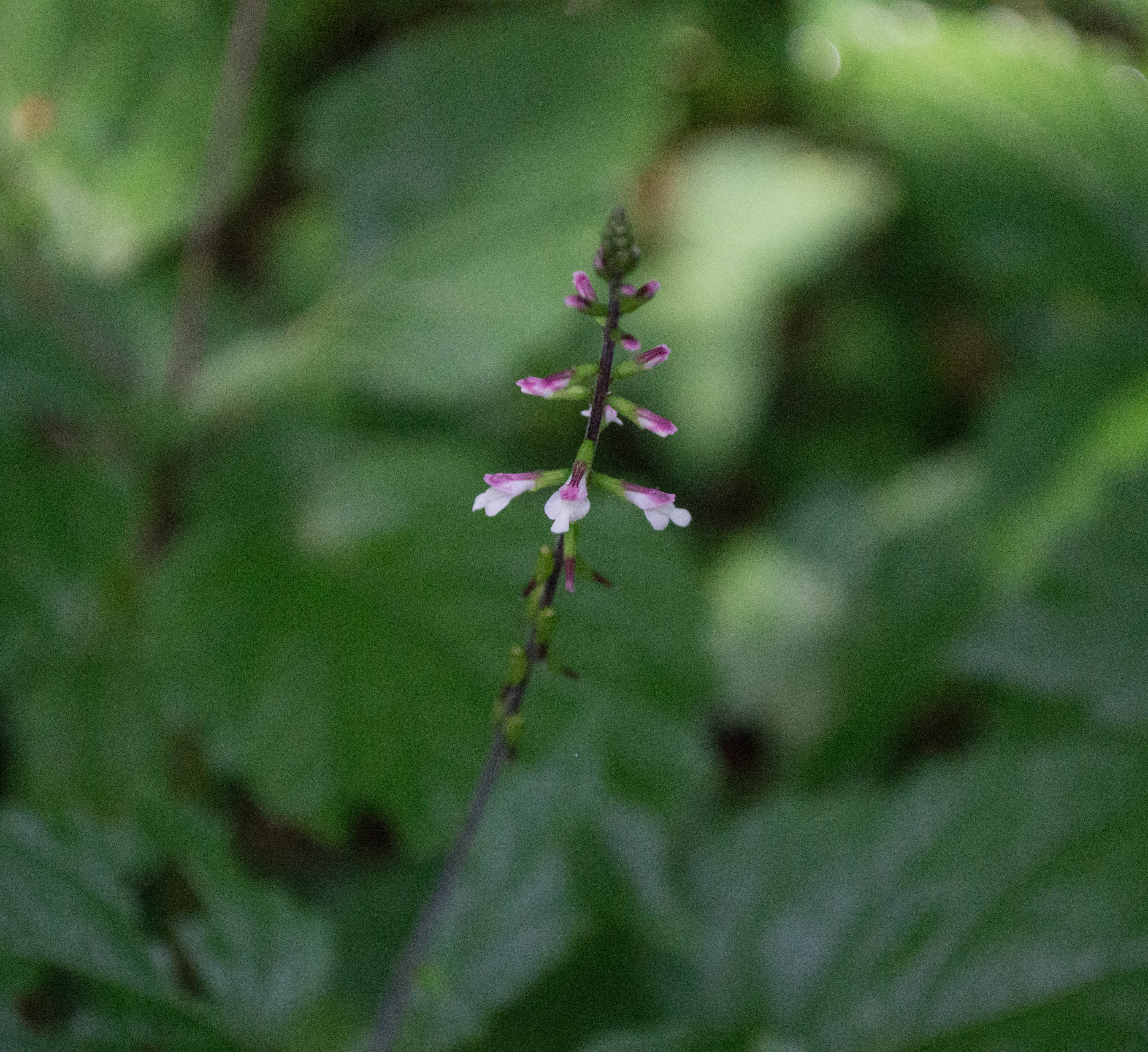
Flower of the Day: Lopseed

Phryma leptostachya; Verbenaceae (verbena family)

20140715-DSC_0033

This is one of my favorites.  It’s the flower that got me thinking about using tiny details to create abstract art.  The three purple teeth on the back of the calyx can’t be seen by the unaided eye:

20140715-DSC_0016

Lopseed is a woodland forb native to the eastern US.  The plant stands about two and a half feet tall; the inflorescence can be a foot long, but each individual flower is about 1/8″ long.  They seem so out of proportion to the plant overall.

20140715-DSC_0014

I was just thrilled to find a stand about a ten minute walk from my house.

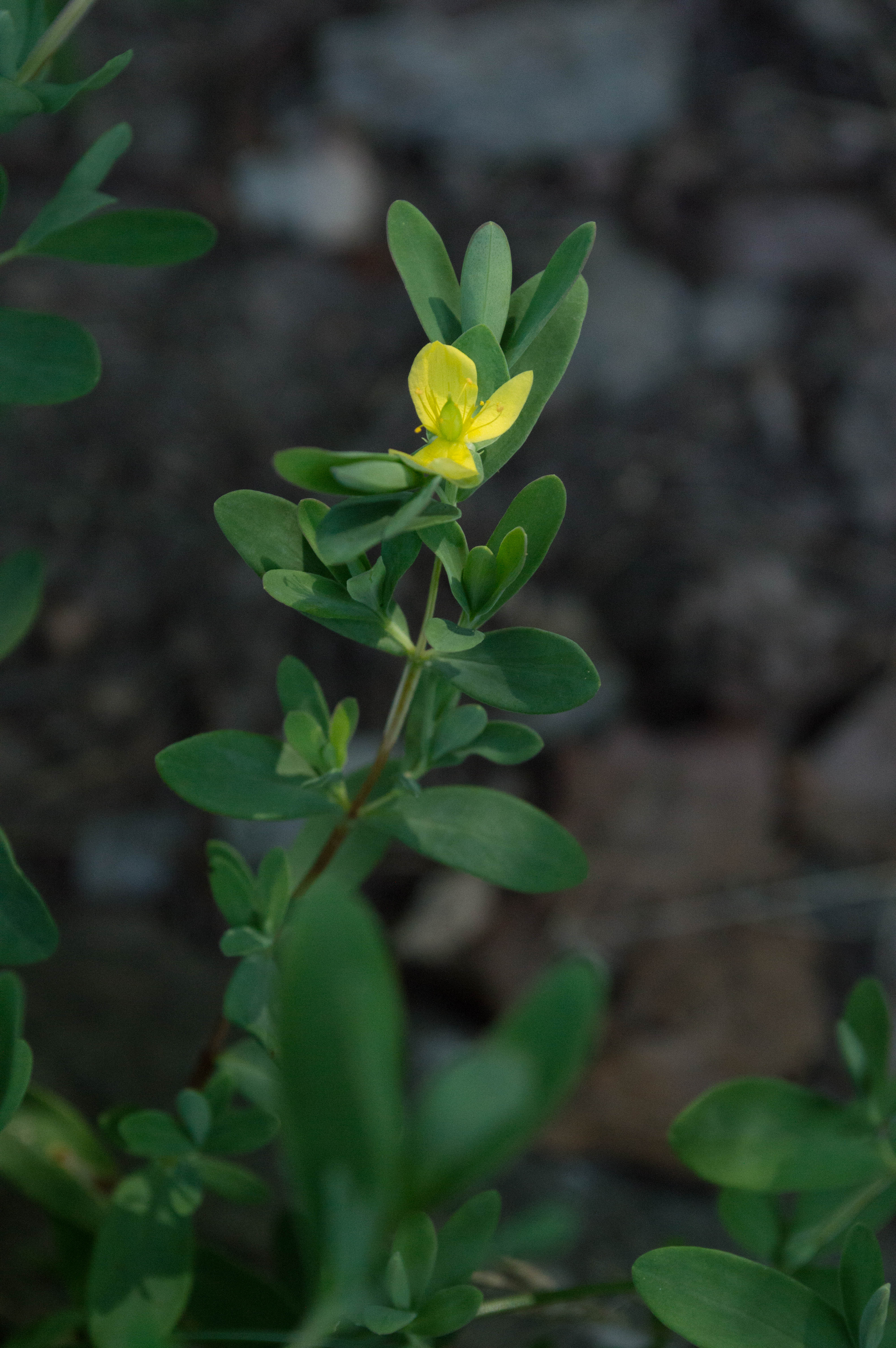
Flower of the Day: St. Andrew’s Cross

Hypericum hypericoides; Clusiaceae (garcinia family)

20140702-DSC_0046A very close relative of the St. Johnsworts, but note that the blossom has only four petals.  The plant is low-growing, with pleasantly light green foliage and dainty flowers. You might have to click on this next picture to see the flower in the lower right: 20140702-DSC_0034Apparently it can be found in many different habitats, from wet to dry, but I’ve only ever seen it in the drier, rockier soils near Carderock (never close to the river).

20140702-DSC_0049


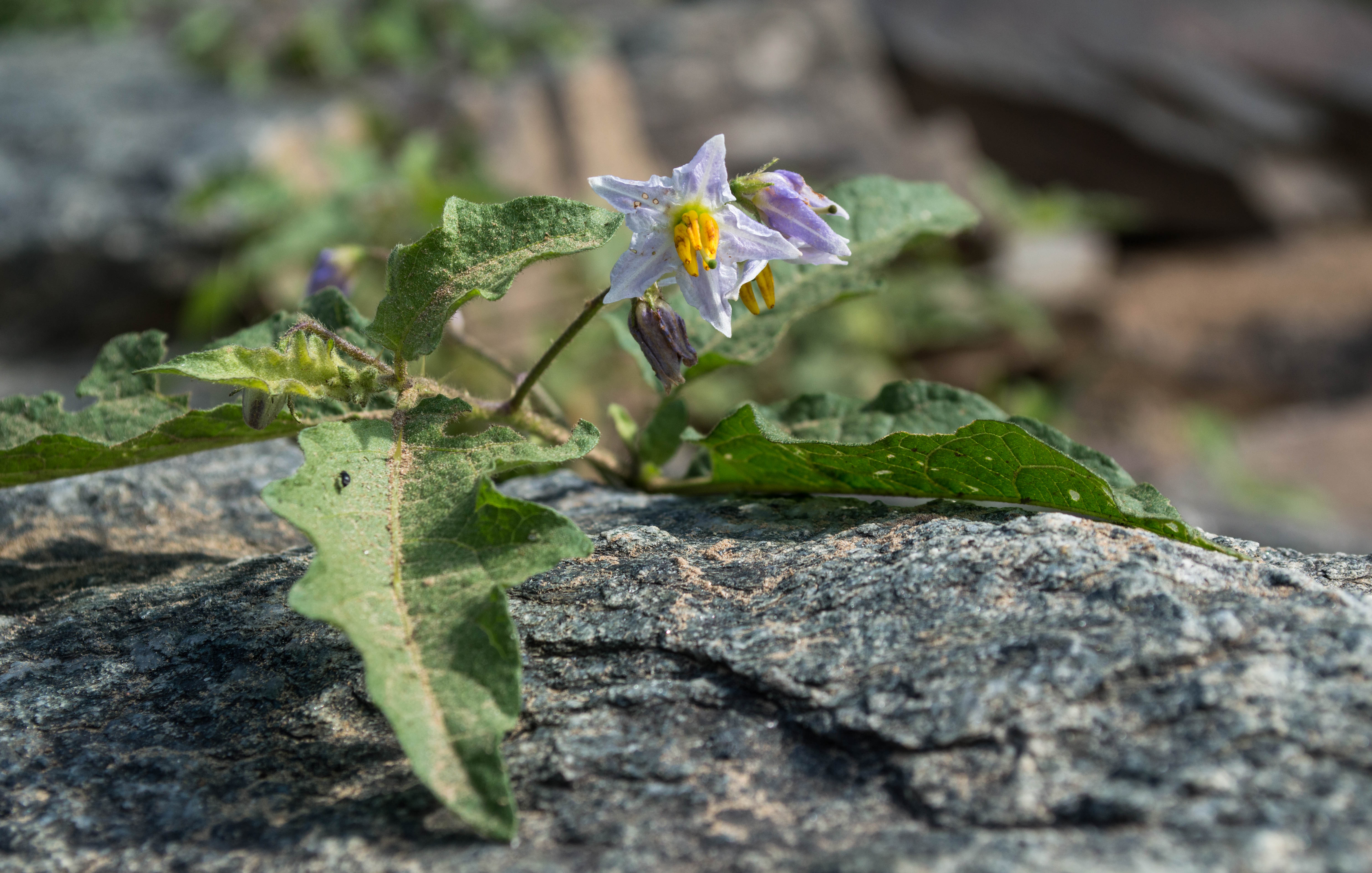
Flower of the Day: Horse Nettle

 Solanum carolinense; Solanaceae  (nightshade family)

20140710-DSC_0101-2

Not really a nettle, despite its common name, but closely related to potato (Solanum tuberosum) and eggplant (S. melogena), and less closely related to tomato (Lycopersicon species), chili pepper (Capsicum species), and tobacco (Nicotiana species).  I write this because I can find nothing particularly interesting to say about horse nettle; its inclusion in the Solanaceae is the only thing about it I find remotely interesting.  It is an ugly little flower on a weedy-looking, ugly little plant.

Gardeners define a weed as “a plant growing where it isn’t wanted”, so I can’t just call this thing a weed, but according to the USDA, seven US states consider it a “noxious weed”. In Arizona it’s a prohibited noxious weed. Apparently it’s very difficult to remove, as broad-spectrum herbicides have little effect on it, and tend to kill its competition instead.  Yay.

Oh, and it’s poisonous.