Flower of the Day: Dodder

Cuscuta gronovii; Convolvulaceae (morning glory family)
20140806-DSC_0099

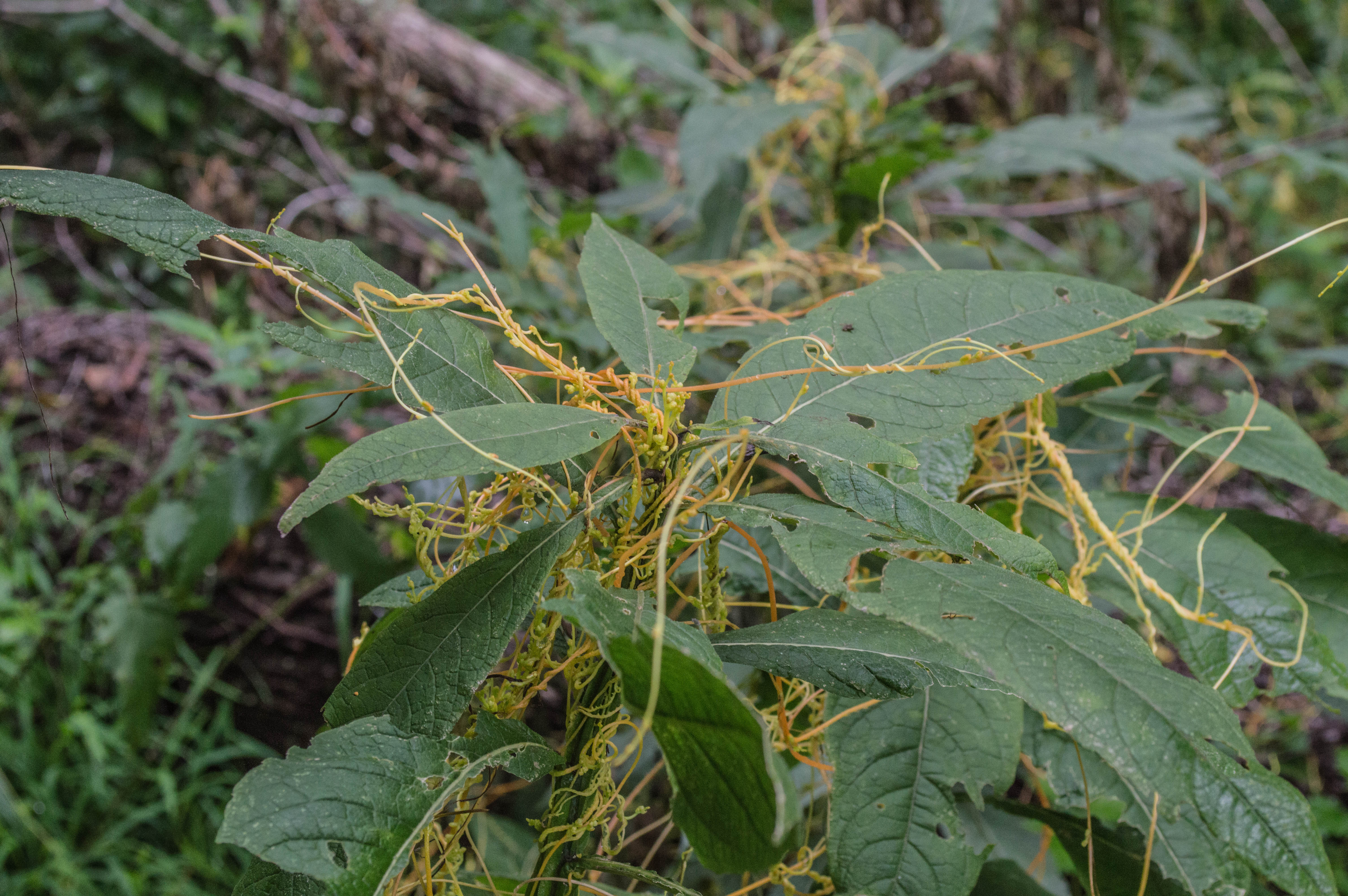
See that tangled mess of yellow and orange threads?  That’s dodder.  It is actually a flowering plant, but it’s an obligate parasite, meaning it depends on a host plant for survival.  Almost entirely lacking chlorophyll, the rootless and leafless stem emerges from the ground and finds a host plant to attach to, then wraps itself around the plant as it grows, penetrating the host in order to draw nutrition from it.  Later in the season it flowers and sets seed, then dies.

Dodder is native to most of the United States, but that doesn’t mean it isn’t a pest.  It’s a major problem for certain agricultural crops (cranberry and blueberry, among others), is a federally listed noxious weed, and is listed by thirteen states as noxious and/or prohibited and/or restricted and/or quarantined… you get the idea.  Look at these stems reaching out from the host plant!  (click on the image)
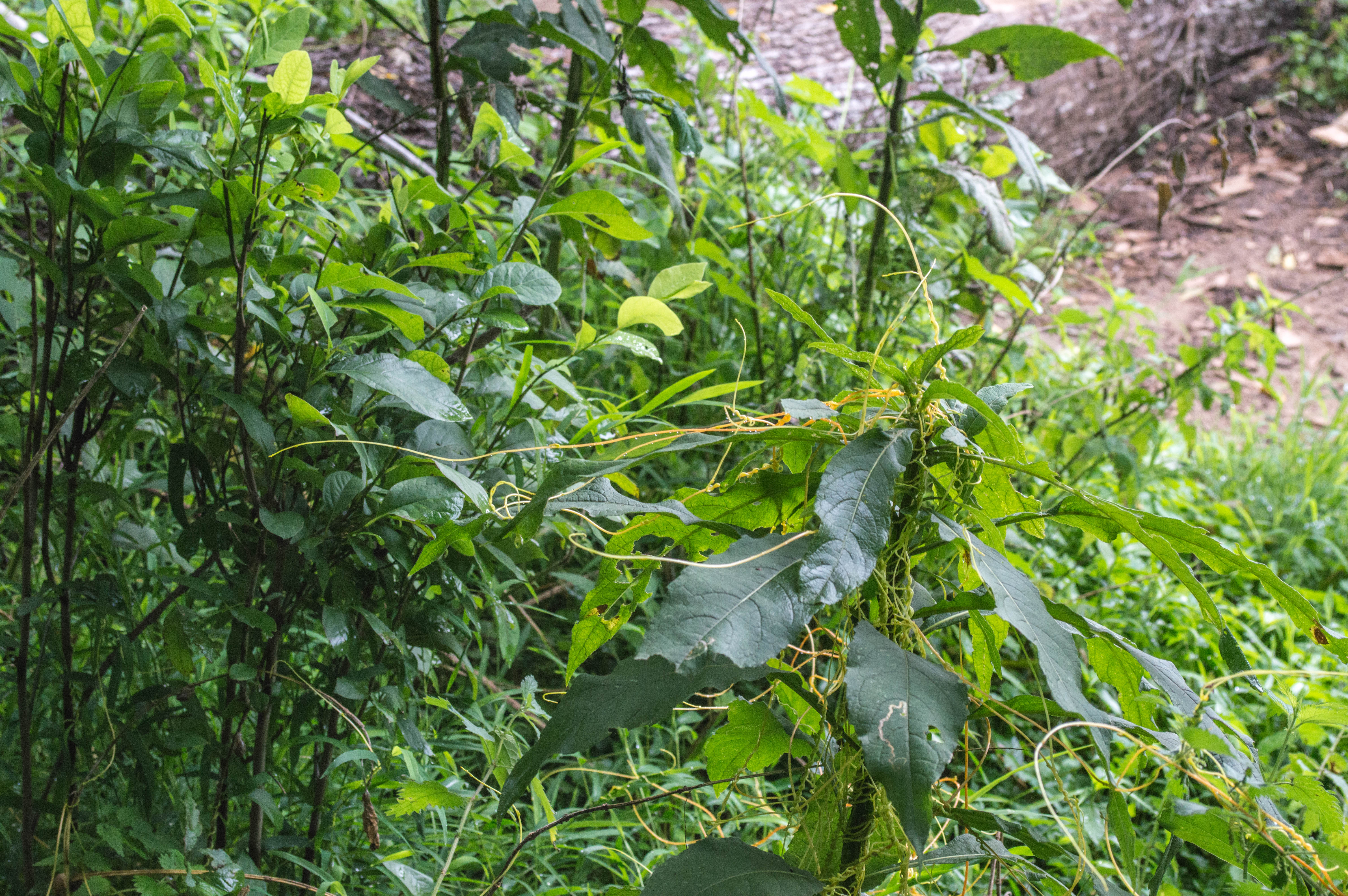
20140806-DSC_0101

As a perpetually curious wildflower enthusiast I was a little excited to find it. On the other hand, I’m a little worried.  The greater Carderock-Marsden Tract area has enough problems from alien invasives without having to deal with dodder, too.

The name “dodder” comes from the Middle High German word for egg yolk.

Good info about dodder from the University of Massachusetts.
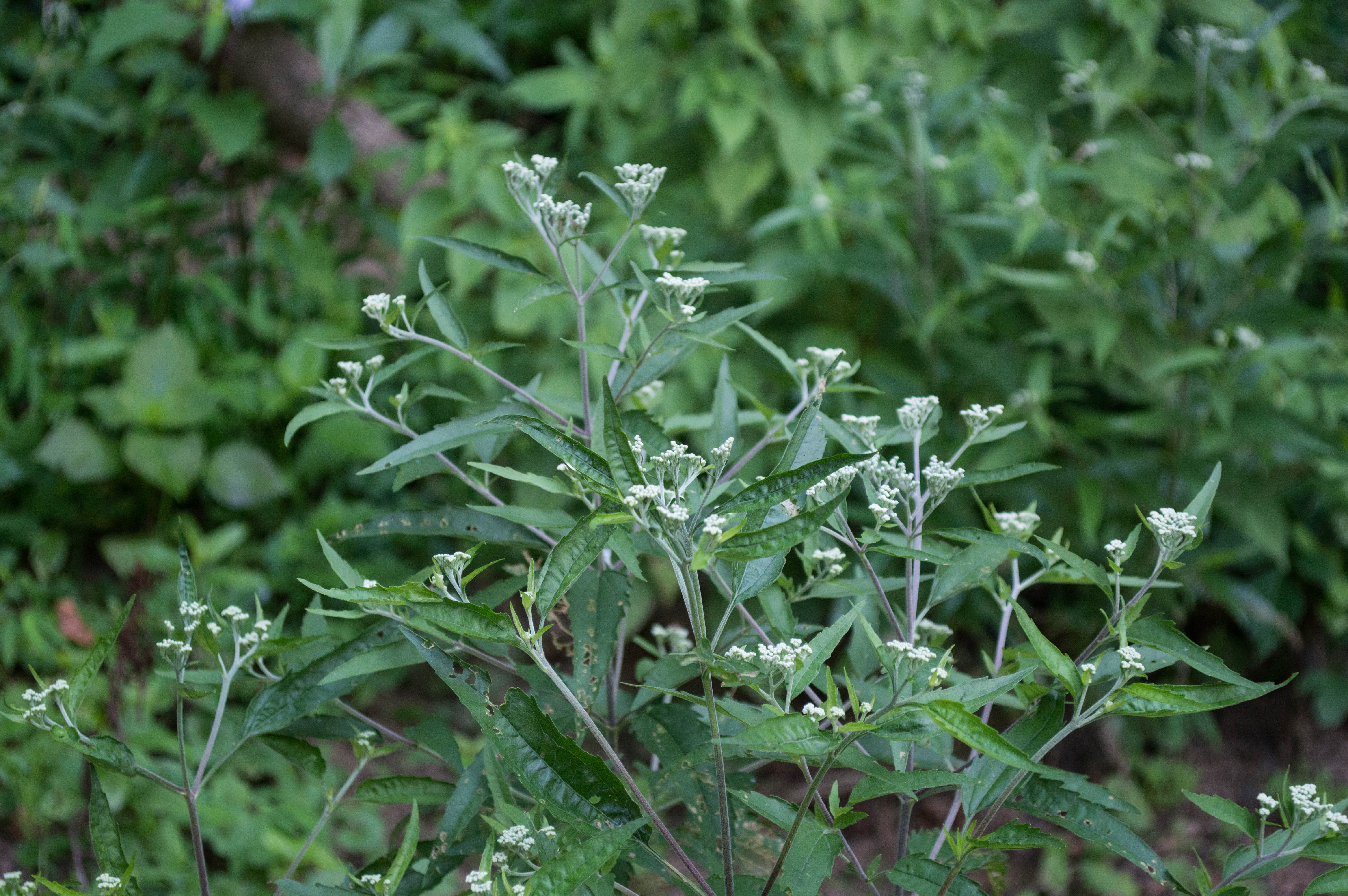
Flower of the Day: Late-Flowering Thoroughwort

Eupatorium serotinum; Asteraceae (aster family)

 DSC_0020

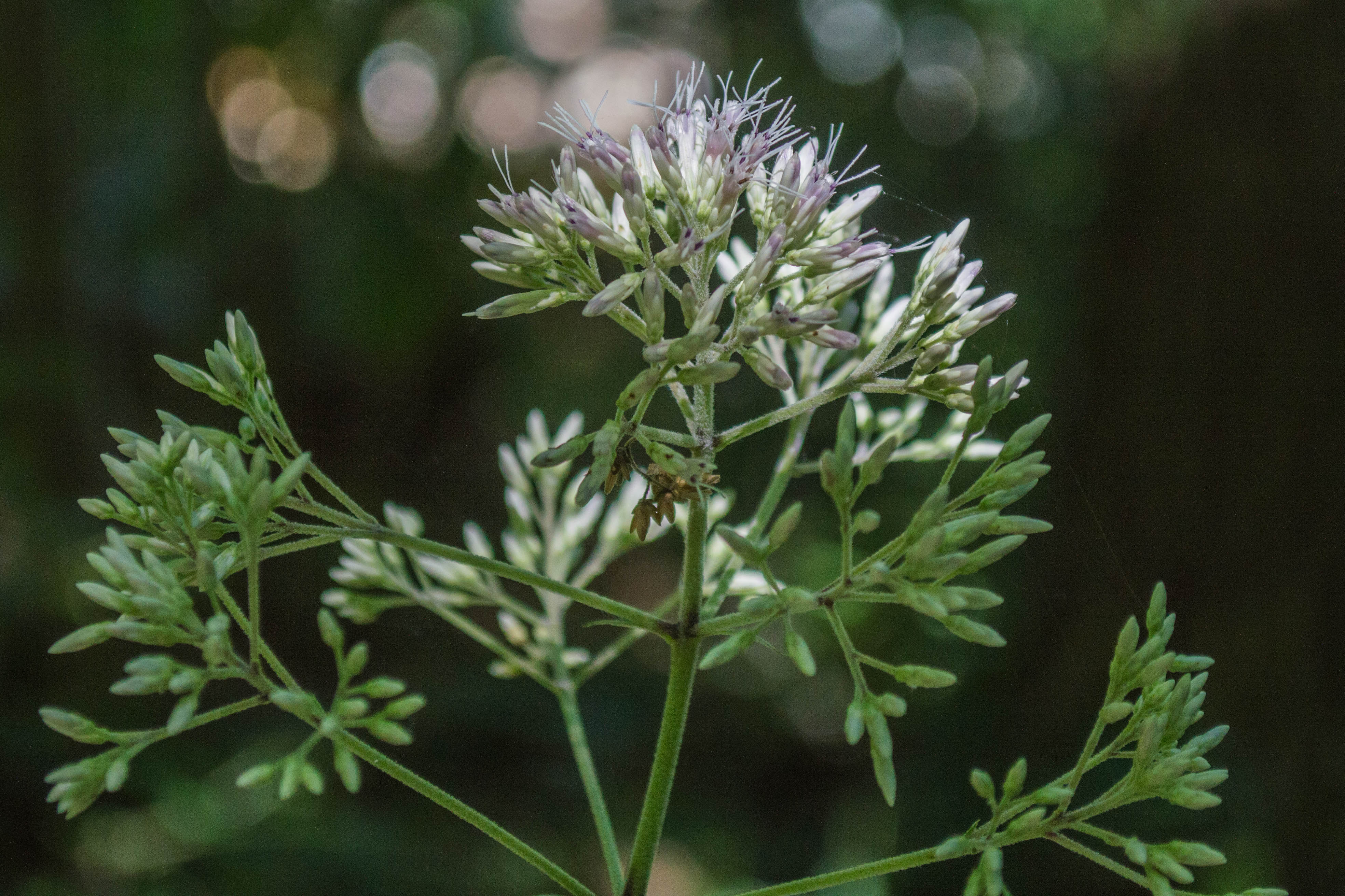
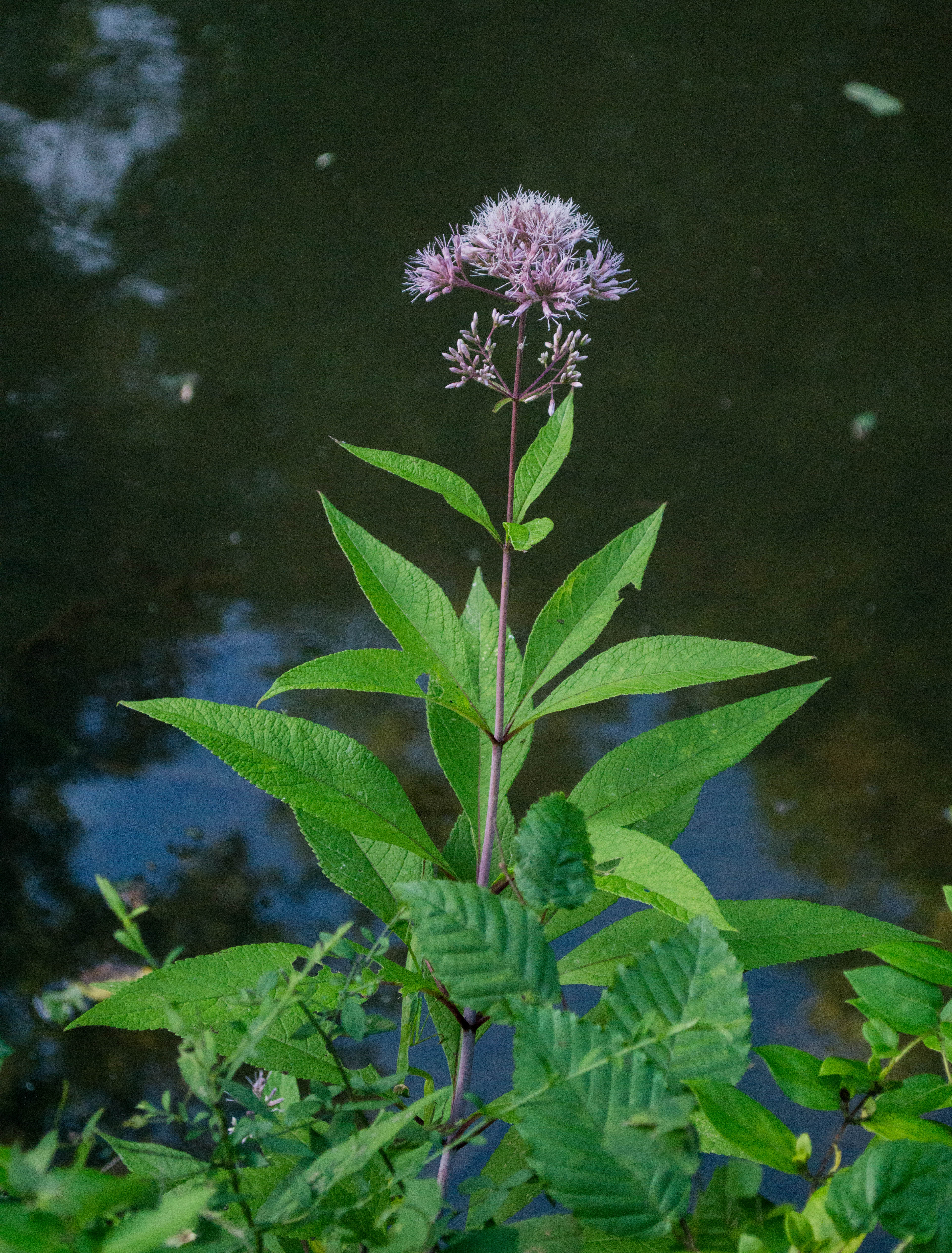
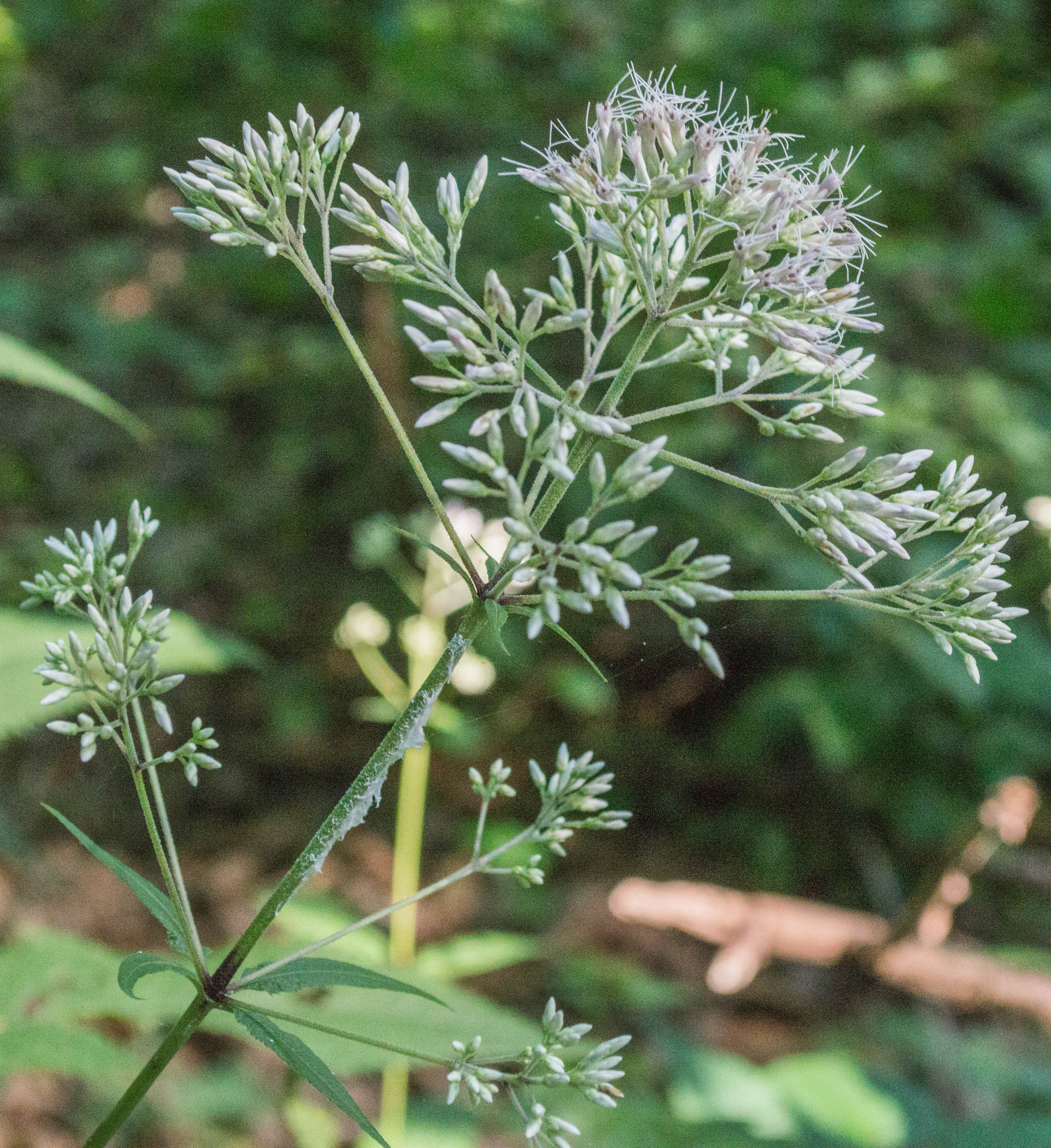
This FOTD is a little premature, as it’s still in bud, but I’m on a roll here with the Eupatoriums.  This one can grow up to five feet tall, and has longer, narrow leaves than the other species I’ve written about the past few days. The inflorescence is rather flat.

DSC_0024

This plant, also known as late boneset, is endangered in New York.  Like most of its relatives, it can be found across the eastern US and into Canada.

Tomorrow, I’ll take a break from plants in the aster family – but not for long, because this is the time of year when they really dominate.  As of August 13, 13% of the plants I’ve catalogued this year have been in the Asteraceae.  By October that figure might be as high as 25%.  Of all the plants families on this earth, only the Orchidaceae has as many species.

Flower of the Day: Mistflower

Conoclinium coelestinum; Asteraceae (aster family)

 20140811-DSC_0275

Yet another in the series of Eupatorium-type flowers, formerly named Eupatorium coelestinum.  Note once again how similar the flowers are to the others I’ve posted about in the last few days.  This plant grows up to three feet tall, and has triangular leaves with short petioles. It’s closely related to the common garden plant ageratum. Its native range is from Ontario and New York south to Florida and west to the central and southern Great Plains.

Here’s a picture showing flowers, buds, and the characteristic leaves:

20140806-DSC_0102 and one more picture for fun20140811-DSC_0274.

Flower of the Day: White Snakeroot

Ageratina altissima; Asteraceae (aster family)

20140729-DSC_0025

Yes, another of the Eupatorium-type plants.  In fact, this species was formerly named Eupatorium rugosum.  It can be distinguished from the bonesets by the leaves, which have long petioles (instead of being perfoliate or sessile), and are generally cordate (heart-shaped).

20140729-DSC_0028

The inflorescences are a little different in shape, but the individual flowers look similar to boneset and joe-pye weed flowers, at first glance, anyway.

DSC_0040

Other common names include tall boneset, white sanicle, and richweed.  At one time people believed that the roots could treat snakebites, hence the name.  Actually, the plant is poisonous, and the source of “milk sickness” that killed many settlers in the early 1800s. Apparently cows don’t normally graze on white snakeroot, but they can if forage is sparse; the poison is then passed through the milk to people.

White snakeroot is found in a wide variety of moist-soil, partly-sunny habitats, from Quebec to Florida and west through the Great Plains.

Flower of the Day: Sweet Joe-Pye Weed

 Eutrochium pupureum; Asteraceae (aster family)

 DSC_0305

Those wacky taxonomists are always re-naming things.  The genus formerly known as Eupatorium contained a large number of species, a few of which I’ll be featuring over the next several days.  Colloquially they’re known as joe-pye weeds, thoroughworts, bonesets, and snakeroots.   Apparently the joe-pye weeds are now in the genus Eutrochium (for a while they were in the genus Eupatoriadelphus).

There’s a lot of folklore around the medicinal uses of this plant, named for a Native American who used it for a variety of ailments.  It’s a plant with a lot of presence, growing to seven feet tall in rich, constantly moist soils all over the eastern half of North America.

DSC_0024 Has a slightly sweet scent, too.  If you have a swale at the back of your yard where nothing wants to grow, plant some joe-pye weed in it as the backdrop for a perennial border.

DSC_0023