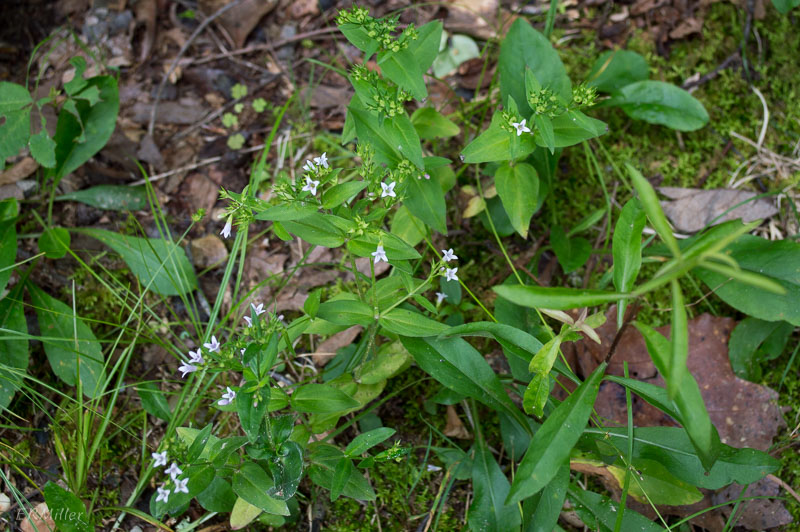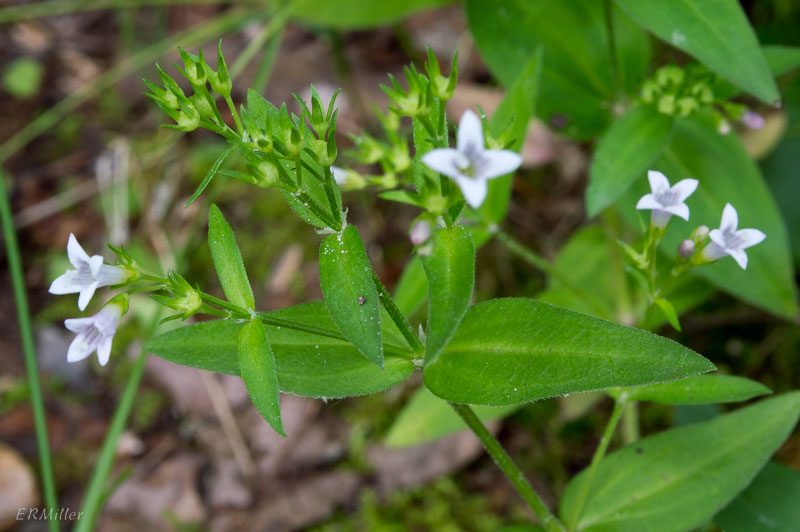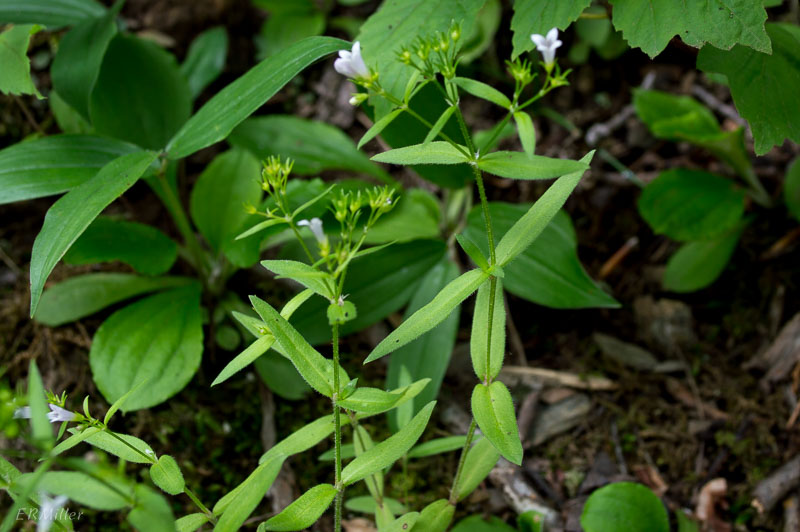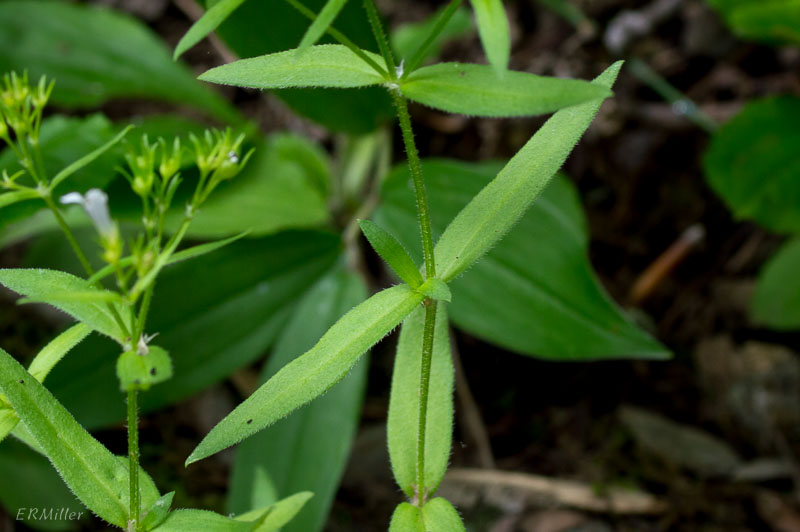
Flower of the Day: Enchanter’s Nightshade

20150612-20150612-_DSC0055

Circaea lutetiana
aka Circaea quadrisulcata
Onagraceae

20150612-20150612-_DSC0040

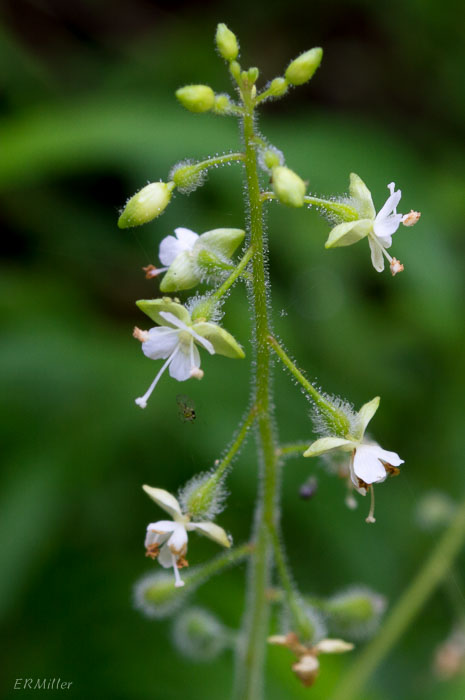
Standing one to three feet tall, this woodland forb has tiny, white, two-petaled flowers. The petals are so deeply cleft that you’d think there are four.
20150612-20150612-_DSC0057

Enchanter’s nightshade’s native range is from the Great Plains east to the Atlantic, north into Canada, and all the way south (except Florida).

The USDA Plants database shows two other species of Circaea in North America; one (C. alpina) is a much shorter plant found throughout much of the US (not the southern Mid-West or deep South) that is endangered or extirpated in several states; the other (C. x intermedia) is a naturally-occurring cross between C. lutetiana and C. alpina.

I spent awhile surfing the internet looking for some interesting facts or trivia about this plant, and came up with nothing, other than confirmation of my observation that summer-flowering woodland plants tend to have very small white flowers.  Enchanter’s nightshade isn’t going to knock your socks off with its beauty, unless you pause long enough to get a good, close look at the flowers.

20150612-20150612-_DSC0053

I actually do find it enchanting.

ps – look closely at the upper sepal in the top photo; see the aphids?

Butterflies and Bumblebees

Sometimes you can’t photograph flowers without photographing insects. Last week at Belmont I found a huge stand of Canada thistle (I think), covered in butterflies and bumblebees.

20150616-20150616-_DSC0048


clouded sulphur
Colias philodice
20150616-20150616-_DSC0044


great spangled fritillary
Speyeria cybele

20150616-20150616-_DSC0030


cabbage white
Pieris rapae

20150616-20150616-_DSC0051


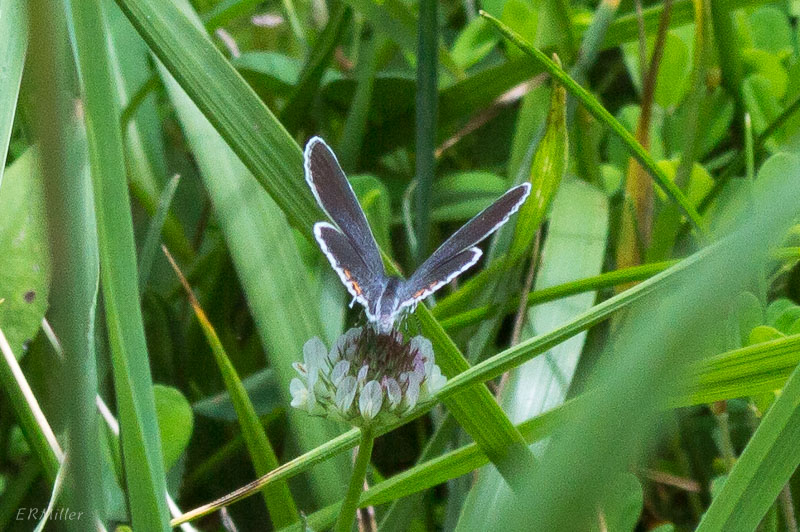
red-spotted purple (I think) on white clover
Limenitis arthemis

20150616-20150616-_DSC0072


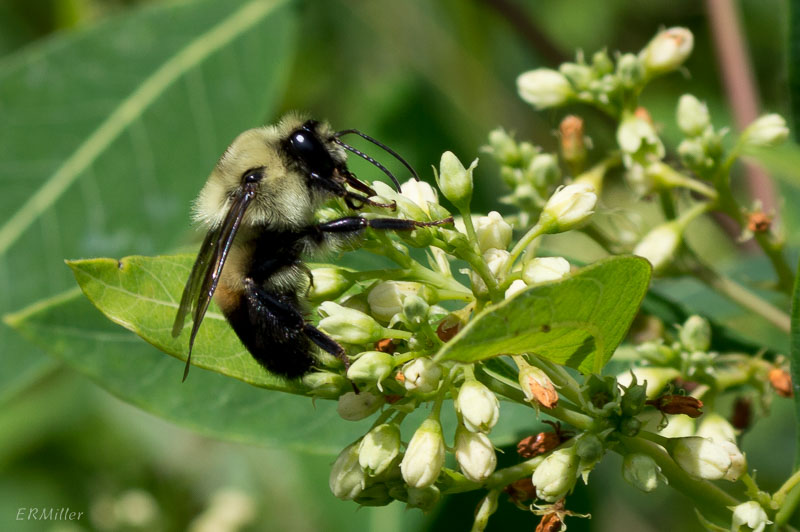
bumblebee on indianhemp
family Apidae


and this, too:
20150616-20150616-_DSC0006


European mantis (I think)
Mantis religiosa

Flower of the Day: Water-Willow

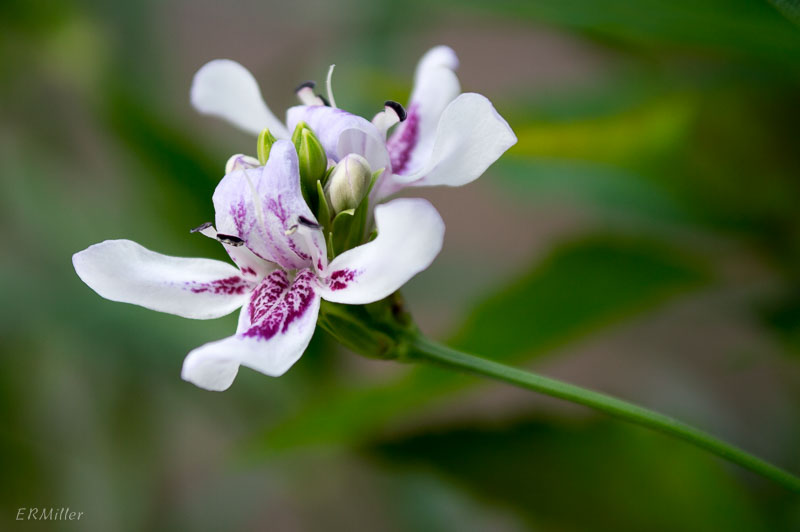
20150610-20150610-_DSC0039

aka American water-willow
Justicia americana
Acanthaceae

As spring turns into summer and the water levels in the Potomac drop, the stems and foliage of this aquatic plant appear along the river’s edge, growing out of the water.

20150616-20150616-_DSC0101 Water willow spreads by rhizomes, forming large colonies that help stabilize shorelines and provide habitat for small invertebrates.  Many types of bees, flies, and butterflies feed on the nectar or pollen.  I don’t know if water-willow could properly be considered a keystone species, but it certainly is ecologically important.

Hundreds of species of Justicia grow in tropical and temperate zones of the Americas and parts of Asia and Africa, but only about two dozen are native to the US.  American water-willow is by far the northernmost growing of these species, and can be found as far north as Ontario and Quebec, though no further west than Texas.  It’s threatened in Michigan and endangered in Iowa.

Although each flower is relatively short-lived, and only a few are produced at a time, the overall blooming period of the plant can be several months long.

20150616-20150616-_DSC0098

evening clouds reflected in the Potomac

Sonofa…!

I was quite excited to find this on June 6, 2014:

20140606-DSC_0045

It was on one of those rock formations that juts into the river. These formations are often covered in poison ivy, but almost always worth the effort. Anyway, these were the only buds in a large stand of the plants.  I made a note to go back a week later and photograph the flowers.

And then, there was a flood.  When I returned, the waters were completely covering the rocks.  A week after that, I went again, and… nothing.  The flood waters were gone, but so were the plants.

I know this plant, because I grew it at my old house.  It’s Baptisia australis (blue false indigo, blue wild indigo), a member of the Fabaceae.  I was excited because it’s threatened in Maryland.

This year, I’ve kept an eye on that rock formation.  Nothing.  Then nothing.  Then nothing… then, on June 10, I decided enough of this game, I’m going out there anyway, poison ivy or no (and boy was there a lot of it).

And I saw this:

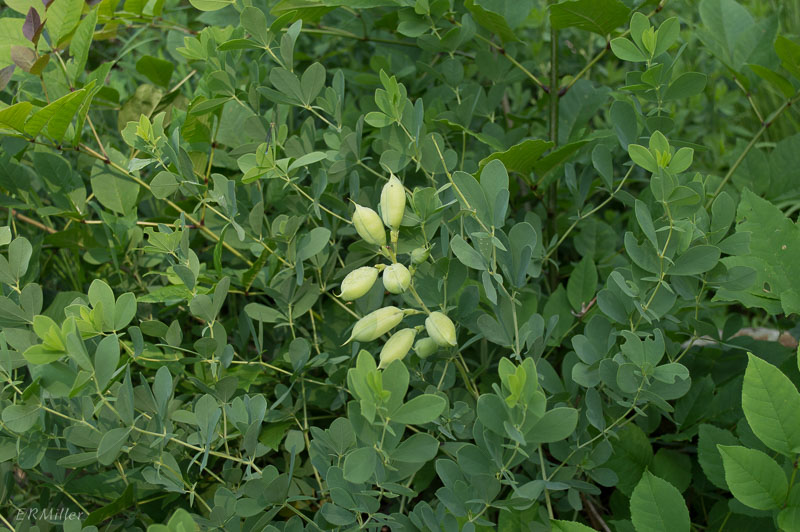
20150610-20150610-_DSC0049

Yep.  Seedpods.  No doubt that this is B. australis, but darn it, two years in a row I’ve missed seeing the flowers!

Bluets: A Closer Look

Warning: more than typical amount of plant geekery follows.

IMG_6685


my trusty D3200 poised by some bluets


As you may recall from yesterday, I went to the C&O Canal to determine if there were indeed two different species of bluets (Houstonia) in the area.

After 15 minutes of walking I arrived at the stand in question, and took a close look.  A really close look.  And lots of pictures.  What I found:

20150617-20150617-_DSC0020


Two plants, one with five flowering stems, one with three flowering stems.  All were about seven inches tall.

20150617-20150617-_DSC0036


The uppermost stem leaves were narrow and one-veined.

20150617-20150617-_DSC0046


The middle and lower stem leaves were oval and three- or five-veined.

20150617-20150617-_DSC0090


It seems this species is Houstonia purpurea.


I walked another 50 yards or so, knowing that there was another stand somewhere, but I couldn’t find it, so I went back to the first stand and studied it a little more. Kneeling on the towpath and looking around me, I spotted some other flowers that I’d missed while standing.

20150617-20150617-_DSC0069


This was about eight feet away from the first stand.  It’s a single plant with six flowering stems, all about seven inches tall (just like the first stand).

20150617-20150617-_DSC0069-2


Look how long and narrow the leaves are compared to the other plant.  This one is H. longifolia.  I think.  Note the pair of leaves at top and bottom of the picture; they’re a little more oval and rounded at the base.  Could this be an intermediate form?!

20150617-20150617-_DSC0022


the flowers of H. purpurea…


20150617-20150617-_DSC0065


…are almost identical to the flowers of H. longifolia


Both Venus’ pride (H. purpurea) and longleaf bluets (H. longifolia) can be found across most of the eastern and mid-west US, with the latter species ranging further north and west into Canada. Longleaf bluets are endangered in Connecticut and Massachusetts, of special concern in Maine, and historical in Rhode Island.

20150612-20150612-_DSC0029