Lamiaceous Weeds Revisited

Now that I have a few more pictures, and now that the plants are blooming, I want to quickly revisit three mint family weeds. The first two are often confused, maybe because of similar habit and flowers.

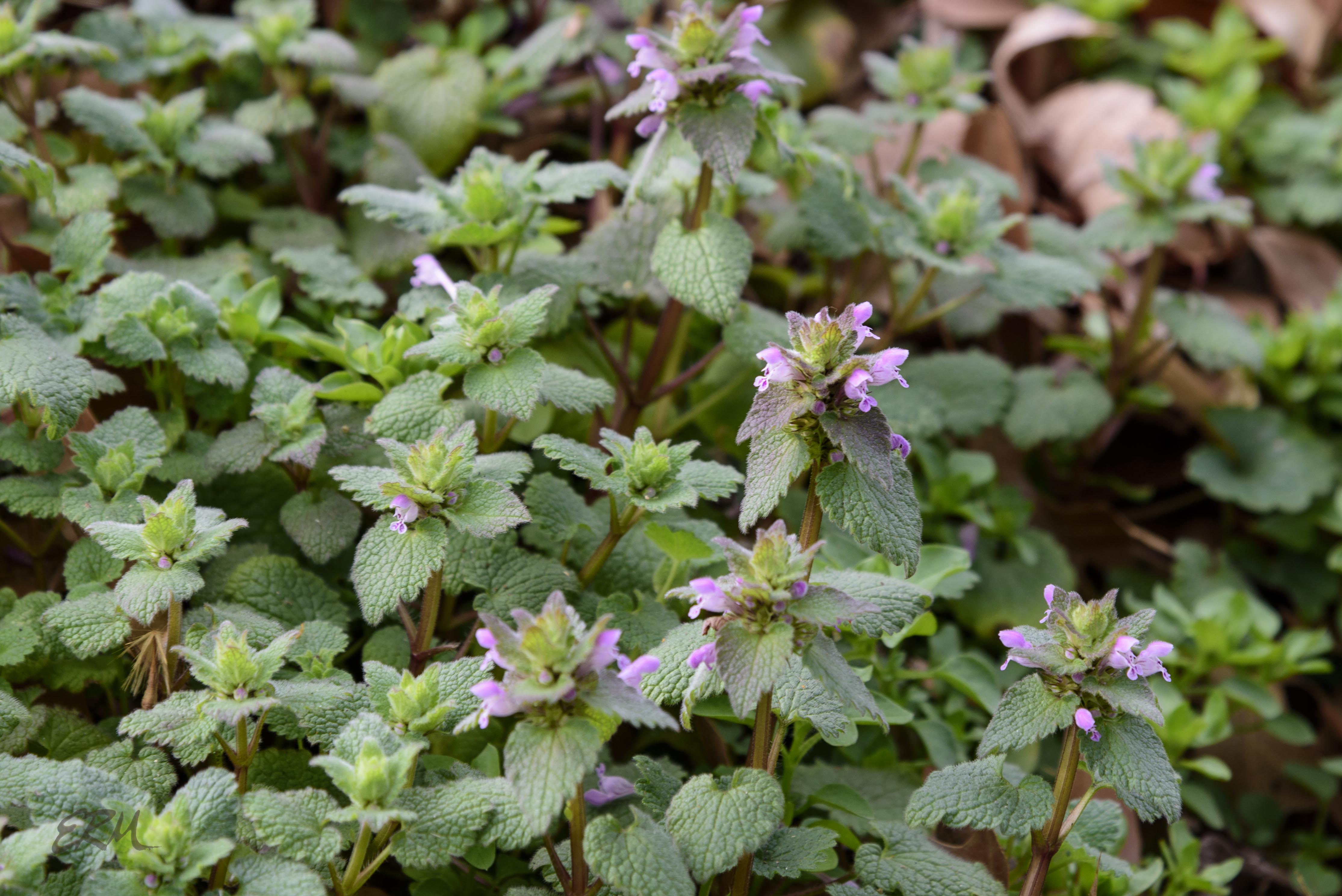
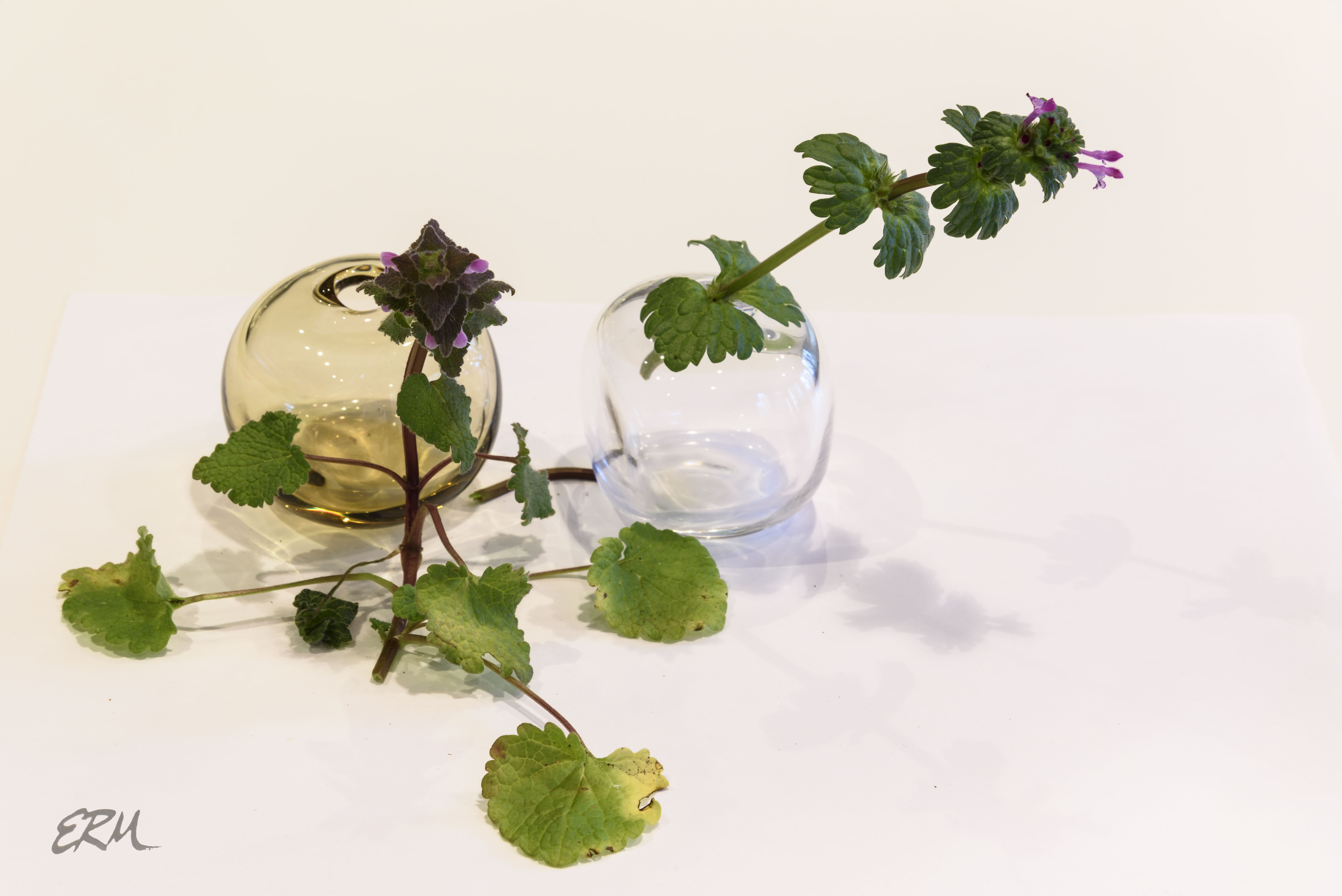
The plant on the left is Lamium purpureum (purple deadnettle), and the one on the right is Lamium amplexicaule (henbit). Both have similar-shaped leaves, but the deadnettle’s are pointier, and note how long the petioles are on the lower portion. The henbit’s leaves are sessile and appear to almost surround the stem. Also, the uppermost stem leaves of the deadnettle are purplish (hence the specific epithet), though not on very young plants.


Lamium purpureum
purple deadnettle


Lamium amplexicaule
henbit


The third species is Glechoma hederacea (gill-over-the-ground, ground ivy, creeping charlie). Ground ivy’s leaves are close in shape to henbit’s, but they have distinct short petioles. Henbit spreads along the ground, but individual stems will stand straight up; ground ivy stays much closer to the ground.

Glechoma hederacea
ground ivy

The Alien Speedwells

There are a lot of low-growing, blue-flowering aliens out there now, like the periwinkle I wrote about two days ago, or the mint family weeds I’ll be writing about next. Among these are the speedwells (genus Veronica, in the Plantaginaceae).

Of the 30 or so species of Veronica that can be found in North America, about two-thirds are alien. There may be as many as 17 species in Maryland; of these one may be native (sources vary), another is a fairly common native, and a third is a listed S1/Endangered native.

So if you find a speedwell in the field, it’s likely an alien. They can be pesky to distinguish, since in many cases close examination of the tiny leaves is necessary.

Trying to differentiate between bird’s eye speedwell (V. persica, pictured above) and ivy-leaved speedwell (V. hederifolia, sometimes spelled V. hederaefolia) was making me crazy, so I finally collected a few samples. In this picture, ivy-leaved speedwell is on the left, and bird’s-eye speedwell is on the right. The main differences are in the leaves. The former has leaves with 3-5 palmately compound lobes, hairy margins and hairy tops. The latter has much smoother leaves that are deeply indented (crenate or dentate).
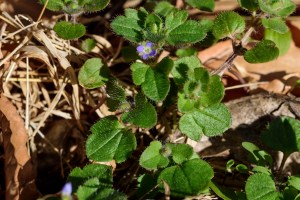
 

This is V. hederifolia. Click on the picture for a closer look at just how hairy the leaves are.


This pretty awful picture from a few years ago shows just enough detail to identify the plant as corn speedwell, V. arvensis. The giveaway here is that the uppermost leaves are elongated, almost triangular in outline, with entire margins. The lower leaves of this species are rounder and toothed. Note its size compared to the blade of grass cutting across the upper left corner.
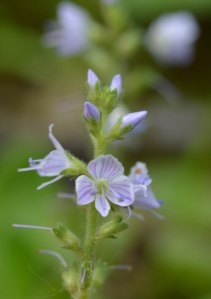
Here’s another old picture. Without details about the rest of the plant, I can’t say for certain, but it sure does look like the inflorescence of common speedwell, V. officinalis. As an aside, take a look at the flower. If you didn’t look closely and tried to key it out using Newcomb’s Wildflower Guide*, you could easily fall into the trap of calling it radially symmetrical, with four petals. But the bottommost petal isn’t the same shape as the others, which means it is bilaterally symmetrical; in Newcomb’s key it falls under “irregular”.

Last one. Again, I’m not certain, but the longish, smooth-margined, sessile leaves in pairs (more visible in other but worse pictures that I have) lead me to ID this as water speedwell, V. anagallis-aquatica. Another clue is habitat: I found it in a very wet, mucky area along the Potomac. It could also be American brooklime, V. americana, but in that species the leaves have more pronounced teeth along the margins, and the leaves have very short petioles.

I’m not an expert and had some trouble learning this genus, so if you disagree with any of my IDs please leave a comment!


*Newcomb’s Wildflower Guide is one of the best ID books for eastern North America flowers; the first question in the key is about symmetry.

Not Quite Yet

A quick stroll around the Carderock area and Billy Goat B up to the Marsden Tract on March 9 showed that the flowers are only just starting. I saw a fair number of spring beauties (Claytonia virginica), a few cut-leaved toothworts (Cardamine concatenata), and one clump of Virginia bluebells (Mertensia virginica) in bloom.

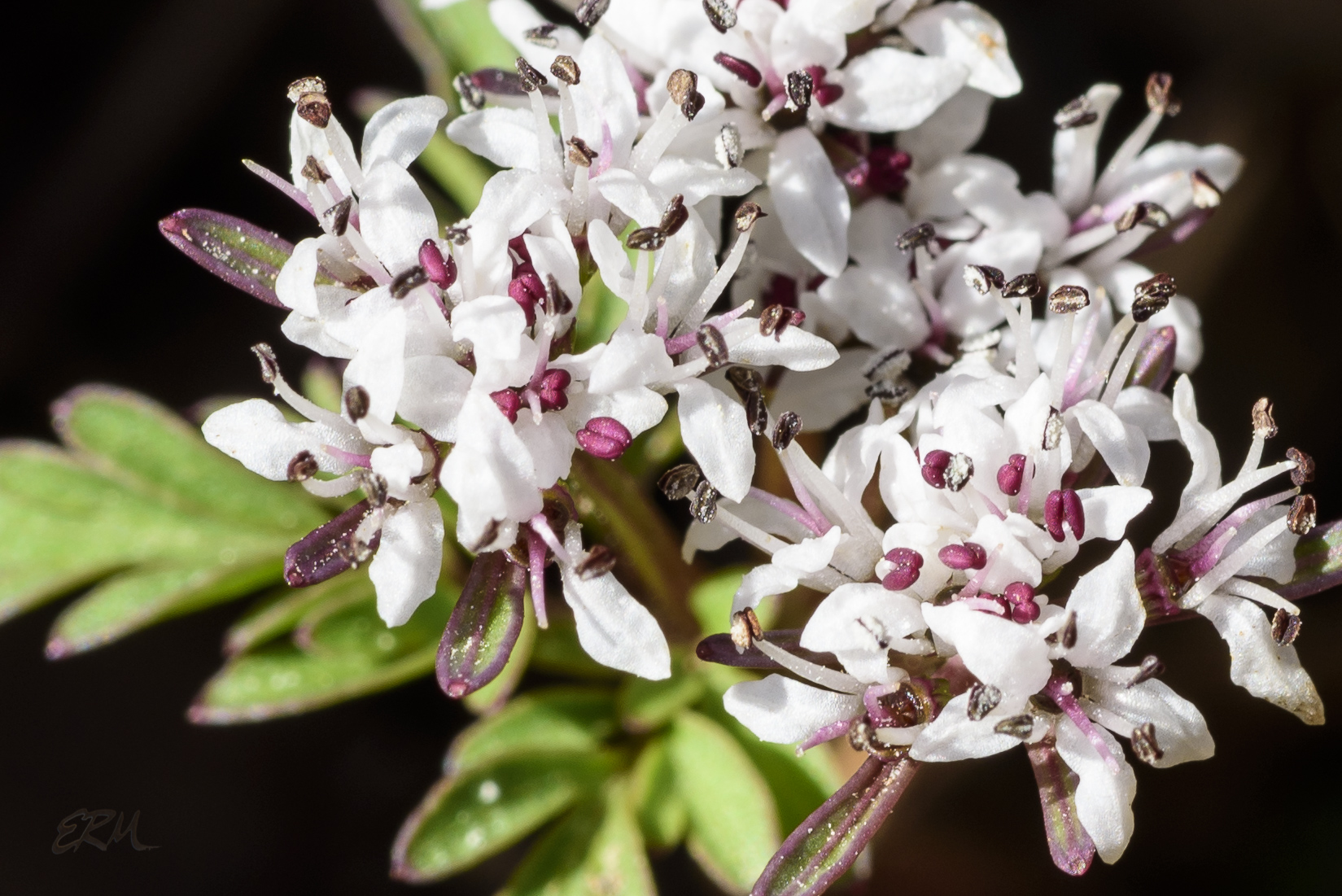
Harbinger-of-spring (Erigenia bulbosa) looks like it’s at its peak, though. There are a few really solid stands of it near the river, but they are hard to find if you aren’t looking closely, since an entire plant is about the width of a nickel.


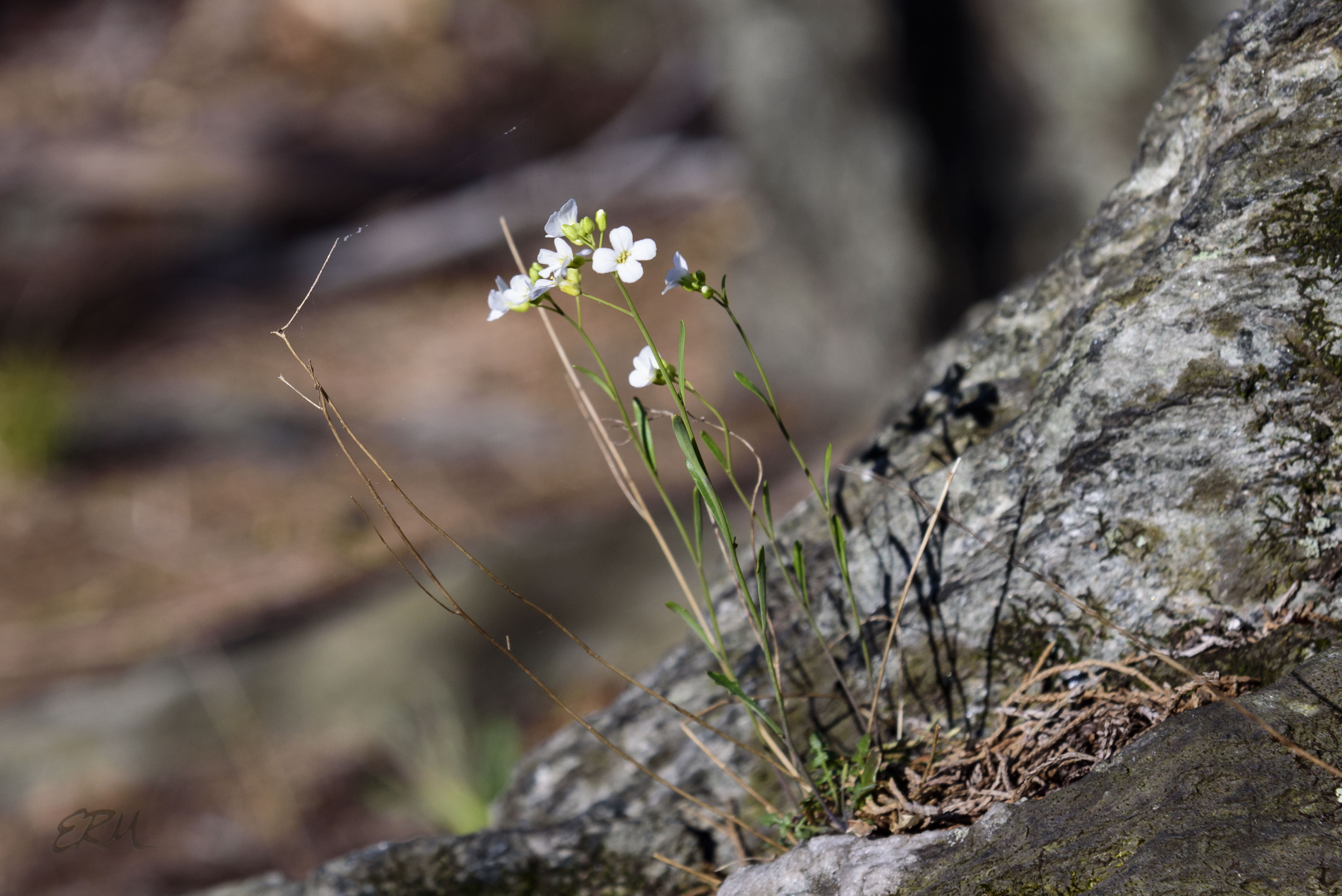
I was a bit surprised to find lyre-leaved rock cress (Arabidopsis lyrata) open already, though most plants had more buds than blossoms. Look for it growing right out of rocks near Carderock.

Early Spring Aliens

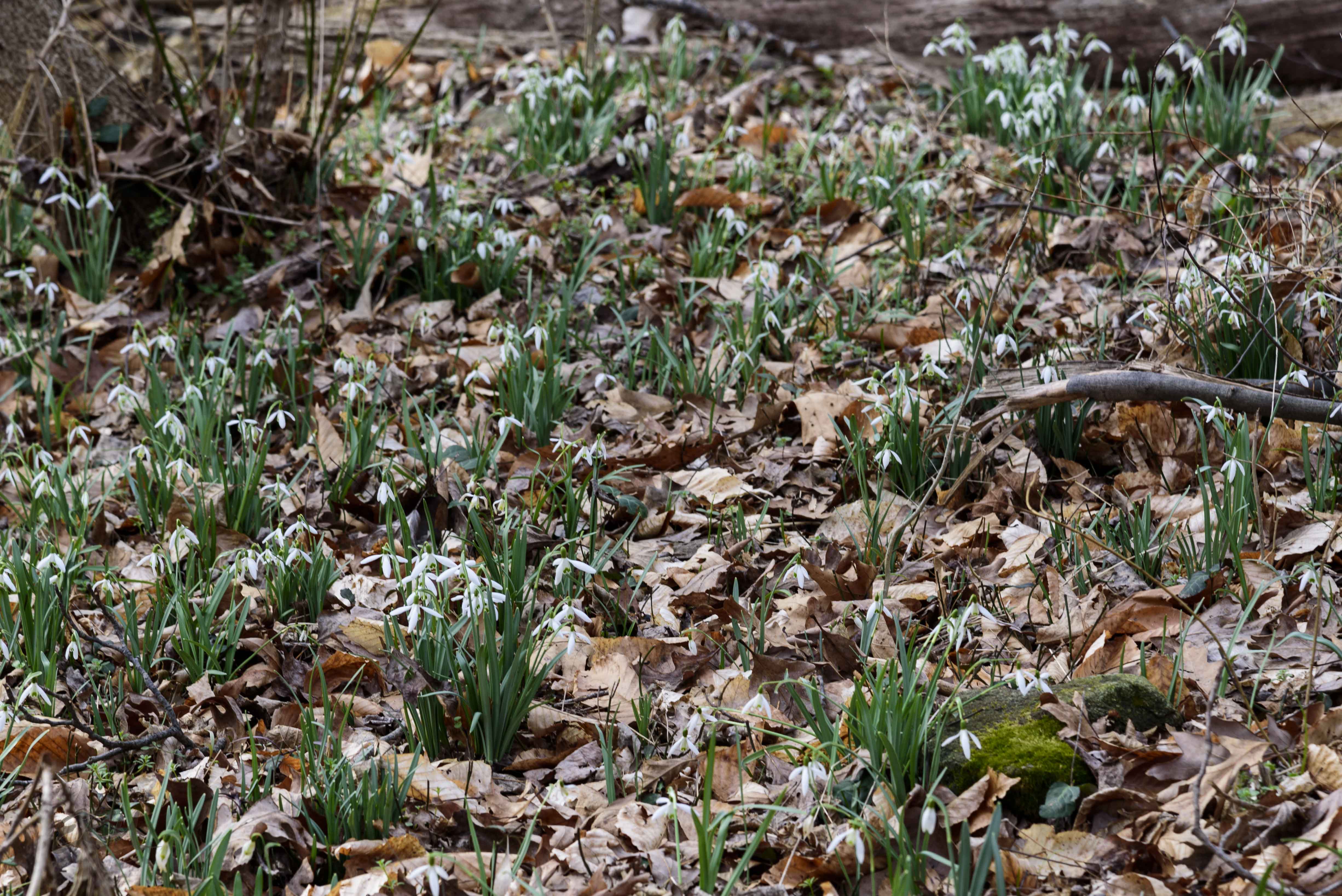
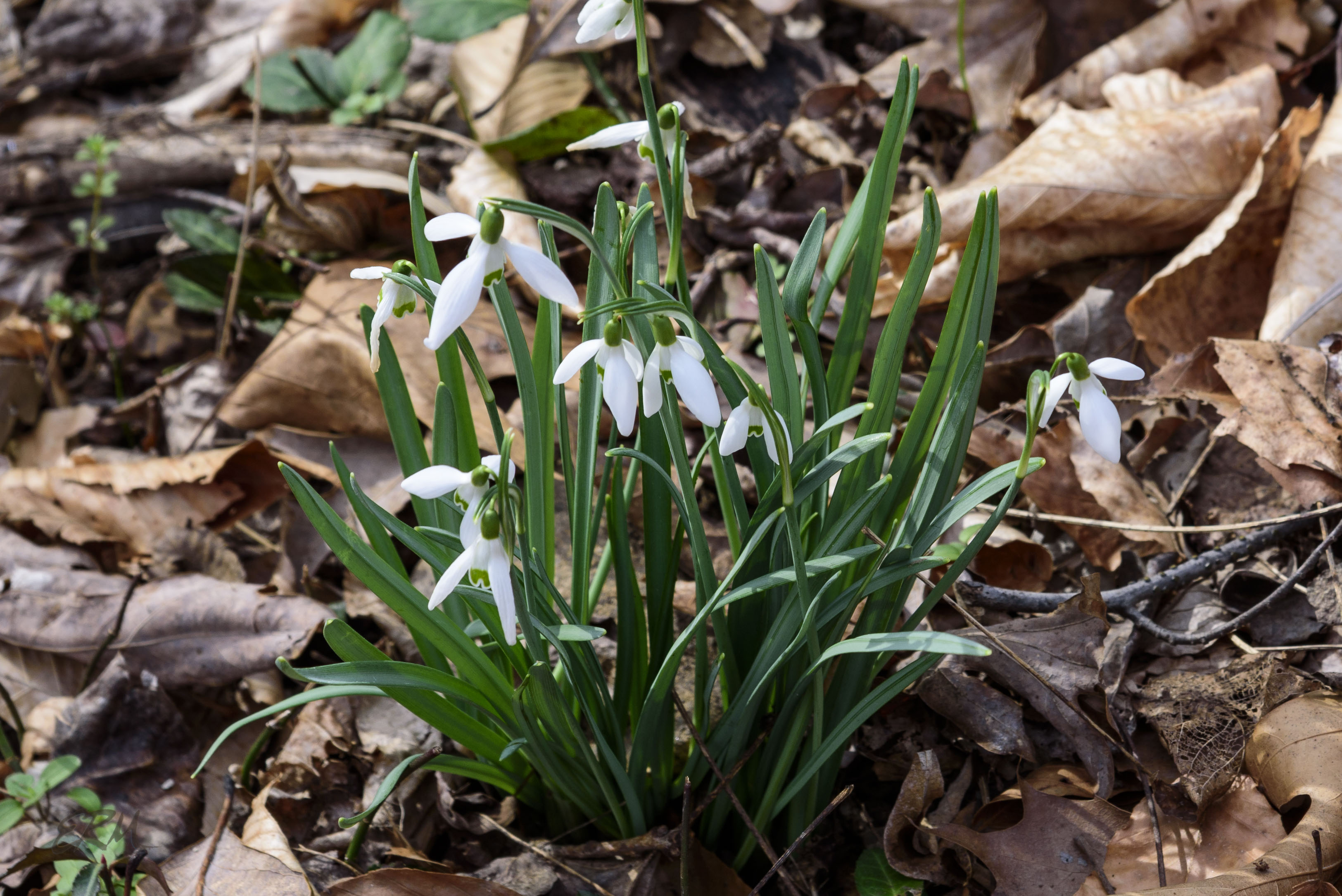
At the end of February, technically still wintertime, I saw this carpet of white on the Cabin John Trail. It wasn’t spring beauties, and it wasn’t leftover snow, either.

This is Galanthus nivalis (snowdrops; Amaryllidaceae), a perennial native to Europe. It naturalizes well, meaning you can plant a few dozen bulbs and enjoy the show year after year as they spread through your garden. Unfortunately, it naturalizes a little too well, and so can be found in woodlands throughout the mid-Atlantic, as well as some other parts of the country.  The National Park Service doesn’t list the species in its manual Plant Invaders of Mid-Atlantic Natural Areas, but the University of Maryland Cooperative Extension considers it invasive.

What exactly does it mean to be “invasive”? I like the USDA Forest Service definition:

An “invasive species” is defined as a species that is

  1. Non-native (or alien) to the ecosystem under consideration; and,
    2. Whose introduction causes or is likely to cause economic or environmental harm or harm to human health.

Whether or not snowdrops cause environmental harm may be just a matter of degree, or time.

I didn’t know that snowdrops were a problem before researching them for this post. Now there’s another item on my garden to-do list: pull out the snowdrops.

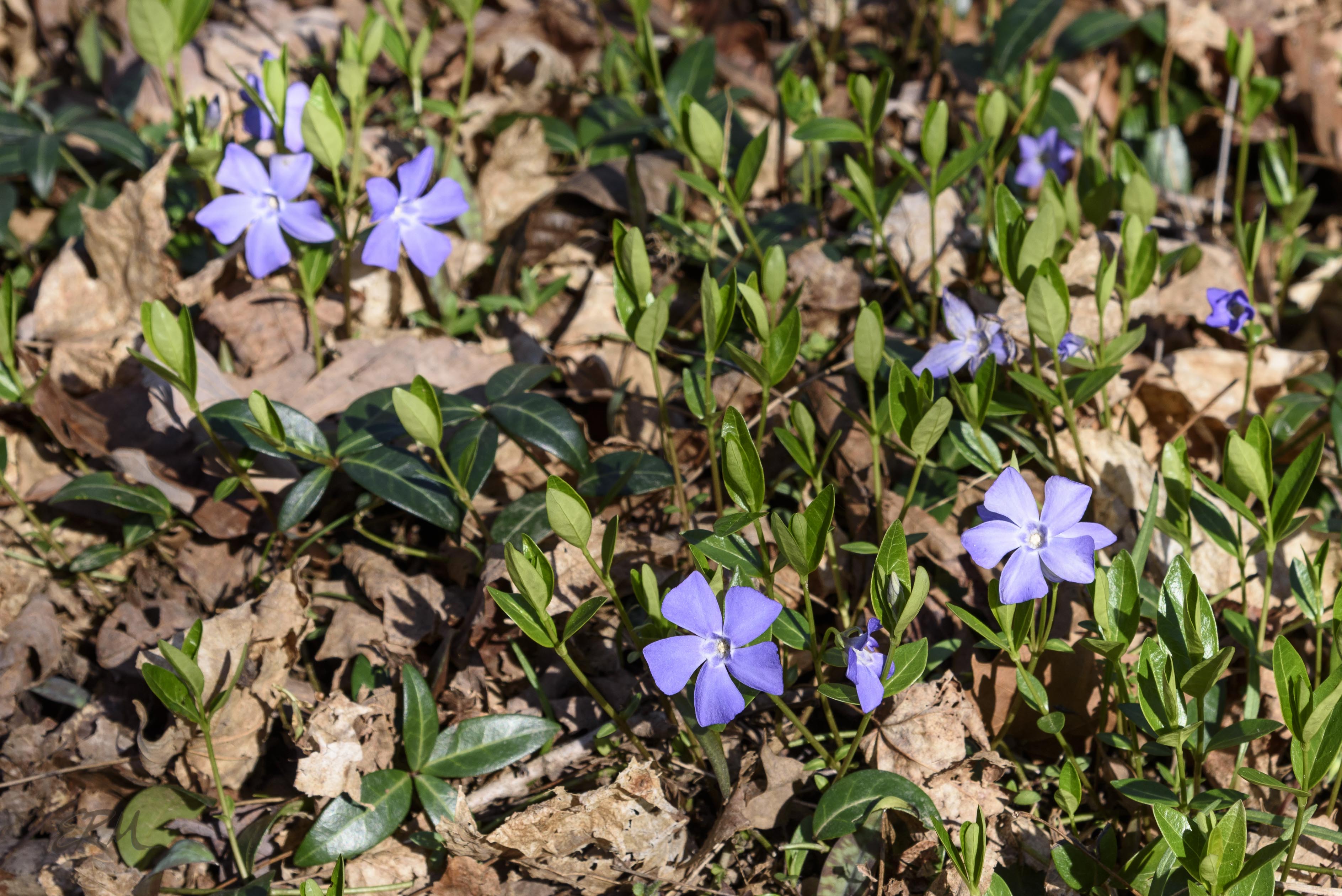
When it comes to Vinca minor (periwinkle; Apocynaceae), though, there’s no doubt. At least twenty-two authorities consider it invasive. It’s easy to find at this time of year. If you follow some of the footpaths near Carderock to the base of the climbing wall, you’ll find vast slopes of the stuff, competing with the Dutchman’s breeches, squirrel corn, Virginia bluebells, and trout lilies that belong there. The plant roots easily at the stem nodes, and since the long stems trail along the ground, it spreads quickly. This characteristic, along with evergreen leaves, pretty purple flowers, and tolerance for a variety of growing conditions, makes it a popular groundcover in home gardens. Please don’t plant it.

next time: more aliens


Maples Have Gender Identity Issues

The earliest blooming wildflower in the Maryland piedmont is skunk cabbage (Symplocarpus foetidus). The flower emerges from wet soils near or in small streams and blooms right there at ground level. It’s probably done now, but our next earliest native plant is blooming, and you have to look up to see it.

Red maple (Acer rubrum, Aceraceae) is one of the most common trees in North America, and ranges from Texas north to Minnesota and all the way to the Atlantic from Florida to Newfoundland. It’s also found in Oregon. Interestingly it’s reported as weedy by some authorities, not surprising since it’s adapted to a wide variety of growing conditions and produces a lot of seed.

While researching maples I had another “plants be complicated” moment, when tripping across a new term: polygamo-dioecious. It seems that some red maples can’t make up their minds whether they’re male, female, or both. Forgive the anthropomorphizing and let me explain.

pistillate flowers on Thalictrum dioicum (early meadow rue)

Flowers can have only pistils (the ovary-bearing or “female” reproductive parts), or only stamens (the pollen-bearing or “male” reproductive parts) or both. Flowers with pistils only are called pistillate, and those with stamens only are called staminate; either type of flower can also be referred to as imperfect. Flowers with both functional pistils and stamens are called perfect.

staminate flowers on Thalictrum dioicum (early meadow rue)

Some species bear perfect flowers only. In other species, each individual plant will bear both pistillate and staminate flowers; this condition is called monoecious, from the Greek words for one (mon) and house (oikos). And in yet other species, individual plants bear only pistillate or staminate flowers; these are plants are termed dioecious (two houses).

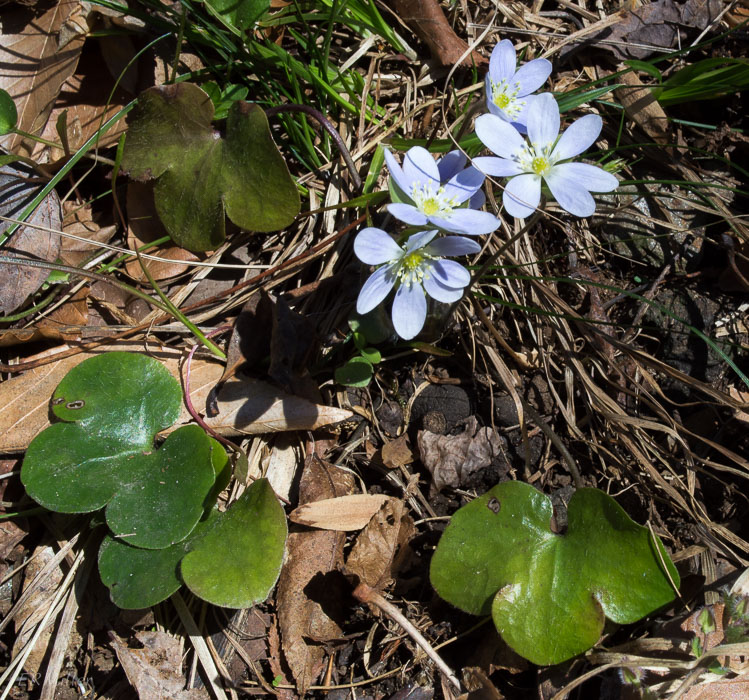
perfect flowers of Anemone americana (round-lobe hepatica)

Polygamo-dioecious describes species in which an individual plant bears both pistillate and perfect flowers, or both staminate and perfect flowers. Acer rubrum is one example. And in case you’re wondering (as I did), if there’s a corresponding term polygamo-monoecious, the answer is yes. In these species, an individual plant can bear all three types of flowers: pistillate, staminate, and perfect.

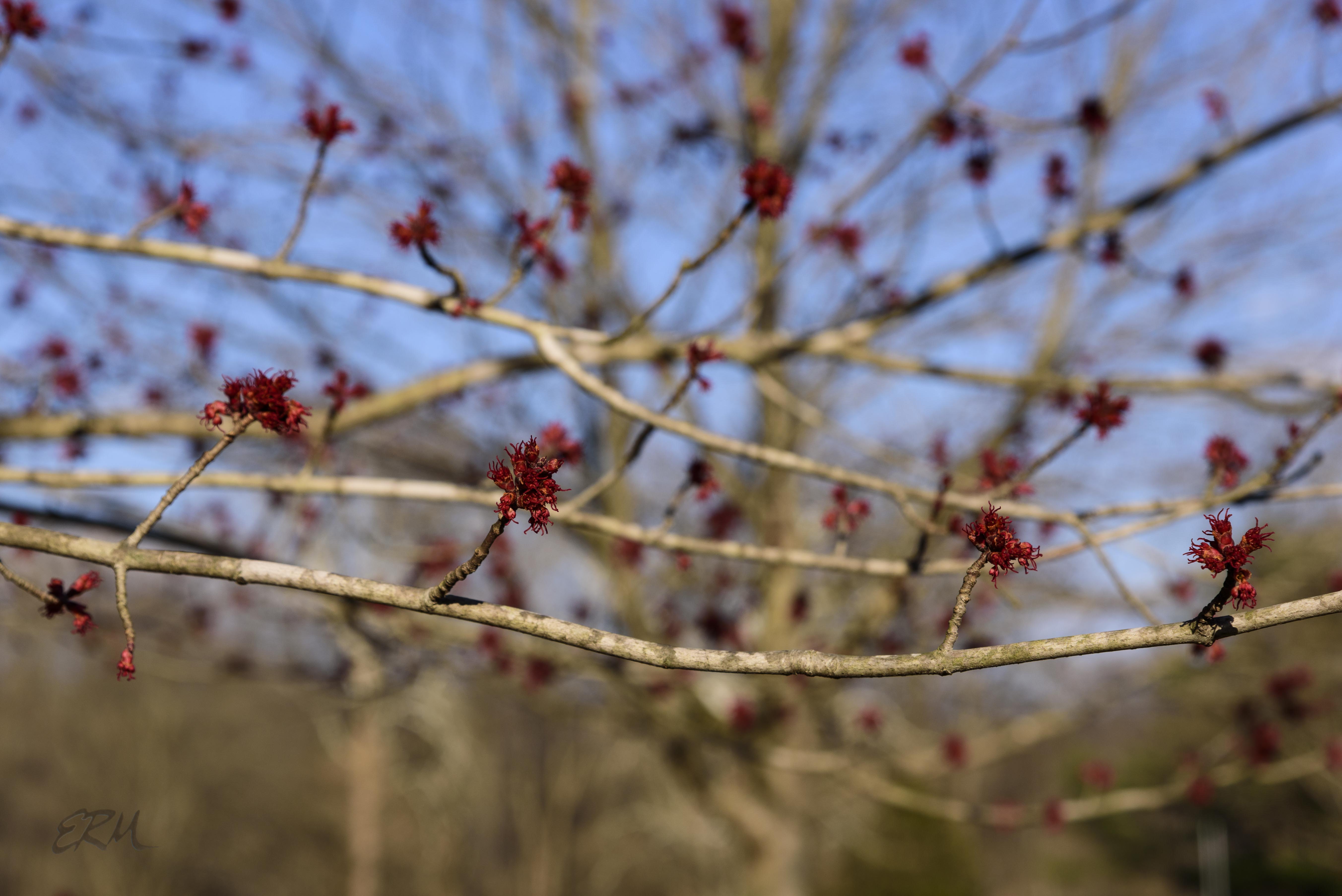
pistillate flowers of Acer rubrum (red maple)

Most maples are polygamo-dioecious, but a few are polygamo-monoecious.


glossary
pistil: flower part that bears ovaries (“female”)
pistillate: flower with pistils only
stamen: flower part that bears pollen (“male”)
staminate: flower with stamens only
perfect or bisexual: flower with both pistils and stamens
imperfect or unisexual: flower with only pistils or stamens
monoecious: plant that bears both pistillate and staminate flowers
dioecious: plant that bears only pistillate or staminate flowers, but not both
polygamo-monoecious: plant that bears pistillate flowers, staminate flowers, and perfect flowers.
polygamo-dioecious: plant that bears either pistillate and perfect flowers, or staminate and perfect flowers