Mid-April Update

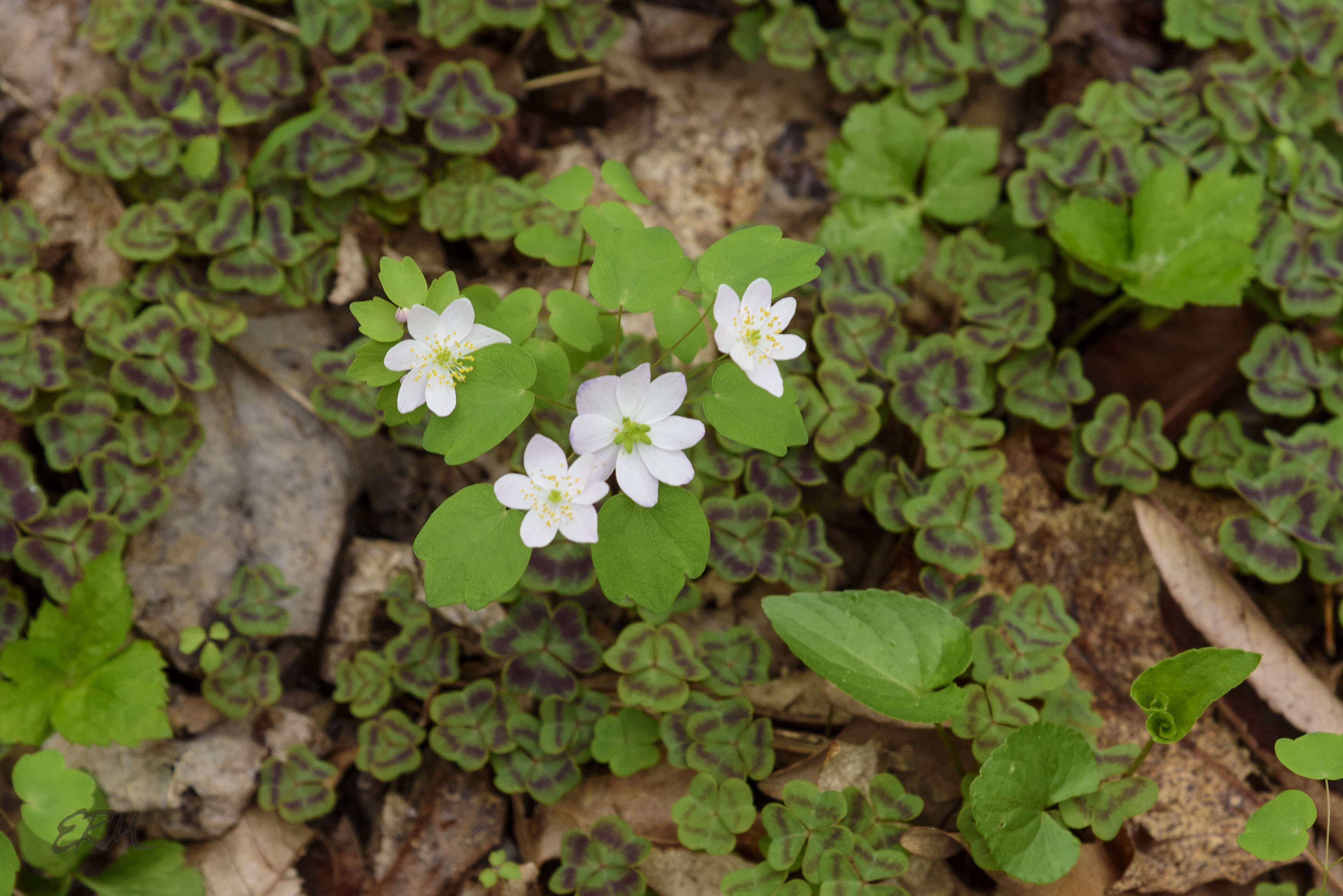
rue anemone blooming in a patch of violet wood sorrel leaves (no flowers yet) at Rachel Carson Conservation Park

Along the Billy Goat B trail on Tuesday, there were still plenty of spring beauties, star chickweed, and field chickweed. While Virginia bluebells are waning fast, wild blue phlox is past its peak but still going strong. Plenty of Coville’s phacelia, but I wasn’t able to find any Miami mist. In a few places along footpaths between the trail and the towpath you can find wild geranium in full bloom, too. Close to the river a few stands of golden Alexanders are open.
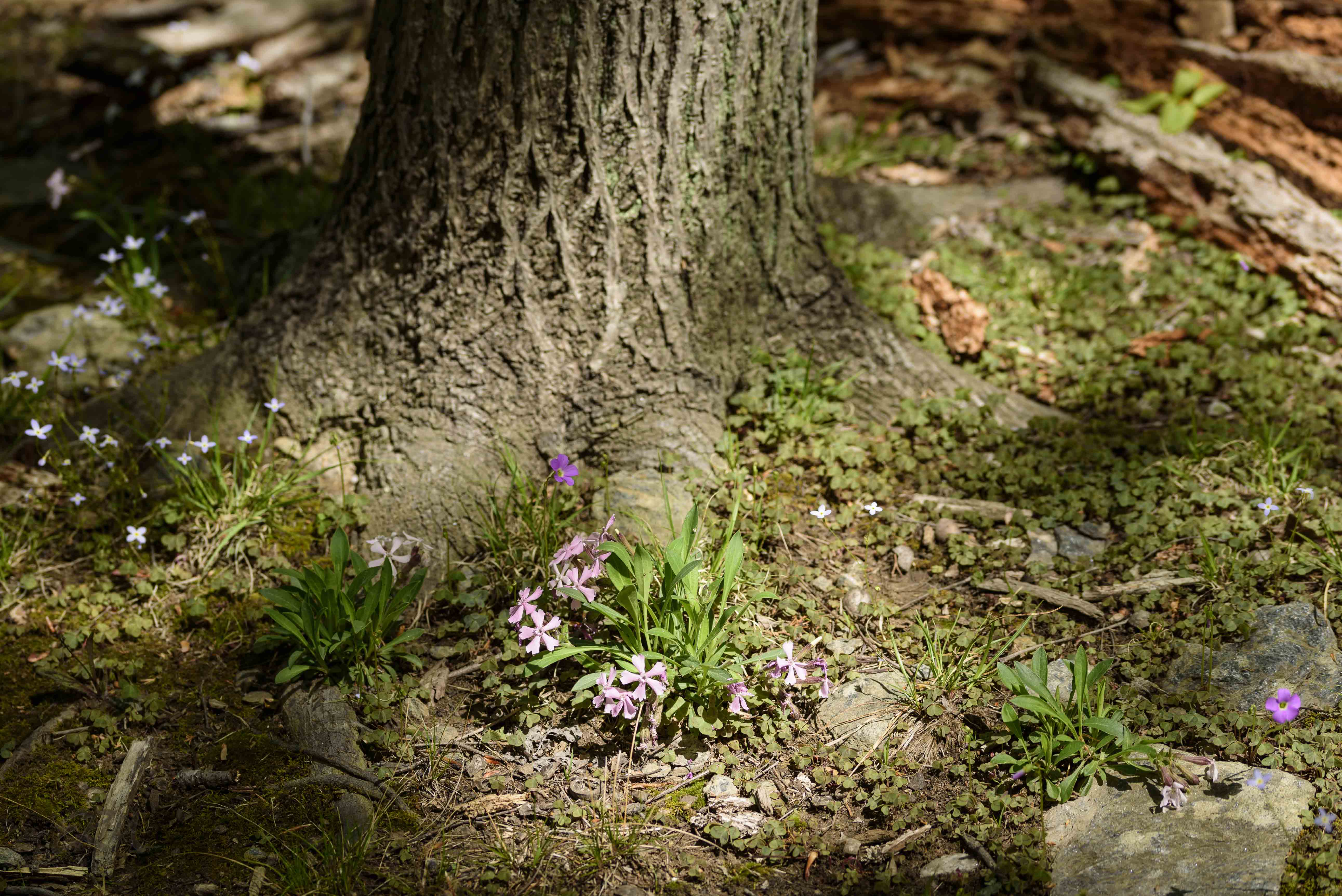
azure bluets, violet wood sorrel, and wild pinks in dappled shade near Carderock

Small patches of violet wood sorrel are blooming along the trail and in the greater Carderock area, which is looking great, with plenty of azure bluets and wild pinks in the rocky areas. Plantain-leaved pussytoes are blooming, too, and dwarf cinquefoil is just starting. Bastard toadflax is budding up and a few days from opening. A few days behind it, perhaps, will be rattlesnake weed, also budding up. Sessile bellwort is done already, and the yellow violets are mostly done, but there’s plenty of creamy violet still. Toadshade is hanging on, but most of the other ephemerals there are done (except spring beauty, of course).

Look up: flowering dogwood and pawpaw are in full bloom.

flower buds on pinxter azalea

Over at Rachel Carson Conservation Park, the pinxter azaleas and showy orchis are in bud; the former will be open within a few days, the orchis in maybe a week. There are a few stands of azure bluets by the river, and gobs of rue anemone and spring beauty everywhere. Look for mayapples and jack-in-the-pulpit, too. There are several nice stands of perfoliate bellwort along the Fern Valley trail.

I also found a new-to-me shrub that I haven’t identified yet. Hopefully it’s something good and interesting and I can write about it in a few days.

perfoliate bellwort at RCCP
Our Earliest Aster

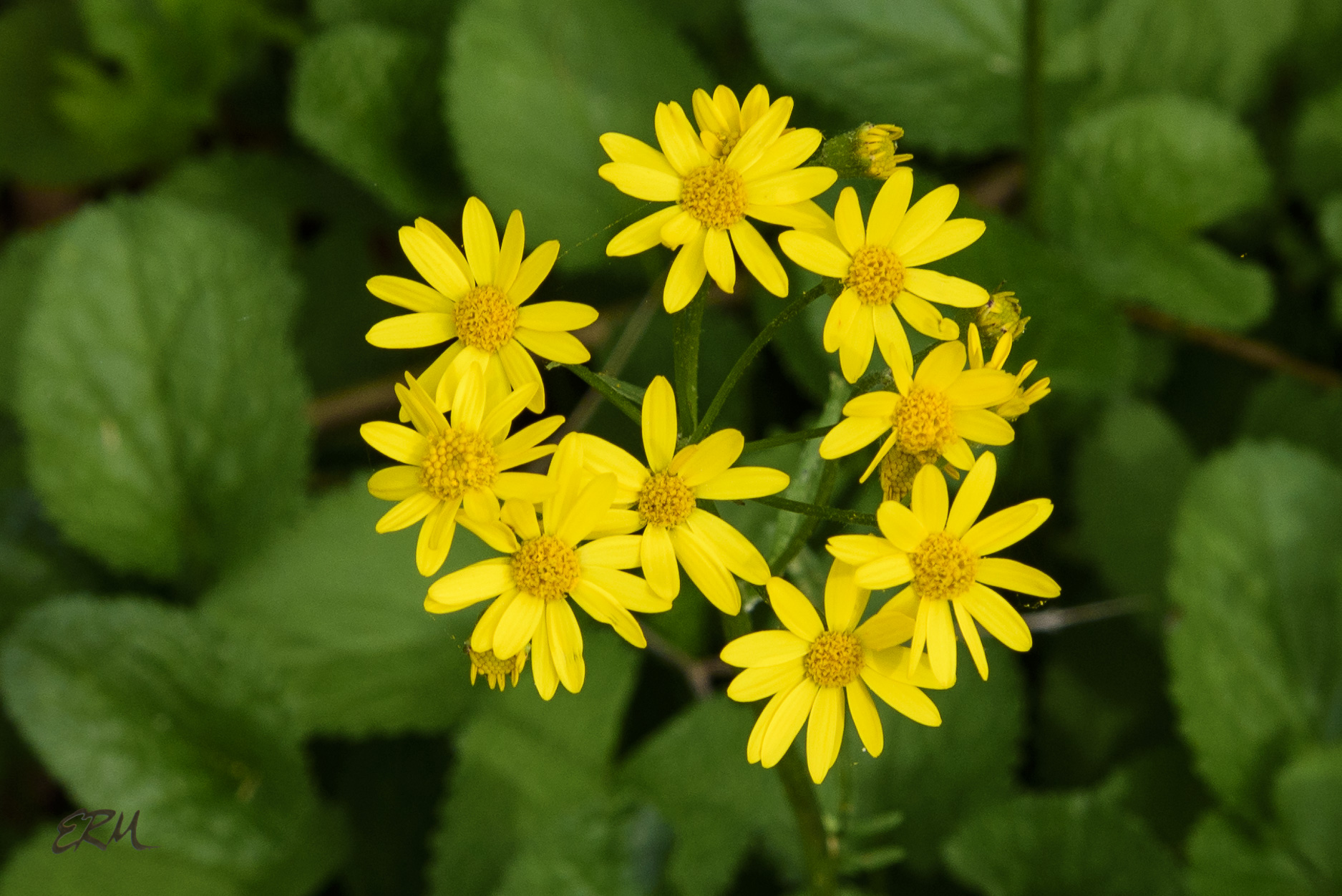
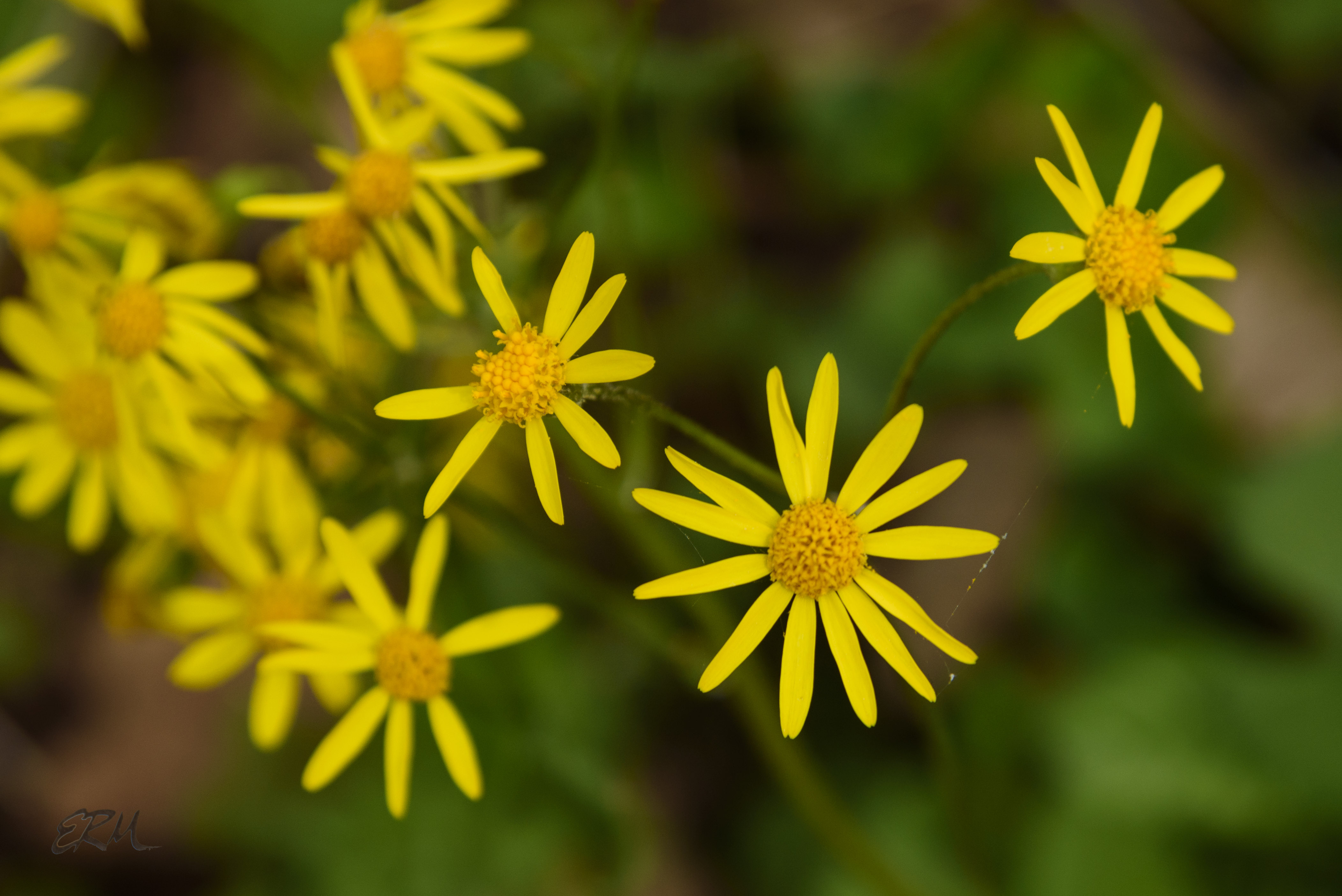
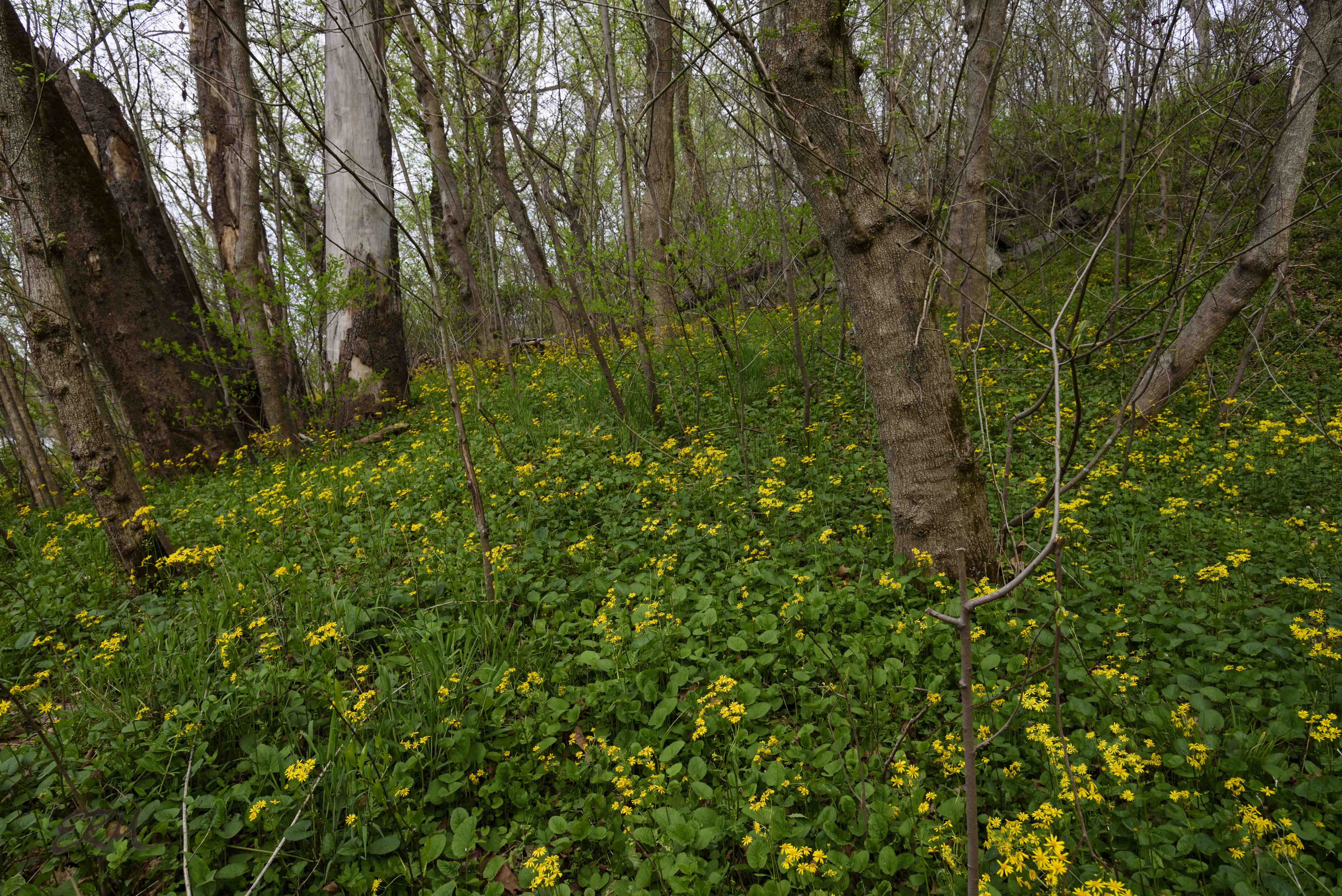
In much the same habitat as Virginia bluebells grows our earliest-blooming aster family species: Packera aurea (formerly Senecio aureus), commonly known as golden ragwort or golden groundsel. It starts blooming about the same time as the bluebells, but in the Potomac Gorge area seems to hit peak bloom just after the bluebells do.

Though they grow together, I’ve noticed that golden ragwort may have a bit more tolerance for slightly drier soils than the bluebells do. In some areas I can see that the land closest to the river is carpeted in bluebells, while a short distance away – on the other side of the trail, for example, where the land starts sloping upward – the carpet changes to ragwort.

Golden ragwort is a colony-forming perennial forb that grows to about two and a half feet tall. The flowers are borne on a corymb ( a more or less flat-topped cluster) and have the typical aster family arrangement of ray flowers and disk flowers.


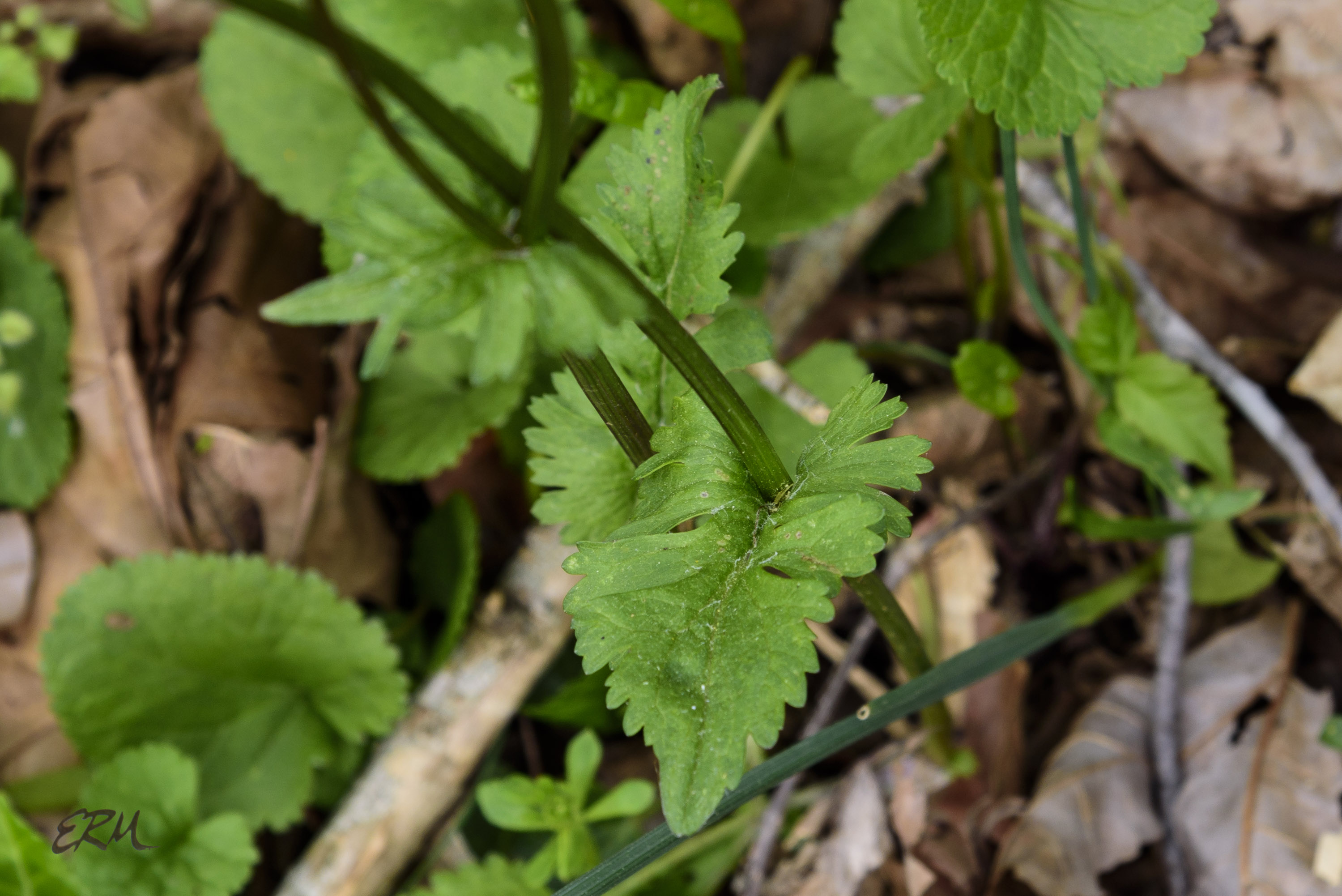
The basal leaves are oval with a cordate base and have scalloped edges and long petioles.


The stem leaves are completely different: narrower, deeply lobed, and sessile or clasping.


Golden ragwort is one of 57 Packera species native to North America. Look for it growing in moist to wet woodlands in the mid-West, mid-Atlantic, New England, a few parts of the South, and eastern Canada.

Two Showy Aliens

So far this year I’ve noted about twenty alien wildflower species blooming in the Piedmont. Checking through old records, I see that nearly one in four wildflowers I’ve found has been alien. It’s a depressing statistic.

Like the natives, these alien wildflowers run the gamut from tiny and inconspicuous to large and showy. The latter are usually garden escapees, of course – naturalized species originally planted for their ornamental qualities.

Of these, the two star-of-Bethlehem species, Ornithogalum umbellatum and O. nutans, might be the showiest. They are classified in either the Liliaceae or Asparagaceae, depending on which authority you consult.

O. umbellatum, common star-of-Bethlehem or nap-at-noon, is a bulb-forming perennial native to Eurasia, with a typical monocot look: the white-striped, dark green leaves are basal, long, and narrow, so that before flowering the plant looks like a clump of grass. The bright white flowers have six tepals with green stripes on the bottoms, and six stamens; the inflorescence is a corymb. It really is a handsome plant. I used to see it fairly often along the Billy Goat trails, but haven’t in the past few years, so I only have this old iPhone photo of the flowers to show.

Common star-of-Bethlehem is found in all but three Maryland counties, and is widespread in North America, occurring in all areas except parts of the mountainous west, and in much of Canada as well. It’s considered a class C noxious weed in Alabama and potentially invasive, not banned in Connecticut.

The second species, O. nutans (nodding star-of-Bethlehem), I see more of every year, even though it’s not quite as widespread in Maryland or North America. The leaves are similar to those of O. umbellatum, but are somewhat succulent with more pronounced parallel veins. The flowers are white, but a bit dull-looking, with a silvery-gray cast, and they’re borne on racemes rather than corymbs. Standing at almost two feet high, O. nutans is rather larger than O. umbellatum, and more easily spotted at a distance. The species is considered invasive in the mid-Atlantic.


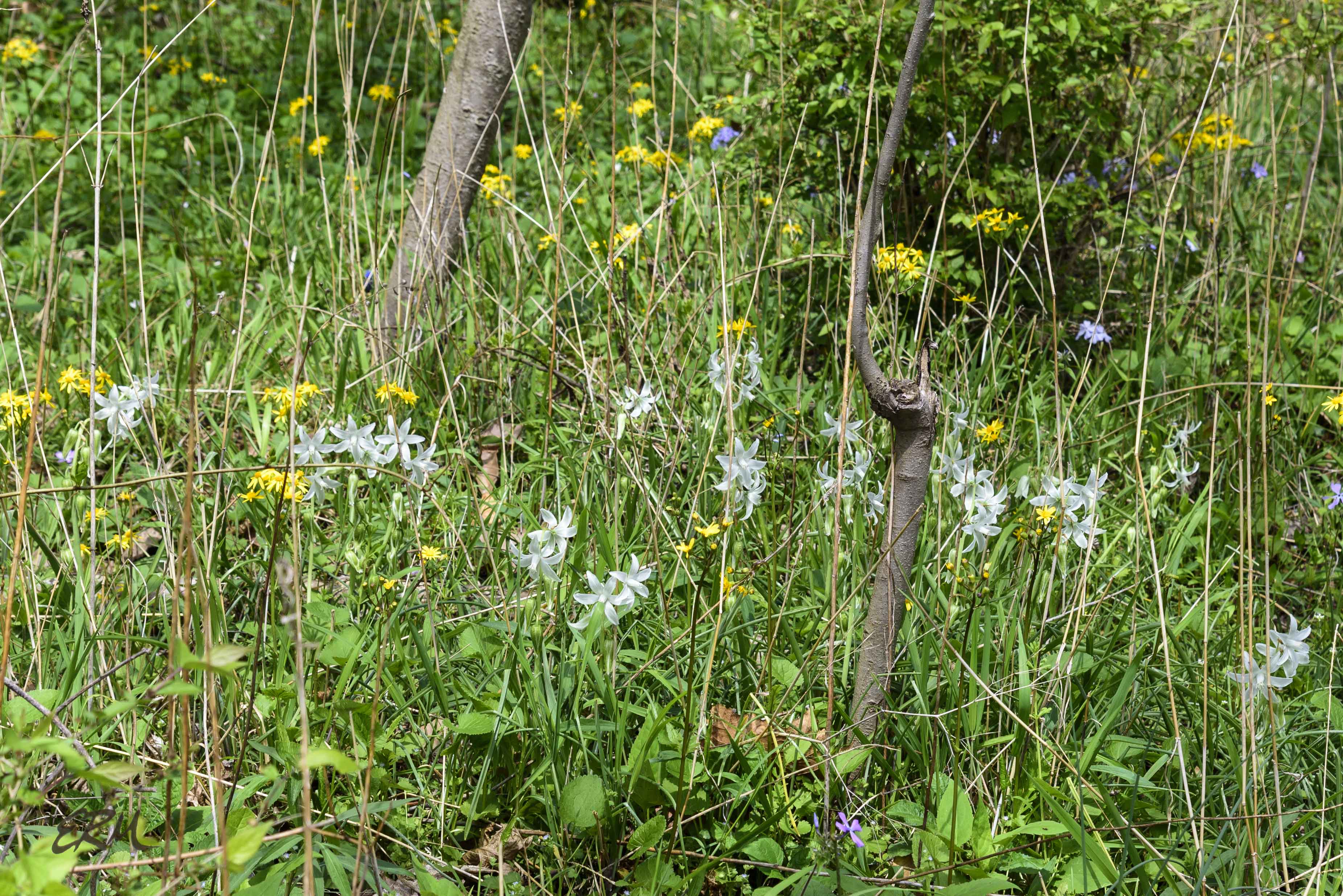
nodding star-of-Bethlehem growing with golden ragwort and wild blue phlox along Billy Goat C

One More Phacelia

Three of the approximately 170 North American Phacelia species can be found in Maryland: Coville’s phacelia, small-flowered phacelia (P. dubia), and Miami mist, aka fringed phacelia or purple scorpion-weed (P. purshii). The second and third of these are both classified S3/watchlist:

Vulnerable/Watchlist—At moderate risk of extinction or extirpation due to a fairly restricted range, relatively few populations or occurrences, recent and widespread declines, threats, or other factors. Typically occurring in 21-80 populations.*

P. purshii is found in Prince Geroge’s, Montgomery, Frederick, Washington, and Garret counties. P dubia has a simliar but smaller range. I haven’t seen this species myself yet, but am always watching for it at this time of year.

P. purshii, though, I see every year, along the Billy Goat B and C trails. There are a few populations in other areas east of the Appalachians, but for the most part this species is found in the Ohio River basin.

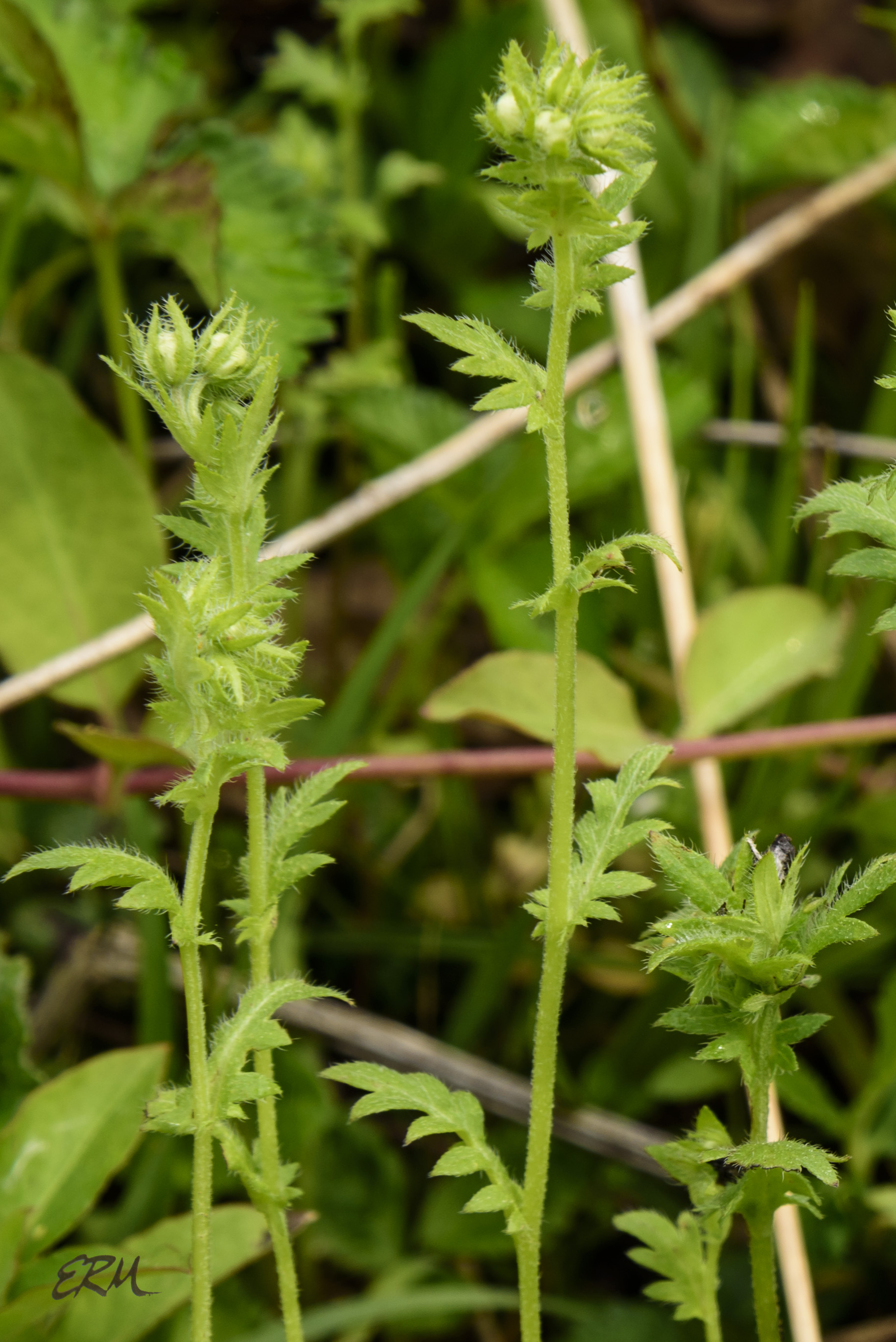
Like Coville’s phacelia, Miami mist is an annual, though it gets a little taller (maybe as tall as a foot and a half). The flowers are fairly small, but markedly larger than those of Coville’s phacelia. It has typical Phacelia traits: hairy leaves, hairy stem, hairy calyces. The five-lobed flowers are borne in a helicoid cyme, though the shape isn’t as pronounced as in some of the western Hydrophylloideae species (pictured here).

*Maryland DNR

A Special Phacelia

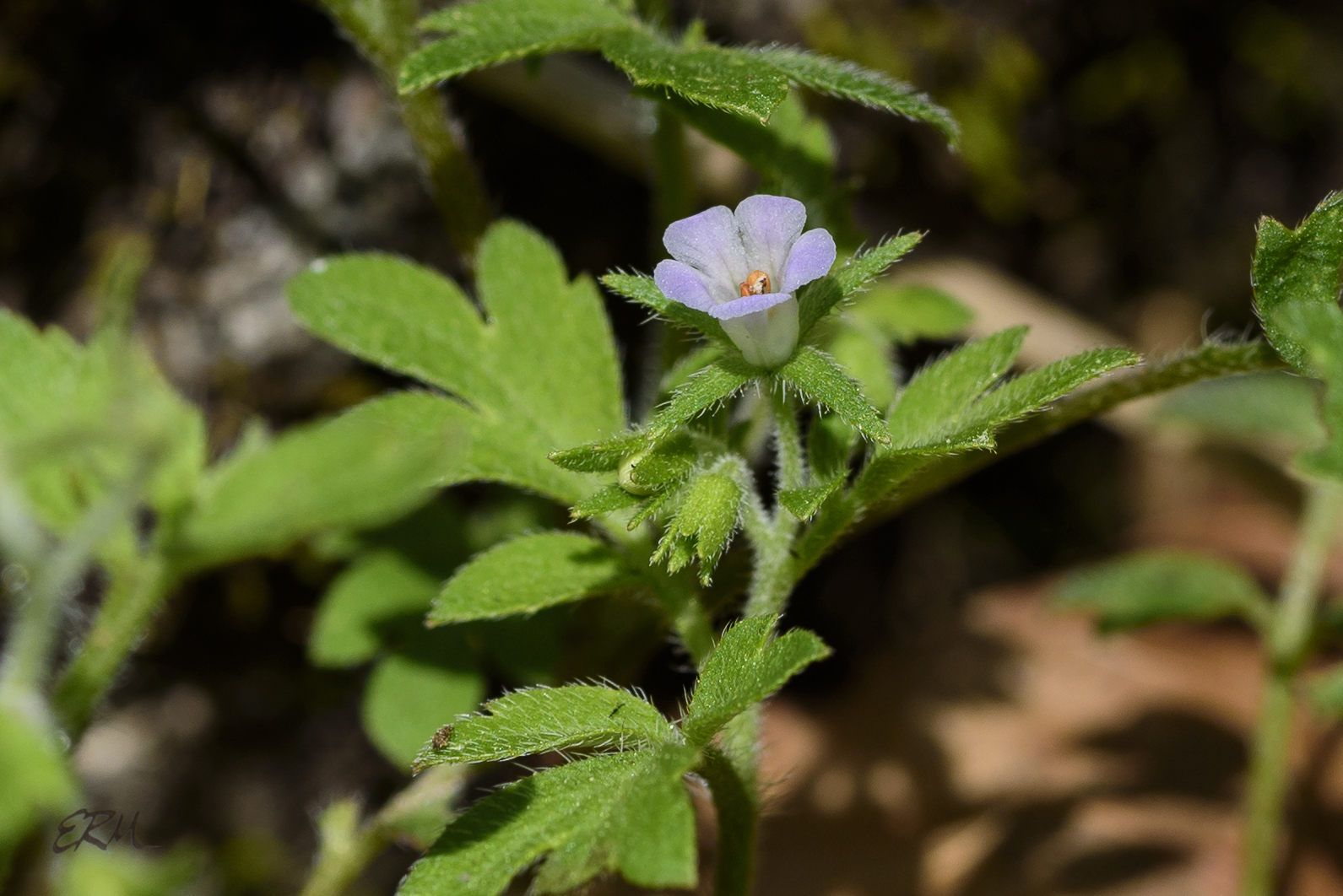
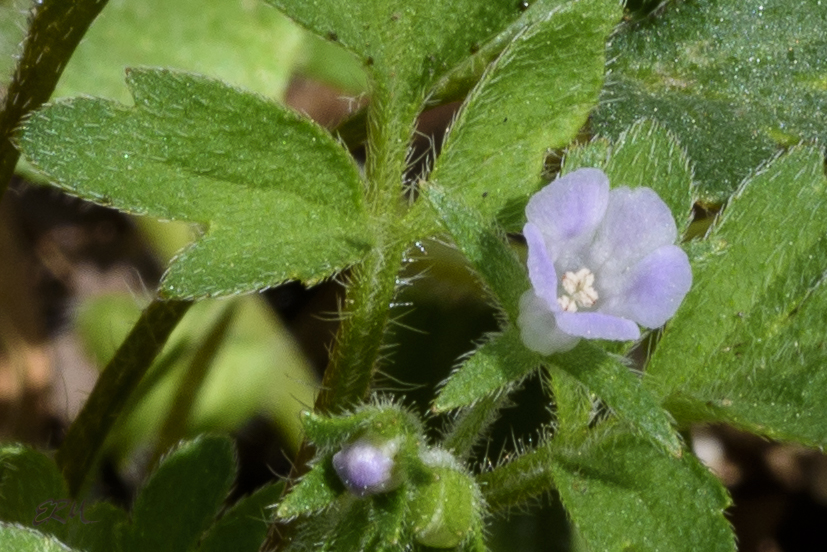
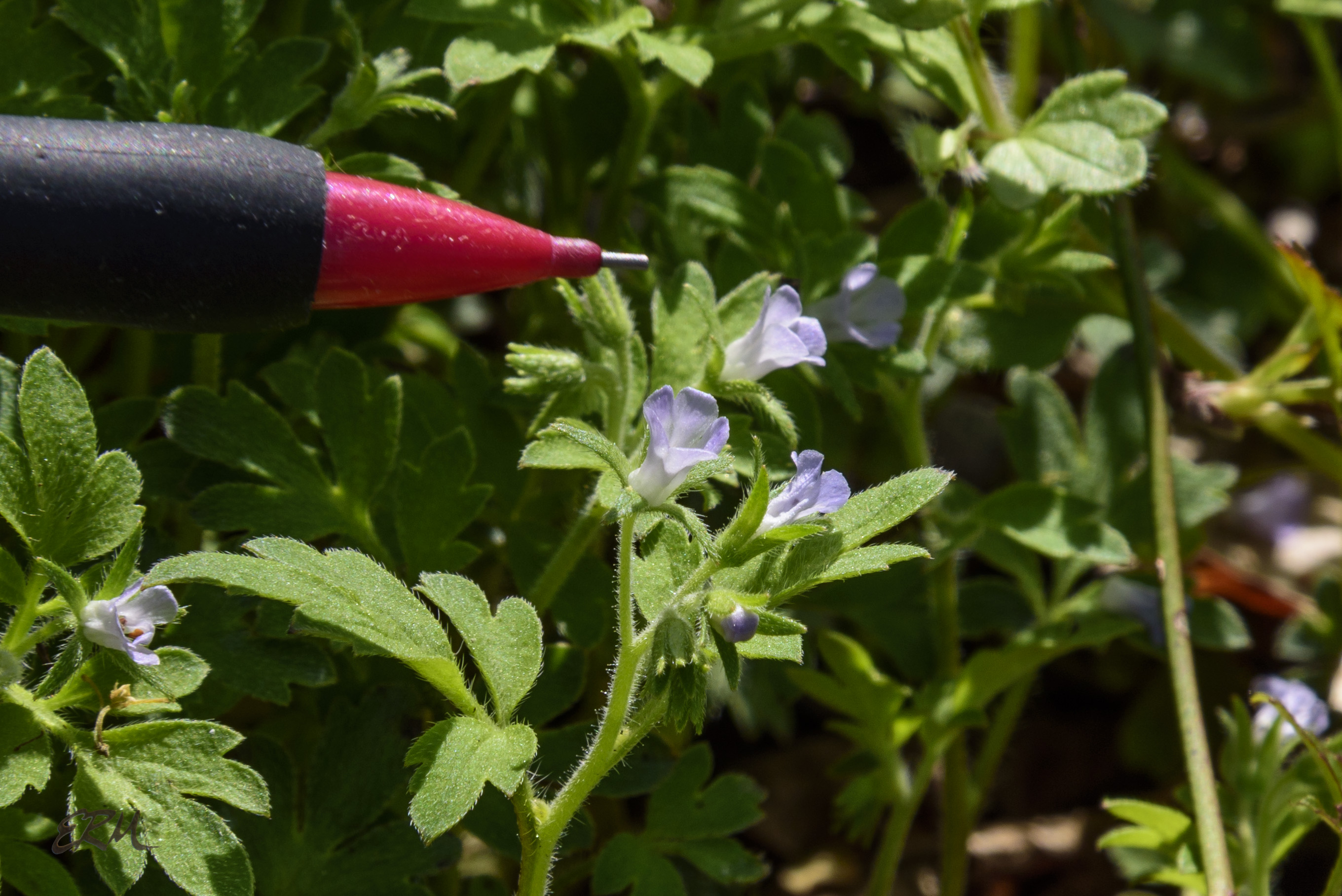
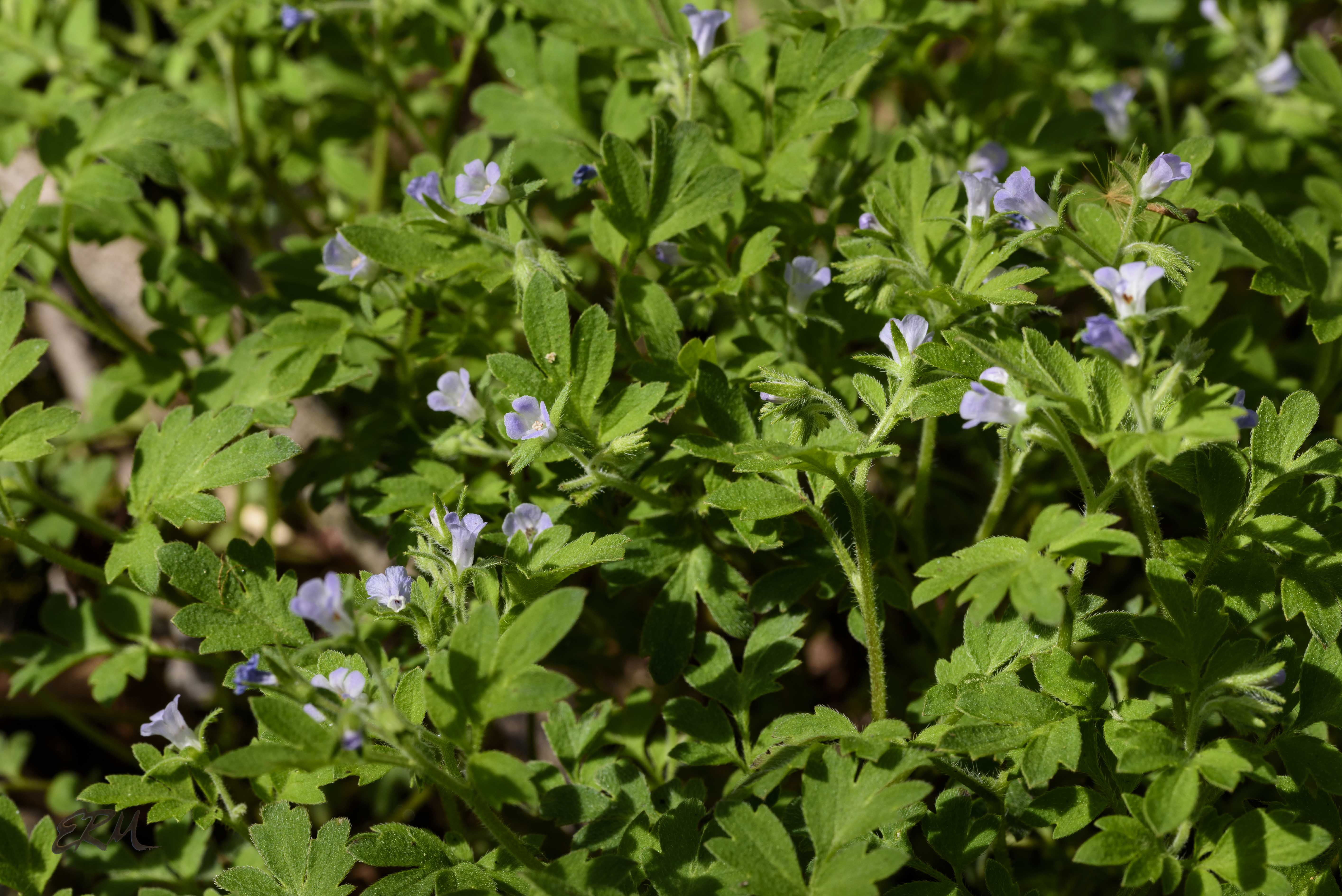
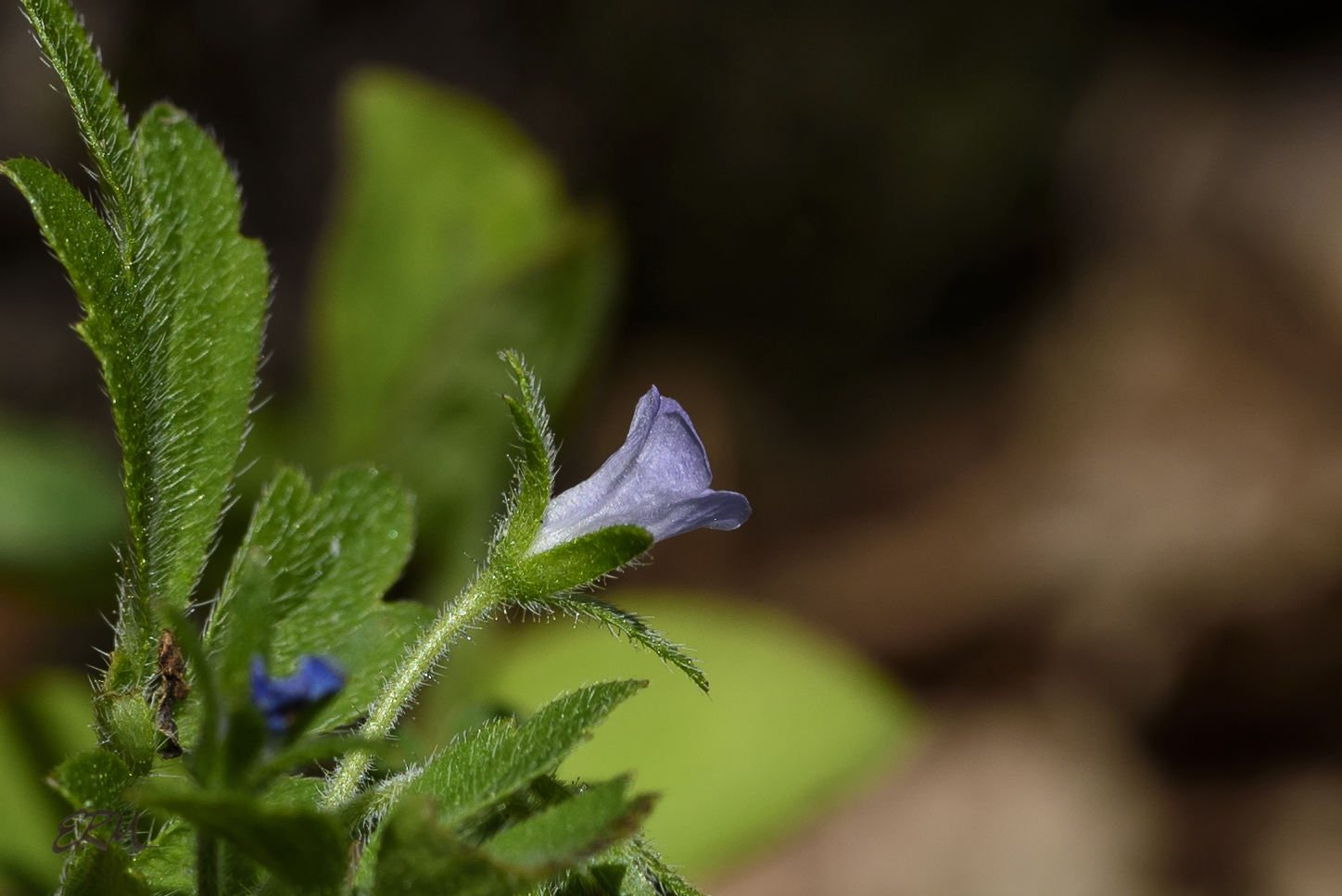
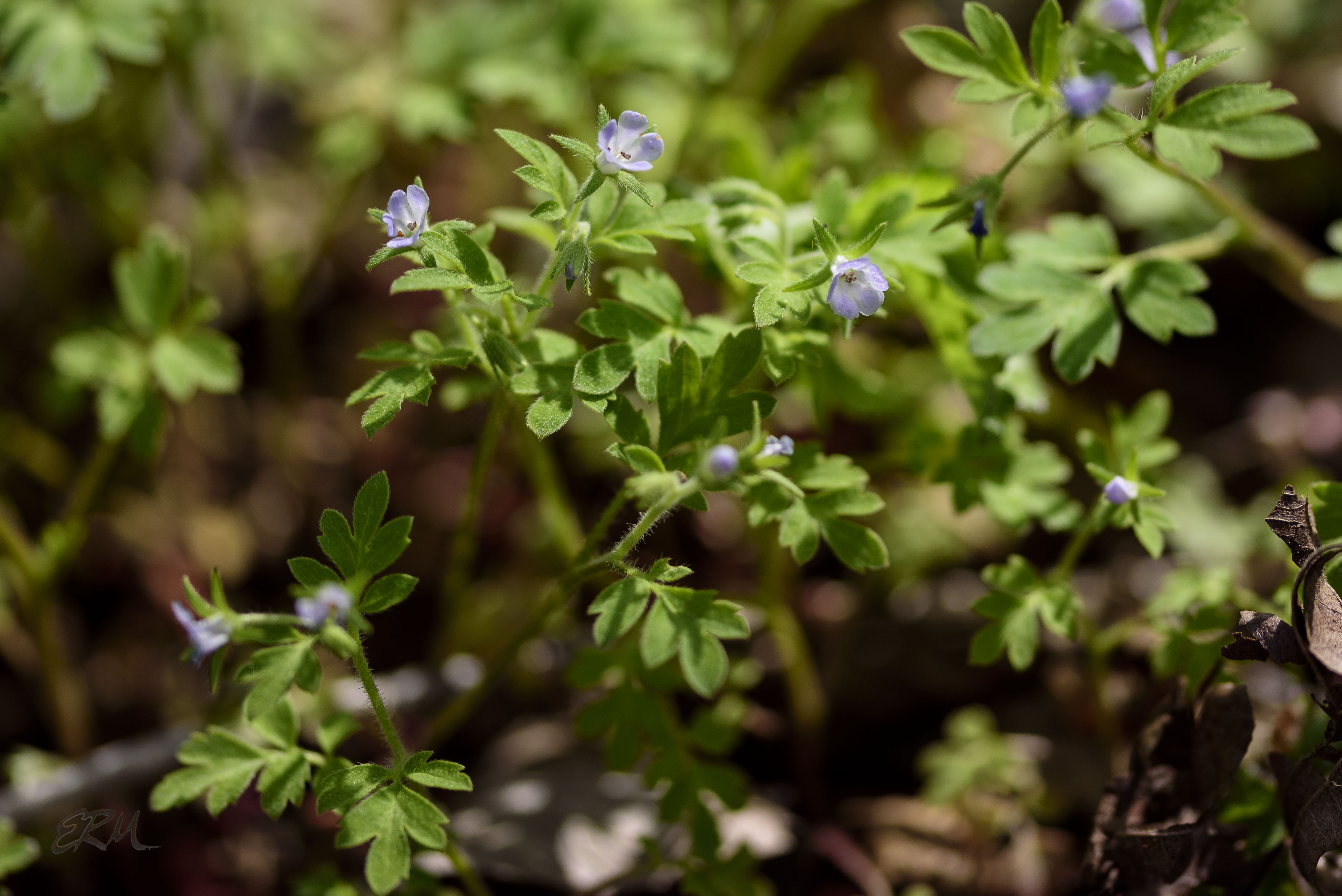
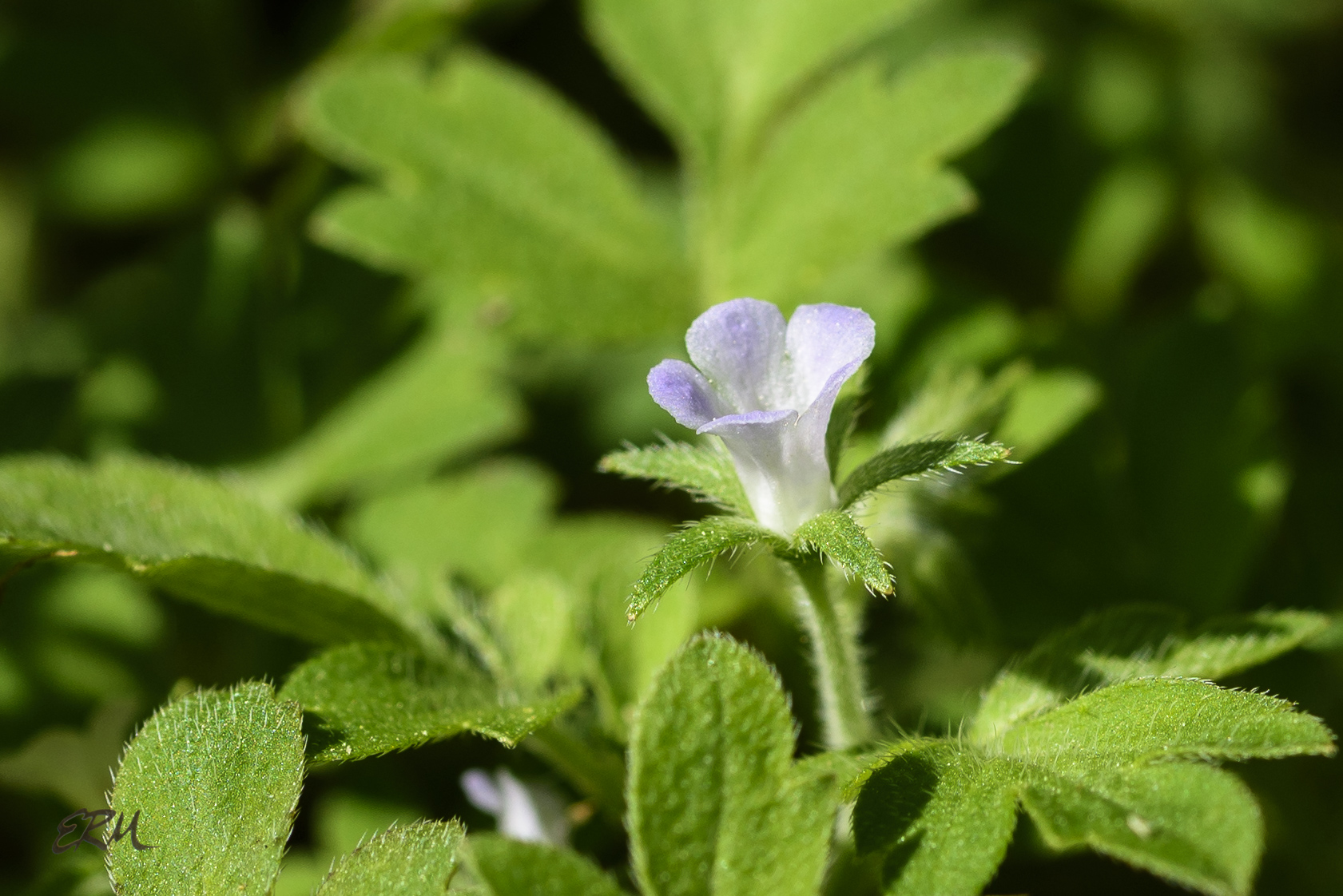
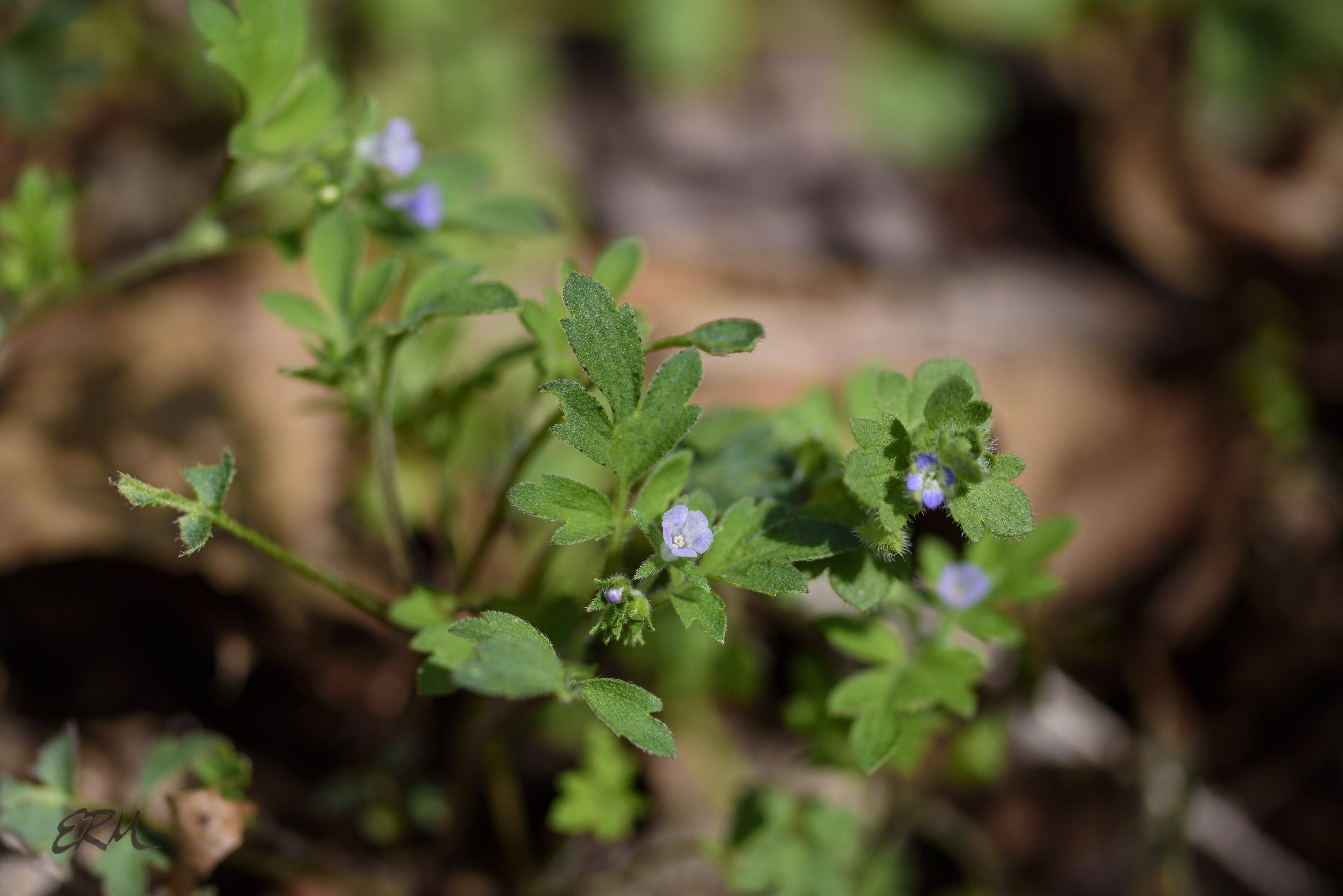
Last Sunday morning Steve and I headed out for a walk, and in less then an hour found Coville’s phacelia. Lots of it. So Monday I went back without Steve but with camera, tripod, and macro lens, and spent some quality time photographing this rare species.


Also known as buttercup scorpionweed, this phacelia is of course related to the phacelias in Anza-Borrego. You can see the similarities in these photos: hairy stems, hairy leaves, hairy calyces with five sepals, and corolla of five petals fused into a single, five-lobed tube.


The plants are annual forbs, growing more or less upright in a rather weak fashion. Literature describes them as up to a foot tall, but I’ve rarely seen them over six inches.


Coville’s phacelia has an odd distribution, with several disjunct populations located in Washington, DC, Montgomery and Prince George’s counties in Maryland, Fairfax County in Virginia, five counties in central North Carolina, and one county in southwestern Indiana.

However, according to natureserve.org:

In addition to the Potomac River (in D.C., Maryland, and Virginia) and drainages of the Cape Fear and Tar Rivers in North Carolina, the species has recently been identified from the Ohio River drainage (in Ohio and West Virginia), the Wabash River drainage (in Indiana and Illinois), and Texas County, Missouri.

Except possibly it hasn’t: apparently authorities in several midwestern states do not differentiate between P. covillei and the very similar P. ranunculacea (oceanblue phacelia).


The Virginia Plant Atlas also shows it present in Halifax County (far southern Virginia). With respect to the taxonomic uncertainty, VPA comments:

This species has often been considered an eastern cytotype of Phacelia ranunculacea (Nutt.) Constance, which occupies similar habitats of the sc. U.S. in the lower Ohio and Mississippi River drainages. Sewell and Vincent (2006, Castanea 71: 192-209) found that the two taxa differ in chromosome number, subtle but consistent morphological characters, and overall distribution. However, morphological differences are fairly minor and the geographic split isn’t as clean as one might hope, as there are populations of P. covillei in the Ohio River drainage, as well as the Atlantic Piedmont. Nevertheless, Sewell and Vincent present a reasonable case for two species, especially since the different ploidy levels would prevent interbreeding.

Coville’s phacelia has the global conservation rank G3, defined as:

Either very rare and local throughout its range or distributed locally (even abundantly at some of its locations) in a restricted range (e.g., a single western state, a physiographic region in the East) or because of other factors making it vulnerable to extinction throughout its range; typically with 21 to 100 estimated occurrences.*

Its state rank in Maryland is S2:

State rare. Imperiled in Maryland because of rarity (typically 6 to 20 estimated occurrences or few remaining individuals or acres in the State) or because of some factor(s) making it vulnerable to becoming extirpated. Species with this rank are actively tracked by the Natural Heritage Program.*

And its state status is E:

Endangered; a species whose continued existence as a viable component of the State’s flora or fauna is determined to be in jeopardy.*


Over the past few years I’ve observed that Coville’s phacelia has a bloom period of three weeks, more or less, so it should still be around. Look for it along the Billy Goat B and C trails. It is indeed locally abundant.


*definitions from “Rare, Threatened, and Endangered Plants of Maryland” (August 2016), available as a .pdf at the Maryland DNR website