One More Fumitory


Monday morning I went out to shoot a very special plant (like I did with white trout lily the previous week), and was surprised to find a large number of short-spurred corydalis growing with it (more on the other plant next time).

Also known as yellow corydalis, yellow fumewort, yellow fumitory, and yellow harlequin, Corydalis flavula is a small annual forb, growing to about a foot tall and bearing flowers in racemes. The flowers are about a quarter to a half inch long.

C. flavula is in the Papaveraceae, closely related to the Dicentra species I wrote about a few days ago. Like other species in the fumitory sub-family, it has two very short sepals, two inner petals, and two outer petals. One of the outer petals is spurred and one isn’t. The leaves are typical of the fumitories as well, compound with lobed leaflets, giving a ferny look to the plant.

This might be an example of a disymmetric flower, with two perpendicular planes of symmetry. So help me I’m tempted to go find one and dissect it, because I’ve never been able to get a detailed enough photo. Disymmetric or no, it certainly is complicated.

I’m not sure how many species of Corydalis are found in Maryland. BONAP shows only C. flavula present, while Maryland Biodiversity Project lists one other but has no records for it, and USDA PLANTS shows two others. C. flavula ranges from northern Florida to New York, and west as far as the eastern Great Plains. It’s threatened in Connecticut and Michigan.

This is How it Should Be

I took this shot late Monday morning, on one of the many seasonal islets in the Potomac – the small spits of land that are islands when the river is running high, but connected to the mainland via channels when the river is low.

Isn’t it glorious? The entire forest floor was carpeted in Virginia bluebells, as well as significant quantities of wild blue phlox and some golden ragwort. I didn’t look hard, but there were no alien species visible.

I bet a Weed Warrior is maintaining it.

In other news, the season is moving along. Dutchman’s breeches and cut-leaved toothwort are pretty much done, and so are the trout lilies. Spicebush is leafing out. Look up and you can see bladdernut and pawpaw blooming. Look way down and you can see wild ginger. There’s also sessile bellwort, golden Alexanders, short-spurred corydalis, and Coville’s phacelia.

Squirrel-Corn

After all the research into the borage and waterleaf families I was looking forward to writing a short little something about this odd yet charming spring ephemeral. Then I went to verify a few facts and saw references to both the fumitory family (Fumariaceae) and the poppy family (Papaveraceae).

Oh, no. Not again.

Short version: pretty much the same thing happened with these two families as with the other two. The interesting thing, to me, is that fumitory-type flowers look absolutely nothing like poppy-type flowers, while the borage and waterleaf flowers (eg Phacelia and Cryptantha species) look an awful lot alike. But then, classification is based on phylogeny, not morphology.

At any rate, flowers previously placed in the fumitory family do have similar features, namely two very small sepals and four petals in two pairs, the outer pair being somewhat squashed and spread-out looking. The symmetry is either bilateral (one plane of symmetry) or disymmetric, meaning there are two planes of symmetry, perpendicular to each other.

Other flowers in the Papaveraceae look like, well, poppies, with radial symmetry.

Back to squirrel corn. In Maryland it’s found in a few parts of the Piedmont and all the physiographic provinces to the west. It’s close relative Dutchman’s breeches is more widespread, in most of the state except parts of the Coastal Plain. A third species, D. eximina, is found in Prince George’s, Montgomery, Allegany, and Garret counties, and is listed S2/threatened. I haven’t seen it yet, but I really want to, because it, too, has funny common names: turkey corn and wild bleeding heart.

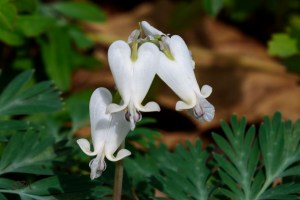
Other fumitory-type flowers found in Maryland include one species of Adlumia, three types of corydalis, and one (alien) species of Fumaria. The popular garden ornamental bleeding hearts (formerly Dicentra spectabilis, currently Lamprocapnos spectabilis) is native to Asia.

Dutchman’s breeches with green foliage

A large patch of the forest floor near the white trout lilies is carpeted in the finely dissected foliage of squirrel corn and Dutchman’s breeches. I’ve noticed that the latter species has a consistent medium green color, while the former is somewhat bluish (glaucous). But less than a mile away, near Plummer’s Island, there’s a stand of the two Dicentra species growing together where the foliage is indistinguishable. I’ve heard that other native plant enthusiasts have observed the same thing, and that some have observed the opposite. Not sure what to make of that, except that it isn’t a reliable way to distinguish the two species. You have to see the flowers. (Or the corms, but I don’t advocate digging up plants growing in public lands.)

squirrel corn with glaucous foliage

Dutchman’s breeches seems to bloom about a week or so before squirrel corn, at least in the Potomac Gorge. It’s close to done now, but squirrel corn should still be blooming.

A note about common names

Timothy Coffey in his well-researched The History and Folklore of North American Wildflowers (Houghton Mifflin Company, 1994) gives common names for about 700 species of plants. Many of these names are probably historical and no longer used, but if you’re interested in such things it’s a fun resource. The following list is from the book.

Dicentra canadensis: colicweed, ghost-corn, Indian-potatoes, ladies-and-gentlemen, lyre-flower, stagger-weed, turkey-corn, turkey-pea, white-hearts, wild-hyacinth

Dicentra cucullaria: bachelor’s-breeches, boys-and-girls, breeches-flower, butterfly-banners, colicweed, dicentre à capuchon, eardrops, flyflower, girls-and-boys, Indian boys-and-girls, kitten-breeches, leather-breeches, little-blue-stagger, little-boy’s-breeches, monkshood, pearl-harlequin, soldier’s-cap, stagger-weed, turkey, white-eardrop, white-hearts.

I know one woman who calls D. cucullaria Dutchman’s-britches.

Similar Species in Similar Families

Phacelia species. Oh, that blue!

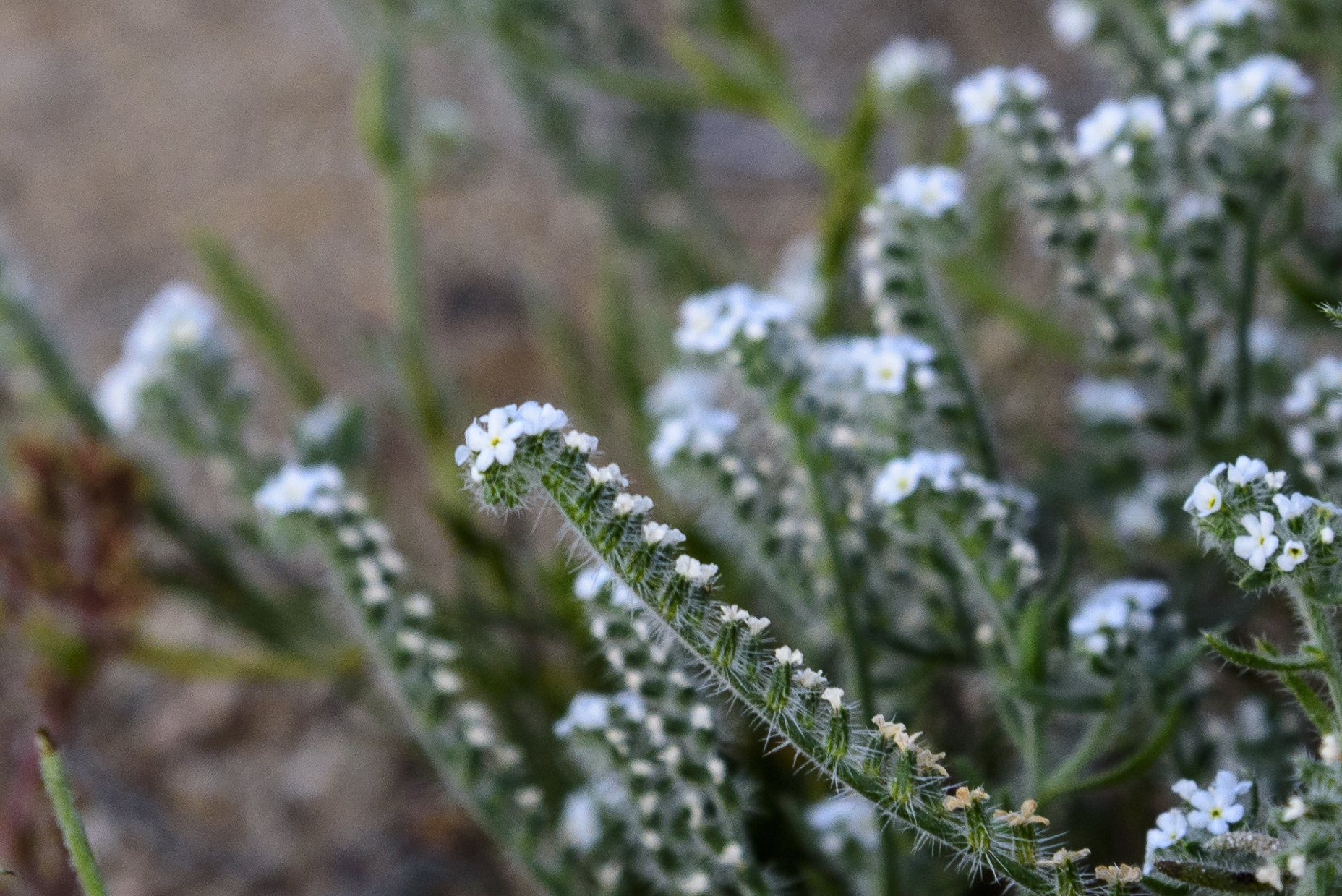
Last year during my Death Valley trip, Cryptanthas drove me crazy. There are something like 120 different species, many of which can only be reliably distinguished by examining the minute nutlets.

Cryptantha species


I saw plenty of Cryptanthas in Anza-Borrego, too, and decided not to bother much with them. Neat little flowers, but I would just have to accept that I wouldn’t be able to identify them fully.

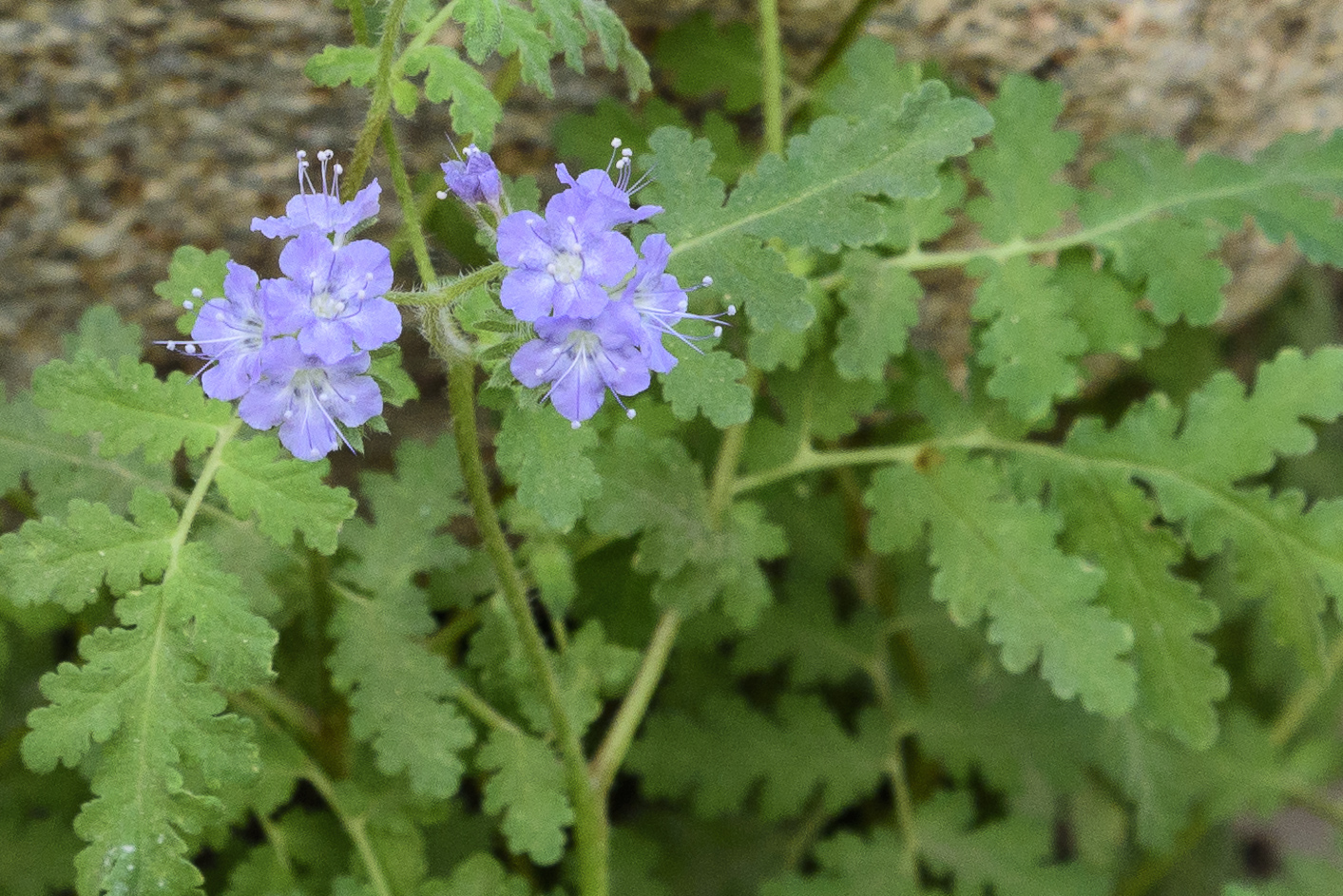
a different Phacelia


Then there were the Phacelias. I saw plenty of them, too. Turns out there are about 170 species of Phacelia in North America. Not all of them are found in the Sonoran Desert, of course, but enough of them are.

Phacelia crenulata.

Phacelia nashiana. Unless it’s Phacelia minor.

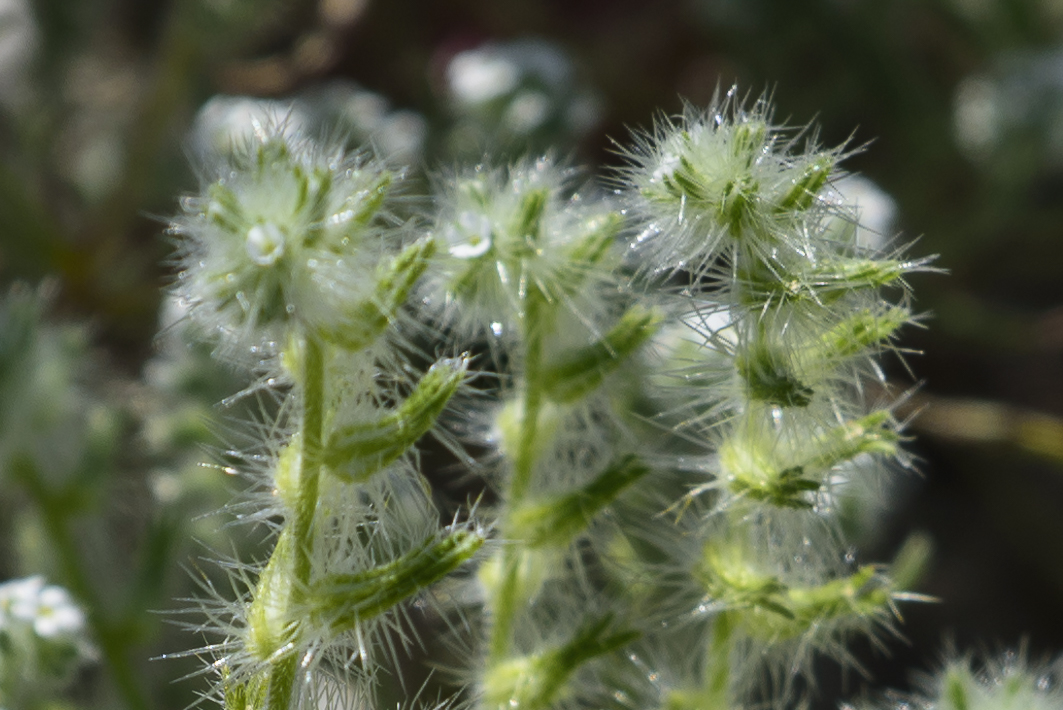
Like Cryptanthas, the Phacelias are notoriously tricky to identify. I spent hours poring over botanical descriptions but my pictures contain only so much information, and often not the right sort. I didn’t get very far.

A different Cryptantha; the flower is about 1 mm wide.


I gave up when I discovered that there’s a species named Phacelia cryptantha.

Phacelia campanularia. I think. I hope.


While researching these plants, I tripped across another issue. Seems that authorities don’t quite agree on which family to place the genus Phacelia in. At one time, there were two separate but closely related families, Boraginaceae (borage) and Hydrophyllaceae (water-leaf).

Pholistoma membranaceum, Hydrophyllaceae. Unless it’s Boraginaceae. Or the Hydrophylloideae subfamily of Boraginaceae.


Recent research has resulted in the Hydrophyllaceae being considered a subfamily of the Boraginaceae, called Hydrophylloideae.  Not all authorities recognize this distinction, though, and research is ongoing. It’s another one of those areas of taxonomic uncertainty.

Amsinckia species, either A. tessellata or A. intermedia, Boraginaceae

Emmenanthe penduliflora, Hydrophyllaceae. Or Boraginaceae. Whatever.


In an attempt to make sense of all this, I went through several books* to get good technical descriptions of the two families’ characteristics, and came up with this chart:

Boraginaceae Hydrophyllaceae
form: forbs; rarely shrubs or trees forbs; rarely subshrubs
overall rough textured, hairy overall small, hairy
leaves: alternate alternate; rarely opposite
simple simple, sometimes compound
no stipules no stipules
often entire mostly lobed, rarely entire
coarsely hairy often hairy or stiff-hairy
inflorescence: helicoid or scorpioid cyme scorpioid cymes or flowers borne singly
flowers: often blue or white mostly blue, purple, white
regular (radially symmetrical) regular (radially symmetrical)
bisexual bisexual
5 sepals, separate 5 sepals, separate or fused
or deeply cleft to appear separate or deeply cleft to appear separate
5 petals, fused 5 petals, fused, often w/ appendages inside
5 stamens fused to corolla, alternate with petals 5 stamens fused to corolla, alternate with petals
? nectary disk present
anthers w/ longitudinal slits anthers w/ longitudinal slits
2 carpels, united, often 2 lobed 2 carpels, usually united
locules 4, usually 1-2 locules
ovules 1 per locule ovules 2 – many
ovary superior ovary superior
style 4-lobed style 2-lobed
stigma 2 lobed stigma capitate
fruit drupe or nutlets capsule

I’m not sure it helped, but it was an interesting exercise.

Phacelia cryptantha?!


Speaking of Phacelias, three of them are native to the Maryland Piedmont. Yesterday I found one blooming profusely and one of the others budding up. More on them in a few days.

another Cryptantha!

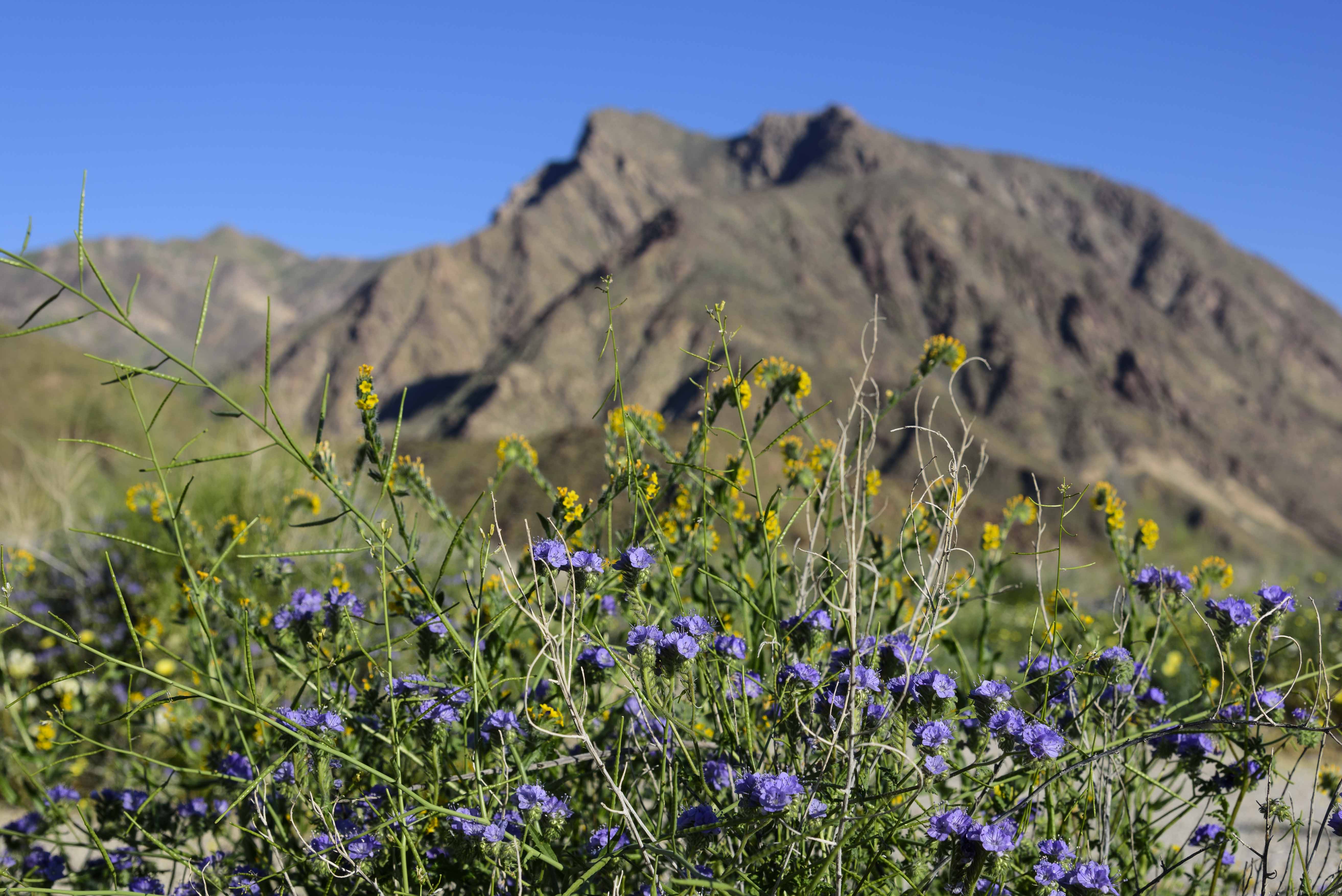
Phacelia and Amsinckia growing together, the devils.


*Botany in a Day, Thomas J. Elpel
Contemporary Plant Systematics, 3rd. ed., Dennis W. Woodland
How to Identify the Flowering Plant Families, John Philip Baumgardt
Photographic Atlas of Botany and Guide to Plant Identification, James L. Castner

Our Next Invasive Alien?

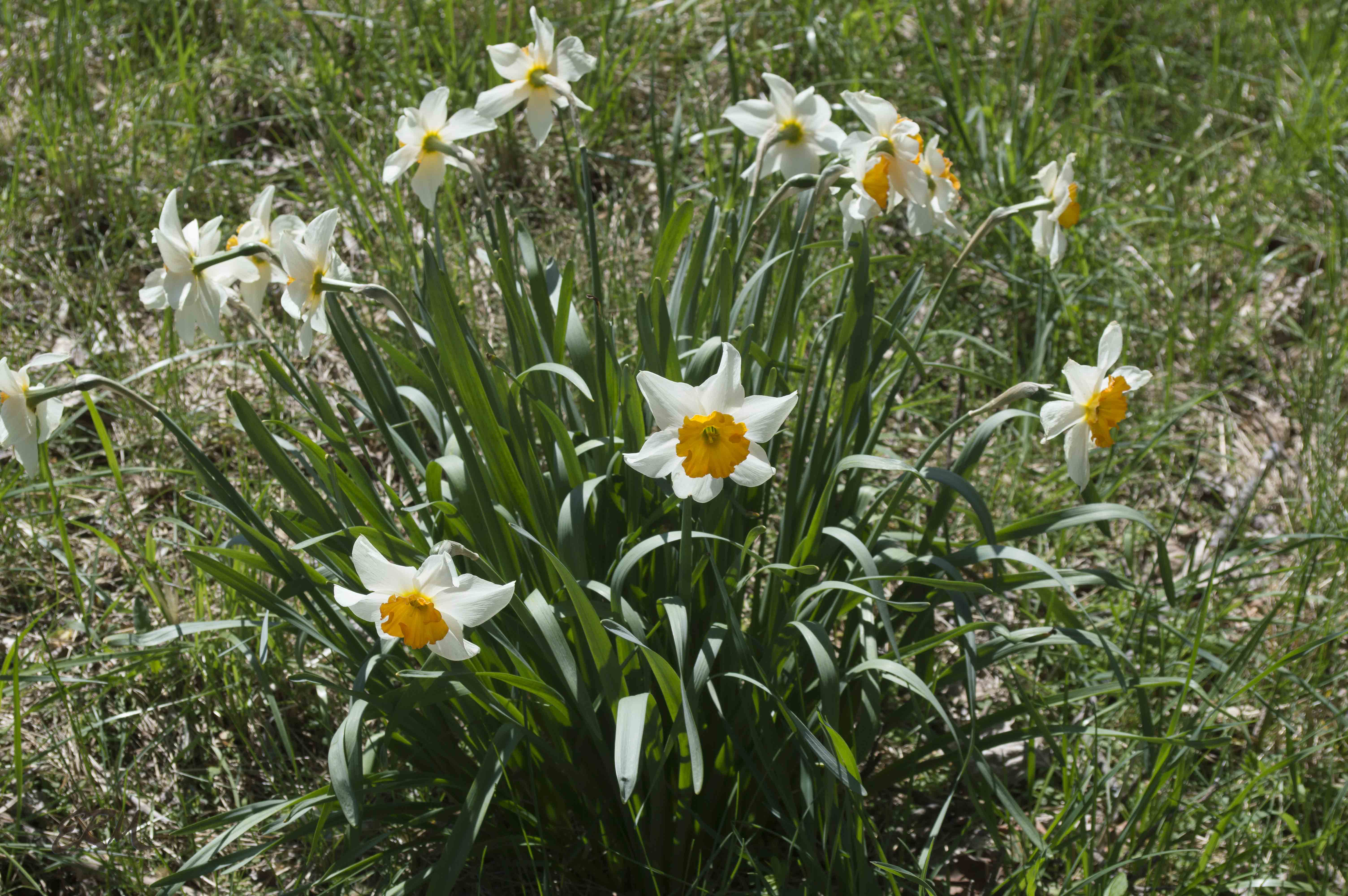
OK, probably not. But still, I wonder. I’m seeing more and more clumps of daffodils in unexpected places. One of those places had some stonework at ground level nearby – an old homestead, perhaps, before the area became parkland? Another place I see them is in parks that back up to private properties; I expect people throw their yard waste to the edge of the parkland, and the bulbs establish themselves there, or get washed downhill and establish a few dozen yards away.

I really don’t think they will ever be dubbed “invasive”. They are clump-forming plants, as you can see in these photos. Old clumps can be very large, but they’re still clumps. It’s not like they form colonies through rhizomes, or spread far by seed.

These clumps were in C&O Canal NHP near the boat launch ramp across from Old Angler’s Inn.