Blue Curls

20160830-_dsc0128

aka forked bluecurls,
bastard pennyroyal
Trichostema dichotomum
Lamiaceae

This mint family member will get your attention. The flower has five petals, two up and three down. But the speckled middle lower petal extends far out from the others, and the four stamens protrude and curl dramatically. The plant itself shows the usual mint family characteristics of paired leaves on a square stem.

Trichostema is from the Greek and means “hair-like stamens”, while dichotomum refers to the way the plant grows (forking in pairs, typical of the Lamiaceae).

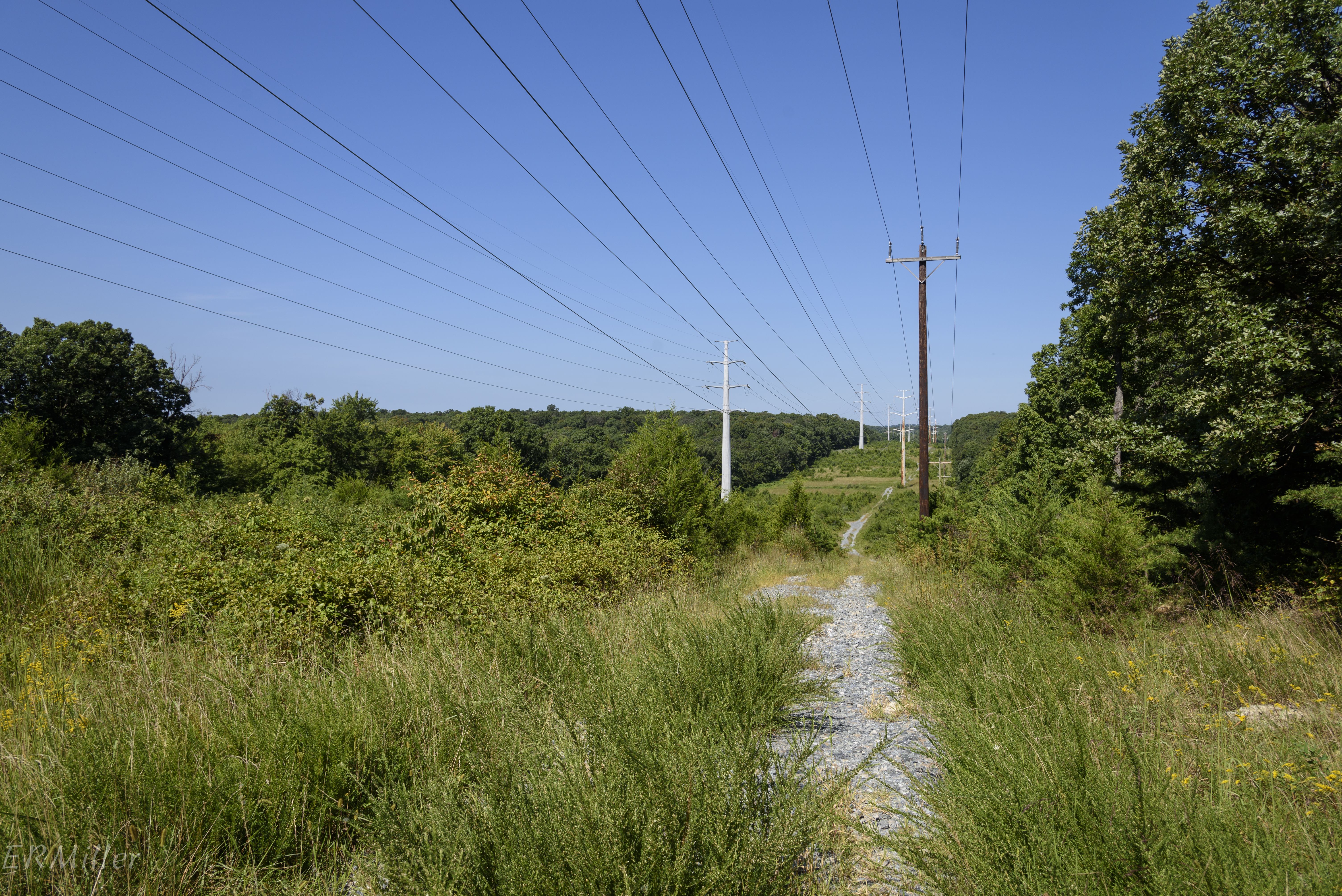
Blue curls is a short (to 18 inches) annual plant of dry, sunny places, such as the power line clear-cut in Serpentine Barrens Conservation Park where I found dozens of specimens. They were growing in a swath of orangegrass plants, another species I only just learned about.

20160830-_dsc0134

According to various sources, blue curls blooms from August through October. I don’t know if that’s the case in the Maryland Piedmont, but I’ll keep an eye open for them when I go back to that area.

This is one of twelve species of Trichostema native to North America; only two others can be found in this area, and both are on the Maryland DNR’s RTE (rare/threatened/endangered) list. T. dichotomum ranges from Quebec and Ontario south to Florida, Texas to the southwest, and Iowa to the northwest. It’s rare in Indiana and threatened in Michigan. In Maryland look for it in the Piedmont as well as parts of the coastal plain, the Blue Ridge, and the ridge and valley provinces.

20160830-_dsc0140

Serpentine Barrens Conservation Park

20160830-_DSC0105

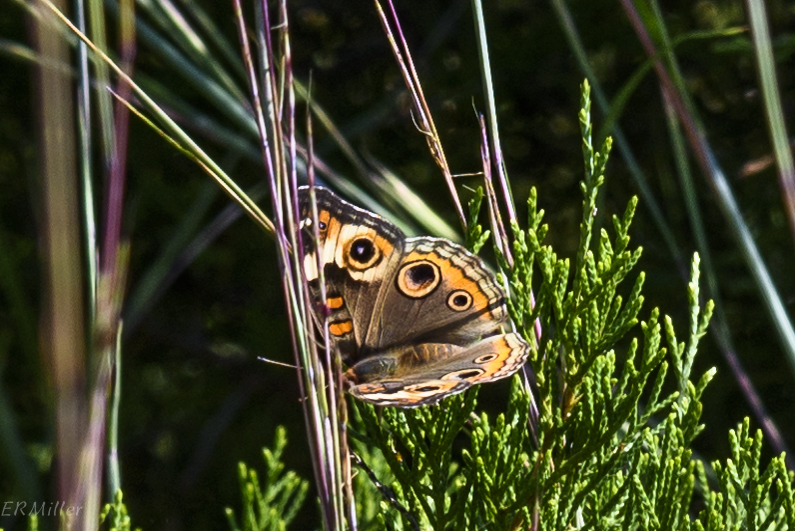
common buckeye (Junonia coenia), common in open areas throughout Maryland

Serpentine barrens are geological areas containing soils derived from serpentinite rock. These soils are characterized by high concentrations of certain elements (such as chromium, cobalt, and nickel), low concentrations of others (such as nitrogen and phosphorus), and an imbalance of calcium (low concentration) to magnesium (high concentration). The chemical makeup of the soils usually results in low water availability. Altogether, the conditions limit which species of plants can grow there.

Serpentine soils can be found worldwide, but serpentine barrens are found only in certain parts of the Appalachian Mountains and the Pacific Coast Ranges. In the east, the largest of these ecosystems are found in Pennsylvania, and in Maryland, at Soldier’s Delight Natural Environment Area (1,900 acres in Baltimore County) and the Serpentine Barrens Conservation Park (256 acres in Montgomery County).

The latter is the place mentioned in my last post. I can’t even find a formal map of the area, but it’s apparently divided into three units. The larger serpentine barrens area seems to occur north and south of Travilah Road, from about Piney Meetinghouse Road in the east to about Sandy Branch in the west. The two North Units are on either side of the Pepco right-of-way that extends west from Piney Meetinghouse Road, south of the stone quarry.

I couldn’t find an exact count of RTE (rare, threatened, endangered) plant species in this park, nor could I find a list, but it’s well known as an RTE hot spot. I didn’t find any RTEs last week, but I did find five species that I haven’t seen elsewhere in the Piedmont.

One of the neat things about this particular serpentine barrens is that despite what you’d expect from the name, most of it is forested. Years ago when I lived in the area I would drive by and wonder why all the trees seemed so stunted. They’re short enough that you might think the area an early-stage successional woodland, but actually it’s climax-stage. On careful observation you can see that the trees are mostly much stouter than trees of the same height in neighboring areas.

More on the “new to me” species in coming days.

Further Reading (in addition to the links above):
Serpentine Barrens (DC Great Outdoors)
North America Serpentine Flora (Smithsonian Institution National Museum of Natural History)
Serpentine Soil (Wikipedia)
Natural Communities – Serpentine Grasslands (Maryland DNR)
a detailed geological map (note: this map can be fussy and not load properly, but if it does load will show the extent of the ultramafic rock formation underlying the Serpentine Barrens Conservation Park, the major rock being serpentinite)

Where Was I?

20160830-_DSC0254

One morning after waking with a headache and ennui, I decided to break out of my rut and get to a place I’ve never been to but have been wanting to get to for years.

This location is well-known among native plant enthusiasts but not so much to the general public. Although not far from anywhere, it’s largely surrounded by private property, so even though it’s a public park, access is limited.

Despite a few dozen nymphal lone-star ticks hitching a ride home on me, it was worth the effort, because I saw five new-to-me plants. None of the species are rare, threatened, or endangered, but still, I’m happy.

I’m sitting in an airport now typing this (and trying not to scratch). With any luck over the next few days I’ll have enough down time (and internet access) to research and write about these flowers. Stay tuned.

Not much to look at, is it? Can you guess where it is?

Tiny Flowers in Big Masses

20160815-_DSC0100

Somewhere along the downstream third of the Billy Goat A trail there’s a 40-foot traverse along a cliff face – really one of the best parts of the trail. I was working my way down those rocks when a bright spot of yellow at the bottom caught my eye.

Helenium flexuosum (Asteraceae) is by no means an unusual plant: it can be found throughout the Maryland Piedmont and much of the eastern US, ranging from southern Maine south to Florida, west to Wisconsin and Minnesota and eastern Texas. It’s not on any state’s conservation list. But for some reason, I’ve only seen it once, along Billy Goat C, and that was two years ago. So I was delighted to see such a nice stand of plants along a very well-used trail.

This plant, along with its close relative common sneezeweed (H. autumnale), likes sun and wet soils, so look for both species along riverbanks. There are huge stands of H. autumnale along the rocks on the northern shore of the Potomac in D.C., upstream of Fletcher’s Boathouse.

20160815-_DSC0104

What I really love about this flower is how well it demonstrates what composites are all about. The three-lobed yellow “petals” are the ray flowers, of which there are typically 8 to 13, while the spherical purplish-brown head can consist of 250 to 500 disk flowers.

20160815-_DSC0097


The photo on the right shows two inflorescences. The bottom several ranks of disk flowers are open on the left one, with the double-lobed stigmas protruding. All of the disk flowers are open on the inflorescence on the right. Click on the picture to see a larger image. Isn’t that neat?

20160815-_DSC0107

Bonus Plant

I had a few goals for my second hike on the Billy Goat A trail:

  1. find spatterdock and get better pictures
  2. find orangegrass and get better pictures
  3. get better pictures of purple-headed sneezeweed and seedbox

20160815-_DSC0021

So it came as a surprise and delight to find this before finding any of the above.

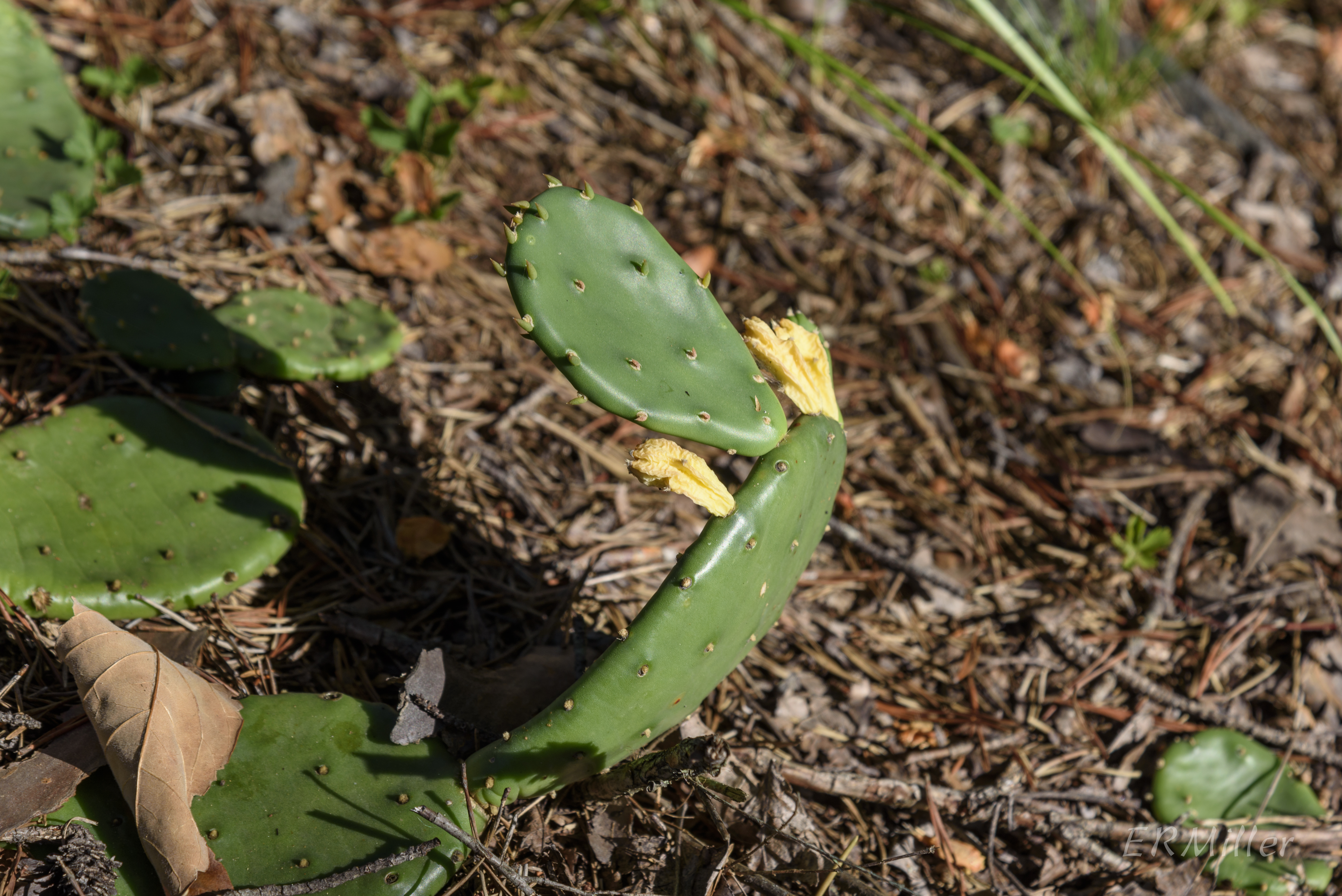
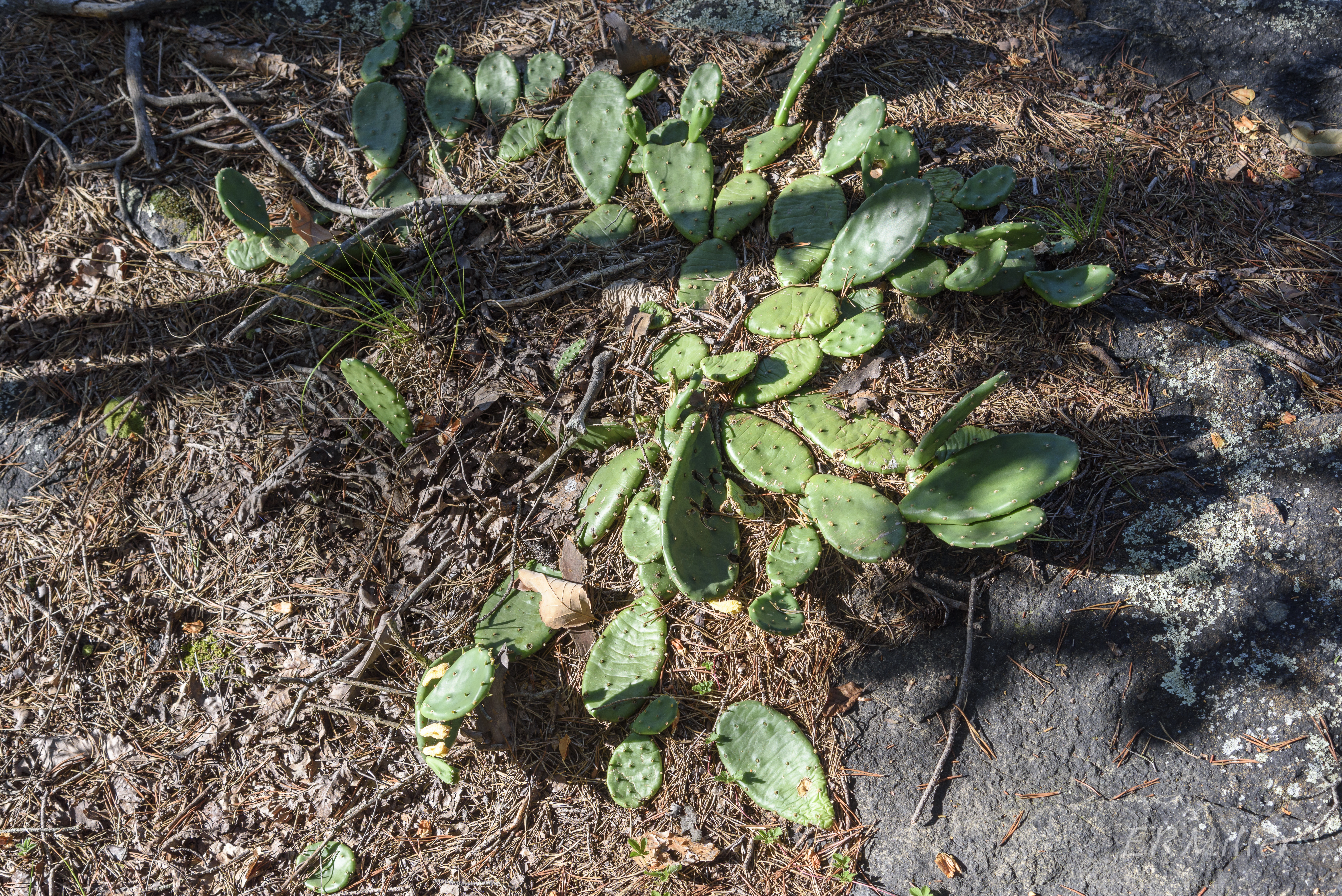
This is Opuntia humifusa, aka eastern prickly pear, the only cactus to grow wild in the state of Maryland, where it’s mostly a plant of the coastal plain. But that’s one of the neat things about the Potomac Gorge: you find things there that aren’t usually found in the Piedmont. Also, strangely, there are records for this plant in Washington County, in the ridge and valley physiographic province.

This species is fairly well distributed through the mid-Atlantic, the South, and the Midwest. It’s listed as endangered in Massachusetts, exploitably vulnerable in New York, special concern in Connecticut, and rare in Pennsylvania.

Being a cactus, it of course is going to like growing on thin, sandy, rocky, well-drained soils, and prefers full sun as well. The Illinois Wildflowers site says that one of the species’ biggest threats is invasion by woody vegetation (presumably because of shading). I found this stand in a somewhat open area growing amid scrub pine (Pinus virginiana) and shrubby St. Johnswort (Hypericum prolificum), in a surprising amount of shade. This is a good size specimen (a few feet across). I hope it can hang on a few more years.

20160815-_DSC0023

Eastern prickly pear is also known as devil’s tongue, low prickly pear, and smooth prickly pear. Don’t let that last name fool you: it may look more or less smooth, but it has hair-fine spines that can cause a lot of pain.

As in Death Valley, I was there at the wrong time to see it bloom. You can see the shriveled flowers in the first picture. I did have a look ’round for other plants, but as there are signs all over Billy Goat A asking people to stay on the trails, I didn’t go far. (Bear Island is under tremendous stress from overuse.)

Oh well. It’s something to look forward to next summer.