Adorable Ericas

It’s hard to choose favorites, but I’m perennially drawn to the beautiful flowers of the Ericaceae (the heath or heather family), be they on trees, shrubs, sub-shrubs, or herbs. I’m writing this after eating a bowl of blueberries, thinking about the other edible ericaceous fruits: cranberries, bilberries, crowberries, lingonberries, huckleberries. Gardeners in the mid-Atlantic states grow azaleas and rhododendrons, Japanese andromeda, leucothoe, zenobia. Real garden geeks (e.g. me) seek out specimen plants like enkianthus. Sourwood is one of the most beautiful trees, though very difficult to grow in a home landscape.

Actually many ericaceous plants are difficult to grow. They usually require humusy, acidic soil, and are often shallow-rooted, hence easily disturbed and damaged. And quite a few of them are mycorrhizal (meaning they can only grow in symbiosis with certain soil fungi).

Then there are the wildflowers. In the mid-Atlantic we’re blessed with a good variety: Indian pipe and pinesap, spotted wintergreen, sweetbells, shinleaf, deerberry, mountain laurel, and the stunning pinxter azalea.

It’s a big family, represented in many habitats around the world. Of course Iceland has its share, too, ten species or so. I saw six, two of them not flowering but identifiable nonetheless (heather and crowberry).

20160618-_DSC0431


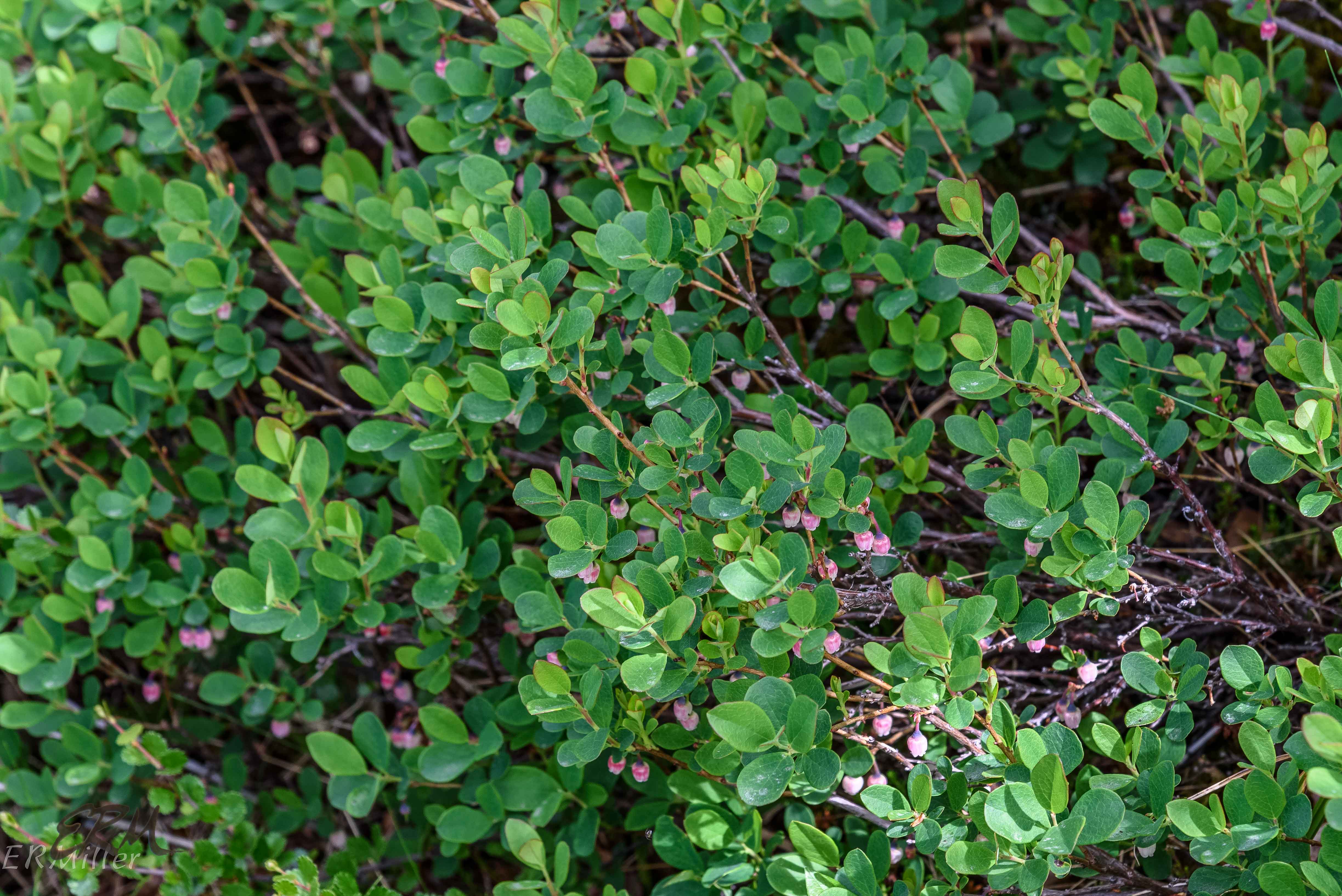
Vaccinium myrtillus
bilberry, whortleberry
Icelandic: aðalbláberjalyng

20160618-_DSC0418


Vaccinium uliginosum
bog bilberry
Icelandic: bláberjalyng


Bilberries are in the same genus as blueberries, but I can’t tell you if they taste similar. I saw both species near Akureyri, and bog bilberry also near Húsafell. Bog bilberry is very widely distributed around Iceland, bilberry less so. In Flowering Plants and Ferns of Iceland, Hörður Kristinsson states that the latter grows “where snow cover is ensured throughout winter”. Interestingly this does not include the interior highlands, presumably because the combination of windiness and lack of substantive vegetative ground cover means that fallen snow just doesn’t stay put.

Both species are sub-shrubs: they have woody stems, but never grow more than a foot tall. In North America, bilberry is found in the mountainous West from Arizona to British Columbia (but not California). Bog bilberry has a much wider range, including Greenland, all of Canada, most of the American West, parts of the upper Great Lakes States, and New England.

Both species have some interesting characteristics, including usefulness in rehabilitating disturbed areas, and bog bilberry is tolerant of high levels of heavy metals in soils. Read more about them on the USFS website: bilberry, bog bilberry.
Next time, the other two ericaceous species.
Woolly

The last plant (woolly willow) in my last post got me to thinking about other woolly Icelandic things. Like sheep, and grass.

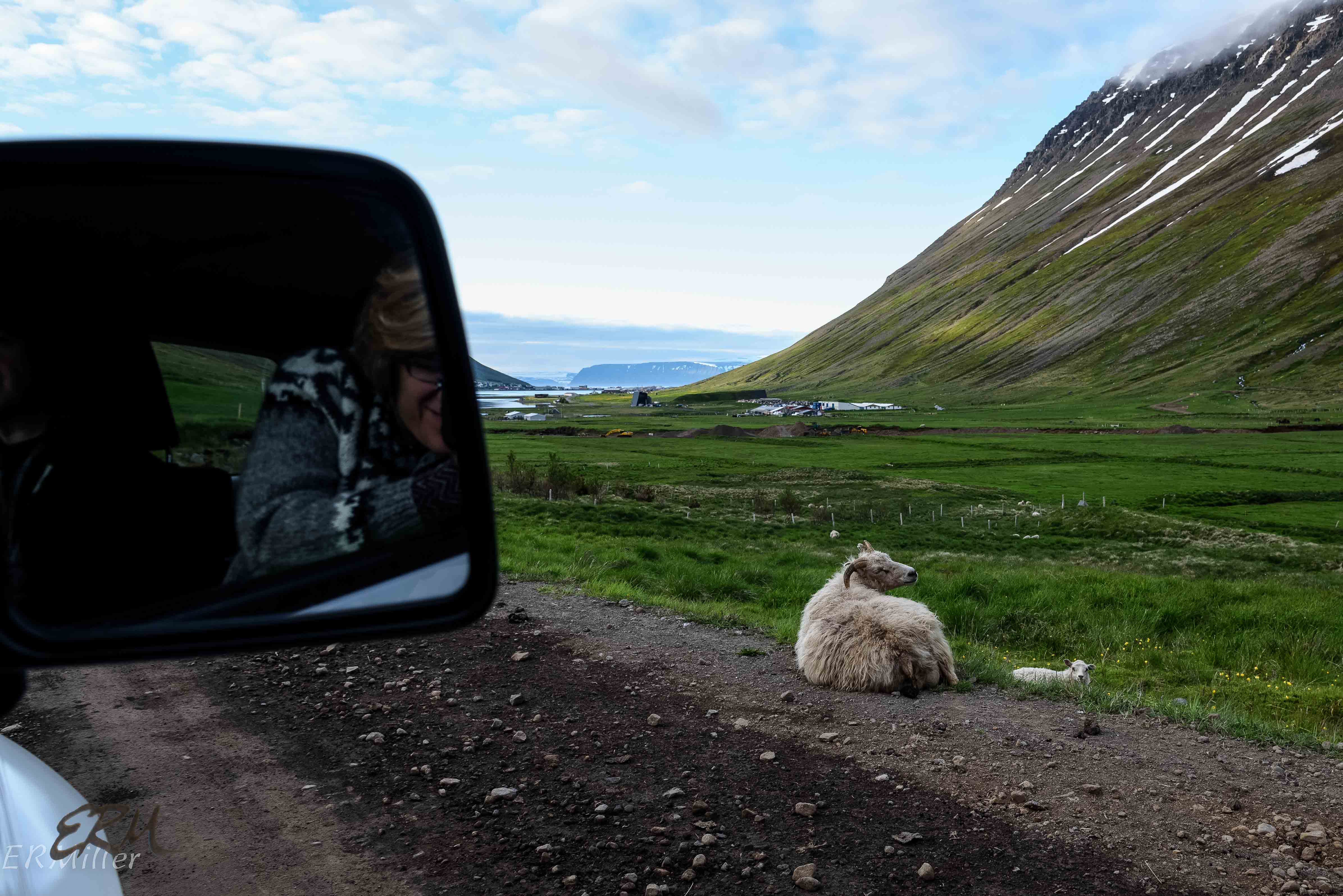
Sheep are everywhere. On-line travel guides will warn of common road hazards, like sudden changes from asphalt to gravel, or one-lane bridges, or fords (not Fords), but they don’t always mention this common cause of sudden braking:

Sheep are as common in Iceland as functional fences aren’t. Mostly bred for meat, this breed of sheep’s double coat yields two different types of wool, which are spun together to form lopi, from which the traditional sweaters (lopapeysa) are knitted. These sweaters are itchy but incredibly warm. After two trips to Iceland I own more of them than I care to admit.

Note how bright the sky is in that photo. It was around 9:30 pm when I shot it, and it’s an accurate exposure.


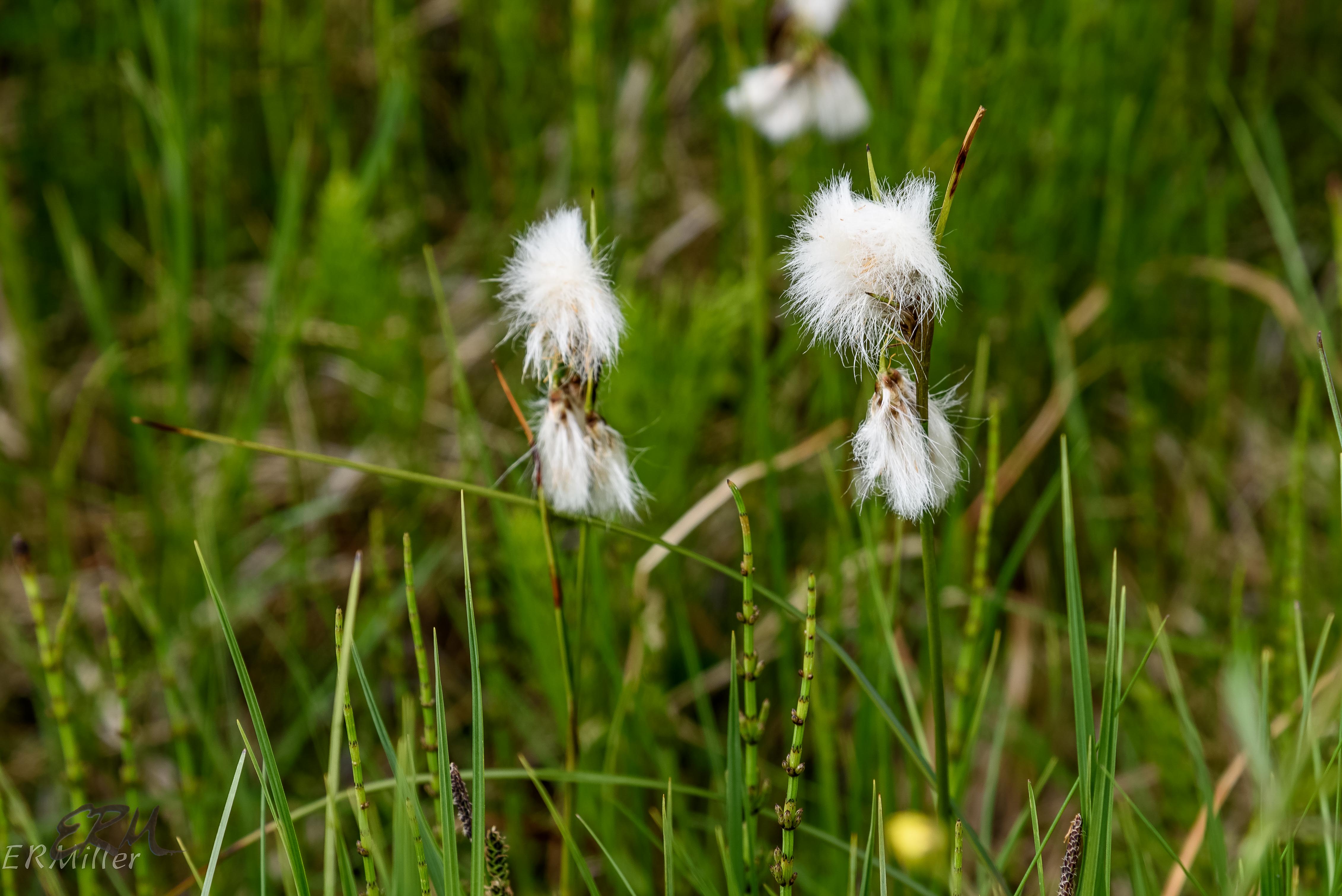
As for grasses, there are a lot of grass and sedge species in Iceland, but this one is really eye-catching. It’s Eriophorum angustifolium, common cottongrass (Icelandic klófífa). It’s actually a sedge. (Some day I will write about the difference between sedges and grasses.) I saw another cottongrass, E. scheuchzeri, but never got any good pictures of it. Both are very common in wetlands all over Iceland.

Sing Willow, Willow, Willow

The genus Salix (willow) consists of about 400 species of woody plants (trees and shrubs) found in many of the temperate and colder regions of the northern hemisphere. How many of these are native to Iceland seems open to debate, with the answer depending in part on the definition of “native”. If “native” means before settlement, then there’s at least one, S. phylicifolia. Hörður Kristinsson in Flowering Plants and Ferns of Iceland claims that there are four native willows, but in the same book uses “native” to indicate “resident in Iceland for more than 300 years”.


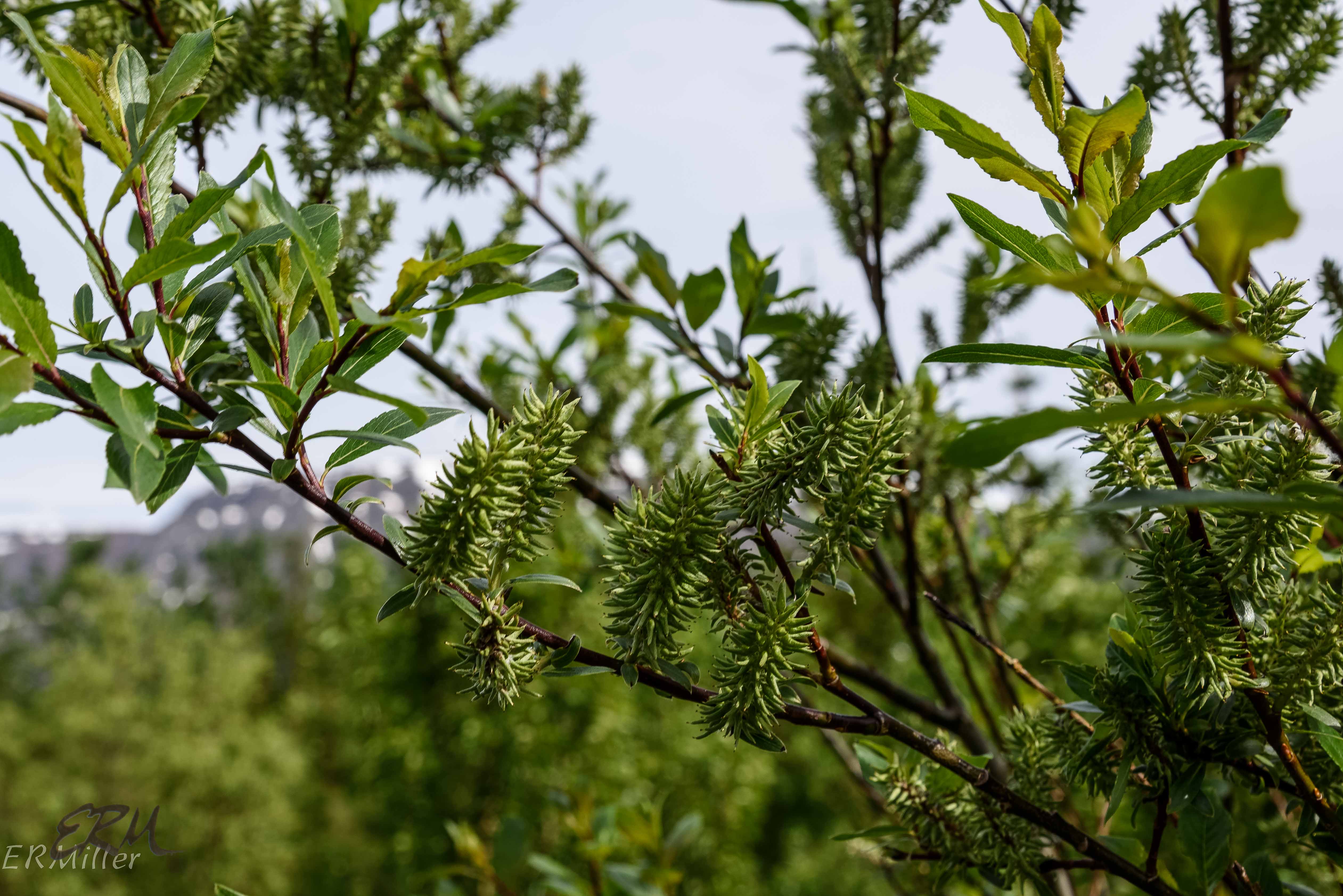
I’m not sure if this plant (right) is S. phylicifolia (tea-leaved willow) or S. myrsinifolia ssp. borealis (boreal willow). The latter species is a naturalized alien with limited distribution that does not include the region in which I found it (Ísafjorður). On the other hand, I didn’t find it “in the wild” – I found it in a cultivated parkland next to an area of summer houses surrounded by densely planted gardens. The limited information I have from this picture suggests boreal willow, despite the location. Or maybe it’s yet another species.

At any rate, tea-leaved willow is the only willow to form woodlands in Iceland. The other species shown below are hardly what you’d think of as shrubs and trees.

Take this one, for example:

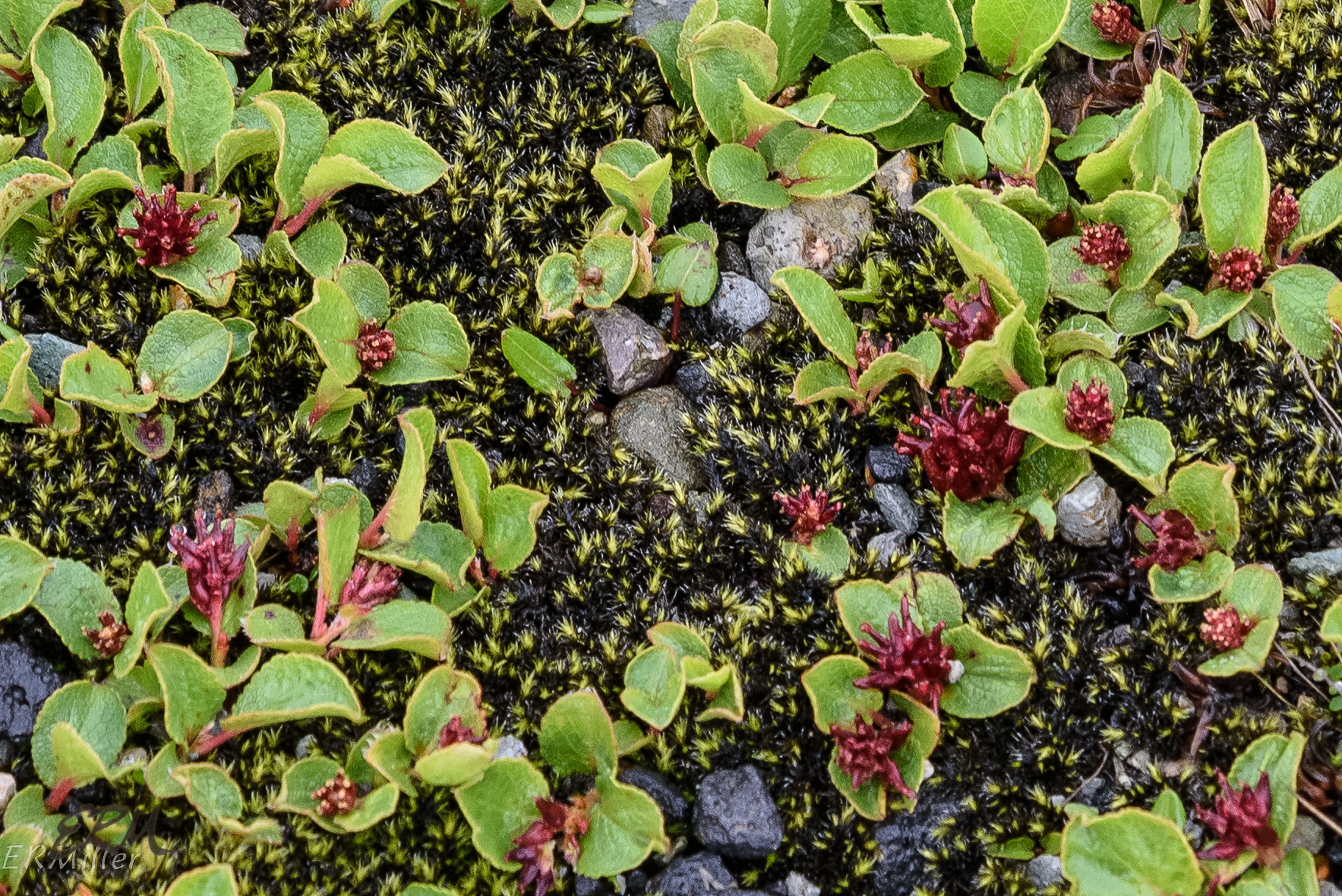
This is dwarf willow, Salix herbacea, which grows no more than eight inches tall. Despite the specific epithet, which means “herbaceous” (as opposed to woody), it’s considered a shrub. The stems are lignified and have a thin bark. It can be found in Fennoscandia, Russia, and North America (Greenland, parts of Canada, and a few New England states, where it’s either threatened or endangered).

All willow species are dioecious – that is, a single plant will have either male flowers or female flowers, but not both. In S. herbacea, the female flowers are red. The Icelandic name for it is grasvíðir, but it’s also called smjörlauf, which means “butter leaf”. Sheep love to graze on it.

20160620-_DSC0634

A little more shrub-like, and a little taller-growing (up to two feet), is the arctic willow, Salix arctica (left). The Icelandic name is grávíðir. Pictured here are female flowers.

Like dwarf willow, it can be found almost everywhere in Iceland. It can also be found in Russia, Fennoscandia, North America (Vermont and the Pacific Northwest), China, and… Madagascar?! This last entry had me chasing wild internet geese but I could find no explanation, only records that the species had been found there.


Starting to look more like what we think of as a shrub or tree, Salix lanata (woolly willow, right) can grow to over six feet tall. The Icelandic name is loðvíðir, and these are female flowers. Like the others, it grows all over Iceland as well as Fennoscandia and Russia. The Encyclopedia of Life provides links to records of it in North America, but it’s not listed in either BONAP or USDA PLANTS Database.

Fun bit of trivia: aspirin is acetylsalicylic acid, a compound created by adding an acetyl group (CH3CO) to salicylic acid, which was originally synthesized from salicin, a substance extracted from the bark of willow trees, for which it is named. Willow bark tea is an ancient analgesic, used in many parts of the world.

Thick

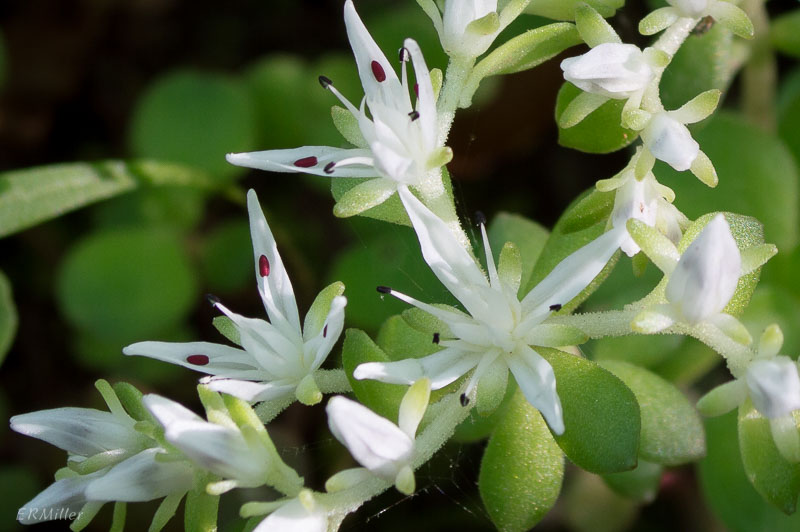
Plants in the Crassulaceae, or stonecrop family, are characterized in part by succulent leaves (crassus means “thick” in Latin).  About 1,400 species can be found throughout the northern hemisphere and in southern Africa. In Iceland there are five species (possibly a few more). I found three.


Rhodiola rosea
roseroot stonecrop
Icelandic: burnirót
seen at Dynjandi


This is a real showstopper of a plant, growing up to a foot tall, with thick, pale leaves contrasting a tight cluster of bright yellow flowers. Although widespread in Iceland, it cannot withstand grazing by sheep, so it’s found only in areas sheep can’t reach. I only saw one specimen, growing at the base of a waterfall.

Roseroot stonecrop is native to North America, from Hudson Bay east into Greenland, as well as Fennoscandia and Russia. In the US it can be found in a few New England counties and in the mountains of North Carolina. There are about 50 species of Rhodiola worldwide; three can be found n the US, but none in Maryland.


Sedum villosum
hairy stonecrop, purple stonecrop
Icelandic: flagahnoðri
seen at Mt. Esja and Sólheimajökull


This species is native to Iceland, where it’s widely distributed, as well as Greenland, Canada, and Fennoscandia. It’s easily distinguished from the other Icelandic Sedum species by the pink flowers (the other species have yellow flowers). This picture doesn’t give a good sense of scale, but this is a belly flower. Those rocks next to the plant are thumbnail-size.


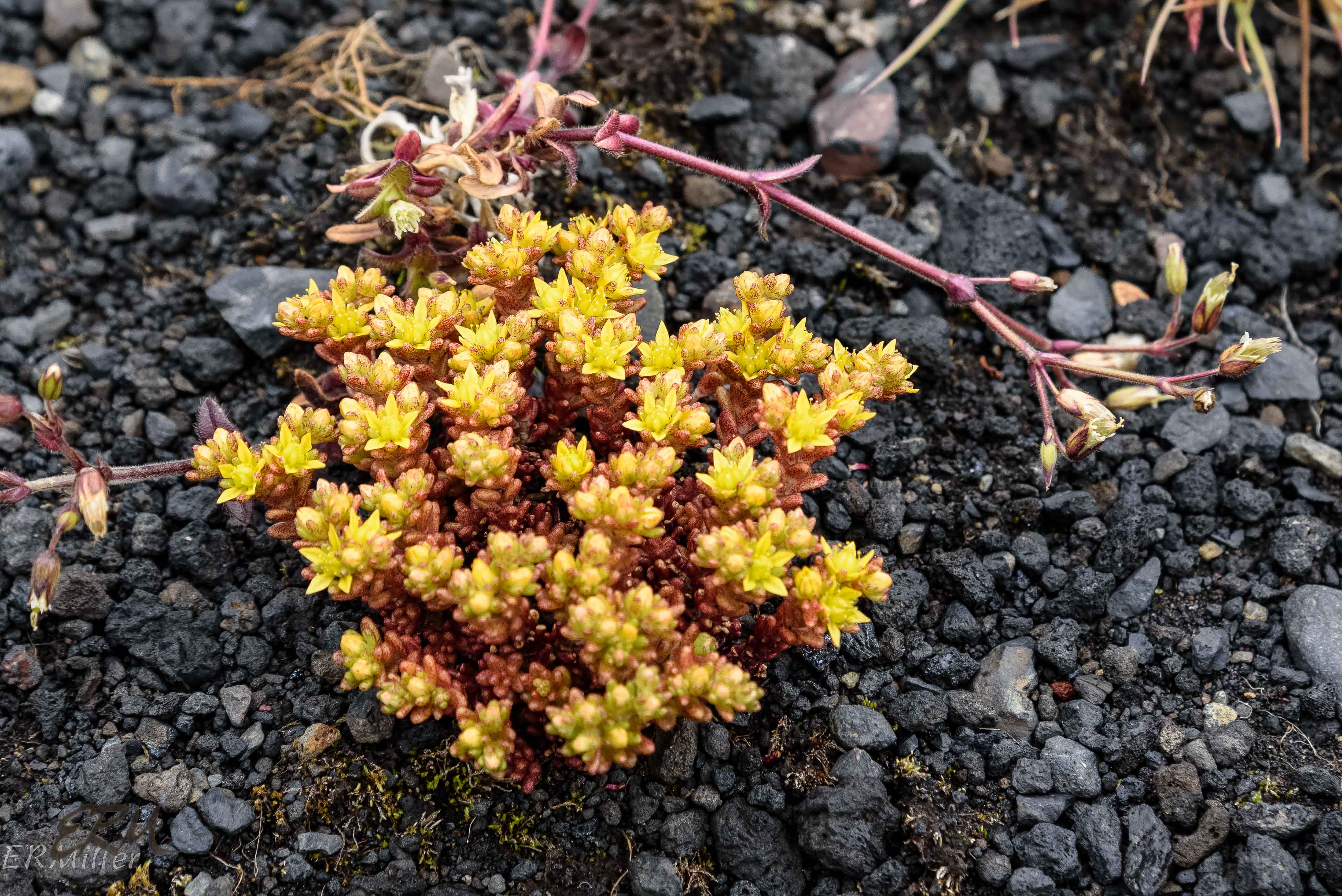
Sedum annuum
annual stonecrop
Icelandic: skriðuhnoðri
seen at Ísafjorður and Sólheimajökull

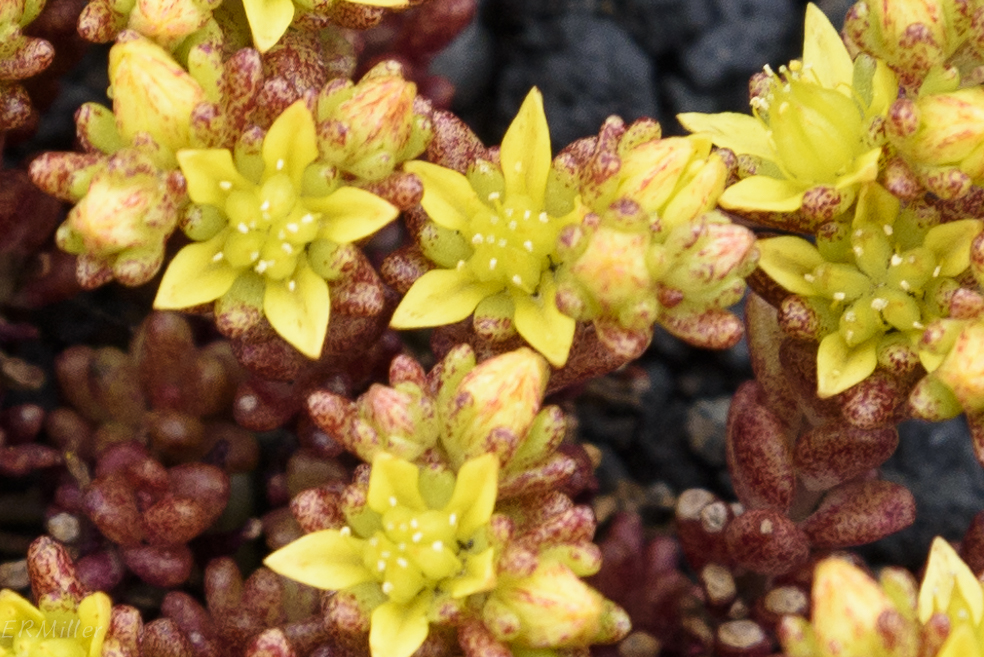
This species is not seen in the US or Canada, but is found in Greenland, Jan Mayen, and Fennoscandia. In Iceland it grows in the warmer areas in the south and east of the country, as well as some parts of the Westfjords, the Snæfellsnes peninsula, and the general area around Akureyri. Seen here, on black volcanic rubble at the snout end of a glacier, it’s quite striking.

20160622-_DSC0809

Neither of these Sedum species is found in Maryland; for similar plants you can look to Allegheny stonecrop and wild stonecrop. The latter is one of my all time favorites, so I’ll re-post a picture:

20150503-20150503-_DSC0013

I don’t find them crass at all.

Icelandic or Arctic?

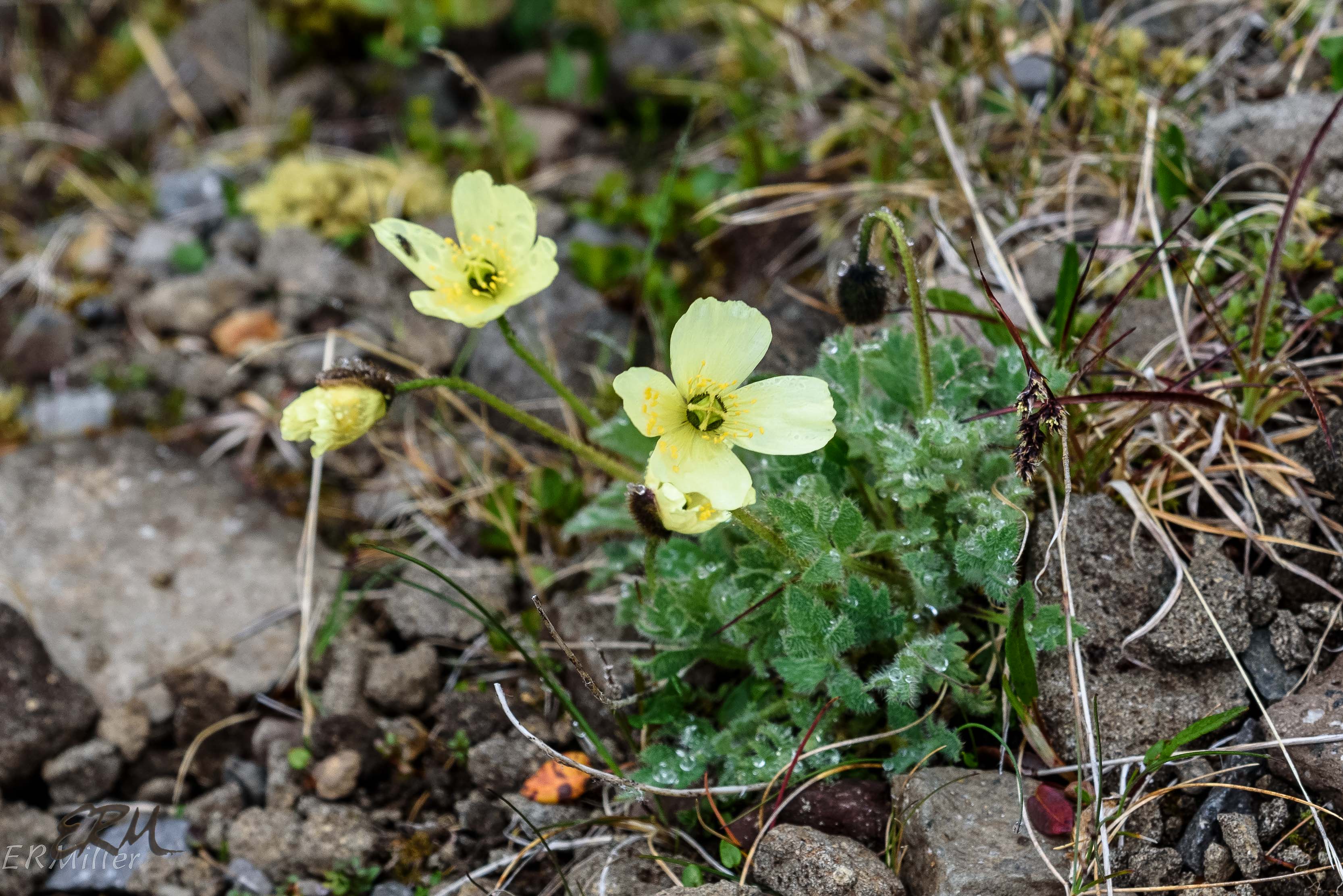
Papaver radicatum
arctic poppy, rooted poppy
Icelandic: melasól
Papaveraceae

If you’re a gardener or flower enthusiast of any sort, you’re probably familiar with Icelandic poppies, popular in the florist trade. These are not Icelandic poppies. They’re arctic poppies.

Because the two common names seem to be tossed around with abandon, I’m going to stick with the Latin here. P. radicatum has four subspecies (according to the Integrated Taxonomic Information System), which may explain why I found conflicting data from various sources. Some claim the species is endemic to Iceland. Others claim it’s endemic to Norway and Sweden. And still others say its native range includes Iceland, Jan Mayen, and North America (Greenland, Canada and the US). Probably what’s going on here is each of the subspecies is endemic or native to a particular area.

I can’t say which subspecies this is, but for sure it’s P. radicatum: the hairy leaves and stem are the signs. This species is found in the western and eastern regions of Iceland, with a few scattered occurrences elsewhere. I saw it in the Westfjords near the waterfall Dynjandi, and in the Snæfellsnes penninsula. In the US it can be found in a few counties in the Rocky Mountain states (and in Alaska).

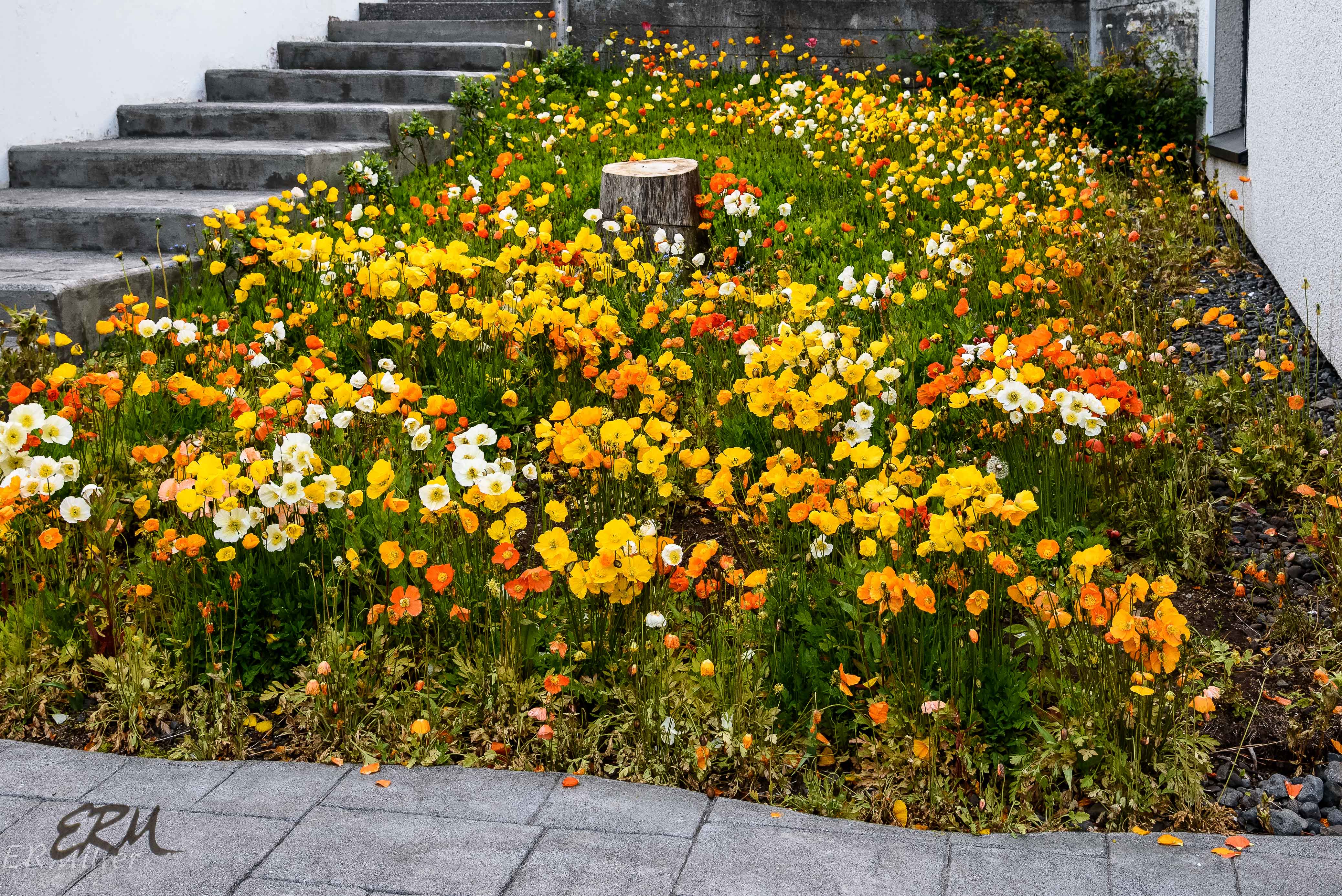
As for the so-called Icelandic poppy of the florist trade, that’s P. nudicaule (or P. croceum in some older sources). It’s hairless – nudicaule means “naked stem”. This species is not native to Iceland, but rather to North America. Sources disagree on its range, though. BONAP shows it as a native in part of eastern Canada only, while USDA shows it as a native in Alaska, Utah, Colorado, and Virginia, and introduced in parts of western Canada.

We did see Icelandic poppies in Iceland:


They grow there in gardens.


20160412-_DSC0002

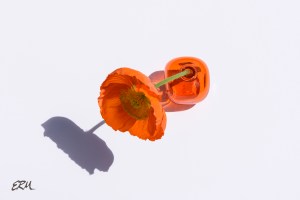
still life with poppy