Leafpiercer

20150821-_DSC0079

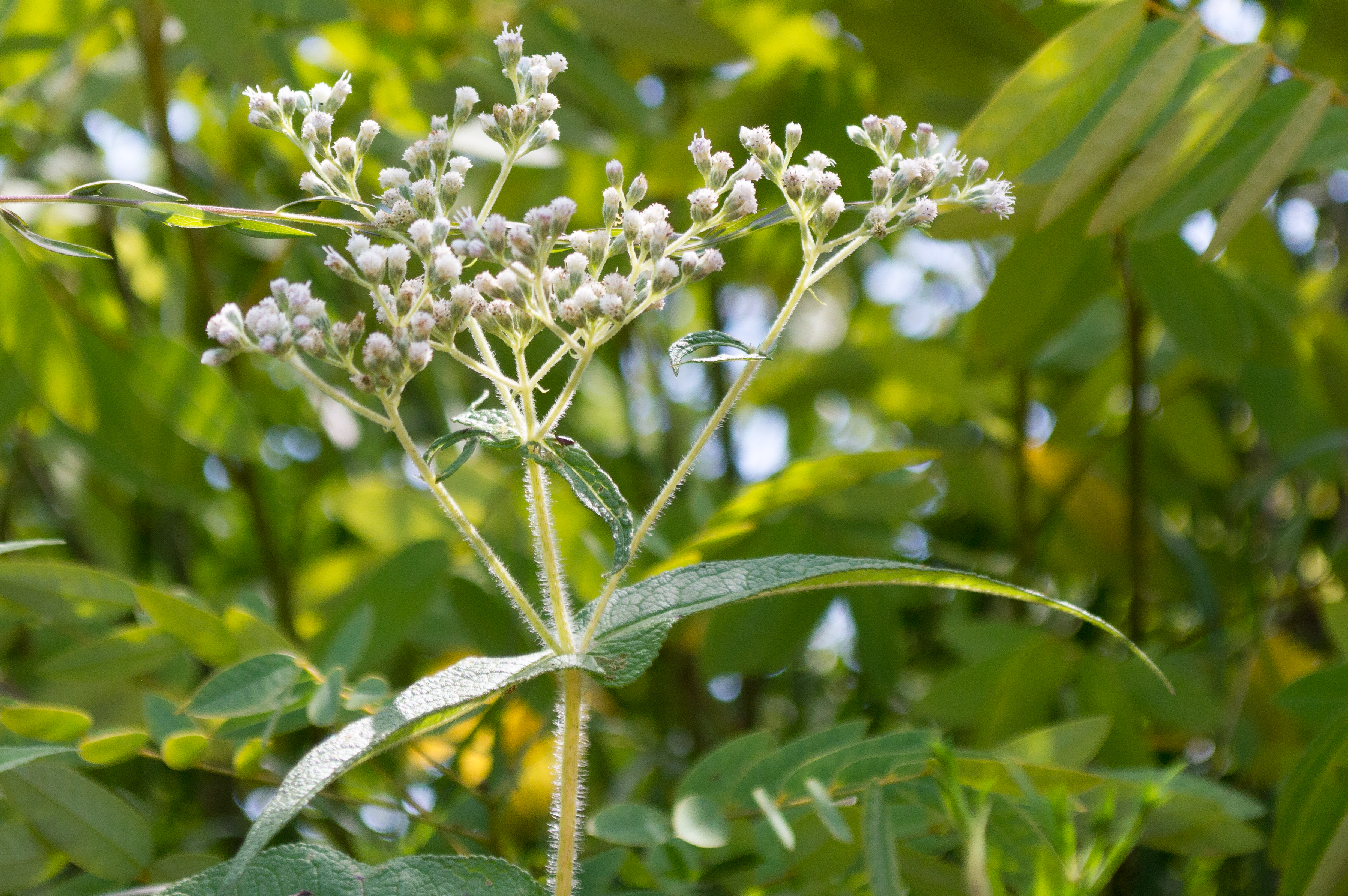
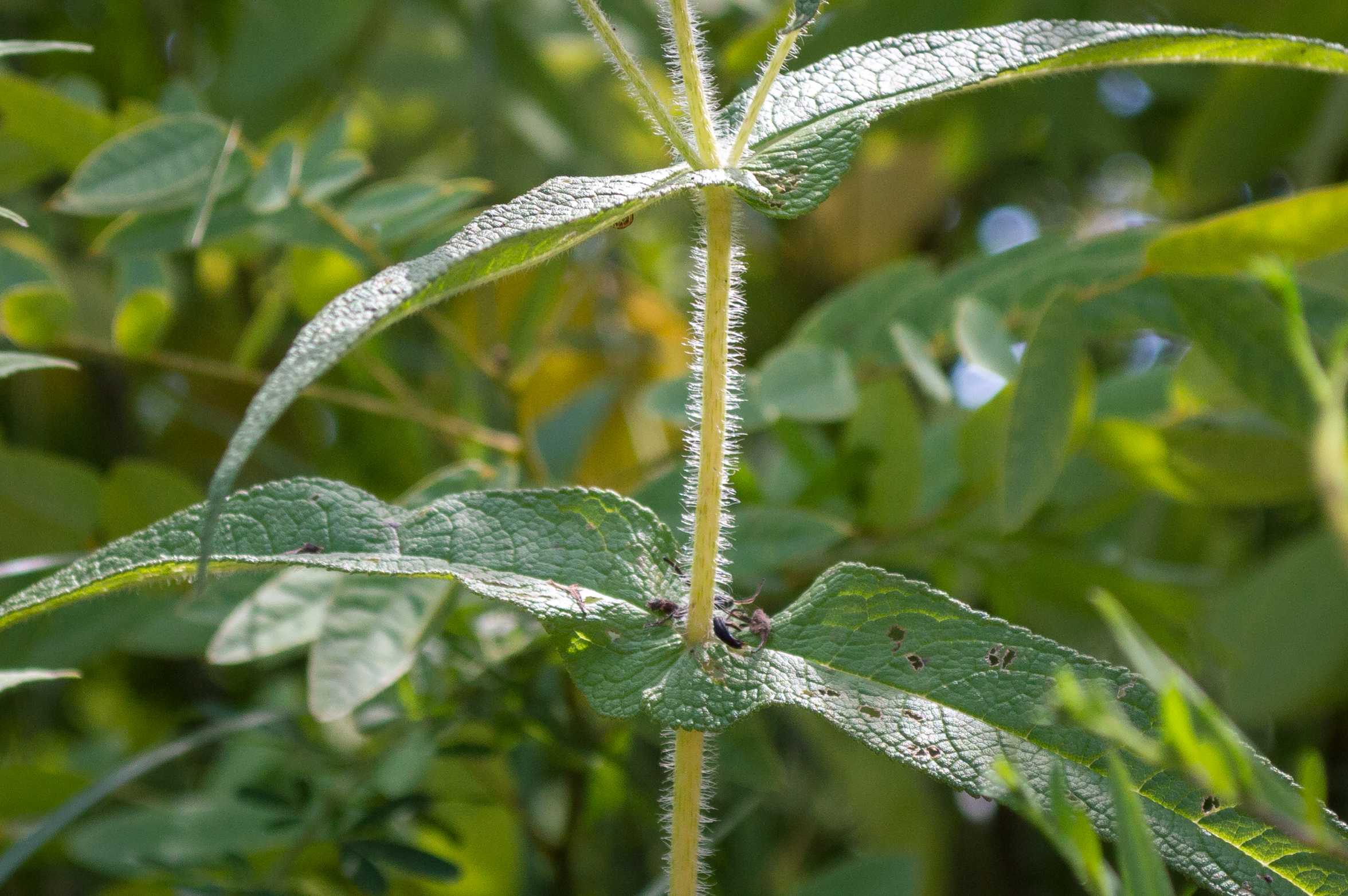
boneset
Eupatorium perfoliatum
Asteraceae

I’m not sure what compelled me to look closely at this particular cluster of tiny white fuzzy flowers.  They’re all over the place at this time of year, in the form of late-flowering thoroughwort and white snakeroot.  But for some reason I pulled the kayak up close to this one islet near Fletcher’s Cove, and there it was.
20150821-_DSC0078

This was a big deal because I’ve never actually seen this plant, despite it being fairly common.  What sets it apart from the other Eupatoriums is the paired, clasping, opposite leaves that make it look like the stem is piercing a single leaf.

There’s nothing about the flowers to distinguish them from other bonesets or thoroughworts.

Boneset likes sun or a bit of shade and wet soils and is tolerant of flooding, so the rock outcrops near the banks of the Potomac are perfect habitat for it.  The native range is from Texas north into Manitoba and all the way east to the Atlantic.

The genus Eupatorium once contained hundreds or species, including (in this area) the various bonesets/thoroughworts, mistflowers, snakeroots, and joe-pye weeds.  Those last three have been moved to other genera, but that is a subject for another day.

20030101-20030101-IMGP0240

…hey, what about the other white flowers in that picture?  Stay tuned!

Lepidopterans Photobomb My Mistflower Shoot

20150823-_DSC0108

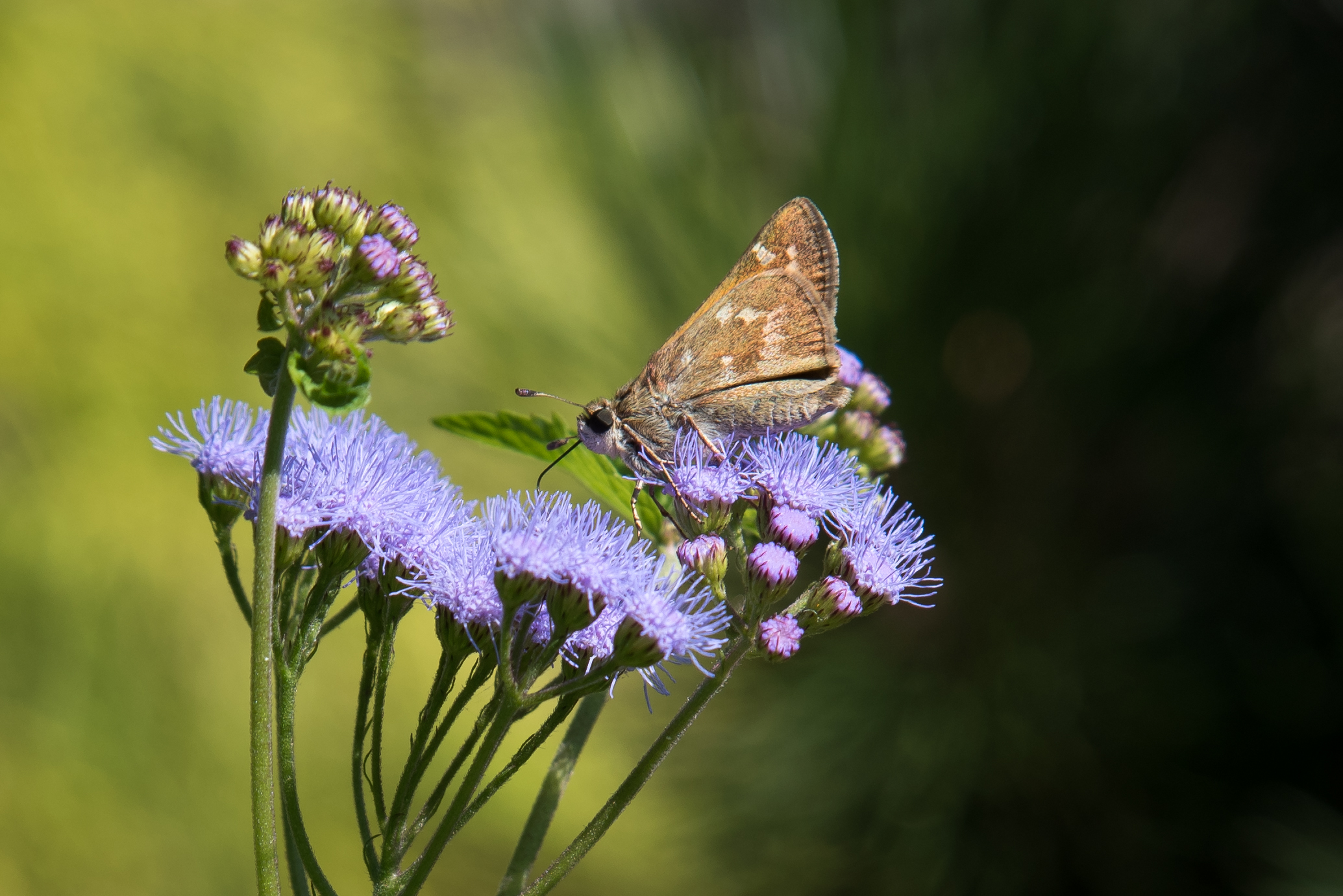
I’ve been trying for two weeks now to get some up-close, detailed shots of various flowers to write a post about plants currently and formerly classed in the genus Eupatorium.  With blue mistflower it’s fairly easy as there’s a nice clump growing in my garden.  But a skipper and a butterfly just wouldn’t leave the plants alone.  I’m not complaining; it was a good opportunity and a pleasant way to spend time on a lovely afternoon.

20150823-_DSC0084

Pictured:
blue mistflower (Conoclinium coelestinum; Asteraceae)
a skipper (little glassywing?)
eastern tailed-blue butterfly (Cupido comyntas)
20150823-_DSC0103 20150823-_DSC0104 20150823-_DSC0105

Blue mistflower is a common plant of partly sunny, wet places – you’ll see it frequently close to the banks of the Potomac, where it blooms from mid to late summer (at least). It can be found from Florida north to New York, east to Texas, and from there north to Nebraska.  It’s a nice native alternative to the similar-looking common garden plants known as ageratum, about which a plantsman at a botanic garden where I used to volunteer would always roll his eyes; he called them “droopy Maryland swamp plants”.  Don’t know where he got “droopy” from.  Anyway, they are growing so vigorously in my evergreen garden – which isn’t particularly wet – that I’m a bit worried they’ll become weeds.

A Plant That Stays Put

20150821-20150821-_DSC0094

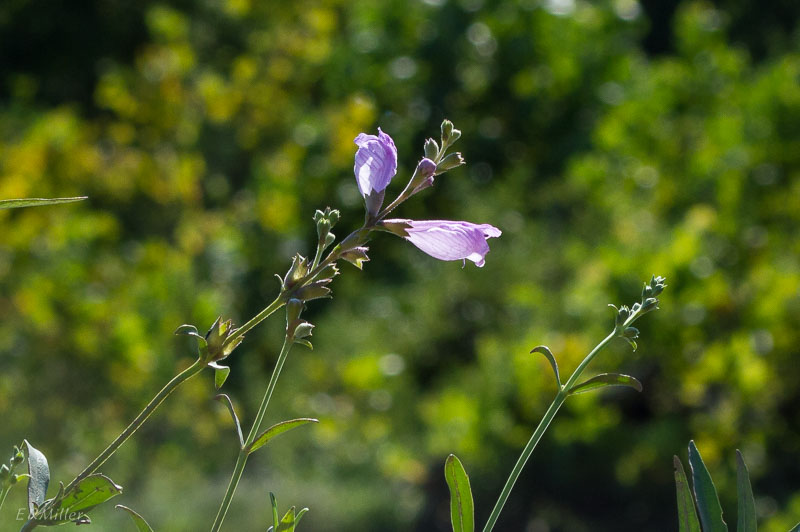
obedient plant, aka obedience, false dragonhead
Physostegia virginiana
Campanulaceae

Another find from my exploration of the lower Gorge by kayak.  I seem to have missed peak bloom, as there could be up to two dozen blossoms per foot-long spike.

20150821-20150821-_DSC0022

Obedient plant is a favorite of native plant gardeners, as it grows vigorously in good soil and sun, and is deer resistant.  Its native range is across most of the US and Canada but for most of the West.  It’s listed as special concern in Rhode Island, and is threatened in Vermont.

About a dozen species of Physostegia grow in the continental US and Canada; of these, P. virginiana is by far the most widespread, and the only one found in the mid-Atlantic Piedmont.

These plants were growing right atop the rock outcrops in the Potomac near Fletcher’s Cove, where I’d expect there is little soil that’s frequently flooded in the spring when the river level is higher.

About those common names… supposedly, you can twist each flower into a different position and it will stay put, at least for awhile.  How do people come up with stuff like that?

20150821-20150821-_DSC0019

Skippers Photobomb My Pickerel-Weed Shoot

20150825-_DSC0106

Pontedaria cordata
Pontedariaceae


Pickerel-weed is an emergent aquatic, so you’ll find it along shorelines, forming large colonies of four-foot tall plants that bloom from summer into autumn.
20030101-20030101-IMGP0249

The flowers have two lips, an upper lip with two lobes and a lower lip with three lobes.

I’ve never seen it in the upper Potomac Gorge, but found masses of plants along the shores of the river downstream of Chain Bridge.


20150825-_DSC0115


The flower spikes and heart-shaped leaves are typically about six inches long.
20150825-_DSC0130


And the skippers adore it.  I believe the one on the left is a male zabulon skipper (Poanes zabulon); the one on the right is either a female zabulon or a clouded skipper (Lerema accius).

Pickerel-weed ranges from Texas to Minnesota and east (and is also found in Oregon and British Columbia).  It’s threatened in Kentucky yet considered weedy by some authorities.

20150825-_DSC0119

peekaboo!

By the way, pickerel-weed flowers are generally a blue-violet color.  All the pictures on this page (except for the colony) are of the same spike; I think some combination of shifting sunlight and camera position accounts for the apparent discrepancy in color.

So Unbelievably Blue

20150822-_DSC0129

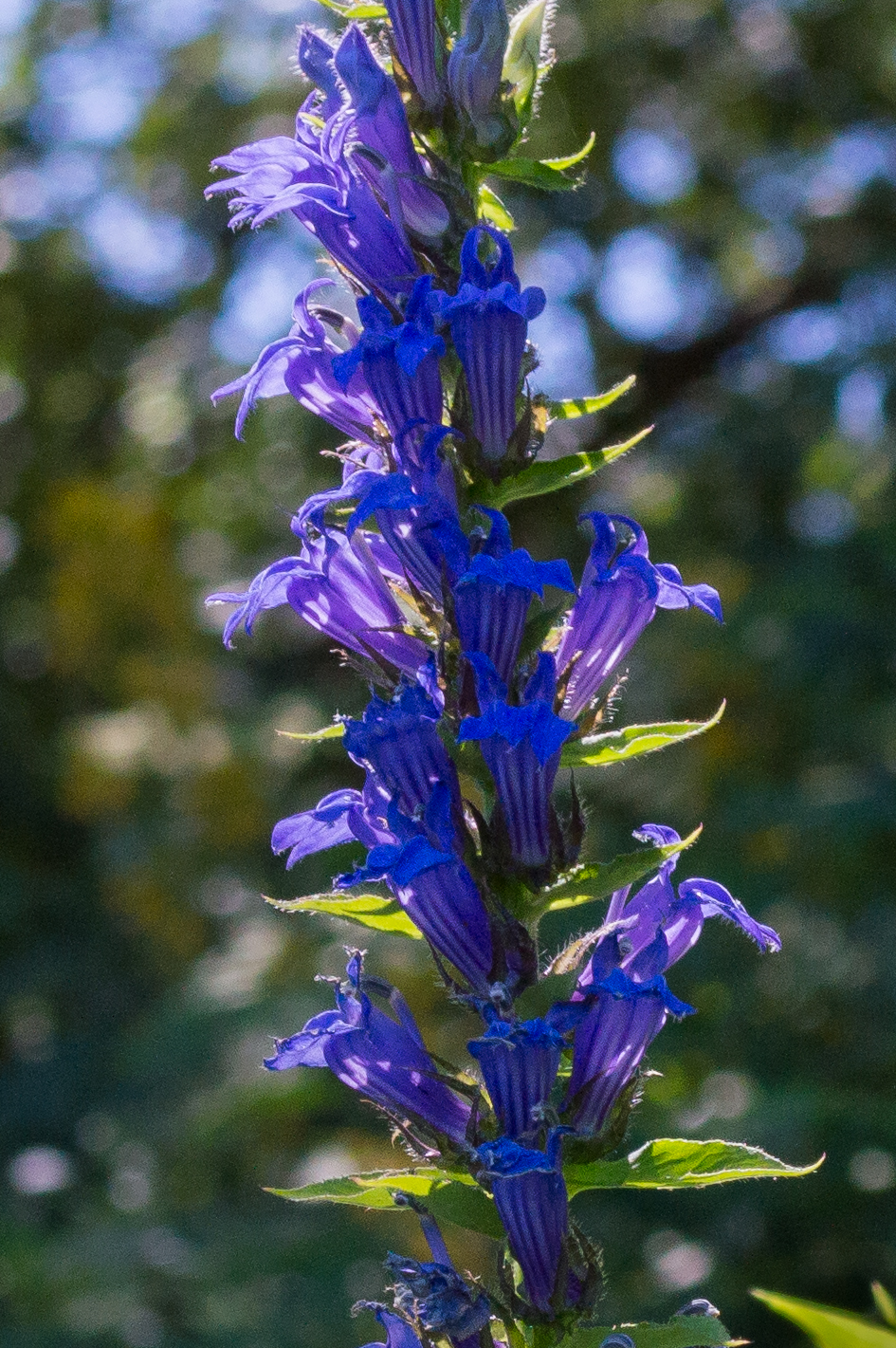
great blue lobelia
Lobelia siphilitica
Campanulaceae


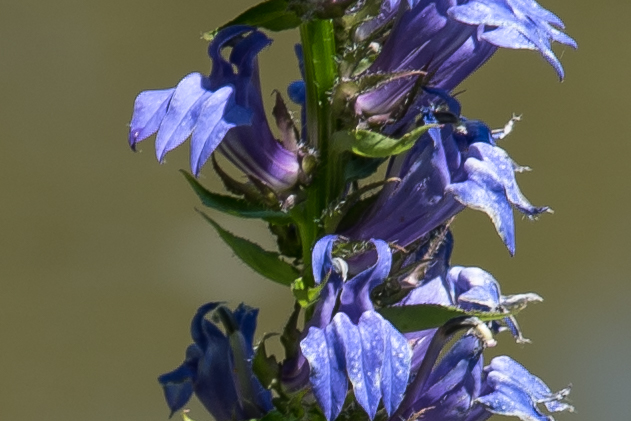
Here’s a cousin of yesterday’s unbelievably red flower.  Like the cardinal flower, great blue lobelia is a plant of wet places.  This single plant was growing right at the water’s edge near Fletcher’s Clove in the lower Potomac Gorge (in Washington, DC.).  I looked all around for others, by boat and on foot, but this was the only plant I could find.

Getting good pictures of it was darn near impossible.  I could only get so close in the kayak, there was no place to land, and the sun was in a less-than-ideal position.

20150822-_DSC0132


seen from the water, mid afternoon


When I went back a few days later to try from the shore, I still couldn’t get close: the bank was too steep, I couldn’t maneuver to different positions, and the sun was, again, not cooperating.

20150825-_DSC0042


the very same plant, seen from the land three days later, early afternoon


Great blue lobelia is found in the US and Canada from the east coast to the Great Plains.  It’s listed as possibly extirpated in Maine, endangered in Massachusetts, and exploitably vulnerable in New York.

Twenty seven native species of lobelia can be found in the US, eight of which occur in Maryland*.  One of these, Indian tobacco, is fairly common in the Carderock-Marsden Tract area.

20150825-_DSC0039

*per the Maryland Biodiversity website