Variations on a Theme: Leafcups

20150816-20150816-_DSC0081

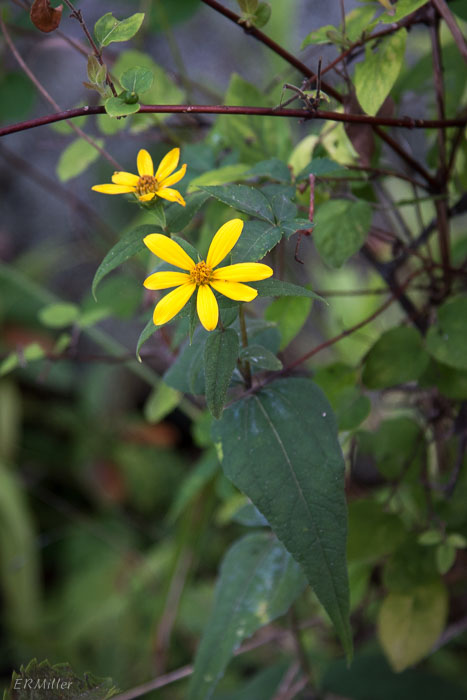
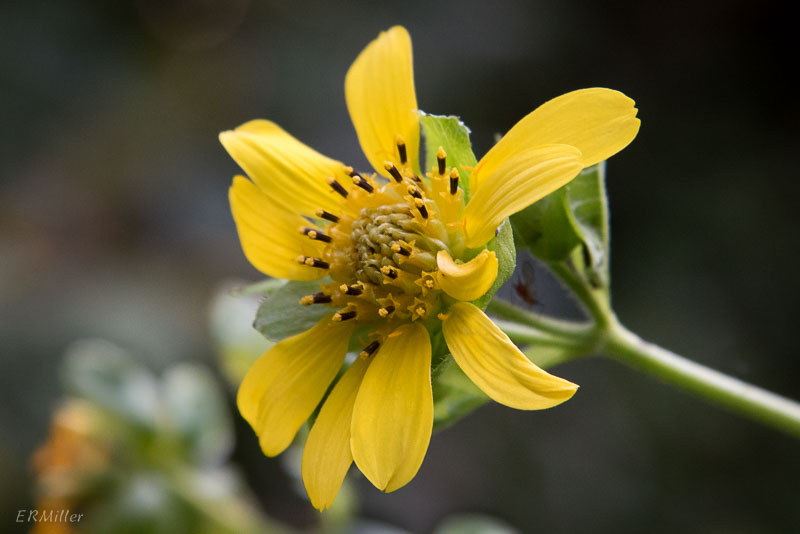
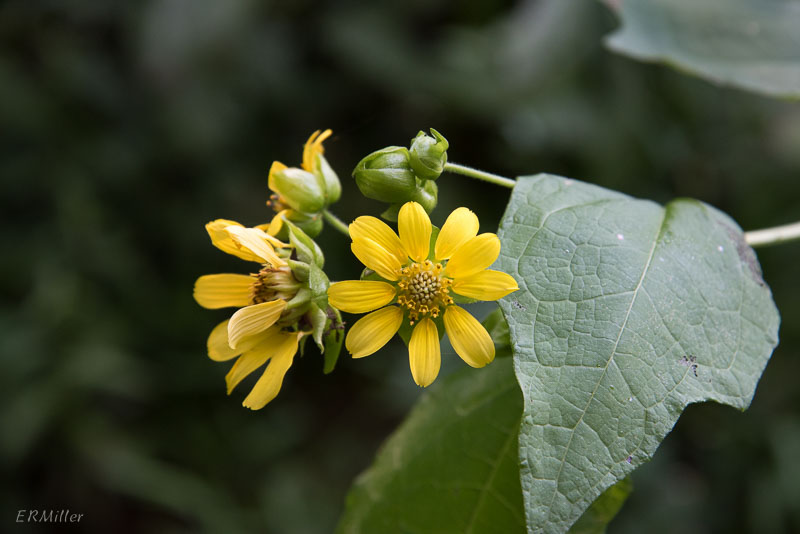
large-flowered leafcup
formerly Polymnia uvedalia, now Smallanthus uvedalia


and

20150817-20150817-_DSC0005


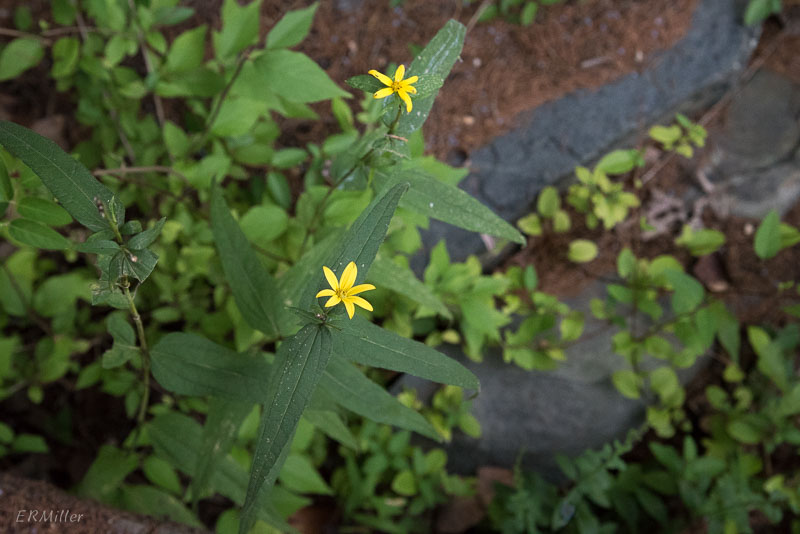
white-flowered leafcup
Polymnia canadensis


What is that tiny white thing in the second photo?  There’s a story.  I’ve been keeping an eye on this plant for a few years, and this is the best shot of a flower I’ve been able to get. There are two stands of it in the general area of Billy Goat B.  One of them is regularly browsed upon by something (I’m assuming it’s deer, they’re responsible for a lot of damage); I’ve never seen the plants in flower.  The other stand is mostly atop an eight foot tall rock outcrop that I can’t get to.  In deep, deep shade.  I can see the plants just fine from below, and sometimes one of the plants near ground level hangs on long enough for me to get a good shot of a leaf

20150817-20150817-_DSC0006

but the flowers have always been out of camera shot.

White-flowered leafcup, also known as small-flowered leafcup, grows two to six feet tall, with tiny little flower heads – less than an inch across – while the leaves can be more than a foot long.  It’s found in most of the eastern US except the far north and a few southern states, and is endangered in Connecticut and Vermont.

20150728-20150728-DSC_0165

Large flowered leafcup is quite a showstopper.  This plant grows three to ten feet tall, with flowers up to three inches across.  You can find huge stands of it on the eastern end of Billy Boat C.  Check out just how big this leaf can be:

20140811-DSC_0267

This leafcup is found more extensively through the southeast and west into Texas.  It’s threatened in Michigan and endangered in New Jersey and New York.
20150816-20150816-_DSC0080

Variations on a Theme: Sunflowers

20150813-20150813-_DSC0088

woodland sunflower
Helianthus divaricatus

and

20150816-20150816-_DSC0055

thin-leaved sunflower
Helianthus decapetalus
Asteraceae

These two species have very similar looking inflorescences, with yellow disks and anywhere from 8 to 20 rays; note that despite the specific epithet “decapetalus” (meaning ten petals), thin-leaved sunflower does not always have ten rays.

Both grow from two to six feet tall. Despite this and the similar flowers, it’s easy to tell them apart if you look at some of the details.

Habitat: woodland sunflower, as the name suggests, tends to be found in the shade of woodlands, often in drier soils than the other species.  Thin-leaved sunflower is more often found in open areas between trails and the river, where there’s more sun and moisture.

20150814-20150814-_DSC0046

Woodland sunflower has long-tapering, lance-shaped leaves  that are either sessile or with very short petioles. The margins have a few slight teeth. The leaf surface is rough to the touch, like sandpaper.

20150816-20150816-_DSC0066

The leaves of thin-leaved sunflower have long petioles, often winged (especially the larger leaves, which are sharply toothed), and the top leaf surface is smooth.

Woodland sunflower can be found in the eastern US and a few states west of the Mississippi.  In the Potomac Gorge, it’s not too common.  It’s listed as “special concern” in Rhode Island.

Thin-leaved sunflower has a similar range and is much easier to find in the Gorge, especially along the eastern half of Billy Goat C.  There are no conservation issues.

Sixty more native species and naturally occurring hybrids of Helianthus are in the continental US and Canada. Seventeen total can be found in Maryland; of these, three are listed as S1 (“highly state rare”) by the DNR.

20150814-20150814-_DSC0001 20150816-20150816-_DSC0059

Found in New York

As I wrote a few days ago, Steve and I spent last weekend in New York State, hiking and eating and generally hanging out.  In addition to dozens of pointed-leaf tick trefoil, we saw…

20150717-20150717-_DSC0029

herb-robert (Geranium robertianum; Geraniaceae); endangered in Maryland, threatened in Indiana, of special concern in Rhode Island, and class B noxious weed in Washington, where it is known as Stinky Bob.

20150717-20150717-_DSC0027


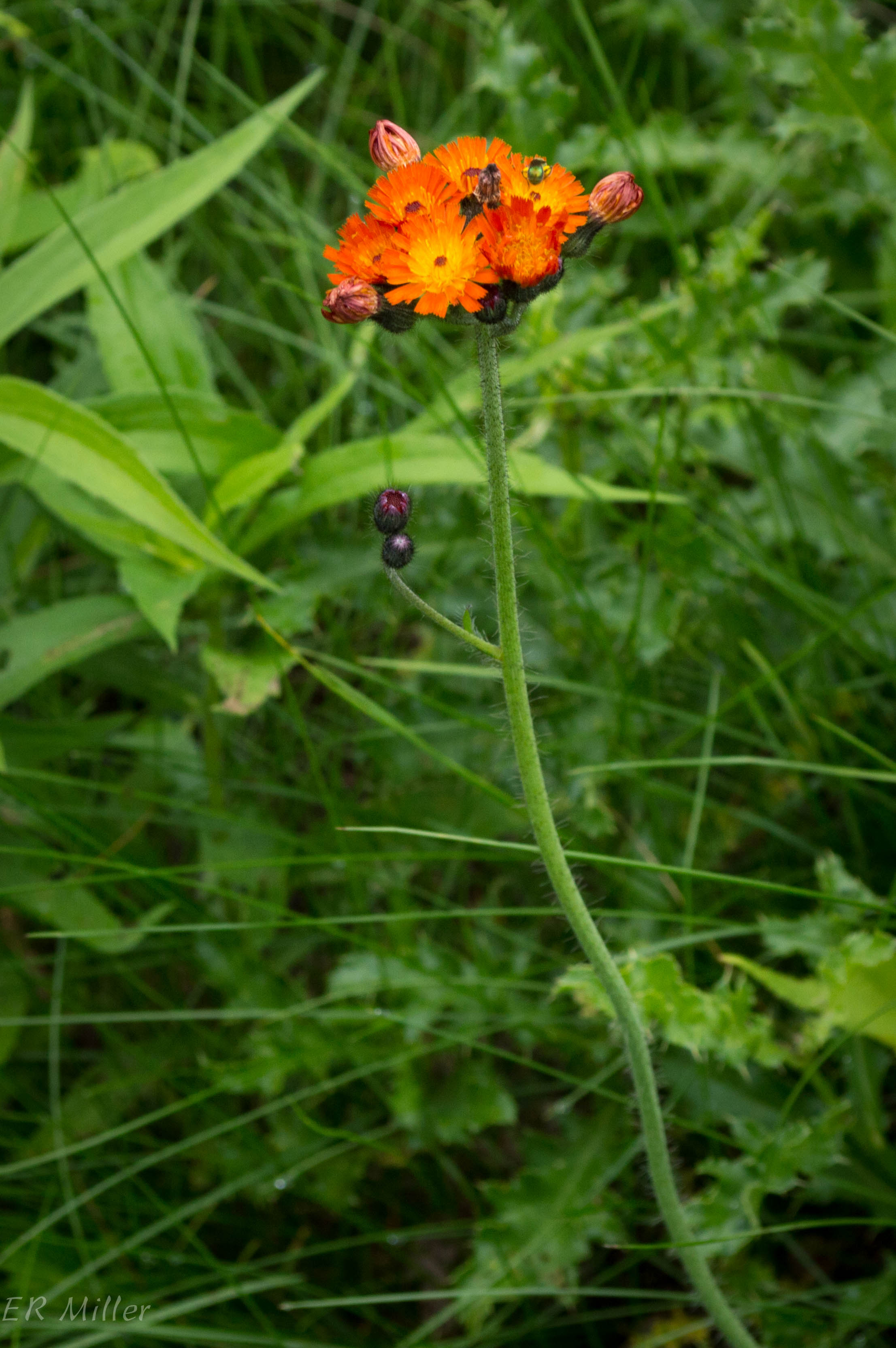
orange hawkweed  (Hieracium aurantiacum; Asteraceae), aka devil’s weed, king-devil, devil’s-paintbrush, missionary weed, fox-and-cubs, and a few others; “A” list noxious weed in Colorado, noxious weed in Idaho, Category 2 noxious weed in Montana, “A” designated weed (and Quarantine) in Oregon, and class C noxious weed in Washington.  We only saw one plant.


20150718-20150718-_DSC0085

20150718-20150718-_DSC0073

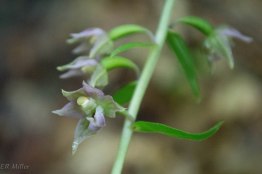
helleborine (Epipactis helleborine; Orchidaceae); imagine my joy on finding an orchid in the wild, then imagine my dismay when I identified it and learned that it’s an alien invasive.

Next time, some less noxious plants.

photographed at Hi Tor Fish and Wildlife Management Area and Finger Lakes National Forest

It’s Pretty, But…

20150711-20150711-_DSC0087

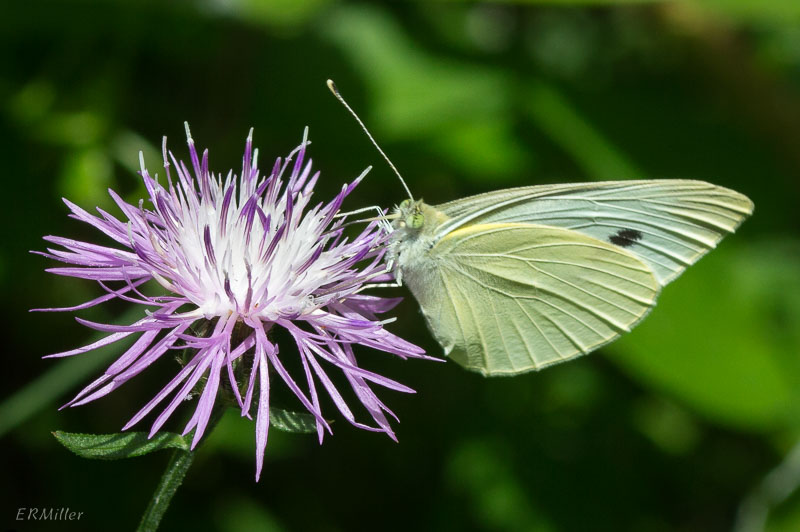
cabbage white (probably; Pieris rapae) on spotted knapweed (probably)

How can you hate such a lovely flower?  Let me count the ways.

I’m a native plant enthusiast.  Finding aliens in the wild bothers me.  It’s not so much a vague “they don’t belong here” feeling, but more of a fear that today’s ooh-isn’t-that-pretty exotic will be next year’s monoculture-forming, native-killing beast.  Like wavy-leaf basket grass, or Oriental bittersweet.  Or spotted knapweed (Centaurea maculosa; Asteraceae).

Of the 32 species of Centaurea found in the US, only three are native.  And none of those are found in West Virginia, where these shots were taken (along the Potomac River in Shepherdstown).

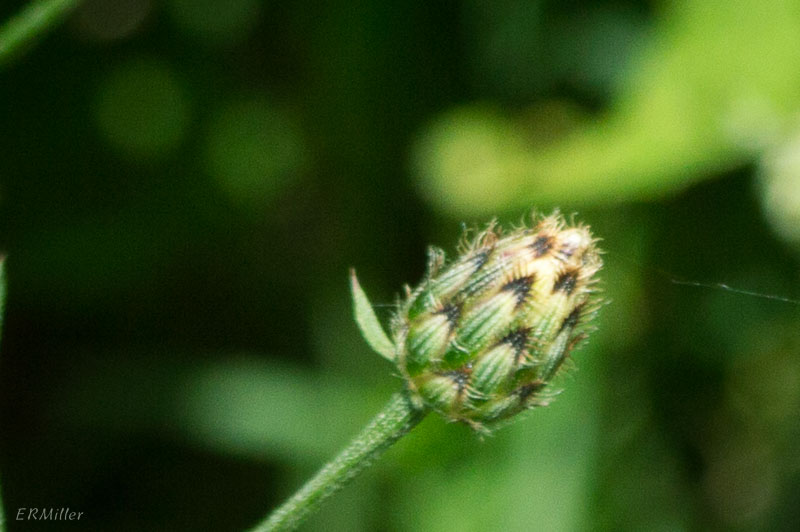
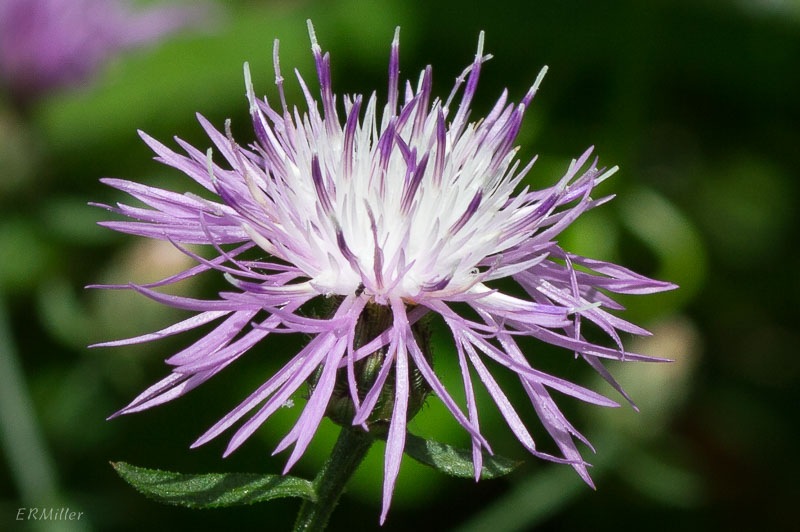
I didn’t study the plant, so I didn’t get enough information to make a positive identification.  I was on a group hike hunting for ferns – actually, for a quite rare fern (subject of a future blog post, for sure) – when I spotted the butterfly and snapped a few quick pics before catching up with the group.  But based on data from BONAP (Biota of North America Project) and USDA PLANTS Database, I’ve narrowed the possibilities down to:

C. nigra -lesser knapweed
C. jacea -brownray knapweed
C. nigrescens -Tyrol knapweed
C. maculosa (aka C. stoebe) -spotted knapweed

20150711-20150711-_DSC0088

With nothing else other than these pictures to go on, I suspect it’s the last one – Centaurea maculosa, the worst of the worst.

This species is a major pest in the West.  And by major, I mean that it’s known to form multi-acre monocultures, out-competing every other plant and rendering the land almost useless for livestock forage.

For awhile people believed that spotted knapweed was allelopathic (producing compounds that inhibit the growth of other plants), but recent studies have shown that it actually out-competes other plants by working symbiotically with a carbon-stealing fungus.  (More fascinating and disturbing details at wildflowers-and-weeds.)

There’s a lengthy, detailed report form the US Forest Service here.  One sobering excerpt:

“Spotted knapweed is considered a serious threat to rangelands in Montana, Washington, Idaho, Oregon, Wyoming, and British Columbia. Because of its affinity for the climate of western Montana, Chicoine and others [25] predicted that spotted knapweed had the potential to invade 37 million acres (15 million ha) in that state alone, and Bedunah [11] speculated that the foothill grasslands in western Montana (the primary habitat for spotted knapweed) are becoming an endangered vegetation type.”  (emphasis mine)

20150711-20150711-_DSC0088

Sure makes a pretty picture, though.