The Aster Family (part 4)

20150616-20150616-_dsc0028


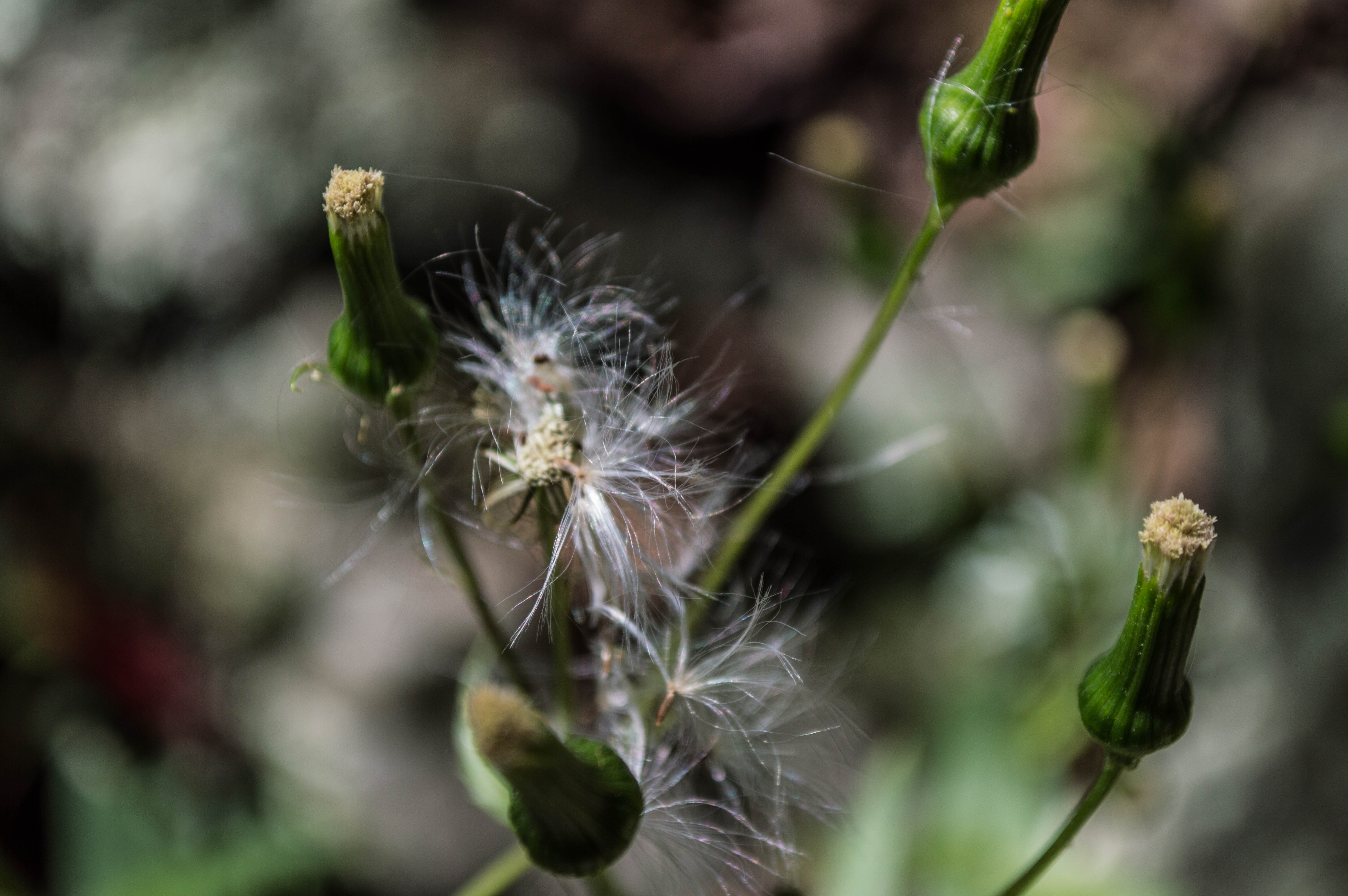
Tragopogon (goatsbeard) species (I think)


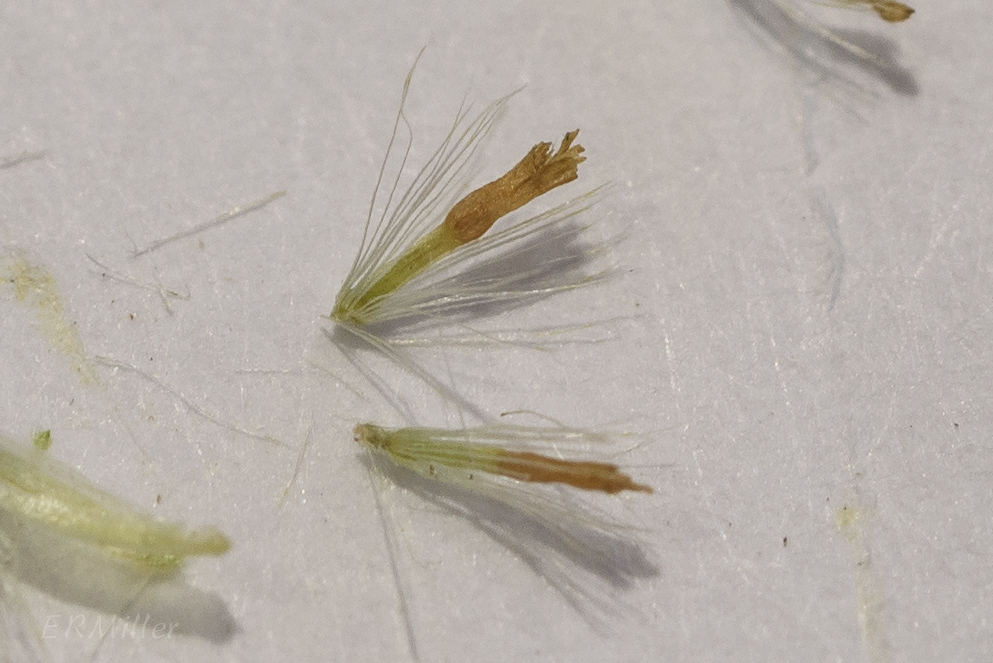
Each floret of a composite family plant produces a single fruit (which contains a single seed) called a cypsela. In many texts and on-line sources, the term achene is used. The difference between the two is technical (it depends on the position of the ovary), and for years both were used rather loosely. While trying to make sense of this I tripped over an article in the Brazilian Journal of Botany, the poorly translated abstract for which reads

The worry about the indiscriminate use of the terms cypsela and achene for the fruits of Asteraceae has been frequently detached by specialists in this family. The present work was developed aiming to verify the existence of arguments to justify the adoption of a term against the other. After historical and anatomical analysis, we concluded that there is technical basis to consider cypsela and achene as different types of fruits. For Asteraceae, the correct is to call cypsela; achenes are only derived from superior ovaries, as in Plumbaginaceae.

At any rate, picture a single small seed with a tuft of hairs, like dandelions have.

20140923-dsc_0115


Erechtites hieracifolius (pilewort)


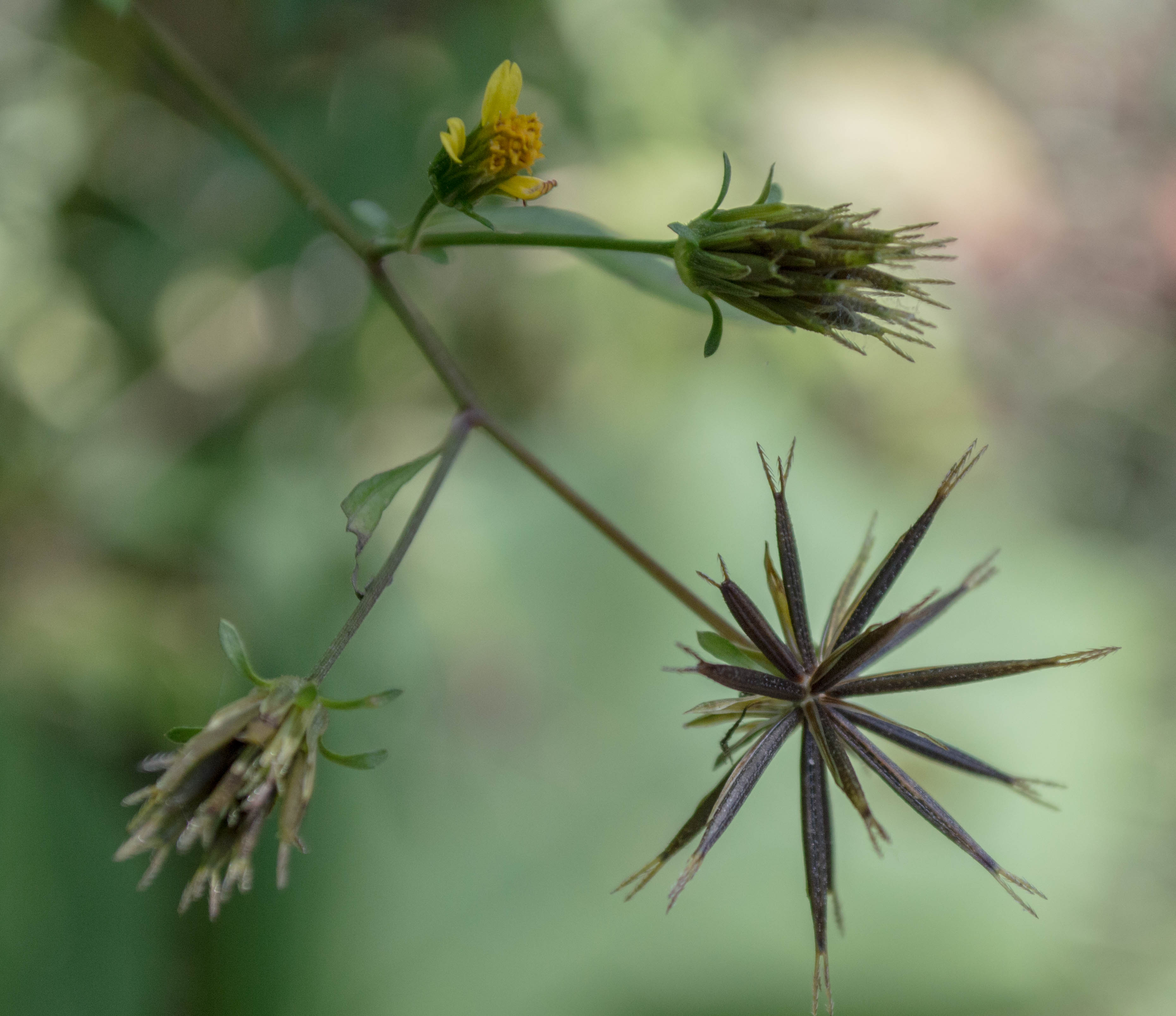
That’s pretty much it, unless there are barbs instead of hairs:

20141006-dsc_0088


Bidens bipinnata (Spanish needles); note the capitulum (flower head) with yellow ray and disk florets at top, another flower head showing the phyllaries in the middle, and the barbed cypsela at the lower right


next: lower classifications

The Aster Family (part 3)

There are three types of aster family flower heads, named according to the type(s) of florets present.

20140825-DSC_0245

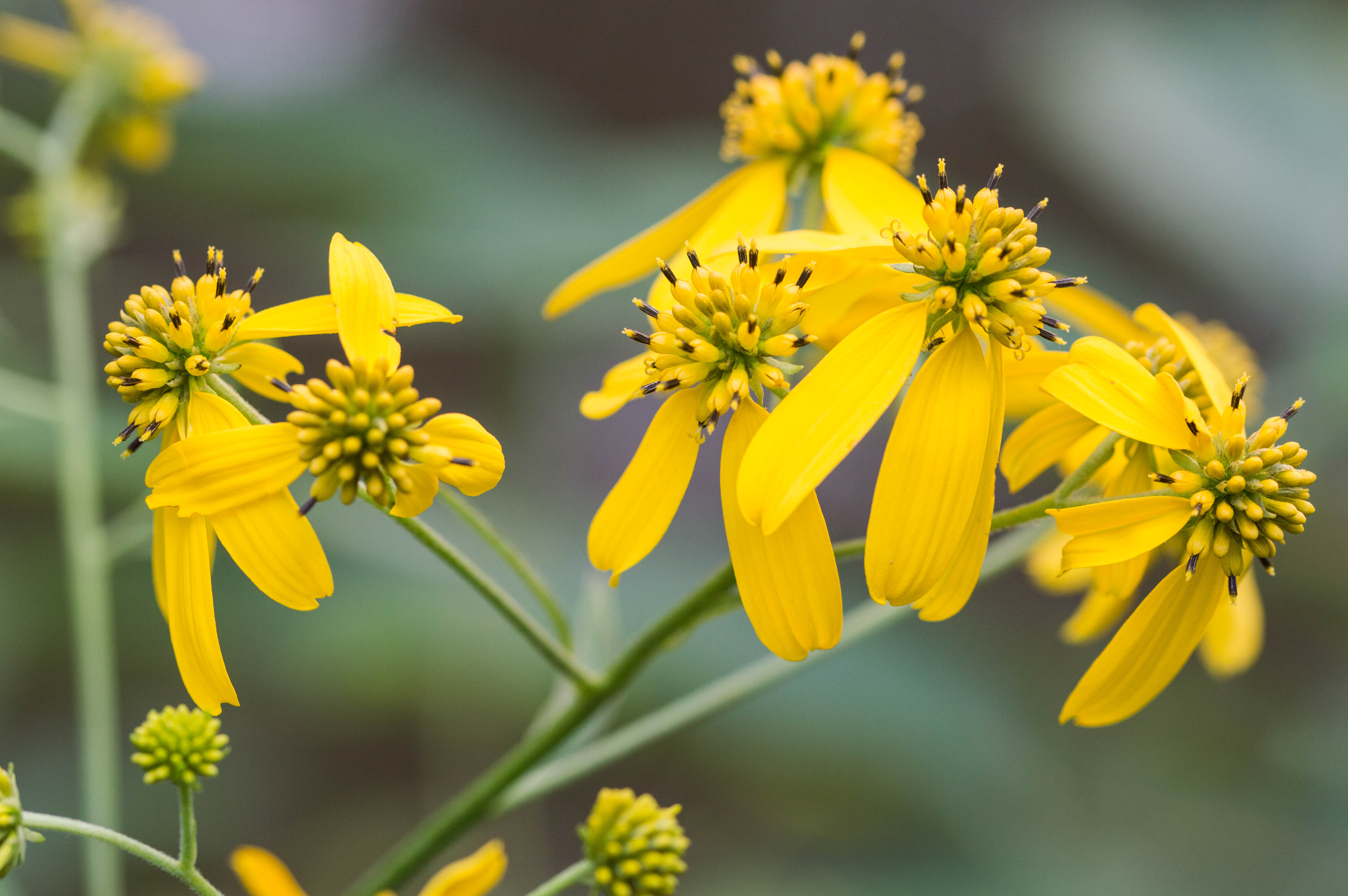
If both types of florets (ray or ligulate and disk) are present in a head, the arrangement is termed radiate.

Verbesina alternifolia
(wingstem)

20150514-20150514-_DSC0078-2


If a head contains rays only, it is called ligulate.

Hieracium venosum
(rattlesnake weed)


20140825-DSC_0317


And if only disk florets are present, a head is called discoid.

Vernonia noveboracensis
(New York ironweed)


Another characteristic of aster flower heads is the presence of phyllaries.

20151020-_DSC0014


20140929-DSC_0221-2

Symphyotrichum species, possibly S. oblongifolium 
(aster)


At the base of a flowerhead there’s a whorl of bracts (modified leaves), called an involucre. In aster family plants only, the individual leaf-like structures are called phyllaries. The number of phyllaries, how they’re arranged (how many rows), the shape, presence of hairs, and other fine details are characteristics used to distinguish certain species from others [see this recent post about tickseed].

Symphyotrichum species
(aster)

next: aster fruits/seeds

The Aster Family (part one)

From golden ragwort in April to goldentop in October, about one in five flowering plant species that I find in the Maryland Piedmont is in the aster family.

It’s unknown how many plant species there are altogether: discoveries still happen, and of course there’s taxonomic uncertainty. But experts believe that there are about 352,000 flowering plant species (angiosperms), and of the other major plant groups, there are an estimated 1,000 species of conifers and conifer allies (gymnosperms), 13,000 species of ferns and fern allies (pteridophytes), and 20,000 species of mosses and liverworts (bryophytes). [The Plant List]. So it’s probably safe to say that flowering plant species outnumber all other plant species combined by an order of magnitude.

Of the flowering plant families, the Asteraceae is probably the largest with about 23,600 species in 1,620 genera. [Encyclopedia of Life]  Whether or not it actually is the largest depends on the current state of taxonomic science; the other contender is the Orchidaceae.

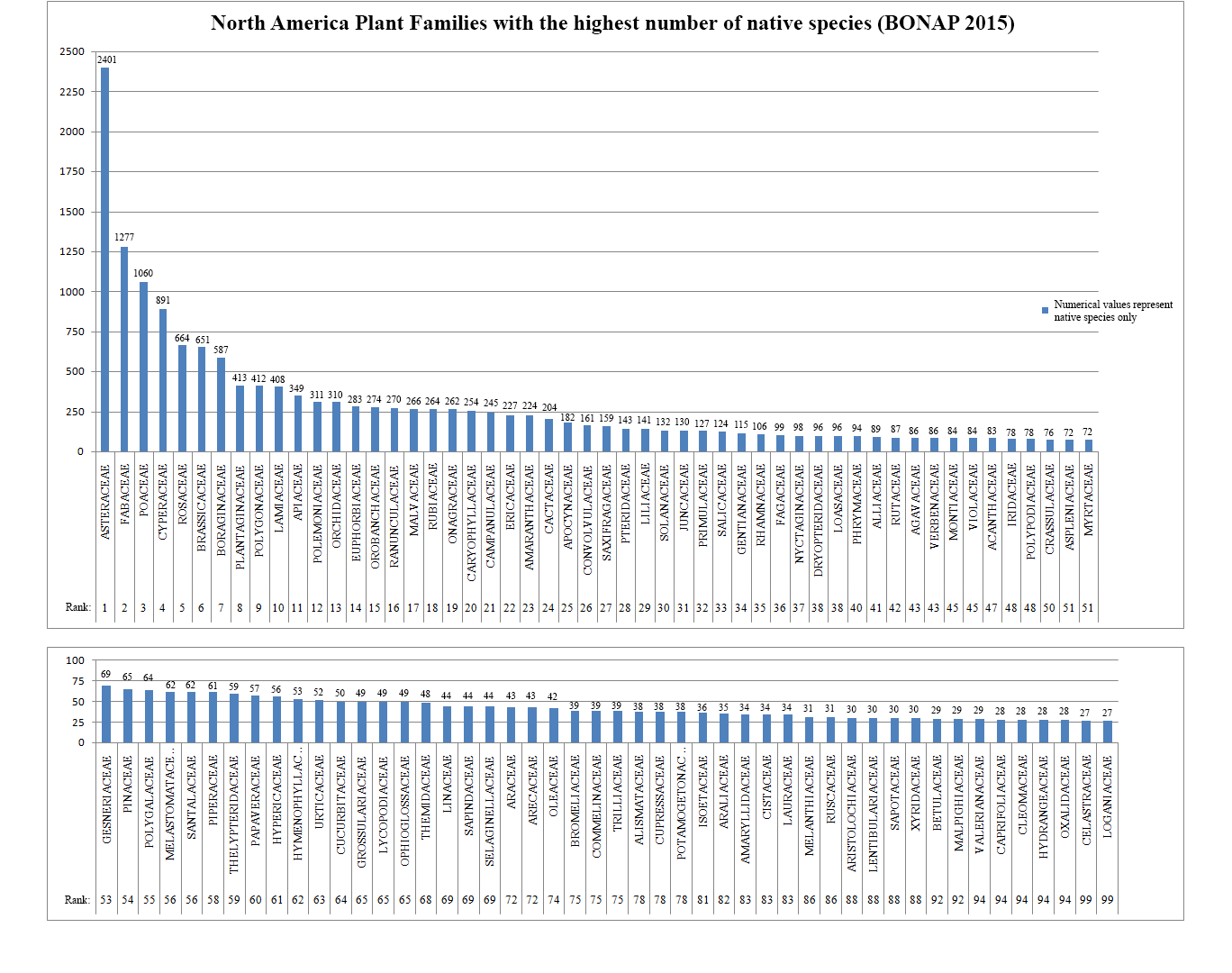
There are 2,401 native Asteraceae species in North America. [BONAP] The Maryland Biodiversity Project lists 373 Asteraceae species (native and alien) in Maryland, and by my very rough estimate, about half of these can be found in the Piedmont.

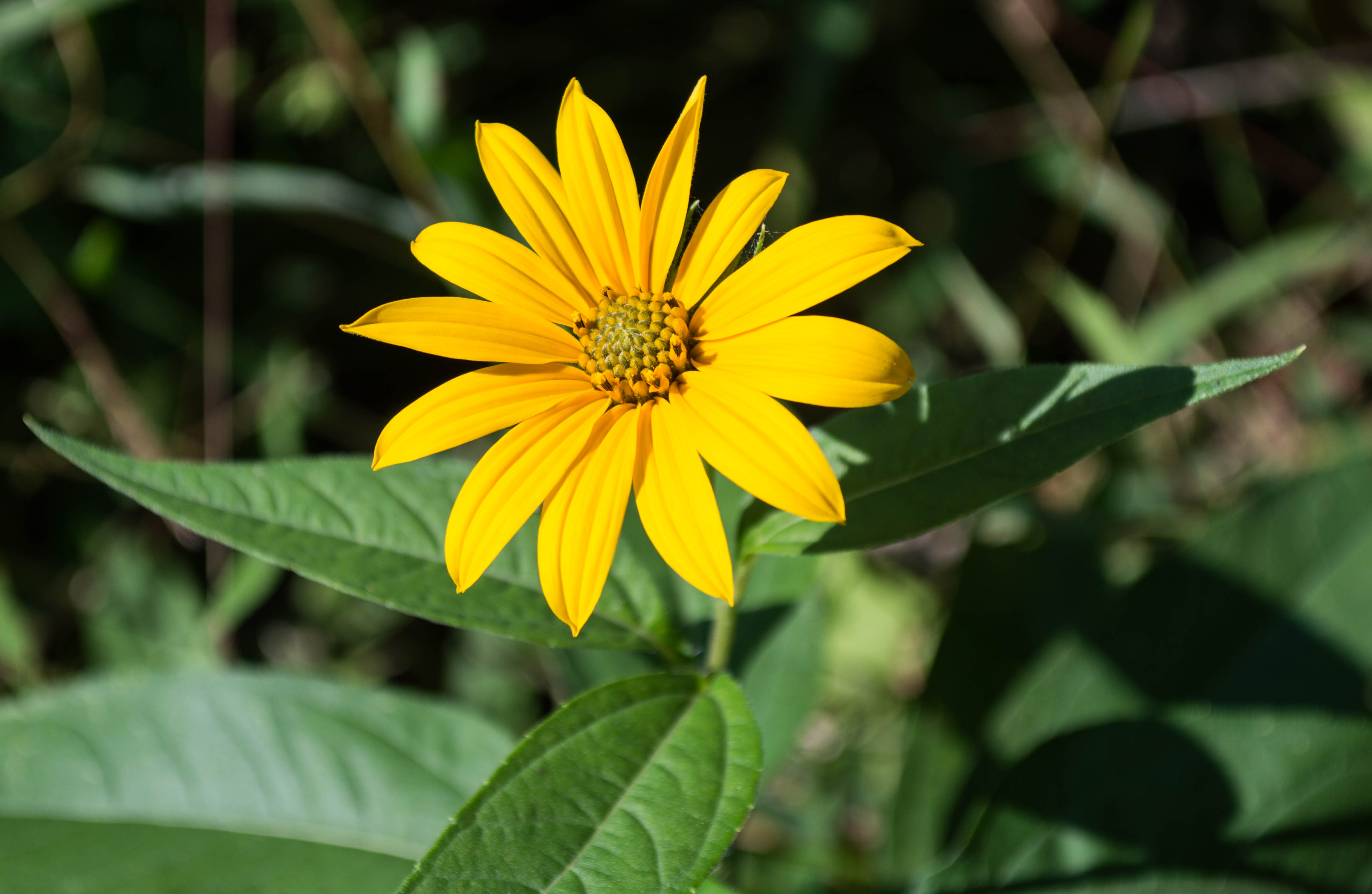
So what are the characteristics of aster family flowers?  Have a look at this Jerusalem artichoke:

20141006-DSC_0080

How many flowers do you see? If I zoom in I can see about 21, not counting the unopened buds.

Wondering how that can be? Here’s a clue: an older but still accepted name for this family is Compositae, or composites. Plants in this family bear heads that appear to be single flowers, but these heads comprise from several dozen to several hundred individual flowers.

next time: aster family floral morphology

This post is dedicated to my friends Cheryl and Barry, who independent of each other gave me the idea to write about plant families during the dormant season. 

Weakley Flora to the Rescue! (With a Primer on Using Botanical Keys)

upper stpem, leaves, and inflorescence

upper stem, leaves, and inflorescence

The day after writing the previous post, I returned to Serpentine Barrens Conservation Park armed with a 10X lens, a small knife, a ruler, a notebook, and most important, a printout of page 1126 of the Flora of the Southern and Mid-Atlantic States by Alan S. Weakley, determined to key out my unknown goldenrod species.

Success! I keyed it out in the field, but collected a sample to photograph at home with the macro lens.

If you’re interested in how botanical keys work, keep reading. If you just want to know which species it is, skip to the end.

The first couplet in Weakley’s key reads:

1  Leaves with numerous slightly raised, pale, translucent, blister-like pustules; leaves transmit light when held up; plant glabrous………E. leptocephala
1  Leaves without pale pustules, or if present then leaves opaque and do not transmit light; plants glabrate to pubescent.

Glabrous is smooth, glabrate means “almost smooth”, and a pubescent area is covered in short hairs.

closeup of stem and leaf base showing hairs

closeup of stem and leaf base showing hairs


Have a look at this photo. Clearly the plant is hairy, so I chose the second line, which leads to this couplet:


2  Major veins on leaf underside 3-5 (if 3 then all 3 veins bold), leaves 5-12 mm wide; heads with 20-50 flowers.
2  Major veins on leaf underside 1-3 (-5) (if 3 or 5 then only the midvein bold), leaves <6 mm wide (-8 mm wide in E. gymnospermoides); heads with 10-20 flowers.

leaf base, underside

underside of leaf at base

In the field I measured the largest leaves that were still intact on the plant. (All the lower, presumably largest, leaves had turned brown and curled up and many had fallen off.) Most of them were in the 7-8 mm range. Every leaf I examined had five veins, though some were pretty hard to see. Given these facts, I chose the first line of couplet 2 (more about the flower heads later), which leads to

3  Leaves 3-6 (-8) mm wide, punctae on leaf upperside bold, flower heads 10-20 flowered………..E. gymnospermoides
3  Leaves 5-12 mm wide, punctae on leaf upperside obscure or not bold, flower heads 20-50 flowered.

Again based on leaf width, and the fact that the punctae (dots) were not bold, I chose the second line, which leads to

4  Leaf undersides, upper stems, and branches glabrate, often with villous hairs on midrib of leaf underside …………………E. graminifolia var. graminifolia 
4 Leaf undersides, upper stems, and branches copiously to moderately short villous
…. E. graminifolia var. nuttallii

Look at the first picture again; I’d call that copiously villous. (“Villous” means covered in soft hairs.)

flower heads (7/32" long)

flower heads (7/32″ long)

About the flowers… Remember that plants in the Asteraceae have composite flowers. That little thing next to the ruler in this picture, measuring only about five and a half millimeters long, is a flower head – a collection of flowers. At least, it was, as these had all turned to seed. I was able to cut some open and tease out the seeds. I didn’t count more than 20 in any single head, which suggests about 20 flowers (each flower produces one seed). But, they were minute, and I was working with a small knife and a 10X hand lens, so it’s quite likely my count was inaccurate. Since I couldn’t get a true count of flowers per head, I ignored that part of the key.

seeds

seeds

So there it is. My mystery grass-leaved goldenrod/goldentop is Euthamia graminifolia var. nuttallii.

October Report

I can hardly believe it’s been more than a month since my last post. Sadly, I’ve only been out hiking three times since then. In mid-October, there isn’t a whole lot of variety to see.

Serpentine Barrens Conservation Park, October 17:

  • asters, blue and white, unknown species
  • silver rod (Solidago bicolor)
  • tickseed sunflower (Bidens polylepis)
  • hyssop-leaved thoroughwort (Eupatorium hyssopifolium)
  • goldenrod (unknown species)

Carderock, October 17:

  • white snakeroot (Ageratina altissima)
  • flax-leaved aster (Ionactis linariifolia)
  • calico aster (Symphyotrichum lateriflorum)
  • blue stem goldenrod (Solidago caesia)
  • zigzag goldenrod (Solidago flexicaulis)
  • silver rod (Solidago bicolor)

Cabin John Trail, October 14:

  • beech drops (Epifagus virginiana)
  • seedpods on downy rattlesnake plantain (Goodyera pubescens)
  • common blue wood aster (Symphyotrichum cordifolium)
  • white wood aster (Eurybia divaricata)
  • other white aster (unknown species)

20161014-_dsc0025

common blue wood aster
Symphyotrichum cordifolium

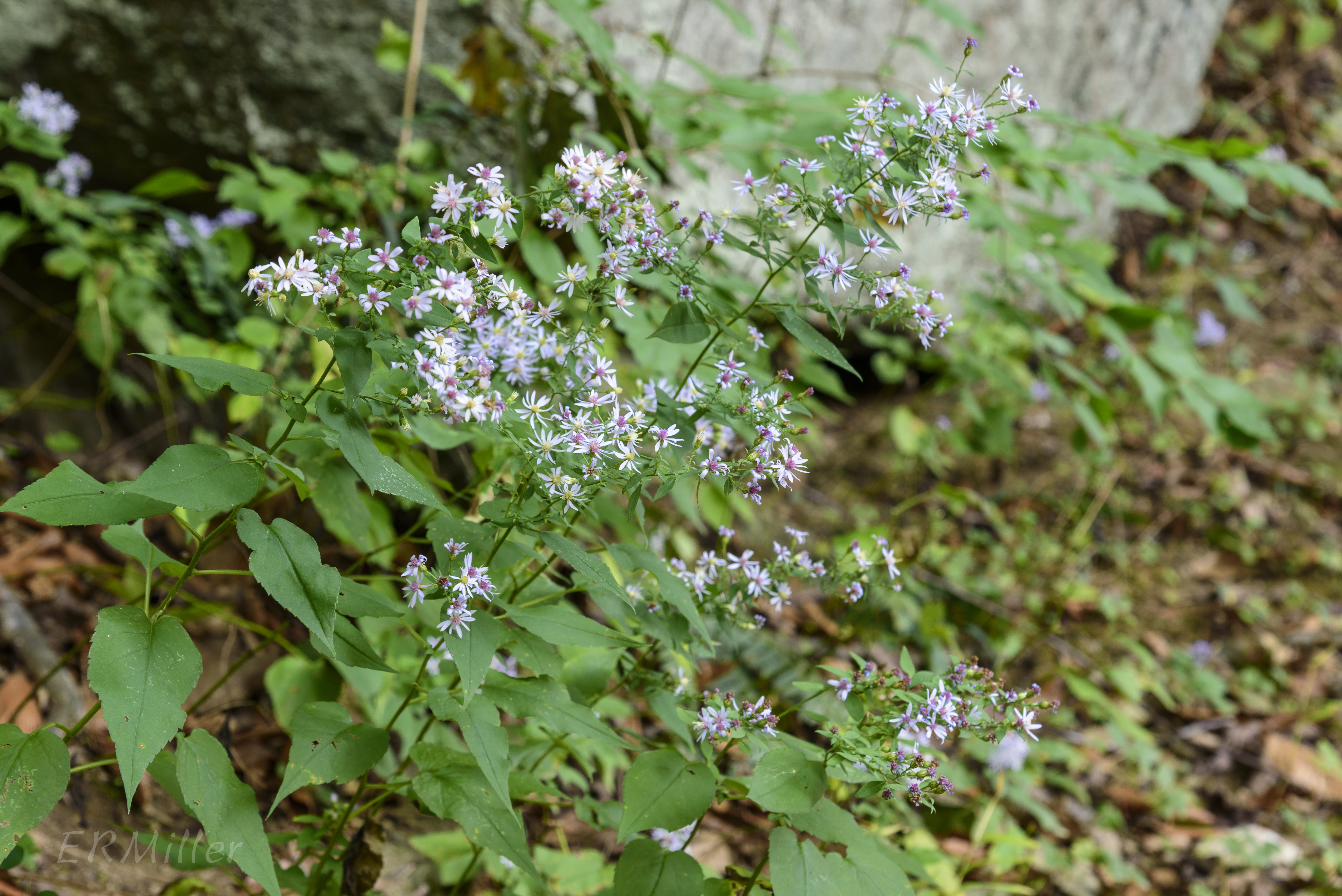
Common blue wood aster, aka heart-leaved aster, is found all over the eastern US and Canada, with some occurences in the midwest, mostly between the Missouri and Mississippi Rivers, and also in British Columbia. The taxonomy of several species closely related to this one is in flux*, so beware if you’re using an older guidebook to try to identify asters that you find. You might not be able to say for certain which species is is, only which genus. For that matter, the older guidebooks will still give the genus as Aster rather than Symphyotrichum.

20161014-_dsc0012


20161014-_dsc0032

white wood aster
Eurybia divaricata

White wood aster has similar leaves to common blue aster, but obviously different flowers. This species is not as widespread, occurring mostly in the greater Appalachian region, from New Hampshire to Alabama (and possibly in Quebec and Ontario).

BONAP and the Maryland Biodiversity Project agree that common blue wood aster can be found in Montgomery and Frederick Counties in Maryland, but disagree where else in the state it grows. Both sources show white wood aster growing in more counties in Maryland. Each of these species grows one to three feet tall, common blue in moist to dry woodlands, white wood in drier areas.  The patch of common blue pictured below is along the Cabin John Trail, near the southern end. It really just lights up the whole area.

20161014-_dsc0007

*see my post last year on the subject: Are Asters Really Asters?