One Reason to Plant Native Flowers


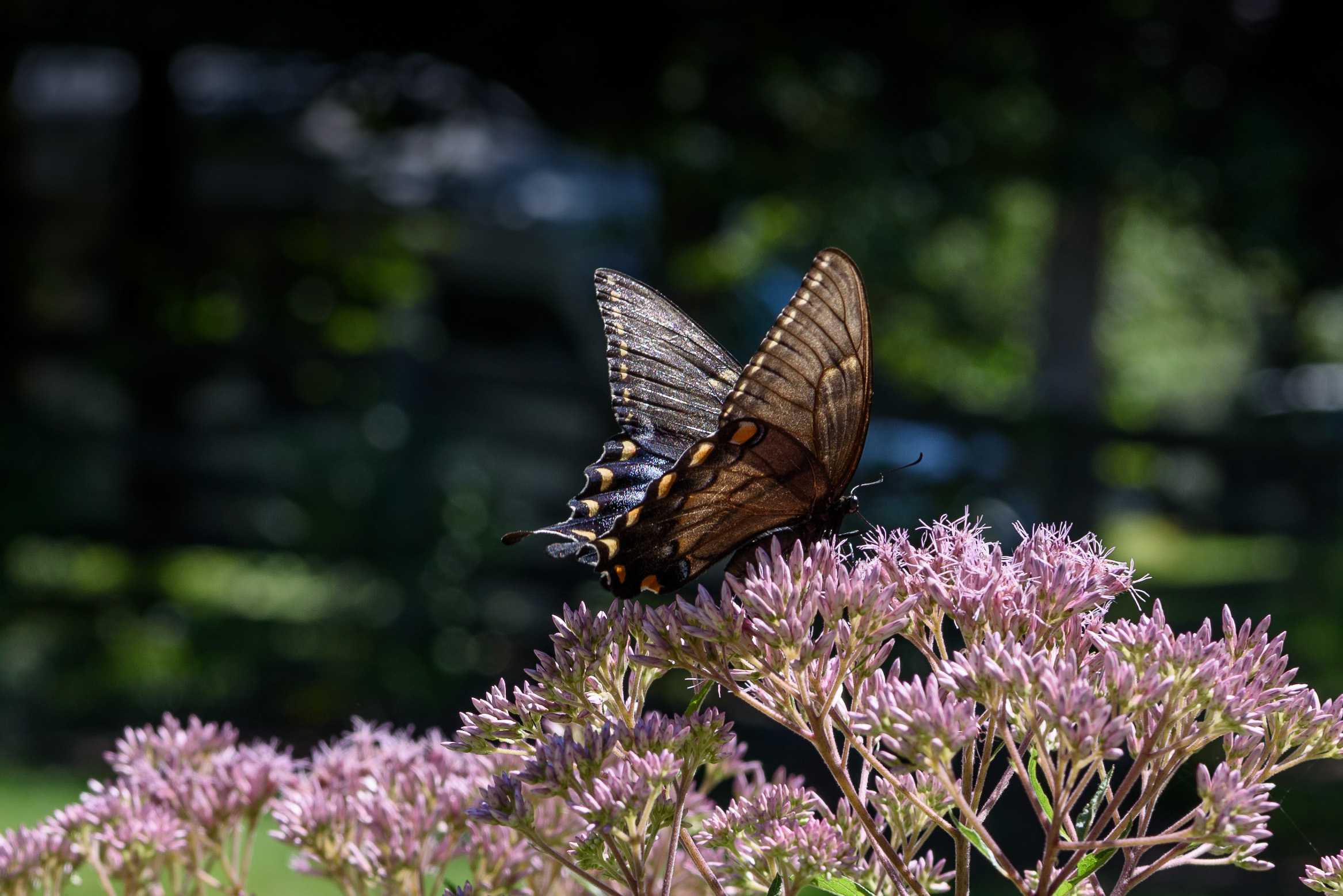
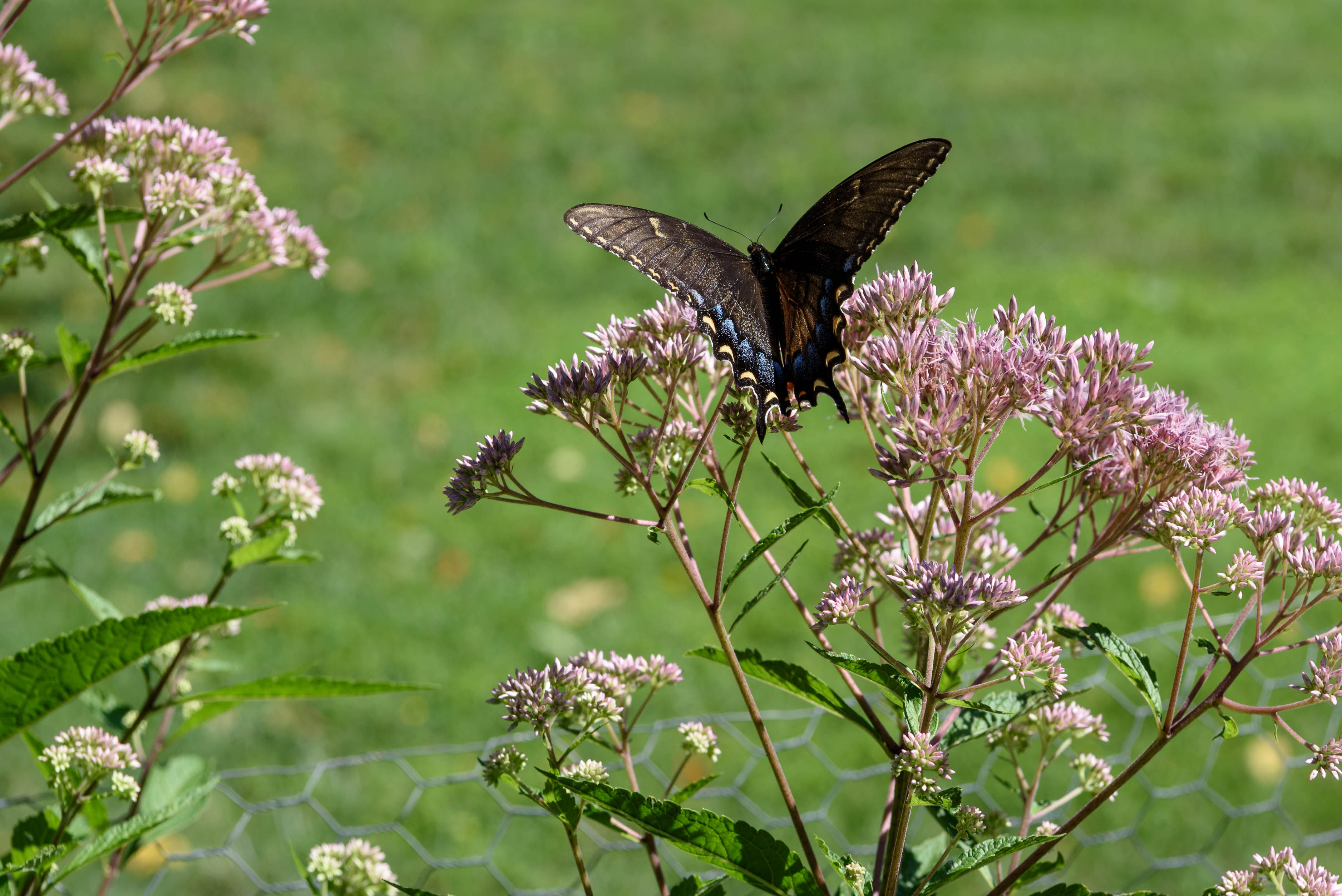
When I don’t have time to write meaningful content, I post pretty pictures. Here are a few of a spicebush swallowtail on Eutrochium fistulosum (joy-pye weed, Asteraceae) in my garden. The plant also attracts monarchs, eastern tiger swallowtails, and lots of skippers and bees.

I hope to get back to writing some time next week. Apologies for the lapses.

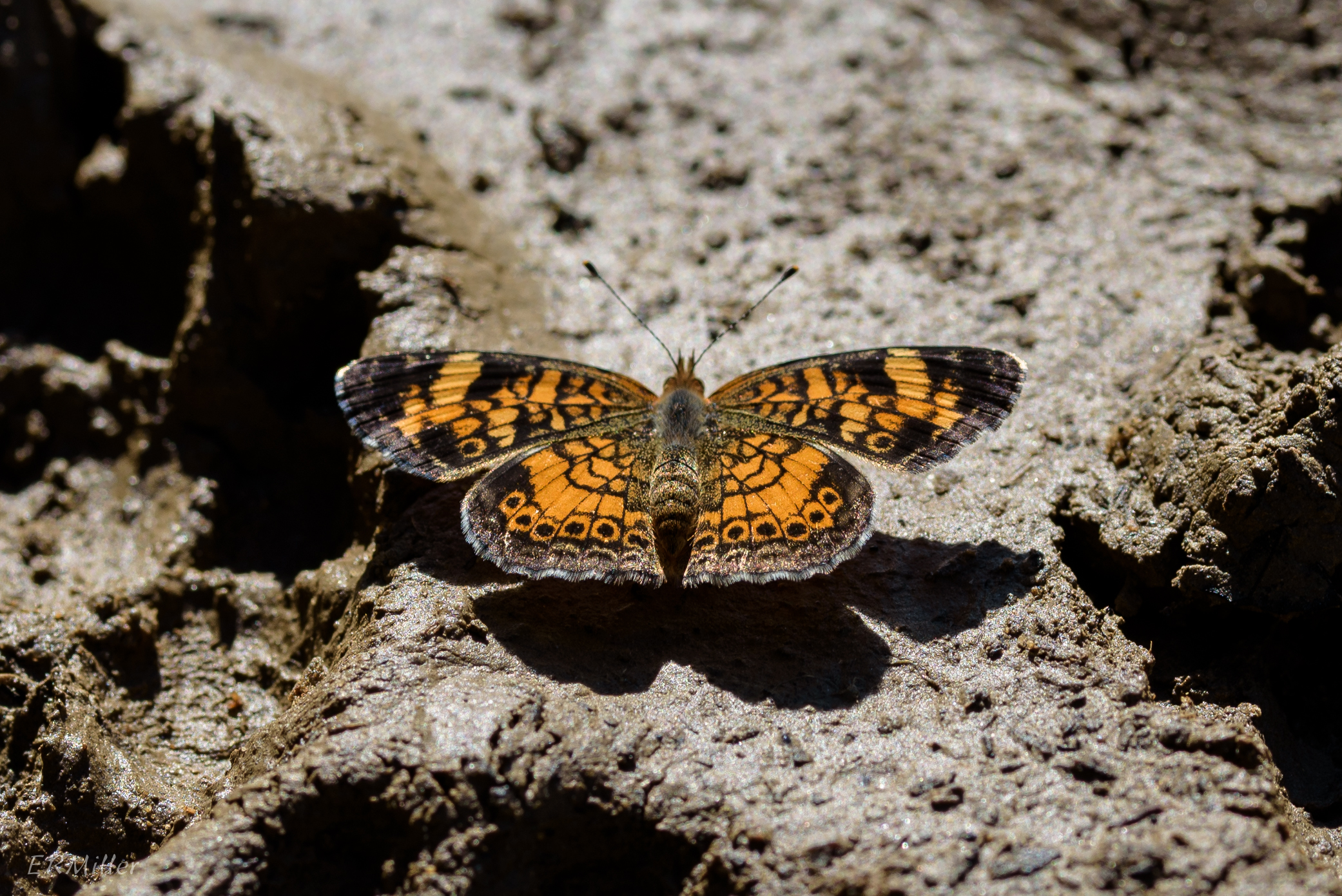
Pearl Crescent

20151012-_DSC0107

pearl cresecent
Phyciodes tharos
Nymphalidae

The pearl crescent is a common small butterfly in the brush-foot family. They produce several broods each year; the adults can be seen flying in Maryland from early May to November. They range from the Rocky Mountains east in the US, southern Canada, and northern Mexico.

Caterpillar host plants include a large number of aster (Symphyotrichum) species. Adults feed on plants in the dogbane, aster, and mustard families (Apocynaceae, Asteraceae, and Brassicaceae).

Like many butterflies, especially brush-foots, they’re often found near puddles. The one pictured here was one of about a dozen flitting about the mud on the banks of the Potomac River one morning in mid-October. The deep depressions to the left and bottom of the picture are dogs’ pawprints.

For more information have a look at
Maryland Butterflies
Butterflies and Moths of North America
Mass Audobon

Monarchs (A Post for Cheryl)

20151005-_DSC0302

Ta-da!  Here it is, the current darling of conservation, the monarch butterfly (Danaus plexippus).  I promised a friend I’d write about them if I ever actually saw one.  So here you go, Cheryl, this post is for you!

This one was in the Smithsonian butterfly garden on the National Mall, feeding on butterfly milkweed (Asclepias tuberosa).

The monarch is easily mistaken for another butterfly, the viceroy.  The two look a lot alike; the major difference is a dark lateral stripe toward the rear of the viceroy’s hindwings.  I don’t have a picture to illustrate that but have a look at the Maryland Butterflies website.

I’m no entomologist so I’ll stick with a few basic facts.

There are two populations of monarchs, one east of the Rocky Mountains and one to the west.

Most of the eastern population overwinters in Mexico, though some will hibernate on the Gulf and southern Atlantic coasts.  Adults already in the tropics do not migrate.

Monarchs lay eggs on milkweeds (Asclepias species, and two other species in the Apocynaceae).  The caterpillars go through five instars before pupating and emerging as an adult butterfly.  The adults will feed on a variety of plants, including species in the aster, carrot, pea, and mustard families.

Monarchs will produce one to six broods during the summer.  Most of the butterflies live only a few weeks; it’s the last brood of the year that migrates south to overwinter, mate, and return north, laying eggs on the way.

The eastern population has declined by more than 90% since 1995, which is about one billion individuals.

The major threat to monarchs is habitat loss, which takes two forms: destruction of the forests in which the monarchs overwinter, and destruction of milkweeds, the sole larval host plant.  Milkweeds are considered nuisance plants by farmers and many homeowners.  Another threat – and another reason to hate invasive species – is the increasing presence of two species of Cynanchum, exotic alien plants that look like the native Cynanchum laeve (which is a larval host plant) but are poisonous to the larvae.

Other species of butterflies migrate, but the monarch is the only one that migrates both ways.

For more detailed information check out any of the following sites:
USDA Forest Service
Butterflies and Moths of North America
Monarch Watch
The Xerces Society


20151005-_DSC0320

Who’s Eating My Dill Weed?

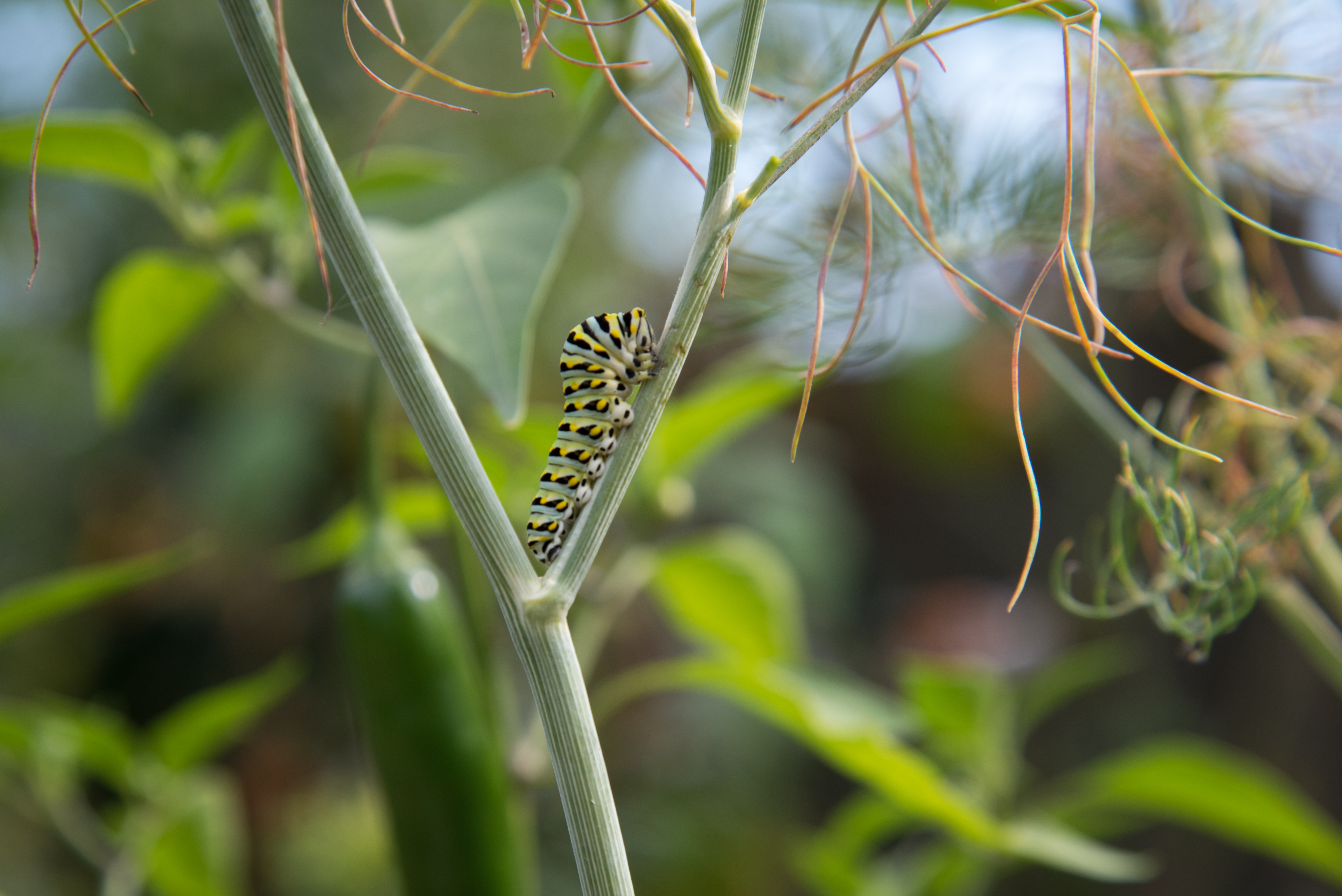
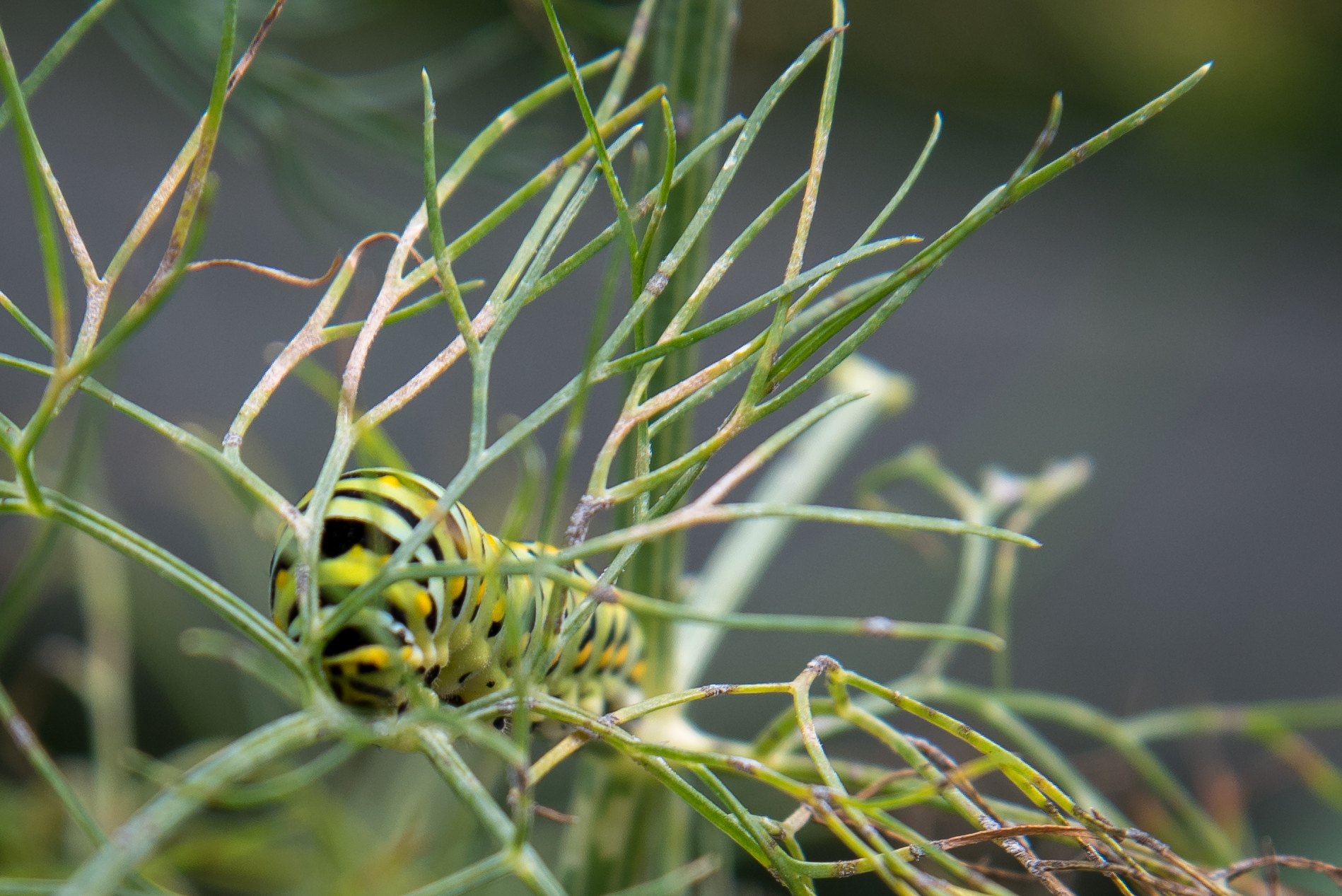
I’m out hunting for wildflowers so often my poor garden is neglected.  This year I let about a dozen or more volunteer dill plants grow wherever they came up. They’re a mess now, some still flowering, most gone to seed and looking weedy. I was pulling them out and cutting them back and generally tidying up when I saw this caterpillar…

20150831-_DSC0022

…and immediately put down the pruners and went inside to fetch the camera. (That’s a serrano pepper behind the dill, by the way.)

There were several, actually, so I stopped pulling the plants and left the insects where they were – there’s plenty of dill to spare, and these caterpillars will soon pupate to later emerge as black swallowtail butterflies.

Black swallowtail (Papilio polyxenes) caterpillars feed on plants in the Apiaceae, mostly on garden plants brought by European colonists: dill, parsley, wild carrots, and fennel.

20150831-_DSC0024


a late flowering dill plant in my garden, August 31


Learning that, I immediately wondered what they ate before the invasion.  I wasn’t the only one asking that question, for the answers were right there on the internet.  Among other things they love golden Alexanders (Zizia aurea).

20150429-20150429-_DSC0020


golden Alexanders on Billy Goat B trail, April 29


I love golden Alexanders, too, and bought one from a native plant nursery last spring. Darned expensive little thing. It’s coming along quite nicely, but there isn’t enough green to spare to feed a voracious late instar caterpillar.  I don’t know what I’ll do if I find one on the plant. Probably pick it off and move it over to the dill.  Hopefully that wouldn’t cause the osmeterium to come out.

Bon appetite, mes beautés!

20150831-_DSC0017

Lepidopterans Photobomb My Mistflower Shoot

20150823-_DSC0108

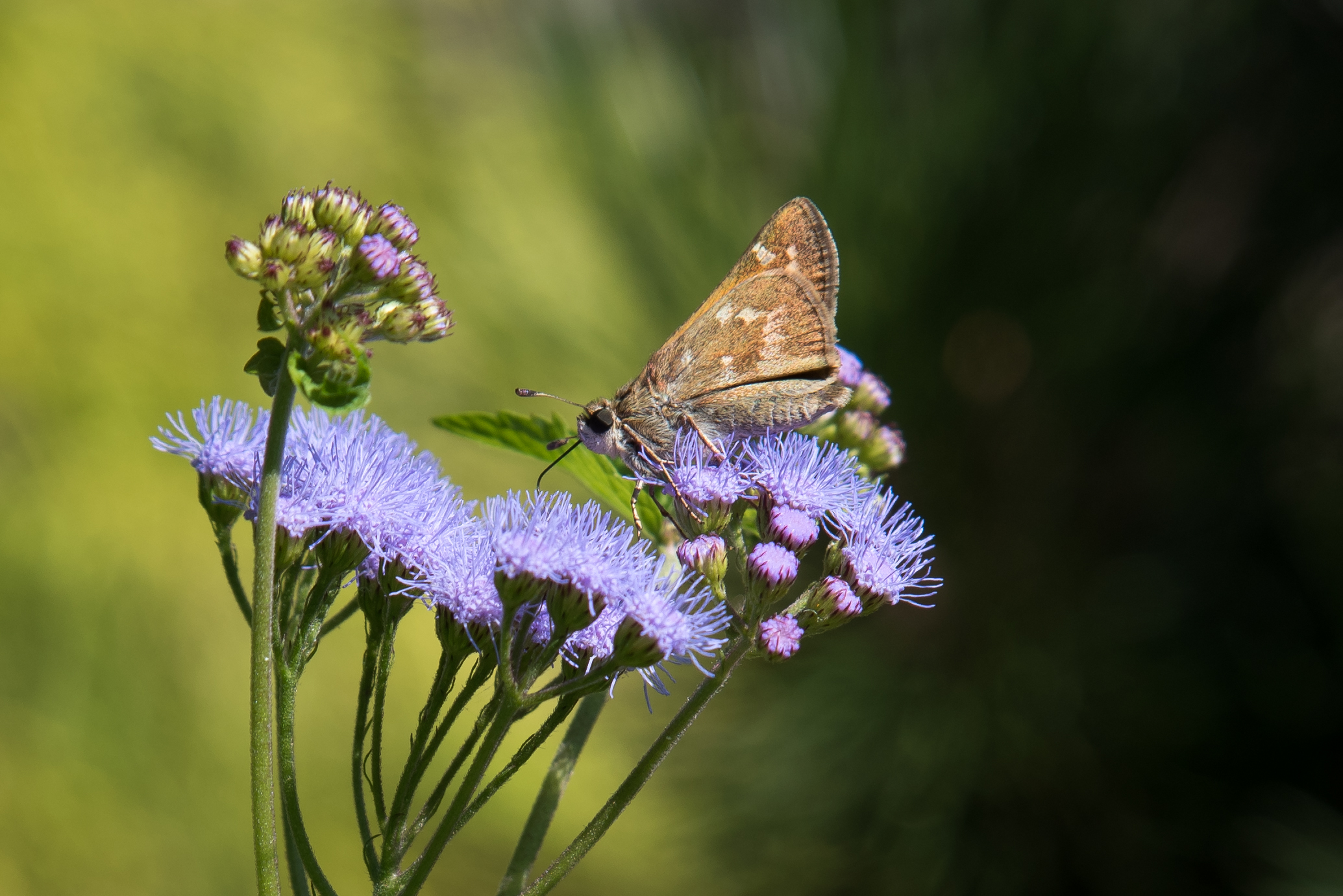
I’ve been trying for two weeks now to get some up-close, detailed shots of various flowers to write a post about plants currently and formerly classed in the genus Eupatorium.  With blue mistflower it’s fairly easy as there’s a nice clump growing in my garden.  But a skipper and a butterfly just wouldn’t leave the plants alone.  I’m not complaining; it was a good opportunity and a pleasant way to spend time on a lovely afternoon.

20150823-_DSC0084

Pictured:
blue mistflower (Conoclinium coelestinum; Asteraceae)
a skipper (little glassywing?)
eastern tailed-blue butterfly (Cupido comyntas)
20150823-_DSC0103 20150823-_DSC0104 20150823-_DSC0105

Blue mistflower is a common plant of partly sunny, wet places – you’ll see it frequently close to the banks of the Potomac, where it blooms from mid to late summer (at least). It can be found from Florida north to New York, east to Texas, and from there north to Nebraska.  It’s a nice native alternative to the similar-looking common garden plants known as ageratum, about which a plantsman at a botanic garden where I used to volunteer would always roll his eyes; he called them “droopy Maryland swamp plants”.  Don’t know where he got “droopy” from.  Anyway, they are growing so vigorously in my evergreen garden – which isn’t particularly wet – that I’m a bit worried they’ll become weeds.