Belly Daisies

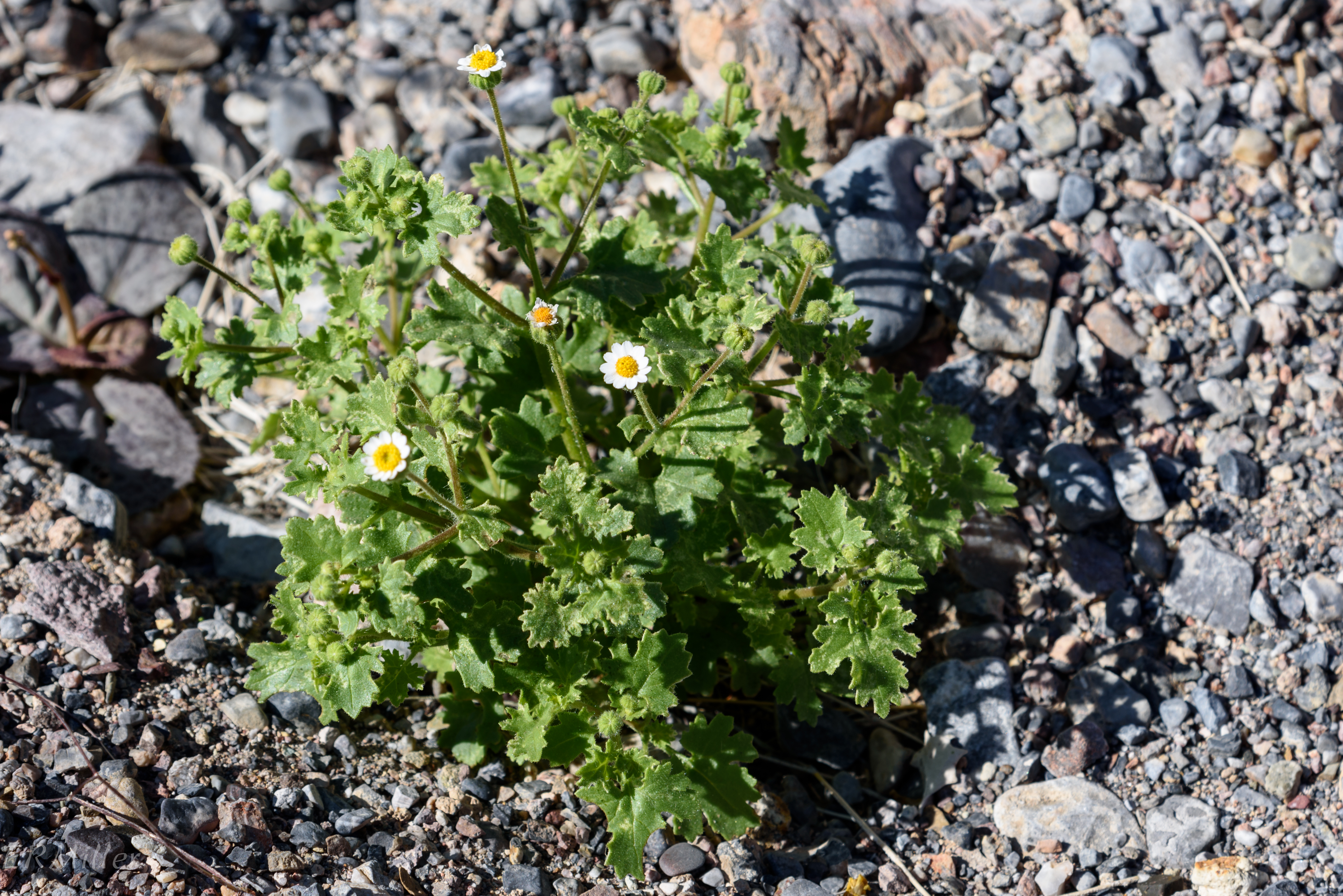
20160310-_DSC0843

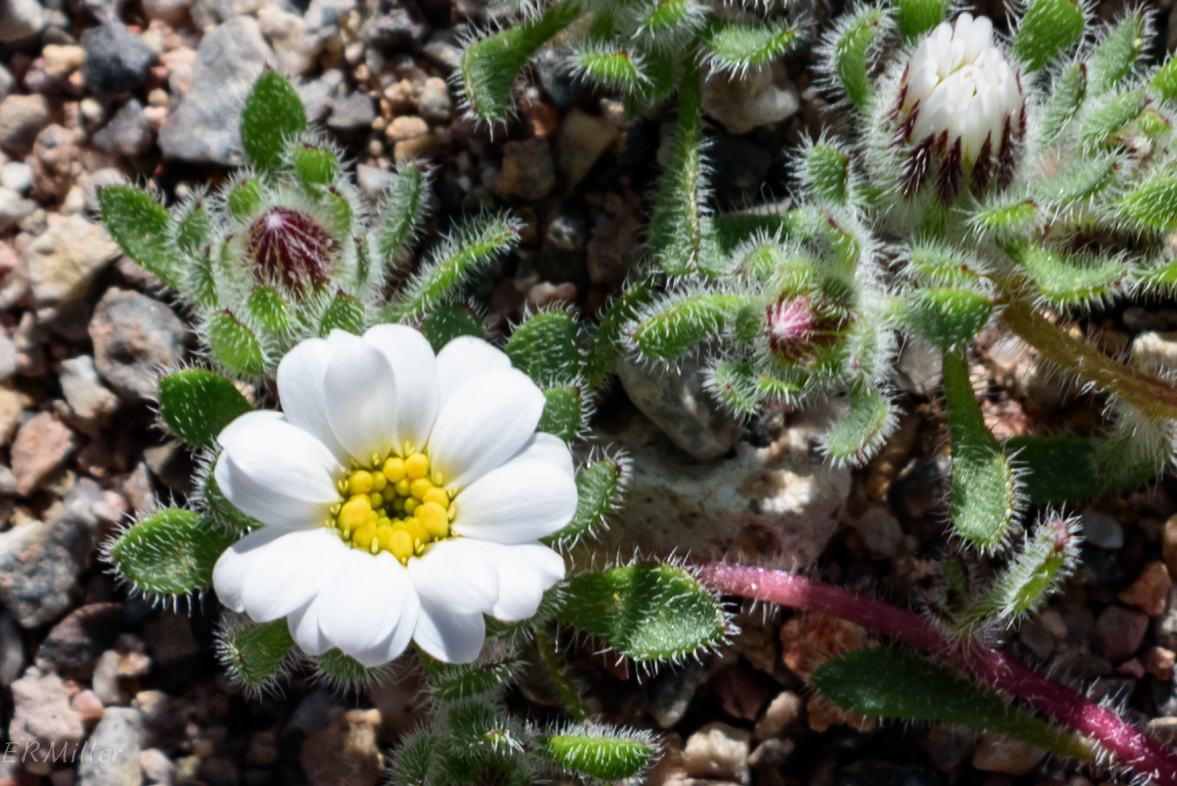
desert star; Mojave desertstar
Monoptilon bellioides
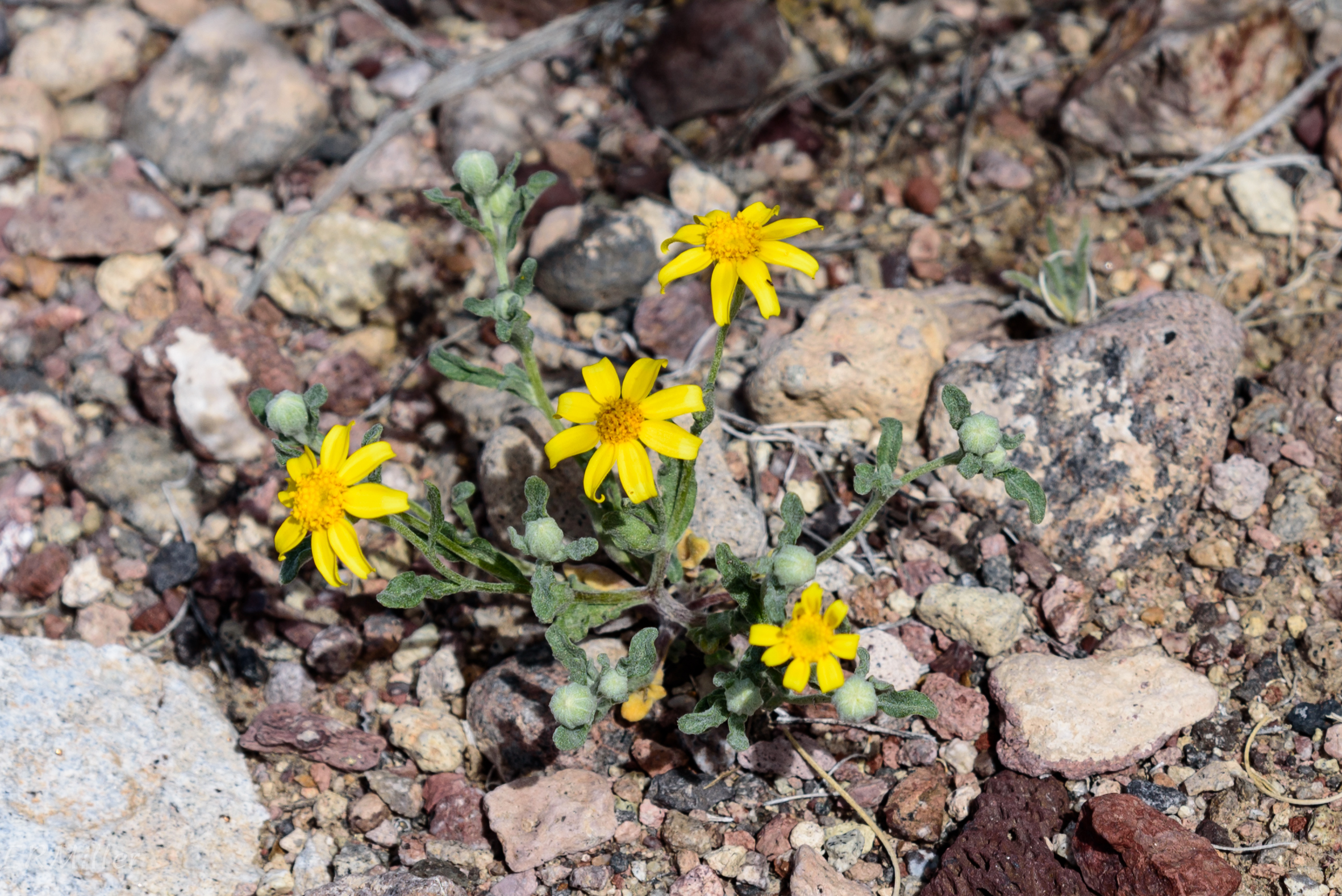
20160310-_DSC0830


rock daisy; Emory’s rockdaisy
Perityle emoryi
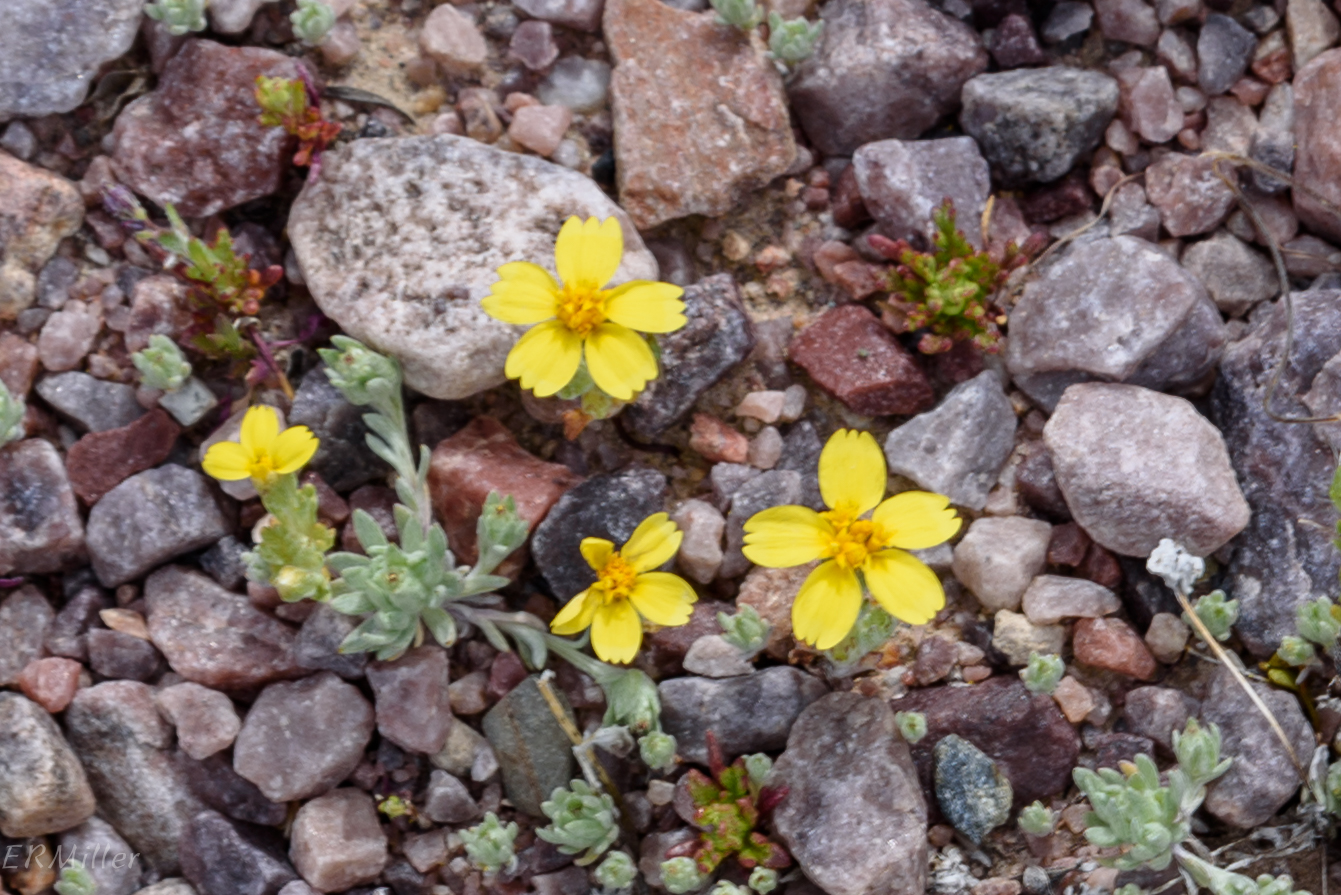
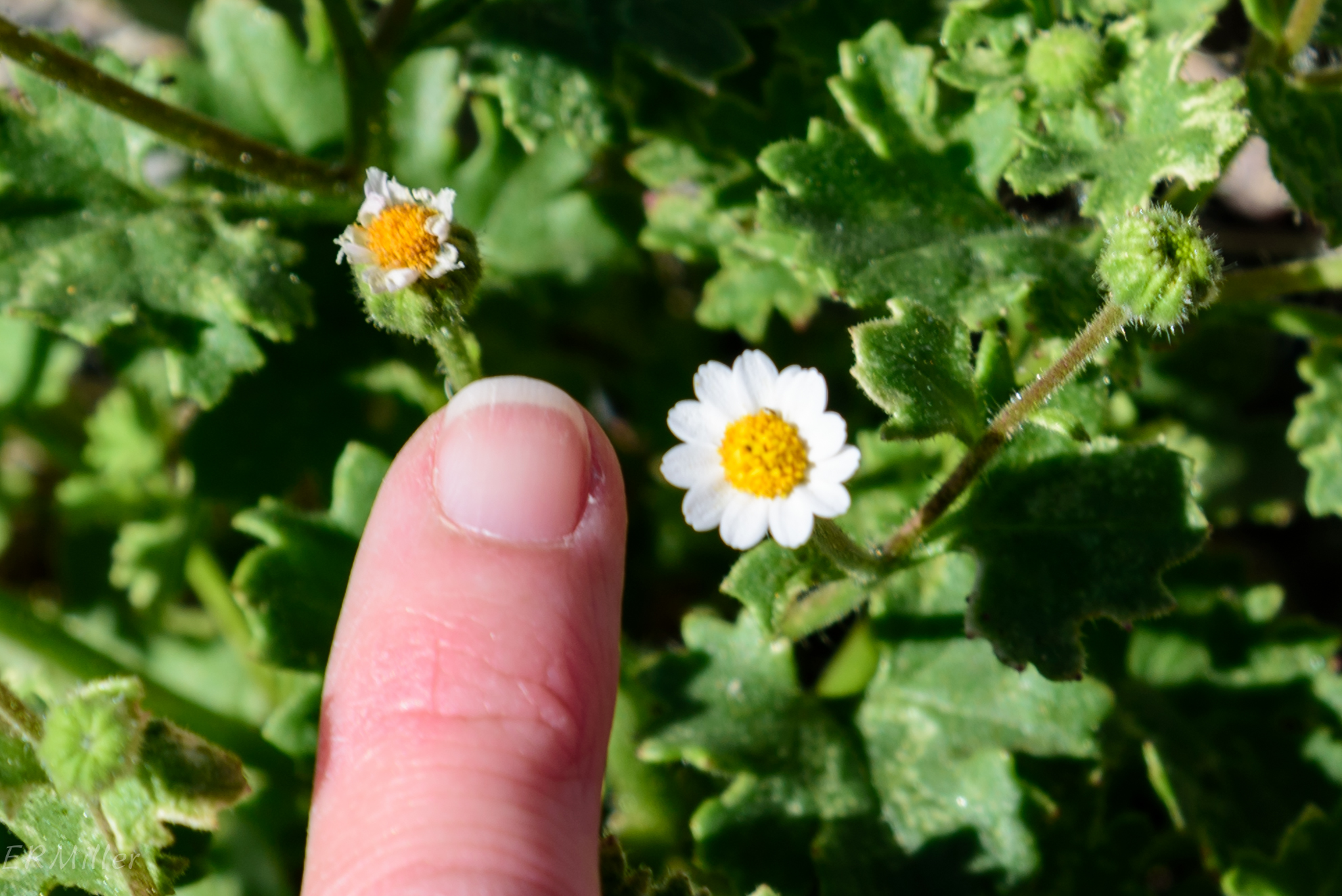
20160309-_DSC0622


woolly daisy; easterbonnets
Eriophyllum wallacei
(formerly Antheropeas wallacei)
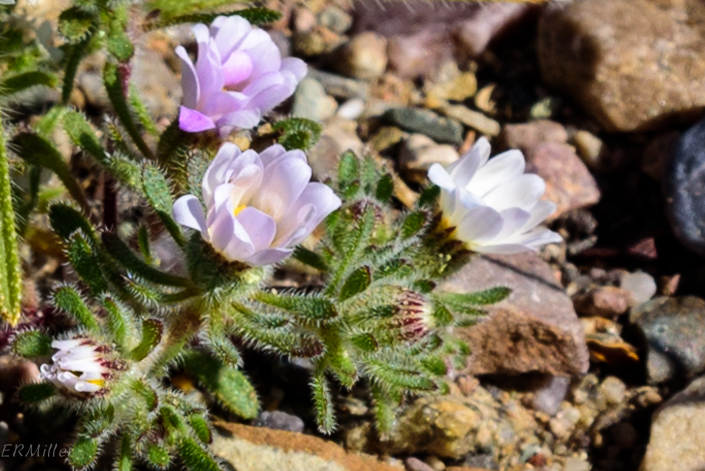
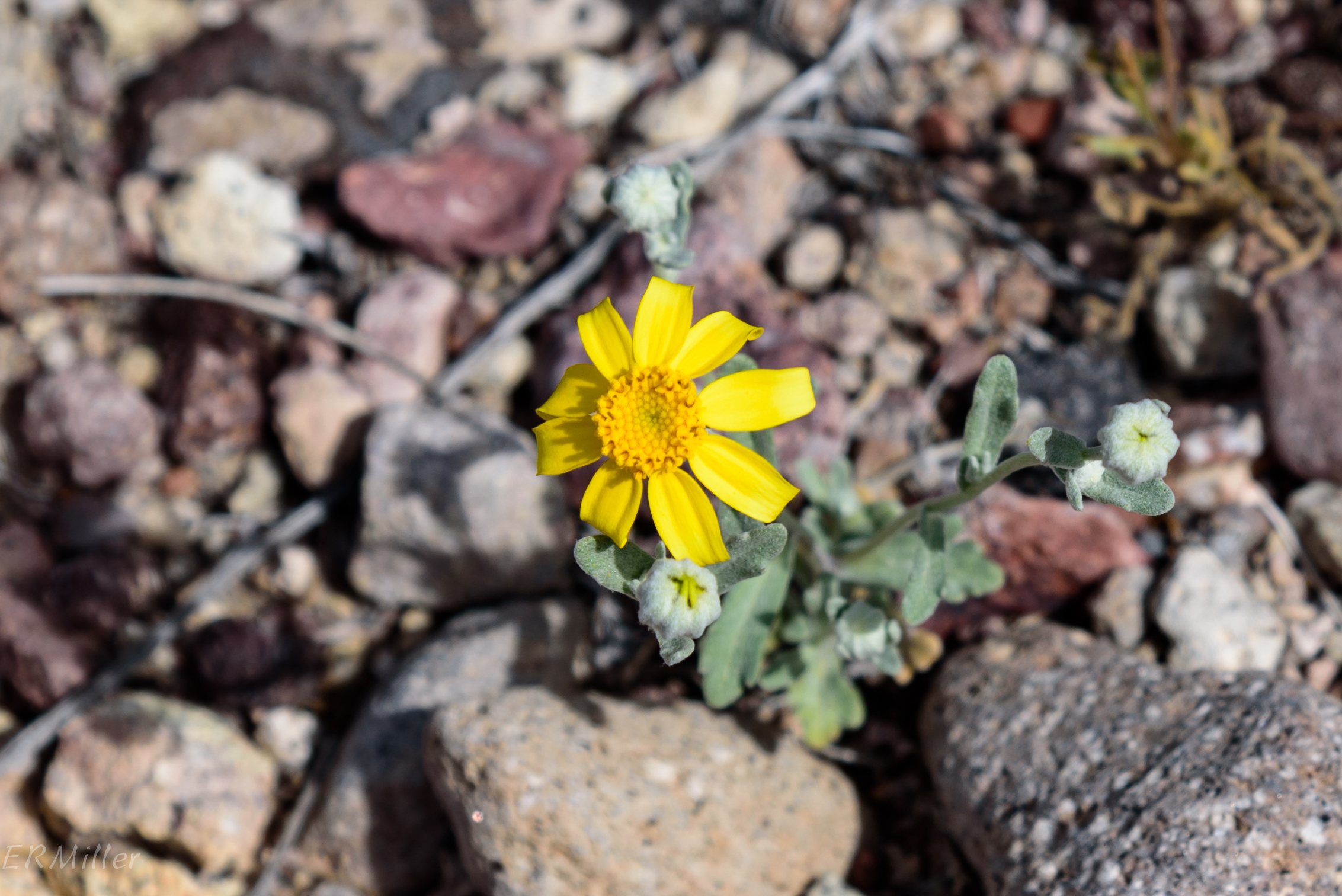
20160309-_DSC0747


false woolly daisy; yellowray Fremont’s gold
Syntrichopappus fremontii


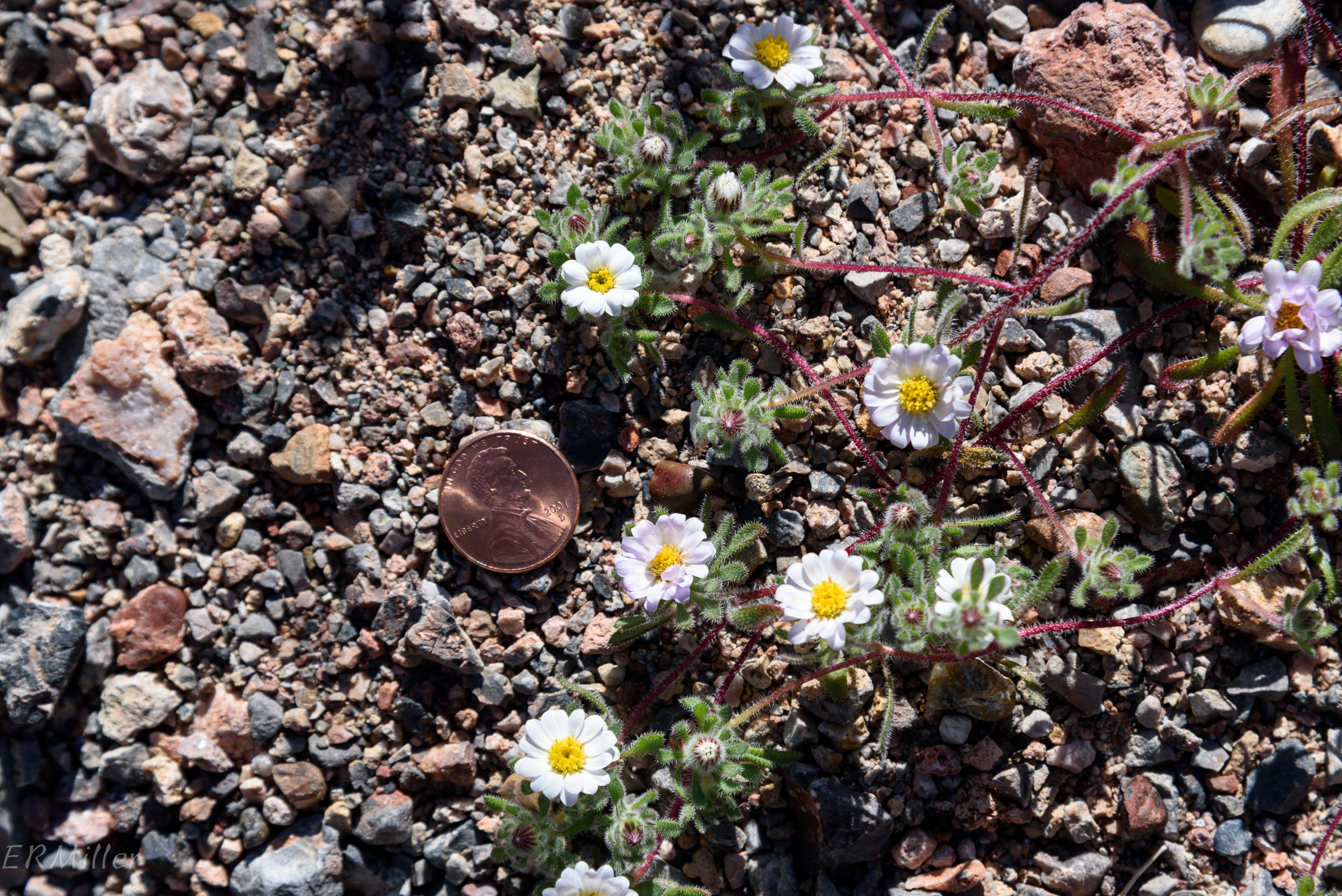
These four Death Valley belly flowers are in the Asteraceae, of course. All are native to the desert Southwest. All are itty-bitty (note the penny in the first photo above).
20160308-_DSC0178

20160310-_DSC0843-2

I found desert star to be especially charming.


young blossoms just opening


mature blossom
20160310-_DSC0831


rock daisy is about the size of a pinky-nail
20160309-_DSC0620


woolly daisy is about the same size

20160309-_DSC0746


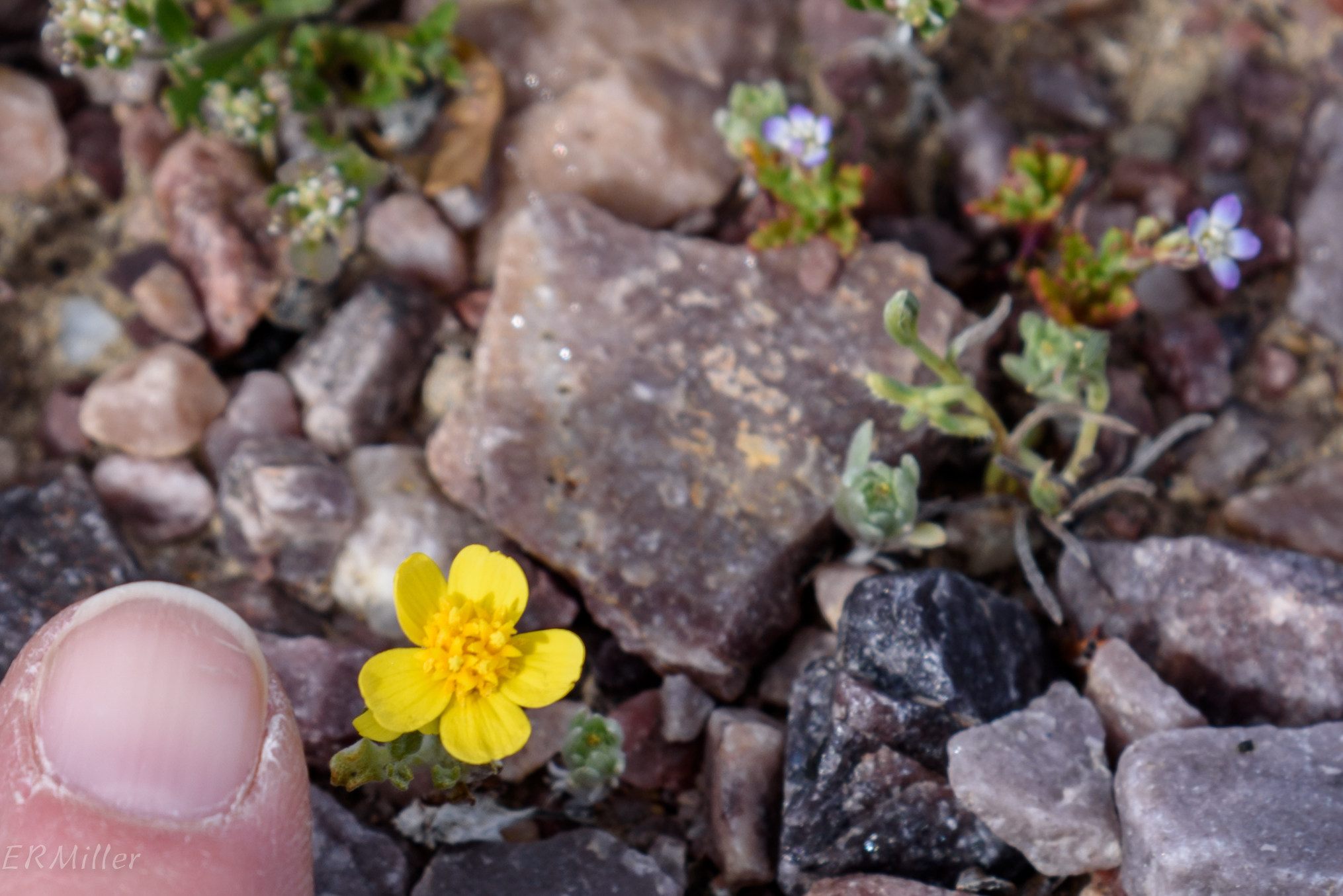
yellowray Fremont’s-gold is a smidge larger (that’s a forefinger nail)


And a special bonus bellyflower: can you see the purple blossom in the upper right of the above photo? The whole thing is about the size of one of the yellow rays. It’s called salt sandspurry (Spergularia salina; Caryophyllaceae). I didn’t even know it was there until I looked at the picture!
 

How Plants Grow in the Desert

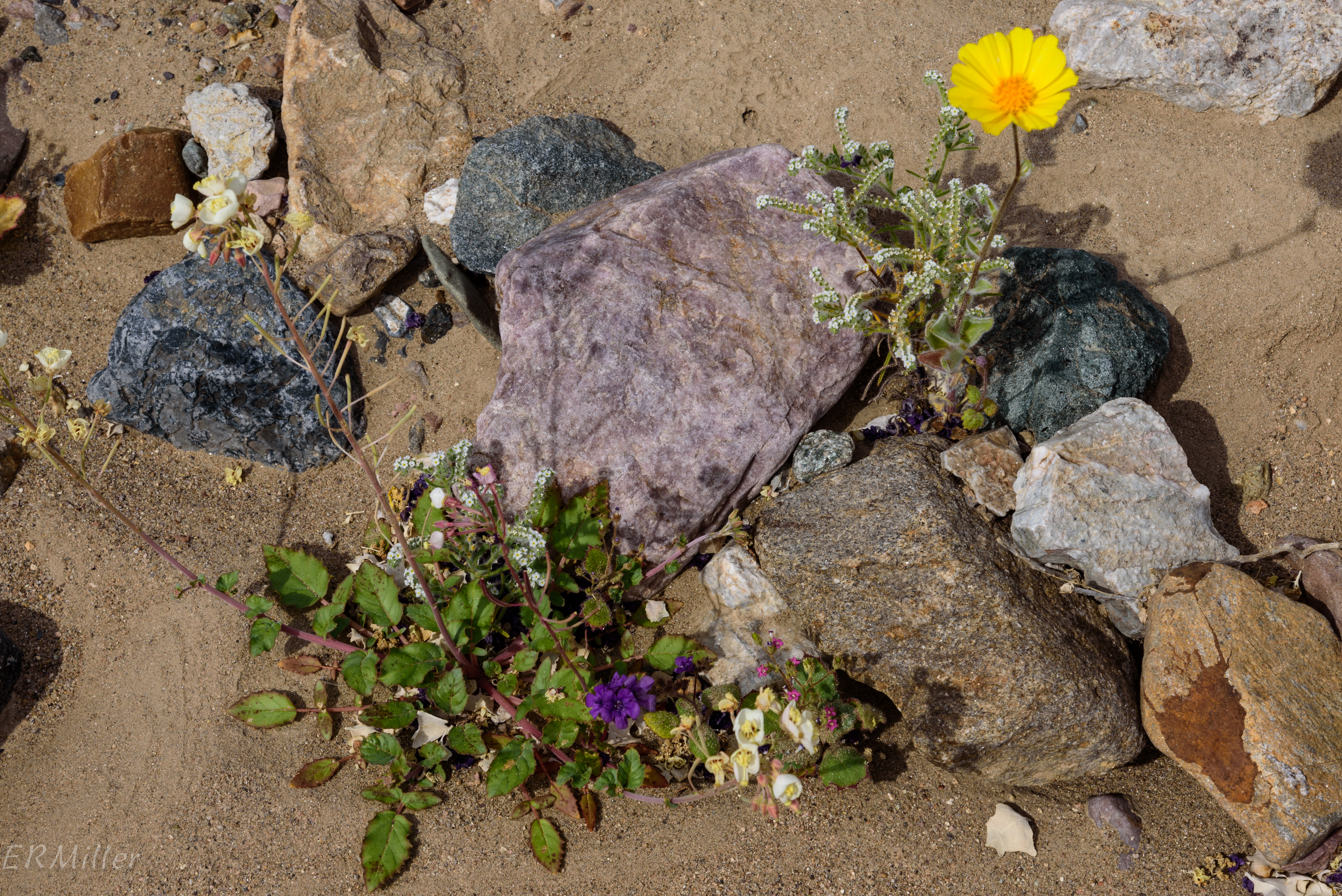
I am no expert in wildflowers, especially not in desert wildflowers, but some things are obvious. Like, even desert plants need water. Take a look at this picture:

20160309-_DSC0708

If you can, click to zoom in. How many plants do you see? How many different species? Notice how they’re all growing together in the lee of a small group of rocks.

I did a lot of poking about during my two and a half days in Death Valley, and it took no time at all to figure out that if you want to see wildflowers (beyond the fields of desert gold), you need to go where there’s moisture in the ground. On the shady side of a wash, up a narrow canyon, into gullies and gulches.

I have nothing special to say about this except that I love the tenacity of desert plants.

…oh, the answers: six plants, five different species. In the lower left
Chylismia claviformis ssp. claviformis (brown-eyed evening-primrose), Cryptantha muricata (pointed cryptantha), Phacelia calthifolia (caltha-leaved phacelia), and Aliciella latifolia ssp. latifolia (broad-leaved gilia). In the upper right, Cryptantha muricata and Geraea canescens (desert gold).


Belly Flowers

In a few recent posts I’ve used the phrase “belly flowers”, regional slang for plants that you need to be on the ground to see. That’s a bit of an exaggeration (knees will do in most cases), but it makes the point. There’s no official definition, of course, but offhand I’d say about a dozen or so of my Death Valley finds could be called belly flowers.

20160308-_DSC0173

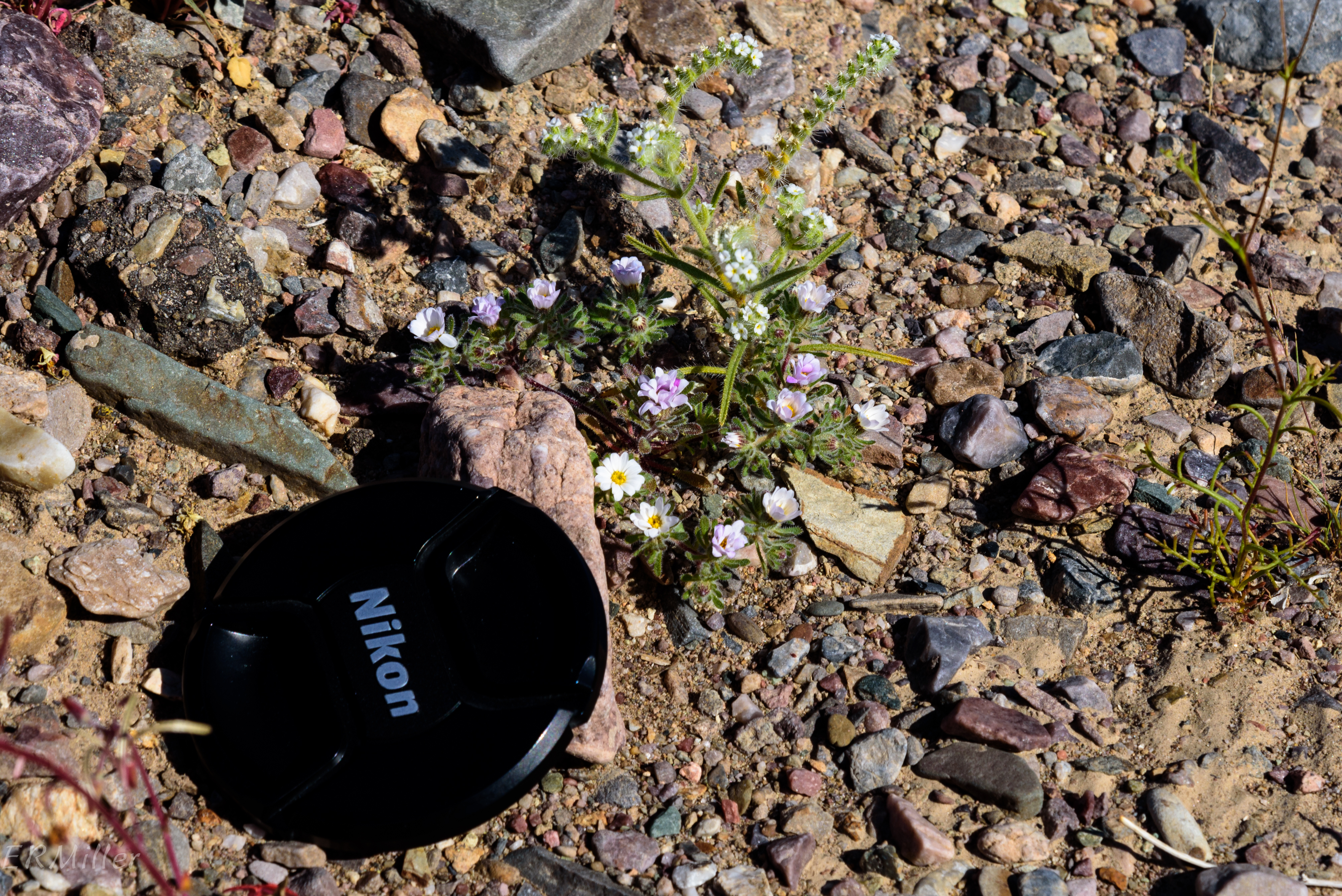
desert star and a Cryptantha species, with 77mm lens cap

Since I’m enamored of tiny flowers, I was charmed to find these plants. I’ve written about a few already (the two gilias and Fremont’s phacelia). Over the next few days I’ll write about a few more.

20160310-_DSC0891

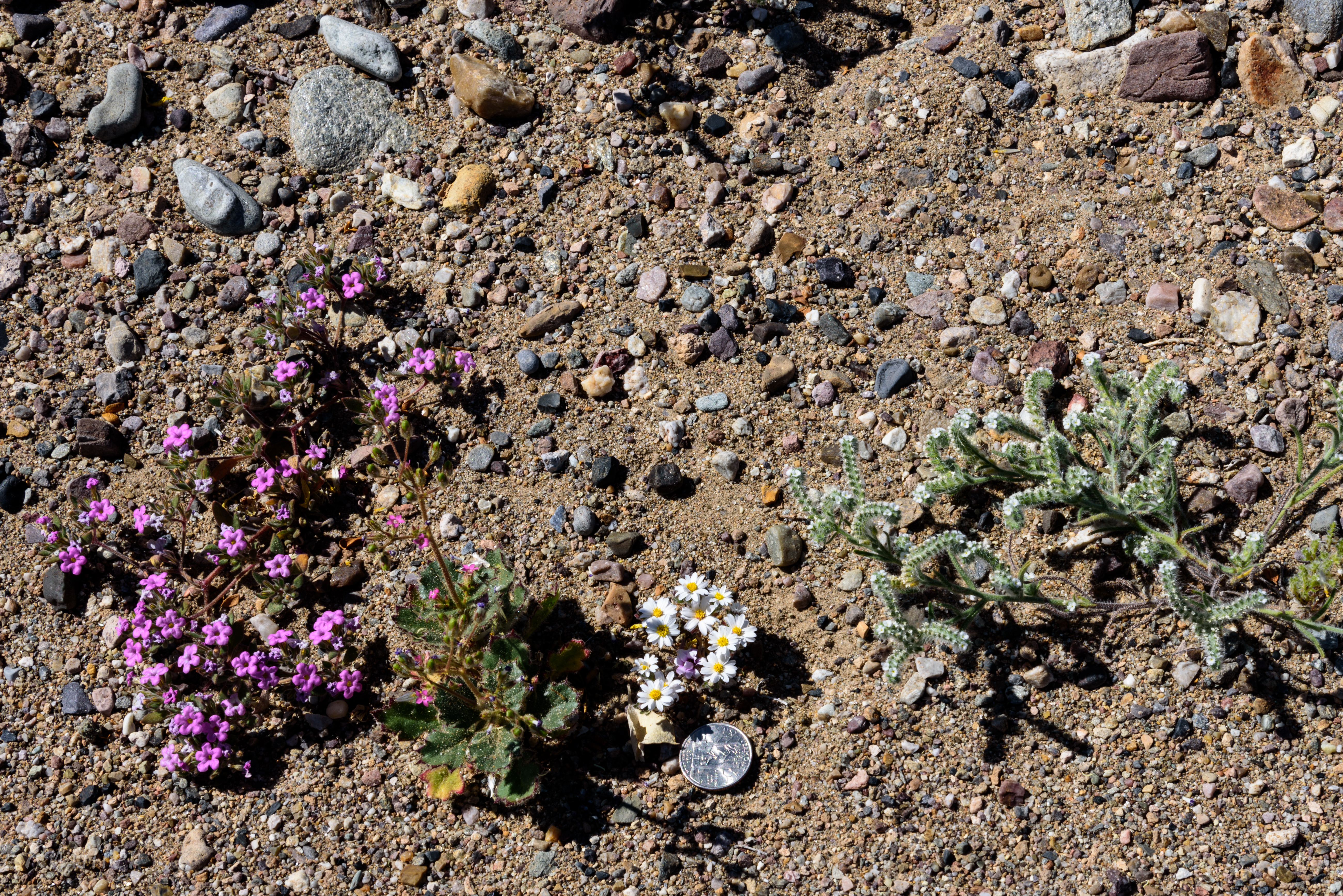
purplemat, broad-leaved gilia, desert star, and Cryptantha species, with dime for scale

Two Cacti, Not Blooming

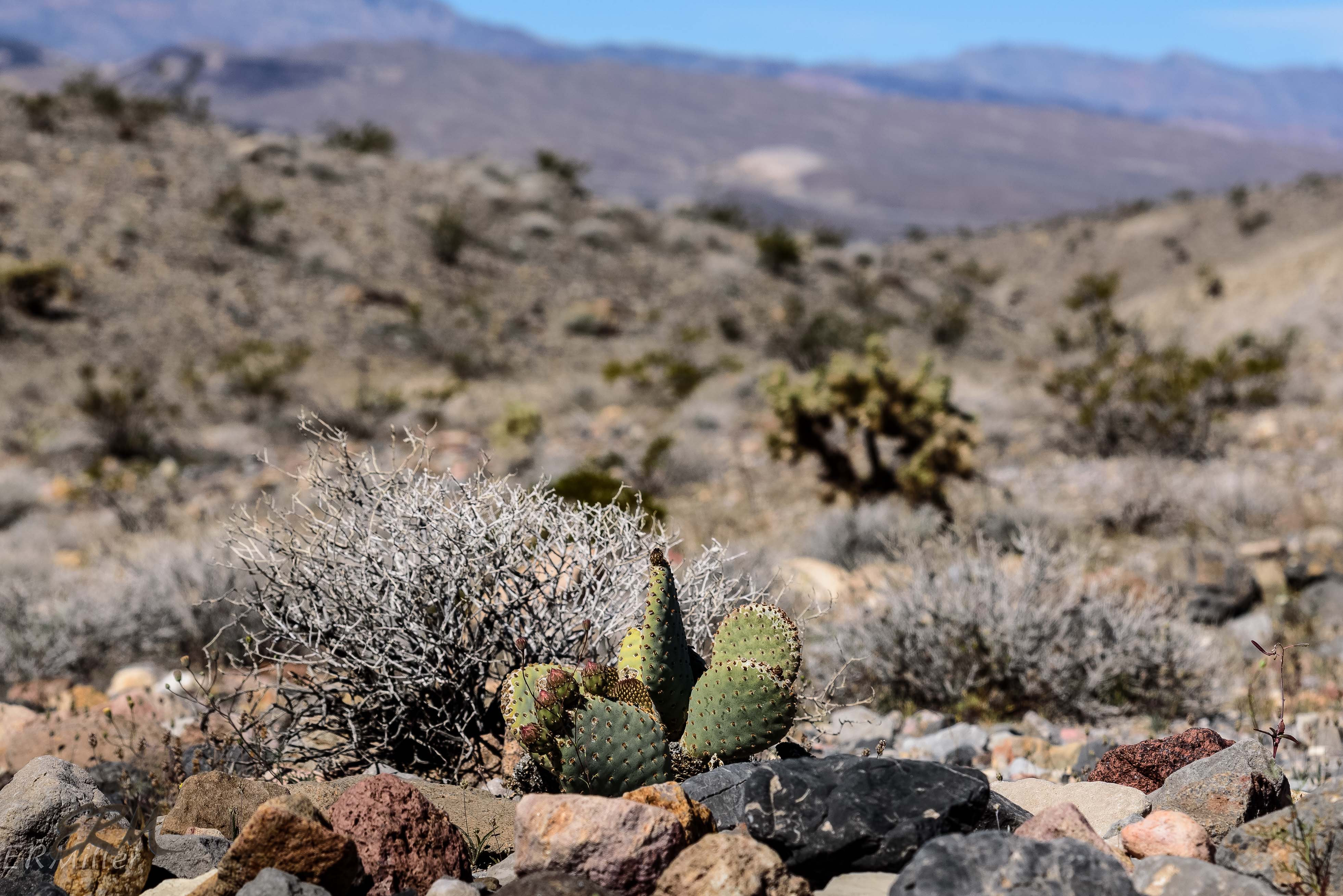
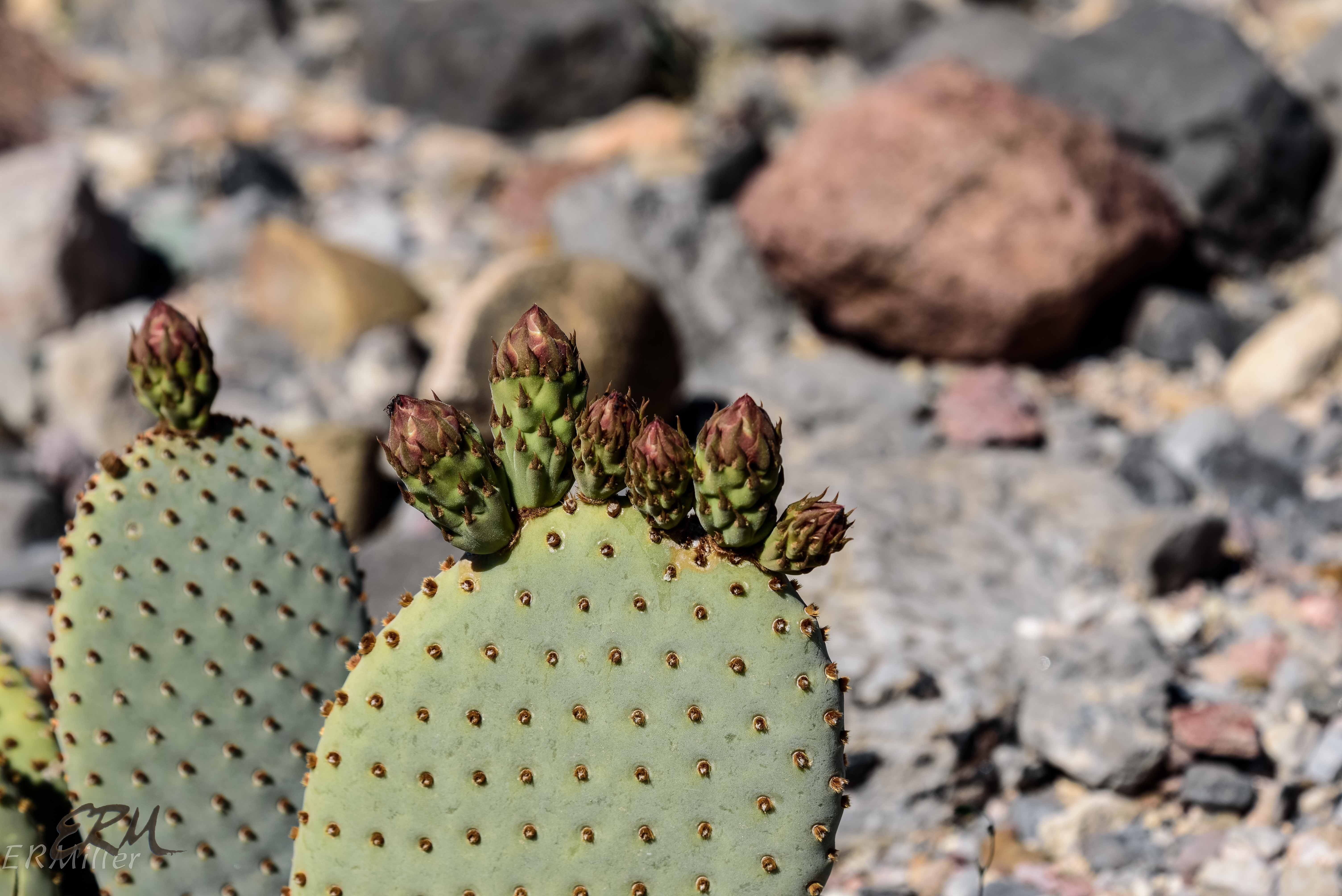
beavertail cactus
Opuntia basilaris
Cactaceae


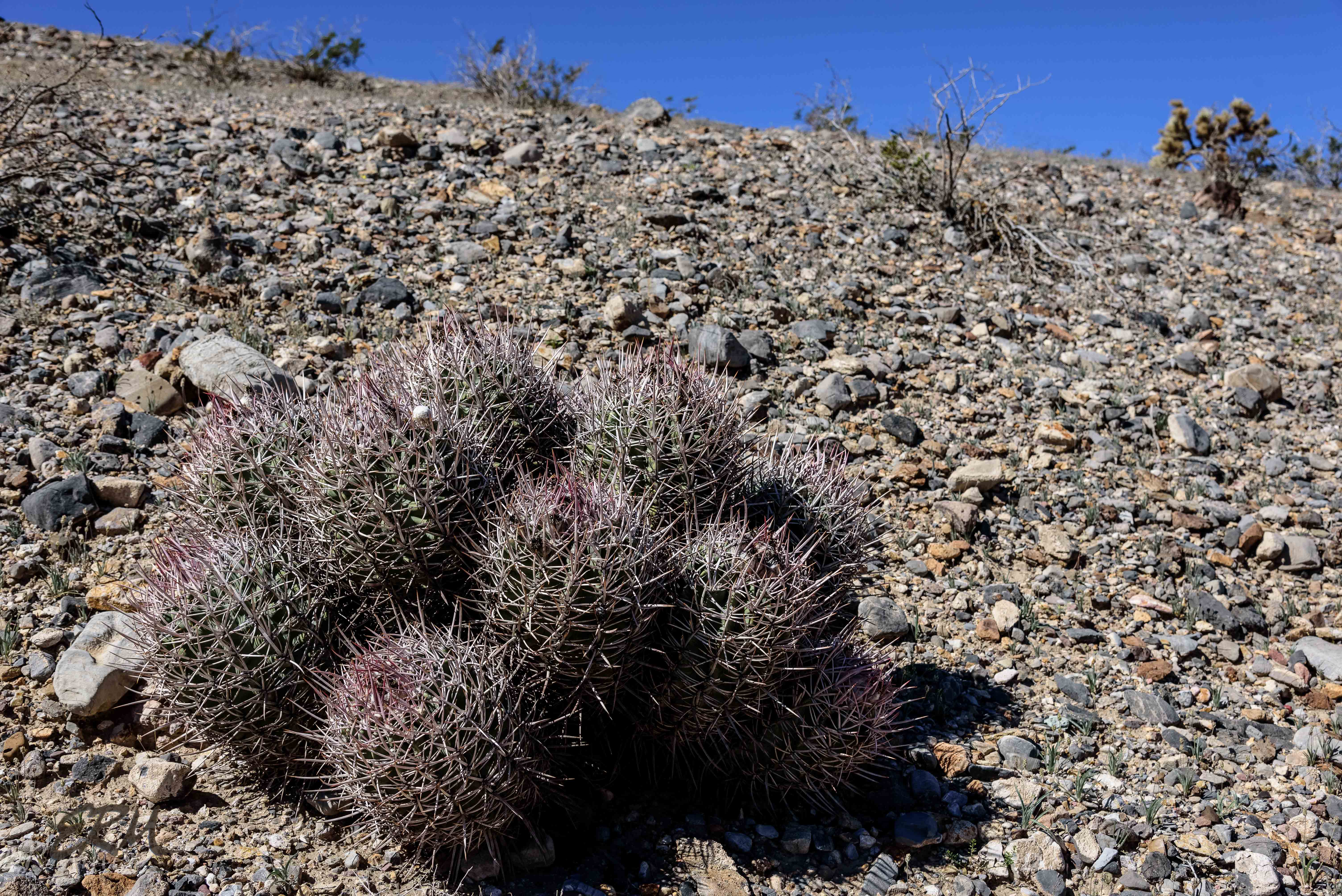
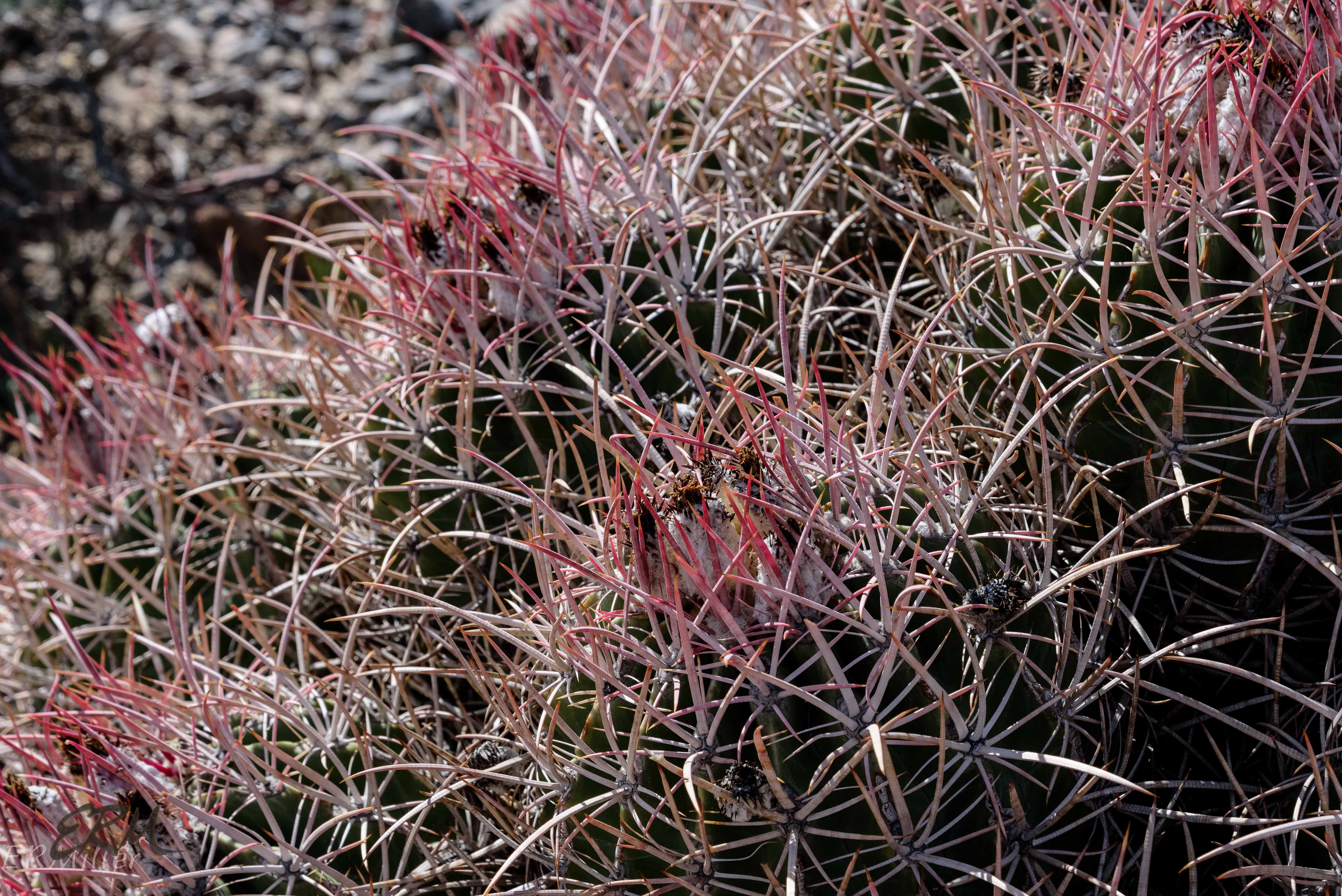
cotton-top cactus
Echinocactus polycephalus
Cactaceae


While exploring the area around the globemallow I came across two different types of cactus plants.  One was well in bud, so I made it a point to go back two days later, right before leaving for the flight home. No luck. Still in bud.


Beavertail looks a lot like the familiar prickly pear cactus (it’s in the same genus), but it lacks spines. There are four varieties; I have no idea which one this is. Here’s a picture of it in flower. [sob]

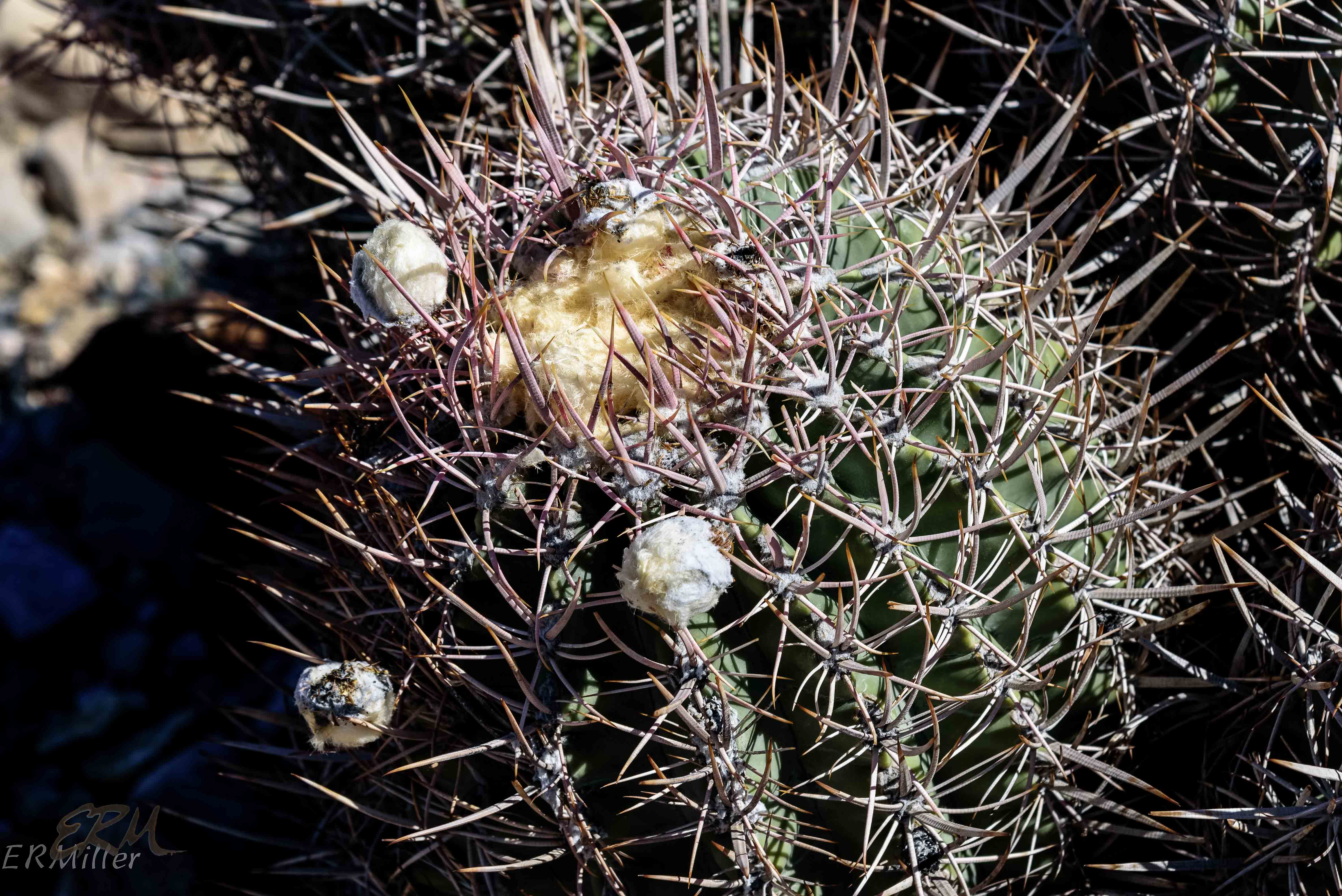
Cotton-top cactus is distinctive because of its form (polycephalus means “many heads”). You can see from this photo how it got its common name:

By the way, if you’re scrambling up a scree where cotton-top are growing, choose to pass the plants on the downslope. I figured this out just a few steps shy of one of the beasts, where sure enough I lost my footing and went for a bit of a slide. It could have been comic in a Road-Runner sort of way. More likely it would have been really painful.


I Brake for Wildflowers…

…wouldn’t you?

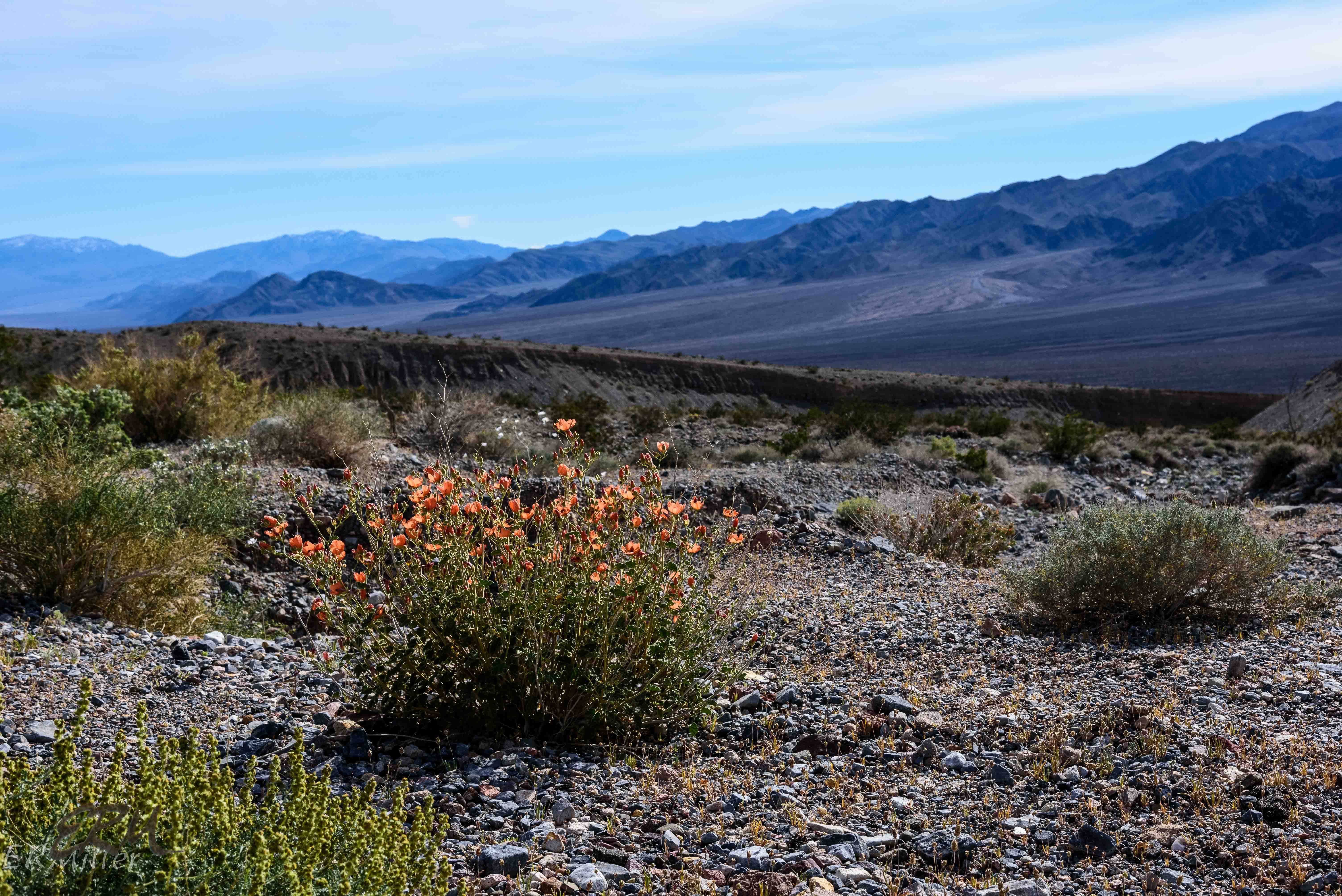
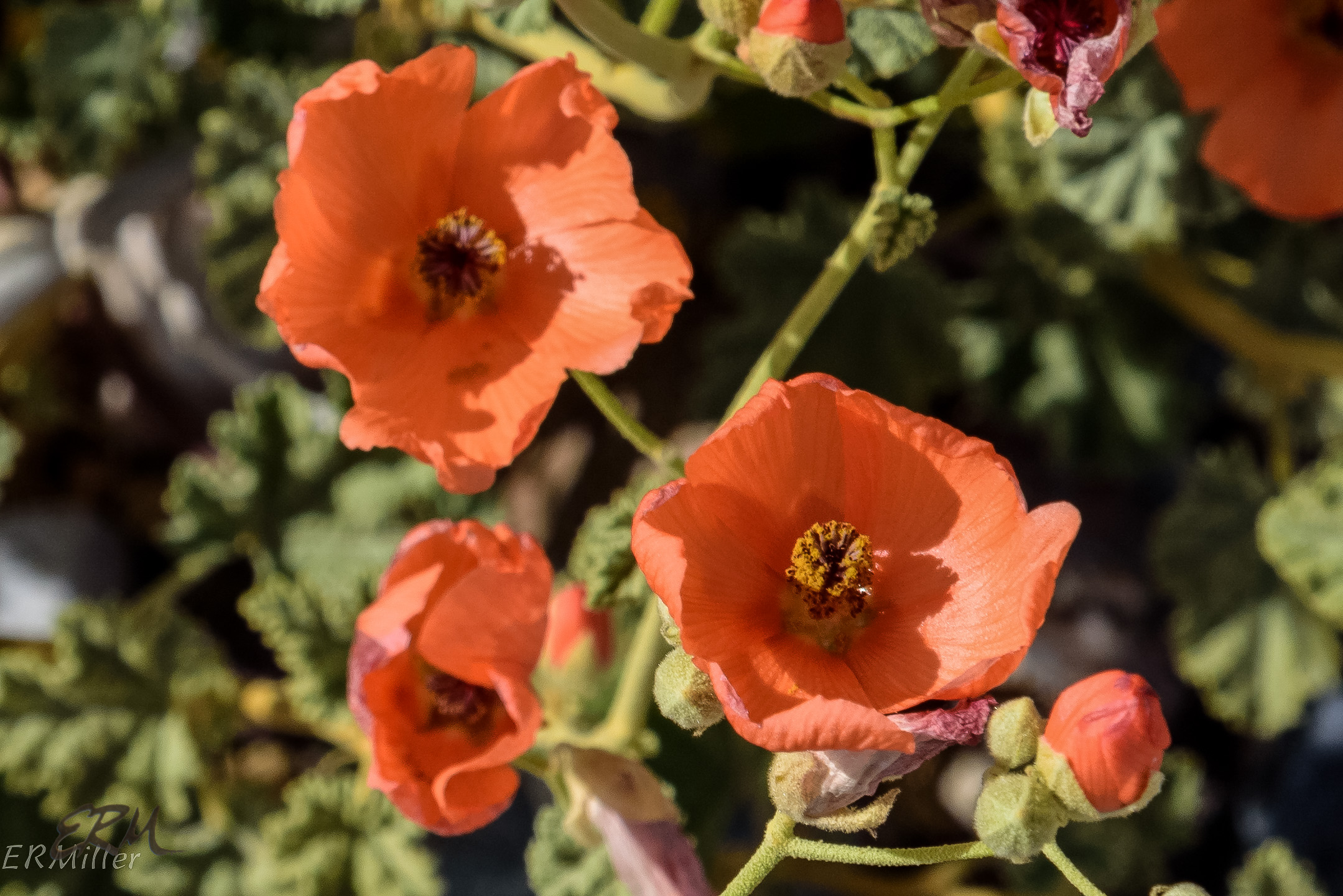
Heading north on Scotty’s Castle Road in not-as-desolate-as-it-appears Death Valley, I spied a big ball of apricot. Apricot?! I’d seen many yellow flowers, and white, and purple and blue and pink, and even some orange dodder looking like balls of Silly String, but this was completely different. Knowing that no cars were behind (good situational awareness), I was able to brake pretty aggressively and have another look before rounding a corner. Half a mile later there was a turnout wide enough to allow a safe u-turn*, then back I went to have a close look at this:


It’s globemallow, aka desert mallow (Sphaeralcea ambigua, Malvaceae), a perennial forb that can grow to three feet tall and three feet wide. When winters are wet, it puts forth an exceptional display. It’s found in California, Nevada, Utah, and Arizona. I’d love to have one in my garden, but the mid-Atlantic is just too wet for a xerophyte like this.

Once stopped at this site, I got my camera bag and water bottles and set off exploring the nearby wash and a mini-butte, where I found plenty of belly flowers and two nifty cacti, neither of which were flowering. More on these another time. This is the only specimen of globemallow I saw on the entire trip.


*those of you who know about my former vocation can imagine how tempted I was to pull a bootleg instead