Blue May

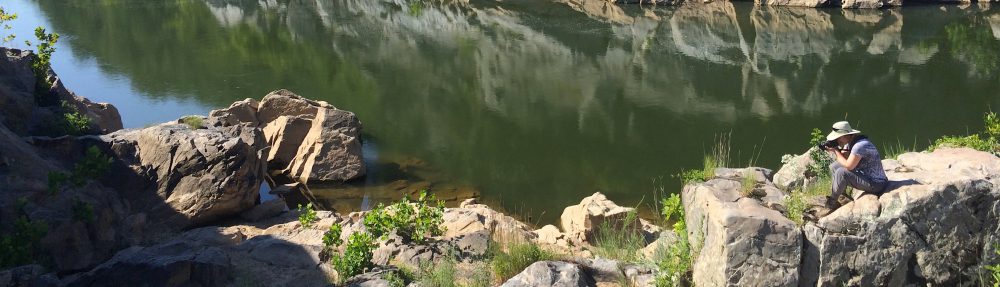
A year ago my friend B texted that she’d found another stand of Baptisia australis (wild blue indigo; Fabaceae; S2/threatened) along the Potomac near Great Falls. I tried searching for it but a broken wrist prevented me from doing the necessary rock scrambling. This year, though, I was able to go out and find the plants on a sunny, breezy afternoon. They were a bit past peak bloom but still magnificent.

Blue false indigo is a prairie species with just a few populations in Maryland. Search for them on the rocky scour bars of the Potomac River.


The baptisia aren’t the only blue flowers showing now. Along the towpath in ditches at Bear Island, blue flag irises are starting to bloom.  These are probably Iris versicolor, though they could be I. virginica. Wondering why I can’t say for sure which species?  Check out my iris obsession of 2017 in a series of 8 posts, starting with this one.


Scattered about in drier areas are clumps of blue-eyed grass (Sisyrinchium angustifolium; Iridaceae).


And in just a few scattered locations are small stands of Scutellaria saxatilis (smooth rock skullcap; Lamiaceae), which is S1 (highly state rare) and endangered in Maryland.

Another Blue Thing

Forked bluecurls (Trichostema dichotomum) is a small annual forb in the Lamiaceae, easy to miss because the flowers are small, too. It’s worth stopping to take a close look, though, because the color is stunning, and mint family flowers are just nifty.


For detailed information about forked bluecurls, see this post from 2016.Many thanks to my friend B for posting about this find on social media; I hadn’t seen forked bluecurls in years, and dropped everything to go photograph them.

A Blue Thing; a New Thing

Earlier this month, while searching the riverbank for showy flowers, I stumbled across two new-to-me flowering plants. Quite a surprise, considering how many species I’ve catalogued in the gorge over the past seven years.

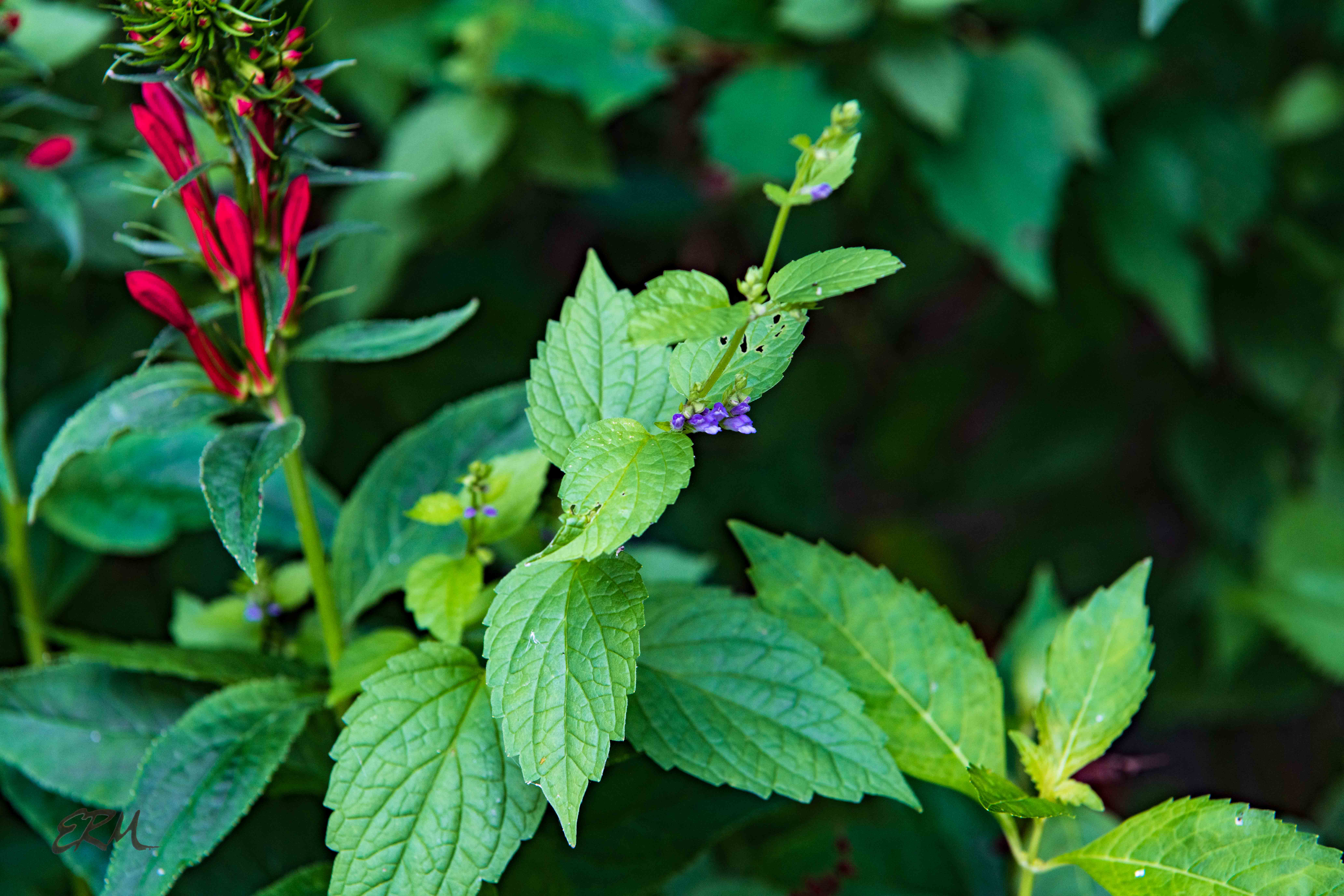
The first was growing among cardinal flowers. I knew right away that it was in the mint family, and it didn’t take long to key out once I got home. Scutellaria lateriflora, aka mad-dog skullcap, is a medium-height forb of wet, sunny areas.


It appears to be one of the most widespread species of Scutellaria, occurring in almost all of North America except for the desert West and parts of western and northern Canada. The flowers are tiny, less than one centimeter long, and are borne on terminal and axillary racemes*.


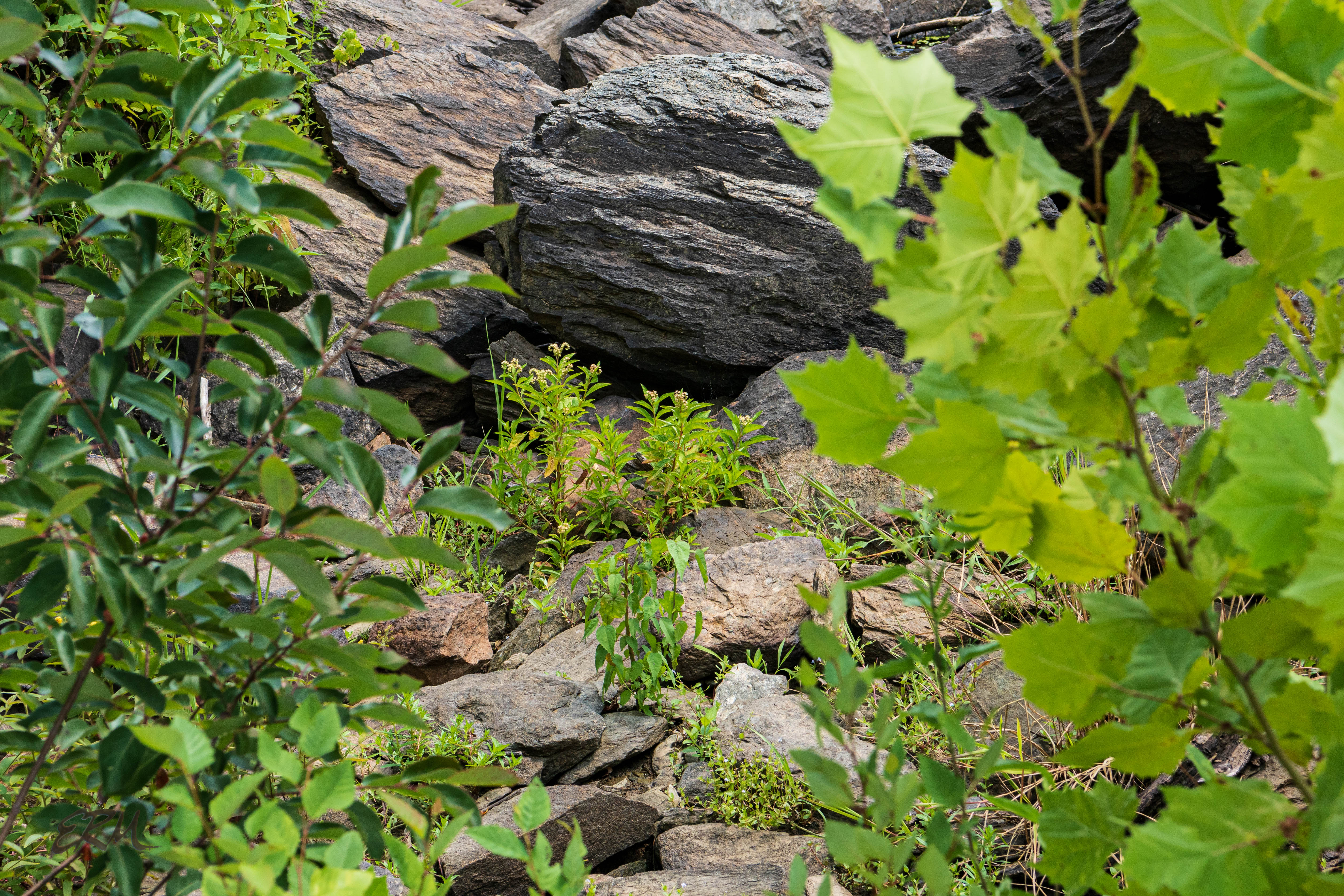
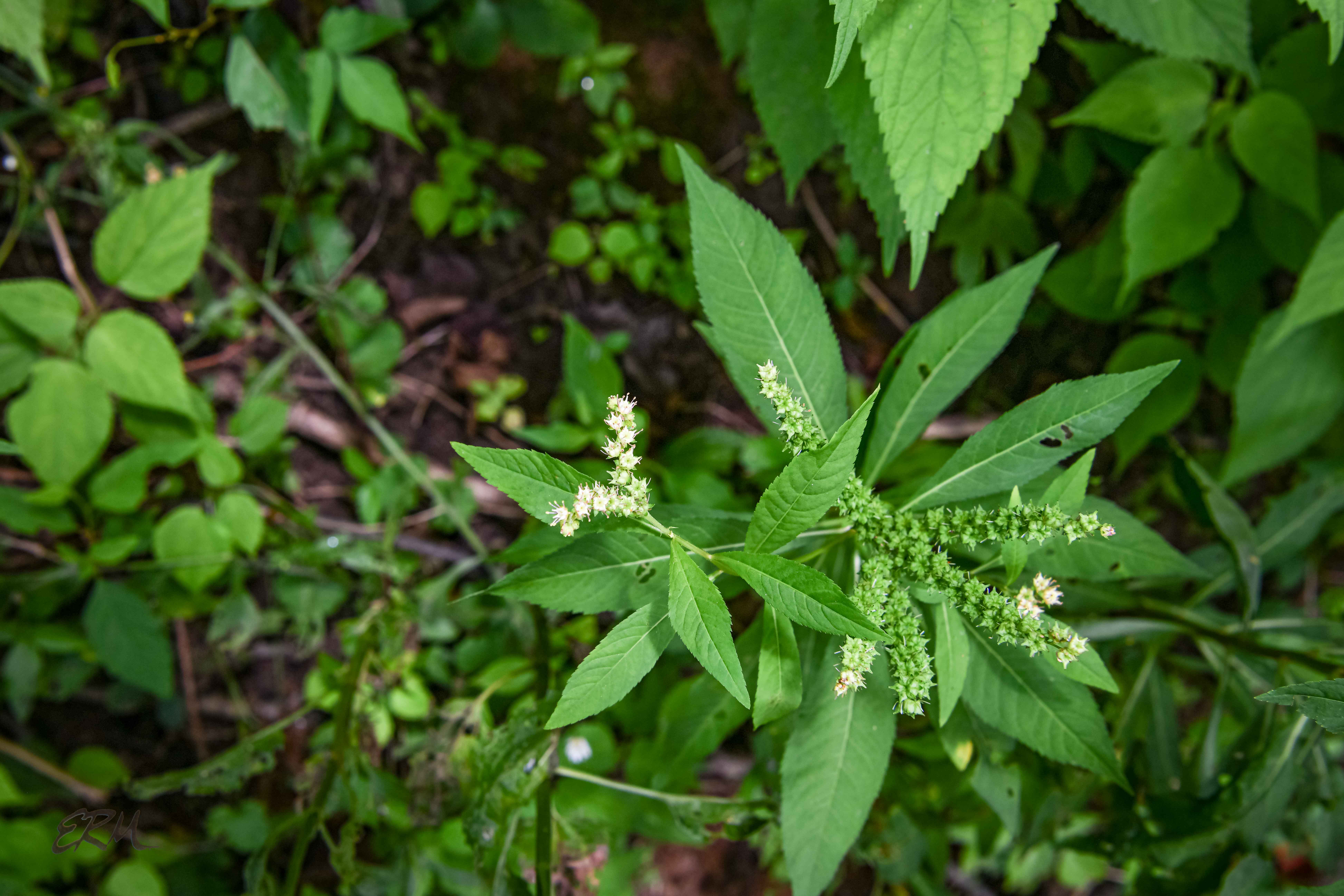
The other find was ditch stonecrop, Penthorum sedoides. Older wildflower guides place this species in the stonecrop family (Crassulaceae), and very old guides place it in the Saxifragaceae; currently it is placed in a family of it’s own, Penthoraceae, with only one other species (P. chinense) and no other genera.

It does look like our native woodland stonecrop, but the plants aren’t succulent, and they prefer wet soils (unlike woodland stonecrop, which likes dry soils)**.


Ditch stonecrop ranges from Quebec to Florida, going west into the prairie; also one small area along the Oregon/Washington border, and maybe British Columbia. Probably it was introduced in these Pacific Northwest areas.


_____

*Illinois Wildflowers  Dr. John Hilty

**Wildflowers of the Atlantic Southeast  Laura Cotterman, Damon Waitt, and Alan Weakley (Timber Press, 2019)

Found Again!

It was raining, and the forecast said rain all week, but then there was a window of a few hours between downpours. Thinking about the plants that might be Scutellaria nervosa, I decided to take the camera on a quick hike to the site and check. I was sure they wouldn’t be flowering yet, since a week before they had just the tiniest little buds on them.

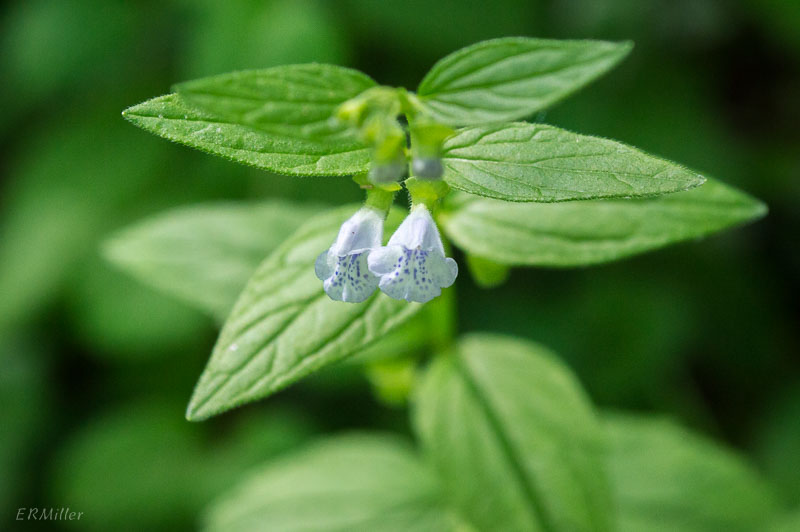
I was wrong: they were already flowering. But, I was right: they are S. nervosa!

Veiny skullcap is one of ten Scutellaria species found in Maryland. All are native, and half of them are on the RTE list (veiny is ranked S1S2). The species is globally secure; the only other jurisdiction listing it is Michigan, where it’s threatened. Its native range is more or less the Ohio River basin and somewhat east of that into the mid-Atlantic states.

This is a slender forb growing to about a foot tall, with a single stem. The lower stem leaves are ovate and dentate, and may have short petioles, while the upper leaves are elliptical, less dentate or almost entire, and sessile. The upper leaf surfaces are lightly covered in hairs, and the margins are more densely hairy.

The light blue, pendant flowers are borne in pairs in the upper leaf axils. They aren’t very showy, and sometimes they hide under the leaves, so they’re easy to miss.

If you find veiny skullcap in Maryland please post in the comments section! We have very few records for this species.

Found Again?

I took this picture four years ago when still fairly new to photography, learning to use a new lens (105mm macro) and not sure what I was doing. Lying on my belly to get some close-up shots of miniscule blossoms on other plants, I happened to see these little pendant blue flowers and shot them, too. I had no idea what the plants were.

Later at home I keyed them out to veiny skullcap (Scutellaria nervosa). And then I learned that the species was listed S1 and endangered in Maryland!

Currently it’s listed S1/S2 endangered, with a status change to threatened pending. According to the Maryland DNR,

S1: Critically Imperiled/Highly State Rare—At very high risk of extinction or extirpation due to very restricted range, very few populations or occurrences, very steep declines, very severe threats, or other factors. Typically occurring in five or fewer populations.

S2: Imperiled/State Rare—At high risk of extinction or extirpation due to restricted range, few populations or occurrences, steep declines, severe threats, or other factors. Typically occurring in 6-20 populations.

Endangered: A species whose continued existence as a viable component of Maryland’s flora is determined to be in jeopardy.

I went back as soon as I could to get better pictures, but couldn’t find the plants, despite knowing exactly where to look (geotagged with iPhone). And I’ve hunted for them every year since, but have never found them.

Until a few days ago.

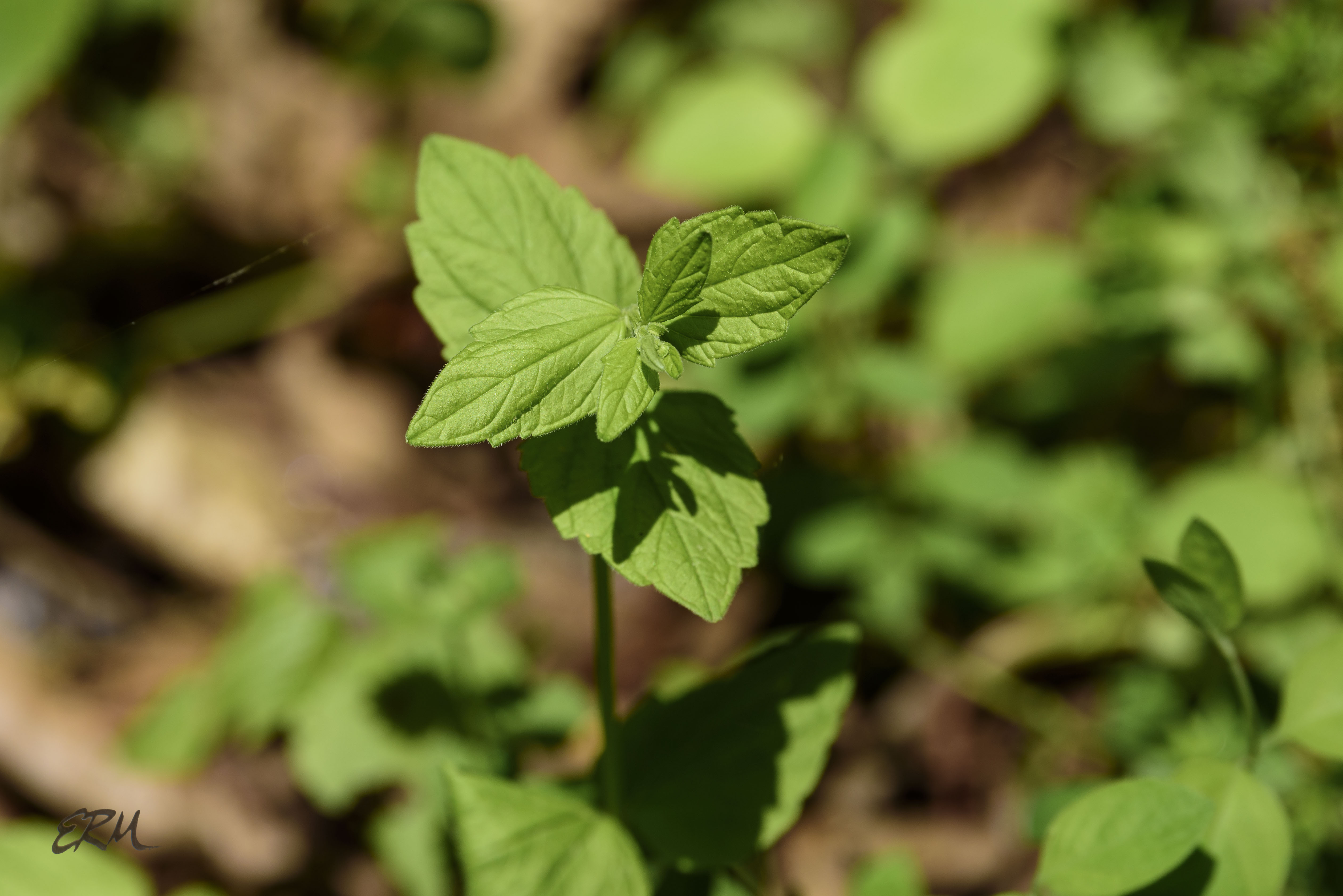
I won’t be positive until they bloom, but the appearance of the leaves and stem, coupled with flower bud location (in the upper leaf axils), leaves little doubt.

Fingers crossed.