It’s Back!

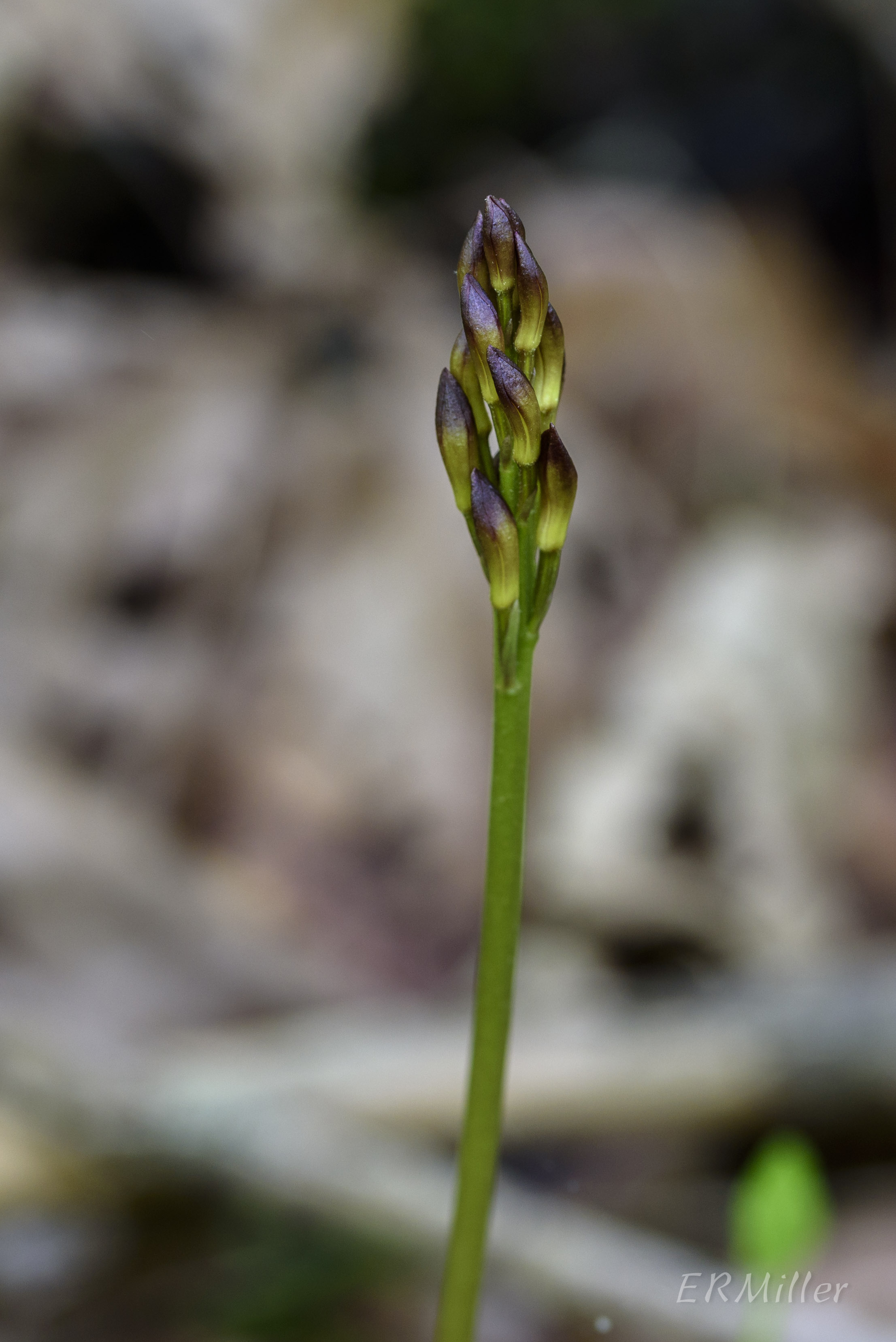
20160802-_DSC0009

Another entry to my two year saga of monitoring a perennial favorite, an unusual (but not rare, threatened or endangered) find that’s inconveniently located in an area of high human and deer activity.

Yes, cranefly orchid is back! I reported last summer that it had disappeared from this spot, but then in October I found some new leaves. And last Tuesday I saw a dozen flowering spikes.

This species is hibernal: each plant grows a single leaf in autumn. The leaf persists through the winter and into late spring, then dies. In midsummer, the plant sends up a spike, which will flower for two to three weeks and then die. The cycle begins again the following autumn.

Last year I thought that maybe deer browse had killed the plants. But I recollect that it was also a dry year, so maybe drought had something to do with it? Then a very knowledgeable and experienced acquaintance told me that cranefly orchid doesn’t necessarily bloom every year. This got me to wondering why, so I did a little research.

Studies have shown that when cranefly orchids are successfully pollinated and fruit is set, there’s a subsequent decrease in root and leaf size*. As a result, plants take a year off, so to speak, because they have insufficient energy stores for another reproductive effort. And blooming can also be affected by deer browse (herbivory) and environmental stresses.

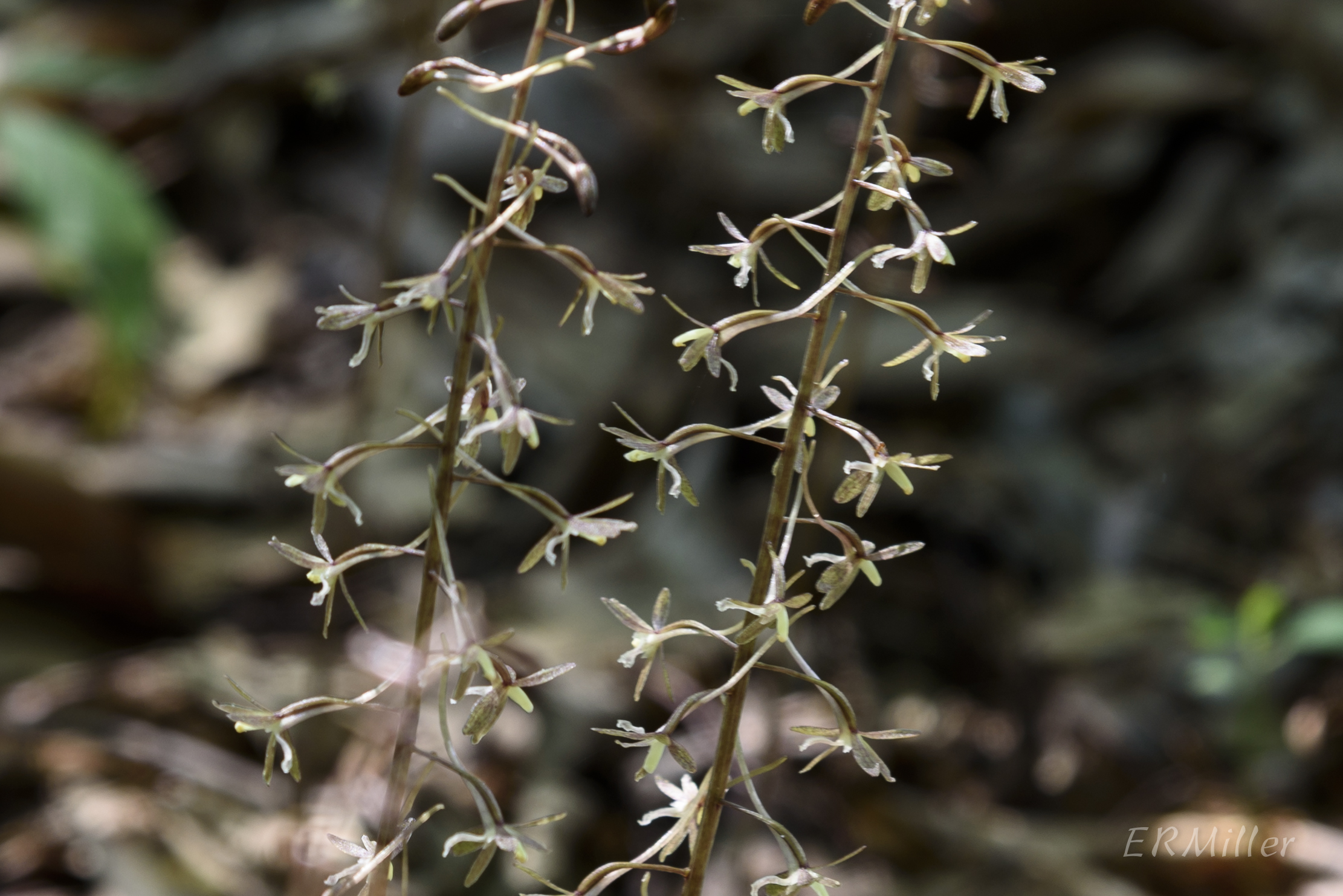
20160802-_DSC0010

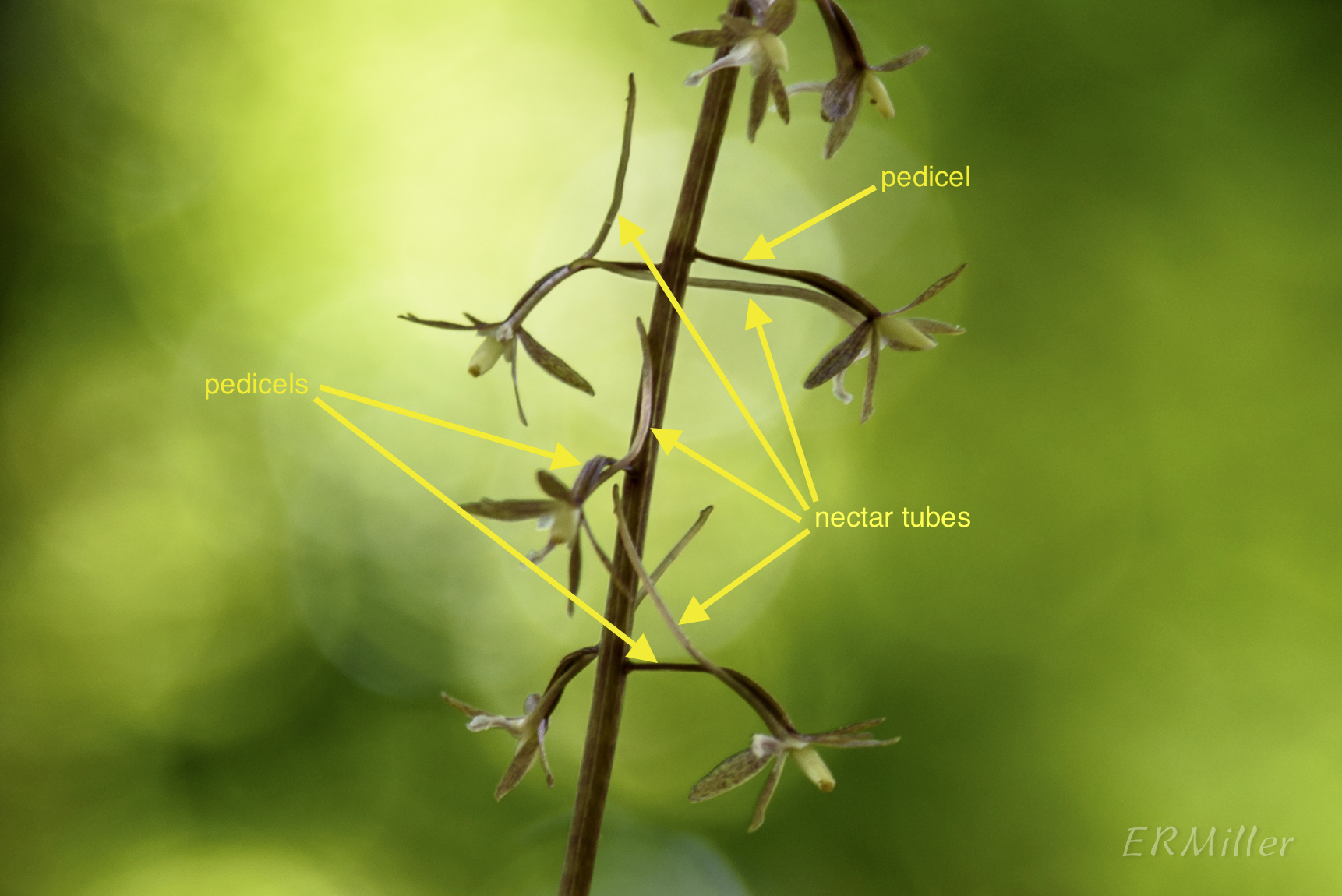
Another interesting fact: the flowers are asymmetrical. Typically orchids show bilateral symmetry (capable of being divided along a plane into a pair of mirror images). It’s a little hard to tell from this picture, as I couldn’t get a straight-on shot of a flower, but these are not bilaterally symmetrical. (I’m going to have to go back and try shooting from a different angle.)
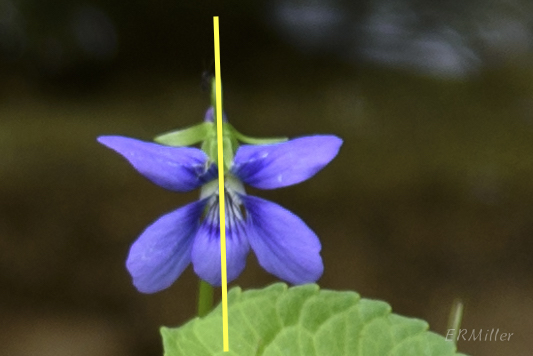
20160505-_DSC0040

This violet was kind enough to stand in for an orchid to demonstrate bilateral symmetry, the yellow line showing the plane of symmetry –>
20160802-_DSC0001

Also, check out those crazy long nectar tubes coming out the backs of the flowers! (Click on the image to see it larger.) The odd shape of the flowers allows pollinia to be deposited onto visiting moths.

Cranefly orchids are just neat.


*”Costs of Flower and Fruit Production in Tipularia discolor (Orchidaceae)” [abstract]

That’s Right, Orchids in Iceland

As far as I can tell, seven species of orchid grow in Iceland. I was lucky enough to spot three of them. Here are the other two.


Dactylorhiza viridis
(formerly
Coeloglossum viride)
frog orchid
Icelandic: barnarót

What a delight to find this particular species, native not only to Iceland but also North America (as far south as North Carolina in the Appalachians and New Mexico in the Rocky Mountains) and northern Asia. In Iceland it’s fairly widespread, growing in heathlands and other rich soil areas at mid elevations. I’ve seen it once before, in Catoctin Mountain Park, a rare find since it’s listed S1/Endangered in Maryland, but it wasn’t blooming then.


Platanthera hyperborea
northern green orchid,
butterfly orchid, bog orchid
Icelandic: friggjargras


Northern green orchid’s native range includes northern North America (Greenland, Canada, Alaska), parts of Asia (Korea, Japan), and of course Iceland. It’s a fairly common plant there in fertile soils, especially heathlands.

Sorry I don’t have better pictures. Guess I’ll have to go back next year and do better.

Orchids in Iceland?!

I spotted this charmer in a little forest park outside of Ísafjorður, in the Westfjords. I was wearing contact lenses at the time so couldn’t make out any details (I usually wear glasses when I’m shooting, since I see much better close up with them). All I saw was spotted leaves and a spike with pinkish flowers. The general form made me think monocot (correct), and the spots reminded me of trout lily, so I was thinking maybe it was in the Liliaceae (wrong).

As soon as I got the pics on the computer and zoomed in I saw my mistake. This is an orchid, Dactylorhiza maculata. The English common name is heath spotted orchid. In Icelandic it’s brönugrös.

20160618-_DSC0403-2

It’s one thing to have read that orchids are found the world ’round (except Antarctica), in most habitats, but quite another to trip upon one in Iceland when you aren’t expecting it. I was so happy!

In Iceland, heath spotted orchid is rather common within its range, but its range isn’t too extensive. It’s found in some coastal areas but not the central highlands. It’s a subarctic plant that ranges through northern Europe, further south in Europe in the mountains, and even parts of North Africa.

This species does not grow in North America, but three other Dactylorhiza species do, including one that’s endangered in Maryland.


Persistence Pays Off, Part One

20160514-_DSC0101

puttyroot; Adam and Eve
Aplectrum hyemale
Orchidaceae

In May of 2014 I saw puttyroot for the first time, two plants and one spike of flowers. After that I saw the seedheads on the spike. Every time I was in the area I’d go by the patch, and (except in summer) I’d see the plants. But in 2015 for some reason they didn’t bloom. I learned later that this is often the case with some species of orchid: if conditions aren’t just right, they won’t bloom.

A puttyroot plant has a single ground-level leaf that comes up in autumn, persists through the winter, and dies back before the plant sends up the flower spike in late spring.

20160514-_DSC0117

A few weeks ago I saw a new spike coming up. I went back again and again, despite the miserable rainy weather we’ve been having, until finally I saw the flowers.

20160514-_DSC0112

Puttyroot ranges from Quebec south to North Carolina, with scattered occurrences a little further south than that, and west as far as Oklahoma, Kansas, and Minnesota. It’s endangered in Massachusetts, New Jersey, and New York, threatened in Vermont, rare in Pennsylvania, and special concern in Connecticut. In the Maryland Piedmont I’ve seen the plants in the Potomac gorge, Patapsco Valley State Park, and on Sugarloaf Mountain.