Another Orchid Added To My List

20160508-_DSC0136

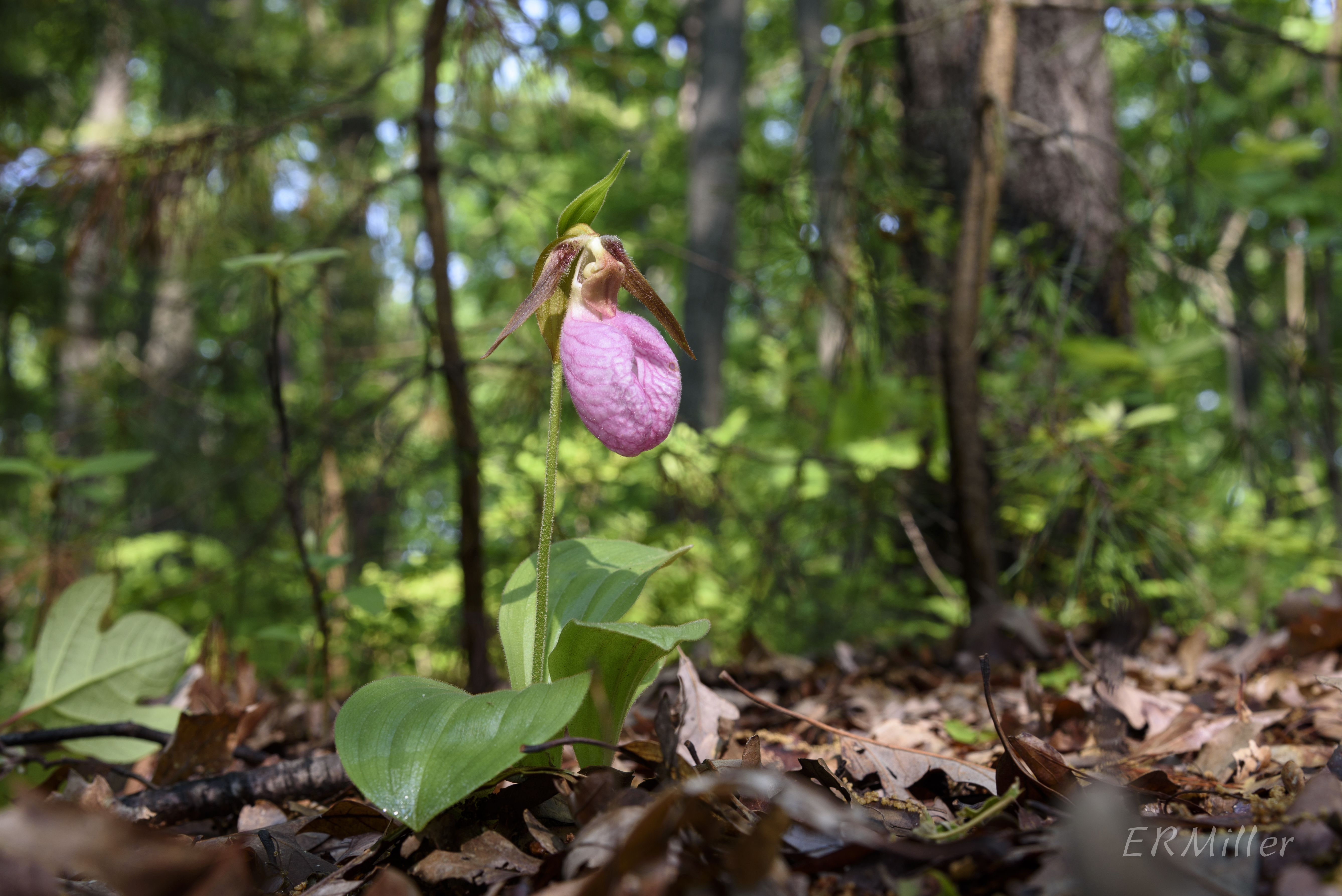
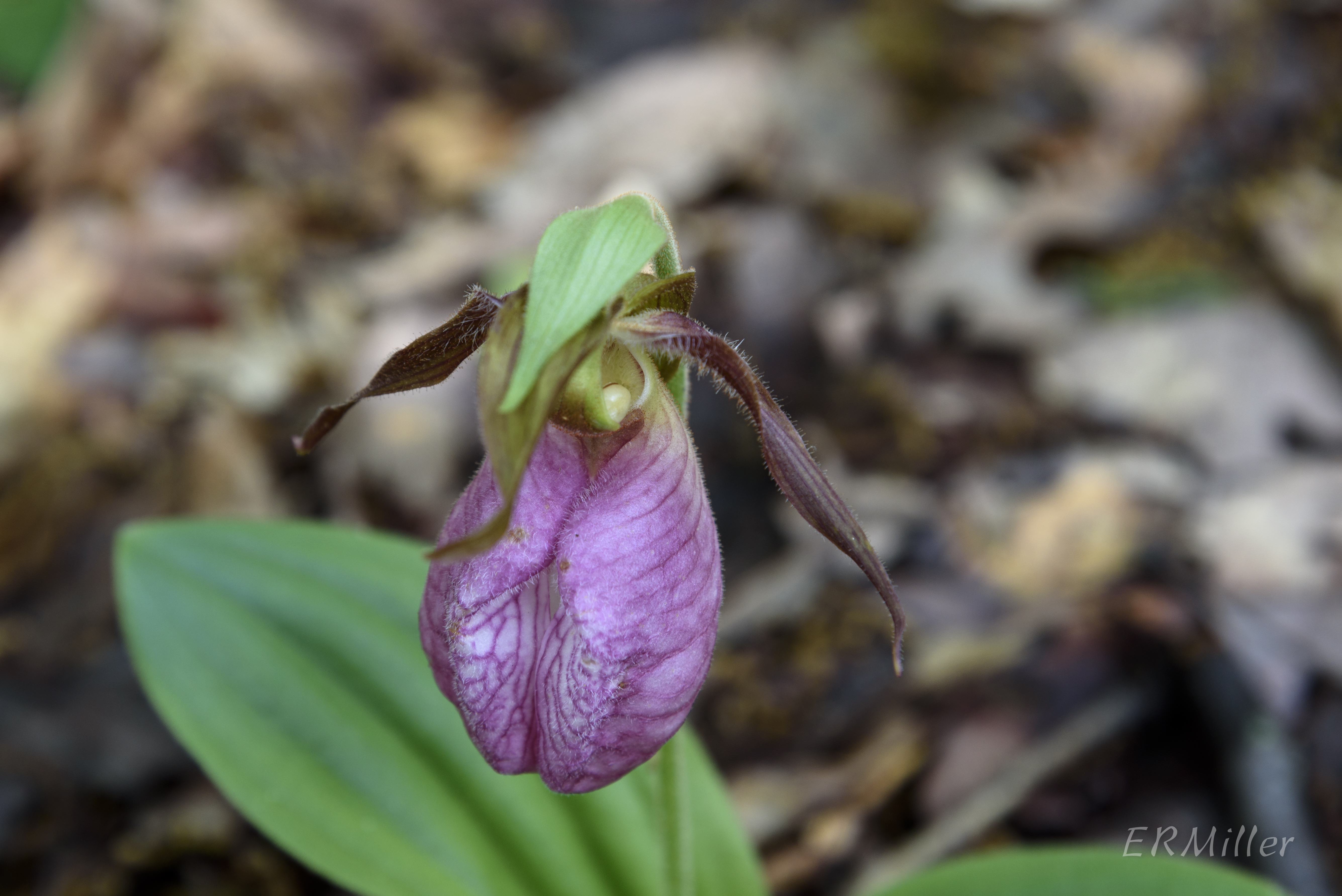
pink lady’s slipper
aka moccasin flower
Cypripedium acaule
Orchidaceae

The state of Maryland is home to more than 50 species of native orchids. Until this past weekend, I have seen only three of those in bloom (and the leaves of a fourth).

I was going a little crazy trying to find any of the three species of lady’s slippers in Maryland. After hours of searching on Sugarloaf Mountain I found a plant, I think, but it wasn’t flowering. I might have seen several plants in Rachel Carson Conservation Park, but can’t be sure until they flower.

20160508-_DSC0151

Then a very kind member of the Maryland Native Plant Society came to my rescue. The instructions were explicit and excellent, and I was able to spot eleven plants in a somewhat spread out area. Three of them were in bloom.

It helps to be looking in the right places, of course. Interestingly, pink lady’s slipper grows in several different habitats. I’ve seen references to it growing in dry woods and moist woods, on slopes and in bogs, in hardwood forests and mixed deciduous-coniferous woods.
20160508-_DSC0163

It does like acidic soils and dappled sunlight.

Like most orchids, this plant depends on a symbiotic relationship with a species of soil fungus in order to reproduce and grow. For this reason (among others, like its very large root system), attempts to transplant it from the wild are doomed to fail.

20160508-_DSC0168

Pink lady’s slipper ranges from the upper Midwest into New England, then south into Virginia and a little further south along the Appalachian Mountains. It can be found all over Maryland, though there are no records for it in four counties per the Maryland Biodiversity Project. It’s endangered in Illinois; exploitably vulnerable in New York; commercially exploited, endangered in Tennessee; and unusual in Georgia.

20160508-_DSC0157

An now, a confession: I actually find this flower rather ugly. That doesn’t change how happy I am to have finally seen it in the wild.
20160508-_DSC0182

Showy Orchis

20160426-_DSC0097

aka purple-hooded orchid
Galearis spectabilis
Orchidaceae


The morning before I left to go to Rachel Carson Conservation Park a second time, someone posted a picture of showy orchis on the Maryland Native Plant Society facebook page. So I went with two goals: to shoot the pinxters, and to find some orchids. It didn’t take too long to find them, but my planned two hour outing became three, then four, then five as I found more and more beautiful and interesting plants to shoot.

Showy orchis is low-growing, with a pair of large basal leaves and a single stem that may hold up to a dozen flowers. It ranges through most of the US and Canada east of the Mississippi River, and somewhat into the Great Plains states, growing in calcareous soils in rich, moist woodlands where there isn’t too much competition from other plants. As with other orchid species, showy orchis has very specific growing requirements (including the presence of certain fungi in the soil), which makes it a difficult plant to grow in the home garden. Attempts to transplant them from the wild are doomed to fail.

20160426-_DSC0133

Showy orchis is endangered in Maine and Rhode Island, threatened in Michigan and New Hampshire, exploitably vulnerable in New York. There’s one other species in the genus Galearis (G. rotundifolia), but it grows much further to the north.

“Orchis”, by the way, is not a typo. It’s a genus in the orchid family, consisting mostly of temperate Eurasian species. Galearis spectabilis was previously placed in that genus, so the common name is just a translation of the plant’s old Latin name, Orchis spectabilis.

20160426-_DSC0145

Orchid Update: New Hope

Two months ago I wrote about finding only a single cranefly orchid, despite seeing dozens the year before.  After posting that I asked a few experts; the consensus was that deer browse had caused the disappearance.

One day last week I was poking about looking for asters and goldenrods that may have started blooming after the recent rains.  I didn’t find many, but I did find this:

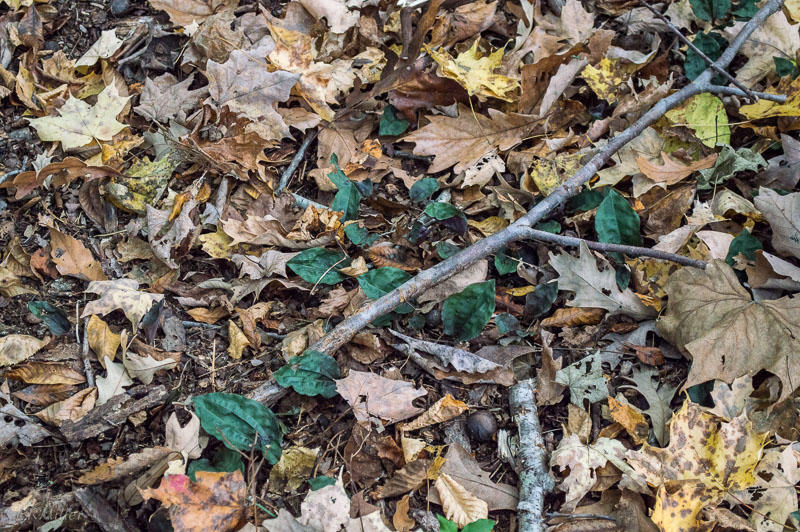
20151010-_DSC0009

Zoom in and look closely.  In the center of the picture is a purplish leaf partly unfurled among all the fallen tree leaves.  That’s a new leaf of cranefly.  There were more, but I didn’t get close, for fear of trampling something (this picture was taken from pretty far away), and quickly withdrew, as there were people about and I didn’t want anyone taking an interest in my interest.  There are poachers in this area.

This year there were no flowering stems in this stand.  Clearly the plants are growing again, but how many seasons of abuse can they take?  I’m considering contacting the park service and asking them to put fencing around this little patch.  It’s an area that sees lots of human activity as well as deer pressure, but I wonder if drawing attention to this patch may do more harm than good.

Feeling hopeful after finding the cranefly, I went over to the place where I saw puttyroot last year, and this:

20151010-_DSC0043

Yes, two new puttyroot leaves.  Again, that’s a zoom-in from a distance.  Last thing I want is to cause damage in my enthusiasm.  I can admire from afar.

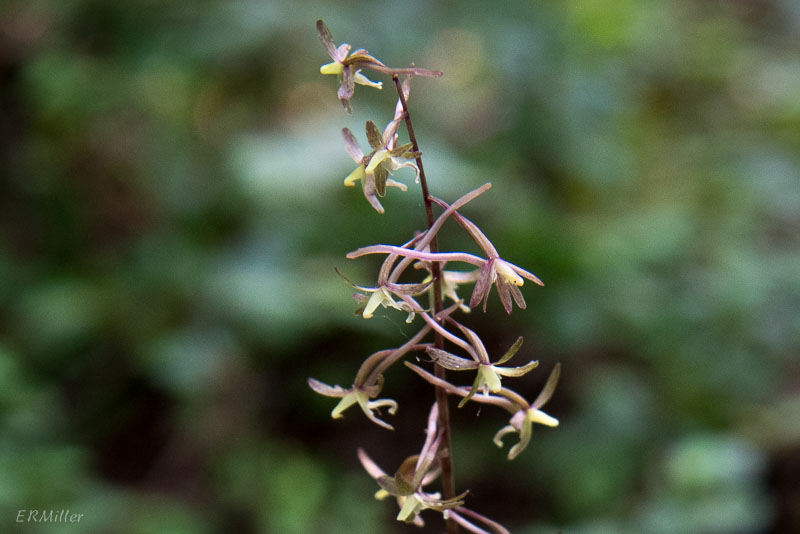
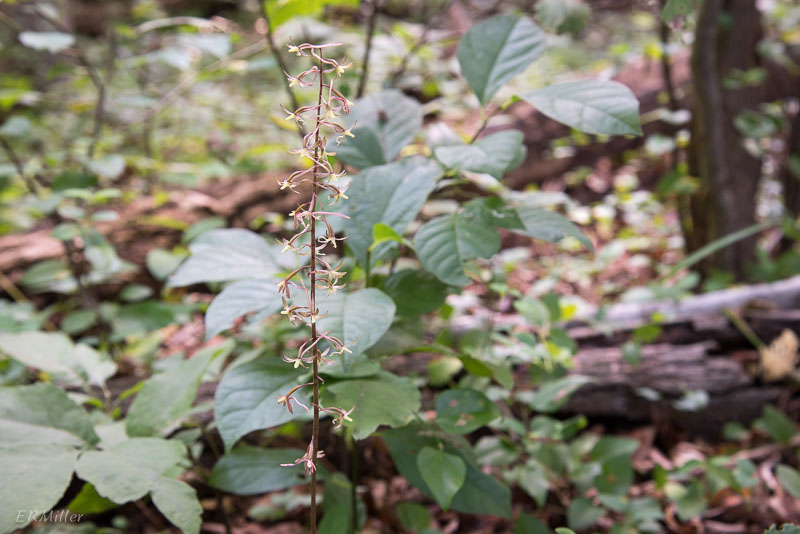
Cranefly Orchid


20150728-20150728-DSC_0096
aka elfin spur
Tipularia discolor
Orchidaceae


You may recall that I’m a little over the moon about orchids, and especially about cranefly orchid.  I know of three distinct patches near each other in one of my usual hunting areas, and I keep an eye on those areas year ’round.

Some time late this spring, I noticed that all the leaves had gone.  It seemed a little early for their annual disappearing act, but I’m not an expert so I shrugged it off and kept watching.

By the last week in July I was getting concerned.  The flower stalks should have been up, and at least in bud if not in bloom.  What was going on?  Did I miss the flowering altogether?  Were they poached?!

This happened with the puttyroot orchid, too.  I know exactly where to find two plants.  All I saw of them this spring was last year’s stalk with seed pods still on it.

I was feeling mighty bad about this.  Not at the thought that I might have missed them, but at the thought that something happened to them and they were gone forever.

20150728-20150728-DSC_0084

Then, one morning a few days later, in a completely unexpected place, something caught my eye: a single stem of this delicate, easy-to-miss wonder.


I admit, I literally fell to my knees with a sigh.

20141021-_DSC0059

Cranefly orchids grow a single hibernal leaf that dies before the plant flowers in mid summer.  It can be common in parts of its range, which extends from the the upper mid-Atlantic south through Florida and Texas, but is rare in Pennsylvania, threatened in Florida and Michigan, and endangered in Massachusetts and New York.

20150728-20150728-DSC_0092

Found in New York

As I wrote a few days ago, Steve and I spent last weekend in New York State, hiking and eating and generally hanging out.  In addition to dozens of pointed-leaf tick trefoil, we saw…

20150717-20150717-_DSC0029

herb-robert (Geranium robertianum; Geraniaceae); endangered in Maryland, threatened in Indiana, of special concern in Rhode Island, and class B noxious weed in Washington, where it is known as Stinky Bob.

20150717-20150717-_DSC0027


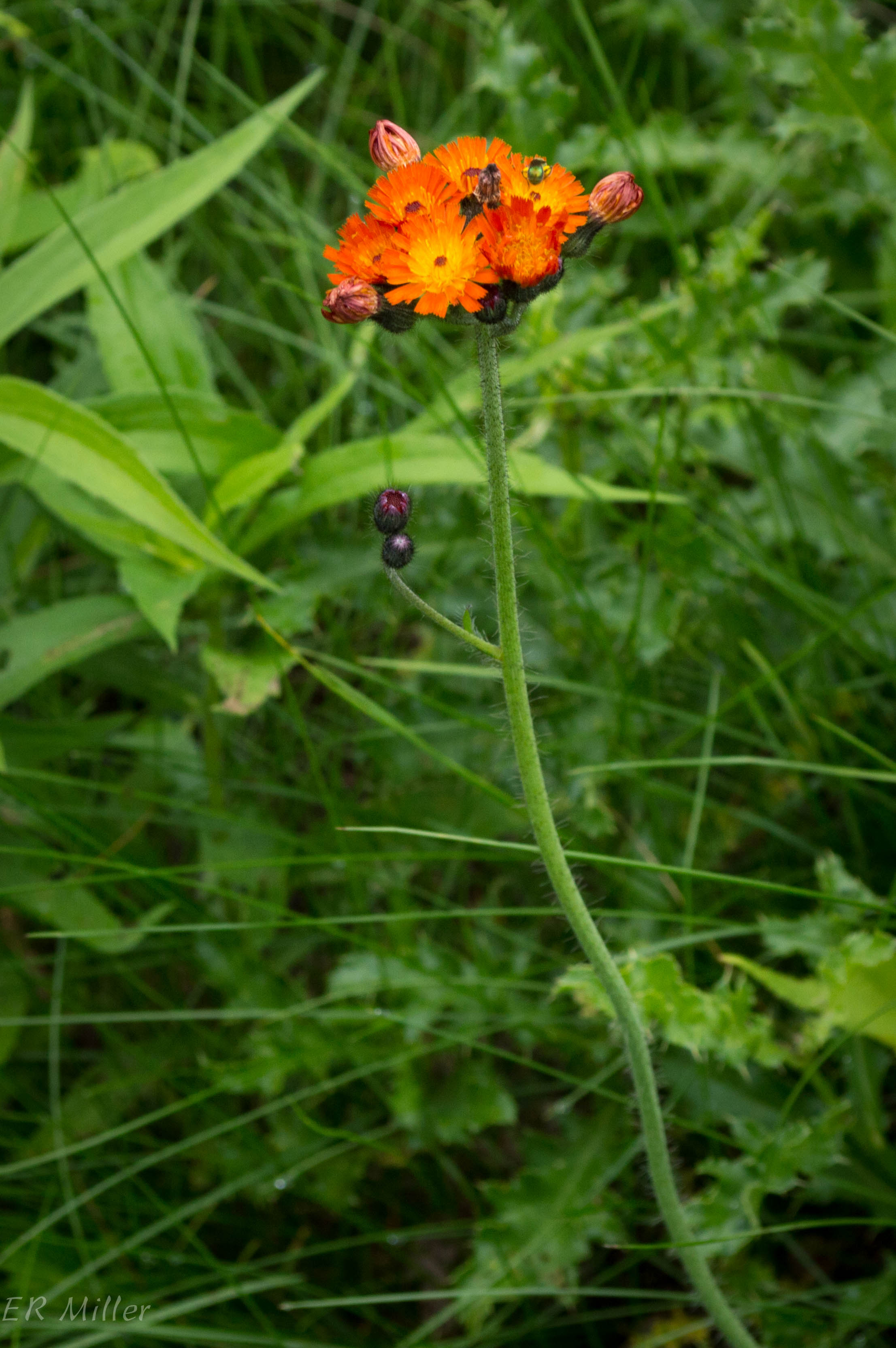
orange hawkweed  (Hieracium aurantiacum; Asteraceae), aka devil’s weed, king-devil, devil’s-paintbrush, missionary weed, fox-and-cubs, and a few others; “A” list noxious weed in Colorado, noxious weed in Idaho, Category 2 noxious weed in Montana, “A” designated weed (and Quarantine) in Oregon, and class C noxious weed in Washington.  We only saw one plant.


20150718-20150718-_DSC0085

20150718-20150718-_DSC0073

helleborine (Epipactis helleborine; Orchidaceae); imagine my joy on finding an orchid in the wild, then imagine my dismay when I identified it and learned that it’s an alien invasive.

Next time, some less noxious plants.

photographed at Hi Tor Fish and Wildlife Management Area and Finger Lakes National Forest