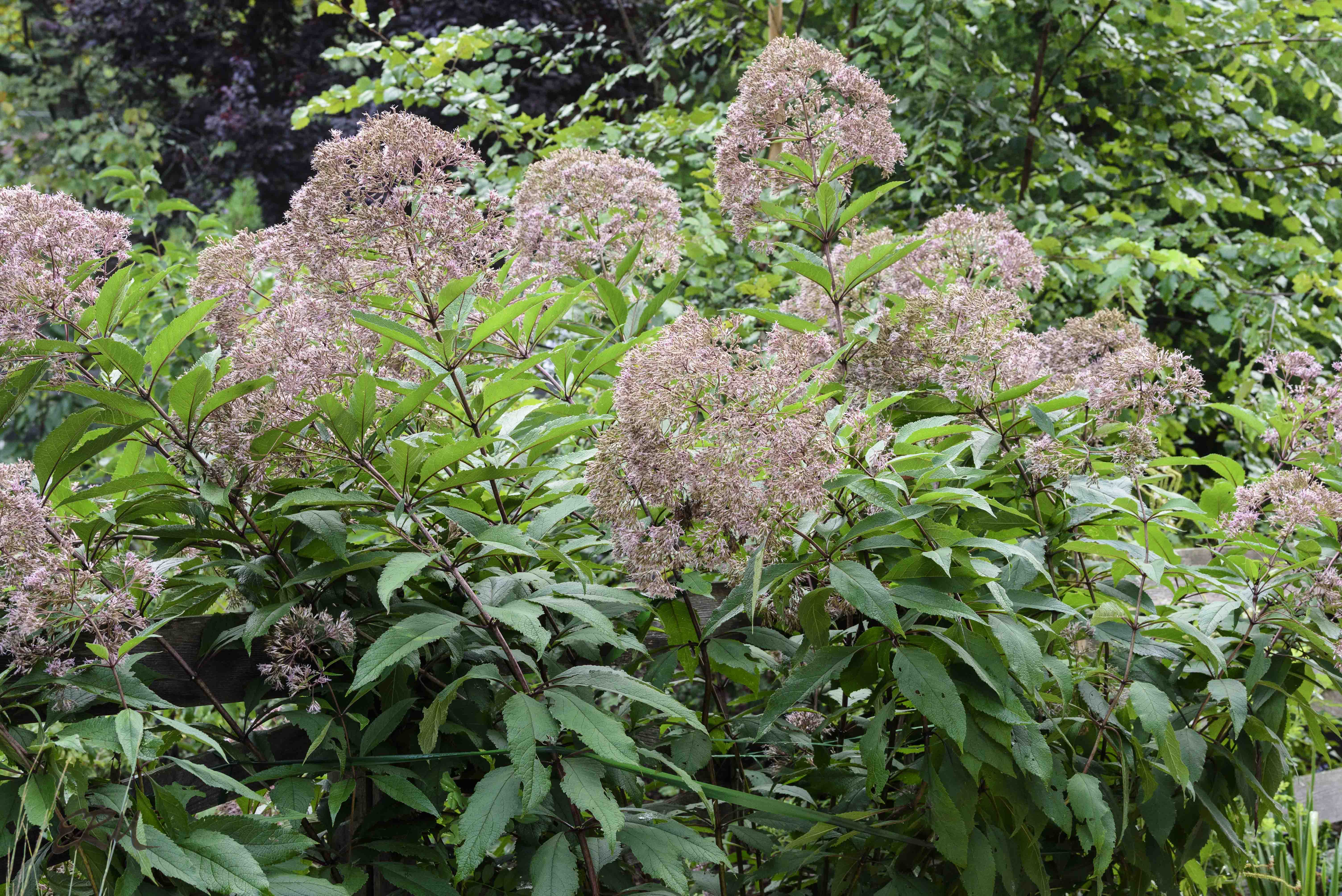
Astery Things #2: The Joe-Pye Weeds

Eutrochium fistulosum

Once upon a time there was a genus of plants called Eupatorium. It was a large genus, lumping together plants commonly known as thoroughworts, bonesets, mistflowers, snakeroots, and joe-pye weeds. Roughly twenty years ago, the genus was split into twelve or more genera. Thoroughworts and bonesets are still Eupatoriums; mistflowers are now Conoclinium, and snakeroots Ageratina. Joe-pye weeds, those plants with large arrays of pink-purple flowers and whorled leaves, were placed in the new genus Eutrochium.
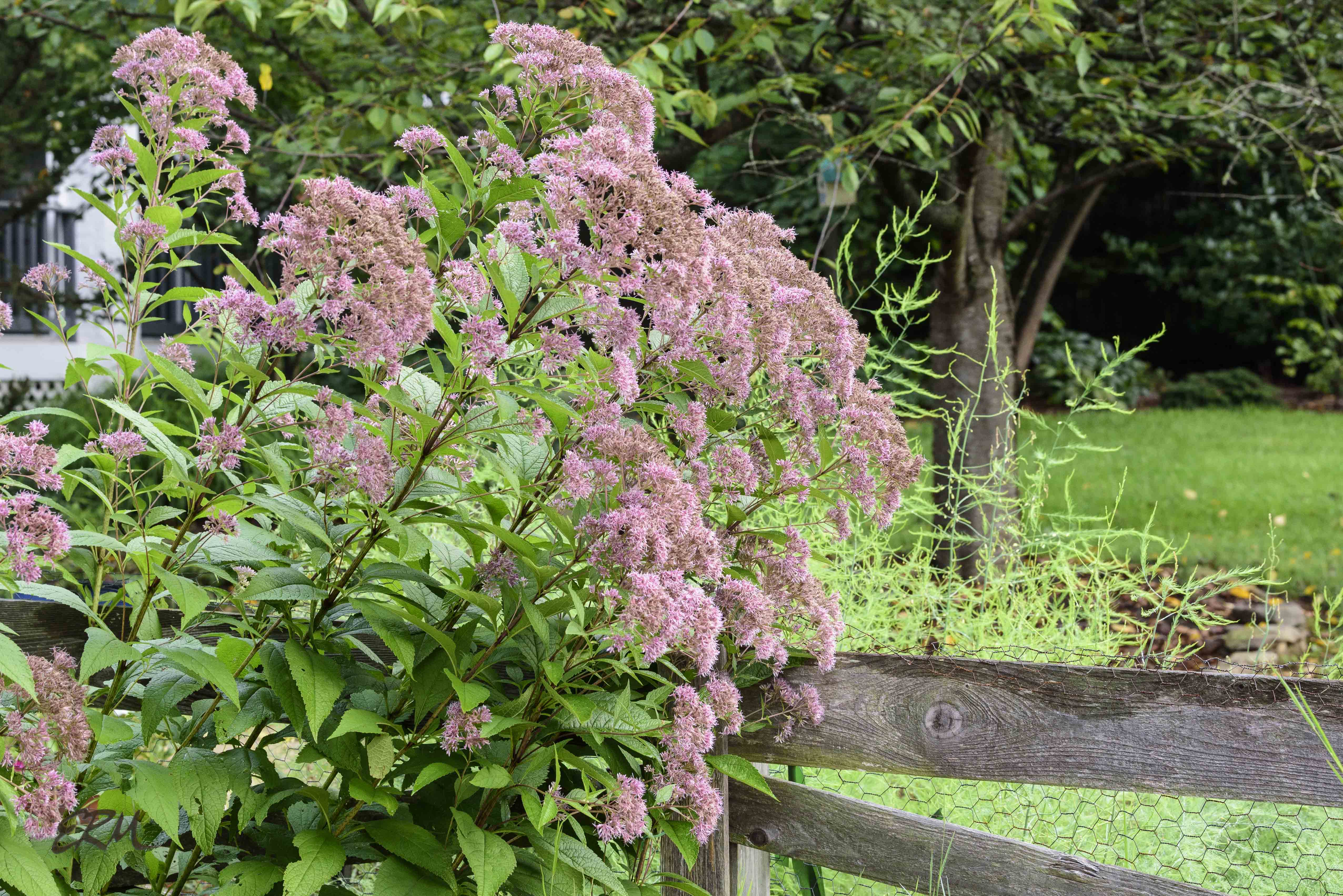
Eutrochium maculatum

Historically, four of North America’s five Eutrochium species were found in Maryland, but one of them, E. maculatum (spotted joe-pye weed), has been extirpated. The other three are

  • E. dubium (eastern or coastal plain joe-pye weed)
  • E. fistulosum (hollow joe-pye weed, trumpetweed)
  • E. purpureum (sweet, sweet-scented, or purple node joe-pye weed)

Distinguishing these four species from one another is fairly straightforward, provided you can look at mature, flowering specimens. Here is a much abbreviated chart of some identifying characteristics, taken from the Flora of North America, with the most useful ones in bold purple:

  E. dubium E. fistulosum E. maculatum E. purpureum
stems
purple-spotted purple purple spotted dark purple at nodes
  sometimes solid purple sometimes spotted sometimes solid purple greenish to purple-green
  solid hollow solid; may be hollow at base solid; may be hollow at base
leaves
arrangement in whorls of 3-4 in whorls of 4-6(-7) in whorls of (3-)4-5(-6) in whorls of 3-4(-5)
venation 3-nerved pinnately veined pinnately veined pinnately veined
shapes deltate-ovate narrowly lanceolate lance-elliptic lance-ovate
  ovate broadly lanceolate lanceolate ovate
  lance-ovate lance-ovate deltate-ovate
margins coarsely serrate finely serrate sharply or doubly serrate coarsely serrate
bases abruptly contracted gradually tapered gradually tapered gradually tapered
or abruptly tapered or abruptly tapered
florets
number (4-)5-9(-10) (4-)5-7 (8-)9-20(-22) (4-)5-7(-8)
notes
found only in coastal plain over 6 feet tall wide distribution known to hybridize
  and inland along major rivers morphologically variable morphologically variable

When trying to identify plants in the field, remember to look at the totality of characteristics rather than focusing on one or two, because there can be so much variation from plant to plant. And also because you really shouldn’t be cutting into plant stems in the field, at least not in areas where plants are protected.
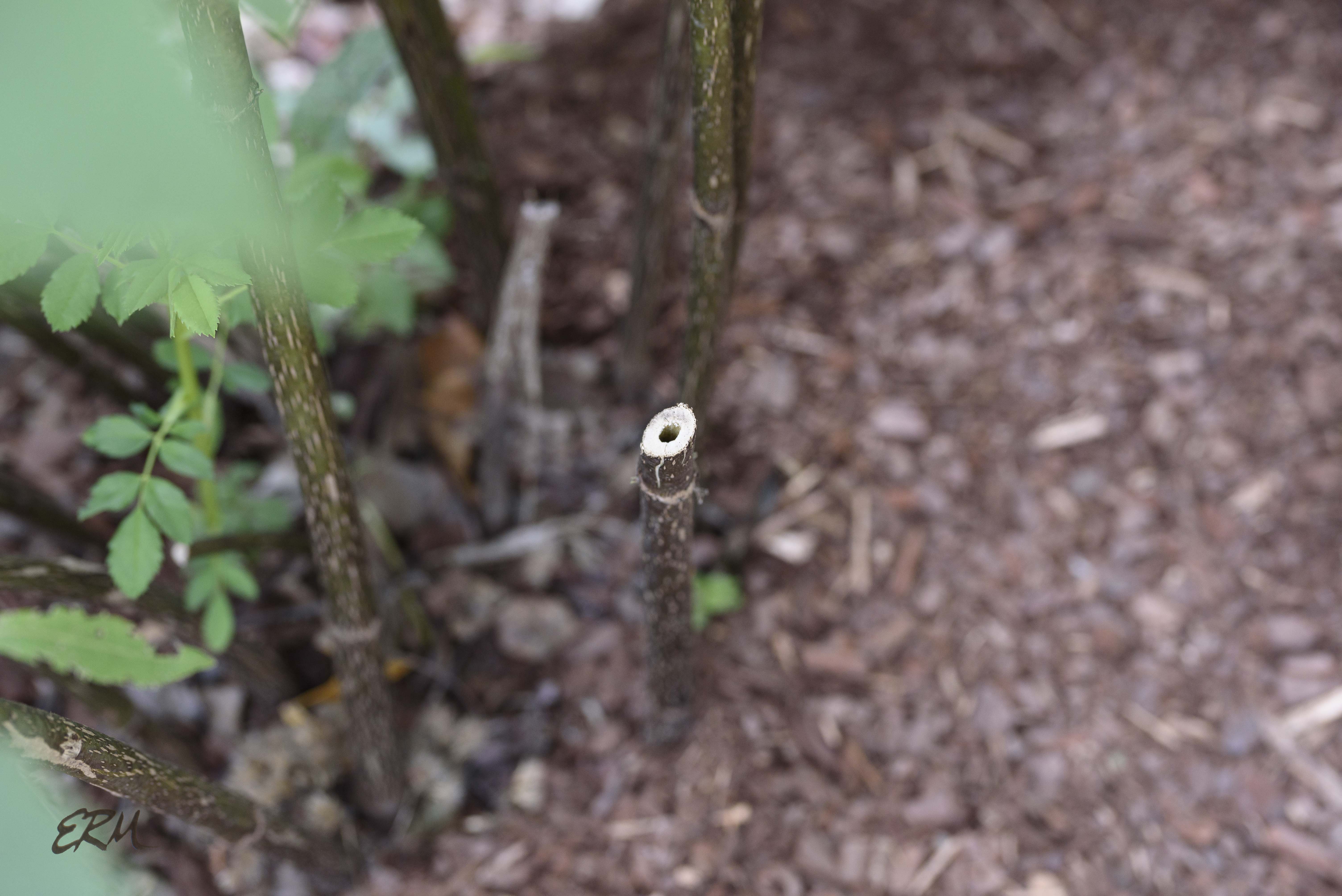
E. fistulosum: hollow stem

Here are a few pictures to illustrate. Keep in mind that these are garden plants; wild-growing specimens rarely look so lush and full. Also, the E. maculatum pictured in this post is not the species, but rather a cultivar (‘Gateway’). Still, it’s not too far off what a wild plant looks like.

E. fistulosum: a whorl of 4 broadly lanceolate leaves

E. fistulosum: a loose corymb of flower heads
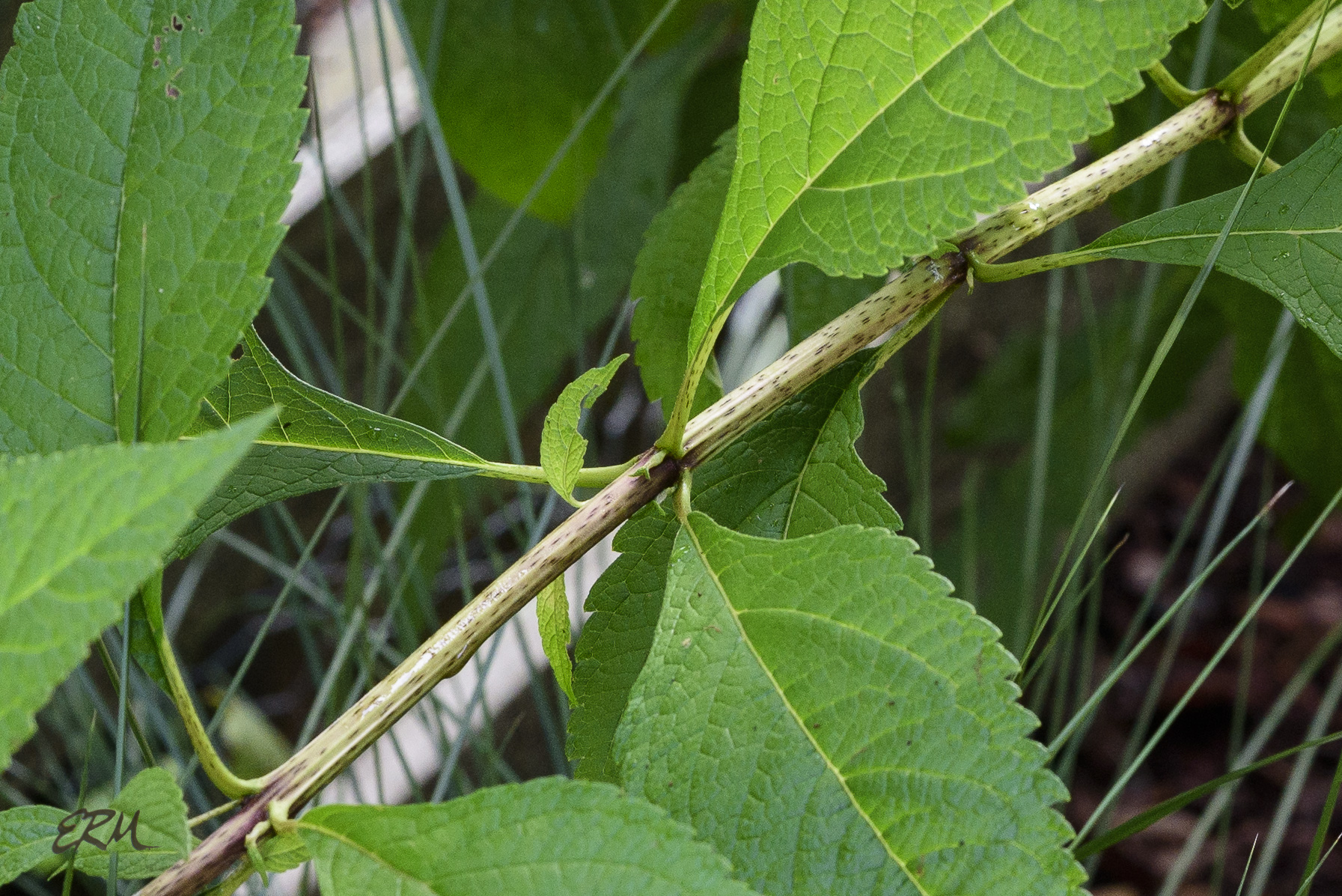


E. maculatum: whorl of three leaves, purple-spotted stems


And here are a few of E. maculatum. It’s worth noting that further up on the stems, the leaves were in whorls of four (but I couldn’t get a good picture up there).
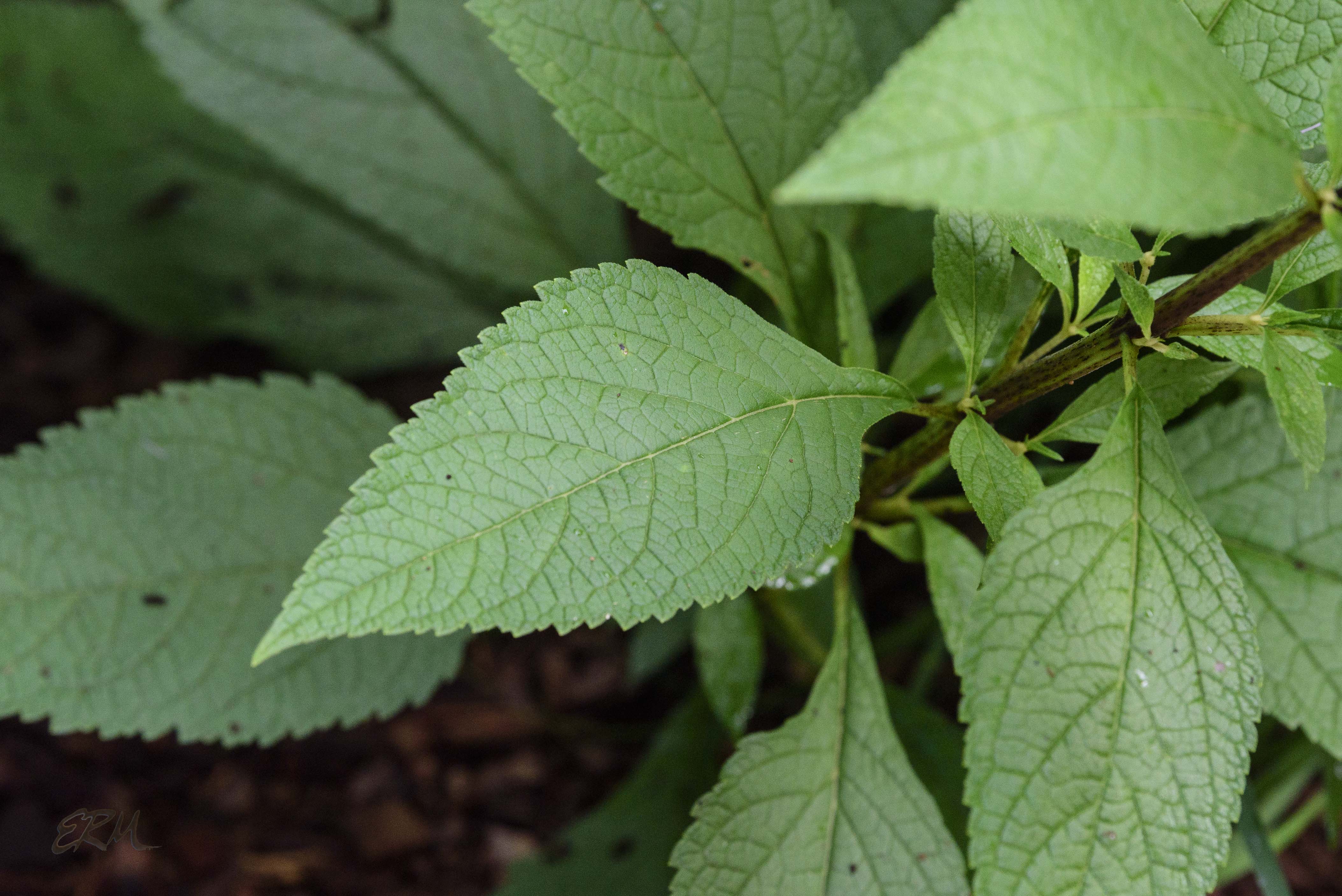
E. maculatum: lanceolate-ovate leaf
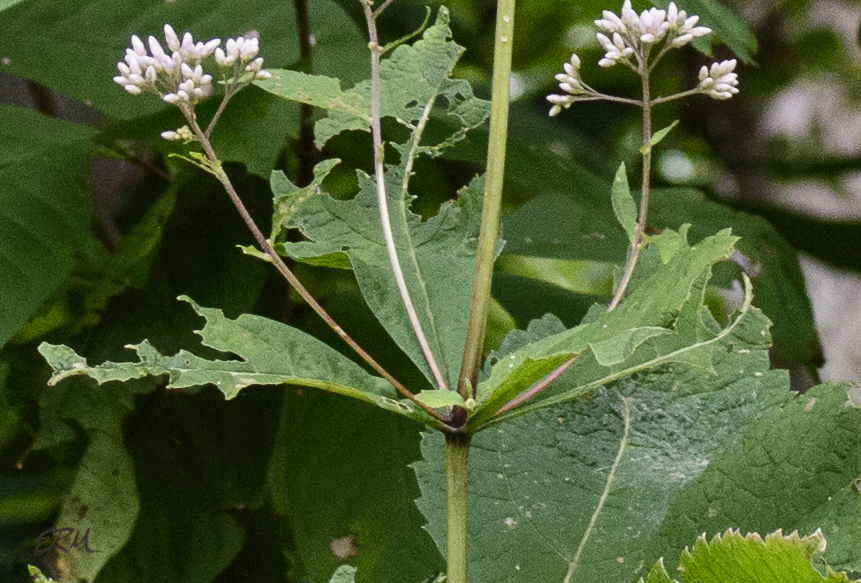


Eutrochium species with purple node

This picture from four years ago is probably of E. purpureum, though I was never able to get close enough for a confident ID. At any rate, it shows what a purple node looks like.


Of course none of this is what makes joe-pye so interesting. It’s those flowers. Unlike the aster I wrote about in the last post, joe-pyes have no ray florets – only disc florets. Each floret consists of five pointed petals, fused at the base, from which a single long style emerges. The cumulative effect of all those tiny flowers, from 4-24 per head, dozens of heads in each corymbiform inflorescence, up to a dozen inflorescences on each stem, often multiple stems from one plant… it’s just breathtaking.
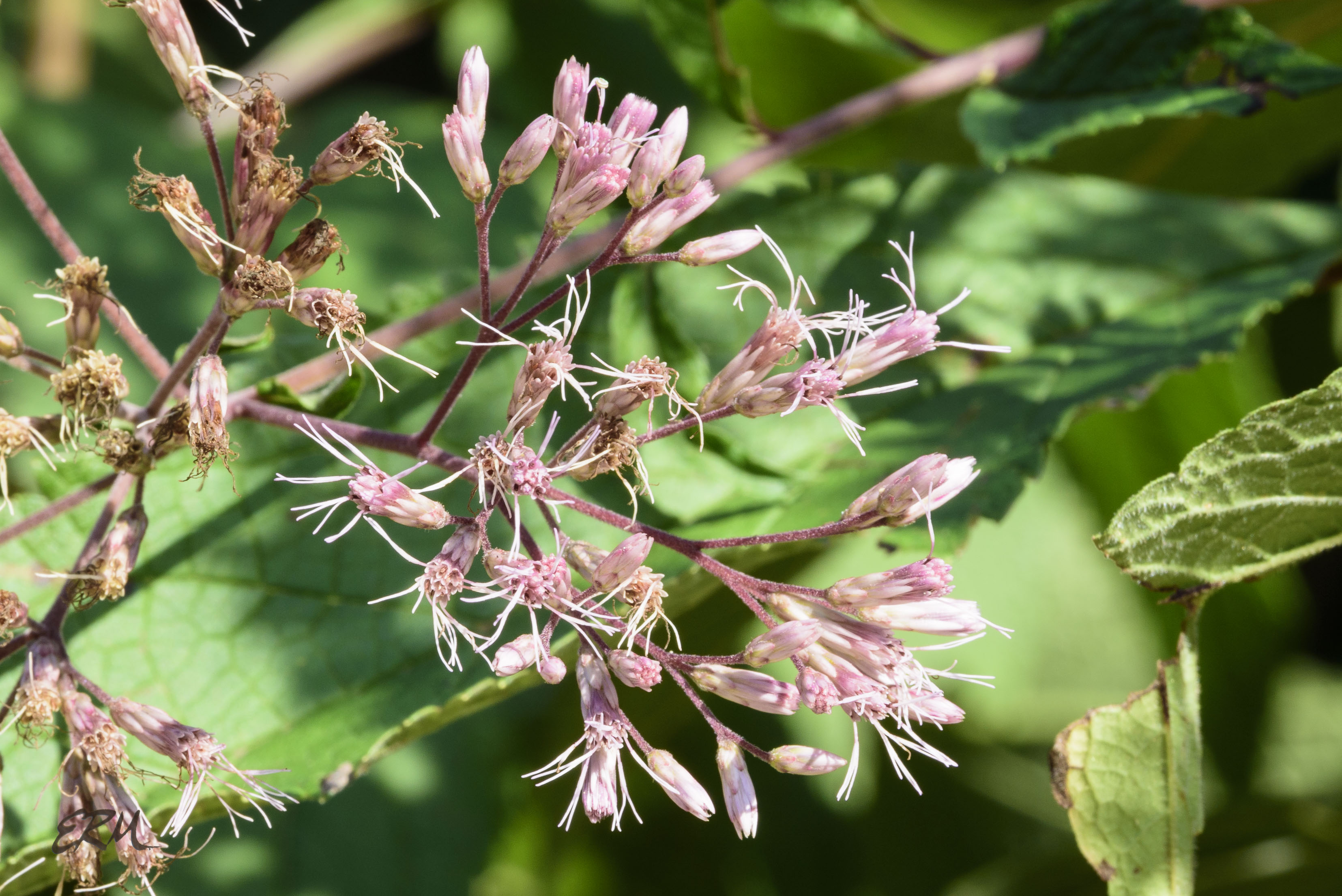
And then there’s the icing on the cake: joe-pye weeds attract bees and butterflies like crazy.

More about this next time.
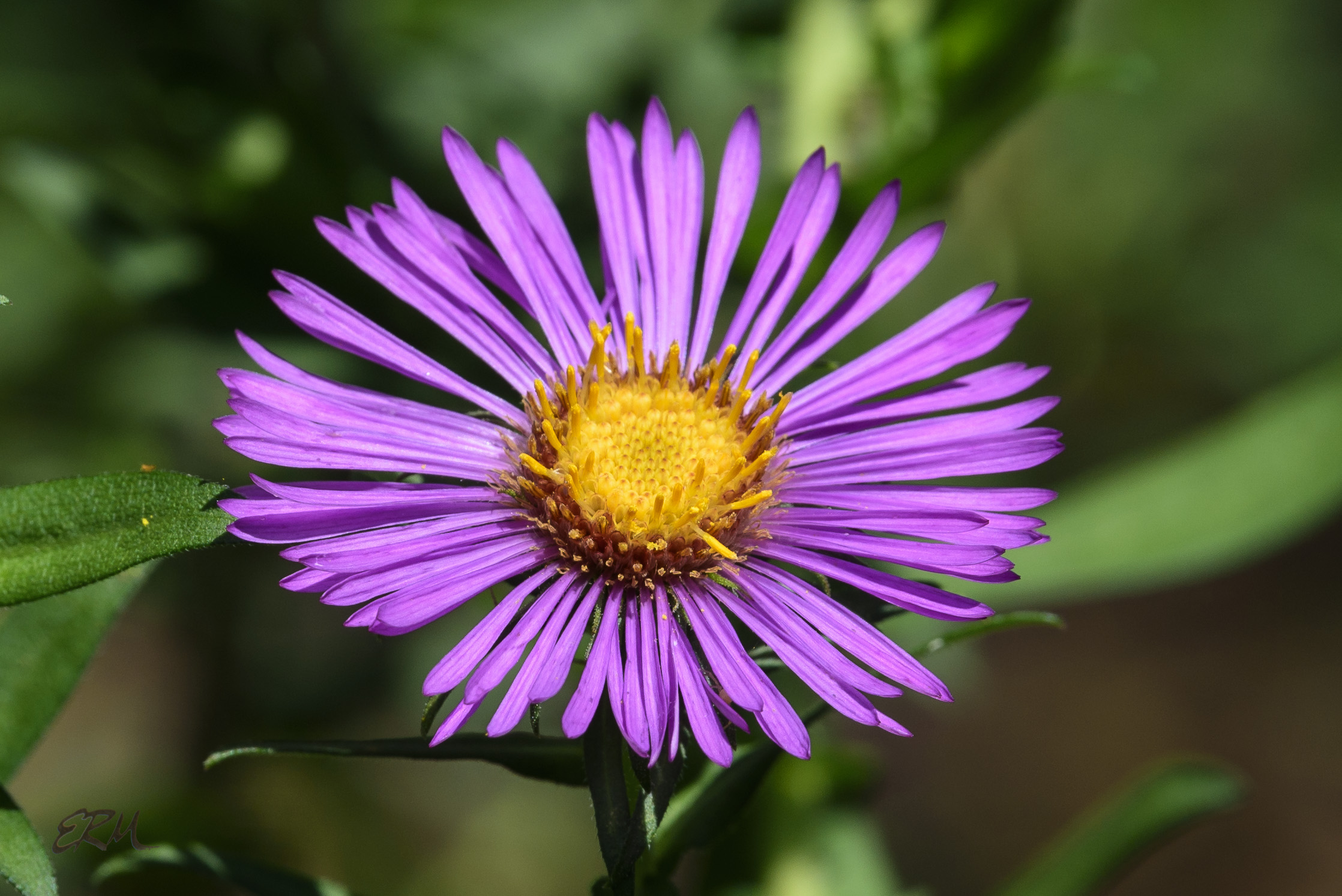
 

Astery Things #1: New England Aster

Symphyotrichum novae-angliae is a typical aster, with flower heads consisting of roughly 50 to 75 dark rose to deep purple ray florets ringing a button of 50 to 110 disc florets that are initially yellow but become purple with age.

upper stem leaves

There are quite a few other blue-purple flowering aster species in Maryland, but distinguishing them is a topic for an upcoming post.

flower heads forming

This species is found mostly in New England, of course, and in the upper mid-west and mid-Atlantic, but also ranges south through the Appalachians and into the Great Plains. In scattered areas of the West it’s found as a garden escapee. In Maryland, New England aster is found almost entirely from the Piedmont west, with just a few occurrences in the Coastal Plain.

pruned by rabbits!

The flowers pictured here are typical, but this particular plant is not. Usually New England aster sports one stem (or just a few) standing up to four feel tall; there may be some branching near the top. The plant shown here was pruned several times by rabbits before I got ’round to spraying repellent on it, hence the short, bushy appearance. New England aster grows in a variety of habitats, sunny to partly shady, almost always in moist to wet soils.


Clearly it makes a lovely garden plant if you can protect it from herbivory while it’s still small.


This is Not Giant Hogweed

Rain ends drought. And rain brings mosquitoes. So many mosquitoes.

I was walking on a wet towpath. So many mosquitoes. Their little whining buzzing was continual, and too close to my ears. Their attacks were continual. It was so humid, I sweated off the first coat of Ben’s 100 in 20 minutes, and took to walking with the bottle in hand. I hate putting poison on my skin, I hate strong odors. Why was I doing this?

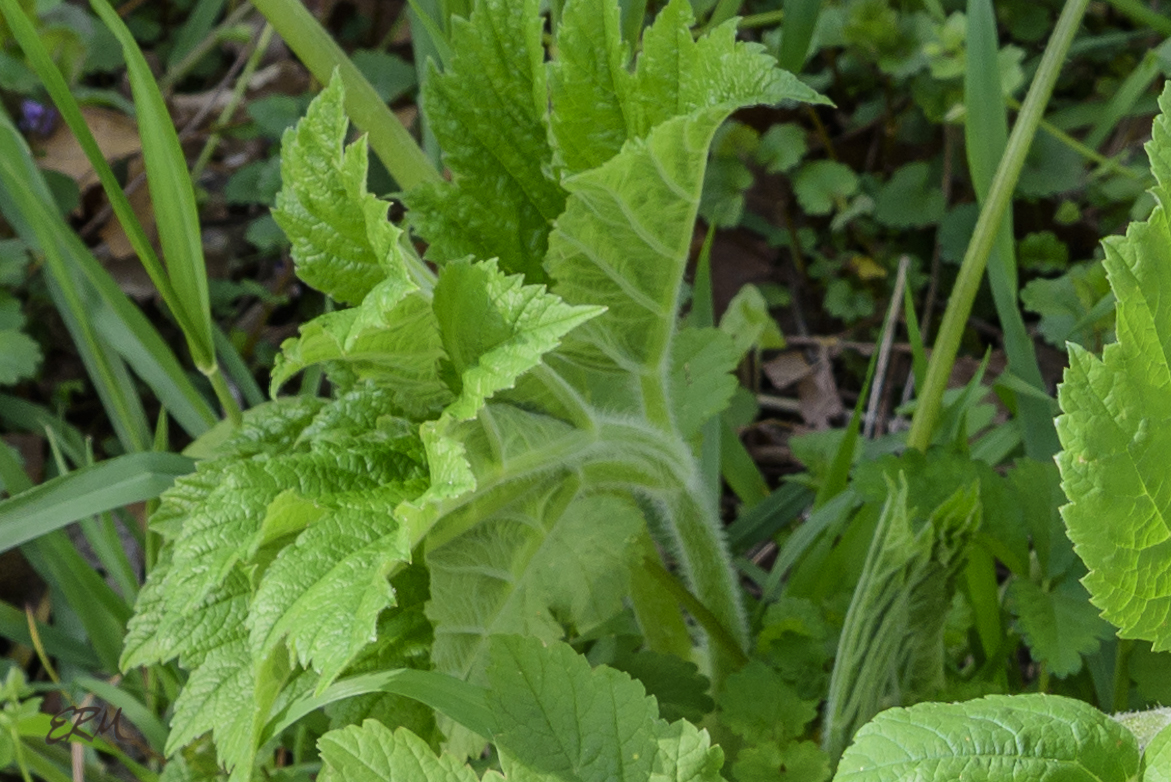
To find a plant, of course. Recent reports of a giant hogweed (Heracleum mantegazzianum) sighting in northern Virginia has led to a bit of a media frenzy, which reminded me of the walk I took with a friend last April. She had pointed at some very large leaves and asked, “what’s that?”

I didn’t know, but figured it for something in the Apiaceae, so I took a few pictures and looked it up later. Turned out to be cow parsnip, Heracleum maximum, a close relative of the plant everyone’s been fussing about.

So there I was, enduring the mosquitoes. I found the plants, a nice stand of them, but sadly they were done blooming. Also they were largely guarded by walls of stinging nettles, so I’ll admit it: I didn’t even try to get good pictures. I got as close as I reasonably could, got a few shots, and then got the hell out of there.

I really can’t overstate just how thick the mosquitoes were.

At any rate, cow parsnip, which is listed S3/watchlist in Maryland, is easily confused with giant hogweed. There have been a few sightings of the latter in recent years, but I understand that those plants were reported to the authorities, who removed them.

I’d love to be able to post pictures of giant hogweed, but I’ve never seen it. I’ll consider that a good thing.

The principal difference between the two is size, although that doesn’t help early in the season, when plants are still small. Giant hogweed grows to five and a half meters (18 feet!) tall, with a stem diameter of 15 centimeters (six inches). Cow parsnip grows to three meters (ten feet), with a stem diameter of five centimeters (two inches). The leaves and umbels are correspondingly sized (much larger on giant hogweed). The largest cow parsnip plants pictured above were about seven feet tall.

A more useful way of telling them apart is to look at the lowest leaves. Both species have compound leaves. Cow parsnip leaves generally have three rather broad lobes, while giant hogweed’s are much narrower and often irregular.

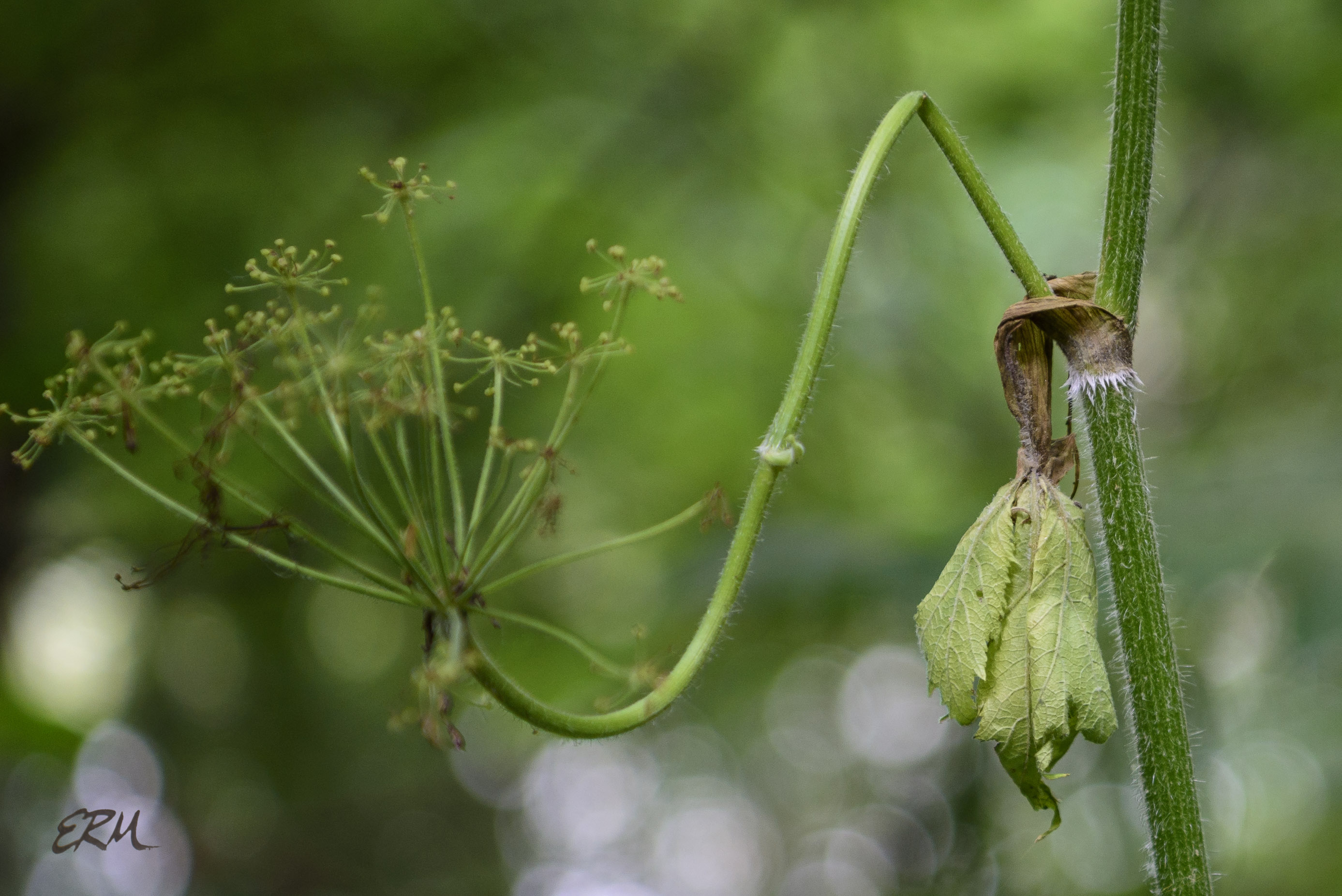
Also, the stems are different. Here’s cow parsnip; notice that but for the hairs, it’s solidly green. Giant hogweed stems have purple splotches. Both species have that ring of hairs at the nodes.

I wrote about the poisonous aspects of these plants in this post.

Remember, plants in the parsley family look a lot alike to the untrained eye. I’ve seen people mistake poison hemlock for Queen Anne’s lace, for example. Some umbellifers are tasty; others are deadly poisonous. Don’t mess around with them.

ps – about one hour after scheduling this piece to post, I saw this:

Dear Friends –
Maryland Native Plant Society board members
Jil Swearingen and (possibly) Rod Simmons will be on the Kojo Nnamdi Show on WAMU between 12:30 and 1:00 on Tuesday June 26. The topic is invasive plants. It was inspired by recent reports of giant hogweed in Virginia.

Be sure to tune in!

https://wamu.org/show/the-kojo-nnamdi-show

(Jil is one of the founding directors of MNPS and Rod is a Past President.)

Found Again!

It was raining, and the forecast said rain all week, but then there was a window of a few hours between downpours. Thinking about the plants that might be Scutellaria nervosa, I decided to take the camera on a quick hike to the site and check. I was sure they wouldn’t be flowering yet, since a week before they had just the tiniest little buds on them.

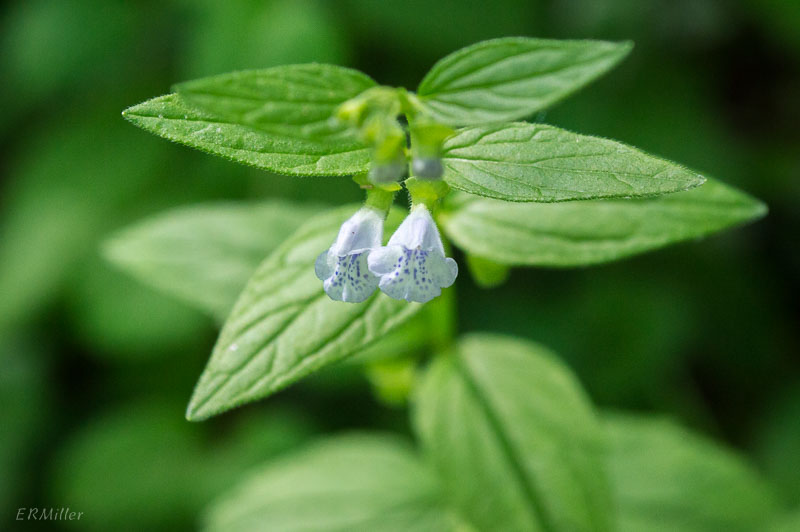
I was wrong: they were already flowering. But, I was right: they are S. nervosa!

Veiny skullcap is one of ten Scutellaria species found in Maryland. All are native, and half of them are on the RTE list (veiny is ranked S1S2). The species is globally secure; the only other jurisdiction listing it is Michigan, where it’s threatened. Its native range is more or less the Ohio River basin and somewhat east of that into the mid-Atlantic states.

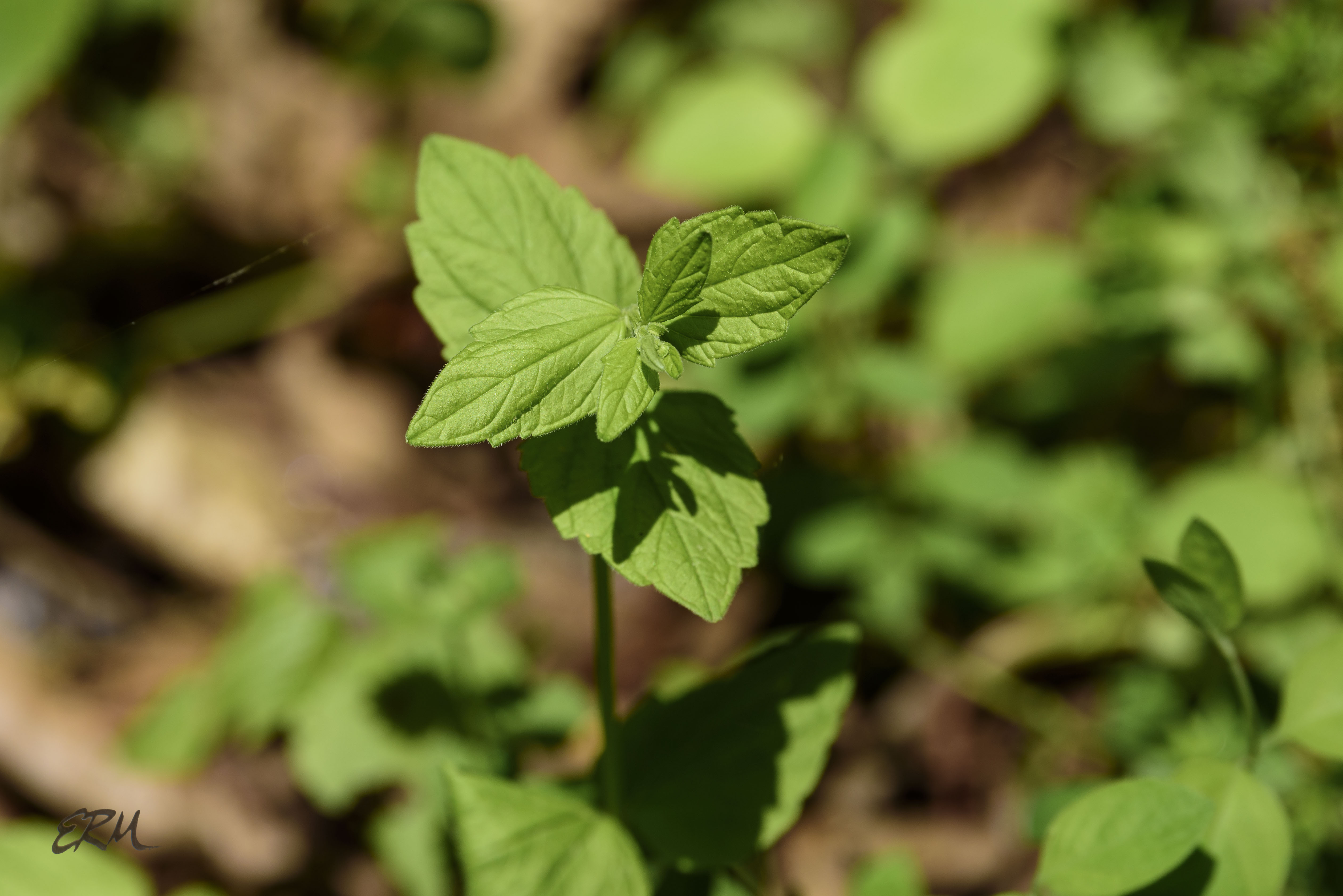
This is a slender forb growing to about a foot tall, with a single stem. The lower stem leaves are ovate and dentate, and may have short petioles, while the upper leaves are elliptical, less dentate or almost entire, and sessile. The upper leaf surfaces are lightly covered in hairs, and the margins are more densely hairy.

The light blue, pendant flowers are borne in pairs in the upper leaf axils. They aren’t very showy, and sometimes they hide under the leaves, so they’re easy to miss.

If you find veiny skullcap in Maryland please post in the comments section! We have very few records for this species.

Found Again?

I took this picture four years ago when still fairly new to photography, learning to use a new lens (105mm macro) and not sure what I was doing. Lying on my belly to get some close-up shots of miniscule blossoms on other plants, I happened to see these little pendant blue flowers and shot them, too. I had no idea what the plants were.

Later at home I keyed them out to veiny skullcap (Scutellaria nervosa). And then I learned that the species was listed S1 and endangered in Maryland!

Currently it’s listed S1/S2 endangered, with a status change to threatened pending. According to the Maryland DNR,

S1: Critically Imperiled/Highly State Rare—At very high risk of extinction or extirpation due to very restricted range, very few populations or occurrences, very steep declines, very severe threats, or other factors. Typically occurring in five or fewer populations.

S2: Imperiled/State Rare—At high risk of extinction or extirpation due to restricted range, few populations or occurrences, steep declines, severe threats, or other factors. Typically occurring in 6-20 populations.

Endangered: A species whose continued existence as a viable component of Maryland’s flora is determined to be in jeopardy.

I went back as soon as I could to get better pictures, but couldn’t find the plants, despite knowing exactly where to look (geotagged with iPhone). And I’ve hunted for them every year since, but have never found them.

Until a few days ago.

I won’t be positive until they bloom, but the appearance of the leaves and stem, coupled with flower bud location (in the upper leaf axils), leaves little doubt.

Fingers crossed.