Sometimes, It’s About Perspective

20150707-20150707-_DSC0089

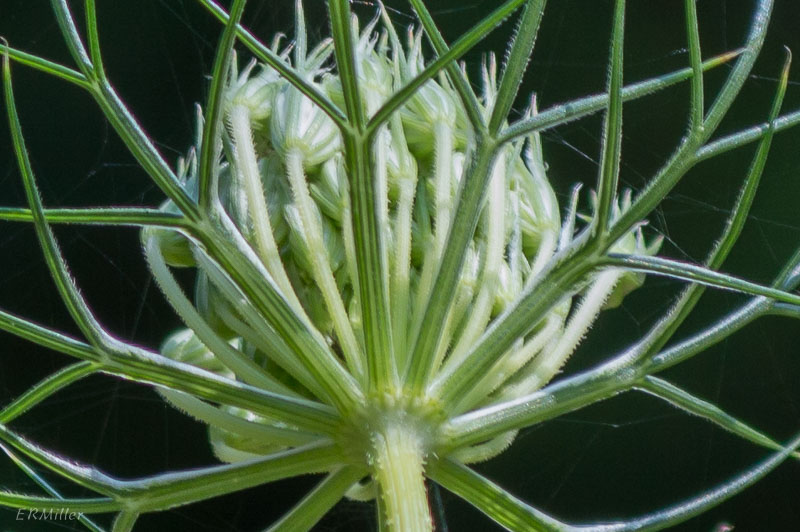
Queen Anne’s Lace
aka wild carrot, bishop’s lace
Daucus carota
Apiaceae


This is probably the plant from which modern carrots were derived, and so we owe it some respect.  Except that it has escaped cultivation and grows wild all over the US and most of Canada and is a serious pasture pest.  Four states list it as a noxious weed.

20150707-20150707-_DSC0090

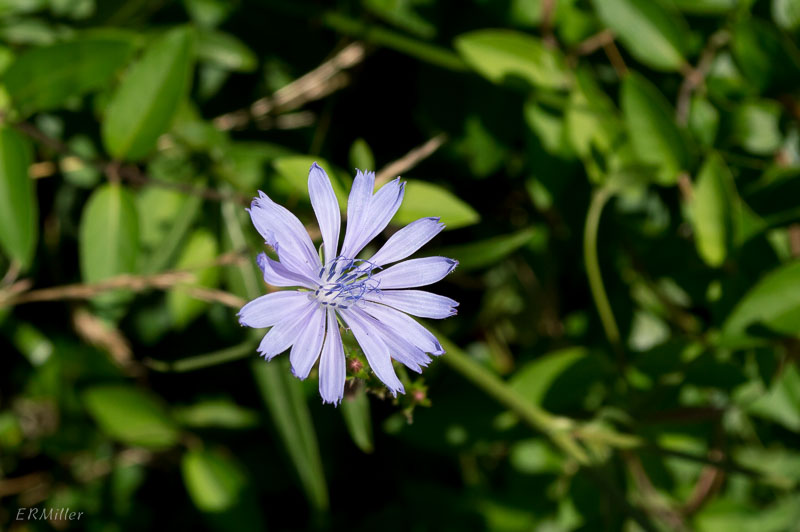
When I was a child “summer” meant riding in the back of my parents’ convertible, watching the Queen Anne’s lace and chicory* go by on the roadside. So pretty!  That might even be my earliest memory of “wildflowers”, though the grown-up me dismisses them as alien invasives.

20150707-20150707-_DSC0091

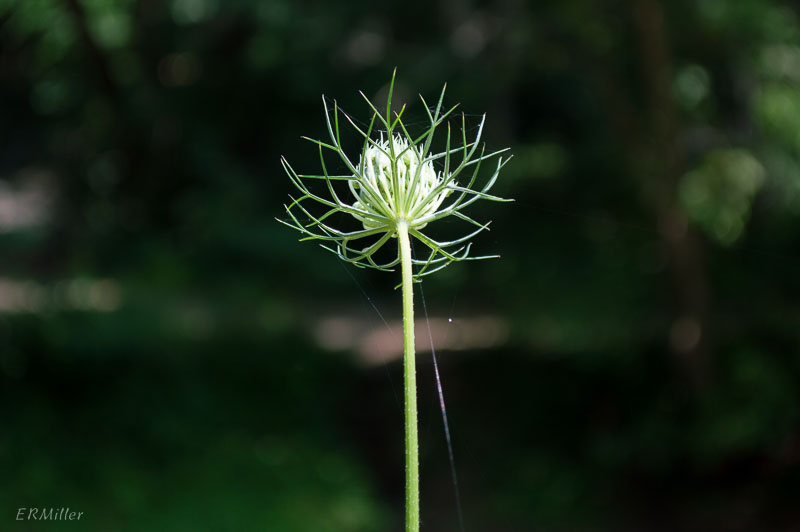
At any rate, I haven’t paid attention to Queen Anne’s lace in years.  Never even took a photograph of one until recently.  While hiking along the C&O Canal towpath near lock 8, I saw some particularly tall specimens with flowers just starting to open.

20150707-20150707-_DSC0090-2


I was quite taken with the form, and spent some time shooting them from different angles.

20150707-20150707-_DSC0089-2


It’s really striking this way, isn’t it?  Much more aesthetically pleasing, and harder to dismiss as a roadside weed.20150716-20150716-_DSC0008


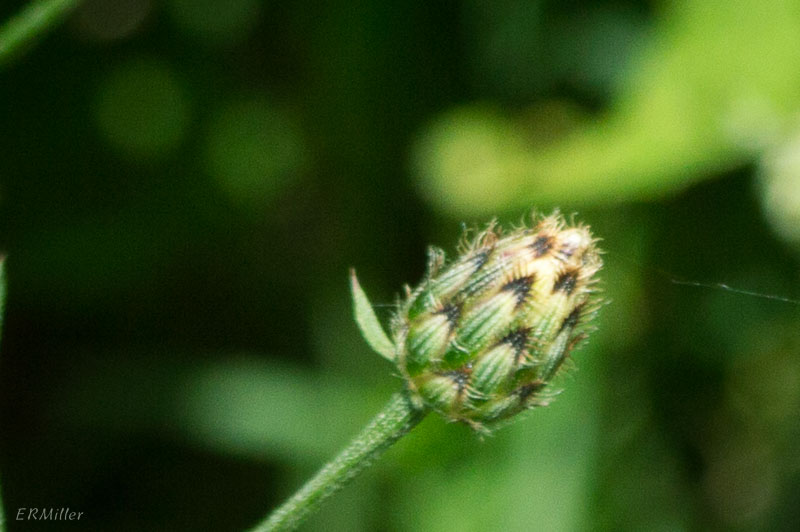
*chicory, aka cornflower and a host of other common names; Cichorium intybus, Asteraceae:
20150710-20150710-_DSC0009

Spiderwebs

I have a particular interest in spiderwebs despite having a fear of spiders. Spiderwebs are difficult to photograph, and I’ve wasted a lot of time trying to get good shots of them.

Hiking along the C&O Canal near Sharpsburg I thought I saw a giant CD disc hanging in the trees.  Of course it wasn’t a CD; rather, the most perfectly formed spiderweb I’ve ever seen.

20150711-20150711-_DSC0007

Just a few steps later was the largest spiderweb I’ve ever seen.

20150711-20150711-_DSC0008

I was really lucky to have decent light for these shots.

Variations on a Theme: Jewelweed

Impatiens species; Balsaminaceae

20150710-20150710-_DSC0026
Impatiens capensis
aka spotted jewelweed, spotted touch-me-not
20150711-20150711-_DSC0001


Impatiens pallida
aka pale or yellow jewelweed, pale or yellow touch-me-not


Of the five native North American Impatiens species, three are found in the Pacific Northwest, while I. pallida is a more eastern species and I. capensis is found almost everywhere except California and the drier states of the West.  The former species is listed as “special concern” in Maine; otherwise there are no conservation issues with either.

Impatiens pallida and Impatiens capensis are almost identical; the only significant differences are the flower color and position of the nectar tube (sadly, I was unable to get close enough to any blooming I. pallida for a clear illustration of this).

20150710-20150710-_DSC0024

Both plants grow to 5 feet tall, preferring wet soils.  You can find I. capensis along the edges of small streams and the banks of the C&O Canal.  I. pallida is less common in the Potomac Gorge, though I did see a few plants just outside Washington, DC.  There are huge stands of it lining the canal at Snyder’s Landing, near Sharpsburg.

Snyder’s Landing, by the way, is a great place to hunt for ferns.  More on that another time.

It’s Pretty, But…

20150711-20150711-_DSC0087

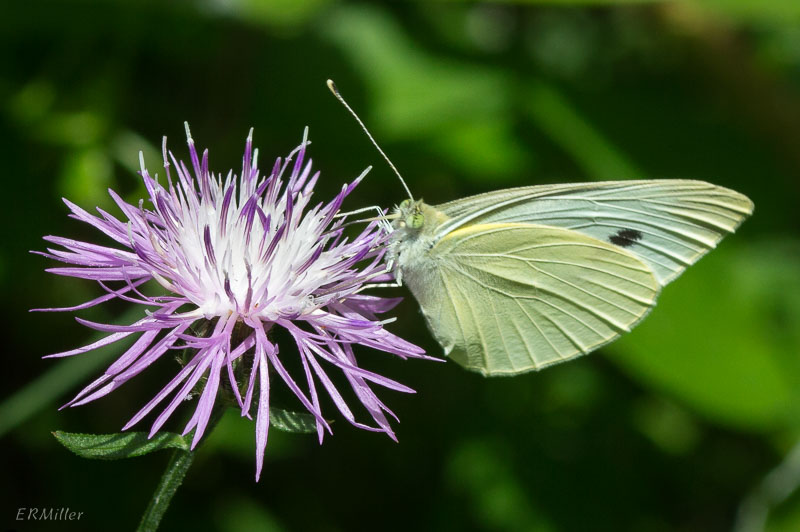
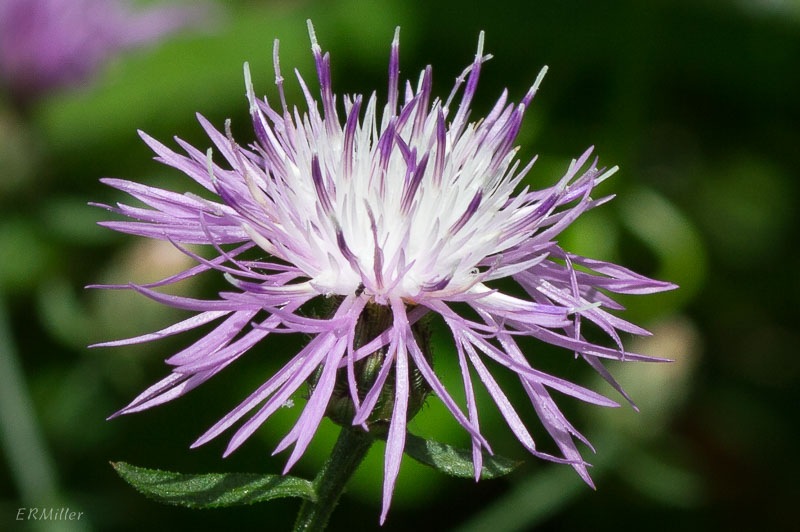
cabbage white (probably; Pieris rapae) on spotted knapweed (probably)

How can you hate such a lovely flower?  Let me count the ways.

I’m a native plant enthusiast.  Finding aliens in the wild bothers me.  It’s not so much a vague “they don’t belong here” feeling, but more of a fear that today’s ooh-isn’t-that-pretty exotic will be next year’s monoculture-forming, native-killing beast.  Like wavy-leaf basket grass, or Oriental bittersweet.  Or spotted knapweed (Centaurea maculosa; Asteraceae).

Of the 32 species of Centaurea found in the US, only three are native.  And none of those are found in West Virginia, where these shots were taken (along the Potomac River in Shepherdstown).

I didn’t study the plant, so I didn’t get enough information to make a positive identification.  I was on a group hike hunting for ferns – actually, for a quite rare fern (subject of a future blog post, for sure) – when I spotted the butterfly and snapped a few quick pics before catching up with the group.  But based on data from BONAP (Biota of North America Project) and USDA PLANTS Database, I’ve narrowed the possibilities down to:

C. nigra -lesser knapweed
C. jacea -brownray knapweed
C. nigrescens -Tyrol knapweed
C. maculosa (aka C. stoebe) -spotted knapweed

20150711-20150711-_DSC0088

With nothing else other than these pictures to go on, I suspect it’s the last one – Centaurea maculosa, the worst of the worst.

This species is a major pest in the West.  And by major, I mean that it’s known to form multi-acre monocultures, out-competing every other plant and rendering the land almost useless for livestock forage.

For awhile people believed that spotted knapweed was allelopathic (producing compounds that inhibit the growth of other plants), but recent studies have shown that it actually out-competes other plants by working symbiotically with a carbon-stealing fungus.  (More fascinating and disturbing details at wildflowers-and-weeds.)

There’s a lengthy, detailed report form the US Forest Service here.  One sobering excerpt:

“Spotted knapweed is considered a serious threat to rangelands in Montana, Washington, Idaho, Oregon, Wyoming, and British Columbia. Because of its affinity for the climate of western Montana, Chicoine and others [25] predicted that spotted knapweed had the potential to invade 37 million acres (15 million ha) in that state alone, and Bedunah [11] speculated that the foothill grasslands in western Montana (the primary habitat for spotted knapweed) are becoming an endangered vegetation type.”  (emphasis mine)

20150711-20150711-_DSC0088

Sure makes a pretty picture, though.
 

Another One Found

This weekend Steve are I are in central New York State.  Yesterday morning, about the time “Another One Missed” auto-posted, we set out for the Hi Tor Wildlife Management Area on the south end of Canandaigua Lake.  A few hundred yards into the hike, we found this:

20150717-20150717-_DSC0020

…a huge stand of pointed-leaf tick trefoil.  Missed at home, found 300 miles north.  Not a one had an open blossom, but nonetheless they were lovely en masse.