Are Asters Really Asters?

20151014-_DSC0102

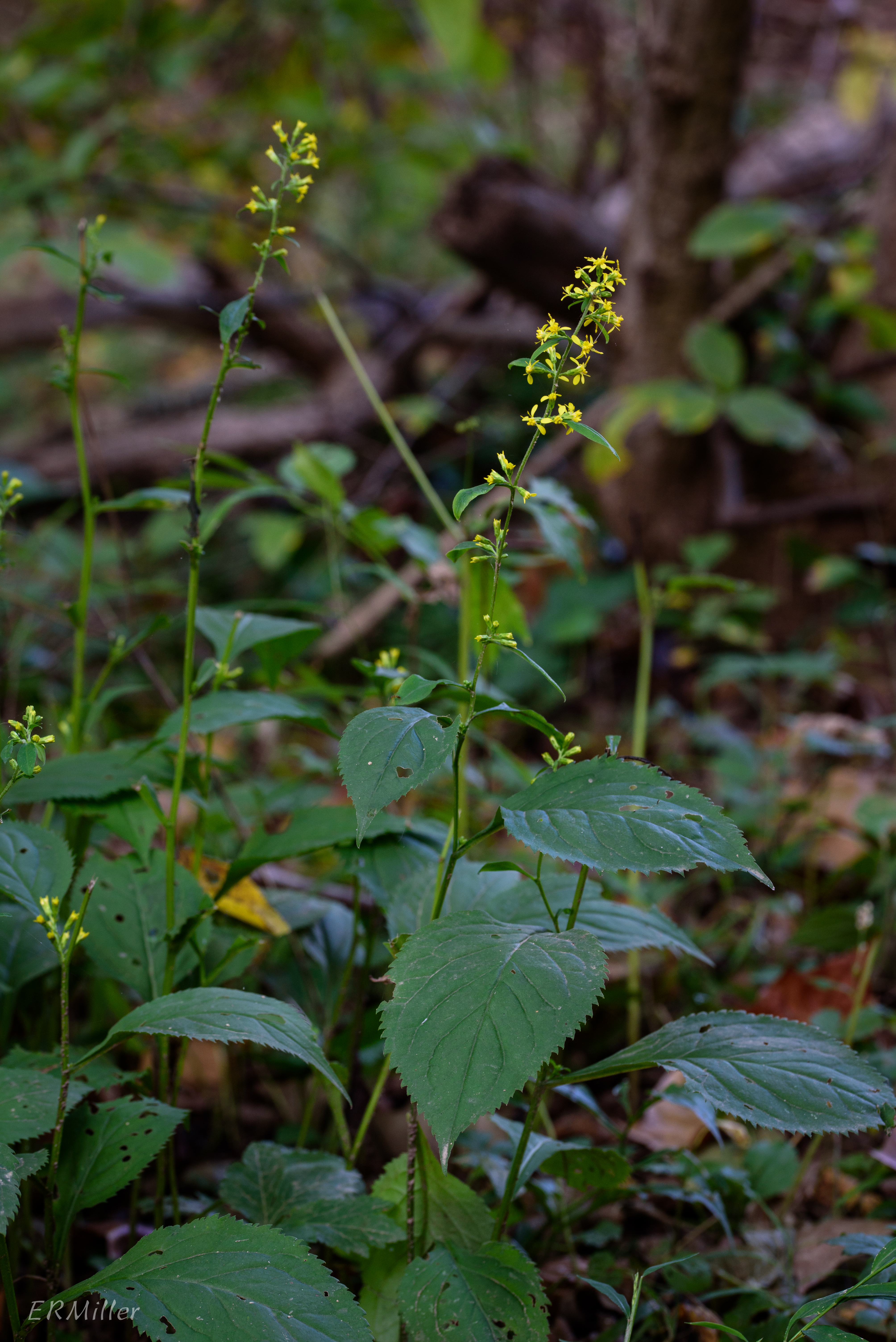
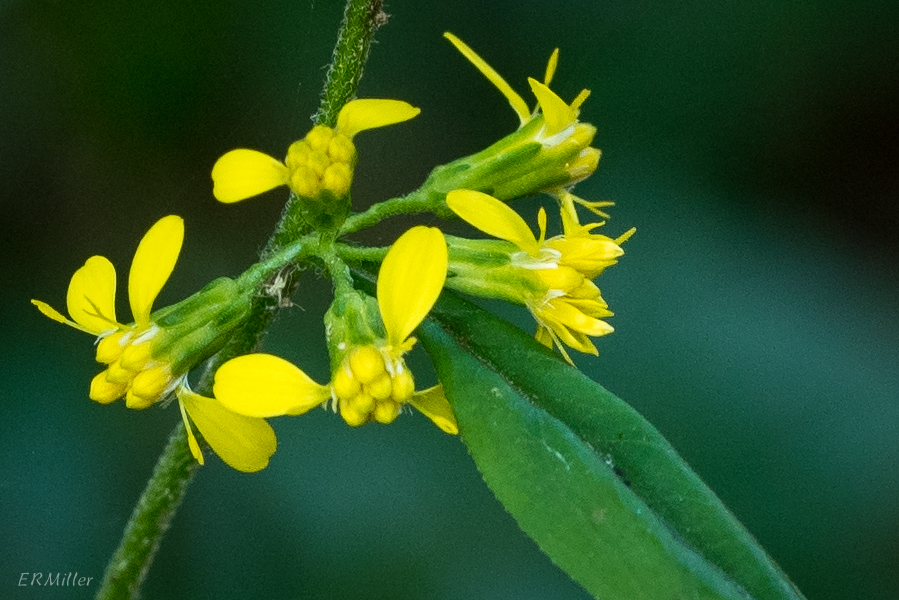
The plants we commonly think of as asters are all over the Potomac Gorge and the mid-Atlantic Piedmont at this time of year. But, botanically speaking, they aren’t actually asters. Or perhaps it would be more correct to say that they aren’t actually Asters.

20151014-_DSC0088 20151014-_DSC0089

the two photos above show adjacent leaves on the same plant

At one time the genus Aster comprised about six hundred different species in Asia, Europe, and North America, but molecular phylogeny research led to a major reclassification. As a result, only one species native to North America is left in the genus Aster. Other than that one (A. alpinus), Aster is reserved for Eurasian species. The North American aster species were placed into ten new genera.

Species in five of those genera, Doellingeria, Eurybia, Ionactis, Sericocarpus, and Symphyotrichum, are found in my geographic area of interest.

20151014-_DSC0076

Newer guidebooks, like Clemants and Gracie’s Wildflowers in the Field and Forest, reflect these changes.

In many cases, the name change is straightforward: Aster ericoides is now known as Symphyotrichum ericoides, for example.  But in some cases – like with the flowers pictured in this post – it’s anything but straightforward.

20151014-_DSC0092

I was studying these pictures and using the venerable Newcomb’s and Peterson’s guides to try to figure out whether they’re Aster sagittifolius, Aster lowrieanus, or Aster cordifolius (and expecting that they would likely be the Symphyotrichum equivalent). Not making much progress, I turned to the internet, and found the following:

According to USDA Plants, Aster cordifolius is now Symphyotrichum cordifolium, a name accepted by ITIS.

According to USDA Plants, Aster lowrieanus is Symphyotrichum lowrieanum, a name not accepted by ITIS, which considers S. lowrieanum to be a synonym for S. cordifolium.

And Aster sagittifolius seems not to have made the cut. Searching for it in USDA Plants leads to S. cordifolium. Searching for it in ITIS leads to both S. cordifolium and S. urophyllum.

Confused yet? So am I. And without a sample at hand I can’t really narrow them down. In order to correctly identify them, I’m going to have to either collect samples (which I won’t do, for both ethical and legal reasons), or try to use my iPhone to access a good dichotomous key on the internet while in the field. It doesn’t help that by the time I found these plants, they had lost their lowest stem leaves.  By now they might be pretty ragged.

In the meantime, I’ve decided that both common blue wood aster (Symphyotrichum cordifolium) and arrow-leaf aster (Symphyotrichum urophyllum) are pictured here. As always, I welcome correction. Including corrections of typos.  I’ve proofread this so many times I can no longer see straight.

20151014-_DSC0117

Postscript: Just for fun, here’s an excerpt from the Astereae Lab overview of asters:
“…However, during the last decade analyses of morphology, chloroplast DNA restriction fragment length polymorphisms and ITS sequence data, and on going karyotype studies have all demonstrated that asters are polyphyletic and members of a number of very distinct phylads within the tribe…”
————
I researched the hell out of this subject, and used the following sources extensively:
USDA Plants database
ITIS
Maryland Biodiversity Project
University of Waterloo Astereae Lab
Wikipedia
Illinois Wildflowers
Blue Stem

20150923-_DSC0030

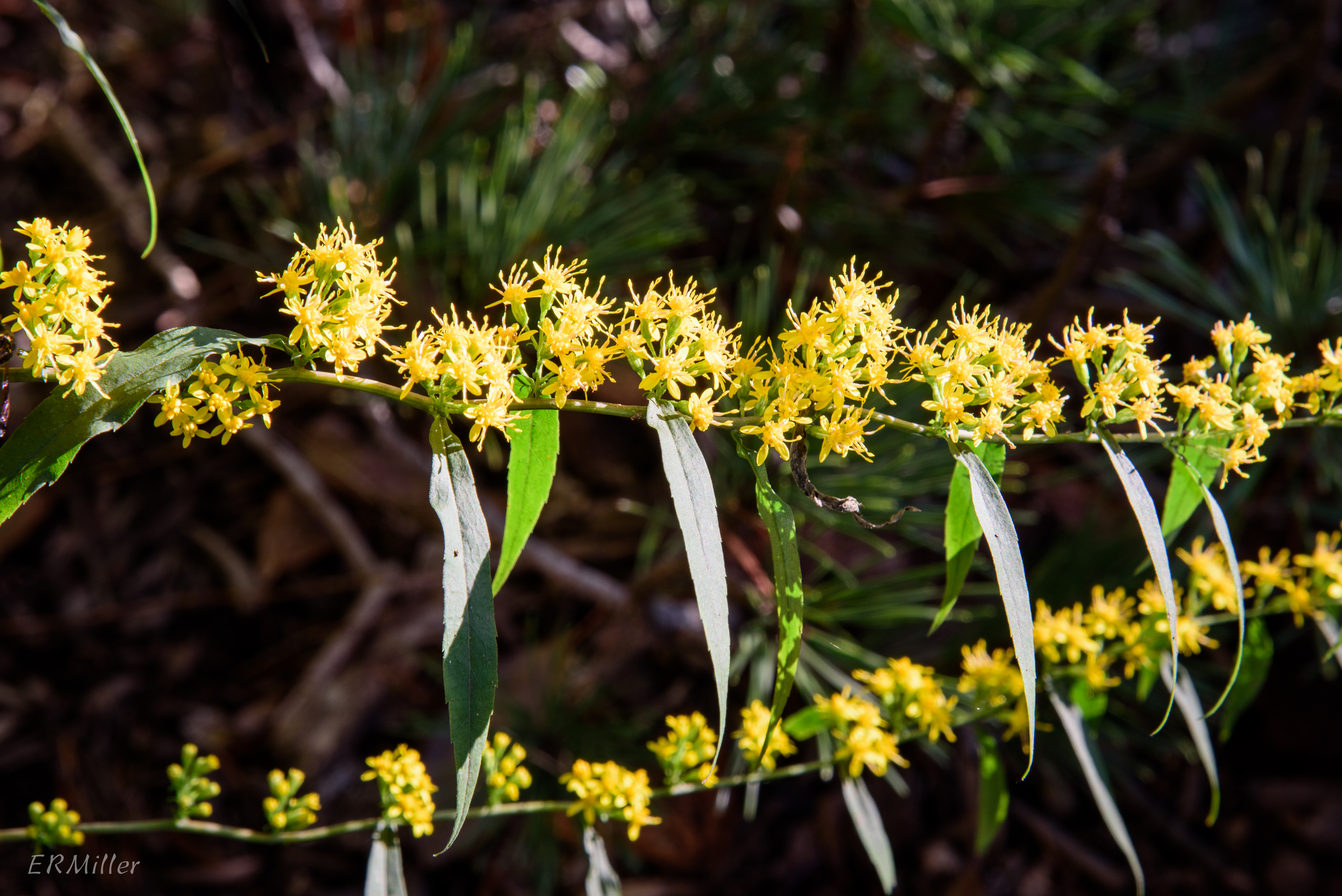
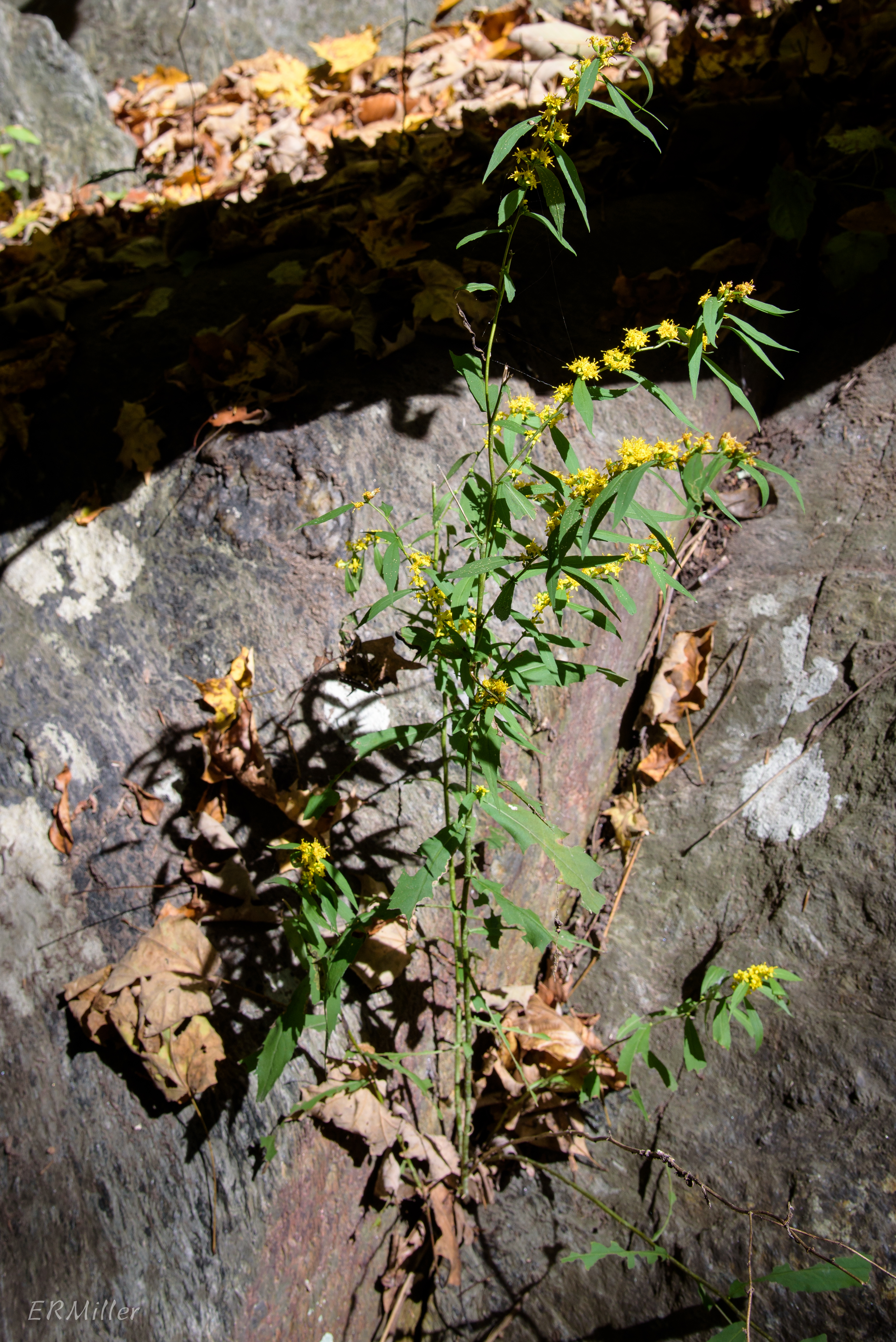
blue-stem goldenrod, aka wreath goldenrod
Solidago caesia
Asteraceae


As I wrote previously (and last year), goldenrod identification can get really tricky. Both zigzag goldenrod and blue-stem goldenrod have unusual characteristics, though. For one thing, they’re woodland plants (most goldenrods like full sun, or at least more sun). And they bloom relatively late. And few other goldenrod species have flower clusters in the leaf axils; most goldenrods have terminal, or at least upper-stem, inflorescences.

20151010-_DSC0048

Whereas zigzag has big, oval, serrated mid-stem leaves, bluestem has linear, smooth-edged or serrated, one-nerved leaves that are sessile, all the way along the stem, which may or may not carry a slight blue tint. Better to rely on leaf shape and the presence of axillary flowers for identification.  As you can see from the photos, it will sometimes have an upright habit, but more often flops over under the weight of the blossoms.

20151010-_DSC0004


The specific epithet is from the Latin caesius, meaning cutting or piercing.

Blue-stem goldenrod can be found from Texas in the south and northeastward into Quebec.  It’s endangered in Wisconsin.

Bent Stem

20151014-_DSC0054


zigzag goldenrod
Solidao flexicaulis
Asteraceae


The late summer not-quite drought wiped out a lot of flowers, but others are starting to bloom after the recent rains. The earlier goldenrods are mostly gone, but this is one of two later-blooming species that are coming along nicely.

With over 70 species in the continental US (two dozen of which occur in the mid-Atlantic Piedmont), it can be difficult to distinguish one Solidago from another. This species is an easy one, though, with large, serrated, ovate leaves with petioles at the middle of the (usually) unbranched stem, and upper stem leaves that are lanceolate. In most specimens, there’s a bend at each node, hence the name “zigzag” goldenrod.  (The specific epithet, flexicaulis, means bent stem.)

20151014-_DSC0064


zigzag goldenrod typically has only a few ray flowers; in this photo you can see the opened disk flowers


Zigzag goldenrod is found east of the Rockies except in parts of the deep South. It’s threatened in Rhode Island.

20151014-_DSC0049


and in this photo, the disk flowers have not yet opened

Monarchs (A Post for Cheryl)

20151005-_DSC0302

Ta-da!  Here it is, the current darling of conservation, the monarch butterfly (Danaus plexippus).  I promised a friend I’d write about them if I ever actually saw one.  So here you go, Cheryl, this post is for you!

This one was in the Smithsonian butterfly garden on the National Mall, feeding on butterfly milkweed (Asclepias tuberosa).

The monarch is easily mistaken for another butterfly, the viceroy.  The two look a lot alike; the major difference is a dark lateral stripe toward the rear of the viceroy’s hindwings.  I don’t have a picture to illustrate that but have a look at the Maryland Butterflies website.

I’m no entomologist so I’ll stick with a few basic facts.

There are two populations of monarchs, one east of the Rocky Mountains and one to the west.

Most of the eastern population overwinters in Mexico, though some will hibernate on the Gulf and southern Atlantic coasts.  Adults already in the tropics do not migrate.

Monarchs lay eggs on milkweeds (Asclepias species, and two other species in the Apocynaceae).  The caterpillars go through five instars before pupating and emerging as an adult butterfly.  The adults will feed on a variety of plants, including species in the aster, carrot, pea, and mustard families.

Monarchs will produce one to six broods during the summer.  Most of the butterflies live only a few weeks; it’s the last brood of the year that migrates south to overwinter, mate, and return north, laying eggs on the way.

The eastern population has declined by more than 90% since 1995, which is about one billion individuals.

The major threat to monarchs is habitat loss, which takes two forms: destruction of the forests in which the monarchs overwinter, and destruction of milkweeds, the sole larval host plant.  Milkweeds are considered nuisance plants by farmers and many homeowners.  Another threat – and another reason to hate invasive species – is the increasing presence of two species of Cynanchum, exotic alien plants that look like the native Cynanchum laeve (which is a larval host plant) but are poisonous to the larvae.

Other species of butterflies migrate, but the monarch is the only one that migrates both ways.

For more detailed information check out any of the following sites:
USDA Forest Service
Butterflies and Moths of North America
Monarch Watch
The Xerces Society

20151005-_DSC0320

Orchid Update: New Hope

Two months ago I wrote about finding only a single cranefly orchid, despite seeing dozens the year before.  After posting that I asked a few experts; the consensus was that deer browse had caused the disappearance.

One day last week I was poking about looking for asters and goldenrods that may have started blooming after the recent rains.  I didn’t find many, but I did find this:

20151010-_DSC0009

Zoom in and look closely.  In the center of the picture is a purplish leaf partly unfurled among all the fallen tree leaves.  That’s a new leaf of cranefly.  There were more, but I didn’t get close, for fear of trampling something (this picture was taken from pretty far away), and quickly withdrew, as there were people about and I didn’t want anyone taking an interest in my interest.  There are poachers in this area.

This year there were no flowering stems in this stand.  Clearly the plants are growing again, but how many seasons of abuse can they take?  I’m considering contacting the park service and asking them to put fencing around this little patch.  It’s an area that sees lots of human activity as well as deer pressure, but I wonder if drawing attention to this patch may do more harm than good.

Feeling hopeful after finding the cranefly, I went over to the place where I saw puttyroot last year, and this:

20151010-_DSC0043

Yes, two new puttyroot leaves.  Again, that’s a zoom-in from a distance.  Last thing I want is to cause damage in my enthusiasm.  I can admire from afar.