Blue Stem

20150923-_DSC0030

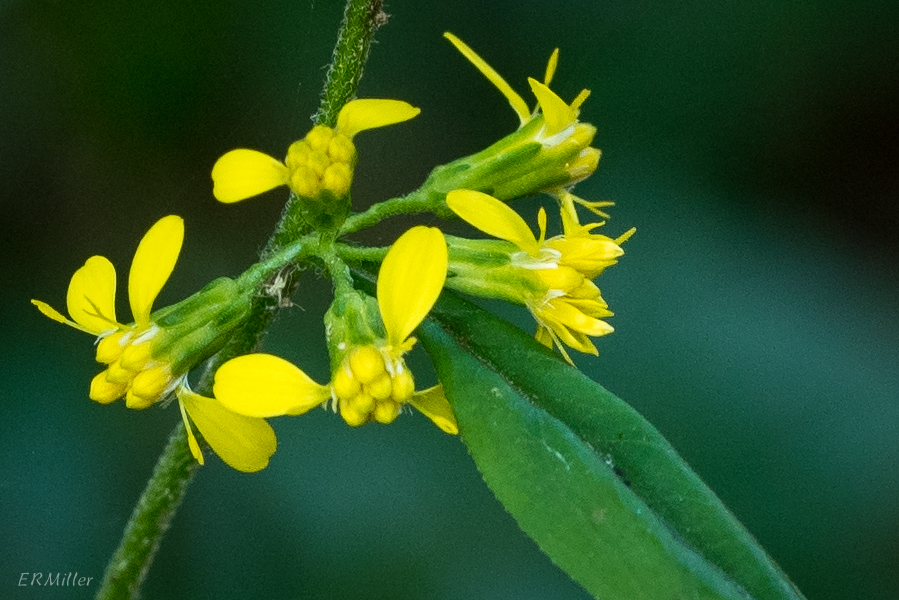
blue-stem goldenrod, aka wreath goldenrod
Solidago caesia
Asteraceae


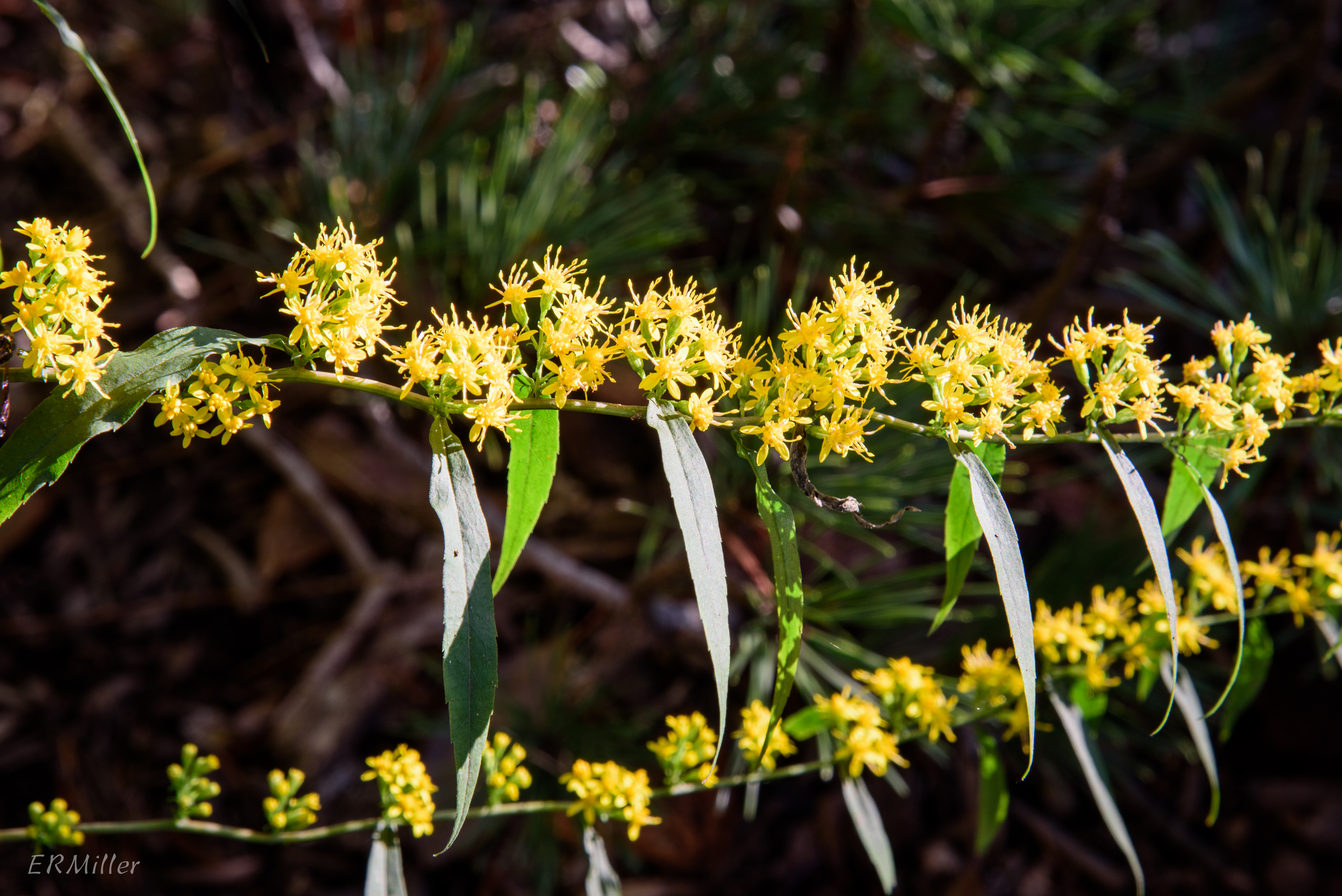
As I wrote previously (and last year), goldenrod identification can get really tricky. Both zigzag goldenrod and blue-stem goldenrod have unusual characteristics, though. For one thing, they’re woodland plants (most goldenrods like full sun, or at least more sun). And they bloom relatively late. And few other goldenrod species have flower clusters in the leaf axils; most goldenrods have terminal, or at least upper-stem, inflorescences.
20151010-_DSC0048

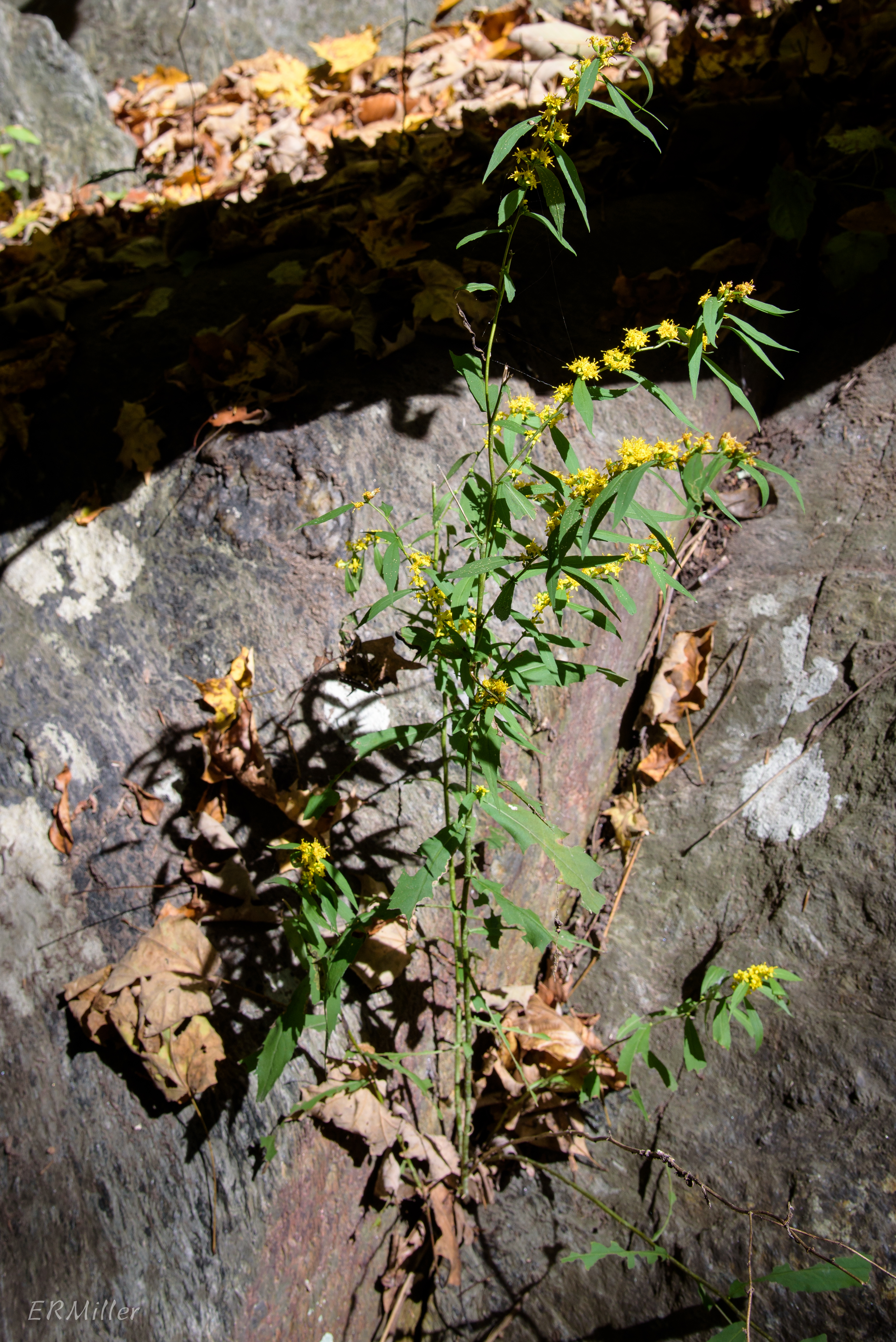
Whereas zigzag has big, oval, serrated mid-stem leaves, bluestem has linear, smooth-edged or serrated, one-nerved leaves that are sessile, all the way along the stem, which may or may not carry a slight blue tint. Better to rely on leaf shape and the presence of axillary flowers for identification.  As you can see from the photos, it will sometimes have an upright habit, but more often flops over under the weight of the blossoms.

20151010-_DSC0004


The specific epithet is from the Latin caesius, meaning cutting or piercing.

Blue-stem goldenrod can be found from Texas in the south and northeastward into Quebec.  It’s endangered in Wisconsin.
Bent Stem

20151014-_DSC0054


zigzag goldenrod
Solidao flexicaulis
Asteraceae


The late summer not-quite drought wiped out a lot of flowers, but others are starting to bloom after the recent rains. The earlier goldenrods are mostly gone, but this is one of two later-blooming species that are coming along nicely.

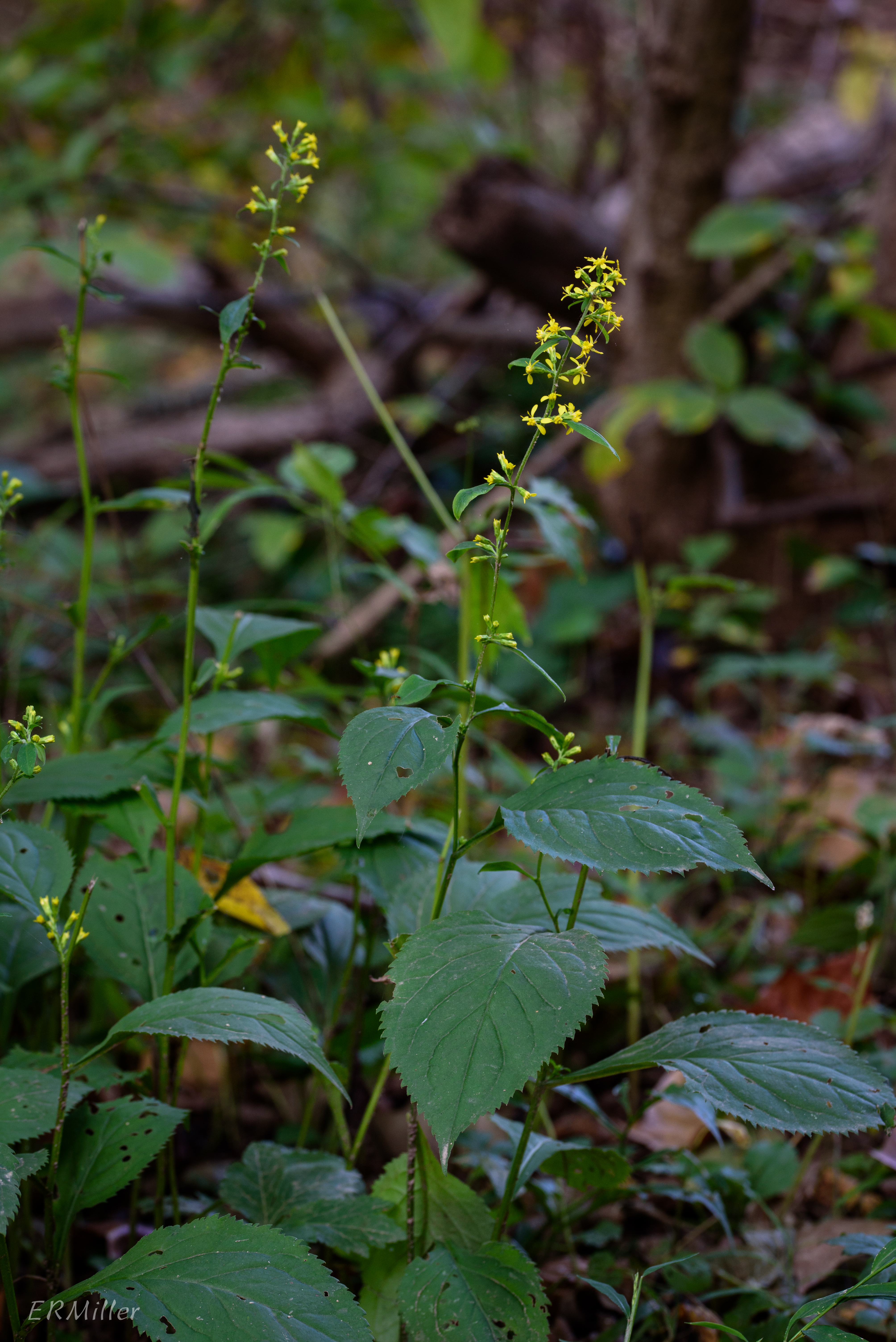
With over 70 species in the continental US (two dozen of which occur in the mid-Atlantic Piedmont), it can be difficult to distinguish one Solidago from another. This species is an easy one, though, with large, serrated, ovate leaves with petioles at the middle of the (usually) unbranched stem, and upper stem leaves that are lanceolate. In most specimens, there’s a bend at each node, hence the name “zigzag” goldenrod.  (The specific epithet, flexicaulis, means bent stem.)

20151014-_DSC0064


zigzag goldenrod typically has only a few ray flowers; in this photo you can see the opened disk flowers


Zigzag goldenrod is found east of the Rockies except in parts of the deep South. It’s threatened in Rhode Island.

20151014-_DSC0049


and in this photo, the disk flowers have not yet opened

Helen of Troy in Autumn

20150821-20150821-_DSC0063

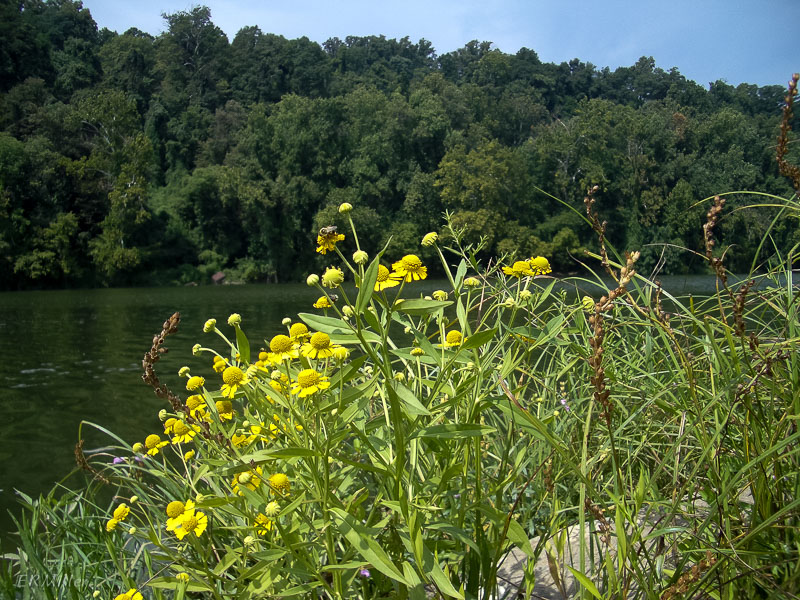
common sneezeweed
Helenium autumnale
Asteraceae


With three naturally occurring varieties, there’s a common sneezeweed found almost everywhere in the continental US and Canada, except the extreme northwest and northeast.  This herbaceous perennial can get up to five feet tall, and likes full sun and plenty of moisture – not surprisingly, this is another plant I found growing along the banks and on the rock outcrops in the lower Potomac Gorge.

20150821-20150821-_DSC0060

Nineteen other native species of Helenium grow in the US.  Common sneezeweed and purple-headed sneezeweed are the only ones known in the Gorge.

Apparently the dried, ground leaves and flowers were once used for snuff, hence “sneezeweed”.

20030101-20030101-IMGP0276

Leafpiercer

20150821-_DSC0079

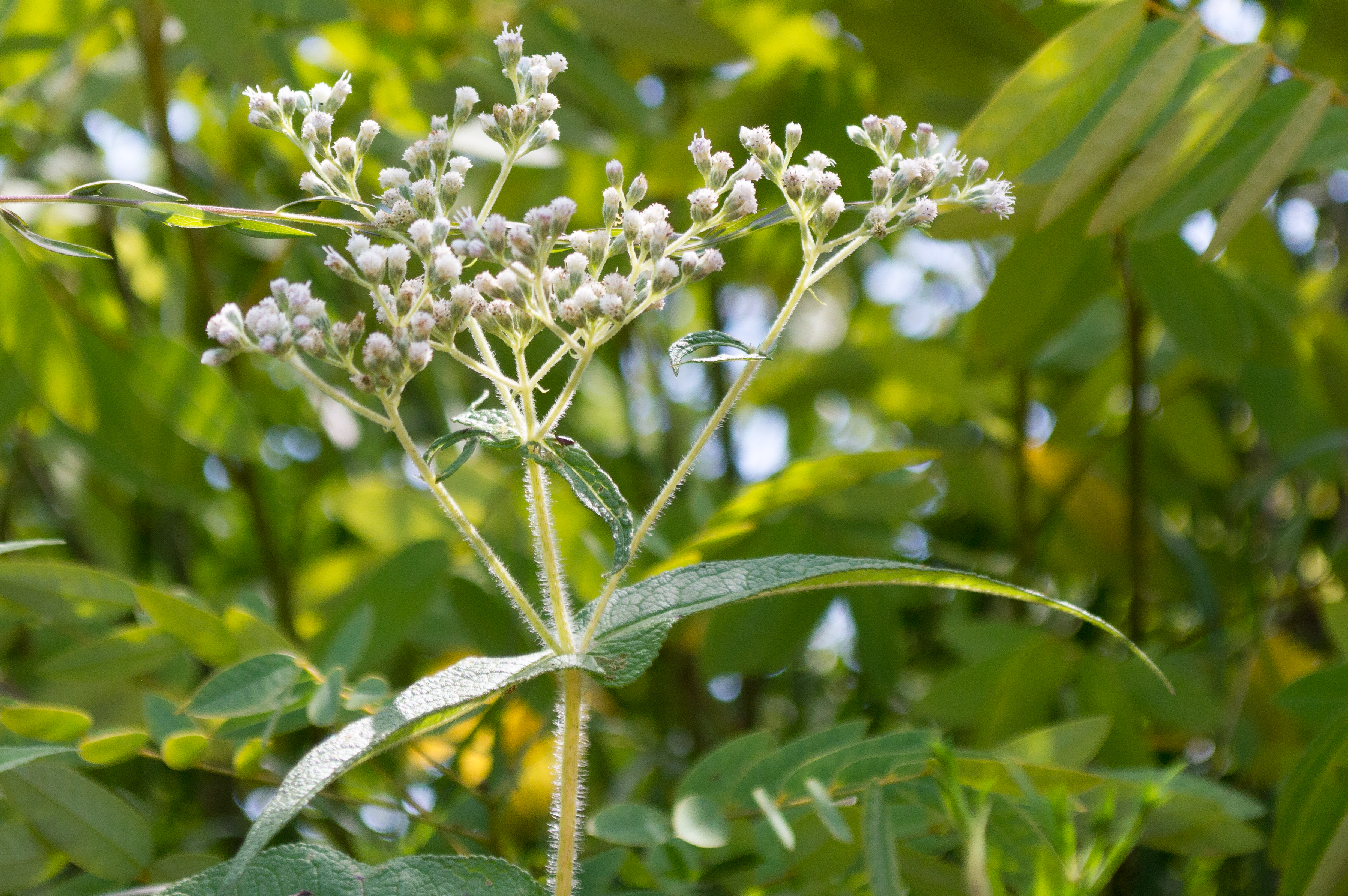
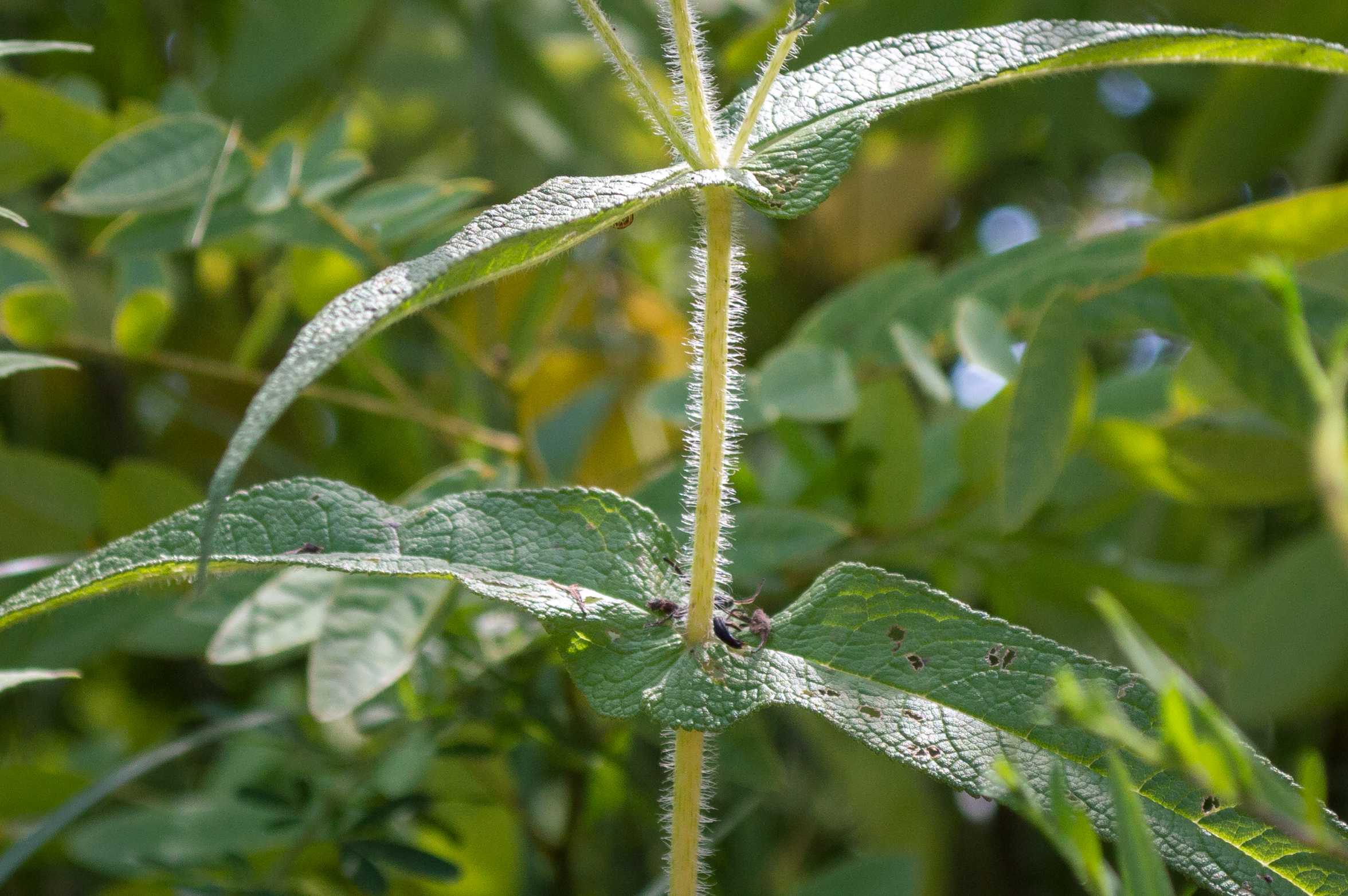
boneset
Eupatorium perfoliatum
Asteraceae

I’m not sure what compelled me to look closely at this particular cluster of tiny white fuzzy flowers.  They’re all over the place at this time of year, in the form of late-flowering thoroughwort and white snakeroot.  But for some reason I pulled the kayak up close to this one islet near Fletcher’s Cove, and there it was.

20150821-_DSC0078

This was a big deal because I’ve never actually seen this plant, despite it being fairly common.  What sets it apart from the other Eupatoriums is the paired, clasping, opposite leaves that make it look like the stem is piercing a single leaf.

There’s nothing about the flowers to distinguish them from other bonesets or thoroughworts.

Boneset likes sun or a bit of shade and wet soils and is tolerant of flooding, so the rock outcrops near the banks of the Potomac are perfect habitat for it.  The native range is from Texas north into Manitoba and all the way east to the Atlantic.

The genus Eupatorium once contained hundreds or species, including (in this area) the various bonesets/thoroughworts, mistflowers, snakeroots, and joe-pye weeds.  Those last three have been moved to other genera, but that is a subject for another day.

20030101-20030101-IMGP0240

…hey, what about the other white flowers in that picture?  Stay tuned!

Lepidopterans Photobomb My Mistflower Shoot

20150823-_DSC0108

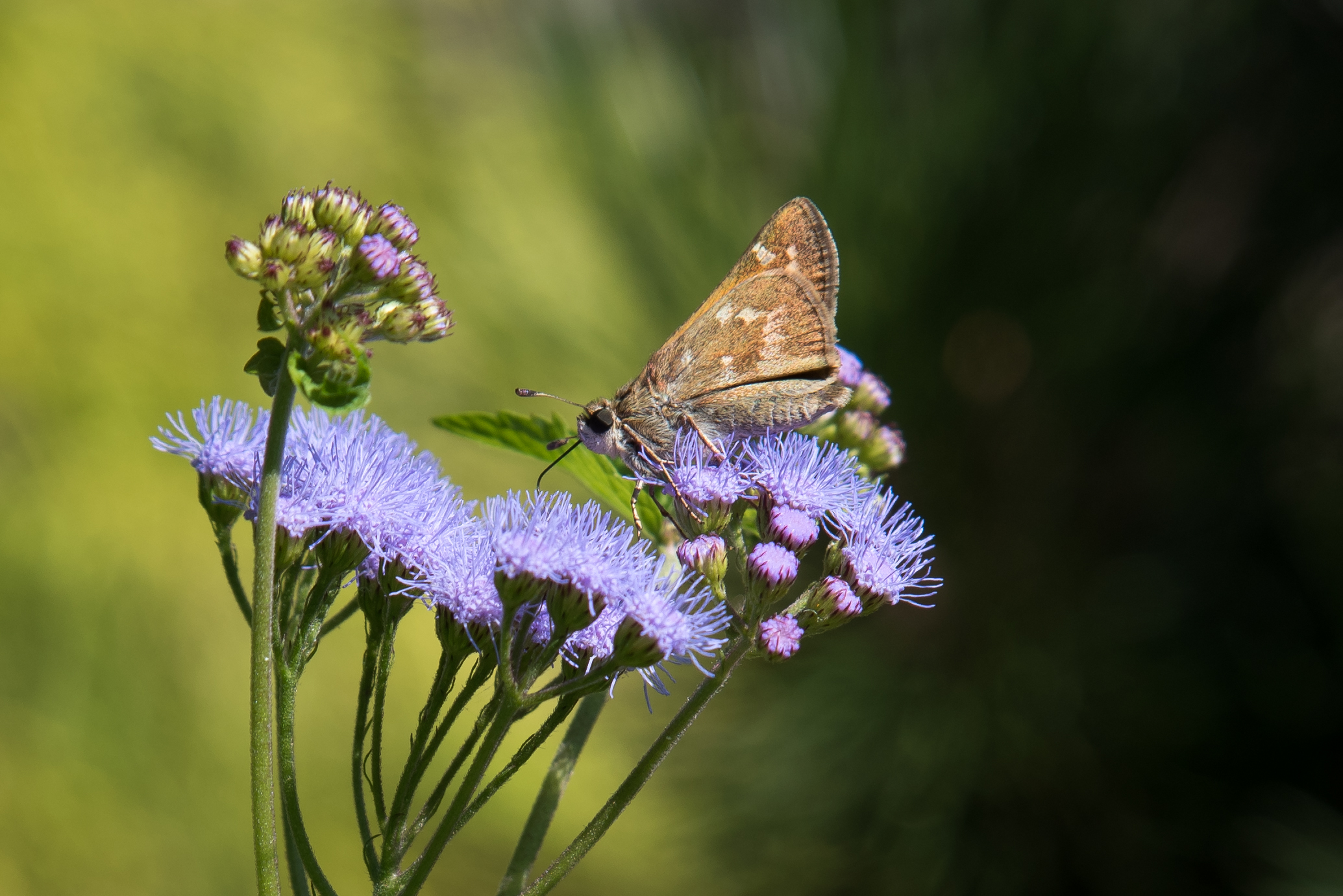
I’ve been trying for two weeks now to get some up-close, detailed shots of various flowers to write a post about plants currently and formerly classed in the genus Eupatorium.  With blue mistflower it’s fairly easy as there’s a nice clump growing in my garden.  But a skipper and a butterfly just wouldn’t leave the plants alone.  I’m not complaining; it was a good opportunity and a pleasant way to spend time on a lovely afternoon.

20150823-_DSC0084

Pictured:
blue mistflower (Conoclinium coelestinum; Asteraceae)
a skipper (little glassywing?)
eastern tailed-blue butterfly (Cupido comyntas)
20150823-_DSC0103 20150823-_DSC0104 20150823-_DSC0105

Blue mistflower is a common plant of partly sunny, wet places – you’ll see it frequently close to the banks of the Potomac, where it blooms from mid to late summer (at least). It can be found from Florida north to New York, east to Texas, and from there north to Nebraska.  It’s a nice native alternative to the similar-looking common garden plants known as ageratum, about which a plantsman at a botanic garden where I used to volunteer would always roll his eyes; he called them “droopy Maryland swamp plants”.  Don’t know where he got “droopy” from.  Anyway, they are growing so vigorously in my evergreen garden – which isn’t particularly wet – that I’m a bit worried they’ll become weeds.