Pinks and Blues

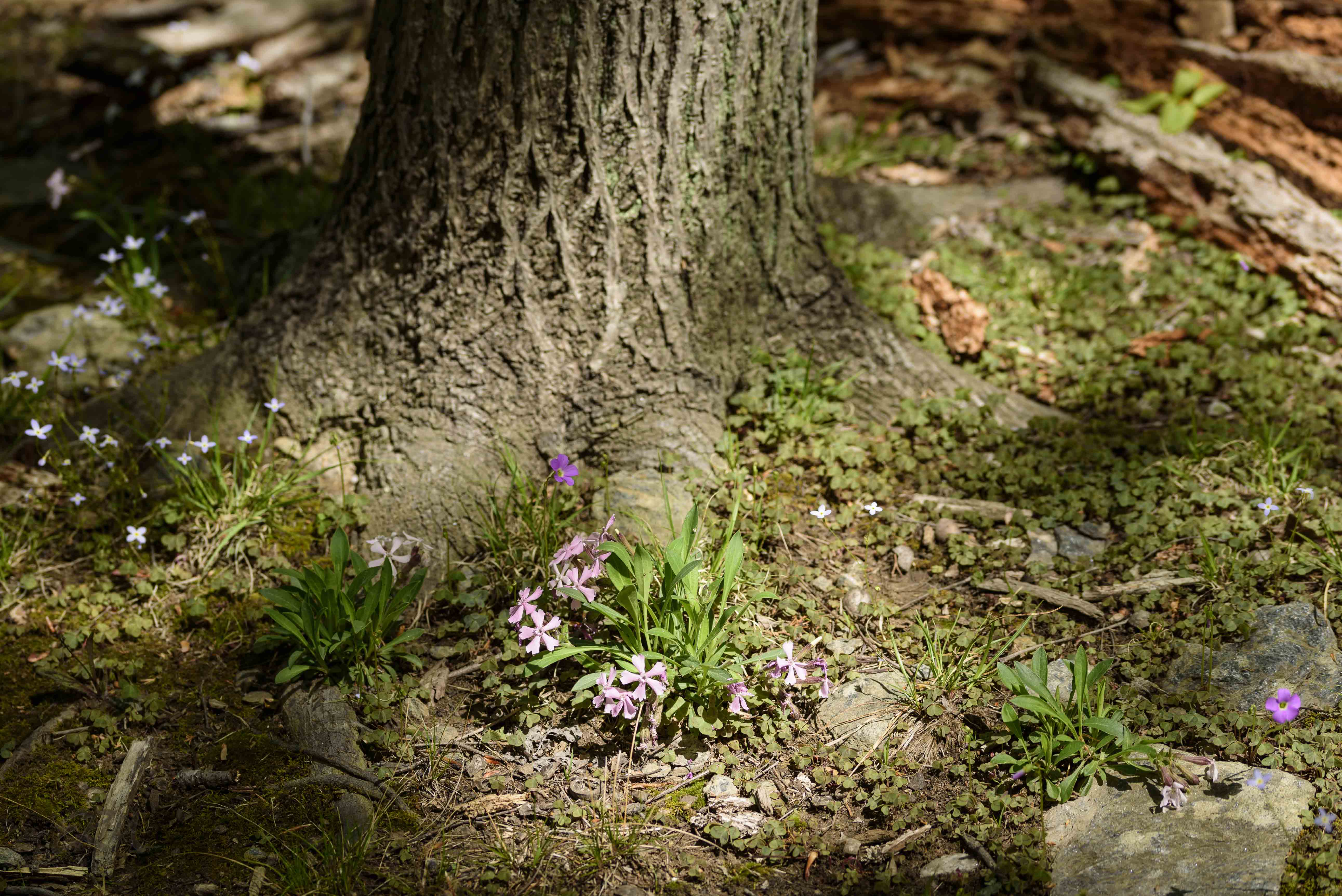
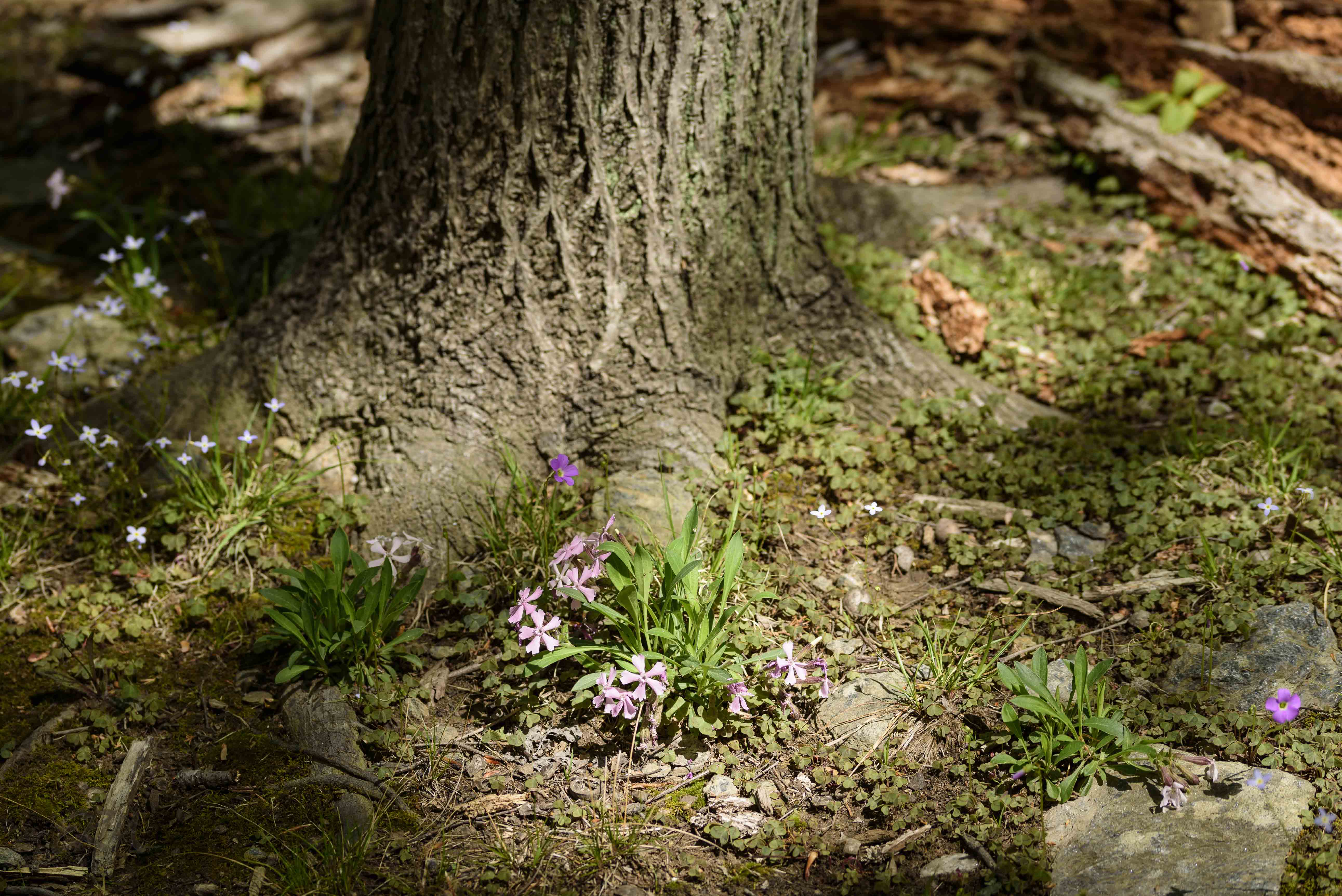
Up near the Carderock climbing wall there’s a little rocky meadow area that has a delightful variety of wildflowers, usually starting about mid April with wild pinks and azure bluets.

Although the colors range from white through pale pink to bright, dark pink, wild pink (Silene caroliniana ssp. pensylvanica, Caryophyllaceae) is not named for the color, but for the shape of the petals (as if they been cut with pinking shears). Another common name for it is sticky catchfly.

This is a clump-forming semi-evergreen perennial that only grows about a foot tall at the most. It prefers dry to moist well-drained soils in rocky areas, with a bit of shade. It makes a great addition to the rock garden if these conditions are met, but in my garden the rabbits keep sampling it, so I have to use repellent. I don’t think the little beasts favor it, but when competition for food is high, wild pinks are vulnerable.

This subspecies of S. caroliniana is found mostly in the mid-Atlantic states and southern New England, with a few pockets in Ohio, Kentucky, Tennessee, and North Carolina. In Maryland look for it in the ridge and valley, Blue Ridge, and piedmont physiographic provinces, and parts of the coastal plain.

There are two other subspecies of wild pink. S. caroliniana ssp. caroliniana occurs mostly in South Carolina and surrounding areas, while subspecies wherryi is more Midwestern. S. caroliniana (subspecies not specified) is endangered in Florida, threatened in Ohio and Tennessee, and exploitably vulnerable in New York

Azure bluets (Houstonia caerulea, Rubiaceae) is one of four bluet species found in the Maryland piedmont, and can be found in most of the rest of the state, too (it’s missing from a few coastal plain areas). It’s widespread from Maine to Alabama and a few parts of the midwest.

This is a very small plant, consisting of a basal rosette of leaves and a few threadlike stems only a few inches tall, with a flower atop each. The flowers are usually light blue with a yellow throat, though they can range from almost white to moderate lavender blue. Since there can be many stems per plant and it grows en masse, it can be quite eye-catching. Other common names include little bluet, innocence, and Quaker ladies.

I have to admit, this is one of my absolute favorites. I have spent literally hours photographing azure bluets, every spring for the last few years. I can’t get enough of them.

See in the top photo the third type of flower, somewhat taller than the others? More on that next time.

Mid-April Update

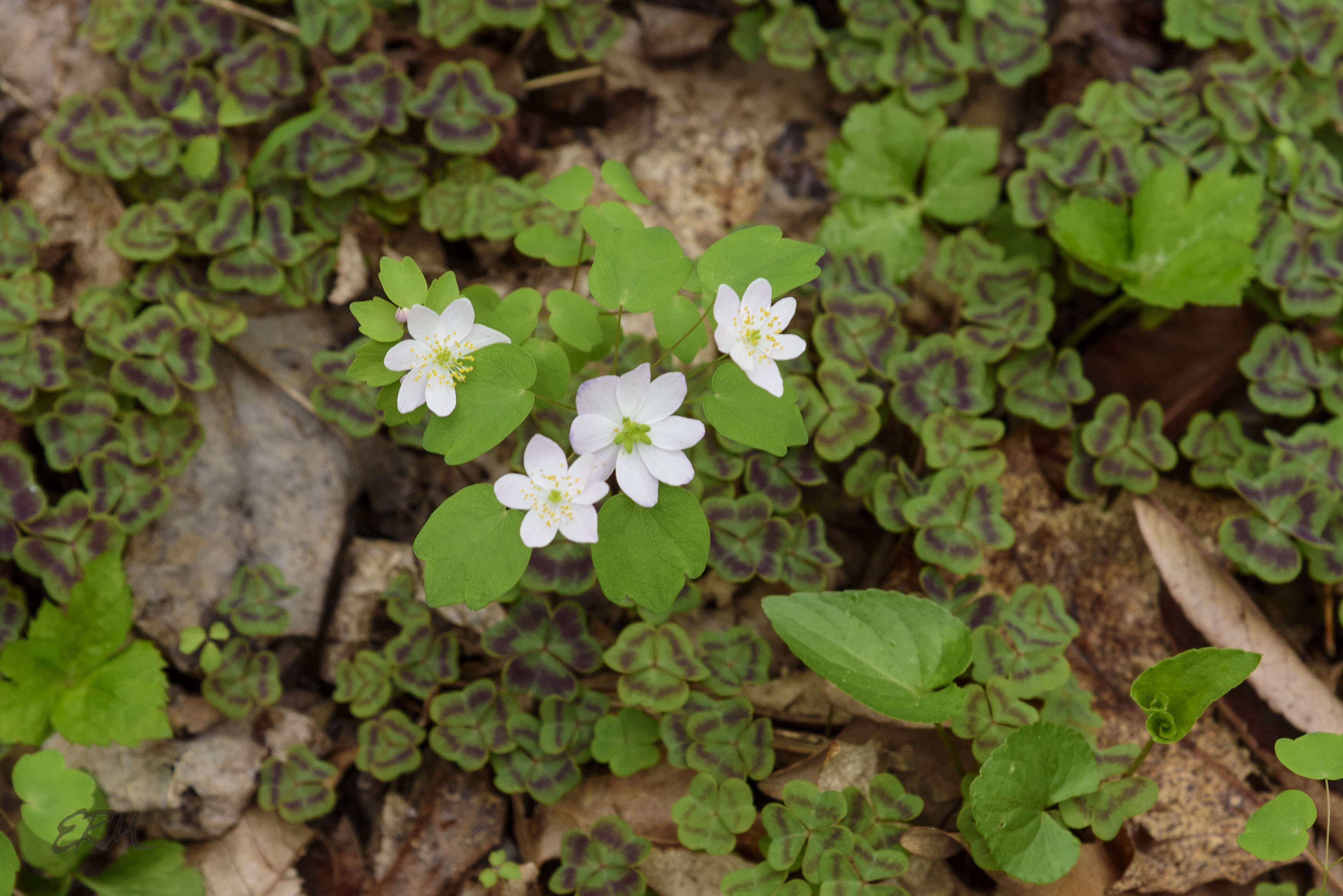
rue anemone blooming in a patch of violet wood sorrel leaves (no flowers yet) at Rachel Carson Conservation Park

Along the Billy Goat B trail on Tuesday, there were still plenty of spring beauties, star chickweed, and field chickweed. While Virginia bluebells are waning fast, wild blue phlox is past its peak but still going strong. Plenty of Coville’s phacelia, but I wasn’t able to find any Miami mist. In a few places along footpaths between the trail and the towpath you can find wild geranium in full bloom, too. Close to the river a few stands of golden Alexanders are open.

azure bluets, violet wood sorrel, and wild pinks in dappled shade near Carderock

Small patches of violet wood sorrel are blooming along the trail and in the greater Carderock area, which is looking great, with plenty of azure bluets and wild pinks in the rocky areas. Plantain-leaved pussytoes are blooming, too, and dwarf cinquefoil is just starting. Bastard toadflax is budding up and a few days from opening. A few days behind it, perhaps, will be rattlesnake weed, also budding up. Sessile bellwort is done already, and the yellow violets are mostly done, but there’s plenty of creamy violet still. Toadshade is hanging on, but most of the other ephemerals there are done (except spring beauty, of course).

Look up: flowering dogwood and pawpaw are in full bloom.

flower buds on pinxter azalea

Over at Rachel Carson Conservation Park, the pinxter azaleas and showy orchis are in bud; the former will be open within a few days, the orchis in maybe a week. There are a few stands of azure bluets by the river, and gobs of rue anemone and spring beauty everywhere. Look for mayapples and jack-in-the-pulpit, too. There are several nice stands of perfoliate bellwort along the Fern Valley trail.

I also found a new-to-me shrub that I haven’t identified yet. Hopefully it’s something good and interesting and I can write about it in a few days.

perfoliate bellwort at RCCP

Carderock Area Report

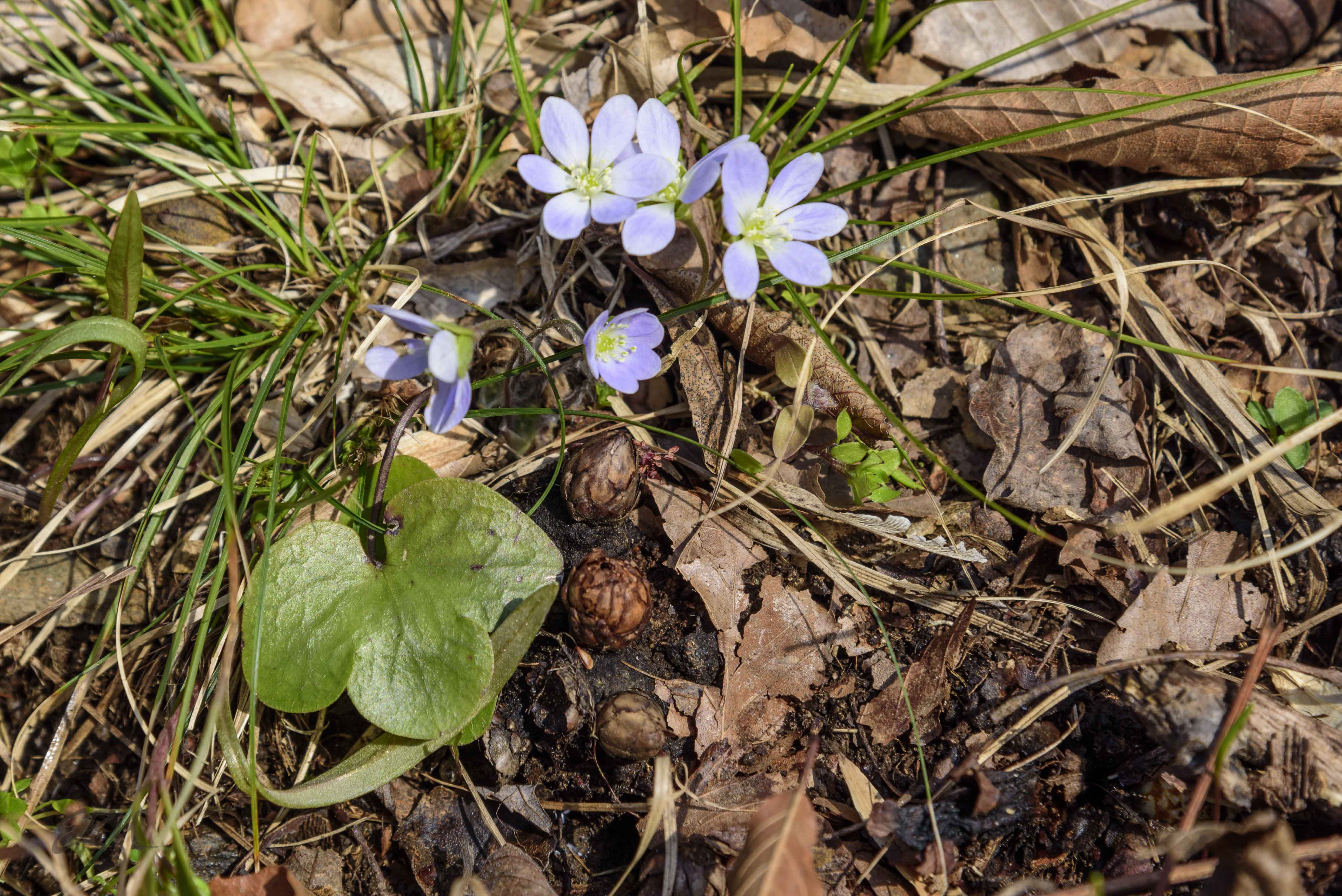
As of March 24, there’s still not much blooming yet. Harbinger of spring is in full bloom, or even slightly past, and round-lobed hepatica (pictured) and lyre-leaved rock cress seem to be at their peaks. Spring beauties are blooming but not en masse. Other native plants seen just starting to open:

  • Virginia bluebells
  • leatherwood
  • cut-leaved toothwort
  • star chickweed
  • wild blue phlox
  • common blue violet
  • spicebush

Golden ragwort is starting, too, well downstream of the Carderock area. Dutchman’s breeches and trout lily foliage is now visible through the leaf litter.

Until the show really gets going I’ll keep posting about Anza-Borrego.

Just Not a Whole Lot Going On

20160606-_DSC0121

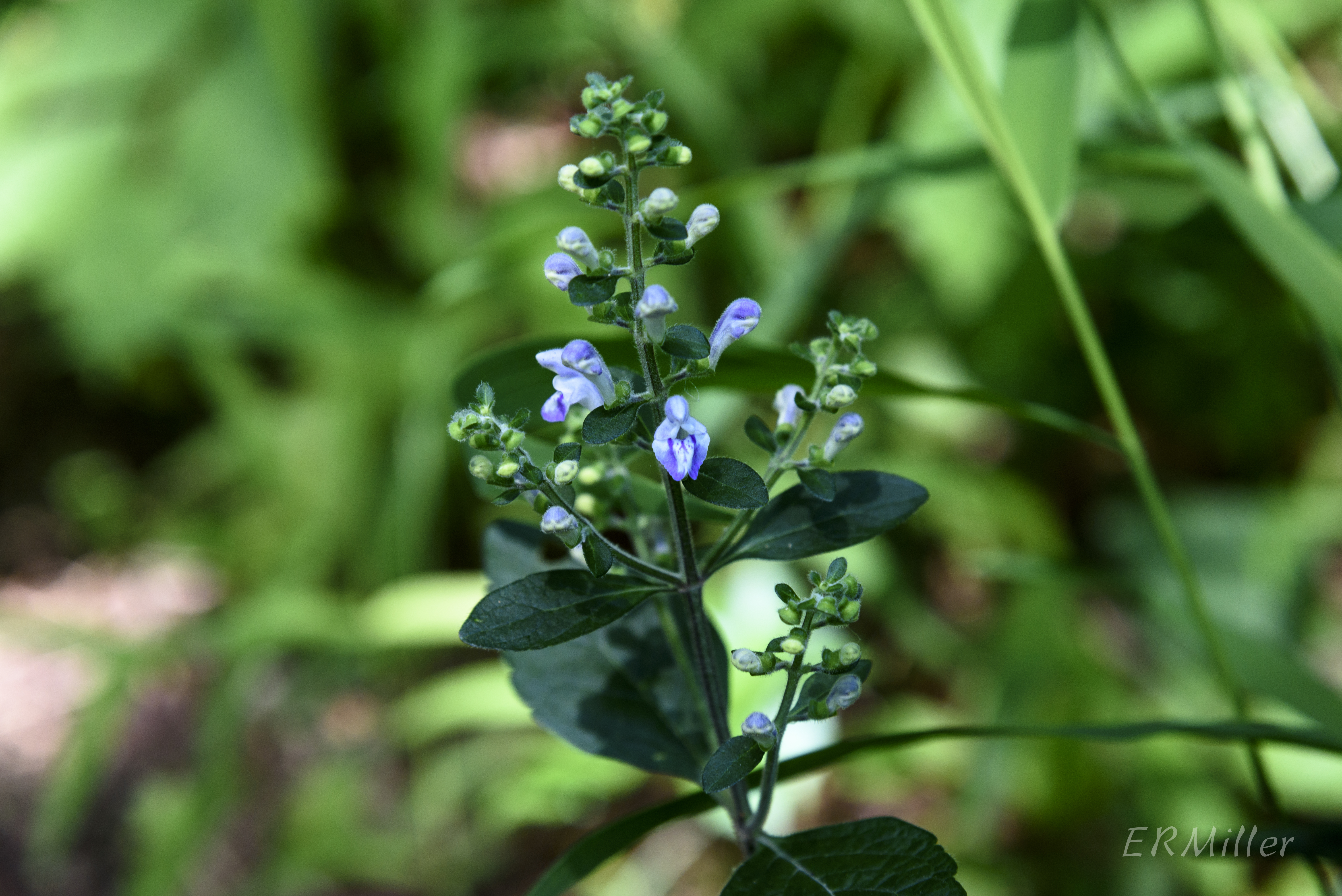
hairy skullcap
Scutelleria elliptica
Lamiaceae


It’s not like me to go for two weeks without posting, but I just haven’t gotten out as much this year. And the times I have gotten out, I’m not seeing much.

On June 6 I hiked about two miles around Carderock. I found a few rather wan-looking blossoms on partridgeberry plants, a single hairy skullcap (in an area where there should have been a dozen or more), some shining bedstraw, and a few blue-eyed grass. A patch of Culver’s root I discovered a month ago appears to have been browsed by deer (bastards). Ramps are in bud. Honewort is blooming, but you really have to be a plant geek to find honewort interesting.

20160607-_DSC0040


longleaf bluets
Houstonia longifolia
Rubiaceae


On June 7 I hiked about three miles on Sugarloaf Mountain, and found one small patch of longleaf bluets blooming. The mountain laurel are still going, though past their peak (they are all done at Carderock). Other than those and some fleabanes, I saw nothing else blooming, though there was an inch-tall spike starting on a downy rattlesnake plantain.

Looking at notes I’ve made over the past few years, I realize there is a bit of a lull from late May to mid June. But this is pretty slim pickings. I hope to get back to the Carderock area today to look for both purple bluets and longleaf bluets, though it may be too early for them.

Carderock, May 2

20160502-_DSC0050

The morning of May 2 I set out for a quick survey of the greater Carderock area, with the goal of shooting some long-tube valerian, a highly state rare/endangered species that grows in several different locations in the Potomac gorge.

20160502-_DSC0013

Along the way, on the towpath between the Billy Goat C and Billy Goat B trailheads, I noticed that a lot of trees along the stone retaining wall were missing.

What the heck? Wondering why, I decided to call the park and inquire when I got home.

I didn’t need to. A few hours later, on the way back, I saw a ranger taking photos, so I asked him about it. In summary, the retaining wall is historic, and it’s been in danger of being damaged by the trees, some of them were quite large. If one had gone down in a storm, the root mass lifting out of the ground could have caused a breach in the wall. Not only would that severely damage the canal and make that part of the towpath unusable, but an 8′ diameter sewer main, part of the Potomac Interceptor sanitary system, runs along there. It, too, would be severely damaged by a breach in the wall.

20160502-_DSC0012

The flags marked a line 20 feet from the base of the wall; all the activity is being kept within that zone. They will be installing some monitoring equipment in order to track changes to the wall in coming years.

My main concern, of course, was damage to plant communities. Good news: the park always has an expert come in for a plant survey before they do any work.

20160502-_DSC0110

Annoyingly the narrow strip of land between the towpath and the wall gets moved every few weeks, but if you go now, you’ll see some lyre-leaf sage blooming in there. The plants are quite short, but year after year they survive the mowers.


The spring ephemerals are almost entirely gone, just a few spring beauties left. Observed blooming on May 2:


  • wild blue phlox (waning)
  • star chickweed
  • Virginia waterleaf (just starting)
  • Coville’s phacelia (past its peak)
  • long-tube valerian
  • clustered snakeroot (just starting)
  • golden Alexanders (S3 – rare to uncommon)
  • rattlesnake weed
  • hairy beardtongue
  • moss phlox (waning)
  • field chickweed
  • wild geranium
  • rue anemone
  • lyre-leaved sage
  • Rubus species (probably a dewberry)
  • azure bluets
  • dwarf cinquefoil
  • plantian-leaved pussytoes (waning)
  • bastard toadflax
  • fringetree
  • deerberry
  • alumroot
  • violet wood sorrel
  • wild pink (a day or two away from being done)
  • spring forget-me-not
  • Virginia spiderwort
  • common wood sorrel
  • Philadelphia fleabane